Tag Archives: movies

Rules & Consequences

John Wick: Chapter 3—Parabellum

by Hope Madden

John F. Wick.

You have to tip your hat to a filmmaker who understands his strengths and plays to them. For Chad Stahelski, I think you just have to take the hat off entirely.

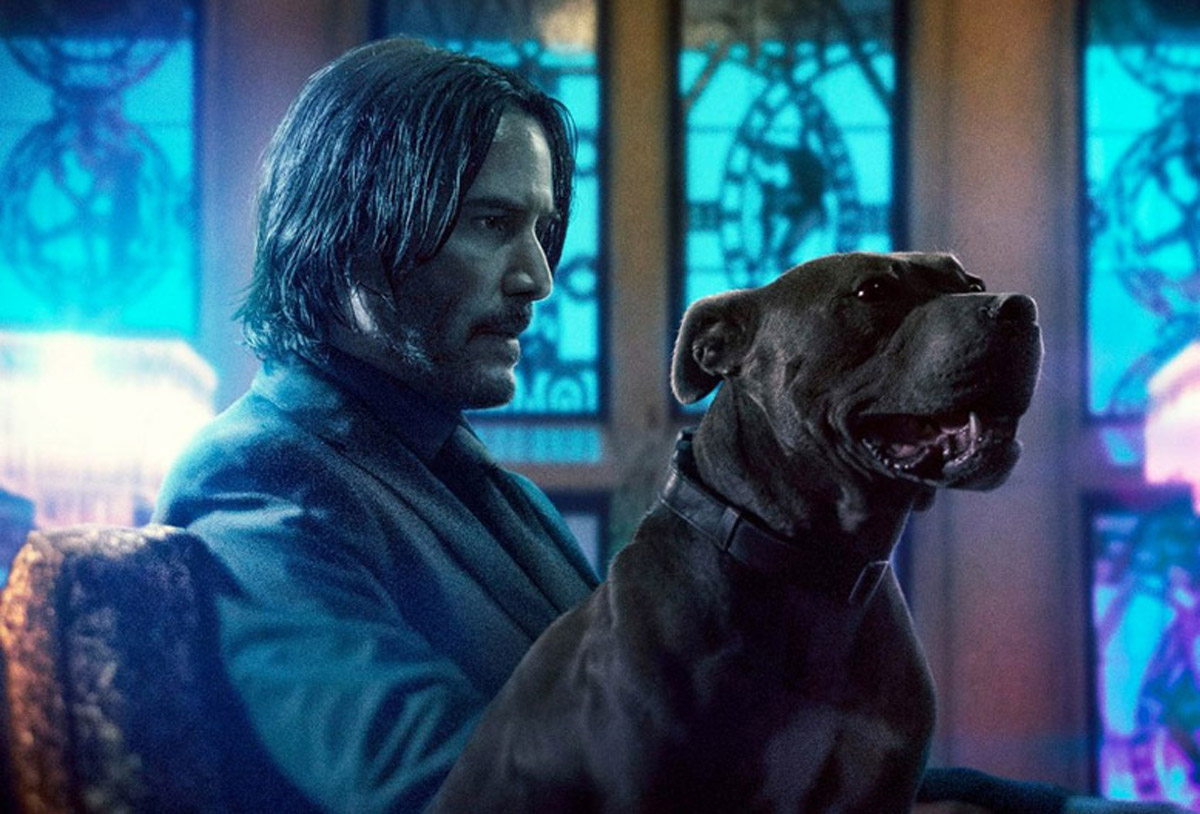
Kickboxer turned stunt man turned stunt coordinator turned helmsman of a phenomenon, Stahelski returns for his third tour with Keanu Reeves as dog-loving assassin widower John Wick for Chapter 3—Parabellum.

The great thing about chapters is that no one expects them to tell a whole story, and since storytelling and acting are not the strongest suits in this franchise, Stahelski wisely sharpens his focus on what is: action.

A breathless Act 1 (with a truly inspired use of the New York Public Library) picks up the moment John Wick 2 ends, mercifully dispensing with the need for exposition. In its stead, balletic mayhem.

The plot of sorts: Wick is in trouble with the guardians of the world’s assassin guild, approximately every third human in NYC is a hired killer, and there is a $14 million bounty on his head. Where can he go? What can he do?

These are questions Stahelski and his army of writers have fun answering with ludicrous, violent, exhausting, carnage-strewn glee.

Inside of 10 minutes it was clear that this is the best film of the trilogy.

Welcome new faces Anjelica Huston and Asia Kate Dillon cut impressive figures, though Halle Berry feels out of her depth and a clear sound stage representation of Morocco is the only clunky set piece in the movie.

Ian McShane, Lance Reddick and Laurence Fishburne return. Wisely, Stahelski lets these guys mete out most of the dialog. I’d wager Reeves utters fewer than 30 lines total.

Again, play to your strengths.

Dan Lausten’s camera ensures that you know when Reeves does his own action, most of which is choreographed and captured in long, fluid, serpentine shots with a lot of broken glass. Man, their easy-shatter glass budget must have been through the roof!

The Fast and Furious franchise didn’t become tolerable until it embraced the fact that it was a superhero series, abandoning all reason and logic and just jumping cars from the 100th floor of one building to the 100th floor of another. Luckily, it didn’t take John Wick six films to take flight.

I Don’t Want to Go Out—Week of May 13

Bunches of movies out this week in home entertainment, and a couple of them are quite amazing. Here’s the whole run down.

Click the film title for the full review.

Apollo 11

Her Smell

Meow Wolf: Origin Story

Fighting with My Family

Cold Pursuit

Charlie Says

Happy Death Day 2U

Pack Animal

Dogman

by Hope Madden

Cinema is full of lovable losers, but every so often an actor so fully inhabits a character that you can almost forget the film around him. He is no longer a disposable source of comedy or pity, but an living, breathing, bleeding human you must root for: Philip Seymour Hoffman’s Scottie in Boogie Nights, Robert De Niro’s Rupert Pupkin in The King of Comedy, Dustin Hoffman’s Ratso in Midnight Cowboy.

Marcello Fonte just leapt onto the list with his deeply flawed, deeply human and beautifully realized dog groomer Marcello in Matteo Garrone’s latest, Dogman.

Slight, fidgety and endlessly kind-hearted, Marcello loves his dogs, his daughter and the neighbors in his grey little seaside slum. Sure, he sells a little coke on the side, but he doesn’t want to cause any trouble.

Unfortunately for Marcello, the behemoth Simone (Edoardo Pesce, utterly brilliant) is nothing if not a lumbering mountain of trouble.

After his darkly delightful 2015 fairy tale outing Tale of Tales, Garrone returns to the heavier Italian realism of Gomorrah. He hasn’t abandoned allegory, though.

Given his nation’s political history and current leanings, it isn’t tough to draw metaphor from the tale of an unthinking bully and the population who cows to him. (This is not a tough metaphor for Americans to fathom, either.)

Not that it pulls attention away from Marcello. The film has themes of the classic Western, a good man pushed to dark means to protect what he has. But in this case, Marcello is an almost feminine presence among the cash-for-gold shop or video game arcade owners who share his strip of town. Marcello is liked, if not exactly respected.

Childlike is what he is, a pack animal but never the alpha. As his story progresses, Garrone’s tight grip on the narrative and its visual emphasis turn the film from that of an underdog’s struggle to something sadder and grander.

As hope mixes with hopelessness, Dogman raises questions it never really answers, and ultimately feels wearily confused and disappointed by people.

https://www.youtube.com/watch?v=LI2JE_xjAaY

Pika Pika

Pokémon Detective Pikachu

by Hope Madden

When my son was small and we played pretend, I made believe I was Snorlax so I could lay on the couch and do nothing. Does that make me a bad parent? Well, a lazy one, anyway, but the point is, I logged countless hours on that couch watching all manner of pocket monster.

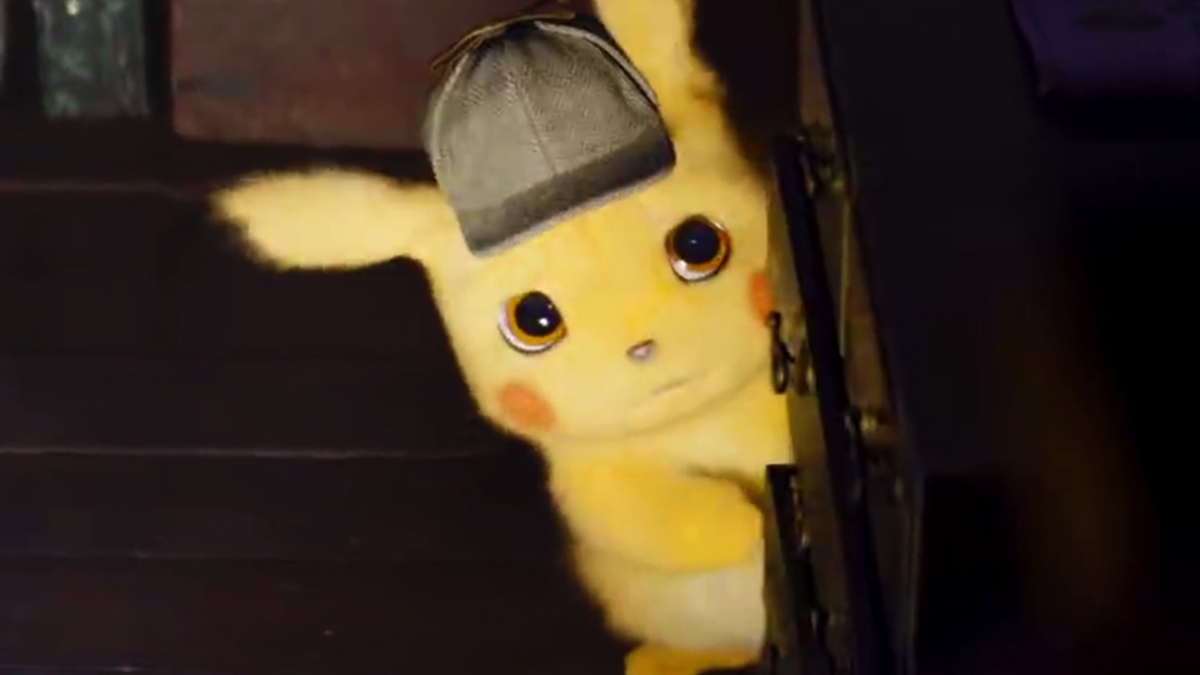
I was dragged unwillingly into the world of Pokémon. No, I am not exactly the target audience for Pokémon Detective Pikachu (read: I am in no way the target audience for this movie). But, when Pikachu (voiced by Ryan Reynolds at his Ryan Reynoldsiest) says, “Mr. Mime is the worst,” I know enough to understand that shit’s the truth.

So, there is a plot. It involves loads upon loads of daddy issues, primarily (but not exclusively) those that hang over Tim Goodman (Justice Smith). In looking for his father he falls into a mystery involving a Pikachu who is not only adorable (he admits as much himself at least twice), but is also connected to Tim. Tim can understand him.

For the uninitiated, Pokémon just repeat their own names over and over and over again in a manner that makes you want to take your own life, and yet you tolerate it because you really do love your son.

But not this Pikachu! Sure, others can only hear his cute “pika pika,” but Tim can hear actual words, and those words are telling Tim, in a humorously snarky way, that he needs to unravel this mystery and work on his interpersonal skills.

Bill Nighy shows up as an entrepreneur/philanthropist/genius. Meanwhile, Ken Watanabe languishes with bafflingly limited screen time as a detective who is, let’s be honest, not very good at his job.

Kathryn Newton is a plucky would-be investigative journalist, her trusty Psyduck in tow. (Note: Psyduck is also the worst.)

Part of the entertainment value here is the genuine fondness for the content director Rob Letterman and his army of screenwriters bring to the table. Good looking CGI, committed performances and a solidly comedic but not too ironic tone also help.

The film doesn’t shoot over the heads of the youngest fans, does embed scads of references and homages for those there for nostalgia, and throws around enough kid-friendly Reynoldsisms to entertain parents who mercifully missed out on Pokémon Gen 1 and 2.

Is it a colossal waste of Ken Watanabe’s talent? Oh God, yes. Terrible.

But honestly, otherwise I don’t have a lot of complaints.

Gimme an A! A! R! P!

Poms

by Christie Robb

At a time when movies are pushing three hours, it feels weird to want one to run longer, but at just over an hour and a half, Poms feels way too short. It’s like a long SNL sketch.

A female-centric comedy about a retired teacher aching for one last shot at her childhood dream of becoming a cheerleader seems like a good option for Mother’s Day weekend—especially for the Boomers and their kids. The cast looks solid: Diane Keaton, Jacki Weaver, Pam Grier, and Rhea Perlman. Poms coming “from the studio that brought you Bad Moms” appears promising.

But it’s all just perfunctory.

Director Zara Hayes and writer Shane Atkinson, both TV veterans making feature debuts, introduce characters via montage and then give them little to do or say.

People become strange antagonists, set on denying the senior cheerleading squad practice/performance time for no discernible reason. Folks burst into tears or have 180 degree shifts in perspective simply because the plot demands it.

Still, Keaton’s performance of a woman striving to live in the moment while hiding terminal cancer is effective. The chemistry between Keaton’s snarky Martha and Jacki Weaver’s bubbly Sheryl is cute. And when they are performing, the women look like they are having a nice time.

You just wish that there was more of a story there, more character development, more cheerleading even. The cast is way too good for this.

Charlie’s Angels

Charlie Says

by Hope Madden

It’s been 50 years since Charles Manson and his family effectively terminated the 1960s. Filmmaker Mary Harron (American Psycho) joins Daniel Farrands and Quentin Tarantino in commemorating the anniversary.

Earlier this year, Farrands unleashed the grim and quickly forgotten The Haunting of Sharon Tate, while Tarantino’s next likely cultural phenomenon, Once Upon a Time in Hollywood,  promises to shine some of its spotlight on the Manson family crimes as well.

Harron’s film, Charlie Says, follows Leslie Van Houton (Hannah Murray), Susan Atkins (Marianne Rendon) and Patricia Krenwinkle (Sosie Bacon), three years after their incarceration, as they reflect on Manson’s promises and their own actions.

The aptly titled film is as concerned with the women’s brainwashing as it is the crimes themselves, although it unfortunately provides no real insight into either.

Harron spends about half the film in the California Women’s Correctional Facility, where the trio is taught by dedicated grad student Karlene Faith (Merritt Wever, portraying the author of the book that inspires the film).

The eerie chorus of “Charlie says…” greets nearly every question Wever lobs at her students, which generally spurs a flashback to time on the ranch with Charlie (Matt Smith).

Here we hit a snag, because Smith lacks the charisma, the hatred, the ugliness or the psychotic aura to pull of Manson. He is never terrifying, never seductive—never convincing.

In fact, most of the flock lacks the weather beaten conviction we recognize from police tapes. The period detail and tone lack degrees of authenticity as well.

Harron’s film opens strong, but it quickly loses its footing and never really finds it again. Working from Guinevere Turner’s screenplay, Harron brings up some interesting themes—particularly questioning the point of breaking through to these women, knowing that puncturing their fantasies only means their clear-eyed horror whether looking backward or forward.

But she doesn’t really land any punches. The film never feels particularly queasying, especially enlightening or even very memorable.

I guess we still have Tarantino. Or maybe it’s just time we all moved on and stopped obsessing over what Charlie had to say.

Wild Thing

Wild Nights with Emily

by Hope Madden

Here’s a fun trend in recent indie filmmaking: let’s revisit our historic “spinsters”, shall we?

Craig William Macneill gave Lizzie Borden the treatment last year with Lizzie, offering a pretty speculative and yet decidedly clear-eyed plausibility. But Madeleine Olneck has actual history to back her up.

Plumbing Harvard University Press’s stash of Emily Dickinson’s poems and letters, Olneck suggests a different, funnier, slyer image of the “recluse poet.”

Wild Nights with Emily plays almost like an episode of Drunk History, although no one seems to be drunk. Olneck simulcasts two parallel retellings of the life of America’s most beloved female poet, and among its most beloved poets, regardless of sex.

Wild Nights does not disregard sex, though.

One storyline—the one you’ll recognize—is dictated by Mabel Todd (a delightful Amy Seimetz in a rare comedic performance). As she stands in her cotton candy pink dress and hat, she regales a rapt audience with stories of the Emily Dickinson she knew.

Well, “knew” seems to be a strong word.

Todd was, indeed, the first to publish Dickinson’s work aside from a stray newspaper editor here and there. And why was that? Because Dickinson was a recluse who shunned publication, as Todd defined it and history was so quick to embrace it?

Or because Dickinson’s rule-defying work was ignored by the literary establishment of her time and because she shunned Todd?

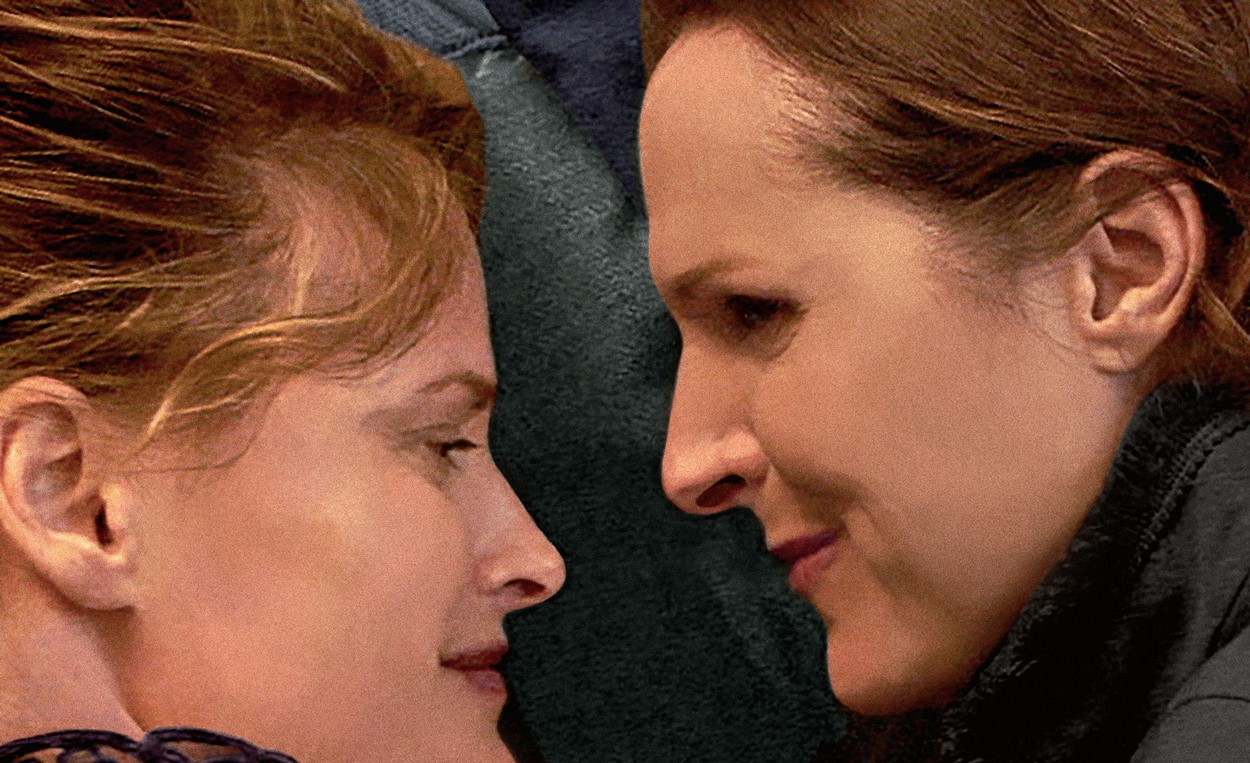
The offsetting narrative explores a different view of Dickinson, warmly and beautifully portrayed by Molly Shannon. Her relationship with lifelong friend, expert reader, fierce proponent and sister-in-law, Susan Gilbert (Susan Ziegler), fuels a poignant and funny story.

Is a likelier reading of Dickinson’s work and letters that of a passionate, lifelong love affair with Gilbert? Olneck’s consistently entertaining narrative certainly believes so.

This is a specifically political film, one that begs with outrage that we reexamine the stories we’ve been told about women in history—this one woman, in particular.

It’s also a mash note to the breathtaking originality and talent of the poet, whose words flow through the film without burdening it by self-importance or pretentiousness. No, Olneck’s audacious wit and Ziegler and Shannon’s performances—alongside spot on comic turns from Seimetz, Brett Gelman, Jackie Monahan and Kevin Seal—guarantee the film never bends toward anything remotely stuffy.

Instead, Wild Nights with Emily offers a refreshing and awfully entertaining new way of seeing an American treasure.

God Bless America

Hail Satan?

by Hope Madden

Who’s up for a Satanic Temple recruitment video?

If you’re thinking Christopher Lee and blood-drinking, virgin-sacrificing minions planning to summon demons forth and end humankind, well, you’re not alone. But you are off the mark.

And while I’m not sure documentarian Penny Lane intended recruitment with her film Hail Satan?, it’s really hard not to find yourself rooting for this scrappy group of idealists.

Lane and her subjects trace a brief history of Satanic grotesquerie in America. From Anton Lavey’s psychedelic Church of Satan (“a rat pack carnival”) to the “Satanic Panic” of the 80s and 90s through the abominable behavior inside the Catholic Church, the film notes how the devil has been used in American popular culture.

But for TST, “Satanism” is simply a way to rework a pejorative term used historically to mark the outsider—a group to which members certainly relate.

Lucien Greaves (a pseudonym) devoted himself to establishing The Satanic Temple as a simple societal outgrowth, a tumor, if you will, on the ass of a state of Christian theocracy he saw in our country. He doesn’t worship Satan. He doesn’t even believe in Satan.

Greaves believes in the religious pluralism promised by the US Constitution, and what better way to convince a state house to remove its ten commandments statue than to insist on the erection of an 8 foot statue of Baphomet on the same lawn? Because, as far as the laws of the US are concerned, if you can’t have one, you can’t have the other.

Lane documents the organization’s growth from theatrical political activist cell to global network of connected communities. Her wry delivery matches the sensibilities of the Satanists in question, but their outrage and their unexpected sense of community fuel the film.

As Lane’s investigation uncovers, The Satanic Temple’s surprising surge in popularity owes itself not just to a citizenry troubled by a sudden swing toward theocracy. It’s also due to the organization’s ability to represents a unified voice for outcasts.

Those very people most vilified by a conservative “Christian” point of view find acceptance here. And  while there may be no better way for them to stick it to their oppressors, this is also their opportunity to make a difference.

If the point of a documentary is to enlighten while it entertains, few docs have succeeded on both fronts as entirely as Hail Satan? In turns frustrating, funny and provocative, it is always a clear-eyed image of America as defined by our citizen’s imperative to challenge our government to better realize the ideals of our Constitution.

Hello Dolly

UglyDolls

by Hope Madden

We open on what is essentially the Island of Misfit Toys. This is the moment when the adults in the UglyDolls audience need to make a choice: accept these notions stolen from far superior toy-related children’s fare as homages, or bristle at inferior product skating by on copy-catting.

It’s your choice, but your kids will mainly see a perfectly sweet, upbeat and unimaginative tale of an ugly duckling. Even better, an ugly duckling who doesn’t need to become a swan to be happy.

That duck, or that blobby pink thing, is Moxy (voiced by Kelly Clarkson). And she lives happily in Uglyville with other merrily misshapen beasties (Wanda Sykes, Blake Shelton, Pitbull, Leehom Wang, Gabriel Iglesias). But Moxie yearns for more.

On a songtastic adventure to fulfill her dream, Moxy and gang run afoul of the pretty dolls, whose leader, Lou (Nick Jonas) intends to keep them from finding the boy or girl who will love them.

Will that stop Moxy? No! She yearns for her very own Andy.

I feel safe in saying that because there’s no question director Kelly Asbury (Shrek 2) and screenwriter Alison Peck (working with characters created by Su-min Kim and David Horvath) have seen Toy Story.

Man, that was a good movie, eh? The whole series, actually. In fact, there’s one scene in Toy Story 3 that made me cry harder than any scene in any film ever. It obviously made an impact on Asbury and Peck as well, because it is lifted shamelessly for the emotional climax of UglyDolls.

When it’s not distracting you with its borderline plagiarism, UglyDolls is sledgehammering its theme. Janelle Monáe voices Mandy, a pretty doll who might be ugly deep down (a good thing). She helps beat the point home that we do not need to conform to be happy. Which is a great theme, and one that a well-made film (like, say, Shrek) can deliver without losing sight of storytelling.

The big screen leap for these critters amounts to a sweetly mediocre marketing strategy for some unattractive (but lovable!) toys.

It Ain’t Teen Spirit

Her Smell

by Hope Madden

“Kill your idols.”

“Give them enough rope and they will do it themselves.”

Apt lines from Alex Ross Perry’s new rock and roll meltdown, Her Smell.

You may think you’ve seen “Behind the Music” style self-destruction, but you have never seen anything quite like this.

And how great is that title?!

Writer/director Perry has a soft spot for unlikeable people. That is the most common element running through his work—Color Wheel, Listen Up Philip, Queen of Earth. So it’s no huge shock that he hasn’t made a profitable film yet. That’s a tough sell: come spend 90 minutes—or in the case of Her Smell, 144 minutes—with someone you’ll have a tough time tolerating.

Which is not to say Perry makes bad movies. He makes really good movies, they just try your patience. Her Smell has a couple of things going for it, though.

First of all, there’s train wreck appeal. Becky Something (a ferocious Elisabeth Moss) is so outrageously tough to love that you cannot look away from the downward spiral Perry dares you to witness.

The second and most important strength is Moss’s stellar turn as Something, a rocker facing the inevitable consequence of drug abuse, pathological insecurity and the shifting dynamics of the music world.

The film itself is a dizzying, self-indulgent mess, which only seems appropriate. Sean Price Williams’s restless camera captures it all. All of it. All all all. And Moss’s toxic, mascara-smeared maniac is such a loathsome explosion, you almost wish rock bottom would come, already.

Uncharacteristic of the filmmaker, though, regret and redemption color the film’s second half. It’s here that Moss’s rawness and the deeply felt character work from her supporting cast (an especially wonderful Agyness Deyn, in particular) repay you for the abuse you’ve taken for more than an hour. 

The music itself—much of it, anyway—is the film’s real weakness. But Moss, who has more than proven her mettle in basically every role she’s ever taken, is more than fearless here. She is bare, ugly authenticity and there is something transcendent about sticking it out with her.