Tag Archives: movie reviews

F*ck Y’all, We’re From Dayton

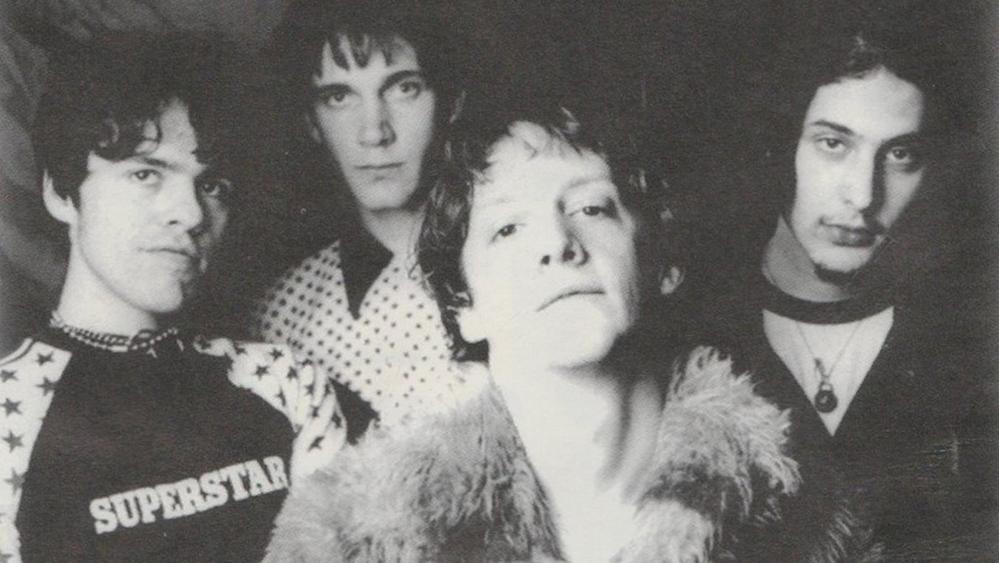
Brainiac: Transmissions After Zero

by Hope Madden

It’s been an ugly few days, and while we reel from our country’s 251st mass shooting, this one painfully close to home, it’s a good time to remember that Dayton, Ohio is an amazing town teeming with fascinating, resilient people.

Eric Mahoney knows that, which explains why he returned to his hometown for this second documentary, this one on the Nineties indie punk force Brainiac.

The adjective used most frequently in Mahoney’s rock doc Brainiac: Transmissions After Zero is “weird.”

Fitting, really, for a film that dives into the brief and electric career of Dayton’s pride and one of the most innovative and surprisingly influential indie bands on the young scene.

Haven’t heard of them? Now’s your opportunity.

Don’t just take it from Mahoney. Take it from Hole’s Melissa Auf der Maur, The Mars Volta’s Cedric Bixler-Zavala, The National’s Matt Berninger, Fred Armisan and tons of others who still mourn the loss of this genuine and unique and weird presence in music.

Filmed 20 years after the freak accident that took the life of the band’s songwriter and main creative force, Tim Taylor, Transmissions After Zero makes itself comfortable with those who knew him best: his mom, his sister, his band.

Mahoney’s timestamp of a picture offers a refreshing break from the Behind the Music style of so many rock docs—partly because Brainiac’s trajectory ended days before signing with a major label.

What results is a candid look at what happens to the rest of the band, dealing not just with grief but also with the abrupt end of their forward progress, the end of their dream.

The film, in the end, is less about Tim Taylor himself and more about the band. Taylor’s presence is never far from mind, but at the same time, Mahoney and his subjects never manage to truly articulate that presence. Perhaps it’s a lack of interview footage, but the absence is felt—which partly frustrates but also fuels the doc’s overall sensibility of loss.

Without Taylor, Mahoney relies on bandmates Juan Monastrio, Michelle Bodine, Tyler Trent and John Schmersal to keep things lively. Their candor, wit and weirdness compel attention and empathy. Their openness with Mahoney is touching and often very funny.

Mahoney offers mainly talking head footage with brief snippets of the band onstage and some low-key but inspired animated sequences. He exhibits a little electro punk flourish himself as he pieces together the elements, but his style never upstages the content.

Instead, he lets the music and the musicians tell their own story. Like a lot of rock docs, Transmissions After Zero introduces or reintroduces a group of voices that should not have been lost. And in this case, it also reminds us how great Dayton and its people really are.

Screening Room: Hobbs & Shaw, The Farewell, Luz, Sword of Trust, Mission Mona Lisa

A bunch of movies to cover this week in The Screening Room, including Fast & Furious Presents: Hobbs & Shaw, The Farewell, Luz, Sword of Trust, Leo Da Vinci: Mission Mona Lisa as well as a whole slew of new movies available to watch at home.

Listen to the full podcast HERE.

Can You Keep a Secret?

The Farewell

by George Wolf

Caught in a lie and feeling desperate?

There’s always the Homer Simpson defense (“It takes two to lie – one to lie and one to listen”), or even the George Costanza (“It’s not a lie if you believe it”).

But with The Farewell, writer/director Lulu Wang finds poignant truths in an elaborate lie, speaking the universal language of “family crazy” while crafting an engaging cultural prism.

Inspired by an episode of the This American Life podcast, The Farewell unfolds through the view of Billi (Awkwafina), a Chinese American who follows her parents back to China after the news of her grandmother Nai Nai’s terminal cancer diagnosis.

But Nai Nai (Shuzhen Zhao-priceless) is the only one who doesn’t know how sick she is, and the extended family has concocted a ruse about a grandson’s wedding to give everyone an excuse to come visit Nai Nai one last time.

Billi’s parents (Tzi Ma and Diana Lin) are worried she’ll end up giving the game away – and with good reason. Billi is not entirely on board for the “good lie,” and this conflict of conscience is the vessel Wang steers to expose important cultural differences while she’s getting solid laughs with all the family antics.

The lies -both big and small- pile up, all in service of the belief that one’s life is part of a whole, and thus it is Nai Nai’s family who must carry the emotional burden of her illness.

It is Awkwafina who carries the film. If you only know her as a comic presence (Ocean’s 8, Crazy Rich Asians), prepare to be wowed. As our window into this push and pull of tradition in the modern world, she makes Billi a nuanced, relatable soul.

While Wang’s script is sharp and insightful, her assured tone is even more beneficial. Even as the film feels effortlessly lived in, it never quite goes in directions you think it might. Wang doesn’t stoop to going maudlin among all the whiffs of death, infusing The Farewell with an endless charm that’s both revealing and familiar.

Funny, too. No lie.

Be a Man

The Art of Self-Defense

by Brandon Thomas

“Name?”

“Casey Davies.”

“That’s a very feminine sounding name.”

This humiliating exchange happens between Casey (Jesse Eisenberg) and Sensei (Alessandro Nivola) as Casey excitedly signs up for karate lessons. Casey suffers from a severe lack of confidence. He leads a drab, boring life. His house? Boring. His job? Boring. Even his dog is boring. No one respects Casey. His coworkers barely register his existence. The final demeaning moment is the night he’s viciously attacked while walking home from the store. Karate seems like the perfect antidote for this life of mediocrity.

Eh – not really.

Watching The Art of Self-Defense made me think of Fight Club. A lot. Fight Club overflows with masculinity. Brawny men beating each other to a pulp while waxing philosophical is the film’s bread and butter. Fincher’s movie definitely comments on the toxicity of masculinity, but it also spends a heck of a lot of time glorifying it, too.

The Art of Self Defense is interested in what it means to be a “real man.” Outside of Casey, the men in this dojo operate through sheer brute force. Violence, intimidation and blackmail are how they make their world work. Casey’s gravitational pull to these figures is a tale as old as time. Writer/director Riley Stearns isn’t interested in reveling in this world Sensei has created, he’s more interested in pushing the audience to share in Casey’s horror as he experiences it.

It’s easy to look at many of Eisenberg’s roles and lump them into the same narrow category. Yes, he plays a lot of isolated losers that stammar and shuffle around, but he also plays those roles with varying degrees of nuance. There’s a level of fear and anxiety he brings to Casey that feels different from his other loveable nerds. Casey is a rubber band about to snap at any moment, and Eisenberg does a fantastic job of keeping the audience guessing as to when that will happen.

Nivola’s Sensei has an air of false machismo to him at all times. He speaks in a low, gruff voice, and his words feel precisely selected, but fake. Nivola gets that this movie is a stark black comedy, and he completely goes for broke. He is able to walk this fine line of playing a scene straight, yet has it come off as a comedic masterstroke.

Armed with biting satire, excellent performances, and more on its mind than cheap laughs, The Art of Self Defense delivers a bold, original dark comedy. Minimal flexing involved. 


Glasgow Skyline

Wild Rose

by Matt Weiner

“Three chords and the truth” is the driving spirit that runs throughout Wild Rose. It’s the reason aspiring country singer Rose-Lynn Harlan (Jessie Buckley) doesn’t just love the genre, she lives it. She has it tattooed on her arm, and her dream of Nashville superstardom buoys her otherwise dreary working-class life in Glasgow.

It’s also an apt quote to hang the movie on. From the opening setup, you already know the notes and you know the progression.  But darned if Buckley doesn’t still have something to say, and in a voice that can’t be ignored.

Buckley (Taboo, Beast) animates every frame as Rose-Lynn, fresh from a year in jail for drug charges and defiant at anyone and anything that comes between her and the country fantasy world she has built her life around.

This includes her long-suffering mother and two young children. Far more supportive is her new employer, the posh Susannah (Sophie Okonedo), who hears Rose-Lynn singing while cleaning her house and encourages her to send a recording to the BBC.

Of course Susannah’s support comes at the expense of Rose-Lynn hiding pertinent background details, and it’s this central tension between following your dreams and making a life of what you already have that concerns most of the drama.

But even if Rose-Lynn’s path is a familiar one, the movie (written by Nicole Taylor and directed by Tom Harper) still imbues her arc with touching consideration and naturalistic ups and downs. Thanks in large part to Buckley, who brings a gut-wrenching humanity to each inevitable screw-up, it’s a journey that is compelling and well-earned—no small feat for the kind of story where at least some cathartic triumph is the payoff we expect for all those bumps along the road.

Wild Rose raises some truly thorny questions about the pursuit of art and the expectations surrounding that. While Rose-Lynn’s story arrives at an answer a bit too neatly, it’s no less catchy of a refrain. There’s a reason that Nashville sound churned out so many hits.


h

Art for Art’s Sake

Pasolini

by Brandon Thomas

Abel Ferrera, the filmmaker behind Ms. 45, The Driller Killer, and Bad Lieutenant, was maybe too perfect of a choice to depict the final 24 hours in the life of Italian artist Pier Pasolini. While this love letter to Pasolini never quite succumbs to standard biopic syndrome, it also doesn’t fully rise above being anything more than hero worship.

After Pier Pasolini (Willem Dafoe) puts the finishing touches on his masterpiece, Salò, the provocative writer, critic, activist and filmmaker returns to Rome to visit with his family. During the course of this relatively normal day, Pasolini takes part in an interview, meets with fellow artists, and cruises the evening looking for a lover. While the day’s events seem mundane and boring for someone typically known as a notorious hellraiser, all of this leads to a tragic outcome on a beach outside of Ostia, Italy.

It’s evident early on that this movie is in awe of Pasolini. The film doesn’t depict Pasolini’s last day as much as it observes it. Ferrera treats the banal dealings of this 24-hour period with reverence. Pasolini’s life and work is church. The man himself is Jesus. 

Where the spirit of Pasolini is sincerely felt is when Ferrera brings the artist’s works to life. A segment from a novel he’s currently working on is realized with graphic depiction as Pasolini’s character, based on the author himself, has an intense sexual encounter with a young man. Another segment finds two men looking for the famed Feast of Fertility Festival where gay men and women come together for one night to procreate. Neither segment adds to Pasolini’s plot (or what exists of one), but they are so categorically Pasolini in tone, spirit and theme that the stillness of the movie is finally shaken alive.

While the lack of narrative momentum causes the film to stumble, Dafoe stuns as the titular character. He doesn’t play Pasolini as much as he channels the spirit of the late artist. Pasolini’s cool and equal indifference flows through Dafoe’s body language and speech like second nature. His Pasolini is a man equally at home with who he his, but also incredibly bored with the person he has become.

Ferrera’s biggest mistake with Pasolini is that he cares too much about the man himself. While Dafoe’s equal admiration leads to a strong anchoring performance, Ferrara’s unwillingness to push the narrative leaves the film largely lifeless and inert. 


Teen Titan

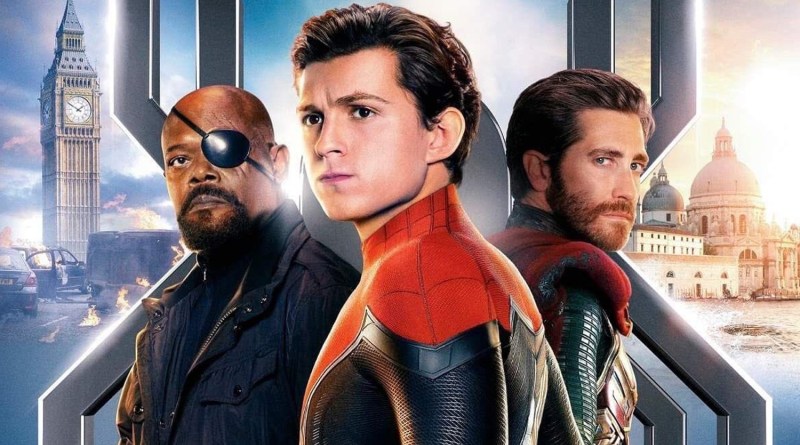
Spider-Man: Far From Home

by Hope Madden and George Wolf

Spider-Man: Far From Home has more than a webshooter up its sleeve.

One part reflection on the state of MCU, one part statement on our cartoonishly ridiculous world today, one part charming coming-of-age tale, the latest Spidey episode almost takes on more than it can carry. But return writers Chris McKenna and Erik Sommers embrace franchise strengths while betting director Jon Watts, also back from Homecoming, can maneuver slick surprises.

The wager pays off, and Far From Home winds up being a film that feels a bit campy for a while, but in retrospect succeeds precisely because of those early over-the-top moments.

Peter Parker (the immeasurably charming Tom Holland), having returned from oblivion (Infinity War), then universal salvation and personal loss (Endgame), would like a vacation. The poor kid just wants to take a trip abroad with his class and get a little closer to his crush MJ (Zendaya).

But that is not to be, is it?

Not with Nick Fury (Samuel L. Jackson) following him across the globe, or the surprise appearance of Quentin Beck aka Mysterio (Jake Gyllenhaal), a new monster-slayer from another Earthly dimension.

“You mean there really is a multi-verse?”

That’s a nice nod to the stellar animated Spidey adventure from last year, and a big clue about how self-aware this chapter is determined to be. The front and center ponderings about what Peter (and by extension, Marvel) is going to do now threaten to collapse the film from self-absorption.

To the rescue: a jarring and unexpected pivot, and that wonderfully youthful vibe that now has one eye on growing up.

Interestingly, Tony Stark fills in for the guilt-inducing father figure that’s always been missing from this iteration of Peter Parker’s tale. Without Uncle Ben, Stark becomes that hallowed hero whose shadow threatens to obliterate the fledgling Avenger.

Peter’s still a teenager, after all, and Homecoming soared from embracing that fact, and from Holland’s ability to sell it in all its wide-eyed and awkward glory.

He still does, but now our hero’s naiveté is shaken by some mighty timely lessons. Number one: “It’s easy to fool people when they’re already fooling themselves.”

Not exactly subtle, but fitting for the world of a distracted teen. And for kids of all ages, there’s no denying how cathartic it is to see world leaders, their media lapdogs and widespread buffoonery on blast and blasted across the largest screens, where good will inevitably conquer.

As fun and funny as this keep-you-guessing Eurotrip is, its core is driven by a simple search for truth. And don’t leave early, because that search doesn’t stop until Far From Home plays its second post-credits hand, and you walk out re-thinking everything you just saw.

Tangled webs, indeed.

California Dreamin’

Echo in the Canyon

by George Wolf

For a musician and a record executive, it was the look of an old movie that led them down a path toward becoming documentarians.

The movie was 1969’s Model Shop, and to Jakob Dylan (Wallflowers, son of Bob) and Andrew Slater (former president of Columbia Records), that film “looked like a Beach Boys record.”

Inspiration took root, with Echo in the Canyon standing as the sweet fruit of their efforts to research and honor the music that defined the film’s setting: L.A.’s Laurel Canyon in the late 1960s.

With Slater directing and Dylan serving as producer and on screen guide, Echo digs deep into a fertile musical catalog. Mixing interviews and performances—both new and archival—the film effectively bridges the gap between those who created the music and those who continue to be inspired by it.

And, oh, the stories are priceless.

From Tom Petty (shown in one of his final interviews) winning his copy of Pet Sounds from a radio contest, to Dylan’s influence (“You’ll have to be more specific,” Jakob deadpans), to Neil Young wanting to take on some cops (“he’s Canadian!”) the tales keep coming, nearly all of them captivating.

And, of course, so is the music.

Classics from the Byrds, Beatles, Beach Boys, Mamas and the Papas and more are explored from their beginnings, and then reborn. From the studio to the stage, Jakob and assorted guest stars (Fiona Apple, Beck, Cat Power) give the songs new coats of paint, and while this approach casts vanity project shadows on Dylan the younger, the motivations always seem properly reverential.

At 82 minutes, the film does seem like it closes the curtain a bit early, but it gets the point across. By the time Graham Nash gives a near tearful declaration that Laurel Canyon in the 60s will one day stand with Paris in the 30s as a watershed of collaborative art, you’re not apt to argue.

Ghost Writer

Yesterday

by George Wolf

Hey, baby boomers (yes, my hand is up), thanks for still buying CDs!

Now please enjoy the latest installment in your Musical Movie Memories Tour, Yesterday.

We’ve already jammed to Queen and Elton, Bruce is set for August, so how about remembering how much we love the Fab Four by envisioning a world where they never existed?

It’s a conceit so instantly charming director Danny Boyle (127 Hours, Slumdog Millionaire) passed on the project, thinking it had already been done. He was convinced otherwise and jumped on board, bringing the script from Richard Curtis (Notting Hill, Four Weddings and a Funeral, Love Actually) to life with a breezy, unabashed fandom.

Jack Malik (Himesh Patel, easy to root for) is a struggling musician in Suffolk who’s ready to give up on the dream. His longtime friend and manager Ellie (Lily James) protests, but Jack rides his bicycle off into the English night unsure of his future.

Fate intervenes with a brief worldwide blackout, which brings an accident, a hospital stay, and Jack waking up in a world without his two front teeth.

Or the Beatles.

That second one is pretty advantageous for Jack’s career, though the film is at its most likable early on, when Jack is trying to remember lyrics, getting nowhere on Google and chastising anyone who doesn’t instantly realize how life-changing “his” new songs are.

Of course, his protests only resonate because we’re still in the old world with him. It’s a credit to the simple genius of this premise that Yesterday can tell without showing and still pull us in. And surprise, it’s also a wonderfully organic way to strip down these songs we’ve heard for decades and remind us how truly great they are.

Jack’s star rises with a move to L.A, getting tutelage from Ed Sheehan (nicely self-deprecating as himself) and an apologetically shameless record label rep (perfectly slimy Kate McKinnon). It’s in America where Yesterday starts to drag a bit, wanting from the absence of spunky James and will-they-or-won’t-they rom that balances this com.

How that turns out, you can probably guess.

As for the musical fantasy, credit Curtis and Boyle for avoiding the easy cop out. Buy in and you’ll be rewarded with an entertaining take on life choices that’s fun to sing along with, occasionally slight but often downright fab.

https://www.youtube.com/watch?v=Ry9honCV3qc&t=13s