Know what you can do this week if you get super bored at your in-laws’, or if you get lonely while you’re away from home for the holidays? You can watch a butt-load of movies. Look at them all! Most of them are so-so, to be honest, but a couple are really good and a couple are better than you think.
You can’t predict what’s going on in the mind of a crazy person. Because, you know, they’re crazy. Logic and reason are not necessarily the pillars they’re using to construct their own reality. So why not just let them tell us? We don’t recommend this as an in-person exercise, but as a movie, it really works out. Here are the 5 best movies from the mind of a madman.
5. Be My Cat: A Film for Anne (2015)
Adrian is a Romanian filmmaker who likes girls and cats. He does not like dogs or boys. His favorite thing? Anne Hathaway as Cat Woman.
He was so inspired by her performance that he knew he had to make a film with her. To convince her, he’s lured three actresses to shoot a film with him. That film is really just to convince Anne, his beloved, that she should star in the real movie.
I really don’t think she will want to.
This movie works on the sheer, weird charisma of writer/director/star Adrian Tofei. He is pathetic and charming and terrifying as he documents his direction as a kind of “behind the scenes” for Anne, so she can understand how truly perfect she is for his film and he is for her artistic future. The result is unsettling, unique and wildly entertaining.
4. The Cabinet of Dr. Caligari (1920)
Director Robert Weine’s inarguable classic remains a cinematic landmark because of its look and its political storytelling. It’s a genre breakthrough for those reasons, as well as one twist that would still be a go-to for the genre nearly a century later.
The film is a story spun by a young man on a park bench. He’s visiting his sweetheart in an insane asylum, and he tells us of their woes. It’s a captivating story, one that speak to writers Carl Mayer and Hans Janowitz’s building worries over authoritarianism in Post WWI Germany, and in the hands of Weine, the imagery takes on a nightmarish aesthetic many would try to imitate.
Alas, as the film ends, we find that our narrator is, indeed, just another patient in this sanitarium and the story has simply come from his own diseased mind.
3. The Last Horror Movie (2003)
A clever concept handled very craftily, The Last Horror Movie is found footage in that we, the audience, have found it recorded over the VHS tape we are apparently watching. What serial killer Max (a top notch Kevin Howarth) has done, you see, is made a documentary of his ghastly habits and shared them with an audience that’s shown, by virtue of the movie it intended to rent just now, its predeliction for someting grisly.
There’s a lot of “yes, I’m a bad person, but aren’t you, too” posturing going on, and while it is an idea to chew on, it nearly outlives its welcome by the time Max applies his theory to concrete action. It’s an idea explored masterfully by Michael Haneke in 1997 (and again, ten years later) with Funny Games, and by comparison, The Last Horror Movie feels a bit superficial. (Not a huge criticism – few could withstand a comparison to Michael Haneke.)
But director Julian Richards deserves immense credit for subverting expectations throughout the film. Just when we assume we’re seeing a predator anticipating the pounce – just when we’re perhaps feeling eager to see someone victimized – the film makes a hard right turn. In doing this, Richards not only manages to keep the entire film feeling fresh and unpredictable, but he enlightens us to the ugliness of our own horror movie fascinations.
2. Man Bites Dog (1992)
In a bit of meta-filmmaking, Man Bites Dog is a pseudo-documentary made on a shoestring budget by struggling, young filmmakers. It is about a documentary being made on a shoestring budget by struggling, young filmmakers. The subject of the fictional documentary is the charismatic Ben – serial killer, narcissist, poet, racist, architecture enthusiast, misogynist, bird lover.
There’s more than what appears on the surface of this cynical, black comedy. The film crew starts out as dispassionate observers of Ben’s crimes. They’re just documenting, just telling the truth. No doubt this is a morally questionable practice to begin with. But they are not villains – they are serving their higher purpose: film.
The film examines social responsibility as much as it does journalistic objectivity, and what Man Bites Dog has to say about both is biting. It’s never preachy, though.
Theirs is a bitter view of their chosen industry, and – much like The Last Horror Movie – a bit of a condemnation of the viewer as well. The fact that much of the decidedly grisly content is played for laughter makes it that much more unsettling.
1. American Psycho (2000)
Director Mary Harron trimmed Bret Easton Ellis’s novel, giving it unerring focus. More importantly, the film soars due to Christian Bale’s utterly astonishing performance as narcissist, psychopath, and Huey Lewis fan Patrick Bateman.
Bateman narrates for us his strategies for keeping up the ruse of humanity for all who’s looking. He feels the pressure and believes an end to the charade is imminent.
As solid as this cast is, and top to bottom it is perfect, every performance is eclipsed by the lunatic genius of Bale’s work. Volatile, soulless, misogynistic and insane, yet somehow he also draws some empathy. It is wild, brilliant work that marked a talent preparing for big things.
It’s a good week, people! On this episode, we talk through some of the best films of 2018, including Roma, The Favourite and Spider-Man: Into the Spider-Verse, as well as The Mule, Vox Lux, Mortal Engines and a whole lot of new stuff in home entertainment.
What does a serial killer have in common with an indie filmmaker? Quite a lot, or so suggests indie filmmaker Lars von Trier.
We’ll say this with all sincerity: The House that Jack Built—a 2+ hour peek into the mind and methods of a murderer—is von Trier’s most lighthearted picture to date.
It’s also as tedious and self-indulgent as Nymphomaniac: Vol. II.
LvT’s artistry lies in his ability to make the viewer uncomfortable. His films are punishing, which is why his first foray into horror, the brilliant and wildly unnerving 2009 film Antichrist, was such a perfect fit. He returns to the genre with Jack, here allowing a sadistic murderer the opportunity to shed light on the filmmaker’s own discomforting artistry.
Which can work—Julian Richards’s The Last Horror Movie and Remy Balvaux’s Man Bites Dog both offer blistering achievements on the theme. But Jack falters, and von Trier falters, in two important ways.
The film does deliver sadistic glory, yet in terms of violence or depravity, it feels oddly safe. Not safe for all viewers, mind you, but horror fans and von Trier fans have seen far more envelope-pushing than what Jack depicts. There is one sequence—the picnic sequence—that is among the most perfect horror movie episodes ever filmed. Beyond that, much of this movie is competently made but ultimately tired.
We follow Jack (Matt Dillon, making the most of a surprising casting choice) through various instances of homicidal mania. As voiceover conversations with the mysterious Verge (Bruno Ganz) pay homage to Dante’s Divine Comedy, Jack’s bloody exploits become less darkly comedic and more brazenly sadistic, testing his claim that “the soul belongs to heaven and the body to hell.”
Just as the Nymphomaniac films traded provocative ideas for fist-shaking admonishments from filmmaker to critics, Jack devolves into an instrument wielded even less bluntly. Again, von Trier channels his tale through two voices: the protagonist and a straw man. Verge serves up the proselytizations on art and morality so Jack can knock ’em down, with snippets of von Trier’s previous films peppered in for anyone who still isn’t getting it.
Not that LvT’s ideas on this topic aren’t interesting – far from it- but the line between personal and self-indulgent is the same one that separates uncomfortable questions that resonate (as in von Trier’s own Dogville) from spoon-fed answers that do not. One side makes for an engaging film experience while the other falls short, no matter how impressive the visual set pieces (which Jack does indeed provide).
Von Trier has unapologetically wallowed in depravity his entire career, and those themes have served the narrative in amazing ways. Now he seems more interested in narratives that serve grandiose debates of his own artistic value.
Let’s hope that road has reached an end. While von Trier remains an artist worthy of attention, The House That Jack Built stands as another missed opportunity.
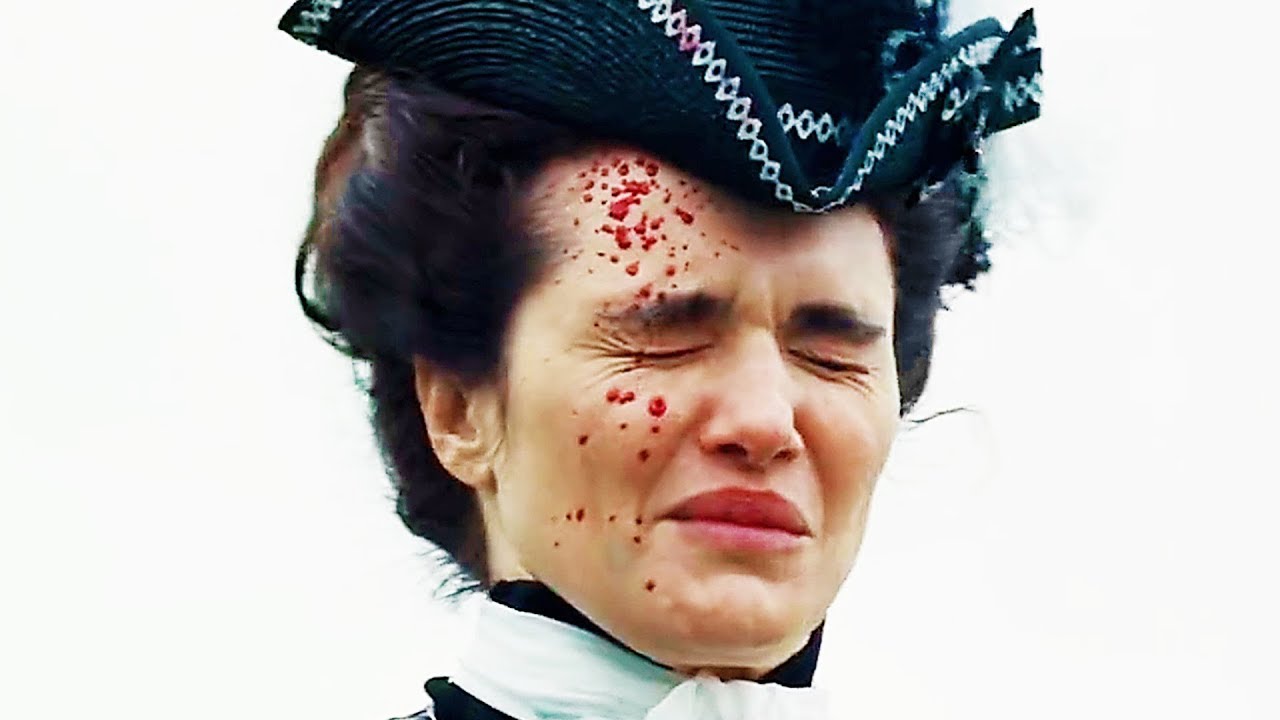
Greek auteur Yorgos Lanthimos is someone you might charitably describe as “uncompromising.” His last two English-language films include a dystopian romantic comedy and a revenge thriller rooted in Greek mythology. So it is both a delight and a relief to see in The Favourite that Lanthimos at his most accessible is also his best yet.
The story for The Favourite was originally written by Deborah Davis, later joined by Tony McNamara but with no screenplay credit for Lanthimos—a rarity. The film covers the later years of Queen Anne’s reign, during which the War of the Spanish Succession and political jockeying in Parliament are tearing the indecisive, physically frail queen in multiple directions.
But the men of the court are little more than foppish pawns. The real palace intrigue takes place between court favorite Sarah Churchill, Duchess of Marlborough (Rachel Weisz) and her new maid, Abigail Hill (Emma Stone), daughter to a once-prosperous family that has fallen on hard times. Sarah and Abigail vie for Queen Anne’s affection and behind-the-scenes power, although those two things are entangled together to varying degrees for Sarah and Abigail.
The Favourite might be dressed up as a period piece, but it’s not a demandingly historical one. Lanthimos admits to taking significant poetic license with the relationship and events between the three women. The effect isn’t just practical (although this should come as some relief if, like me, you were dreading a Wikipedia deep-dive on Whiggism).
It’s also an avenue by which Lanthimos can smuggle in his trademark eye for the very contemporary and very weird, cruel ways we treat each other. And in this area, Lanthimos has cast the perfect leading women to keep up with—and even rise above—his vision.
Stone and Weisz play off each other to perfection, with pitch black verbal volleys that threaten to turn as deadly as the war taking place beyond the mannered confines of the palace. But it’s Olivia Colman who dominates every scene, which is all the more impressive for her mercurial take on the physically deteriorating Queen Anne. Colman brings a measure of sympathy to Queen Anne that transcends what could have been played for easy mockery, and she deserves every award coming her way this year.
Lanthimos and cinematographer Robbie Ryan (American Honey, Slow West) keep the camera movement as brisk as the dialogue. The film’s frequent and disorienting use of fisheye is a recurring signature, but even the more conventional wide shots manage to combine a palatial sense of openness with Lanthimos’s signature creeping, queasy dread.
It felt strange to laugh out loud so much during a Lanthimos movie, especially with the undercurrents of violence and misanthropy that stalk The Favourite. Maybe it was the irrepressible performances from the leading women. Or maybe lines like “No one bets on whist!” are just inherently funny.
Whatever the reason, this deadly serious comedy of manners is among the director’s—and the year’s—best.
No doubt you’re hip to the talent of Natalie Portman.
But if you only know Brady Corbet as an actor (Funny Games, Melancholia, Simon Killer), or maybe don’t know him at all, get to know Corbet the visionary filmmaker.
Corbett writes and directs an astute and unusual pop ballad about celebrity—American celebrity, at that.
Vox Lux opens in 1999 as young Celeste (Raffey Cassidy, The Killing of a Sacred Deer) and her high school class are visited by a disgruntled young white male. Corbet’s camera plays with the horror of the scene as it dawns on those in the classroom as well as the audience what is about to happen.
As Celeste heals from a bullet to the spine, she and her older sister Eleanor (Stacy Martin) work through their collective grief and trauma by writing a song, which Celeste later performs at a memorial vigil.
Thanks to the astute strategy of a no-nonsense manager (Jude Law) and straightforward publicist (Jennifer Ehle), the song becomes a healing anthem and Celeste—her protective sister at her side—is launched into pop stardom.
Corbet’s chaptered “21st Century Portrait” (the proper subtitle to his film) offers infrequent omniscient narration from Willem Dafoe, a glib narrative device that’s part “Behind the Music” and part sociological commentary. Tragedy is commodity in modern America, a fact that can only mean more tragedy.
When the timeline shifts forward and Portman takes over in the lead, we see a new character fully formed from years of living that are only hinted at. Celeste is now a veteran megastar with a daughter of her own (also played by Cassidy) and strained relationships with everyone around her.
Portman’s performance is such an all-in tour de force it effectively divides the film into parts: with and without her. She commands the screen with such totality you’re afraid of what Celeste might do if you dare to shift your focus somewhere else.
Corbet knows better than to do that. With Portman as a mesmerizing guide, he crafts a fascinating fable with two uniquely American pillars – gun violence and celebrity culture. Vox Lux is shocking, funny, sad, and haunting, with plenty of visual flourish and even some new songs by Sia.
It’s a statement, and coming from a relatively unknown writer/director, a pretty audacious one.
Should we really be surprised a spider-based franchise has so many legs?
It wasn’t that many years ago when Spider-Man 2 was the conventional wisdom pick for all time best superhero flick. Then last year, Homecoming erased the memories of some disappointing installments with a tonally perfect reboot.
And now, Spidey gets back to his animation roots with Into the Spider-Verse, a holiday feast of thrills, heart, humor and style that immediately swings to the very top of the year’s animated heap.
Teenager Miles Morales (voiced by Shameik Moore from Dope and The Get Down) is juggling a lot of teen drama. He’s trying to make friends at a new school, make nice with his dad (Brian Tyree Henry), and practice graffiti art with his cool Uncle Aaron (Mahershala Ali), so he really doesn’t need to be dragged into an alternate universe with Spider-Man (Jake Johnson) right now, okay?
But, thanks to an evil plan from Kingpin (Liev Schrieber) and Doc Ock (Kathryn Hahn), that’s just what happens. And before you can say quantum theory, Miles is meeting kindred heroes from all over the Spider-Verse, including another Spider-Man (Chris Pine), Spider-Man Noir (classic Nicolas Cage), anime version Peni Parker (Kimiko Glenn) and Spider-Ham, a hilarious Looney Tunes-style crime fighting pig (John Mulaney).
Writer Phil Lord follows his winning scripts for Cloudy with a Chance of Meatballs and The Lego Movie with an even bigger bulls-eye, one that manages to honor franchise traditions as it’s letting in some fresh, hip, and often very funny air.
In the hands of directors Bob Persichetti, Peter Ramsey and Rodney Rothman, the story bursts to vibrant life. The dazzling animation gives a big soul kiss to comic books and pushes nearly every frame to its action-following limit.
This Spider-Man is filled with everything you want in a superhero flick today. There are compelling characters and engaging conflicts within a diverse climate, and a vital, clearly defined message of empowerment that stays above the type of pandering sure to bring eye-rolls from a kid’s b.s.detector.
Bunches and bunches of options for home viewing this week. Oscar hopefuls to definitely-not-Oscar-hopefuls, take your pick. But let us help you out, will you?
It’s a great week to take a break from Hollywood bombast and invest in something independent. In the podcast this week we break down Tyrel, Maria by Callas and Divide and Conquer: The Story of Roger Ailes. Plus, a few quick thoughts on the Golden Globe nominations before heading out to the lobby to sort through new releases in home entertainment.
The subtle discomforts start early in Tyrel, writer/director Sebastian Silva’s perceptive and slyly intense slice of racially tinged mumblecore, a film that benefits greatly from yet another standout turn from Jason Mitchell.
Mitchell stars as Tyler, an African-American man who is grateful to escape a houseful of in-laws by joining his friend John (Christopher Abbott) on a birthday getaway in the Catskills.
But it’s not John’s birthday. It’s John’s friend Pete’s (Caleb Landry Jones) birthday, and it isn’t long before Tyler is meeting plenty of new faces and realizing his is the only one that isn’t white.
Plus, it just happens to be the weekend of Trump’s inauguration. Perfect.
Amid heavy dialog that’s fast and free-flowing with an improvisational feel, the crowded mountain home becomes a nerve-wracking metaphor for the state of race relations. Silva, the unconventional Chilean filmmaker who mined social anxieties effectively in Nasty Baby and The Maid, continues to subvert expectations through intimate, thoughtful characterizations.
After a long stream of memorable supporting roles (Straight Outta Compton, Mudbound, Detroit, Kong: Skull Island), Mitchell carries this film with a performance that is sympathetic from the start, a key factor Silva leans on to turn our insecurities against us. With each slight, appropriation and assurance that “he didn’t mean anything by that,” Tyler’s feelings become more conflicted, raising the level of concern we have for what might happen.
As is his wont, Silva steers clear of expected plot turns and veers in surprising directions, one of them concerning a friendly Catskills neighbor down the road (Ann Dowd).
Though it’s understandably easy to compare this film to Get Out (especially with Jones in the cast), that comparison itself may be one of the scabs Silva is picking. Why did Jordan Peele’s horror story resonate so brilliantly?
With a focus on casual affronts to identity and the privileged confidence that everything is fine, Tyrel‘s Catskills weekend offers some clues.