Tag Archives: movie reviews

Punk History

Desolation Center

by Rachel Willis

Director Stuart Swezey has a personal interest in telling the story of Desolation Center and the five truly unique events they coordinated in the mid-1980s. As one of the primary figures involved in the organization of these events, he has a lot of information on the subject.

And we’re lucky that Swezey decided to delve into his catalog of archival footage because there is a lot of amazing material presented in his documentary, Desolation Center. Through primary source material, interviews with the musicians and artists who performed, and event attendees, the documentary is an engaging historical look at a definitive moment in punk music history.

A brief history of the Los Angeles punk scene in the 1980s opens the film. The police department in Los Angeles was quick to break up punk shows, storming into venues and raiding the scene, interrupting shows and arresting concert goers. It was this perpetual harassment that led Swezey to the idea that they hold a show in the desert.

From the archival material, you get a sense of the intimacy of the first show. There are fewer than one hundred people in attendance, but a truly unique and awesome experience is conveyed through the existing video. From footage of the ragtag group of punk fans traveling on buses to the desert concert (which featured Minutemen and Savage Republic), the audience gets a glimpse at how monumental this was for the people who attended, performed, and organized the event.

The best part of Desolation Center is the archival photos and videos from the shows. Though the first show is small, word of mouth spreads, and the second desert show is bigger as evidenced by the footage from the second event. The second show’s line up included Berlin’s industrial band, Einstrüzende Neubauten and performing artist Mark Pauline, whose shows were astonishing if not entirely safe (at one point he attempts to blow a boulder from the side of a mountain during the show, but thankfully for those in attendance, it’s an unsuccessful endeavor).

Footage from the next three shows – which take place on a boat, back in the desert, and in a warehouse, and include bands like Sonic Youth and Meat Puppets – help the audience understand the experience. The shows are extraordinary events, and while watching the documentary, one feels lucky to be given the chance to see the astounding performances.

The interviews, at times, help the audience understand what it felt like to be a part of Desolation Center. Other times, they overinflate the experience. Swezey’s best course of action would have been to let the footage speak for itself, but his choice to include so many interviews may have been due to the film disintegrating over the years – some of the vintage film has clearly seen better days.

However, Desolation Center is a fascinating documentary and a great addition to the illustrious – and infamous – history of punk rock.

Snitches Get Stitches

Low Tide

by George Wolf

If you’ve been waiting for the perfect time to pitch your idea of re-making The Town as a coming of age drama, too late.

Writer/director Kevin McMullin beat ya to it with his first feature Low Tide, a nifty debut that leans on plenty of heist tropes cleverly downsized for teenage conspirators.

Alan (Keean Johnson) and Peter (IT‘s Jaeden Martell) are New Jersey brothers with roots in the fishing district. Mom has passed on so while Dad’s away working a boat, Alan breaks into houses with his goofy friend Smitty (Daniel Zolghadri from Eighth Grade) and scary pal Red (Alex Neustaedter).

The gang ropes young Peter in for his first job as lookout, but somebody snitched. Sergeant Kent (the always reliable Shea Wigham) gives chase just as they’re leaving the latest B&E, and not everyone gets away.

Not everyone knows about the very valuable score some of the boys found in that house, either, which leads to plenty of suspicion among thieves.

Plus, one honest to goodness buried treasure.

McMullin blends his genres well, creating an ambiguous time stamp that can resonate with various demographics, and indulging in some noir fun without collapsing into full Bugsy Malone territory.

We’ve been watching the talented Martell grow up since his St.Vincent breakout five years ago, and his thoughtful turn as the smart, cautious Peter shows his transition into adult roles should be a smooth one. The kid’s just a natural.

And it’s not just Martell. There’s not a weak link in this ensemble, giving McMullin plenty of room to pursue his vision with inspired confidence.

If you’ve seen even a few heist dramas, the only things that may surprise you are the age of these bandits and how little you fault the film for its familiarity.

Attempting to define the moment when a young life chooses the path it will follow is not exactly a new idea. By wrapping his teen characters in recognizably adult archetypes, McMullin keeps the drama just a hair off-kilter, rewarding our continued investment.

As Sergeant Kent tells one of the boys, “This is your origin story. You gonna be the good guy, or the bad guy?”

Low Tide makes it fun finding out.

Posse of One

Wrinkles the Clown

by Hope Madden

It’s fun to scare kids.

Oh, wait, is that illegal?

Documentarian Michael Beach Nichols (Welcome to Leith) looks at just about every side of that unusual argument with his sly documentary Wrinkles the Clown.

Ostensibly, Beach Nichols digs into the story of the man behind Wrinkles, a shady older gentleman living in a van in Fort Myers who failed as a traditional clown, so he improvised. Placing stickers around town with his masked face, clown name and phone number, Wrinkles offered to frighten your misbehaving children for a fee.

Yes, it is sort of genius.

As we ride around the beach town for the aged in a lived-in conversion van, we’re privy to the voice mails recorded at the Wrinkles number. Reprobate that he seems to be, Wrinkles is still considerably less frightening than the parents hoping to take advantage of his behavioral services.

Says one father, his child wailing in the background, “I want you to eat her.”

Wrinkles’s response? “My favorite kind of scares are the ones that pay the most.”

This kind of dry, deadpan humor fuels a film that explores the most peculiar sociological experiment.

Who would call? How will their children react? Why are clowns so effing scary in the first place? A solid documentarian, Beach Nichols understands that these are the deeper questions to be addressed. Admittedly, continually flashing the image of a grampa-faced clown holding balloons and peeking into your sliding glass door late at night is his excellent way to keep your interest as he digs into these concerns.

We hear from folklorists (with still-packaged action figures mounted to their office walls, so  you know they’re legit), child psychologists, pro-Wrinkles parents, anti-Wrinkles parents and one traditional clown.

Poor Funky. “There’s a whole generation growing up with no positive image of a clown whatsoever,” he laments, happy face in place.

It’s a fascinating look at the function clowns have served since their medieval beginnings, as well as the internet’s way of amplifying folk tales.

And while Beach Nichols, like the great showmen, performs his own sleight of hand, the film itself is more interested in the primal, collective unconscious tapped by those Wrinkles wrinkles.

The Shapes of Water

Aquarela

by George Wolf

“We swam out through the trunk!”

Those are six of the very few spoken words in Aquarela, and they quickly establish the stakes in Victor Kossakovsky’s immersive documentary. His aim is to get you startlingly close to the world war between man and water.

There is power, there is beauty, there is death. And there’s some death metal, which isn’t as out of place as you might think.

In case you haven’t noticed, this is a great time to be a documentarian, and thus, a fan of documentaries. This year alone, we’ve seen technological breakthroughs make possible the wonders of Apollo 11, They Shall Not Grow Old and Amazing Grace.

Like those, Aquarela (“watercolor” in Portuguese) employs cutting-edge wizardry for an experience that begs for the biggest screen you can find.

Monstrous ocean waves build and crash, huge chunks of ice fall prey to rising global temperatures, and a hypnotic narrative emerges. Mankind has battled the shapes of water for centuries, in hopes of lessening its dangers and harnessing its power, and Kossakovsky feels it’s time to hear from the other side. The few humans who speak feel like party crashers.

Don’t expect explanations, you won’t get any. What you will get in Aquarela is an utterly astounding profile of a living, breathing, dying force of nature.

Born in a Trunk

Judy

by George Wolf

Call it a comeback, a re-introduction or a friendly reminder, but Renee Zellweger’s channeling of Judy Garland is an awards-worthy revelation.

Since winning an Oscar for Cold Mountain over fifteen years ago, Zellweger’s resume has been scattershot and curious enough to make seeing her name on top of the marquee a rather nostalgic blast from the past.

But here, she’s just a blast, bringing a can’t-look-away magnetism to every moment she’s on screen, and leaving a noticeable absence when she’s not.

Based on Peter Quilter’s stage play The End of the Rainbow, Judy shows us a legend struggling to get work and fighting to retain custody of her children. By the late 1960s, daughter Liza was off starting a career of her own, but Judy’s two young kids with producer Sid Luft needed a stable home that Garland could not provide.

Accepting a lucrative offer for a string of concerts in London, Judy leaves her son and daughter with their father in hopes that the British engagement will give her the resources needed to take them back full-time.

Focusing on this late, sad period in Garland’s life is a wise move by director Rupert Goold (True Story) and screenwriter Tom Edge (The Crown). A limited scope can usually provide biopics with a better chance for intimacy, and true to form, Judy’s false notes arrive with the flashbacks to Garland’s days as a child star.

Showcasing her mistreatment as a young cog in the MGM studio system is well-intentioned but unnecessary, the blunt forcefulness of this thread adding little more than jarring interruption.

Zellweger is all we need to feel the tragedy of Garland’s fall. Her portrayal comes fully formed, as both remarkable outward impersonation and a nuanced glimpse into a troubled soul. Nary a movement seems taken for granted by Zellweger, and her delivery of Edge’s memorable dialog is lush with an organic spontaneity.

And though she barely sang publicly before her training for Chicago, Zellweger again shows impressive vocal talent. Of course she can’t match the full richness of the real Judy (who could?), but Zellweger’s style and phrasing are on-point bullseyes, never shrinking from Goold’s extended takes and frequent closeups during some wonderfully vintage musical numbers.

In one of the film’s best moments, Judy joins two male superfans (Andy Nyman, Daniel Cerqueira) for a late night dinner at their apartment. I won’t spoil what happens, but have some tissues handy. It’s a beautifully subtle and truly touching ode to Garland’s status as an early gay icon, and to the universal pain of loneliness.

Ironically, this brilliant performance should bring Zellweger the second act that Judy didn’t live long enough to enjoy. I’m guessing she’ll appreciate it, and I know she’s earned it.

Living Out Loud

Raise Hell: The Life & Times of Molly Ivins

by George Wolf

Even if you know nothing of Molly Ivins, you won’t be long into Raise Hell before you’re wondering: WWMID?

After a lifetime of speaking truth to power was ended by cancer in 2007, what would Ivins do – or more pointedly, what would she say – about the cesspool of blatant corruption that is American politics in 2019?

And as entertaining as Janice Engel’s documentary is, its biggest takeaway is just how badly Ivins is missed in a profession now facing unprecedented threat.

Engel is clearly a fan, but her portrait of Ivins as one of a kind is hard to rebut. A six-foot-tall Texas native who could out-drink the Bubbas while she skewered their elected reps, Ivins blazed a gender trail through newsrooms across the country.

Ivins even covered Elvis’s obit and funeral for the New York Times before settling in as a Pulitzer-nominated political columnist and author, the role that brought her legions of what one longtime colleague called “not readers…constituents.”

Her writing was smart, informed, and extremely opinionated, laced with acerbic wit, a passion for civil liberties and an undeniable voice. And Engel, as director and co-writer, makes sure you realize how unnervingly prescient it was, as well.

Of course, all this also brought Ivins plenty of haters, and though Engel isn’t preaching to that choir, she doesn’t completely shy away from the personal demons that dogged Ivins throughout her life.

Like its subject, the film is fast-paced, smart, fun and funny, as Engel deftly uses Ivins’s timeline as a microcosm of shifting political landscapes. But more importantly, Raise Hell is a fitting tribute to a woman who wasn’t afraid to, and an urgent call to follow her lead.

Head Space

Ad Astra

by George Wolf

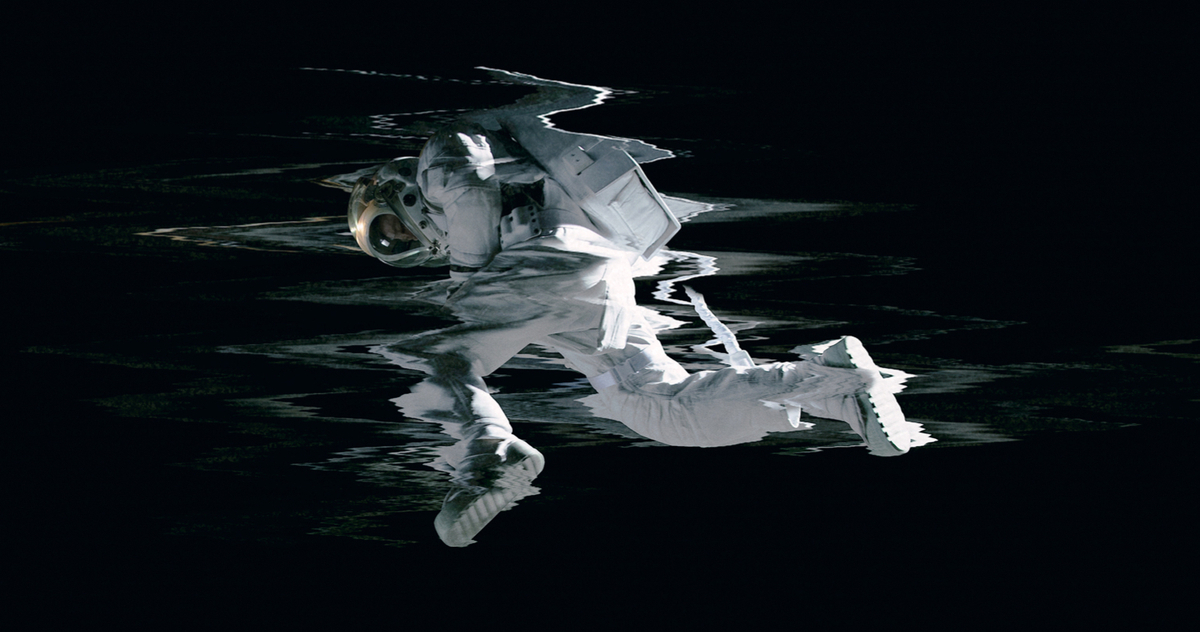
In a near future world full of wondrous space travel, the presence of t-shirt vendors and war zones on the moon provides apt bookends for the struggle to balance both hope and conflict.

The continued search for intelligent alien life keeps mankind gazing “to the stars” (Ad Astra in Latin), but that search has hit a dangerous snag.

Strange electrical surges are amassing casualties all over the globe, and a top secret briefing blames the Lima Project, a deep space probe led by hero astronaut Clifford McBride (Tommy Lee Jones) that hasn’t been heard from in years.

McBride’s son Roy (Brad Pitt) is a decorated astronaut himself, so who better to task with finding out just what happened to dad and his crew?

Daddy issues in zero gravity? There’s that, but there’s plenty more, as a never-better Pitt and bold strokes from writer/director James Gray deliver an emotional and often breathless spectacle of sound and vision.

The film’s mainly meditative nature is punctured by bursts of suspense, excitement and even outright terror. Gray (The Lost City of Z, We Own the Night) commands a complete mastery of tone and teams with acclaimed cinematographer Hoyte Van Hoytema (Dunkirk, Interstellar, Let the Right One In) for immersive, IMAX-worthy visuals that astound with subtlety, never seeming overly showy.

And speaking of subtle, Pitt is a marvel of piercing restraint. Flashback sketches of an estranged wife (Liv Tyler, effective without dialog) and reflective voiceovers help layer Roy as a man lauded for his lack of emotion, but lost in a space devoid of true connection. Though the role is anchored in common masculine themes, Pitt’s take never succumbs to self pity. A new tux for award season would be wise.

We’ve seen plenty of these elements before, from Kubrick to Coppola and beyond, but it is precisely in the beyond that Ad Astra makes its own way. It’s a head trip, and a helluva rocket ride.

The Glitter and the Gold

Downton Abbey

by Christie Robb

Like a proper English tea, the Downton Abbey movie delivers a little bit of everything with a light, elegant—sometimes even whimsical—touch.

A royal visit to the titular estate in 1927 provides the inciting incident that reunites fans of the popular TV series with the Crawley family and their domestic staff. The film starts with a lengthy show recap (for those who haven’t anticipated the film by binge-watching all six seasons). It then squeezes at least half a season’s worth of drama into a two-hour runtime.

No spoilers here, but expect familiar Downton themes delivered in unexpected ways: violence, illness, romance, jealousy, snobbery, inheritance issues, reputation anxiety, surprise Crawley cousins, and buffoonery provided by a certain sad-sack ex-valet.   

Unlike the excellent series finale that neatly wrapped up every character’s storyline, the film does not focus equally on all the main characters. Director Michael Engler returns from the TV version, and the film reads more as a continuation of the story than an extended epilogue, much like an extra-long Christmas special without the holiday bit.

Still, the Downton movie’s production values are a tad higher, providing extended drone shots of the impressive house and grounds. There are more sets, showing us previously unseen rooms inside the Abbey, a bit more of the village, and a neighboring, even fancier abode that hosts a ball.

The ensemble cast slips effortlessly back into their former roles, highlighted by the Dowager Countess (Maggie Smith) and Isobel Merton (née Crawley, Penelope Wilton) and their delicious repartee full of sniping and droll bon mots. 

This is definitely a film made for fans of the show, as a newbie would probably be completely lost even with the recap. But for those who spent 2011-2016 devouring the show like a warm scone fresh out of the oven, the movie is a delightfully unnecessary, but very welcome, treat.

Screening Room: Hustlers, Brittany Runs a Marathon, Tigers Are Not Afraid, Haunt, Depraved