Tag Archives: movie reviews

Pokémon? No.

Nekrotronic  

by Christie Robb

It’s a truth universally acknowledged that a cute accent will make even the silliest sentiment 20 percent more charming. So, it’s fortunate that the dialogue in Kiah Roache-Turner’s action/comedy/horror is mostly delivered in appealing Australian accents. Otherwise it’s a bit of a mess.

A take on cell phone addiction, Nekrotronic asks the question, “What if demons got online and created a knock-off of Pokémon Go to steal our souls?”

Thankfully, Howard, a sanitation engineer/orphan, discovers he’s the descendant of generations of necromancers (nekromancers?) with demon-fighting superpowers, now upgraded with what look like coaxial cable ports in the backs of their heads. Years ago, his necromancer parents split up when mom, Finnegan, was turned to the dark side. Howard’s dad hid him with muggles before being murdered by his ex.

Ben O’Toole delivers a decent performance in Howard. He’s equally able to pull off his silly X-Men-style superhero suit and deliver the occasional bit of banter that reminds us that the movie is supposed to be part comedy. His chemistry with his tragically underused sidekick Rangi (Epine Bob Savea) is probably the best part of the film. Too bad it’s mostly in the first 18 minutes.

After the initial setup, Nekrotronic often seems to forget the comedic slant and leans heavily into the action. The special effects and fight sequences are acceptable. But there are no stakes. What is Finnegan going to do with the power of the souls she devours through the cell phone game? Use the power to get more souls. Why? To what purpose? Unclear. What does Howard stand to lose? Little. He already seems to hate his foster family and his job. He’s not invested in random strangers. His BF Rangi might take a hit, but Howard’s powers can sorta mitigate that.

The movie mashes up Matrix, Tron and Ghostbusters and sets it to a half-hearted attempt at a Tarantino soundtrack. But there’s no focus or originality in the result.

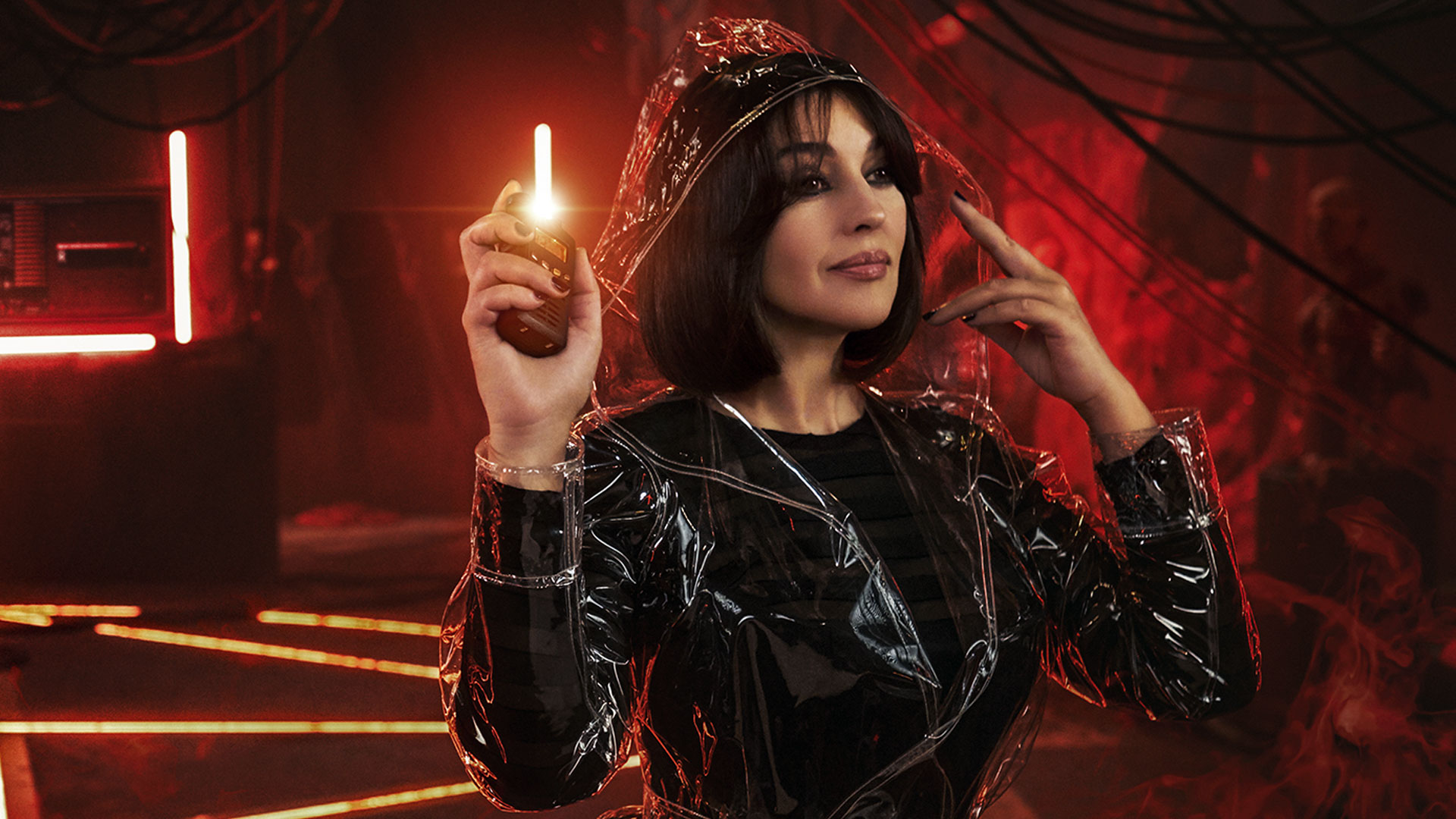
The weakest part of the movie is probably Monica Bellucci’s Finnegan. Possessing a gorgeous Italian accent, her delivery proves the exception to the accent-makes-it-better maxim. She struggles to enunciate the juvenile, expletive-laden dialogue that comes much more naturally from the other characters. It feels like when your manager researches slang on Urban Dictionary and pulls the results out in the conference room to seem relevant. It’s cringy and off-putting.

In the end, Nekrotronic delivers a little bit of everything, but it not enough of the right things.

She Is the Warrior

The Warrior Queen of Jhansi

by Hope Madden

My genuine thanks to first time writer/director Swati Bhise for bringing to my attention the Indian freedom fighter and queen, Rani Lakshmibai. The woman was an absolute badass.

Lakshmibai (Devika Bhise, Swati’s daughter) reigned over the Indian state of Jhansi during the mid 1850s, a time of British rule. In 1857, she took part in a rebellion aimed at freedom from the colonial oppressors.

When I say took part, I mean she wielded swords on horseback, united an otherwise divided smattering of armies and generally kicked all manner of ass.

She was most impressive.

She deserved a better movie.

Bhise’s approach to this wildly untraditional tale is far too traditional, too restrained, and too afraid to dig into any of the characters, including the lead. More cripplingly, the film is basically a chamber piece until the third act.

That could work if what we saw was the backbiting and usurping that may have gone on behind closed doors—British or Indian—as a woman took charge. Or if it was strategy and brainstorming that we observed, or if stirring speeches bore witness to the ruler’s inner conflict and motivational charisma.

Instead we get a blandly sanitized soap opera, the warrior queen discussing hair care with her female soldiers as frequently as military tactics. Throughout, Bhise’s direction feels amateurish, every scene stagnating as it drowns in costumes and unconvincing sets.

Dialog fills in for character development, but we also see a lot of the queen sitting silently and thinking. The Warrior Queen of Jhansi depicts lot of pondering, a lot of costumes, very little action.

“I am no stranger to battle,” Rani Lakshmibai tells whoever might listen, but it’s news to us because we haven’t seen her do anything besides think, talk and change her clothes. Worse still is the single scene of battle practice, where she readies her female forces, not one of whom can convincingly handle a sword.

The British side of things fares little better, although a smug Rupert Everett  as Sir Hugh Rose and Nathaniel Parker as blowhard Sir Robert Hamilton do inject some life into the proceedings. Everett is the only actor in the entire cast asked to find multiple layers in his character. It’s just two layers, really, but they are a welcome change.

It is a magnificent feat, no doubt, that the story of a 1850s Indian warrior queen has made its way to the American big screen (there are two Indian films, one classic and a second released this year). I wish it was a better movie.

House Painting

The Irishman

by Hope Madden and George Wolf

In 1973, Martin Scorsese gave us Mean Streets, the tale of a fledgeling gangster contemplating the rungs that could lead him to the top of the NYC mafia. The film takes the point of view of the young man looking forward, and it boasts a supernaturally brilliant performance by Robert De Niro, then 30-years-old.

Scorsese’s latest, The Irishman, looks at a gangster’s rise through those same ranks, this time with the eyes of an old man looking back on his life. In another performance that will remind you of his prowess, a 76-year-old De Niro stars.

The 3 ½ hour running time opens patiently enough as Rodrigo Prieto’s camera winds its way through the halls of a nursing home, establishing a pattern. We will be meandering likewise through the life and memories of Frank Sheeran (De Niro), house painter.

“When I was young,” says Sheeran, “I thought house painters painted houses.”

Sheeran’s telling us his tale in much the way the actual Frank Sheeran told writer Charles Brandt (author of Scorsese’s source material) what may or may not have been the truth about his history as a mob hitman (it’s not paint he’s splashing across walls) and his relationship with Jimmy Hoffa (Al Pacino).

Teamed with acclaimed screenwriter Steven Zaillian (Schindler’s List, Moneyball, Gangs of New York), Scorsese’s sly delivery suggests that he’s interested in what might have happened to Hoffa, sure, but he’s more intrigued by memory, regret and revisionism in the cold glare of time. The result is sometimes surprisingly funny, with a wistful, lived-in humor that more than suits the film’s greying perspective.

De Niro’s longtime partnership with Scorsese makes it even easier to view Sheeran as an extension of the director himself, taking stock of his legacy in film.

The decades-spanning narrative could have easily made for a riveting Netflix series instead of one three and a half hour feature, but as the first act blends into the second, the film has you. The grip is subtle but it is more than firm, the epic storytelling and nuanced performances combining for an absorbing experience that takes your mind off the clock.

And what a joy to watch three powerhouses in the ring together.

Joe Pesci, playing against type as Russell Bufalino, the quiet mafia boss who mentors Sheeran, is as good as he’s ever been. Pacino fills Hoffa with an electric mix of dangerous bravado, unapologetic corruption and dogged sincerity. And De Niro, like that aging fighter reclaiming his title, gives The Irishman its deep, introspective soul.

And while the trio of legends is commanding the screen, Scorsese uses a small supporting role to remind us he can still speak softly and hit hard.

As Peggy Sheeran, the elder daughter who has watched her father evolve into the man he is, Anna Paquin is piercing, and almost entirely silent. When Peggy finally speaks, she asks her father a direct question that carries the weight of a lifetime behind it, and serves as the perfect conduit to drive the film to its aching conclusion.

Away from the chatter of Scorsese’s views on superhero movies or the proper role of Netflix, The Irishman stands as a testament to cinematic storytelling, and to how much power four old warhorses can still harness.

Redacted

The Report

by Hope Madden

Admit it. Own up to it. Hold yourself accountable. Then our country can move on.

Oh right, also, I saw The Report this week.

For his clear-eyed reminder of what post 9/11 America was like, writer/director Scott Z. Burns takes a page from Adam McKay’s book of outrage, leaving both tongue and cheek behind.

Daniel Jones (Adam Driver, who is having one hell of a year) is a Senate staffer working for Dianne Feinstein (Annette Bening, eerily good). He’s been tasked with investigating the CIA’s post 9/11 “enhanced interrogation” tactics.

Among the heads of the CIA are Thomas Eastman (Michael C. Hall) and John Brennan (Ted Levine).

That Burns cast two actors known best for playing serial killers as CIA leaders is slyly hilarious and indicative of the contempt the filmmaker has for those responsible for this shameful page in US history.

The Report brims with rage, justifiably so, but Burns never stoops to melodrama, rarely even preaches. Much of his ire is delivered via Driver’s sullen stare. Driver is characteristically amazing. Though his performance is largely internal, it spills over with the ache and anger of a citizen who loves his country and cannot believe what he sees happening.

The entire cast—and it’s a big one—impresses, from bewildered CIA staff to opportunists looking to cash in, from battered inmates to White House Chief of Staff. With limited screen time, each performer establishes a character, not a cardboard villain or hero, and the contribution elevates the entire film.

Burns’s script stumbles periodically over exposition, but given the sheer volume of information he covers, it’s a fault that’s easy to forgive. Somehow he manages to contain in just under two hours what Daniels himself couldn’t fit inside 7000 pages.

Importantly, though the film does look to enlighten us on the corruption, greed and fearmongering that led the US to such sadistic measures, Burns wisely leans more heavily on a larger theme of admission and oversight as the only steps toward regaining self-respect and the respect of the world.

Timely.

I Don’t Want to Go Out – Week of November 11

Tons of movies to fill your “I forgot how cold and crappy fall could be” hours. Some of these movies are great. Some of them are crap. We are here to help you tell the difference.

Click the film title to link to the full review.

The Farewell

Midnight Traveler

The Peanut Butter Falcon

Good Boys

47 Meters Down: Uncaged

https://www.youtube.com/watch?v=AvXjx8SZbv8

Brian Banks

Primal

After the Wedding

Flightless Bird

Bluebird in My Heart

by Brandon Thomas

“There’s a bluebird in my heart that wants to get out, but I’m too tough for him. I say, stay in there, I’m not going to let anybody see you.”

As I often do before starting to write a review, I went to Google and typed in the title of the movie. I’m typically looking for behind the scenes info about the film at hand, but this time something different stood out: the above opening to Charles Bukowski’s poem Bluebird

The connection between A Bluebird in My Heart and Bukowski’s poem is tenuous. One might be inclined to link the hard drinking, womaning poet with the film’s protagonist. 

That would be giving it more thought than the filmmakers did.

Danny (A Hijacking’s Roland Moeller) has recently been paroled from prison. A chance meeting affords Danny the opportunity to live in a small hotel in exchange for some carpentry work. Danny strikes up a somewhat reluctant friendship with Clara (Lola Le Lann), the hotel manager’s daughter. When a savage act of violence is carried out on his new friend, Danny is torn between enacting revenge or keeping his head down as a new parolee. 

A Bluebird in My Heart is the kind of basic revenge story that we’ve seen dozens of times before. Basic can be good when offering up memorable performances or a few plot twists and turns. Bluebird has none of that. This is a film that’s set on checking off all of the standard boxes that come with a revenge plot.

First time director Jeremie Guez struggles to make Danny and Clara’s relationship the heart of the film. The problem is that we’re never truly allowed to get to know these two people. Danny is defined by his past incarceration, while Clara’s story is characterized by a father who is currently behind bars. Their characters, and their relationship, is entirely superficial.

This pointed focus on Danny leaves the villains largely faceless. After whiffing the relationship between Danny and Clara, some outstanding villains might have freshened things up a bit. That doesn’t happen. What we get are the typical indistinguishable bad guys in black leather coats and sloppily shaved heads. These guys barely register as a threat.

Cinematographer Dimitri Karakatsanis does at least manage to make the film look outstanding. The urban setting forgoes the typical colorless drab and instead takes full advantage of early morning and evening light. Even the inside of the cheap hotel is bathed in shadow and warm blue light. The entire film has an inviting visual appeal.

Despite having some outstanding visuals, A Bluebird in My Heart still only offers a rehash of many of the same tired revenge flicks from the last decade.


Bombs Away

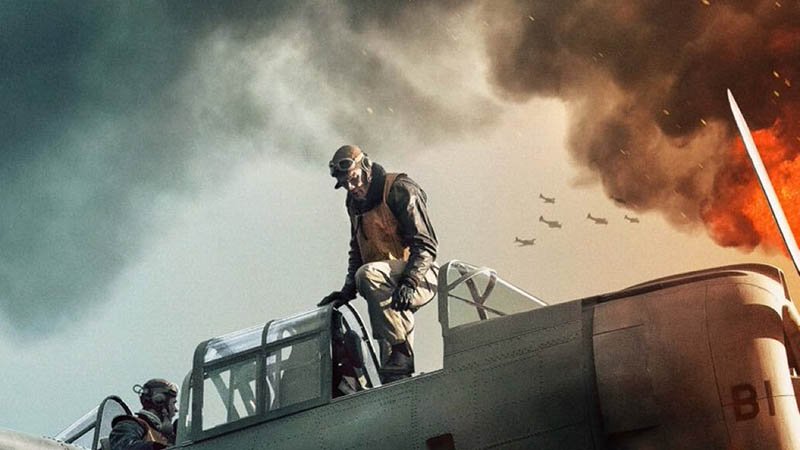
Midway

by George Wolf

After Independence Day, 2012, The Day After Tomorrow and more, the book on Roland Emmerich is fairly easy to read: expect spectacle over storytelling.

Midway is Emmerich’s latest, and that checks out.

A grand production respectfully dedicated to the American and Japanese forces that fought the legendary battle, the film does have heart in all the right places. But too often, it feels more inspired by war movies than the real thing.

Patrick Wilson is Edwin Layton, whose description as “the best intelligence officer I’ve ever known” gives us an early introduction into screenwriter Wes Tooke’s plan for character development.

“I told you she was a firecracker!”

“He’s the most brilliant man I know.”

“Best pilot in the world!”

“Knock off the cowboy b.s.!”

Layton still feels guilty about the intelligence failures of Pearl Harbor, and he pleads with Admiral Nimitz (Woody Harrelson) to trust his prediction of an upcoming Japanese invasion of Midway Island.

Names such as Nimitz and Halsey (Dennis Quaid) may be the only ones familiar to non history buffs, but no matter, none of the characters feel real anyway. They’re just humans who pose nicely while spouting the dialog of actors explaining things to an audience.

So much for the storytelling, now for the spectacle.

It’s pretty damn thrilling.

When the battles are raging, especially in the air, Midway soars. Constructed with precision and clarity, these extended set pieces allow Emmerich to indulge his showy instincts for maximum payoff.

Director John Ford famously filmed on Midway Island while the battle took shape. Emmerich and Tooke don’t ignore that fact, a not so subtle reminder that this is their movie about war, and they’re going big!

And about half the time, that’s not a bad thing.

When it needs to be big, this film is huge, detailed and epic. But when it needs to be small, and make this history breathe again through intimate authenticity of the souls that lived and died in it, Midway just can’t stop flexing.

The Spirit of Giving

Last Christmas

by Cat McAlpine

Last Christmas, Kate (Emilia Clarke) had a lifesaving operation. Instead of gaining a new lease on life, she seems to have stumbled onward with a bad attitude and very little hope.

This Christmas, she works days at a Christmas shop in Covent Garden run by “Santa” (Michelle Yeoh, wonderful).  She spends her nights lurking at bars and begging friends to let her crash on their couches. In between, Kate rushes to West End auditions with little to no preparation.

She’s a grumpy, miserable elf.

Last Christmas is, first a foremost, a Christmas romcom. There’s baggage that comes with that specific niche, and in a desperate effort to buck the norm, a truly awful and predictable plot emerges.

When Last Christmas isn’t trying to be a Christmas romcom, it shines. The script penned by Oscar-winning writer Emma Thompson (who also plays Kate’s mother) and Bryony Kimmings (story by Thompson and Greg Wise) has witty and heartfelt dialogue, developed characters, and b-plots that flesh out the main story rather than distract from it.

The film’s best moments come when it explores the relationships between women, the power of embracing your heritage, and the scariest parts about being a family.

Even some of the most melodramatic moments are made gut-wrenching by Clarke’s honest and genuine performance. “They took a part of me and they threw it away.” She cries, and you feel it.

If this film had been written as a family drama or a late-in-life coming of age, it would be a strong seasonal flick. Director Paul Feig (Bridesmaids, The Heat, Spy) has shown time and time again that he can do female comedy, and do it well, but the expectations and trappings of this specific and outdated genre hold him back.

In the end, if you enjoy a good romcom, Last Christmas soars far above any of its recent direct-to-Netflix counterparts. If you already roll your eyes when men work hard to convince messy women that they are, in fact, worthy of love – this one’s not for you.

What’s Up, Doc?

Doctor Sleep

by Hope Madden and George Wolf

The Shining was always going to be a hard act to follow, even for Stephen King.

But as soon as King revisited the horror with Doctor Sleep, the bigger challenge instantly fell to whomever was tasked with bringing it to the screen.

That would be writer/director Mike Flanagan, who’s trying on two pairs of pretty big shoes. His vision will not only be judged next to one of the most iconic horror films of all time, but also by the source author who famously doesn’t like that film.

While Doctor Sleep does often feel as if Flanagan is trying to serve two (or more) masters, it ultimately finds enough common ground to become an effective, if only mildly frightening return trip.

After surviving the attempted redrum, adult Dan Torrence (Ewan McGregor) is struggling to stay clean and sober. He’s quietly earning his chips, and is even enjoying a long distance “shine” relationship with the teenaged Abra (Kyliegh Curran).

But Abra and her unusually advanced gifts have also attracted the attention of Rose the Hat (Rebecca Ferguson, sweetly menacing) and her cult of undead travelers. Similarly gifted, Rose and her band seek out young shiners, feeding on their powers to remain immortal.

Flanagan breaks the spooky spell to dive into terror in a truly unnerving sequence between Ferguson’s gang and a shiny little baseball player (Jacob Tremblay). Effectively gritty and hard to shake, it is the one moment the film fully embraces its horror lineage.

Reportedly, Flanagan had to convince King that it is Kubrick’s version of The Shining that reigns in popular culture (as it should), and that their new film should reflect that. Smart move, as is the choice to hit you early with lookalike actors in those famous roles from 1980.

Is it jarring seeing new faces as young Danny, Wendy, Dick Halloran and more? Yes it is, but as the film unfolds you see Flanagan had little choice but to go that route, and better to get comfy with it by the time Dan is back among the ghosts of the Overlook hotel.

King has made it clear he needed more emotional connection to his characters than Kubrick’s film provided. McGregor helps bridge that gap, finding a childlike quality beneath the ugly, protective layers that have kept Danny Torrence from dealing with a horrific past.

Flanagan (Oculus, Hush, Before I Wake, Gerald’s Game) stumbles most when he relies on awkward (and in some cases, needless) exposition to clarify and articulate answers. Kubrick was stingy in that regard, which was one of The Shining‘s great strengths. Questions are scary, answers seldom are.

Whatever the film’s setbacks and faults, it is good fun getting back to the Overlook and catching the many Shining callbacks (including a cameo from Danny Lloyd, the original Danny Torrence). Flanagan’s vision does suffer by comparison, but how could it not? Give him credit for ignoring that fact and diving in, leaving no question that he’s as eager to see what’s around each corner as we are.

Doctor Sleep can’t match the claustrophobic nature or the vision of cold, creeping dread Kubrick developed. This film often tries too hard to please—not a phrase you’d associate with the 1980 film. The result is a movie that never seems to truly find its own voice.

It’s no masterpiece, but check in and you’ll find a satisfying, generally spooky time.