Tag Archives: movie reviews

Hereditary

Inheritance

by Cat McAlpine

Lauren learns of her father’s untimely death from an aggressive reporter shoving a microphone in her face. There isn’t a lot of room for privacy when you’re a part of the Monroe family. Lauren is Manhattan’s District Attorney. Her brother, William, is running for congressional reelection. The Monroes are in the news and in the spotlight.

Unfortunately, the harsher the light, the darker the shadows. When her father’s will saddles her with a cruel inheritance and a bunker full of secrets, Lauren has to explore what she’s willing to do for the family name.

Simon Pegg has above and beyond the best performance here as the villainous Morgan Warner. It’s not just his excellent dialect work (as always) that helps him disappear into the role, but his commitment creating a full, if not deranged, character. The film’s weak script and loose plot points fail to support his choices, and often leave him out to dry, making Pegg cartoonish when he’s meant to be menacing.

Lily Collins falters as Lauren because she has so little to build on. The family dynamic itself is vague and cold. Brief flashbacks reveal a tumultuous relationship with her father, but little else is done to explore Lauren’s relationships. Lauren is grappling with how she chooses to remember her father, but he’s given no redeeming characteristics and frankly, neither is she.

The rest of the cast suffers a similar fate, with characters barely introduced, underdeveloped, and quickly discarded, resulting in stiff deliveries and people you simply don’t care about. That makes it hard to buy in to a story that hinges on putting it all on the line for family.

All said, this film lacks the commitment it needs to be memorable.  In an effort, maybe, to keep mainstream, Inheritance only skims the horror/thriller genres instead of really getting its hands bloody. Penned by Matthew Kennedy (his first) Inheritance works too hard at the top, and gets the pacing all wrong. While it hits a much better tempo later on, director Vaughn Stein (Terminal) piles on with some impatient cuts that make the story feel rushed.

Too little too late comes a breakneck plot twist that attempts to definitively draw a line between the good guys and the bad guys. In the dark, there are only shades of gray, but Inheritance isn’t elegant enough to navigate them. The film’s tiptoeing around the darkest inclinations of the family patriarch rob the story of its real moral dilemma and its real fun.

There is definitely fun to be had in the final 20 minutes of the film. You just have to make it that far. 

Seeking Truth

The Dalai Lama: Scientist

by Rachel Willis

People around the world generally know something about the 14th Dalai Lama. Whether you know him as a religious figure, political refugee, or something else entirely, director Dawn Gifford Engle wants to highlight another aspect of the Dalai Lama – scientist.

For over thirty years, the Dalai Lama has hosted talks with some of the world’s leading scientists. From George Greenstein (cosmologist) to Francisco Varela (biologist and neuroscientist) to Steven Chu (physicist), the Dalai Lama has opened discussions, facilitated new ways of thinking, and highlighted similarities between western science and Buddhist science.

From interviews with the Dalai Lama, we learn that had he not become the 14th Dalai Lama, he may have pursued a career in engineering. Many of those who speak with the Dalai Lama emphasize the fact that he has a “curious mind.”

Most, if not all, of these meetings with scientists were recorded, so Engle has a wealth of footage to use to tell this story.

Unfortunately, this is largely where the documentary falters. With all this footage, the film spends too much time trying to help the audience understand the basics of fields like cosmology, quantum physics and biology. Unless one is particularly keen to learn about these topics, the documentary becomes tedious. It fails in its primary purpose of underlining the ways in which the Dalai Lama has contributed his understanding to these subjects. Most of these scenes focus on the scientist of the moment, animating his words with simple graphics, while the Dalai Lama listens intently. Most of what is learned through these scenes is that His Holiness is a good listener (admittedly a good trait to possess).

The film is also guilty of meandering as it digs through thirty years of footage. Early on, there is a brief section explaining the war between Tibet and China that led to the Dalai Lama’s exile in India. Some beautiful animations appear in the first ten minutes of the film, showing some of the moments in the Dalai Lama’s young life that made him interested in the universe. Those animations are discarded too early – an unfortunate decision, as they are some of the most effective moments.

The film does remind us why the Dalai Lama is admired around the world. He is a champion of using science to improve the world for all conscious beings, he advocates scientific understanding for all (it is a requirement of monks in their monastic training), and he stands as a reminder that religion and science can go hand in hand.

These are a few of the lessons worth learning within this disjointed documentary.

I Can’t Go Out – Week of May 18

Just one movie transitioning from its theatrical release to streaming platforms, but if you’re ready to brave Target (or want to add one more thing to your cart), loads of new DVD/BluRay options are out there. Here’s a quick walk through.

Click the film title to link to the complete review.

Buffaloed

Emma (DVD)

Onward

Sonic the Hedgehog (DVD)

Brahms: The Boy II

Long Distance Dedication

The Vast of Night

by George Wolf

The Vast of Night wastes no time in transporting you to another world.

Opening with vintage Rod Serling welcoming us to “Paradox Theatre,” director Andrew Patterson unveils an incredibly polished debut, one that’s full of meticulous craftsmanship, effective pacing and wonderfully engaging storytelling.

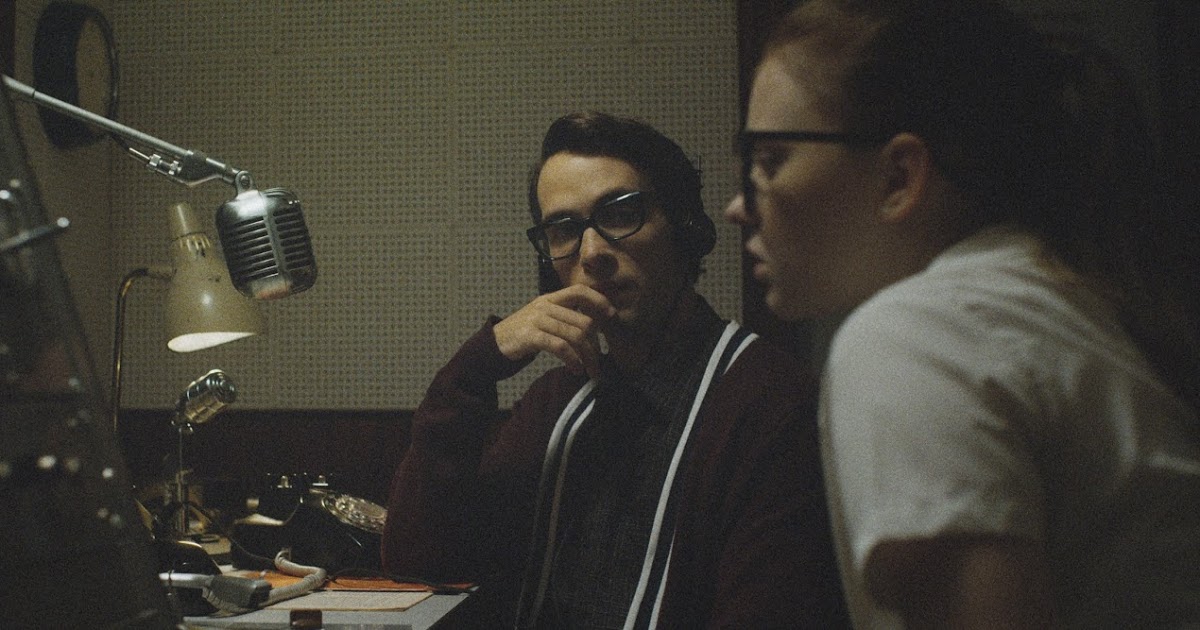
Picture the small town of Cayuga, New Mexico in the 1950s. As the gymnasium stands are filling up for the night’s big high school basketball matchup, a smooth-talking radio DJ and a wholesome teen have stumbled onto something very, very big.

Fay Crocker (Sierra McCormick) is filling in for the local telephone operator as WOTW’s nighttime show with Everett “The Maverick” Sloan (Jake Horowitz) playing in the background. But a strange transmission is also coming through the radio, and Fay lets Everett know about it.

Everett opens the mic to ask if any of his “five listeners” can identify the sound, and Billy (Bruce Davis) calls in with a mighty big story to tell. Mabel (Gail Cronaur) has one, too, leading Everett and Fay off into the New Mexico night to search for answers.

Peterson’s commitment to production and sound design results in a totally immersive experience. The period details – from costumes to recording equipment – are more than just historically correct. Paired with the rapid-fire, comfortably lived-in dialog from screenwriters James Montague and Craig W. Sanger, they create a throwback setting that charms without the tell of undue effort.

Peterson also flexes confidently behind the camera, moving from extended tracks to slow pans to quiet stills, all in service of the film’s wondrous tone. With McCormick and Horowitz leading a stellar ensemble, what could have been a generic sci-fi time filler becomes a smart parable with an eerie grip.

The Vast of Night is a film about listening. To each other, to the stars, to the ugly secrets of our past and to the great possibilities of our future.

And speaking of the future, Andrew Patterson has a bright one.

Rescue Me

Fourteen

by Hope Madden

Mara (Tallie Medel) and Jo (Norma Kuhling) make an odd couple, or so says Mara’s one-time dinner date who remembers the pair of best friends from high school. Mara’s quiet, no-fuss. And Jo?

“She’s cutting.”

In fact, Mara and Jo resemble any number of very real relationships, those that maneuver childhood and the dramatic complexities of adolescence to settle into something adult that may not be sustainable.

Jo is flashy, passionate, needy. Mara is level-headed and supportive. Dan Sallitt’s understated character study Fourteen picks up their relationship somewhere into adulthood and follows it from Mara’s point of view with a detached but caring comment on how life, responsibility and surrender finally look.

Matter-of-fact performances eliminate any hint of melodrama as Fourteen wades through a series of the duo’s scenarios across about a decade. The performers’ delivery and the director’s style undercut any artifice, nearly every scene focused exclusively on a conversation, most of which feel improvisational.  

It offers a loose but relentless progression, a regrettable erosion focused on growing up and growing apart, caring for each other and caring for yourself.

Sallitt rarely focuses squarely on big moments. Jo’s breakdowns and histrionics remain almost entirely off screen, and what we see is Mara’s inevitable response as well as quietly significant moments: the first dinner with a new boyfriend, a trip back home for a timely visit.

The progression of time told in haircuts and apartments is handled more gracefully in Fourteen than what you might expect, but again, Sallitt’s style is not showy. More than the visual backdrop to mark a new era, it’s Medel and Kuhling’s recognizable reacquaintance, first halting then quickly entrenched in familiar patterns: this is who we are.

Medel’s performance, aided by her enormous eyes, is deceptively compelling. As the friend less likely to draw notice (she mentions at one point that, in Jo’s presence, she sometimes feels as if she’s not even there), she’s comfortable in the background. At the same time, Mara is clearly and constantly observing, making a mental note, internally balancing what’s best for Jo versus what’s best for herself.

Kuhling is a bit weaker, her believable amalgamation of tics in early scenes do not translate well to her climactic breakdown, which at times feels like a student actor’s workshop.

It’s a minor flaw, though, in a film that feels quietly courageous in its interest in one of life’s great heartbreaks.

Monster Mash

Monstrum

by Hope Madden

Very little in life brings me joy quite like a decent creature feature. Even the silly ones where a big, boil-riddled muppet winds up slathering pus leakage all over Korean mountain people in the 1500s.

Especially those.

Hun Jong-ho’s new import takes us back to 1506, a time when the king is beset by troubles: his disloyal prime minister, a plague across the land. That is a lot for one man to handle, and an even larger load once his most loyal guard, Yoon Gyeom (Kim Myong-min), abandons him to save a little girl’s life.

Fast forward a decade or so and strife still divides the nation, but that strife has a new name: Monstrum.

But is that monster really there? Or is it all just a figment of mass hysteria planted by a conniving prime minister? The sleuthing sets up a clever-enough through line and the deception creates space for plenty of gory action sequences.

Jong-ho’s story, which he penned along with Byeon Jeong-uk and Heo-dam, offers a relatively simple “the people have the power” narrative elevated by some nice set pieces and a handful of choice performances.

Myong-min cuts a properly heroic figure: quiet, savvy, handy in a fight. Kim In-kwan makes the perfect sidekick, his comedic moments (though often anachronistic) offer welcome moments of levity.

With K-pop’s Lee Hye-ri (of the band Girl Day), Jong-ho delivers a little 16th century girl power via one spunky adolescent who’s smart, capable, irreverent and fearless. (Another anachronism? Probably, but again, it’s a movie with a giant, pus-dripping puppet. You came looking for realism?)

And hey, who’s that handsome young man beguiled by Hye-ri’s badassedness? It’s Parasite’s Choi Woo-sik, charming as ever.

The film looks great, thanks in part to some exceptional costuming but mainly to cinematographer Kim Dong-Yeon’s capable maneuvering through interiors and exteriors, false backdrops and lushly wooded hills.

Monstrum is no masterpiece—go in expecting The Host and come out disappointed. But for creature feature fun and just a touch of flatulence humor, Monstrum delivers.

An Eye for Style

The Times of Bill Cunningham

by Brandon Thomas

In 1994, rookie producer Mark Bozek sat down with New York Times fashion and street photographer, Bill Cunningham. The casual chat about an award Cunningham was receiving was supposed to only be a quick 10-minute in and out.

The interview didn’t end until the tape in Bozek’s camera ran out.

Twenty-five years after conducting this interview, Bozek makes his feature documentary debut with The Times of Bill Cunningham. Less a look or critique of the New York fashion scene, Bozek’s interest is sharply focused on the unassuming Cunningham. 

Bozek uses the ample footage at his disposal to let Cunningham share his thoughts and insights about his life and career. Cunningham’s almost child-like zeal for his work comes across as both disarming and curious all at once. From his beyond-modest “apartment” in the old Carnegie Hall Studios building, to his uniquely un-chic wardrobe consisting mainly of hand-me-downs, Cunningham wasn’t your typical New York fashion figure. 

As the layers peel back more and more, Bezok is able to capture and celebrate Cunningham’s genuine kindness — whether that be his enthusiasm for catching people “as they are” on the street, or the financial support he showed a friend who was fighting a losing battle with the AIDS virus. 

Peppered throughout the film are many of Cunningham’s photos. The juxtaposition of these wonderful photographs with his animated interview makes for an appreciative experience. Many of these photos were splashed across Cunningham’s weekly spread in the New York Times. A few gems, however, were never published during Cunningham’s storied career. 

Sparse narration by Sarah Jessica Parker (Sex and the City) provides needed connective tissue and context. It’s one thing to take Cunningham’s word for it, but highlighting his accomplishments in the broader fashion world is a poignant statement on how important he was to the fashion industry and to New York City itself. 

Documentaries focused on one individual aren’t new. Specific filmmakers, politicians, and athletes have all received this treatment. What’s so different, and enthralling about The Times of Bill Cunningham is how much Cunningham gets to speak for himself. It’s an honest, unfiltered look at a man that did what he loved — and did it well. 


Gangster Lean

Capone

by Hope Madden

What a nutty idea.

You’ve seen Capone on film: films about him, films containing him, films about gangsters reminiscent of him. A lot of these movies have been great – some of them classic. But you have never seen Alphonse Capone the way writer/director Josh Trank sees him.

Wisely, Trank realized Tom Hardy would be able to translate his vision.

There are moments, especially early in the film, where Hardy and Trank seem to be conjuring Vito Corleone (Hardy has always carried the same dangerous charisma of Brando, anyway). But it doesn’t take long before the role defines itself as something we truly have not seen before.

The film focuses on the final year of the infamous mobster’s life—the adult diapers and dementia year. He’s served his prison term for tax evasion, the syphilis he contracted in his youth has taken its toll on his mind and body, and his money is quickly evaporating.

Maybe he’s hidden $10 million somewhere. Maybe he’s just nuts.

Trank’s loose narrative is less concerned with the scheming, criss-crossing and backstabbing from underlings trying to find the money than it is with Capone’s deterioration, and that’s what makes this film so gloriously odd.

There is a grotesque humor underlying many of these scenes. Trank doesn’t ask you to sympathize with this notorious villain, nor does he revel in his decrepitude. But he definitely explores it, and that’s a brave decision. Many a mobster film fanatic will be annoyed by this glimpse into the post-badass years, but defying expectations is something Capone does early and often.

If Trank doesn’t trade in sympathy, we can still expect Hardy to generate empathy. As is characteristic of every performance in his career, Tom Hardy finds the faulty humanity in this character. His depiction of Capone’s confusion is unerringly human, and in his hands Trank’s macabre humor never feels like mockery.

Linda Cardellini flexes more in the role of Capone’s wife Mae than she has in her many other turns as put-upon spouse. She’s a great sparring partner for Hardy, and their volatile but ultimately tender relationship creates a needed grounding for a film so busy with the shadowy unreality of a diseased mind.

Because of the borderline surreal nature of a film told from the point of view of a man in the throes of dementia, it’s often tough to suss out the reality of the events onscreen. This generally works, but there are certainly moments—generally those inserted to give us stepping stones of a plot–that seem stiffly ill placed.

Thankfully, Hardy’s there to command your attention. No doubt some viewers will be disappointed—those who tuned in to see Hardy play a badass at the top of his game. My guess is that the reason one of the finest actors working today was drawn to Capone was the opportunity to do something just this unexpected.

https://www.youtube.com/watch?v=Bnvz-P9j2qA