Tag Archives: movie reviews

Wrestling with Family

Brighton 4th

by Brandon Thomas

Georgian filmmaker Levan Koguashvili’s Brighton 4th is a charming drama that surprises with some subtle comedic flourishes. It’s a film that never gets lost in a self-serious tale of immigrants “roughing it” – instead staying firmly grounded in interesting and likable characters.

Kakhi (Levan Tedaishvili), a former Olympic wrestler, travels from the central Asian country of Georgia to the Brighton Beach neighborhood of Brooklyn to visit his son. He finds him living in a shabby boarding house and learns that his son owes serious debts to a local mob boss. Hoping to get his son out of this jam, Kakhi begins looking for ways to raise the money to pay off his son’s debt and return home to Georgia. 

Tedaishvili wows with a beautifully stoic performance. Kakhi is a character that happily takes on the burdens of those he loves. From committing a “minor” case of kidnapping to help two women get the pay they’re owed, to letting that same man free out of a sense of respect, Kakhi is a man with a strong – but quiet – moral code. Tedaishvili’s performance is all the more amazing as this is only his second film. His debut was all the way back in 1987’s Khareba da Gogia.

Brighton 4th wonderfully blends drama and comedy. There’s a grounded absurdity to the comedy that makes it entirely relatable. Whether it’s the chaos from the kidnapping plot, or Kakhi’s family members continually losing money over minor annoyances, the laughs are good-natured and always centered in character. 

The most striking part of Brighton 4th is the spotlight it puts on basic decency. It would be easy to focus on the ugly parts of life when depicting the struggles of immigrants. That part is apparent in the film for sure, but Koguashvili’s interest is in how people treat one another when times get hard. Kakhi continually puts the hardships of his friends and family on his own shoulders and does so without complaint. One scene in particular – when the newly kidnapped man helps soothe a woman with epilepsy while she’s having a seizure – showcases the film’s core belief: that when things are hard, people will rise up to lend a helping hand.

While not being an overly complicated tale about the strife of new immigrants, Brighton 4th does offer a sweet, uplifting tale of a family doing what they can with what they have to help each other.

They’re at the Gate

Barbarians

by Hope Madden

Why is the dinner party such a ripe concept for horror? Or at least trauma?

Indies It’s a Disaster and Coherence bend time and space. The Invitation takes things in a bloody direction, The Humans picked more familial scabs. What they all have in common is that intimate gathering where familiarity breeds contempt.

They also require few locations and minimal cast, so they’re not too tough to mount on a small budget.

Director/co-writer Charles Dorfman takes all that into consideration with his feature debut. A veteran producer, Dorfman co-writes this fearsome tale with another longtime producer making his creative debut, Statten Roeg.

Together they spin the story of birthday boy Adam (Iwan Rheon, Game of Thrones). He and girlfriend Eva (Catalina Sandino Moreno) await their two guests. Eva is a sculptor, and she and Adam have been living in the first of what will be many exclusive new homes developed on ancient, isolated, mystical UK land.

The developer, Lucas (Tom Cullen and his exceptional beard), is Adam’s polar opposite: narcissistic, ambitious, full of shit. Today Eva unveils her big sculpture, she and Adam sign final paperwork to own the house, and Adam blows out the candles on his dream of making it as a director in London in favor of quiet country life.

Well, maybe not because a) Lucas has had another offer, and b) masked intruders threaten the whole evening.

Part comedy of manners, part home invasion thriller, Barbarians finds itself on uneven footing.

With its monolith and fertility festival masks, the film not-so-subtly conjures 2001: A Space Odyssey and The Wicker Man. It can’t deliver on either promise, though.

More problematic is the way Dorfman discards the themes and character development so carefully articulated in the first half of the film. The fact that the invasion itself never matches the tension of the simple dinner —what with its evasions, lies, manipulations — becomes Dormfan’s biggest problem. At dinner, the filmmaker tends to the themes of the film, twisting discomfort into a knot that’s too easily untied by some intruders in animal masks.

Gun for Hire

The Contractor

by Hope Madden

Chris Pine is Hollywood’s unsung Chris, isn’t he? Under-sung, anyway. Just because he’s not an Avenger. He is a dependable, charismatic presence in any film, though, which is why each of his efforts deserves a little optimism. Even one as seemingly unremarkable as The Contractor.

Pine plays James Harper, a Navy Seal with 5 tours under his belt. One shredded knee, one worthless lung and a host of other physical consequences from his time under fire mean that Harper is no longer of use to the US military. Debts at home have him entertaining offers he probably shouldn’t.

After too lengthy an Act I, The Contractor pivots to tight action thriller. Pine delivers vulnerability and honor as the damaged service vet, and director Tarik Saleh surrounds him with able support.

The great Ben Foster arrives about 20 minutes into the feature, and that’s never a bad sign. The film’s biggest draw is the chance to see Pine and his Hell or High Water co-star reunite. Foster is among the most effortlessly authentic actors working, every character’s backstory hanging on his face and haunting his eyes.

He and Pine have a lived-in camaraderie that goes a long way toward deepening the emotional underpinning of what is otherwise a blandly repetitive, unimaginative military action flick.

The real surprise is that Saleh — who began his career with the bizarre and amazing dystopian fantasy Metropia — couldn’t produce something a little more intriguing. The by-the-numbers script from J.P. Davis doesn’t help, but aside from a handful of decent fisticuff sequences, Selah does not prove himself as an action director.

Gillian Jacobs, Fares Fares, Eddie Marsan and Kiefer Sutherland — all underused — do what they can to bring nuance to underwritten characters, but it’s not enough to salvage the film.

Rather than elevate a bland picture, the performances feel wasted in this derivative and formulaic thriller.

The Horrors of Garage Entrepreneurship

Madelines

by Christie Robb

Madeline (Brea Grant, Eastsiders) and her husband Owen (Parry Shen, General Hospital) are two independent scientists working on a time travel device in their garage laboratory. Everything seems to be going well. They successfully moved an orange across time and space. They secured investment capital from their backer Rory (Richard Riehle, Office Space/legendary “that guy”). And they are all set to try experimenting on human subjects.

But one night, Madeline starts coding after she’s had a few too many wines and sends herself into the future only to return and find out that, due to a typo in the code, she and Rory can expect a new Madeline to return from the future every day at the same time for 3,600 days. What to do?

It’s a real conundrum.

Directed by Jason Richard Miller (who produced Frozen—no, not the Disney one) and co-written by Brea Grant, the film manages to entertain despite its minuscule cast of three and limited setting. A lot of the credit goes to Grant, who gives individual quirks to the various Madelines that she embodies.

Matt Akers’s 80s-inspired synth score is also a real delight, providing the entire project with a late-night direct-to-syndication guilty pleasure vibe.

It’s not a movie that can stand up to much logical scrutiny, though. And both the horrific and comedic elements could have been dialed up somewhat. But as an experiment, I think the team is on to something.

Wicked Woods

Sideworld: The Haunted Forests of England

by Hope Madden

Jonathan Russell and George Popov have been exploring England’s haunted history for a number of years now. For their first feature collaboration, 2017’s Hex, the co-writers/co-directors took us into the woods for a spell.

In 2020 the pair co-wrote – this time with Popov flying solo behind the camera – a modern exploration of folk horror with The Droving. Once again, the two unveiled a spooky history where primitive behavior meets supernatural forces deep in England’s woods.

The filmmakers’ latest suggests a serious preoccupation at this point. Their documentary Sideworld: The Haunted Forests of England walks us through some of the spectral history that likely influenced their earlier dramatic efforts.

Where Kier-La Janisse’s recent doc Woodlands Dark and Days Bewitched dove into dramatic recreations of folk horror, Popov and Russell dig into the myths that inspired the fiction.

Russell writes, Popov directs and lends vocal talents to the fairly brief excursion into local folklore surrounding three different forests: Epping Forest, Cannock Chase and Wistman’s Wood. Their stories tell of pig beasts and howling dogs, weeping children and witches, tragic lovers and highwaymen.

They don’t stop with musty legend, though. Links to contemporary crime help to bridge the modern with the ancient in a way that sheds light into how tales of hauntings originate.

Though Popov narrates most of the film, he’s joined on occasion by Suzie Frances Garton and William Poulter. The film would have benefitted from more vocal variety, particularly since the filmmakers avoid any kind of talking-head footage. A little commentary from folklorists or experts would also have helped the film deliver a bit more relevance.

You can’t fault the spell Sideworld casts. Richard Suckling, who did such a beautiful job as DP for The Droving, again develops an atmosphere of beauty and dread. His cinematography mesmerizes from the opening moment. Paired with Matthew Laming’s haunting, whispering whistle of a score, the forests of Popov’s exploration easily convince of spectral menace.

https://www.youtube.com/watch?v=lpA-_CrVu8Y

In Sickness and in Health

7 Days

by Matt Weiner

We likely have years of pandemic-related movies ahead of us. And while 2022 may seem a bit soon to look back on the early days of Covid-19 (much as this country seems ready to declare mission accomplished no matter what), here’s some good news: You’ll be hard-pressed to watch anything more winsome and heartening than Roshan Sethi’s 7 Days.

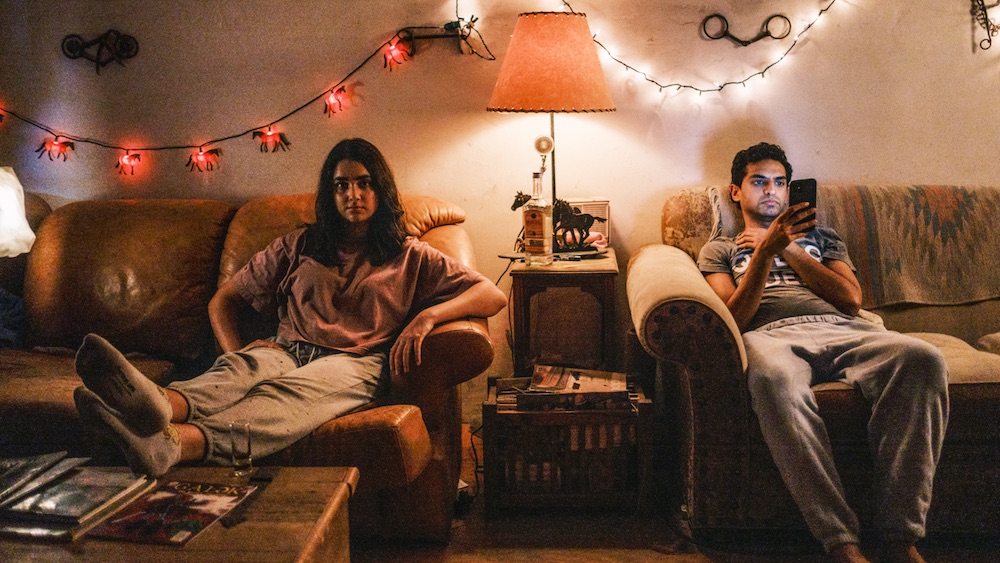
A pre-arranged first date in March 2020 between Ravi (Karan Soni, who also co-wrote the screenplay with Sethi) and Rita (Geraldine Viswanathan) goes for much longer than either one was expecting when Covid grinds the country to a halt. Unable to get back out of town right away, Ravi hunkers down with Rita.

As the world outside Rita’s house falls apart, the two opposites—traditional, marriage-minded Ravi and freewheeling, drinking and partying Rita—slowly get to know each other on a deeper level than their disastrous first meet-up.

Sethi’s romantic comedy might be the first to use shelter in place as a meet cute, but the film earns its medical bona fides. This is Sethi’s feature debut, perhaps because he is also a practicing oncologist who wrote on medical dramas while finishing Harvard Medical School.

The film is set not only in quarantine but almost entirely within the confines of Rita’s house—save the occasional video call for Ravi, who keeps to his arranged dating schedule even with Rita sitting just feet away. So it falls entirely on Viswanathan and Soni to make these people we genuinely want to be trapped with, even as their perfectly opposite foibles drive each other mad.

And sure, their relationship follows the usual romcom course. (No spoilers, but you will get an answer to the question of whether opposites attract.) But both leads bring an impressive level of charm and depth to their roles, with a chemistry that feels natural and earned even within the formula.

Ravi and Rita have more in common than they first think—not just their traditional families urging them to settle down, but also the struggle of forging their own identities and paths in life.

Of course, the shadow of Covid looms over all of their conversations, especially the early days when so much was unknown and a cough could be the harbinger of weeks on a ventilator—or worse. The way the film works these concerns into the third act is inevitable but no less affecting.

Nothing about the phrase “Covid romcom” should play out as well as everything does with 7 Days. For that alone, the movie is a surprising gem. But to also get an incisive look at love and dating, thoughtful cultural commentary and genuine laughs is a pandemic miracle.

Romancing the D

The Lost City

by Hope Madden

A romance novelist who’s really a bit of a hermit becomes a reluctant adventurer looking for legendary jewels in a far-off land, with a roguishly handsome man—part hero, part heartthrob—at her side.

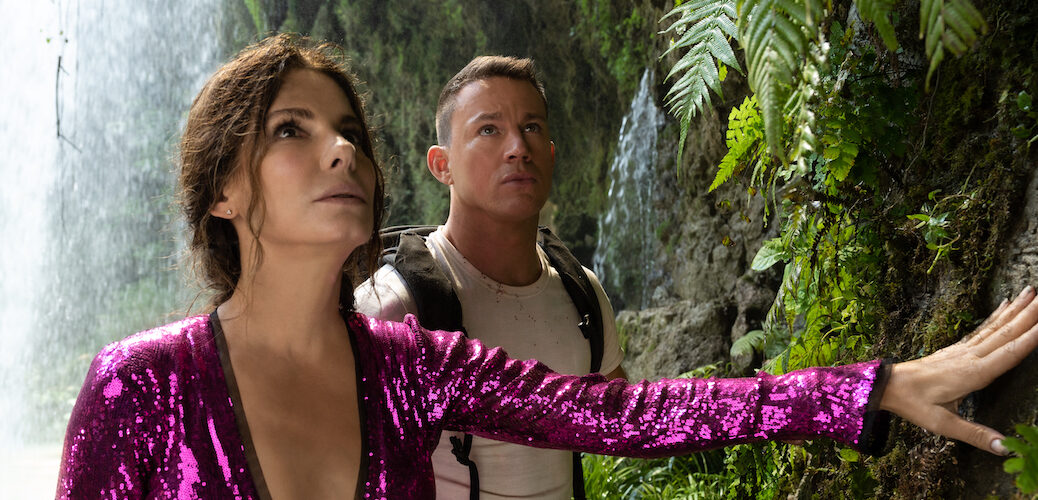
No, it isn’t Romancing the Stone. It isn’t even Jewel of the Nile. Aaron and Adam Nee’s romantic adventure comedy The Lost City offers less adventure, more screwball comedy. And more sequins.

Sandra Bullock is Loretta Sage, whose romance novels are known less for their anthropological mysteries than their hunky hero. That hero has been depicted over many book covers by Alan (Channing Tatum).

Promoting their latest effort, The Lost City of D, Loretta gets nabbed by a wealthy villain (Daniel Radcliffe, playing delightfully against type), who believes she can decipher a map leading to untold riches.

The real gem in this film is Brad Pitt in an extended cameo as the tracker hired to find Loretta. The Oscar winner and veteran leading man is just so much fun when his only goal is to be funny, and in this movie, he’s a riot. (It helps that he gets to deliver the film’s single best line.)

Bullock and Tatum are both solid comic performers, but neither is given much to work with in this odd couple romance. A grieving widow given up on love, Loretta doesn’t offer Bullock a lot of room for hilarity. Instead, she becomes a rather dour anchor for the project.

Tatum’s dunderheaded beefcake is appealing enough, but can’t quite keep the film afloat. A side plot featuring Da-Vine Joy Randolph (Dolemite Is My Name) feels like filler, which this 2-hour film did not need.

There are some chuckles, especially when Pitt’s onscreen. Bullock and Tatum share enough chemistry, deliver physical comedy well enough, and generate enough charm between them to keep the breezy entertainment enjoyable.

The Lost City offers pretty, lightweight fun, not unlike a romance novel.

Luck o’ the Irish

You Are Not My Mother

by Hope Madden

It’s March. At our house, that means it’s time for Irish horror movies. The Hallow, A Dark Song, The Hole in the Ground —the films that tread that fertile island’s folktales are always among the best.

Writer/director Kate Dolan’s You Are Not My Mother does just that. Her opening sequence will leave you on edge, wondering what you may have gotten yourself into. After that, she settles into a family drama twisted around the kind of visitors that have been scurrying off with Irish folks and tormenting families for centuries.

Hazel Doupe is Char, an unpopular high school girl with serious problems at home. Her ma, Angela (Carolyn Bracken), barely gets out of bed and Granny’s (Ingrid Craigle) gout keeps her sidelined. Things aren’t much better at school, where she’s the object of bullying.

Plus, there are the nightmares.

The film is a blend of dysfunctional drama and folk horror. At times the story seems allegorical of mental illness — bipolar disorder, in particular. Dolan and a game cast explore the specific pain and yearning that goes along with wanting so badly to save a person you love from themselves.

At the same time, they dig into the horror of looking into familiar eyes and finding no one you recognize, but maybe someone who means you harm.

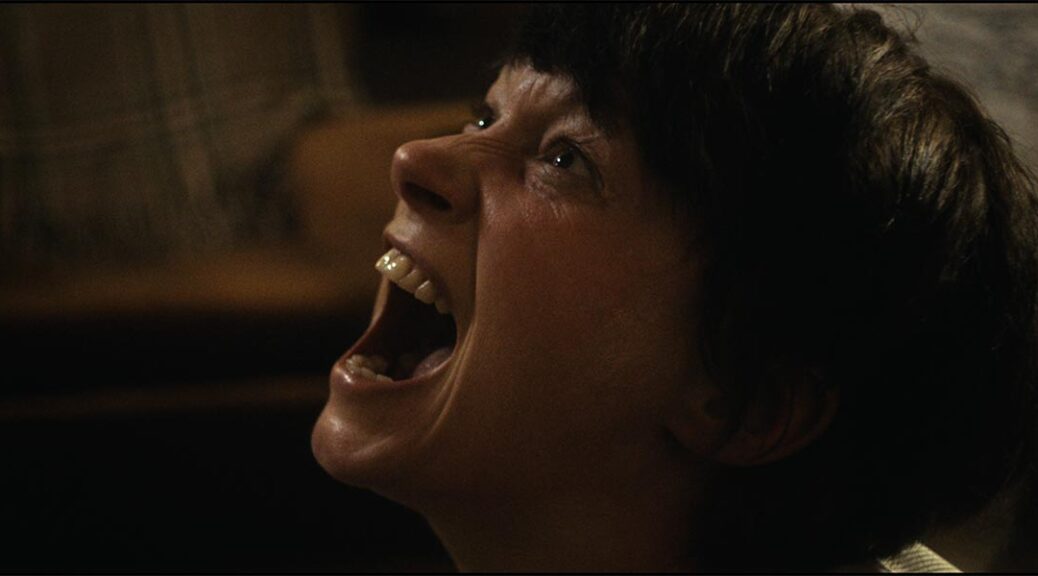
Dolan’s equally invested in spinning an Irish folk horror yarn, and Bracken is entirely on board here. As Angela transforms bit by bit, Bracken embraces the vitality of the new presence Mom has become. She makes the most of some terrifyingly intimate horrors, and one particular dance sequence is enough to leave a mark.

Doupe leans toward listlessness as the central figure, essentially trying to be invisible until she can escape her adolescent hell. The performance style often works, but at times leaves the film wanting for a little charisma.

But it’s a small criticism of a film that so cleverly points toward Ireland’s pagan mythology as not the evil nor the good, but the truth that’s working under everybody’s noses whether they admit it or not.

Wake Up Call

6:45

by Rachel Willis

Working from a screenplay by Robert Dean Klein, director Craig Singer brings us the time loop horror film, 6:45.

Bobby (Michael Reed) and Jules (Augie Duke) are trying to work through some issues, so they visit the quaint island of Bog Grove for a relaxing vacation. What the couple doesn’t know is that their visit to the island falls on the anniversary of a traumatic, unsolved murder. Because of this, the ferry service doesn’t run, and they’re stuck – or so they’re informed by the nosy, odd proprietor for the inn where they’re staying.

A slow opening that follows the couple exploring Bog Grove, its tourist shops and oddball residents, doesn’t take advantage of the opportunity to build tension. When the tragedy occurs, it comes as a relief rather than a shock.

Soon, Bobby descends into a nightmare he must relive over and over. Being forced to relive the day alongside Bobby is a horror in itself.

No one else experiences the loop, so we get to see Duke in a range of roles: some days she wishes could last forever, others see her trying to rein in an increasingly unstable boyfriend. Reed, on the other hand, is stuck playing a man who doesn’t seem to know how to handle himself each day. Every time the crucial event occurs, he seems constantly taken by surprise.

The cast of locals has little to do, often repeating lines from previous loops. They fill mostly stereotypical roles: small-town friendly and welcoming or weirdly creepy. There isn’t middle ground, and it makes for uninteresting characters.   

Rather than differentiate itself from similar time loop films through storytelling, 6:45 instead focuses on camerawork and distracting split screens. Anywhere from four to six screens will litter the frame, some focusing on banal details, others on more interesting visuals. Days are relegated to montages,

Flashbacks detailing the couple’s history sometimes punctuate the flashbacks. It’s here that Singer cleverly injects moments that help us understand why the couple has been fighting. It’s clear that the fight revolves around infidelity, but these fleeting moments offer hints of violence, which reveals something more sinister.

The film does take an interesting turn, but it comes too little, too late. It also fumbles any message it’s trying to get across. Instead of offering a strong look at a troublesome relationship, it embraces shock over commentary. In the end, we’re not shown anything new or astute.