Tag Archives: movie reviews

Not Bird nor Plane nor Even Frog

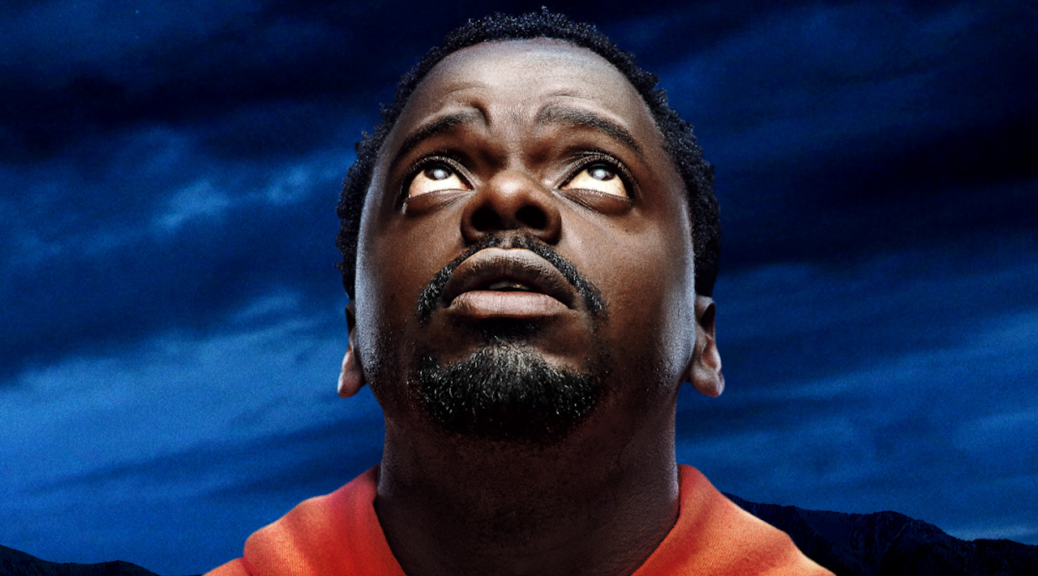
DC League of Super-Pets

by Hope Madden

Y’all should have a pet. That’s the message of the feel-good, sometimes surprisingly dark, wildly well-cast animated feature DC League of Super-Pets.

It’s not a tough lesson, really. That’s why one pet has to learn something different. Krypto (Dwayne Johnson), Superman’s dog, doesn’t really know how to be a dog. He figures out something about pack animalhood when he’s robbed of his superpowers, Superman goes missing, and the shelter animals up the road develop their own special skills.

Who’s to blame? Is it evil Lex Luthor (Marc Maron)?

Oh, no. No, this villain is a far, far more dangerous creature. Look out for Lulu (Kate McKinnon), a hairless Guinea pig once saved from experimentation in Luthor’s lab!

Guinea pigs have not done this much animated damage since that South Park episode.

There are lessons aplenty in this film, but just one I want Hollywood to take away from it: McKinnon should voice all animated bad guys forevermore. She couldn’t be more perfect, couldn’t be more fun.

She’s not alone. The supporting voicework in this film delights. Other scene stealers include Keanu Reeves as a brooding (what else?) Batman and Natasha Lyonne as a cantankerous yet horny turtle.

Sure, the actual stars are Johnson and Kevin Hart, and they’re about as fun an odd couple when they’re cartoon dogs as they are when they’re CIA agents or board game buddies. But the real story here is the supporting cast, which also includes John Krasinski, Diego Luna, Jemaine Clement, Daveed Diggs, Vanessa Bayer, Dascha Polanco, Jameela Jamil and Olivia Wilde.

Wow, that’s a lot of people, which indicates that DC League of Super-Pets suffers from the same bloat as almost all DC films. There are too many characters, too many tidy endings, too little for everyone to do.

Co-directors Jared Stern and Sam Levine, along with co-writer John Whittington (writing with Stern) have collectively created a solidly unremarkable set of animated films and episodes. This is no different.

There’s a lot going on with not much really happening. It looks good, not exceptional. It’s fun and almost immediately forgettable. It does expose the diabolical side of the Guinea pig, though. Fear them!

Non Binary

Neptune Frost

by Hope Madden

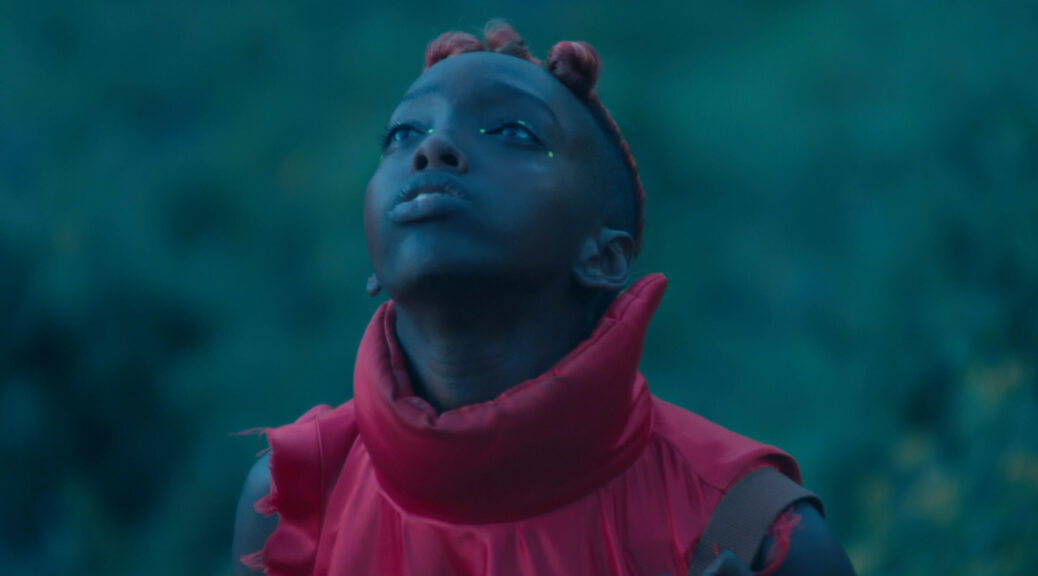
Drawn by common dreams, individuals from all around post-war Rwanda journey to a place, time and reality they can call their own in Anisia Uzeyman and Saul Williams’s Afrofuturistic musical, Neptune Frost.

The nightmare of war in the recent past, the oppressive religion, and the reality of the economy take shape on the screen. What is Rwanda today?

Williams and Uzeyman use something that feels like performance art to depict Africa’s place in technology’s journey to consumers. Tech’s raw materials—from the coltan (a raw material used in electronics) characters mine to computer refuse strewn and useless across the landscape—are woven into different character costumes.

Visually stunning, the aesthetic emphasizes the story’s earthy yet techno quality. Bursts of color and texture in costume design, in particular, along with surreal, day-glo dream sequences are gorgeous.

At the same time, the filmmakers braid together varying uses for the word binary. An obvious term in relation to the lo-fi tech landscape, the word takes a more complicated meaning with the fluid presence of Motherboard, played at first by Elvis Ngabo and later by Cheryl Isheja. The word is again reexamined as Motherboard is received by Innocent (Dorcy Rugamba), and then Matalusa (Bertrand Ninteretse).

Traveling from one age to another, one realm to another, one gender to another, Motherboard is an agent of transformation. They tell us they see through what blinds others, they see the past and present and future altogether.

In time, the very word binary becomes meaningless, a limitation. Frequent mention of binary crime theory, a concept deepened by the line “to imagine hell is privilege,” offers stark reminder that this is a Rwandan film.

For Neptune Frost, there is not one or the other, not past or future, not good or evil, not male or female, not miner or mine. This fluidity makes the film tough to properly summarize, and the ambiguous and ambitious plot structure becomes frustrating during the middle section. But Neptune Frost is never less than fascinating.

Rich with symbolism that brings past to present and reinterprets it for the future, the film speaks of resilience and power. And it does it like no film you’ve seen before.

Travel Companions

My Donkey, My Lover & I

by Hope Madden

Unabashedly romantic and decidedly French, My Donkey, My Lover & I follows Robert Lewis Stevenson’s journey through Cevennes National Park as walked by Antoinette (Laure Calamy) and Patrick, her donkey.

Antoinette is no hiker, no trail-wizened traveler. She’s a schoolteacher smitten with a student’s father (Benjamin Lavernhe). When he cancels their romantic trip to instead vacation with his wife and daughter, Antoinette decides to crash.

She doesn’t find him immediately. What she does find is that very few people travel with a donkey nowadays, she’s ill-prepared to actually hike 220km with or without a donkey, and that early oversharing with other hikers will make her a bit of a celebrity along the journey.

Aah, romance!

Writer/director Caroline Vignal keeps it breezy, never vilifying the married Vladimir nor seeing Antoinette as a stalker. A bright, earnest turn from Calamy is hard to resist. She gives Antoinette a good humor that brings a little cheer to even the most embarrassing of situations.

The countryside is gorgeous, the cast of French vacationers and waylayers disarm, and Calamy charms her way through it all. On paper, Antoinette is a fool—a superficial, self-centered fool at that. But Calamy, whose game performance won a Cesar (the French Oscar), keeps the character open and vulnerable.

Still, the star here is Patrick. Vignal has remarkable instincts for animal-related comedy. Yes, we know from the first moment Antoinette can’t get the ass to move where we’re headed. They will reluctantly become best friends, she’ll learn something about independence and things will end well.

But by underplaying the donkey for so long, delaying the reaction shots and obnoxious braying, Vignal manages to swing from charming romantic trifle to slapstick comedy and back with weird grace.

The whole affair feels as slight and ultimately unessential as the one shared by Vladimir and Antoinette. But there’s something forgiving about it that’s appealing. Rather than judge or deny or even truly mock a middle-aged romantic’s starry-eyed quest for love, My Lover, My Donkey & I sees value in it.

Plus there’s a funny donkey.

Great American Melting Pot

American Carnage

by Hope Madden

“I’m an a**hole, JP, not a quitter.”

This, I think, is my favorite thing about director/co-writer Diego Hallivis’s sociopolitical horror American Carnage. Rather than setting up one-dimensional, morally impenetrable heroes, Hallivis—writing with his brother Julio—delivers likable but flawed, and therefore realistic, characters to root for.

Those characters are mainly the offspring of immigrants: JP (Jorge Lendeborg Jr.), Camila (Jenna Ortega), Big Mac (Allen Maldonado) among them. Governor Harper Finn’s (Brett Cullen) election-friendly executive order not only deports all illegal immigrants, but also detains their US-born children for failing to turn their parents over to authorities.

Some of those kids can work off their sentence by providing elder care at the Alcove, an institution run by the benevolent Eddie (Eric Dane).

Though the comedic writing is never as sharp as it should be, Hallivis’s cast supplies charm and sarcasm in equal measure. Unsurprisingly, Ortega stands out as the group’s unofficial badass. Her scowl and unlikeable demeanor are the perfect offset to Lendeborg Jr.’s good-natured tenderness.

Maldonado works hardest to elevate tepid dialog, delivering the film’s most consistent comic relief with a jovial, lovable character.

The villains, on the whole, are not the over-the-top psychopaths of traditional horror. This is no doubt intentional. Racist danger, especially as it was uncovered and amplified during Trump’s reign (the film’s title comes from his inaugural speech), is a kind of walks in broad daylight, may be your neighbor, blends into the background reality.

Other than one little dance of evil, the villain performances are somewhat understated.

The villainy is not. There’s a metaphor at work, and though it doesn’t entirely work, the goodwill Hallivis’s cast generates keeps you interested in their journey and eager for comeuppance.

What starts off with a nearly The Forever Purge vibe takes a sharp turn into creepier John Hughes territory, then another dramatically Romero pivot. American Carnage looks good and performances are solid, but the movie can’t overcome those tonal shifts.

https://www.youtube.com/watch?v=VXgIFTH2FLA

Rideshare Terror

Endangered (aka Fox Hunt Drive)

by Brandon Thomas

Expectations are a hard thing to contend with when watching movies. Whether it’s the actors present or the filmmaker’s previous work, one can’t help but think something along the lines of, “Oh, well I know where this is going.” Many movies don’t subvert those expectations, but thankfully there are enough of them out there that do throw exciting curveballs at the audience. While not a new cinematic classic, Endangered offers up a compelling twist on the hostage thriller.

Alison (Natalie Zerebko) is making ends meet as a rideshare driver on the roads of Orlando, Florida. Most of her passengers are the standard fare of obnoxious young people, talkative oversharers, and silent couples. Alison’s monotony is doused one evening after picking up a secretive passenger (Michael Olavson). The passenger looks nothing like his account picture, and his stand-offish demeanor instantly puts Alison on the defensive. As the night wears on, these early red flags will only mark the beginning of a chaotic night.

From the start, it was hard not to think of Michael Mann’s Collateral while watching the first half of Endangered. There aren’t very many thrillers that predominantly take place in a car, but out of those that do, Collateral stands heads and shoulders above the rest. Thankfully, the setting is where the similarities cease and Endangered is able to carve out an identity all its own.

Circling back to expectations, director Drew Walkup wisely shakes things up early. We’ve all seen hostage thrillers like this before, and some well-placed surprises rocked me back on my heels just a little bit. These twists – if you will – never cheapen the narrative momentum and feel lock-step with where Walkup was driving the story from the beginning.

The chemistry between Zerebko and Olavson is the glue that holds the film together. Without their tandem captivating performances, the film simply wouldn’t work. Both are able to draw empathy and fear at different times. To say more would potentially spoil the back half of the film.

While maybe not the most technically polished thriller of the year, Endangered makes an impression through clever plotting and two strong leads.

https://www.youtube.com/watch?v=DXckSUkjdg8

Today’s Lesson

The Blood of the Dinosaurs

by Hope Madden

Joe Badon seems like an odd duck.

Or so his films would suggest. The director/co-writer’s latest absurdity, The Blood of the Dinosaurs —which appears to be related to an upcoming short The Wheel of Heaven—delivers oddball charm and horror in equal measure.

What’s it about? That’s an excellent question, and not a simple one to answer.  

Kids’ TV host Uncle Bobbo (an eerily unblinking Vincent Stalba) wants to teach us where oil comes from. With assistance from his vampire puppet co-host Grampa Universe (voiced by John Davis) and his young helper Purity (Stella Creel), he seeks to enlighten and entertain. And misinform.

What else does Badon hit on? Birth. Death. Choice. 3D glasses. Kitch. Homage. Dinosaurs.

Badon, writing with regular collaborator Jason Kruppa, riffs on old school kids programming almost along the lines of Turbo Kid, Psycho Goreman, maybe even Strawberry Mansion and last year’s Linoleum. The Blood of the Dinosaurs, running a brisk 30 minutes, is far more confined and targeted than these. It feels a bit like an actual episode of something, but something terribly wrongheaded. Sort of a Pee-wee’s Playhouse for sociopaths.

If that does not seem like a ringing endorsement, you’re not reading it correctly.

The film throws a lot at you and not all of it hits, but Stalba’s central performance jibes perfectly with the weird concept to create a show that, quite honestly, I’m sorry I can’t watch every Saturday morning.

Pretty in Pink

Anything’s Possible

by Hope Madden

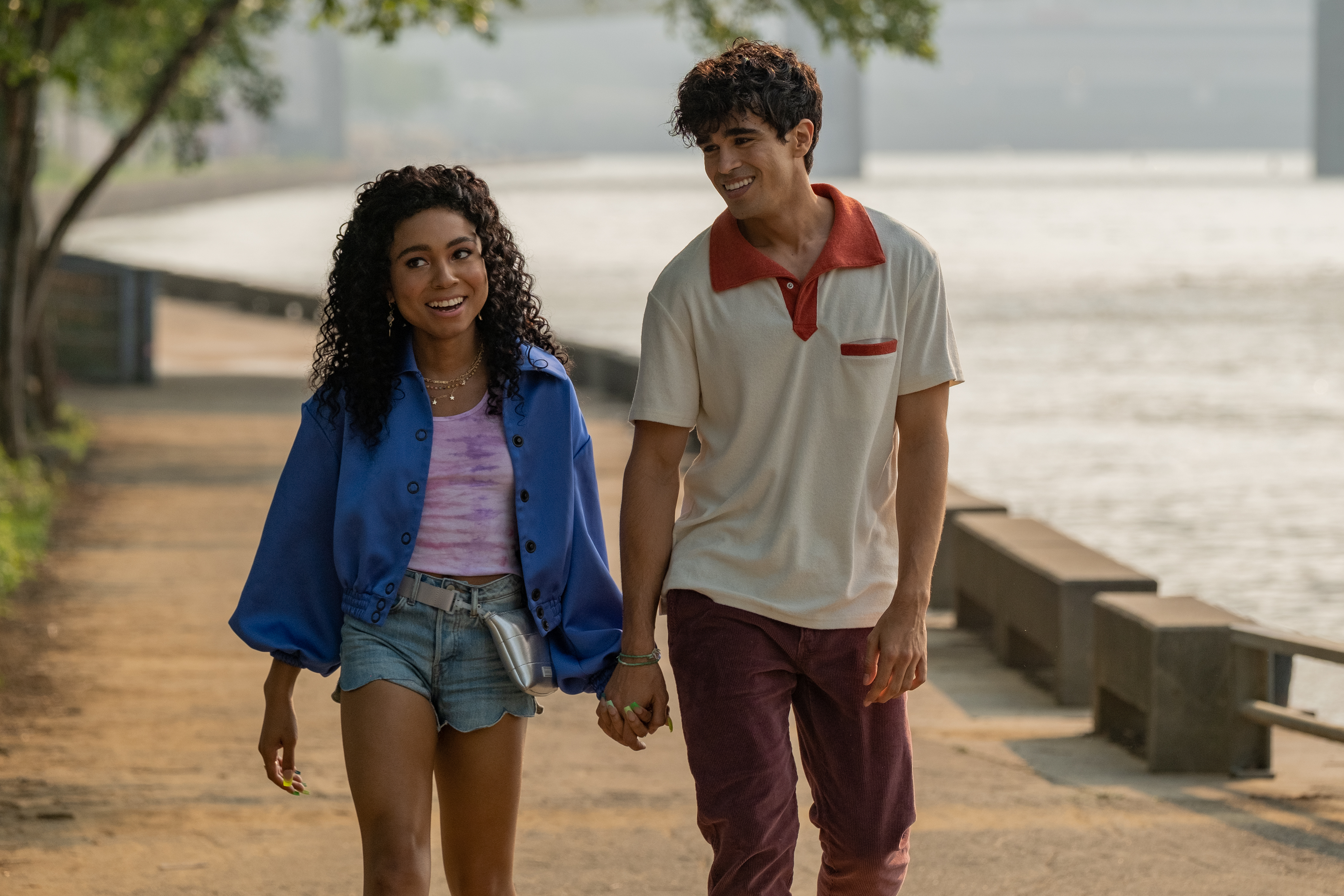
On the surface, Billy Porter’s directorial debut—the coming-of-age rom-com Anything’s Possible—is pretty traditional fare. High school can be tolerable with good friends, boys complicate everything, being different is the worst, just hold on until you can start it all again at college.

That does describe this film. The only thing differentiating this story from dozens of other high school dramedies littering cinematic history is that our lead, our Gen Z Molly Ringwald, is a beautiful trans girl named Kelsa.

Kelsa (Eva Reign) is starting her senior year and counting the days until she can leave Pittsburgh for her dream school, UCLA. She spends all her time with her two besties, Em (Courtnee Carter) and Chris (Kelly Lamor Wilson), but their balance is thrown out of whack when Em announces she likes Khaled (Abubakr Ali), Kelsa’s secret crush.

Porter and screenwriter Ximena García Lecuona lean hard on formula. The one difference here is that Kelsa is juggling more than most high school seniors, even if she’s determined to convince herself that she is not.

Porter’s sly direction follows Kelsa’s lead. As she’s ready to complicate the narrative by considering how the world is reacting to her not as a teen but as a trans teen, the film redirects its attention. The simplicity of the movie’s structure, its plot, even its performances often work in its favor.

Many viewers will, for the first time ever, see themselves in this comforting adolescent formula. For countless other viewers, normalizing Kelsa’s high school anxieties demystifies and creates empathy.

But is it entertaining? Sure! Reign is a charmer, as is Ali. Support work, especially from the always impressive Renée Elise Goldsberry, as well as a clearly loving look at PittsburgH, give the film a welcome sense of joy. And while there is one extremely ugly comment, on the whole Anything’s Possible never wallows in trauma.

That’s not to say that Anything’s Possible or Kelsa manages to sidestep all the dangers and indignities that face trans teens. But it’s not the focus.

Rather than making a film about the day-to-day oppression, trauma, bigotry and danger facing a trans teen,  Porter and García Lecuona turn our attention to the universal dramas of being a teenager in Pittsburgh. That may not feel groundbreaking or even necessary, but it absolutely is.

Rattlin’ Bog

Moloch

by Hope Madden

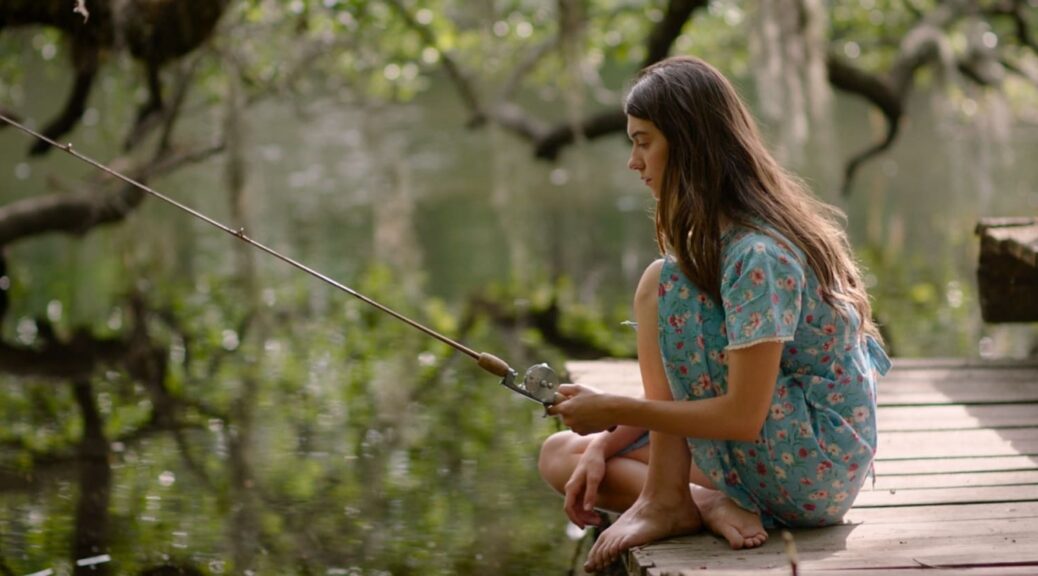
A bog is a nice spot for horror, eh? You think you’re walking along a lovely field when suddenly, you’re sucked in. Like quicksand, only mossier.

Betriek (Sallie Harmsen) and her daughter Hanna (Noor van der Velden) live with Hanna’s grandparents on the edge of one such Dutch mire in Nico van den Brink’s Moloch. A body just turned up out there, perfectly preserved for maybe hundreds of years.

And then another appears. And another. And another—each a female from a different era. The discoveries trigger other unusual behaviors, all of it corresponding with the town’s celebration of an unsavory history.

It sounds a little contrived, a little familiar, but van den Brink’s naturalistic approach to the story offsets any hokeyness. Harmsen’s spooked but reasonable lead makes for a clear-eyed hero, one who rails against her lot in life quietly but surely. Her choices sometimes feel erratic but never unnatural, and the cast around her shares a lovely and reasonably strained chemistry.

All performances are more raw than polished, which amplifies an authenticity struggling to anchor the supernatural elements.

Because scary stories are scarier if you believe them.

Not that the film ignores its spectral side. Ringing bells, musical interludes, moments in an aquarium and other highlights of the film’s sound design lend Moloch a supernatural eeriness that deepens its dread.

Van der Velden shows keen instincts for allowing his tale to unravel in its own time. Close attention to detail allows a rich understanding of the story Moloch tells. Whether you devote that kind of attention to the film or not, Moloch gets its point across.

Screening Room: Where the Crawdads Sing, Mrs. Harris Goes to Paris, Paws of Fury, Landis: Just Watch Me & More