Tag Archives: MaddWolf

Hot Childs in the City

The Sun Is Also a Star

by George Wolf

Every time I see the latest Young Adult romance fantasy on the big screen, I end up thinking about Barton Fink getting reprimanded for not sticking to the formula.

“Wallace Beery! Wrestling picture!”

Credit The Sun Is Also a Star for trying to stray outside the usual lines, even as it hits those same formulaic goalposts.

Natasha (Yara Shahidi) and Daniel (Charles Melton) are great-looking (and somehow, single) teens in New York City. Hers is a family of Jamaican immigrants facing deportation in 24 hours, while his Korean family runs a black hair care store in the neighborhood.

‘Tasha “doesn’t believe in love,” but meeting Daniel gives him the chance to win her over while she explores a last option to stay in the U.S.

Yes, there’s voiceover essay reading, yes he realizes her specialness after one faraway glimpse, and yes they both have to break free from the lives their parents have planned for them. Yes, in a city of millions they keep stumbling into idyllic situations where they’re all alone. Yes, it’s based on a YA novel and yes, some of the dialog is downright cringeworthy.

You knew much of that already (because “wrestling picture!”), but the film does mange to score some little victories.

Best of those is the assured direction from Ry Russo-Young (Nobody Walks, Before I Fall) , who keeps NYC’s melting pot as an ever-present supporting player. Paired with the diversity of the cast, the undercurrent of real lives upended by immigration policies comes in surprisingly deft waves.

But as Daniel waxes on about fate and the need for chemistry, it eventually becomes clear that Shahidi and Melton – both promising talents – don’t have enough of it.

That’s a problem, and it stands at the top of the list of things this film is selling that you just can’t buy.

Meaningful Suffering

Trail by Fire

by George Wolf

Another death row drama with a clear agenda, probing one questionable conviction to build a righteously angry condemnation of our entire justice system?

Yes, Trail by Fire is certainly that, but the familiarity of its gripping narrative actually serves to strengthen the argument. How many dubious death sentences will it take to shake our comfortable faith in fair trials?

In 1992, Texan Cameron Todd Willingham (Jack O’Connell) was sent to death row for setting the house fire that killed his three young children.

After years in prison, concerned citizen Elizabeth Gilbert (Laura Dern) took an interest in the case. Along with lawyers from the Innocence Project, Gilbert worked to poke enough holes in the conviction to get Willingham a new trial.

Adapted from a New Yorker magazine article and Willingham’s own letters from prison, the committed script from Geoffrey Fletcher (Precious) suffers only in the rushed introduction of Gilbert’s character. But though any organic motivation for Liz’s commitment may be thin, it’s overcome by the sterling performances from the two leads.

O’Connell – a vastly underrated talent- is heartbreakingly effective as Willingham, a man happy to have a regular visitor but wary of the hope Liz brings with her.

His journey from slacker defiance to jailhouse wisdom is grounded in the authenticity of McConnell’s touching performance. This man was no altar boy, but our sympathy for him is well-earned.

The chemistry with Dern is evident from the start. While these plexiglass encounters are a necessary staple of this genre, Dern and McConnell make them simmer with an intensity that is often riveting.

Kudos, too, to Emily Meade as Willingham’s wife Stacy. The Willingham marriage was challenging, to say the least, and Meade (Nerve, Boardwalk Empire, The Deuce) is good enough to make the conflicted relationship recall the bare emotions of Manchester by the Sea.

Director Edward Zwick (Glory, Blood Diamond, Pawn Sacrifice) takes some narrative risks that ultimately pay off, keeping the pace vital through some effective visual storytelling that feeds the sense of a ticking clock.

Zwick also builds layers of indelible support characters (Willingham’s first jail cell neighbor, the lead prison guard, an independent arson investigator) that leave engaging marks, often at junctures critical to avoiding an overly rote structure.

Crushing in its familiarity, gut wrenching in its specifics, Trial by Fire is a tough but worthy reminder of the illusion of fairness.

Rules & Consequences

John Wick: Chapter 3—Parabellum

by Hope Madden

John F. Wick.

You have to tip your hat to a filmmaker who understands his strengths and plays to them. For Chad Stahelski, I think you just have to take the hat off entirely.

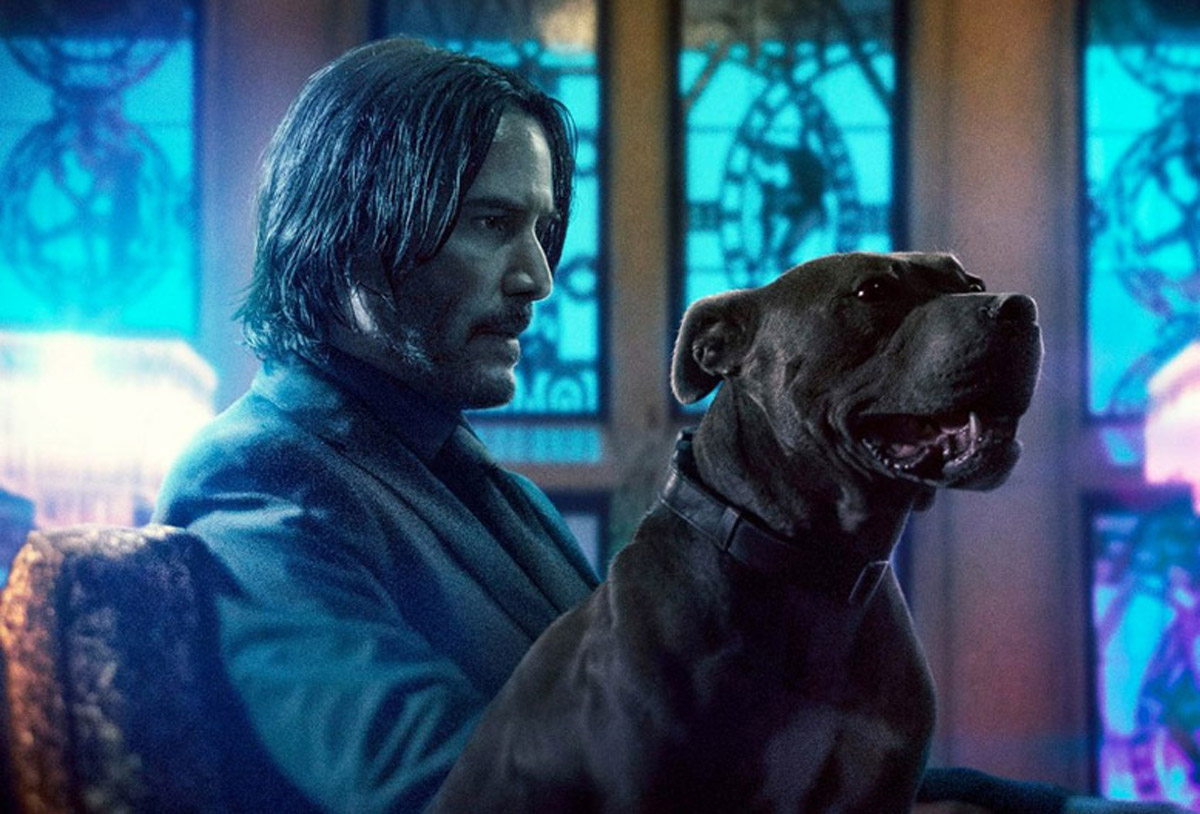
Kickboxer turned stunt man turned stunt coordinator turned helmsman of a phenomenon, Stahelski returns for his third tour with Keanu Reeves as dog-loving assassin widower John Wick for Chapter 3—Parabellum.

The great thing about chapters is that no one expects them to tell a whole story, and since storytelling and acting are not the strongest suits in this franchise, Stahelski wisely sharpens his focus on what is: action.

A breathless Act 1 (with a truly inspired use of the New York Public Library) picks up the moment John Wick 2 ends, mercifully dispensing with the need for exposition. In its stead, balletic mayhem.

The plot of sorts: Wick is in trouble with the guardians of the world’s assassin guild, approximately every third human in NYC is a hired killer, and there is a $14 million bounty on his head. Where can he go? What can he do?

These are questions Stahelski and his army of writers have fun answering with ludicrous, violent, exhausting, carnage-strewn glee.

Inside of 10 minutes it was clear that this is the best film of the trilogy.

Welcome new faces Anjelica Huston and Asia Kate Dillon cut impressive figures, though Halle Berry feels out of her depth and a clear sound stage representation of Morocco is the only clunky set piece in the movie.

Ian McShane, Lance Reddick and Laurence Fishburne return. Wisely, Stahelski lets these guys mete out most of the dialog. I’d wager Reeves utters fewer than 30 lines total.

Again, play to your strengths.

Dan Lausten’s camera ensures that you know when Reeves does his own action, most of which is choreographed and captured in long, fluid, serpentine shots with a lot of broken glass. Man, their easy-shatter glass budget must have been through the roof!

The Fast and Furious franchise didn’t become tolerable until it embraced the fact that it was a superhero series, abandoning all reason and logic and just jumping cars from the 100th floor of one building to the 100th floor of another. Luckily, it didn’t take John Wick six films to take flight.

I Don’t Want to Go Out—Week of May 13

Bunches of movies out this week in home entertainment, and a couple of them are quite amazing. Here’s the whole run down.

Click the film title for the full review.

Apollo 11

Her Smell

Meow Wolf: Origin Story

Fighting with My Family

Cold Pursuit

Charlie Says

Happy Death Day 2U

Pack Animal

Dogman

by Hope Madden

Cinema is full of lovable losers, but every so often an actor so fully inhabits a character that you can almost forget the film around him. He is no longer a disposable source of comedy or pity, but an living, breathing, bleeding human you must root for: Philip Seymour Hoffman’s Scottie in Boogie Nights, Robert De Niro’s Rupert Pupkin in The King of Comedy, Dustin Hoffman’s Ratso in Midnight Cowboy.

Marcello Fonte just leapt onto the list with his deeply flawed, deeply human and beautifully realized dog groomer Marcello in Matteo Garrone’s latest, Dogman.

Slight, fidgety and endlessly kind-hearted, Marcello loves his dogs, his daughter and the neighbors in his grey little seaside slum. Sure, he sells a little coke on the side, but he doesn’t want to cause any trouble.

Unfortunately for Marcello, the behemoth Simone (Edoardo Pesce, utterly brilliant) is nothing if not a lumbering mountain of trouble.

After his darkly delightful 2015 fairy tale outing Tale of Tales, Garrone returns to the heavier Italian realism of Gomorrah. He hasn’t abandoned allegory, though.

Given his nation’s political history and current leanings, it isn’t tough to draw metaphor from the tale of an unthinking bully and the population who cows to him. (This is not a tough metaphor for Americans to fathom, either.)

Not that it pulls attention away from Marcello. The film has themes of the classic Western, a good man pushed to dark means to protect what he has. But in this case, Marcello is an almost feminine presence among the cash-for-gold shop or video game arcade owners who share his strip of town. Marcello is liked, if not exactly respected.

Childlike is what he is, a pack animal but never the alpha. As his story progresses, Garrone’s tight grip on the narrative and its visual emphasis turn the film from that of an underdog’s struggle to something sadder and grander.

As hope mixes with hopelessness, Dogman raises questions it never really answers, and ultimately feels wearily confused and disappointed by people.

https://www.youtube.com/watch?v=LI2JE_xjAaY

Pika Pika

Pokémon Detective Pikachu

by Hope Madden

When my son was small and we played pretend, I made believe I was Snorlax so I could lay on the couch and do nothing. Does that make me a bad parent? Well, a lazy one, anyway, but the point is, I logged countless hours on that couch watching all manner of pocket monster.

I was dragged unwillingly into the world of Pokémon. No, I am not exactly the target audience for Pokémon Detective Pikachu (read: I am in no way the target audience for this movie). But, when Pikachu (voiced by Ryan Reynolds at his Ryan Reynoldsiest) says, “Mr. Mime is the worst,” I know enough to understand that shit’s the truth.

So, there is a plot. It involves loads upon loads of daddy issues, primarily (but not exclusively) those that hang over Tim Goodman (Justice Smith). In looking for his father he falls into a mystery involving a Pikachu who is not only adorable (he admits as much himself at least twice), but is also connected to Tim. Tim can understand him.

For the uninitiated, Pokémon just repeat their own names over and over and over again in a manner that makes you want to take your own life, and yet you tolerate it because you really do love your son.

But not this Pikachu! Sure, others can only hear his cute “pika pika,” but Tim can hear actual words, and those words are telling Tim, in a humorously snarky way, that he needs to unravel this mystery and work on his interpersonal skills.

Bill Nighy shows up as an entrepreneur/philanthropist/genius. Meanwhile, Ken Watanabe languishes with bafflingly limited screen time as a detective who is, let’s be honest, not very good at his job.

Kathryn Newton is a plucky would-be investigative journalist, her trusty Psyduck in tow. (Note: Psyduck is also the worst.)

Part of the entertainment value here is the genuine fondness for the content director Rob Letterman and his army of screenwriters bring to the table. Good looking CGI, committed performances and a solidly comedic but not too ironic tone also help.

The film doesn’t shoot over the heads of the youngest fans, does embed scads of references and homages for those there for nostalgia, and throws around enough kid-friendly Reynoldsisms to entertain parents who mercifully missed out on Pokémon Gen 1 and 2.

Is it a colossal waste of Ken Watanabe’s talent? Oh God, yes. Terrible.

But honestly, otherwise I don’t have a lot of complaints.

Third Time Charmless

The Hustle

by George Wolf

1964’s Bedtime Story begat 1988’s Dirty Rotten Scoundrels and now, after begettin’ a gender switch, the con is on again as The Hustle.

This third time is not lucky, or charming, or funny. Mostly, it’s just painful.

Anne Hathaway is high-class grifter Josephine, who’s wary of newcomer Penny (Rebel Wilson) trying to work the same bit of French Riviera turf. Josephine’s attempts to drive Penny away go nowhere, so the two hatch a wager to decide just who will have to find new hunting grounds.

Hathaway is a worthy Oscar winner, and though Wilson’s pony could really use more tricks, she can be funny. What either one of them saw in this inane script is beyond me and beneath both of them.

The film seems overly proud of itself for the girl power wokeness, while director Chris Addison bases the updated gags on such contorted silliness that when Penny exclaims “That makes zero sense!” it feels like we just learned the identity of Keyser Soze.

If you’ve seen either of the first two go ’rounds, you already know how the con winds up, and it’s never been less fun getting there.

But if the heart of The Hustle is new to you, see steps one or two.

Gimme an A! A! R! P!

Poms

by Christie Robb

At a time when movies are pushing three hours, it feels weird to want one to run longer, but at just over an hour and a half, Poms feels way too short. It’s like a long SNL sketch.

A female-centric comedy about a retired teacher aching for one last shot at her childhood dream of becoming a cheerleader seems like a good option for Mother’s Day weekend—especially for the Boomers and their kids. The cast looks solid: Diane Keaton, Jacki Weaver, Pam Grier, and Rhea Perlman. Poms coming “from the studio that brought you Bad Moms” appears promising.

But it’s all just perfunctory.

Director Zara Hayes and writer Shane Atkinson, both TV veterans making feature debuts, introduce characters via montage and then give them little to do or say.

People become strange antagonists, set on denying the senior cheerleading squad practice/performance time for no discernible reason. Folks burst into tears or have 180 degree shifts in perspective simply because the plot demands it.

Still, Keaton’s performance of a woman striving to live in the moment while hiding terminal cancer is effective. The chemistry between Keaton’s snarky Martha and Jacki Weaver’s bubbly Sheryl is cute. And when they are performing, the women look like they are having a nice time.

You just wish that there was more of a story there, more character development, more cheerleading even. The cast is way too good for this.

Forming the Fellowship

Tolkien

by George Wolf

Better confess right now: the whole Hobbit, Lord of the Rings thing just isn’t my bag. God bless you if you love the books, films and all, but the whole story just leaves me cold.

That’s not to say I can’t respect and admire the incredible imagination of author J.R.R. Tolkien, or the biopic about him that’s full of so much respect and admiration.

But what’s strangely missing in Tolkien is the wonder, the spark of endless creativity so abundant in the author’s expansive literary landscapes.

Writers Stephen Beresford and David Gleeson anchor Tolkien’s pre-Hobbit life in the trenches of WW1. As Officer Tolkien (Nicholas Hoult) searches the battlefield for a boyhood friend, flashbacks fill us in on his upbringing as an orphan adopted into wealth.


With an eye on “changing the world through the power of art,” Tolkien forms a “Dead Poets” – type secret society with his mates at Oxford, where he impresses esteemed language professor Joseph Wright (Derek Jacobi in a wonderful cameo) as well as the lovely Edith Bratt (Lily Collins).

Both Hoult and Collins are committed and pleasing, but the courtship becomes just another informative but less-than-engrossing leg the film stands on.


Though director Dome Karukoski keeps things well-assembled and plenty reverent toward his subject, this film never quite conveys the spirit of inspiration it seeks to celebrate. With a frustrating lean toward safety over enlightenment, Tolkien turns an ambitious quest into a rather pedestrian journey.

Charlie’s Angels

Charlie Says

by Hope Madden

It’s been 50 years since Charles Manson and his family effectively terminated the 1960s. Filmmaker Mary Harron (American Psycho) joins Daniel Farrands and Quentin Tarantino in commemorating the anniversary.

Earlier this year, Farrands unleashed the grim and quickly forgotten The Haunting of Sharon Tate, while Tarantino’s next likely cultural phenomenon, Once Upon a Time in Hollywood,  promises to shine some of its spotlight on the Manson family crimes as well.

Harron’s film, Charlie Says, follows Leslie Van Houton (Hannah Murray), Susan Atkins (Marianne Rendon) and Patricia Krenwinkle (Sosie Bacon), three years after their incarceration, as they reflect on Manson’s promises and their own actions.

The aptly titled film is as concerned with the women’s brainwashing as it is the crimes themselves, although it unfortunately provides no real insight into either.

Harron spends about half the film in the California Women’s Correctional Facility, where the trio is taught by dedicated grad student Karlene Faith (Merritt Wever, portraying the author of the book that inspires the film).

The eerie chorus of “Charlie says…” greets nearly every question Wever lobs at her students, which generally spurs a flashback to time on the ranch with Charlie (Matt Smith).

Here we hit a snag, because Smith lacks the charisma, the hatred, the ugliness or the psychotic aura to pull of Manson. He is never terrifying, never seductive—never convincing.

In fact, most of the flock lacks the weather beaten conviction we recognize from police tapes. The period detail and tone lack degrees of authenticity as well.

Harron’s film opens strong, but it quickly loses its footing and never really finds it again. Working from Guinevere Turner’s screenplay, Harron brings up some interesting themes—particularly questioning the point of breaking through to these women, knowing that puncturing their fantasies only means their clear-eyed horror whether looking backward or forward.

But she doesn’t really land any punches. The film never feels particularly queasying, especially enlightening or even very memorable.

I guess we still have Tarantino. Or maybe it’s just time we all moved on and stopped obsessing over what Charlie had to say.