Wow, there are a lot of movies coming home this week. Some of them are so bad. Just really, extraordinarily bad. But hidden in there are a couple of decent horror flicks you might have missed.
There is something primally terrifying in the idea of missing persons – losing someone or being lost. Where are they and what is happening to them? No mater which side of that question you are on, the imagination conjures terrifying images.
Listen to the full podcast, including a special interview with Hounds of Love director Ben Young.
5. The Poughkeepsie Tapes (2007)
John Erick Dowdle’s film is a difficult one to watch. It contains enough elements of found footage to achieve realism, enough police procedural to provide structure, and enough grim imagination to give you nightmares.
Edward Carver (Ben Messmer) is a particularly theatrical serial killer, and the film, which takes you into the police academy classroom, asks you to watch his evolution from impetuous brute to unerring craftsman. This evolution we witness mainly through a library of videotapes he’s left behind—along with poor Cheryl Dempsey (Stacy Chbosky)—for the police to find.
Cheryl is Carver’s masterpiece, the one victim he did not kill but instead reformed as his protégé. It’s easily the most unsettling element in a film that manages to shake you without really showing you anything.
4. Berlin Syndrome (2017)
Aussie photographer Clare (Teresa Palmer, better than she’s ever been) is looking for some life experience. She backpacks across Europe, landing for a brief stay in Berlin where she hopes to make a human connection. Handsome Berliner Andi (Max Riemelt) offers exactly the kind of mysterious allure she wants and they fall into a night of passion.
What follows is an incredible combination of horror and emotional dysfunction, deftly maneuvered by both cast mates and director Cate Shortland. The mental and emotional olympics Palmer goes through from the beginning of the film to the end showcase her instincts for nuanced and unsentimental performance. Clare is smart, but emotionally open and free with her own vulnerability. The way Palmer inhabits these characteristics is as authentic as it is awkward.
Even more uncomfortable is the shifting relationship, the neediness and resilience, the dependency and independence. It’s honest in a way that is profoundly moving and endlessly uncomfortable. Riemelt matches Palmer’s vulnerability with his own insecurity and emotional about-faces. The two together are an unnerving onscreen pairing.
3. The Vanishing (Spoorloos) (1988)
Back in ’88, filmmaker George Sluizer and novelist Tim Krabbe adapted his novel about curiosity killing a cat. The result is a spare, grim mystery that works the nerves.
An unnervingly convincing Bernar-Pierre Donnadieu takes us through the steps, the embarrassing trial and error, of executing on his plan. His Raymond is a simple person, really, and one fully aware of who he is: a psychopath and a claustrophobe.
Three years ago, Raymond abducted Saskia (Johanna ter Steege) and her boyfriend Rex (Gene Bervoets) has gone a bit mad with the the mystery of what happened to her. So mad, in fact, that when Raymond offers to clue him in as long as he’s willing to suffer the same fate, Rex bites. Do not make the mistake of watching Sluizer’s neutered 1993 American remake.
https://www.youtube.com/watch?v=fcA10H-85×4&t=36s
2. The Blair Witch Project (1999)
Blair Witch may not date especially well, but it scared the hell out of a lot of people back in the day. This is the kind of forest adventure that I assume happens all the time: you go in, but no matter how you try to get out – follow a stream, use a map, follow the stars – you just keep crossing the same goddamn log.
One of several truly genius ideas behind Blair Witch is that filmmakers Daniel Myrick and Eduardo Sanchez made the audience believe that the film they were watching was nothing more than the unearthed footage left behind by three disappeared young people. Between that and the wise use of online marketing (then in its infancy) buoyed this minimalistic, naturalistic home movie about three bickering buddies who venture into the Maryland woods to document the urban legend of The Blair Witch. Twig dolls, late night noises, jumpy cameras, unknown actors and not much else blended into an honestly frightening flick that played upon primal fears.
1. Hounds of Love (2018)
Driven by a fiercely invested and touchingly deranged performance from Emma Booth, Hounds of Love makes a subtle shift from horrific torture tale to psychological character study. In 108 grueling minutes, writer/director Ben Young’s feature debut marks him as a filmmaker with confident vision and exciting potential.
It is the late 1980s in Perth, Australia, and at least one young girl has already gone missing when the grounded Vicki (Ashleigh Cummings) sneaks out her bedroom window to attend a party. This isn’t nearly as dumb a move as is accepting a ride from Evie White (Booth) and her husband John (Stephen Curry).
As the couple dance seductively and drink to celebrate, Young disturbingly conveys the weight of Vicki’s panicked realization that she is now their captive. It is just one in a series of moments where Young flexes impressive chops for visual storytelling, utilizing slo-motion, freeze frame, patient panning shots and carefully chosen soundtrack music to set the mood and advance the dreadful narrative without a spoken word.
Low-key visionary director Richard Linklater, inexhaustible talent Cate Blanchett and wildly popular source material exploring creativity, motherhood and existential angst—Where’d You Go, Bernadette could work.
The title suggests two things. Metaphorically, it refers to
a disappeared genius. Bernadette Fox ceased to exist when she abandoned her architectural
artistry for parenthood and, as far as the creative world knew, vanished.
In a less metaphorical manner, the title refers to the
actual mystery driving the plot of Maria Semple’s novel—the story of a teenager
using emails, news clippings and notes to try to piece together the whereabouts
of her now-literally-missing mother.
That mystery is mainly gone from Linklater’s film
adaptation, as Bernadette (the ever-exquisite Blanchett) doesn’t up and vanish
until well after the 90-minute mark, and because the audience knows where she
is all the while.
Instead, Linklater focuses on why she left in the first
place. Because, what could have been an ideal situation for another woman—wealthy
husband (Billy Crudup) and his super-attentive administrative assistant,
precocious and adoring daughter (Emma Nelson), nice neighborhood (even if the
neighbors hate her), good schools, money to burn on virtual personal assistants
(who turn out to be Russian identity thieves)—welp, it just doesn’t seem to be
enough for Bernadette.
There’s a lot to like about Where’d You Go, Bernadette, including a game cast and some gorgeous footage. Unfortunately, under all that is yet another fantasy about a rich white woman who needs to find herself.
In its worst moments, the film falls back on catty mean girlisms,
as if the greatest nightmare a woman could face would be for the withering
cliquishness of high school to survive into adulthood, the popular moms making
you feel like an outcast all over again.
The filmmaker hits his stride, unsurprisingly, when pairing Blanchett with, well, basically anybody. Her one-on-one moments with Nelson, Kristin Wiig (as prissy neighbor Audrey), Laurence Fishburne (playing a former colleague) and Crudup (neutered as his character is) almost make up for the blandly directionless narrative.
Linklater can do comedy (School of Rock!!). He can certainly dive into motherhood (Boyhood). Nobody’d argue his insight and artistry when it comes to documenting a romantic relationship with its ups and downs (Sunset series). Frustratingly, with this film he simply cannot seem to decide which direction to take.
Comedic moments are abandoned before they land, emotional messiness
is tidied into submission, dramatic moments are undercut before they can
generate any tension.
The resulting, meandering tale doesn’t go much of anywhere.
Cinematic in structure, narrative in its storytelling, all of it expressed with a visual flair that give it the sense of poetry—Honeyland is no ordinary documentary.
Filmmakers Tamara Kotevska and Ljubomir Stefanov offer a master class in fly-on-the-wall documenting with their patient, beautiful story of a lone beekeeper. Or is Honeyland actually an analogy for the human race and our relationship with this planet?
It’s both.
The Sundance winner offers no exposition, no context, no question and answer. Content to simply observe, Honeyland follows Hatidze Muratova, a Macedonian beekeeper. Loving long shots establish both the rugged terrain and the isolation of Hatidze’s days as she begins the yearly cycle of transporting a hive, caring for it and reaping the benefits of that patient, diligent work.
The filmmakers’ respect for Hatidze drives the doc, which
never labels or trivializes its subject, never patronizes.
The solitude and the quiet of Hatidze’s days spent with bees
and evenings with her bedridden mother soon make way for chaos and cacophony,
as Hatidze’s lonesome dot of Macedonian land makes room for Hussein Sam and his
nomadic family.
Kotevska and Ljubomir abandon the long shot in favor of mid-range filming and close ups crowded with jumping children, bickering siblings, chickens and cattle. The campers, the kids, the lifestock, the noise—all of it caught with affection and trepidation by both the filmmakers’ camera and Hatidze’s smiling eye.
Somewhere on the edge of this rush of sound creeps Hatidze, curious and cautious but smiling. Little by little she and this family form a community. She even becomes something of a mentor in the beekeeping tradition to one of the young sons, forming a sweet and eventually heartbreaking relationship.
Heartbreaking because rush and need, ambition and impatience all combine with selfish interests to convince the Sam family that beekeeping is also for them. Shortcuts lead to a natural imbalance and soon Hatidze faces the crisis left behind when the natural environment is used for profit rather than nurtured for balance.
Beautifully filmed with natural light to create a sort of visual lyricism, Honeyland becomes an allegory for our times. It’s hard not to be invested in Hatidze’s story, in her bees, as if our own future depends on them.
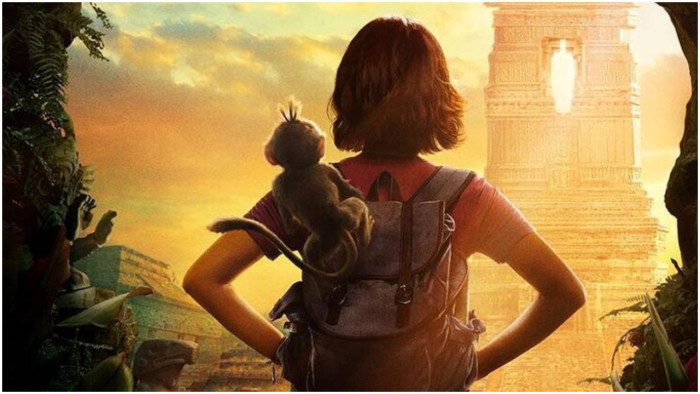
Dora the Explorer takes her backpack, her map and her
adventures to the big screen. Can you say surprisingly entertaining?
It helps that director James Bobin (The Muppets, Flight of the Conchords) has mastered the art of cheeky-yet-wholesome fun. Our story begins in the jungle where 6-year-old Dora (Madelyn Miranda) and cousin Diego (Malachi Barton) seek adventure under the somewhat watchful eyes of Dora’s parents (Eva Longoria and Michael Pena).
But Diego is off to the big city with his parents and, about
ten years later, Dora goes to stay with him while her parents seek the famed
Lost City of Gold.
She may be 16, but Dora (Isabela Moner) hasn’t changed,
which means the nightmare of high school is about to get worse for Diego (Jeff
Wahlberg – yes, he’s a nephew).
And though the bulk of the plot deals with a kidnapping, a
jungle adventure to find Dora’s parents, and an Indiana Jonesesque trek into a
lost city, the heart of the film is with outsiders and outcasts facing high
school.
Moner is an impressive talent, a point she’s proven with roles in Sicario 2 and Instant Family. She plays bright-eyed Dora with utter earnestness, allowing Bobin and a game cast to land plenty of jokes, none of them cynical or unkind.
This is definitely a family-friendly film, but you don’t have to be a preschooler to find enjoyment. Bobin’s good-natured humor winks at parents, the move to high school will endear the film to ‘tweens, but the high spirit and affection for the source material won’t be lost on little ones.
Is it a classic? It is not. And if you were one of the many middle aged men sitting alone in the theater yesterday, for shame. But Dora and the Lost City of Gold is a charmer and not a bad way to spend some time with the family.
So remember, high school is a horrible nightmare. Be yourself. And no swiping!
“The ocean’s always trying to kill you. It doesn’t take a
break.”
So says Tracy Edwards, and she should know. At 24 years of age in 1989, fresh off a stint as cook on a charter boat, Edwards skippered the Maiden with the first all-female crew to enter England’s Whitbread Round the World Race.
Thirty years later, documentarian Alex Holmes revisits this
historic event with clarity and candor.
It’s certainly no surprise that the odds were stacked against Edwards, although it is fascinating to look back at just how these sailors were treated by other yachtsmen as well as the media.
According to Jen Mundy, Edwards’s girlhood friend and member
of her crew, those set to sail Maiden were told: “You’re not strong enough.
You’re not skilled enough. Girls don’t get on. You’ll die.”
Girls don’t get on?
Yes, even as the Eighties came to a close there were enough
commonly believed stereotypes about women’s inabilities and bitchy tendencies
to sink a yacht. And Holmes is not ready to let those spouting such idiocy off
the hook. He interviews a number of journalists, each of whom admit to being
convinced the Maiden has no shot at completing the race. The Guardian’s Bob
Fisher went so far as to refer to the crew as “a tinful of tarts.”
He actually defends that headline in the documentary.
It’s impossible not to notice that the word “woman” is used
maybe twice in the entire film, every participant, even Edwards herself,
preferring the term “girls.”
Vocabulary aside, Holmes finds an interesting arc for a
sports doc. As the race begins, simply finishing the first leg was cause for
patronizing celebration: a bunch of girls didn’t die. Hooray!
But Edwards and crew were, like everyone else in the race in
1989, competitors invested in the competition, focused on winning and only on
winning. Unlike their competition, the crew of the Maiden seemed genuinely,
even wildly unaware of the profundity of simply participating.
The spirit of female defiance, that’s the flag the Maiden
flew at journey’s end. After proving their ability – after besting their
competition repeatedly —that celebration lost its patronizing taint.
Scene after windy, wet, terrifying scene—the nautical thrills crisply underscored by Rob Manning and Samuel Sim’s score—skipper and crew of the Maiden strategize, tough it out, and risk a watery grave. And why?
Mainly because one malcontent—Edwards, who’d been suspended
26 times before she was finally expelled from school at 15—wanted to do it and
was told she couldn’t.
It’s been an ugly few days, and while we reel from our country’s 251st mass shooting, this one painfully close to home, it’s a good time to remember that Dayton, Ohio is an amazing town teeming with fascinating, resilient people.
Eric Mahoney knows that, which explains why he returned to
his hometown for this second documentary, this one on the Nineties indie punk
force Brainiac.
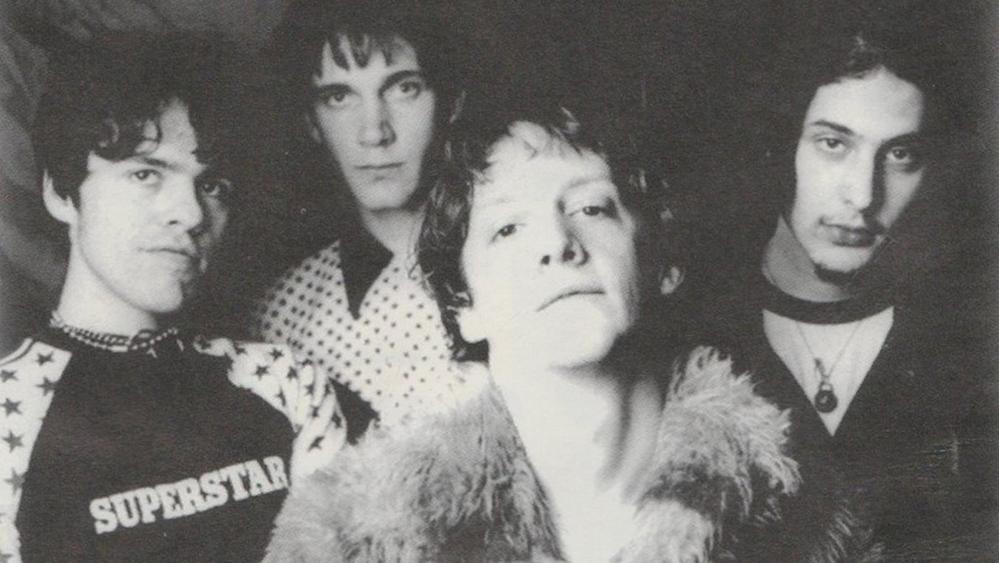
The adjective used most frequently in Mahoney’s rock doc Brainiac:
Transmissions After Zero is “weird.”
Fitting, really, for a film that dives into the brief and electric career of Dayton’s pride and one of the most innovative and surprisingly influential indie bands on the young scene.
Haven’t heard of them? Now’s your opportunity.
Don’t just take it from Mahoney. Take it from Hole’s Melissa
Auf der Maur, The Mars Volta’s Cedric Bixler-Zavala, The National’s Matt
Berninger, Fred Armisan and tons of others who still mourn the loss of this
genuine and unique and weird presence in music.
Filmed 20 years after the freak accident that took the life
of the band’s songwriter and main creative force, Tim Taylor, Transmissions
After Zero makes itself comfortable with those who knew him best: his mom,
his sister, his band.
Mahoney’s timestamp of a picture offers a refreshing break
from the Behind the Music style of so many rock docs—partly because Brainiac’s
trajectory ended days before signing with a major label.
What results is a candid look at what happens to the rest of the band, dealing not just with grief but also with the abrupt end of their forward progress, the end of their dream.
The film, in the end, is less about Tim Taylor himself and more about the band. Taylor’s presence is never far from mind, but at the same time, Mahoney and his subjects never manage to truly articulate that presence. Perhaps it’s a lack of interview footage, but the absence is felt—which partly frustrates but also fuels the doc’s overall sensibility of loss.
Without Taylor, Mahoney relies on bandmates Juan Monastrio,
Michelle Bodine, Tyler Trent and John Schmersal to keep things lively. Their
candor, wit and weirdness compel attention and empathy. Their openness with
Mahoney is touching and often very funny.
Mahoney offers mainly talking head footage with brief snippets of the band onstage and some low-key but inspired animated sequences. He exhibits a little electro punk flourish himself as he pieces together the elements, but his style never upstages the content.
Instead, he lets the music and the musicians tell their own story. Like a lot of rock docs, Transmissions After Zero introduces or reintroduces a group of voices that should not have been lost. And in this case, it also reminds us how great Dayton and its people really are.
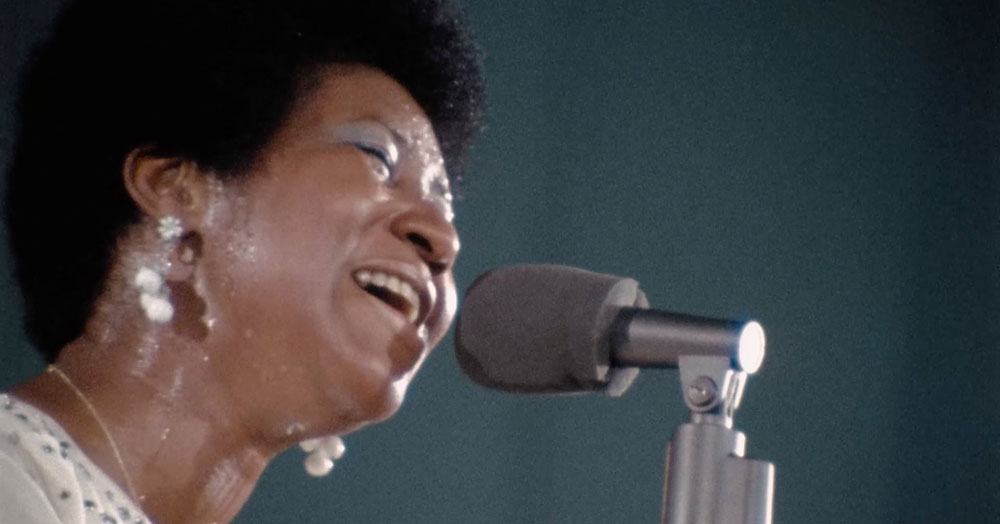
A couple of the best films of 2019 are ready for you to take them home. Do not miss Amazing Grace, an unmissable music documentary that captures Aretha Franklin at the apex of her skills, and the introspective indie gem The Souvenir.