Screening Room: Let Him Go, Jungleland, Mortal, The Dark and the Wicked, Kindred & More
by Hope Madden
It’s incredibly hard to make a film that feels fresh. Hell, it’s hard to get a film greenlit unless you can describe it to potential financers as a cross between something they’ve seen and something else they’ve seen. Most hope of originality is squashed early.
Writer/director Joe Marcantonio doesn’t exactly concern himself with originality in his feature debut, Kindred. He hopes a stellar cast and a thick, uneasy atmosphere can make up for some of his film’s predictability. For the most part, that does work.
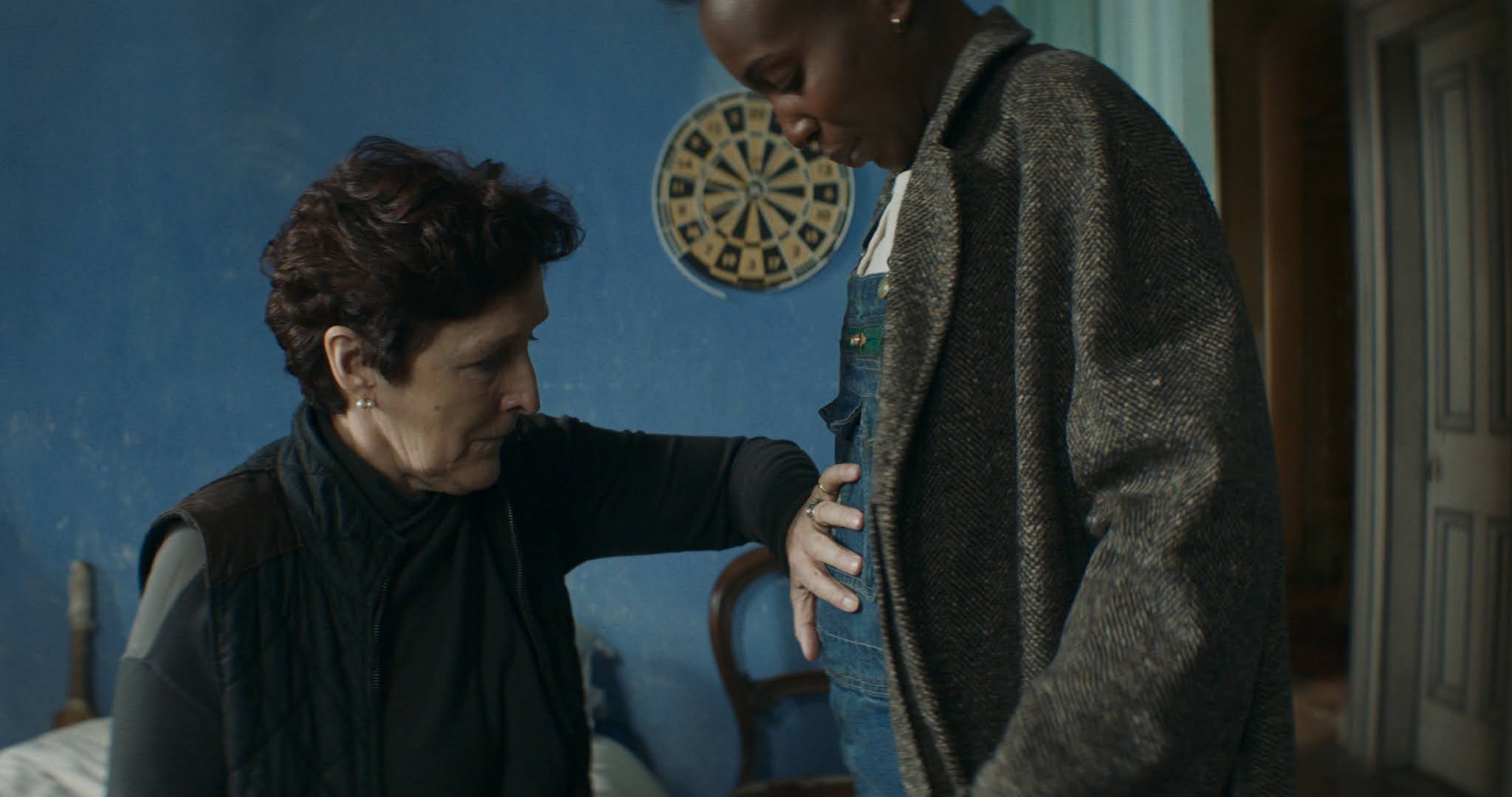
Charlotte (Tamara Lawrance) and her white boyfriend Ben (Edward Holcroft) intend to leave their isolated English village for Australia. Now it’s just telling Mum (Fiona Shaw, as formidable a presence as ever).
The first Sunday lunch with Mum and step-brother Thomas (Jack Lowden) effectively conveys all we need to know about the family dynamics, and Marcantonio tidily establishes a sense of dread that will only deepen as the moments pass until the final credits.
Charlotte, you see, is pregnant, and when Ben dies suddenly, Mum and Thomas offer hospitality that will quickly turn into an inescapable prison.
There are hints early in the film that perhaps Ben is more like his Mum—a bit controlling and manipulative, even if he doesn’t honestly realize it. This sets an intriguing conflict that will obviously balloon once Mum’s in charge.
It’s Rosemary’s Baby meets Get Out. See? Two outstanding movies that you may not want to see watered down into a terribly obvious story, but again, a great atmosphere and several fierce performances will pull you through it.
Shaw’s turn is a magnificent slice of will and bitterness, but it’s Dunkirk’s Lowden who steals the film. In his hands, Thomas is so eerily sincere that you never know quite what to expect. He’s simultaneously sympathetic, pathetic, and sweetly terrifying.
Lawrance works valiantly against a script that frustrates you with its lazy plotting of constant near-escape and recapture. Worse still is the way Marcantonio ignores his underlying themes of racism—something that could have given the old Gothic style fable of bit of new life.

by Hope Madden
André Øvredal is a hard filmmaker to pin down. After his 2010 breakout Trollhunter, a giddy found footage flick concerning the impact giant trolls have on his native Norway, the writer/director got far more serious with his 2016 sophomore effort, the excellent horror show The Autopsy of Jane Doe.
Then it was all visuals and atmosphere in the more family friendly genre fare Scary Stories to Tell in the Dark. And now he abandons any hint of horror, returning to the mythology of his homeland for a superhero tale of sorts, Mortal.
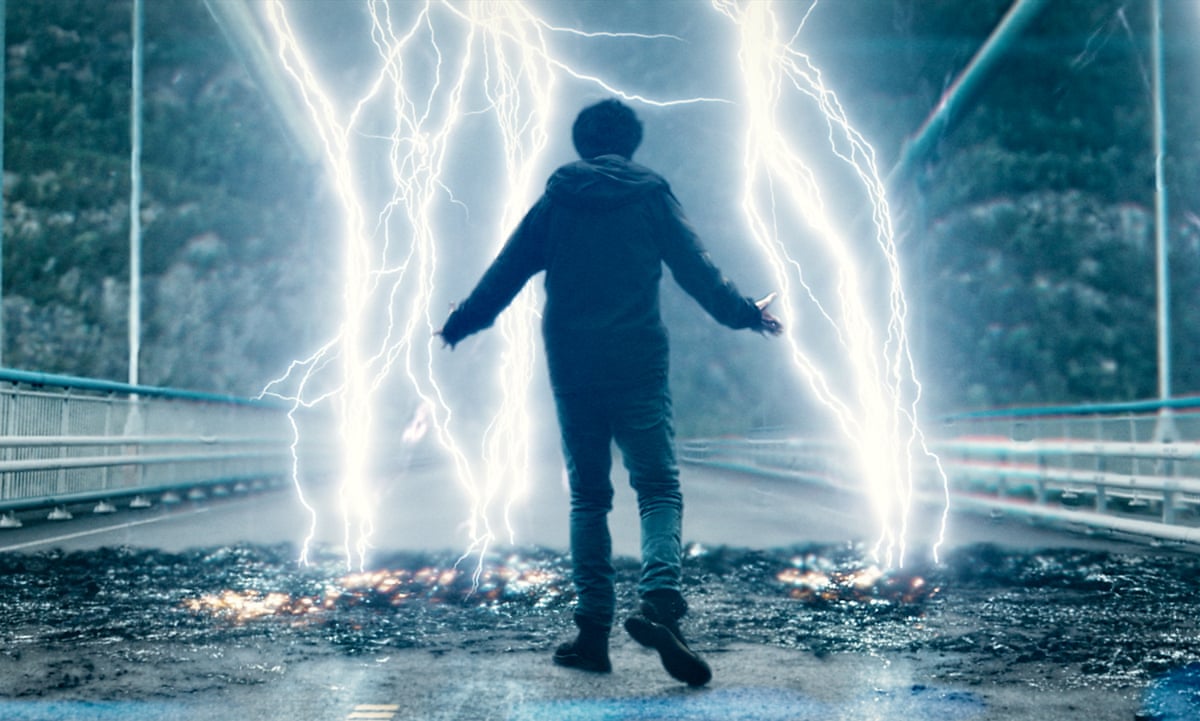
Nat Wolff is Eric, a disheveled American in Norway. He keeps to the forests, isolates, but eventually runs afoul of a car full of teenage d-bags—much to the dismay of the marauding teens.
Under arrest and awaiting an American convoy, he’s befriended by Christine (Iben Akerlie) the Norwegian therapist asked to speak with him. She’s the first to recognize his burgeoning but uncontrolled powers, although the Americans who are coming for him seem to have some inkling.
What Øvredal has done here is to reimagine the superhero origin story. True to its title, Mortal examines a very human character, weighing the guilt, pressure, confusion and fear that come with this territory.
Some comic franchises—the X-Men, in particular—ask whether humankind is ready or even worthy of superior beings. Mortal does the same. In fact, it does a lot of the same things you’ve seen in other origin stories and superhero franchises. Its uniqueness may be in the afterthought about how the world would construe the existence of a superhero in terms of religious implications.
This is one of the truly interesting thoughts the film injects into the overcrowded genre. It’s not well developed, unfortunately. But there is something akin to swagger in watching this mid-budget action thriller wrangle Norway’s own mythology away from a far showier, exponentially more famous universe.

by Hope Madden
I’ve been a Bryan Bertino fan since The Strangers because of course I have. How could I not be? That loyalty paid off in 2016 with the moving allegorical horror The Monster, and it rewards viewers again this weekend with the supernatural terror of The Dark and the Wicked.
A twisty old Southern Gothic that relies on practical effects and imagination, the film arrives somewhere in deeply rural America with Louise (a terrific Marin Ireland). She’s about a day behind her brother Michael (Michael Abbott Jr., The Death of Dick Long), back at home because of Dad’s deteriorating health.
Mom (Lynn Andrews) does not want them here.
Bertino is not a filmmaker to let his audience off the hook—if you’ve seen The Strangers, you know that. Like that effort, TD&TW is a slow burn with nerves fraying inside the isolated farmhouse as noises, shadows, and menacing figures lurk outside.
Bertino and cinematographer Tom Schraeder work the darkness in and around the goat farm to create a lingering, roaming dread. There are clumsier moments that feel like pre-ordained audience scares, and they really stand out in a film that otherwise just seeps into your subconscious. But where Bertino, who also writes, scores extra points is in crafting believable characters.
Too often in horror you find wildly dramatic behavior in the face of the supernatural. One character adamantly denies and defies what is clearly happening while another desperately tries to communicate with “it.” No one would do either, but this is the best way to serve the needed action to come in lesser films.
Here, Bertino, Ireland and Abbott give us real characters honestly grappling with something extraordinary.
The don’t want to be here. They don’t want to leave. So, they just do what they can, like the rugged folks they are.
“Well, if I’m here, I’m gonna work.”
Like Natalie James’s Relic from earlier this year, TD&TW has the long, slow, debilitating experience of parental illness on its mind. Like that film, this movie has a deeply aching center that makes the horror in the house as tragic as it is scary, and more horrifyingly, somehow inevitable.
by Hope Madden
Spell is here to let you know that fear of backwoods folk is not for white people only.
Omari Hardwick is Marquis, an enormously successful corporate lawyer who is not above defending clients against class action lawsuits that would primarily benefit people of color like himself. Why does he do it? Because that’s his job, he’s good at his job, he makes a lot of money, and he worked very hard to get where he is.
How do we know that last bit? Well, nightmares about abuse wake him in the morning, plus he knows how to pick a lock when his wife somehow locks herself in her own bedroom. Marquis came from somewhere he’s not proud of, and now he has to pilot his own airplane with his wife and two teens back to Appalachia to go to his father’s funeral.
Spell is a by-the-numbers backwoods thriller. Our hero has forgotten where he comes from. This film plans to scare him into remembering.
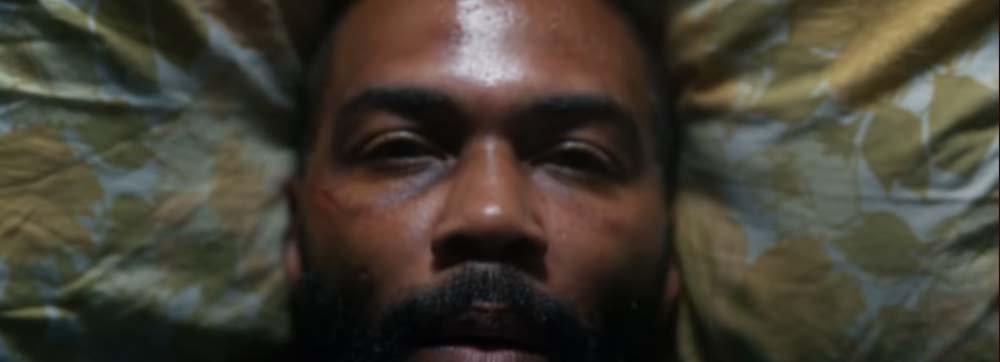
Marquis wakes up all James Caan style in the bedroom of some helpful but controlling woman who wants him just to rest. He does not not want to rest, though. Quite reasonably, he wants to know where his family is, what happened to him, and why Miss Eloise (Loretta Devine) keeps the door to his room locked.
Deep in Appalachia, it seems, you will always find a creepy granny type who conjures a bit, an amiable grampa type who’s not as nice as he seems, and an extra-large, extra quiet Jethro kind of guy in bib overalls.
Screenwriter Kurt Wimmer doesn’t drum up too many surprises there. His screenplay borrows heavily from about a dozen films from Misery to The Skeleton Key to Green Inferno, not to mention every flick where a group stops off at a creepy gas station only to realize they’ve gone too far off the map for their own safety.
Wimmer is white, though, which makes this particular story an unusual one for him. Director Mark Tonderai does not get a screenwriting credit, so I guess we assume that this vernacular sprung from the head of Wimmer. I really hope not. It would be problematic enough coming from a Black writer.
Marquis’s foot, though. For gore hounds and the squeamish looking for a nasty thrill, that foot alone is almost worth it.
Until the third act. I am not one to suggest that ambiguity equals plot holes. I like movies that leave questions unanswered. Unless those questions are: Where did the entire cast of villains go off to, leaving the hero all the time in the world to travel wherever he needs to go in these woods? And why isn’t he even limping?

by Hope Madden
Alfie (Chelsea Islan) is a badass survivor. You can tell because she’s really mean to everyone and she and others repeatedly mention the ordeal she’s already survived.
One problem: if you haven’t seen writer/director Timo Tjahjanto’s 2018 film May the Devil Take You—and you probably haven’t—you’ll need to take this film at its word. May the Devil Take You Too (also called May the Devil Take You: Chapter Two) revisits the hero of that little known Indonesian film two years after the incidents you likely don’t know about.
Maybe I’m wrong. Maybe you totally know all about Alfie, young Nara (Hadijah Shahab) and some kind of demonic parenting issues. If you haven’t seen the original—and I haven’t, by the way—you should probably still be able to make heads or tails of this sequel’s story. More or less. Kind of.
So here’s the skinny. Meanie-pants Alfie, badass survivor, and young Nara find themselves the involuntary guests of seven foster siblings. Like Alfie, the group has some diabolical paternal concerns. It’s never at all clear why they think Alfie could help them, why Nara had to come, or why the whole thing is staged as a kidnapping.
The point is, best not to look closely at the details.
The filmmaker has his own take on religious ritual, possession and afterlife horror, although he is unafraid to wear his American influences on his sleeve. Evil Dead references are a lot less fun when delivered so humorlessly, though. (You may also detect several Nightmare on Elm Street references, and just a touch of Constantine.)
Chapter Two does a lot with a limited budget, relying mainly on old fashioned practical effects and makeup for scares—with frequently decent outcomes. There is some grisly fun to be had in Tjahjanto’s nightmare funhouse.
The filmmaker’s strength is certainly more in staging and effects than it is in writing, however. Contrived and often counter intuitive, the plot is little more than an opportunity to string together kills and the dialog is weak. Not one character makes natural decisions— mainly they stand around in a group looking shocked and screaming each other’s names while something happens.
But once it gets going, Chapter Two is pretty relentless with the bloody action. That’s probably not reason enough to see it, unless you’re a huge fan of the original. Maybe that one was good.
Thrilled to be asked by Nightmares Film Festival to interview filmmaker Natalie James. The Relic director talks about the transition from shorts—like her NFF winning Creswick—to features.
by Hope Madden
Who doesn’t enjoy a good bag o’cash flick?
Whether it’s the darkly humorous Lucky Grandma or lyrically tragic A Simple Plan, the terrifying innocence of Millions, or the violent masterpiece that is No Country for Old Men modern cinema has proven that you can do a lot with the combination of thrill, hijinks and dread that come along with an unexpected satchel full of bills.
Writer/director Kim Yong-Hoon pieces together just such emotions with his first feature. A nice guy, a missing person, that bag of cash, a mean tattoo, a lucky pack of cigarettes, a cool title—Beasts Clawing at Straws looks like it has it all.
Telling his tale in chapters that disjoint the narrative into a series of six interconnected plotlines, the filmmaker borrows the cinematic language of Tarantino and the Coens. If you’re going to steal from somewhere, you could do worse.
His pacing, framing, use of color and light all give the film its own swagger, though, and whether you guess where it’s all headed or you don’t, you’re bound to remain interested.
Where the filmmaker really strikes it rich is with this cast. Every actor adds a little exaggerated pathos to the mix as we ascend the ranks of smalltime crooks, each looking to score off another, all of them somehow connected to this stuffed Luis Vuitton bag.
Woebegone and hard working, Sung-Woo Bae offers the picture an emotional center. But the mid-film entrance of Do-yeon Jeon—glorious as ever—gives Beasts new life. She offers the chapters a sleek, devious tone the film had been missing.
Beasts Clawing at Straws offers mainly visceral if superficial thrills, but periodically it does ask us why it is we find ourselves rooting for the baddie. In the world created in this film, good and bad are separated by shades of grey and blood stains and no matter how you define yourself, you’re only one big, fat bag of cash away from finding out the truth.
by Hope Madden
Has it really been three years since filmmakers Justin Benson and Aaron Moorhead took us on the UFO death cult head trip that was The Endless?
It’s hard to tell with these guys. They really like to play with time.
Another riff on the same theme, Synchronic is a sci-fi fantasy about parallel dimensions and time travel—plus bath salts.
Steve (Anthony Mackie) and Dennis (Jamie Dornan) are best friends and NOLA paramedics, each facing his own existential crisis. Dennis can’t seem to move past the fear that he’s settled: for his wife, his job, his life. Meanwhile, Steve—whose existence of work, drink and women long ago ceased to have meaning—gets a medical diagnosis that has him rethinking everything.
So far so ordinary, but if you’ve seen anything these filmmakers have done (and you should see everything), you know something seriously weird is coming.
The film’s conceit is a fascinating one, and every grisly crime scene offers a curious clue that may eventually help Steve solve a mystery that gives him purpose and redirects his bestie. Benson, who writes and co-directs, offers plenty of opportunity for mind-bending action and wild set pieces.
He and co-director/cinematographer Moorhead cut back and forth through time to keep you guessing as to the mystery developing, but what’s left underdeveloped are the characters.
Two of the filmmakers’ previous three efforts focused on a pair of men linked through time and experience to the other—best friends in Resolution, brothers in The Endless. This kind of relationship has proven a beautiful anchor for their trippy plots, but Synchronic doesn’t invest enough time or attention to Steve and Dennis’s characters.
Both Mackie and Dornan are solid enough, but their chemistry is weak. The time-worn friendship is more discussed than exposed. Worse, Synchronic is the first of the filmmakers’ movies to lack a robust sense of humor. And it is missed.
The result is a sometimes dour though mainly melancholy effort that feels far less original than it really is. Synchronic is clever, to be sure, and at times quite touching. But for filmmakers who’ve until now positively dripped with inspiration, it feels like a step backward.