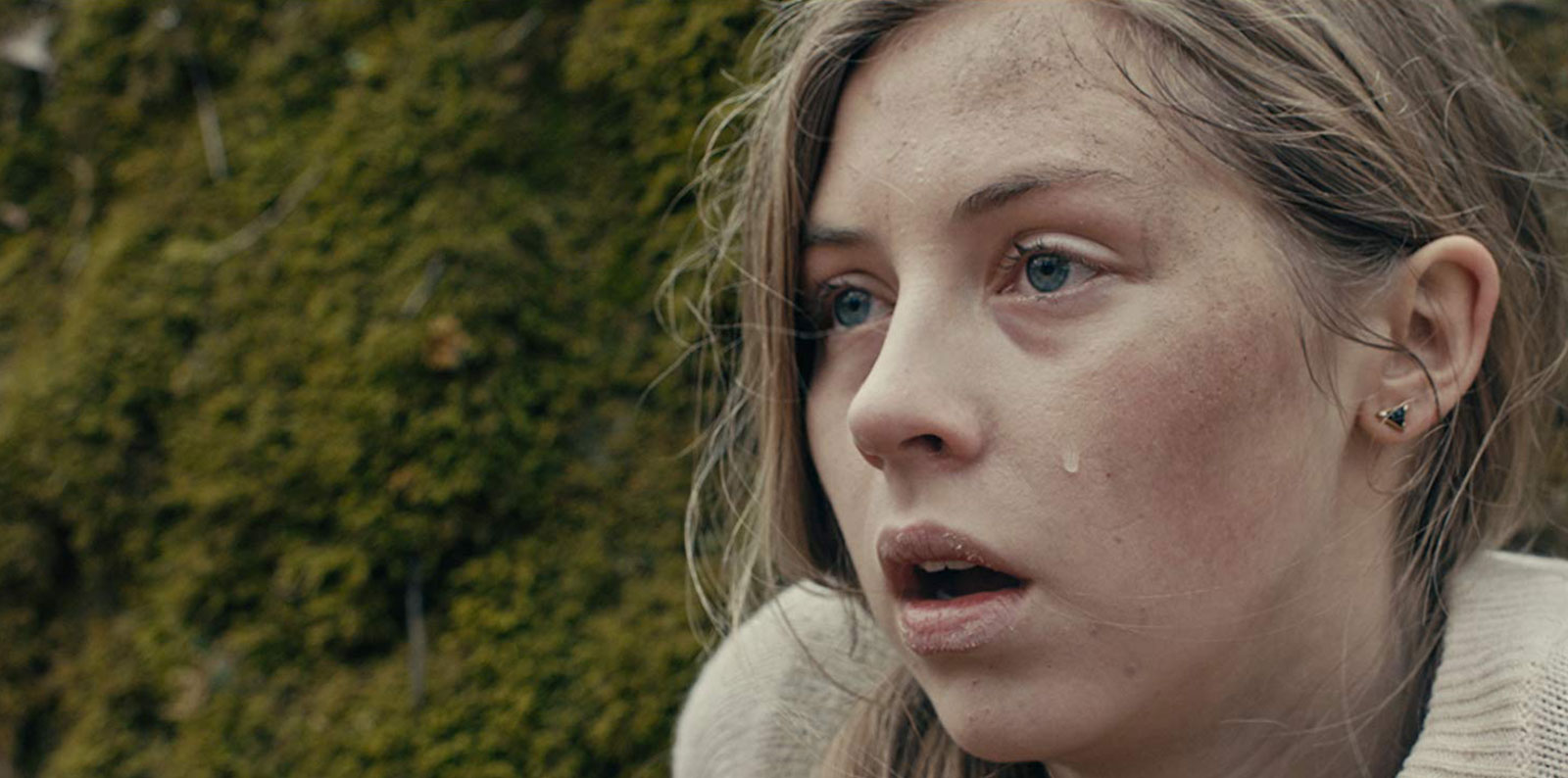
Micro-budget horror movie The Deeper You Dig is co-written and co-directed by husband and wife John Adams and Toby Poser, who co-star alongside their daughter Zelda Adams. This is a story about an unusual family created by an unusual family.
The film centers on a close if unconventional mother/daughter duo (Poser and Adams the younger). The two make ends meet in a rugged mountain town by taking advantage of townies looking to hear their fortunes. But when her daughter goes missing, Ivy (Poser) reconnects with her long-forgotten abilities to determine what the police can’t.
Poser is particularly impressive, and what may be the most
intriguing thing about the way the film is written is how both Ivy and daughter
Echo are characterized. No cliché suits these two—each is carved out uniquely,
a blend of dissonant ideas that feel authentically human. Their undiscussed but
clearly present “outsider” nature only serves to underscore their emotional
need for each other, which gives the mystery resonance and adds a little
integrity to the supernatural elements as well.
Ivy’s relationship with new-in-town Kurt (John Adams) is
even more peculiar—rightly so. Adams the elder delivers a twisty, haunted
performance that’s the real heart of the film’s horror. His work is both
physical and emotional, with personality changes that never feel forced or
showy.
Not every performance is as strong as the central three, and
not every beat in the plot works. Certain moments feel pulled from TV
melodramas, and the film’s micro-budget is most felt whenever CGI is employed.
But The Deeper You Dig makes an excellent case for
seeking out low-budget indies. It’s creepy and satisfying. It explodes clichés,
keeps you guessing, and takes advantage of the clear trust among the actors to
create an unusual and compelling family dynamic.
Even with its handful of missteps, The Deeper You Dig clearly represents a group of filmmaking talent to keep an eye on.
Finally, someone truly understands what it’s like to be an
incredibly angry adolescent girl.
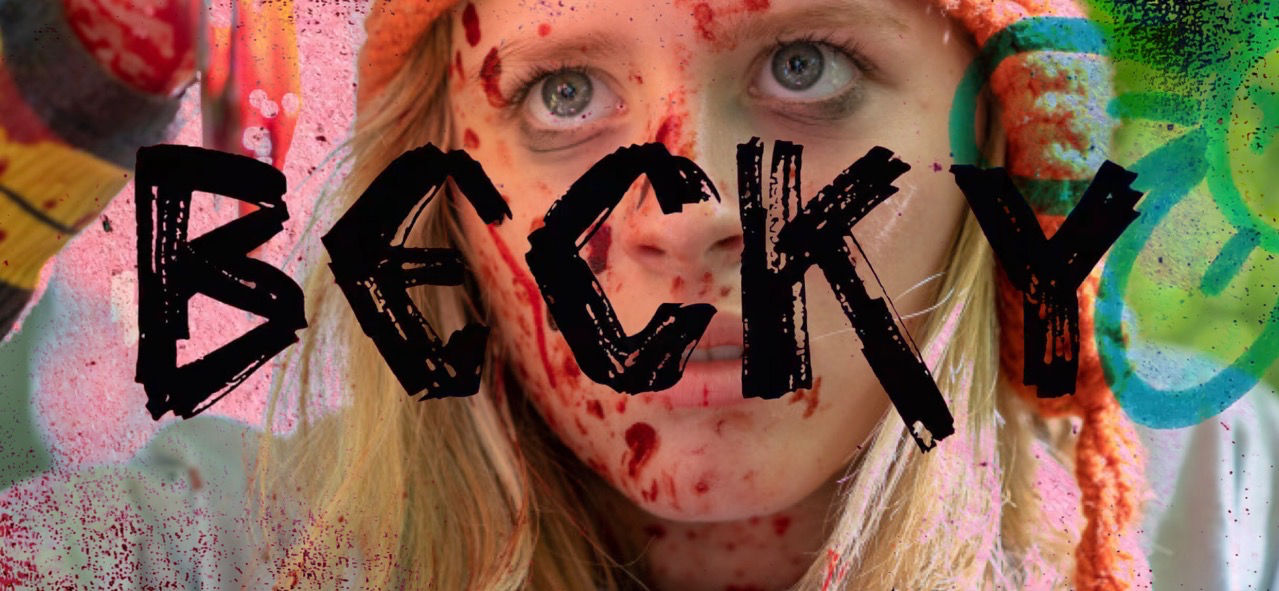
At the very least, Jonathan Milott and Cary Murnion’s film Becky
understands enough to be afraid of her.
The titular 13-year-old, played with convincing charisma by Lulu Wilson, is a handful for her widowed father (Joel McHale). Still, dad has decided this is the weekend to take Becky for a getaway with his girlfriend (Amanda Brugel), and her 5-year-old (Isaiah Rockcliffe). They head to the old vacation cabin for a big talk.
He soon finds that his 13-year-old may not be the scariest
thing on earth.
Or, you know what? Maybe she is.
Kevin James plays against type as a swastika-tatted up inmate, leader of a band of escapees. James may be hoping to catch the same mid-career fire Vince Vaughn has been fanning, mainly portraying the heavy in various indie thrillers. Early scenes play well, James cutting a solemnly menacing figure as he quietly organizes and orchestrates. But as the film wears on it becomes clear the actor can’t manage the sinister energy needed to really make an impression.
I’ll take this over Paul Blart, though.
Robert Maillet’s a lot of fun, though. At 6’10”, the one-time
wrestler dwarfs even the gangly McHale. He’s no master thespian, but his arc
creates a spectacular punctuation for Becky’s own transformation and his sheer
immensity brings a little needed anxiety to the film.
The writing team, which includes Lane and Ruckus Skye of the brilliant and as-of-yet undistributed Devil to Pay (originally titled Reckoning), cheats a little with this script. Backstories, motivations and mysteries—particularly as they articulate the villainous characters—feel less undefined than lazily obscured. Between that and James’s inability to truly sell the viciousness in his character, the family’s jeopardy lacks the intensity it needs for this film to truly impress.
Wilson does not. In her hands, Becky is a fascinating character, and it is with this character that the writing team and directors score the most points. The film is bloody, angry and, even for its fairly formulaic premise, unpredictable.
On its surface, Pledge may appear to be little more than a competently made fraternity horror in the tradition of Skulls. It is a cautionary tale about hazing taken to its sadistic (if likely logical) extreme.
But director Daniel Robbins’s latest horror show, from a tight script by co-star Zack Weiner, digs into issues bigger than tribe mentality. Pledge is not just about how far you’d go to belong. It asks about compliance, cowardice, and the cost and definition of success.
Weiner plays Alex. Alex is a college freshman and a nerd. He’s joined by buddies Ethan (Phillip Andre Botello) and Justin (Zachery Byrd), the three forming a trio of losers looking for acceptance. As the day of fraternity pledge party embarrassments wears on, a pretty girl shows up from nowhere and invites the buddies to a different kind of party.
Who can say too “good to be true”? Well, anybody who’s ever seen a movie, but Pledge has some surprises hiding behind those kegs.
The film’s first obvious strength is the cast. Each of the primary trio of actors delivers a believable outcast, and their chemistry feels fresh and honest enough that you never doubt their actions.
In fact, all the performances are quite solid—the good guys occasionally unlikeable, the bad guys sometimes teetering on sympathetic—and the writing is sharp.
Once Robbins has you rooting for his sad sack heroes, the film works well enough as a straightforward exercise in bloodlust and torture. And nasty ass soup.
But where Weiner’s savvy script and Robbins’s sly direction really excel is in digging into this predictable plot (see Hostel, American Werewolf in Paris and any number of other “hot chick invites doofus guys to a party at their own peril” subgenre) to find an ugly picture of American privilege.
Pledge is no masterpiece. It is, however, a tightly packaged, insightful and mean little flick.
College co-ed (Hermione Corfield) follows her GPS into the backwoods of Kentucky, and hits a dead end before bumping into some less-than-helpful locals: tussle, injury, escape into the woods.
I don’t know how many times you’ve seen that very film, but I have probably seen it twice already this week. (It’s a problem, I know.)
This woman-in-peril pairing with the “city folk lost in the backcountry” formula equals one very tired experience.
The fact that filmmaker Jen McGowan, working from a script by Julie Lipson, offers us a victim/heroine who fights and thinks is not quite enough to save Rust Creek from drowning. But McGowan’s tricky, and she has more surprises packed in her double-wide than you might think.
The film, on its surface, asks us to rethink the victim in a hillbilly thriller. But Rust Creek cuts deeper when it requires that we—and the heroine, for that matter—rethink the hillbilly.
Michelle Lawler’s cinematography sets a potent mood, enveloping the proceedings in an environment that is in turns peaceful and gorgeous or treacherous and brutal, and she does it with natural, almost poetic movement.
This imagery allows the Kentucky woods to become the most vibrant character in the film, although those tree-covered hills are peopled by a few locals worthy of notice—not all, but a few.
Jay Paulson—best known to normal people for his brief stint on Mad Men, best known to my people as the porn-obsessed psychopath in Robert Nathan’s Lucky Bastard—cuts an intriguing, lanky figure as Lowell.
Slyly fascinating from the moment he takes the screen, Paulson shares an uncommon onscreen chemistry with Corfield. The smart, human relationship they build as they bide their time and cook some meth may be reason enough to see Rust Creek.
McGowan doesn’t burst as many clichés as she embraces, unfortunately. Still, the biggest obstacle facing her as she maneuvers her tropes to serve a (hopefully) unexpected purpose is that her protagonist is the least interesting character in the movie. This is not necessarily Corfield’s fault. She does what she can with limited resources. Sawyer is just the fuzziest character, and the one with the least articulated arc.
That means the resolution packs less of a wallop than it should, but certain moments and characters will linger.
This is actually the first question my friend was asked in an interview for an internship with a meat packing plant, but it’s also a good piece of self-reflection before you sit down to We Are the Flesh.
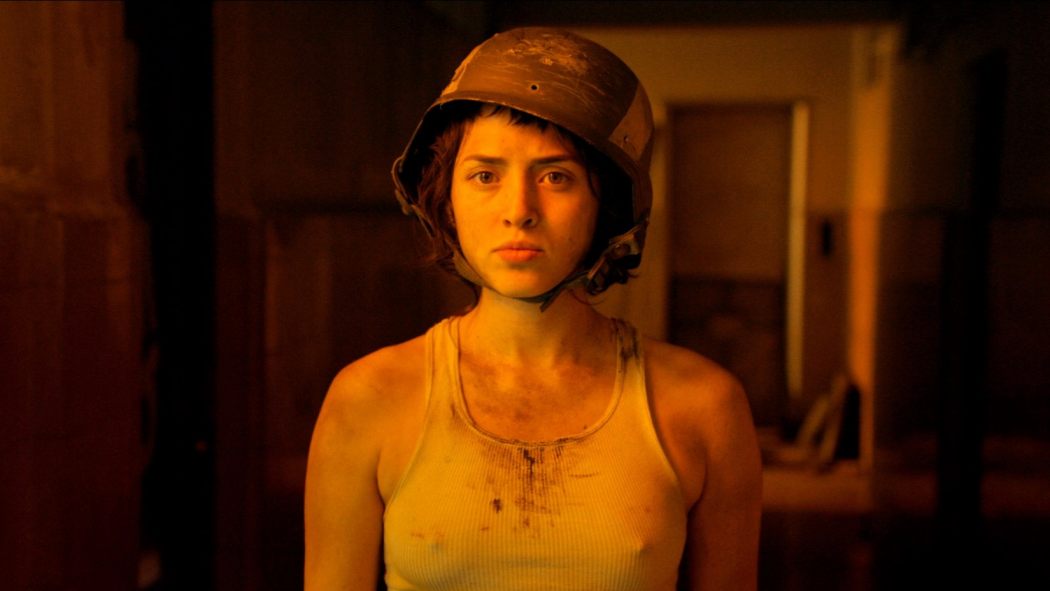
First time feature writer/director Emiliano Rocha Minter announces his presence with authority – and a lot of body fluids – in this carnal horror show.
A hellish vision if ever there was one, the film opens on a filthy man with a lot of packing tape. He’s taking different types of nastiness, taping it inside a plastic drum to ferment, and eventually turning it into a drink or a drug. Hard to tell – loud drum banging follows, as well as hallucinations and really, really deep sleep.
During that sleep we meet two siblings, a teenaged brother and sister who’ve stumbled into the abandoned building where the hermit lives.
What happens next? What doesn’t?! Incest, cannibalism, a lot of shared body fluids of every manner, rape, maybe some necrophilia – depending on your perspective – a lot of stuff, none of it pleasant.
Minter has created a fever dream as close to hell as anything we’ve seen since last year’s Turkish nightmare Baskin.
Had Minter not found an anchor for the overwhelmingly lurid imagery, his movie would have felt like little more than self-indulgent horror porn (like literally horror and porn).
Noé Hernández conjures a goblin-like image, his unblinking eyes and demonic grin permanent fixtures as he mentors his teenage charges in his repellant ways. The boy he’s dubbed Skeletor (Diego Gamaleil) resists, though his consistently surprising sister (María Evoli) is less inhibited.
There’s little chance you’ll watch this film in its entirety without diverting your eyes – whether your concern is the problematic sexuality or just the onslaught of viscous secretions, the screen is a slurry of shit you don’t really want to see.
What opens as a post-apocalyptic hellscape eventually morphs into a social comment on Mexico City’s disposable population, which is both the film’s strength and its weakness.
Unfortunately, though Minter’s movie boasts deeply unnerving ideas and compelling performances, in light of other Mexican filmmakers making social commentaries – Jorge Michel Grau’s brilliant 2010 We Are What We Are, in particular – We Are the Flesh comes up slightly lacking.
St. Patrick’s Day approaches, and thoughts turn to flowing green meadows, flowing Guinness taps, and – if you’re us – flowing Irish blood. Yes, we celebrate this holiday the way we celebrate every holiday, with carnage and shreiking. So join us over on the Emerald Isle as we count down the 5 best Irish horror movies.
5. The Hallow (2015)
Visual showman Corin Hardy has a bit of trickery up his sleeve. His directorial debut The Hallow, for all its superficiality and its recycled horror tropes, offers a tightly wound bit of terror in the ancient Irish wood.
Adam (Joseph Mawle) and Clare Hitchens (Bojana Novakovic) move, infant Finn in tow, from London to the isolated woods of Ireland so Adam can study a tract of forest the government hopes to sell off to privatization. But the woods don’t take kindly to the encroachment and the interloper Hitchens will pay dearly.
Hardy has a real knack for visual storytelling. His inky forests are both suffocating and isolating, with a darkness that seeps into every space. He’s created an atmosphere of malevolence, but the film does not rely on atmosphere alone.
Though all the cliché elements are there – a young couple relocates to an isolated wood to be warned off by angry locals with tales of boogeymen – the curve balls Hardy throws will keep you unnerved and guessing.
4. Citadel (2012)
In the colorless world of Edenstown, an Irish slumland abandoned by the police just beyond the last bus stop, an agoraphobic young father (Aneurin Barnard) struggles to remain sane and take proper care of his infant daughter. He’s plagued at night by the feral, hooded children that roam the area – the very monsters that killed his wife. Now they seem to want to take the baby, too.
Writer/director/Irishman Ciaran Foy builds dread beautifully in a picture that borrows from Cronenberg’s The Brood, among other films, but still manages to offer a fresh take on the horror of evil, faceless children. Taking shots at a lot of the underlying causes of rampant Irish urban poverty (each of which translates well across the pond), Foy is optimistic and brutal at the same time.
He spins an urban blight nightmare where fatherless children run amuck, perpetrate violence, and spread malevolence like a disease across a town too trapped by poverty to escape. An unholy Catholic church and impotent social services do more harm than good. In Foy’s parable, nothing can be changed until a father grows a pair and faces his responsibility.
A handful of predictable obstacles aside, Ciaran’s unsettling film hits a nerve, and if you follow the metaphor through to the conclusion, his image of correcting the situation is certainly provocative.
3. Byzantium (2012)
Director Neil Jordan returned to the modern day/period drama vampire yarn in 2012 with Byzantium. With more understatement and talent, he far exceeds the middling effort that was Interview with the Vampire. Thanks go to two strong leads, a lonesome atmosphere, well-handled flashbacks, and a compelling story.
A mother and daughter land in a coastal carnival town. Saoirse Ronan is the perfectly prim and ethereal counterbalance to Gemma Arterton’s street-savvy survivor, and we follow their journey as they avoid The Brotherhood who would destroy them for making ends meet and making meat of throats.
Jordan attempts a bit of feminism but the film works better as a tortured love story. A host of fascinating, dimensional supporting characters and dual storylines that work well together gel in Jordan’s most hypnotic work in years.
2. Stitches (2012)
There are a lot of scary clowns in films, but not that many can carry an entire film. Stitches can.
This Irish import sees a half-assed clown accidentally offed at a 6-year-old’s birthday party, only to return to finish his act when the lad turns 16.
Yes, it is a familiar slasher set up: something happened ten years ago – an accident! It was nobody’s fault! They were only children!! And then, ten years later, a return from the grave timed perfectly with a big bash that lets the grisly menace pick teens off one by one. But co-writer/director Connor McMahon does not simply tread that well-worn path. He makes glorious use of the main difference: his menace is a sketchy, ill-tempered clown.
Dark yet bawdy humor and game performances elevate this one way above teen slasher. Gory, gross, funny and well-acted – it brings to mind some of Peter Jackson’s early work. It’s worth a look.
1. Grabbers (2012)
This joyously Irish horror comedy contends with an alien invasion in the most logical way to deal with any problem (at least in my very Irish family): Maybe if we drink enough, it’ll just go away.
Director Jon Wright takes Kevin Lehane’s tight and fun script, populating it with wryly hilarious performances and truly inventive and impressive creatures. The FX in this film far exceeds the budgetary expectations, and between the brightly comedic tale and the genuinely fascinating monsters, the film holds your attention and keeps you entertained throughout.
Drunken fisherman Paddy (Lalor Roddy) finds something more than lobsters in his trap. Indeed, not-lobsters are making a quick horror show of the island where Paddy lives, but somehow Paddy has gone unscathed. What’s his secret? It’s his truly heroic blood alcohol content, which is poisonous to the monsters. So, all the islanders have to do is hole up in the local pub, drink til they’re blind, and wait for the sun to dry up the island so the sea creatures are immobilized.
It amounts to a surprisingly tender, sweet, and endlessly funny creature feature that pairs well with a hearty stout or a shot of Jamo.
“For all you lost souls racing down that long road to redemption…”
That’s a theme – a concept that informs everything from a Springsteen song to a Mad Max movie with many, many stops in between. In a horror movie, though, redemption can be harder to come by. With Southbound, we’re given five tries to get it right.
Successful anthology horror is difficult to pull off. Varying directorial styles, tones, and themes often render certain tales tedious by comparison to others, and the quality differential can make it tough for a film to hold together as a single entity. Southbound, for the most part, manages to transcend these issues as it spins its diabolical tale, interlocking five stories of travelers on a particularly desperate stretch of highway.
The film opens strong as two bloodied passengers rush to a desolate gas station to clean up and take stock of their situation – a situation we’re given very few clues about. But the immediately menacing, we-know-something-you-don’t-know atmosphere inside that gas station sets us up for the nightmarish episode that will unravel.
What follows are pieces on similarly distressed wayfarers – a rock trio with a flat tire, a distracted driver, a brother searching desperately for his missing sister, a family on an ill-planned vacation, then back to the original bloodied pair heading for gas.
Though each story makes is own impression – some darkly comic, others more evidently supernatural, others grittier or bloodier – each allows the desert highway to inform a retro style influenced by the indie American horror of the Seventies. A soundtrack supplied by the lonesome radio DJ on everyone’s dial – when used effectively – underscores this throwback aesthetic, as the all-knowing DJ (Larry Fessenden) emphasizes that the trouble facing these journeymen is quite beyond their control.
Rather than feeling like five shorts slapped together with a contrived framing device, the segments work as a group to inform a larger idea – together they help to define this particular and peculiar stretch of highway. Time for Fessender to cue up AC/DC.
Aah, the precarious position of the alpha male. Oh should I say Aaaaaaaah!? Because that is the delightfully appropriate title of Steve Oram’s feature directorial debut.
An absurd horror comedy, the film offers no dialog at all, just grunts, as humans – devolved into ape mentality – go about their poop-throwing, territory marking, television smashing daily existence.
It’s the kind of overly clever premise you expect to wear thin, but honestly, it doesn’t. Much credit goes to a game cast (including Oram) that sells every minute of the ridiculousness, and to Oram again as director. He keeps the pace quick, his images a flurry of insanity you need to see more than once to fully appreciate.
Oram has more in store than a wickedly bloody send up, though. His film wisely deconstructs our own human preoccupations and foibles in a way that’s strangely touching, even sad at times.
The lack of dialog suits the experiment in the same way Steven Soderbergh’s meta-dialog suited his weirdly personal 1996 effort Schizopolis, or the way Miroslav Slaboshpitsky’s use of unsubtitled sign language fits his brilliant film The Tribe. While Aaaaaaaah! is far lighter and more madcap than either of these, it still asks you to use another means of understanding character actions, which allows you to see humanity on a more jarringly primal level.
It wouldn’t even be a horror movie were it not for all those severed penises.
Oram and his appealing cast keep you interested as seemingly divergent stories blend and reshape, and domestic hierarchies shift. Lucy Honigman is particularly compelling, but every actor has surprising success in articulating a dimensional character with nary a word to help.
A familiar face in British comedy, Oram stood out in Ben Wheatley’s 2012 horror comedy Sightseers. He’s playing against type here as the threatening male presence, but he’s equally hilarious. The talent has to rely primarily on sight gags, obviously, and Oram has a flair for presentation. His quick 79 minute running time helps, but there’s never a dull moment in this jungle.
Visual showman Corin Hardy has a bit of trickery up his sleeve. His directorial debut The Hallow, for all its superficiality and its recycled horror tropes, offers a tightly wound bit of terror in the ancient Irish wood.
Adam (Joseph Mawle) and Clare (Bojana Novakovic) move, infant Finn in tow, from London to the isolated woods of Ireland so Adam can study a tract of forest the government hopes to sell off to privatization. But the woods don’t take kindly to the encroachment and the interlopers will pay for trespassing.
What’s in the woods and why is it so angry?
“An occupied people forced into hiding by fire and iron,” explains a friendly Irish policemen to the Brit couple helping to sell off Erin’s ancient forests.
Openly influenced by Evil Dead, The Shining, The Thing, and Straw Dogs, among others, the film rarely feels stale for all its rehash. Hardy borrows and spit-shines, but the final amalgamation takes on such a faery tale quality that it generally works. (Except for that Necronomicon-esque book – that’s just a rip off.)
Hardy has a real knack for visual storytelling. His inky forests are both suffocating and isolating with a darkness that seeps into every space in Adam and Clare’s lives. He’s created an atmosphere of malevolence, but the film does not rely on atmosphere alone.
Though all the cliché elements are there – a young couple relocates to an isolated wood to be warned off by angry locals with tales of boogeymen – the curve balls Hardy throws will keep you unnerved and guessing.
A lot of the scares require very little visual effect – one early bit where Adam is knocked into the trunk of his car while something claws and bangs at the door toward his screaming infant is particularly nerve wracking. Still, Hardy’s joy and real gift is in the creature feature half of the film.
The magical folk of the Hallow – “faeries, banshees, and baby stealers” – have a look that is unique, appropriately woodsy, and immensely creepy. And just when you think the film’s reached its peak with this back woods monster mash, Hardy takes a sharp turn with a deeply felt emotional plot twist.
The political allegory doesn’t really pan out; Clare, though well performed, is entirely one-dimensional; the mythology of the sludge, while cool, doesn’t clearly fit with the monsters; and why in the hell do the rest of the natives stay?!
That’s a lot to ponder, but Hardy – magician that he is – will keep you so interested with relentless pacing and horror wonder that you won’t even notice.
New Zealand teenage outcast Brodie (Milo Cawthorne) knows he and his friends are losers, so of course they start a band to get loud and be cool! But when their rocking involves playing an ancient piece of music known as the Black Hymn, they unwittingly summon an evil entity and the body count starts rising.
New Zealand actually has a strong history of blood-soaked horror comedies – beginning with the early, goretastic work of Oscar winner Peter Jackson – and Deathgasm is among the most accessible and most fun of the lot.
In his feature debut, writer/director Jason Lei Howden, a veteran of Jackson’s special effects team, borrows heavily from Shaun of the Dead-style pacing and camerawork while managing to poke some blood-spattered fun at the “devil music” stereotypes often thrown at heavy metal.
You’ll find plenty of laughs, some rom-com elements, and winning performances from both Cawthorne and Kimberley Crossman as Medina, the school beauty who can also swing a pretty mean ax.
You’ll also find an awful lot of clever kills, including the very non-traditional usage of a closet full of sex toys.
Clever and surprisingly self-aware, Deathgasm is fine excuse to feed your inner metalhead.