Tag Archives: independent film

More Coffee, Marge

David Lynch: The Art Life

by Hope Madden

Filmmaker David Lynch is nearly as enigmatic a cultural fixture as his films. Indeed, as is the case with most of his cinematic output, you might be tempted to assume that his own folksy exterior covers something dark and lurid.

The new documentary David Lynch: The Art Life does what it can to confirm that impression. While it hardly resolves anything in a concrete way, if Lynch’s art imitates the artist, then this film imitates both.

Co-directors Jon Nguyen, Rick Barnes and Olivia Neergaard-Holm recorded Lynch as he mused on childhood stories and the events that led him into the world of art and film. The audio is used to narrate footage – some recent, some archival – working together to illuminate the artist and his work. To a point.

Nguyen, who produced the doc Lynch about the making of the auteur’s 2006 film Inland Empire, has created another appropriately Lynchian film.

Once again there is a sweetness, almost innocence, about the filmmaker that feels wildly at odds with the darkness and macabre of the art we watch him create – and at the same time, seems fitting.

Much of the film is spent with Lynch in his studio as he molds, spreads and sculpts materials for art pieces. His artwork is far more immediately disturbing than his films, which tend to situate the horrifying inside a landscape of beauty. On canvas, the horror is right up front.

The work and process behind it give the film a wonderfully tactile quality and the team of directors frame and shoot the proceedings in a style Lynch himself would appreciate.

The doc takes us through Lynch’s artistically formative years and ends somewhat abruptly around the time of Eraserhead. The goal is not to document his life’s work, nor even to truly shed light on the conundrum of his particular artistry.

Instead it is a fascinating and beautifully filmed piece of what you might expect. You’ll find a lot of cigarette smoke and Coke bottles, unassuming odd-duckery and gruesome imagery.

But if you’re hoping for insight into what exactly inspires David Lynch’s fears, obsessions and grim work, be warned: The Art Life does more to continue the mystery than to solve it.

Verdict-3-5-Stars

I Want to Believe

The Dark Tapes

by Charlotte Orr

A ten foot tall demon, devil possessed mistresses, and lizard-like aliens. All promise a terrifying movie experience, but does The Dark Tapes succeed?

Vincent Guastani and Michael McQuown’s film is a found-footage anthology documenting “transdimensional entities.” The first couple stories are enjoyable – I’m glad they reserved the better actors for these sections.

The remaining stories, however, couldn’t keep my attention. Unfortunately, the acting quality distracted greatly from their plots.

It’s a good thing there isn’t much to miss out on anyway. The installment “cam girls” has some of the worst acting in the whole film. I have to give the actors some slack though, seeing as they didn’t have much to work with. The script was unbelievably bland and predictable.

Same goes for “Amanda’s Revenge,” which gives little explanation as to what exactly is going on. This would normally be fine as long as enough is given to allow the viewer to run free with their own conclusions, but there just isn’t enough substance to formulate one’s own theories.

Each storyline in this film goes for the unexpected twist at the end, and these two simply fail to surprise.

With that aside, not every short in the anthology is lacking. The complex science behind the “To Catch a Demon” storyline required all my attention, and the eerily convincing demon was able to keep it. Kudos goes to Guastani for special effects and creature design.

The end of “The Hunters and the Hunted” left me pleasantly surprised. Initially my notes read, “not unlike every other ghost hunting film.” Which I subsequently had to cross out after a major twist.

The Dark Tapes proudly states that it’s the found-footage horror movie with the second most awards and nominations, coming in at 61. As a whole, this film failed to be up to par with others in the genre, such as Paranormal Activity.

It certainly was a valiant effort, but they should have focused on those couple storylines with potential and ditched the rest.

Verdict-2-0-Stars

Hometown Hero

Citizen Jane: Battle for the City

by Rachel Willis

When you think of a city, what is the first image that comes to mind? Great buildings rising into the sky or masses of people living, working and playing on the streets and sidewalks?

These two ideas form the diametrically opposing viewpoints of city planning and urban development at the heart of the documentary, Citizen Jane: Battle for the City.

The focus of Matt Tyrnauer’s doc is Jane Jacobs, a writer who studied urban development and the negative effects of urban renewal on formerly vibrant city centers. Her book, The Death and Life of Great American Cities, highlighted the ways the “top-down” approach to urban development ruined cities. Jacobs’s observations were based on her own experiences living in Greenwich Village, and on the large urban planning projects helmed by New York’s city planner, Robert Moses.

Using extensive archival footage, Tyrnauer paints the history of New York’s reconstruction starting at the end of World War II. Coming out of the Great Depression, the leaders of New York were eager to revive the city. For them, Moses was the man to undertake the massive project.

Citizen Jane highlights the detriment Moses’s plans brought to the people living and working in New York. Unfortunately, New York wasn’t the only city affected. Across the United States and the world, Moses’s vision was replicated.

Jacobs believed in a “bottom-up” approach to city development. Rather than taking a macro view, she advocated talking to the people who made up the city’s neighborhoods and using their input to move forward.

The documentary’s many interviews with architects, city planners, and historians back Jacobs’s views. Scenes of empty apartment buildings, desolate streets, and cities dissected by sprawling highways underscore the failure of Moses’s plans. On paper, the cities look vibrant, but in reality, they’re empty shells.

The cinematography blends well with the story Tyrnauer tells. Cities are portrayed as living, breathing ecosystems, emphasizing Jacobs’s writing. It’s clear that Tyrnauer understands the city as Jacobs saw it.

For both, the city isn’t a lifeless collection of buildings; it’s the vibrant heart that beats in the people who live there.

Verdict-5-0-Stars

Bon Appetit

The Dinner

by Hope Madden

Enduring a dinner party – in cinematic terms, it can lead to a cathartic catfight (Carnage), mass suicide (The Invitation) or an all out apocalypse (It’s a Disaster).

It would appear that having to remain civil through such a meal causes us, as a civilization, a lot of anxiety.

Writer/director Oren Moverman (Rampart, The Messenger) ignites that discomfort and then looks at it from all angles with his newest, The Dinner.

Richard Gere – that silver fox – is Stan Lohman. A politician with a congressional race on the line and an important bill currently up for a vote, he’s juggling a lot right now. So why stop everything to join his brother Paul (Steve Coogan), along with Paul’s wife Claire (Laura Linney) and his own wife Katelyn (Rebecca Hall) for a 5-star meal?

Well, it isn’t good news.

The restaurant of choice is beyond posh, its lushly appointed dining rooms and obscenely laden tables a fascinating surrounding for the drama unfolding. When Moverman remains with his primary foursome inside this restaurant, an involving and curiously repellant morality play unfolds.

Moverman has a particular talent – one that these veterans relish. He scripts characters who are rarely entirely what they appear at first blush, never go where you expect them to go, and somehow wind up being the same and yet remarkably different than what you’d imagined.

This kid of layered challenge can prove too much for many actors, but Hall, Coogan, Gere and especially Linney are custom made for such work. Indeed, in many respects these actors are superior to their material.

Linney and Hall suffer from underwritten characters, which is a shame because both find something primal under all their characters’ studied polish.

Gere is breezily at ease as the smooth politician, convincing himself and others of his genuineness as he works the room.

Coogan is the standout surprise, playing against his traditionally comedic type as the enigma in the middle of this conundrum.

Suffice it to say, the couples have a parental nightmare to contend with, and it’s when Moverman brings in flashback to enlighten the audience that his drama begins to lose its way. Mix in some additional flashbacks to illuminate Paul’s character, including an excruciating Civil War sequence (we get it – sibling rivalry – enough already!), and the slow film comes to a stand-still.

It’s a frustrating way to spend an evening, The Dinner, but not a waste of time. Every member of the cast has a moment of brilliance working with a script that also shines in fits and spurts.

Verdict-3-0-Stars

Hieronymus Bosch High

My Entire High School Sinking Into the Sea

by Matt Weiner

There’s a paradox running through teen movies. While they’re often most enjoyable when first discovered as a kid relatively close to the characters’ ages—if not the actors’ ages (I’m looking at you, Spader… and every other 1980s actor)—they so rarely capture what it feels like in the moment during those chaotic and vulnerable years.

Instead there’s almost a prolonged sense of l’esprit de l’escalier powering the plots: an entire industry of outcast writers getting their just deserts, without reality getting in the way this time.

What’s so refreshing about My Entire High School Sinking Into the Sea is that not only does writer-director and comics artist Dash Shaw avoid that paradox, he does it through some of the most inventive and absurd art to be seen in any recent animated film, with a tactile humanity that can hold its own against Pixar.

Shaw keeps the action tight and focused with a quick setup that lets the comic stars riff while the world around them falls apart: best friends Dash (Jason Schwartzman) and Assaf (Reggie Watts) start their sophomore year at Tides High School looking to make a big splash writing for the school newspaper.

Fellow classmate and editor at the paper Verti (Maya Rudolph) is looking for more than just news copy from Assaf, and this tension fractures the trio just as an earthquake threatens to plunge the poorly built school into the sea.

The dialogue is cute, with lots of throwaway non-sequiturs helping to keep the movie surprisingly cheerful for what’s basically a mass casualty event with children. And the Verti-Assaf courtship will ring particularly true for any extracurricular misfits in love.

But more than anything else, it’s the artwork that takes the movie from good to great. Shaw uses deceptively simple figures for the characters, which lends a sharp contrast to the lush and ever-changing backgrounds.

As Dash, Assaf and Verti battle external and internal forces to make their way out of the sinking school, the scenery rapidly veers from Impressionistic canvas to disjointed scrawls—and with textures that feel more alive than the 3D in any superhero movie.

The chaos of the set pieces ebb and flow with the trio’s journey of self-discovery, and Shaw delights in creating kaleidoscopic homages to 1970s disaster movies. At heart, though, it’s also a teen movie—with an unsubtle reminder for adults that the bar for what feels like the end of the world is very different but no less serious when you’re a kid just trying to find your way in the world.

Verdict-4-0-Stars

Milo and Orlok

The Transfiguration

by Hope Madden

Milo likes vampire movies.

So, it would seem, does writer/director Michael O’Shea, whose confident feature debut shows us the relationship between the folklore and the life of a forlorn high school outcast.

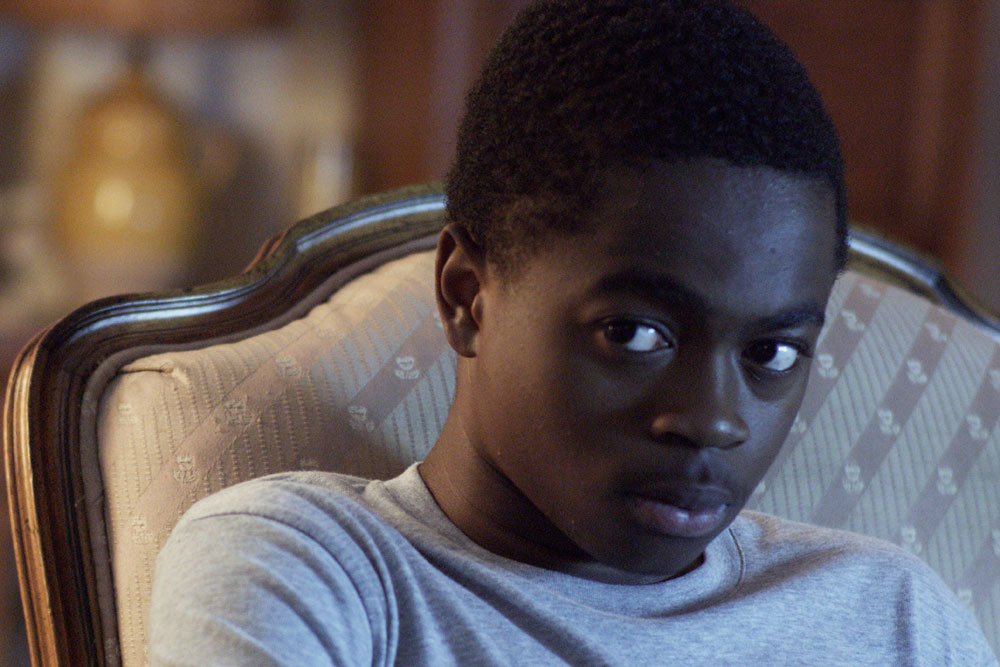
Eric Ruffin plays Milo, a friendless teen who believes he is a vampire. What he is really is a lonely child who finds solace in the romantic idea of this cursed, lone predator. But he’s committed to his misguided belief.

The film opens in a public men’s room. A man washing his hands overhears what he believes to be a sex act underway in a nearby stall. In fact, Milo is sucking the life out of a middle aged business man, then pocketing his cash and heading silently back to the rundown NY apartment he shares with his older brother.

All this changes when Milo meets Sophie (Chloe Levine), another outsider and the only white face in Milo’s building. The two strike up a friendship and sweet courtship, despite the fact that Sophie prefers the glittery Twilight saga, while Milo’s interests (like, presumably, O’Shea’s) are more “realistic.”

O’Shea’s film borrows ideas from George Romero’s Martin, Tomas Alfredson’s Let the Right One In, and openly gushes over Murnau’s Nosferatu.

So does Milo. It’s a way the filmmaker authenticates the teen’s self-determined transformation. Inside and out, the film draws on the best in vampire cinema to help Milo deal with a world in which he is a freak no matter what he decides to do.

A profound loneliness haunts this film, and the believably awkward behavior of both Ruffin and Levine is as charming as it is heartbreaking.

Ruffin’s performance borders on impenetrable, which often works in the film’s favor, but as often does not. His big eyes and expressionless face depict a lost soul, his demeanor simultaneously sympathetic and menacing. But there’s too little arc.

The Transfiguration is a character study as much as a horror film, and the underwritten lead, slow burn and somewhat tidy resolution undercut both efforts.

Still, there’s an awful lot going for this gritty, soft-spoken new image of a teenage beast.

Verdict-3-5-Stars

Girlhood

All This Panic

by Rachel Willis

Director Jenny Gage’s documentary offers its audience an unflinching look at the behavior of American teenagers.

Gage spent three years following a few girls in Brooklyn, including Lena, Ginger, Dusty and Sage. On the cusp of leaving high school for college, the girls are in some ways remarkably mature and in other ways, still very much children.

They snipe at each other over shared memories, bicker with their parents, and talk to each other about boys, school and the future. As the girls enter their first years in college, they mature in leaps and bounds. Their friendships deepen, they enter into relationships, and they can talk about themselves with insight that many adults lack.

They also have parties – with alcohol and a lack of parents – that those of us who are older likely recognize from our own high school days.

At one point, Lena talks of “hooking up” with a boy in her room during a party, though her definition of hooking up seems to be restricted to kissing. It’s the kind of naivety that is touching to see.

As they age, the parties have more alcohol, drugs come into play, and “hook ups” mean sex. It sometimes feels that kids these days grow up too fast, but the reality, as seen through the camera’s lens, seems a lot like it always has been: kids have the same hopes, fears, and goals that they’ve always had.

Watching All This Panic is like reading a diary. The girls are open, raw, and familiar. The film is crafted so it feels that the young women are speaking directly to you. You are on this path with them: a friend and confidant. It’s a technique that works well, and Gage knows how to draw the audience into this world.

Verdict-4-0-Stars

What About Above Her Neck?

Below Her Mouth

by Hope Madden

In a world where thin, beautiful, braless women look hot at work, stare longingly at each other and writhe sensually across the screen, are we supposed to see art where art is not just because Below Her Mouth is a film made by and (ostensibly) for women?

Writer Stephanie Fabrizi and director April Mullen – with an entirely female crew – bring to life the threadbare tale of an uptight good girl whose wild side is ignited by a chance encounter with a bad boy.

The fact that the bad boy is female is beside the point.

No, unfortunately, it is the only point.

Dallas and Jasmine – I swear to God, those are their names – are stiffly played by Erika Linder and Natalie Krill, respectively. Both cut impressive figures and are clearly comfortable with nudity.

Their chemistry is forced and inauthentic, their dialog weak, their storyline nearly nonexistent. What little plot there is – straight, engaged Jasmine indulges her fantasy with Bowie-esque roofer Dallas while her beau is out of town – feels more like porn than like a real movie.

There’s a reason for that.

Below Her Mouth is bound to garner comparisons to Abdellatif Kechiche’s Blue Is the Warmest Color – to its terminal detriment. Though Blue has its flaws, it tells a powerful story very well and boasts utterly brilliant performances. And, like Alain Guiraudie’s equally sexually graphic Stranger by the Lake, Blue’s vivid – almost exhausting- carnality supports the narrative.

Below Her Mouth strings together almost enough narrative to frame a dozen or two sex scenes.

Is there something to be said for taking that oh-so-heterosexual film structure (good girl/bad boy, not porn) and upending it? Shouldn’t Mullen be praised for subverting ideas of sexual objectification – if that’s what she’s doing? (We can objectify us just as much as you can – is that the theme at work here?)

Should she be applauded for bringing an entirely female-made film to our theaters?

No. Because the movie sucks.

Verdict-1-5-Stars

Free for All

Free Fire

by Hope Madden

The first notes I took, about ten minutes into the screening for Ben Wheatley’s latest Free Fire, read like so: This is a ballsy first act.

Indeed. Co-written with his wife and frequent collaborator Amy Jump, the Seventies crime thriller wastes little time on backstory, context or exposition. None, really.

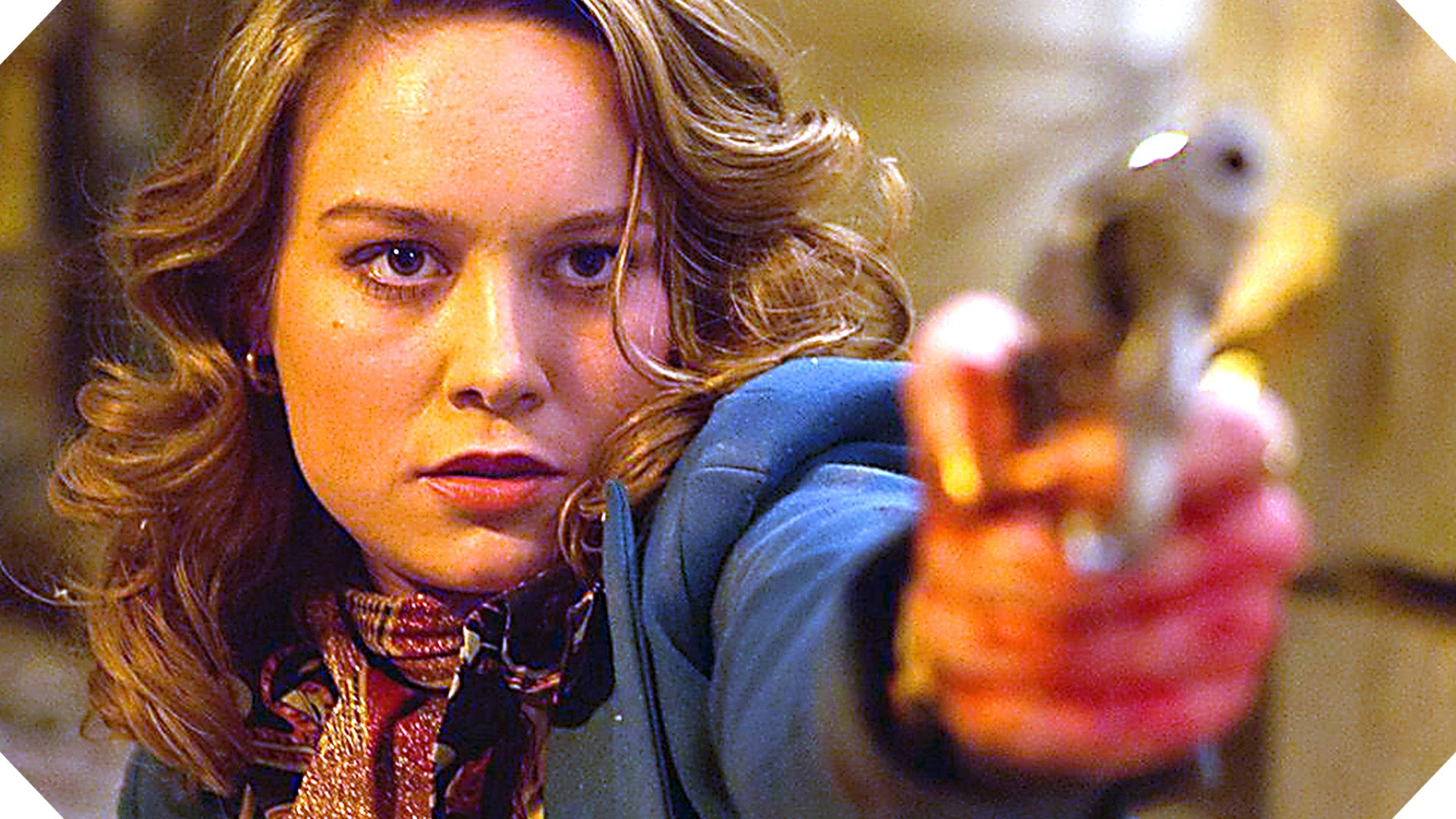
You gather that two Irishmen (Cillian Murphy, Michael Smiley) wait in a warehouse parking lot with their liaison (Brie Larson) to a gun runner. They’re always waiting for their own henchmen, as well as the gunrunner’s liaison (Armie Hammer).

I love Ben Wheatley. In 2011, he and Jump brought forth the utterly brilliant horror show Kill List, and I have waited breathlessly for every collaboration since. Free Fire included.

And while each of Wheatley’s films is decidedly different from each other, Free Fire is very different from most films altogether.

Imagine if the entire 93 minutes of Reservoir Dogs took place in that last act shootout among the pack.

The noteworthy fact about Free Fire is not that it has a ballsy first act, but that the entire film is a third act. With scarcely a word of context, we’re rolled into an empty warehouse just in time for a shootout to begin, and there we will stay until the film concludes.

It’s pretty brilliant, really. Character development happens under fire. Hammer’s “Ord” (yep, that’s his name) brings a lot of laid back comedy. Brie Larson is characteristically spot on, as is the always welcome Cillian Murphy. The two infuse characters and the proceedings with some authentic humanity.

Also working the comedy angle is Sharlto Copley – always reliable for some scenery-chewing, here working those mandibles as a South African imbecile/arms dealer once misdiagnosed as a child genius.

Jump and Wheatley rob the gang meeting of any of the slick romance or brutal gravitas usually bestowed on such events by cinema. There is a barely controlled, very funny, incredibly bloody chaos afoot here, and it is a wild and entertaining sight to behold.

Verdict-3-5-Stars

Boy Interrupted


After the Storm

by Christie Robb

There’s something about being a parent that helps you put into context and process the resentments you held about your own parents’ mistakes. You understand why they zigged when they should have zagged. Having the responsibility to create some sort of stability and comfort for a child drives home the fact that adulting is something that we make up as we go. None of us is perfect. And we all make mistakes. So, we treasure, even more, the good memories.

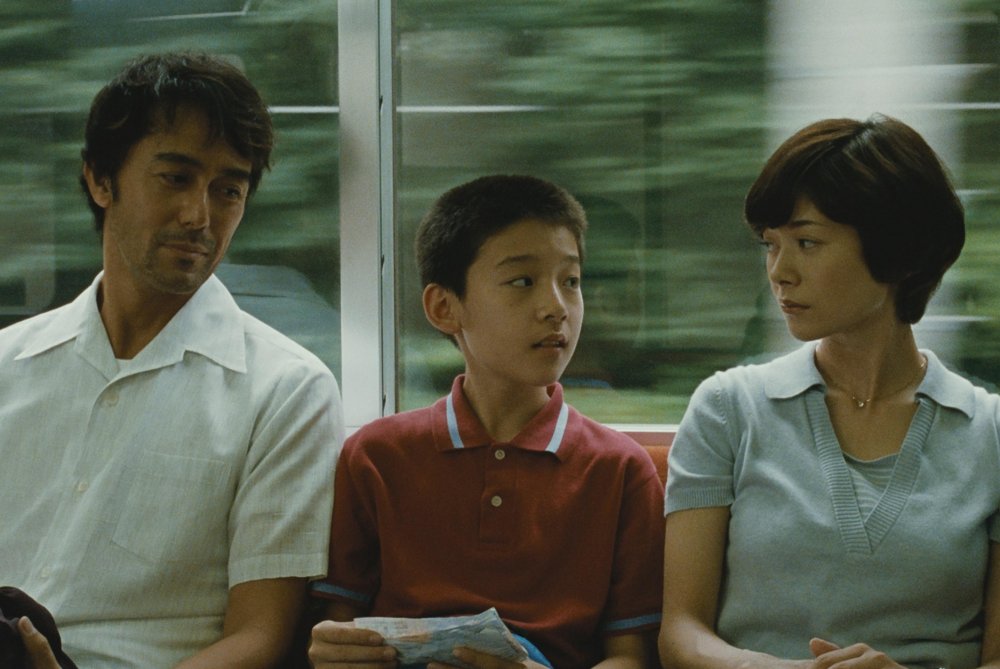
After the Storm is a meditation on this theme. Writer/Director Hirokazu Koreeda centers the film on Shinoda Ryôta (Hiroshi Abe), a moderately successful novelist turned private detective. Shinoda mourns the death of his father, the demise of his marriage, his separation from his adolescent son, a stalled career, and a gambling addiction.

He’s at the point where he has to decide whether to give up hope for being a late-bloomer and admit failure.

Unable to find happiness in his present life outside of a cheap high in the midst of a gambling binge, he’s eternally looking backwards at the opportunities he let slip away or dreaming about a future where he can finally buy his kid that new top-of-the line baseball glove, finish his novel, oust his ex’s new boyfriend, or win the lottery.

After the death of his father (also a gambling addict), Shinoda starts showing up at his mom’s house to help her out a little bit, to give her some spending money, and also to look for stuff to pawn. He’s months behind on child support. He’s turning down paid writing gigs to blackmail high school students. He’s spying on his ex.

One day, on a visitation with his son, Shinoda takes him over to his mom’s so the kid can visit with his grandmother and Shinoda can weasel a free meal. The weather turns bad just as Shinoda’s ex-wife (Yôko Maki) drops by for pickup. A typhoon ultimately strands the estranged family together at Shinoda’s mom’s cramped apartment. Initially awkward, the forced extended contact gives Shinoda a chance to live in the present, confront some of his flaws, and recreate a treasured moment that he shared with his father.

This isn’t a simple movie of redemption. But it’s not a melancholic tear-jerker either. It is a movie that will make you think about what kind of person you thought you might be when you grew up and weigh that against your assessment of your current character. And if you are a parent, it might make you wonder about what particular moment your kid might remember years later and wish to relive.

Verdict-3-0-Stars