From director Darren Lynn Bousman (Saw II-IV, Repo: The Genetic Opera) comes a vacation horror romp that will bring you some thrills and chills. Nothing more, nothing less.
The highlight here is certainly the gorgeous island setting, which is a welcome departure from haunted houses and summer camps with bad reputations.
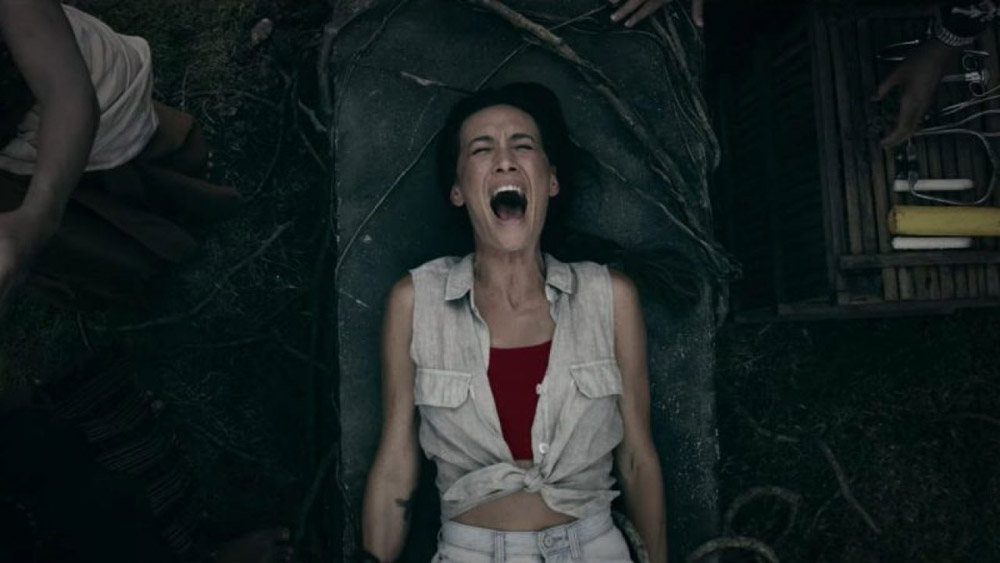
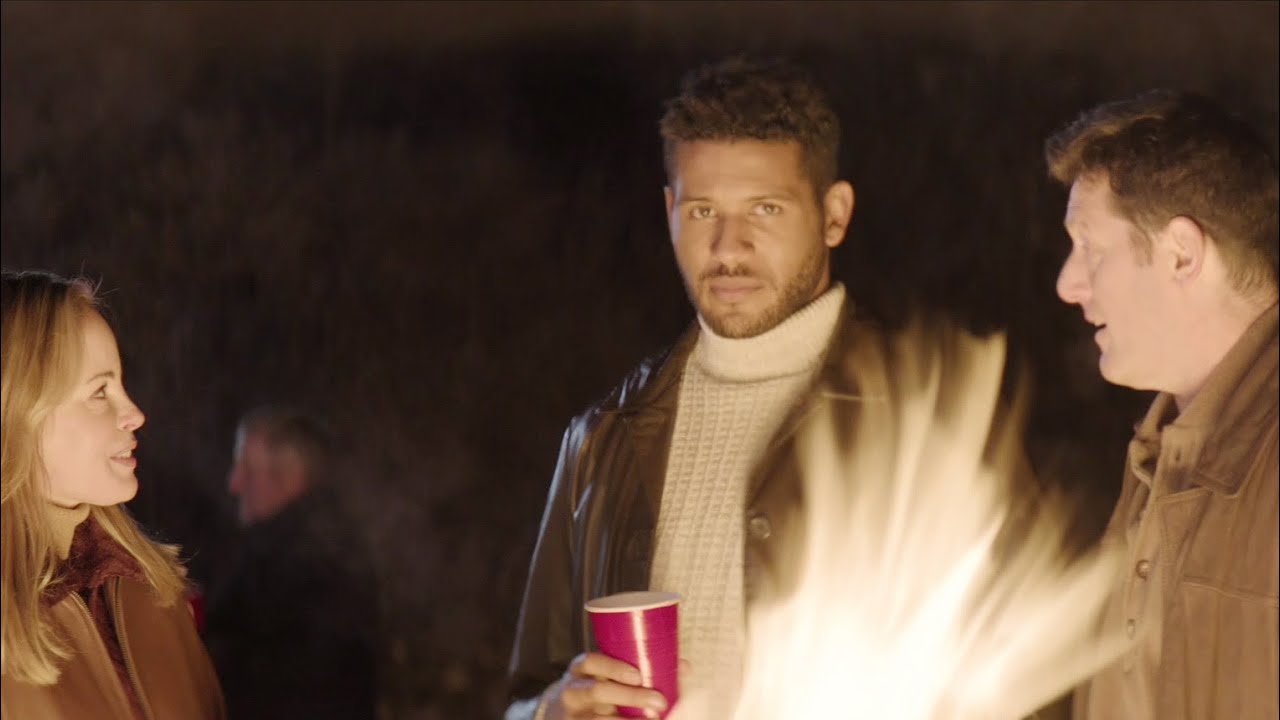
The panic begins when a vacationing couple (Maggie Q, Luke Hemsworth) on a remote island realizes they remember nothing from the previous night. The rather chilling race to get answers showcases some intense visuals and surreal editing techniques that help add excitement to the predictable—if surprisingly brutal—twists.
If you are a full on horror fanatic, you will probably have at least a decent time here. The film breaks no new ground but it hits its marks rather decently. The whole, “everybody knows whats going on except you” set up owes a lot to classics such as Rosemary’s Baby and The Wicker Man.
It’s also not hard to imagine that the success of Midsommar was a factor in greenlighting this film. It similarly attempts to incorporate a modern theme or two, including a very light commentary on consent and free will, which if fleshed out a bit more could have added some potency and depth.
Also sorry to be that guy, but in 2020, do we really need another film where island natives are portrayed as little more than villains who delight in the torture of the “civilized” Americans? It’s a hypothetical question, the answer is: no, probably not.
What Death of Me lacks in originality it sometimes makes up for with intense visual flourishes and dream sequences, but by the third or fourth “was it a dream or did it really happen?” moment, the horrific scenes begin to lose their sense of danger and traumatic permanence. Because of this, the film starts to flounder a bit in the middle section, just before we reach the rather satisfying, bloody climax.
It’s way off course from being a masterpiece, but for fans of the genre stuck inside during these COVID-19 days, you could do worse than this film that teleports you to a beautiful island for a few bloody thrills.
It’s been eight years since Brandon Cronenberg swam familiar
family waters with his feature debut, Antiviral. He is back with another
cerebral, body-conscious fantasy thriller and my first thought is
dayyuuuummmmn…
Son of the master of corporeal scifi horror David
Cronenberg, Brandon appears to come by his fixations naturally. With Possessor,
he travels along with a high end assassin (Andrea Riseborough) who uses a piece
of tech (inserted directly into the squishy brain, naturally) to body hop from
one mark to the next. She enters one body, takes it over, executes the hit and
moves on.
That last part has started to cause some issues, though.
As it was with Antival, much of the world building
here is left to our imagination and the film is stronger for it. Possessor’s
internal logic is solid enough to be the entire plot. The context is impeccably
rendered, providing the most disturbing landscape for Riseborough and her primary
avatar, played by the nicely understated Christopher Abbott.
All of it proves an incredible piece of misdirection for
what the film is actually accomplishing.
For much of the running time, the chameleonic and
underappreciated Riseborough’s Tasya Vos plays an observant interloper—exactly
what we are in this weirdly meticulous and recognizable future world. Showy
jabs about privacy, appropriation, gender definition and capitalism are
simultaneously clever and intentionally distracting.
Cronenberg’s created a gorgeous techno world, its lulling
disorientation punctuated by some of the most visceral horror to make it to the
screen this year. There is something admirably confident about showing your
influences this brazenly.
Credit Cronenberg, too, for the forethought to cast the two
leads as females (Jennifer Jason Leigh playing Riseborough’s boss). The theme
of the film, if driven by males, would have been passe and obvious. With
females, though, it’s not only more relevant and vital, but more of a gut punch
when the time comes to cash the check.
Possessor is a meditation on identity, sometimes very obviously so, but the underlying message takes that concept and stabs you in your still-beating heart with it.
That is a good, sinister question when posed by the
mustachioed traveler responding to his captive’s promise to remain silent if he
lets her go. It’s good because it clarifies to her and us that this is not his
first prisoner rodeo, an unsettling fact that increases tensions and moves the
story forward.
It’s also a good question to ask director John Hyams as his
road trip horror Alone serves up a very familiar premise.
Jessica (Jules Wilcox), her beat Volvo station wagon and
hitched U-Haul trailer are making a cross-country trip. Nobody else, just them.
Sure, Mom keeps calling, but Jessica just can’t right now.
It’s beautiful, wooded country, but a little treacherous—more so once that black SUV starts following her around.
You know where this is going from the opening scene, so the only
hope is that the execution delivers some thrills. Drone shots of trees may be a
little tired by this time, but they are pretty and they give the sense of
isolation. Screenwriter Mattias Olsson makes subtle changes to the predictable
story, giving each character an unexpected layer or two to keep you guessing.
Wilcox’s no-thrills performance suits the project beautifully. Though frustrating in the early going (don’t pretend you wouldn’t do some stupid things in that situation, too), Jessica’s resolve and tenacity are proven with a focused, physical performance.
Marc Menchaca, known only as Man, is a delight in the role of the villain. That ‘stache! Nary a false note creeps into his menacing demeanor. His is the saucier of the two characters and the hateful chemistry between the actors drives the thrills and commands attention.
Anthony Heald also makes a welcome appearance at about the halfway point, and the action takes an effective turn with him. But mainly, Alone benefits from two truly savvy performances. It just doesn’t have much to say that we haven’t already heard.
How many films, horror or otherwise, open as a moving van
leaves a fresh faced family unpacking in their new dream home? Kurtis David
Harder and his new Shudder thriller Spiral welcome you to the
neighborhood.
What feels like your typical suburban paranoia film, this
time given a fresh coat of paint with the introduction of a same-sex couple at
its center, turns out to be something else entirely.
Even as Malik (Jeffrey Bowyer-Chapman) and Aaron (Ari Cohen)
try to convince Aaron’s teenaged daughter Kayla (Jennifer Laporte) that she really
won’t miss the big city, Malik is seeing some things around the cul-de-sac that
worry him.
But Aaron isn’t ready to believe the neighbors are
homophobes (or racists, for that matter, even if Tiffany across the street
assumed Malik was the gardener).
Spiral quickly falls into a very familiar pattern.
Malik, who works at home as a writer, begins to let his research get the better
of him. Writer’s block has him paranoid—or maybe there’s a trauma in his past
that’s to blame? Is he really seeing something strange in his neighbors’
windows? Is Aaron right, did he go overboard with that new home security
system?
It sounds familiar—so much so that the film sometimes just figures your brain will fill in blanks left open. And while Spiral’s internal logic is never air tight, screenwriters Colin Minihan (It Stains the Sands Red, What Keeps You Alive) and John Poliquin are more interested in bigger patterns. Their social allegory doesn’t achieve the breathless thrills of Get Out, but Spiral swims similar waters.
The filmmakers see patterns in political hatred and the continuing reaffirmation of the status quo, and those patterns are horrifying. While horror has always been an opportunity for the collective unconscious to deal with social anxiety in a safely distant way, Spiral is less interested in creating that comforting fictional buffer. It’s as if the filmmakers want you to see the holes in their plot so you’re more able to see the nonfiction it’s based on.
Aah, the woods. It is almost overwhelming in its defiance of
civilization, its sheer magnitude of just plain nature. Shakespeare set his
magic there, but a lot of horror filmmakers lean closer to Lars Von Trier’s
proclamation: Nature is Satan’s church.
Making his feature debut as both director and co-writer,
Minos Nikolakakis conjures a spooky fairy tale that makes much ado about nature.
Panos (Prometheus Aleifer), a city doctor looking for a
simpler, more isolated existence, moves to a remote Greek village to become the
town’s only (and apparently first) doctor. Winding through wooded, mountainous
roads on his way to his new home he nearly runs down a lovely young woman, who
promptly disappears back into the woods.
Once in the village, Panos discovers tight-lipped locals, superstition and boredom—all of which leads him on a quest to figure out who that girl in the woods might be.
It’s to Nikolakakis’s credit as a visual storyteller that so
many familiar elements still work to cast a spell. The film explains very
little. It sprinkles clues about, but relies on your familiarity with the way
folk tales work to lead you into an unusual take on the genre. There’s nothing
overstated or campy about Nikolakakis’s fairy tale trappings.
Aleifer’s understated charisma—his penetrating stare, his abiding
sadness—creates a strong center for the story. A melancholy mixture of logic
and longing, his bearing articulates the dizzying, frustrating mixture of
emotions and circumstances that trap Panos.
Anastasia Rafaella Konidi’s earthy version of the succubus
intrigues consistently. She vacillates between demanding and imploring, but
never feels genuinely sinister. And we’re never entirely sure whether the
doctor sees his plight in the woods as a dream or a nightmare, and that
shifting reality generates dizzying dread.
The film’s weakest element is the presence of co-writer John De Holland in the role of Panos’s protective half-brother, George. The performance is shaky enough that the first act suffers badly—the first impression is of a movie not worth your time.
Luckily De Holland has considerably less screen time through
the remainder of the film. Still, when George does appear intermittently he
punctures the spell Nikolakakis and the remainder of the cast has conjured and
it takes a while to recreate the mood.
The way the story resolves itself is a puzzle, and not an especially satisfying one. With Entwined, Nikolakakis boasts some impressive storytelling instincts, but there’s still room for growth.
What were we looking for? Reboots/remakes that are superior to the original. There are more than you think. In the podcast, we run through eight horror reboots that are superior to the original, kick around another handful that are Even Stevens, and argue about several that could maybe go either way (depending on which one of us you’re talking to). So, you know, have a listen.
5. Dawn of the Dead
Zack Snyder would go on to success with vastly overrated movies, but his one truly fine piece of filmmaking updated Romero’s Dead sequel with the high octane horror. The result may be less cerebral and political than Romero’s original, but it is a thrill ride through hell and it is not to be missed.
The flick begins strong with one of the best “things seem fine but then they don’t” openings in film. And finally! A strong female lead (Sarah Polley). Polley’s beleaguered nurse Ana leads us through the aftermath of the dawn of the dead, fleeing her rabid husband and neighbors and winding up with a rag tag team of survivors hunkered down inside a mall.
In Romero’s version, themes of capitalism, greed, and mindless consumerism run through the narrative. Snyder, though affectionate to the source material, focuses more on survival, humanity, and thrills. (He also has a wickedly clever soundtrack.) It’s more visceral and more fun. His feature is gripping, breathlessly paced, well developed and genuinely terrifying.
4. Suspiria
Luca Guadagnino continues to be a master film craftsman. Much as he draped Call Me by Your Name in waves of dreamy romance, here he establishes a consistent mood of nightmarish goth. Macabre visions dart in and out like a video that will kill you in 7 days while sudden, extreme zooms, precise sound design and a vivid score from Thom Yorke help cement the homage to another era.
But even when this new Suspiria—a “cover version” of Dario Argento’s 1977 giallo classic—is tipping its hat, Guadagnino leaves no doubt he is making his own confident statement. The color scheme is intentionally muted, and you’ll find no men in this dance troupe, serving immediate notice that superficialities are not the endgame here.
3. The Ring/Ringu
Gore Verbinski’s film The Ring – thanks in large part to the creepy clever premise created by Koji Suzuki, who wrote the novel Ringu – is superior to its source material principally due to the imagination and edge of the fledgling director. Verbinski’s film is visually arresting, quietly atmospheric, and creepy as hell.
From cherubic image of plump cheeked innocence to a mess of ghastly flesh and disjointed bones climbing out of the well and into your life, the character of Samara is brilliantly created.
Hideo Nakata’s original was saddled with an unlikeable ex-husband and a screechy supernatural/psychic storyline that didn’t travel well. Screenwriter Ehren Kruger did a nice job of re-focusing the mystery.
Sure, it amounts to an immediately dated musing on technology. (VHS? They went out with the powdered wig!) But still, there’s that last moment when wee Aidan (a weirdly perfect David Dorfman) asks his mom, “What about the people we show it to? What happens to them?”
At this point we realize he means us, the audience.
We watched the tape! We’re screwed!
2. The Thing/The Thing From Another World
The 1951 original The Thing From Another World is a scifi classic, and every inch of it screams 1950s. The good guys are good, the monsters are monsters. Everything has its place. It’s reassuring.
John Carpenter’s remake upends all that with a thoroughly spectacular tale of icy isolation, contamination, and mutation.
A beard-tastic cast portrays a team of scientists on expedition in the Arctic who take in a dog. The dog is not a dog, though. Not really. And soon, in an isolated wasteland with barely enough interior room to hold all the facial hair, folks are getting jumpy because there’s no knowing who’s not really himself anymore.
This is an amped up body snatcher movie benefitting from some of Carpenter’s most cinema-fluent and crafty direction: wide shots when we need to see the vastness of the unruly wilds; tight shots to remind us of the close quarters with parasitic death inside.
The story remains taut beginning to end, and there’s rarely any telling just who is and who is not infected by the last reel. You’re as baffled and confined as the scientists.
1. The Fly
As endearing and fascinating as we find Kurt Neumann’s 1958 Vincent Price vehicle, it just doesn’t quite have the same impact once you’ve seen Jeff Goldblum peel off his fingernails.
Not because it’s gross—and it is gross AF—but because he’s fascinated by the process itself. It’s the scientist in him.
David Cronenberg knows how to properly make a mad scientist film, especially if that madness wreaks corporeal havoc. But it’s not just Cronenberg’s disturbed genius for images and ideas that makes The Fly fly; it’s the performance he draws from Goldblum.
Goldblum is an absolute gift to this film, so endearing in his pre-Brundlefly nerdiness. He’s the picture’s heartbeat, and it’s more than the fact that we like his character so much. The actor also performs heroically under all those prosthetics.
The 2008 film Deadgirl tested me. Boasting solid
performances across the board, it told of a bullied teen who pined for the bully’s
girlfriend. He and his even more damaged best friend find a monster, which one
sees as a curse and the other sees as a gift. The resulting 95 minutes took me three
tries to complete, not because it was scary or gross or troubling, but because
it was unwatchably hateful.
Co-writer/director Frank Sabatella builds The Shed on similar terrain.
Stan (Jay Jay Warren), still stuck on his middle school
crush Roxy (Sofia Happonen), is in trouble at school, with the sheriff’s
department, and with his abusive grandfather, not to mention the local bullies—who
have a real field day with his best friend Dommer (Cody Kostro).
So far so familiar, but Sabatella zigs when you think he’ll zag in a couple of important ways. The monster in question—that thing stuck in the shed, at least until sundown—used to be his neighbor, Mr. Bane (Frank “Big Brain on Brad” Whaley, nice to see you).
What Sabatella mines with just a handful of excellent, tense, gory scenes is a certain isolated, rural anxiety. He mixes childhood terrors with adolescent angst with smalltown rebellion with something aching and lonely. All of it, in these few scenes, speaks to something authentic in terms of wrong-side-of-the-tracks coming of age.
Everything else is borrowed, from the Night of the Living
Dead and Fright Night, that old Michael Fassbender Nazi zombie thing
Cold Creek and, of course, the morally bankrupt Deadgirl. Maybe just
a touch of Stakeland.
Still, it’s fun.
Kostro is particularly effective as the best friend who’s far more f’ed up than Stan realizes and Warren offers a strong emotional center to the film. There are about a dozen too many nightmare sequences and the end is simply nonsense, but for horror fans, it’s not a bad time.
As far as psychological thrillers go, this is a peculiar one. An odd concoction of glaringly obvious plot twists and contrived diegesis; of excellent performances but inconsistent characters; of an implied take on influencer culture leading, bizarrely, into The Manchurian Candidate territory, Diery can be best described as—a bit of a mess.
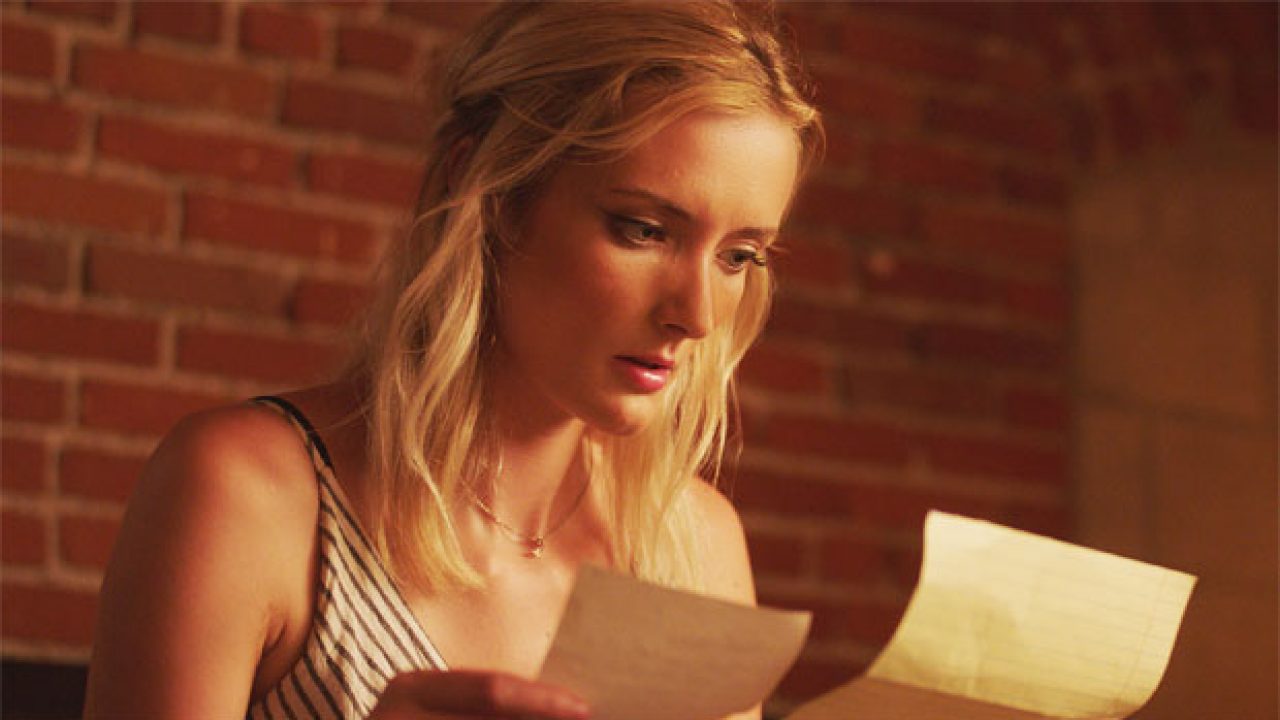
Marie (Claudia Maree Mailer), a popular Instagram model with over one million followers. She is well on her way to getting her masters degree in comparative religion, leaving an abusive relationship and moving on from childhood trauma that saw her hospitalized. She seems to have a perfect life. As, indeed, everyone keeps telling her. However, Marie is haunted still by the events of her past, and when her cherished diary goes missing and letters, seemingly from an obsessed fan, begin turning up at her apartment, things take an extraordinary and deadly turn.
My chief complaint here is John Buffalo Mailer’s writing: there’s a lot of ideas floating around, too many in fact, and nothing comes of any of them. Is this a cautionary tale about the dangers of sharing our lives on social media? Is it a tension-filled spy thriller? There’s even a suggestion of witchcraft at one point. The answer is that it’s all of those things and none of them. To be honest, I’m not overly convinced filmmaker Jennifer Geifer herself knows.
This feels like a committee has put it together, several different concepts mashed together to form some semblance of a complete narrative. It fails. And it’s a real shame, too. Performances are pretty good across the board, even if the characters are a little generic – with standout displays from Claudia Mailer, Ciaran Byrne and Philip Alexander. But very little here occurs naturally. Almost everything feels manufactured, except, maybe, for the chemistry between the central cast, which is wholly organic.
Diery certainly isn’t without its charms: the characters are likable, the performances are solid, and Julia Swain’s cinematography exudes atmosphere. But it’s let down, badly, by several plot contrivances and its inability to stay on the rails for more than 20 minutes.
And when it ended with an enormous Sleepy Hollow-like exposition dump, I was done.
The first thing you’ll likely notice in writer/director Henk
Pretorius’s supernatural thriller The Unfamiliar is that the distant
hero— the one who comes home from war only to shut down emotional or
psychological answers to problems, instead relying on power tools and car
repair to soothe a wounded mind—is a woman.
Izzy (Jemima West) returns from a tour in Afghanistan and
immediately feels out of sorts at home. It’s as if she doesn’t even know her
husband or oldest daughter, her son’s turned into some kind of lurking weirdo,
and she’s weighed down by guilt for leaving home while her youngest was just an
infant.
So, when the hallucinations start, PTSD seems a likely
culprit.
The truth is, the gender swap draws attention to some of the
laziest horror clichés that we’ve come to simply accept without dissection.
It is absolutely fascinating to watch a man carry a baby around, no real purpose but to stare with furrow-browed concern as his wife struggles to come to terms with the situation. By enlisting a female character to behave so erratically in service of a weak story, Pretorious seems to be intentionally pointing out the idiotic leaps in logic audiences are willing to make.
You cannot miss every hackneyed beat, it’s brilliant. If
only that were really the purpose.
If it’s ironic that Pretorious’s fresh approach to casting only
draws attention to his clichés, wait until you see what he does with cultural
appropriation.
Why is Izzy’s family having supernatural problems? It seems her husband may have disturbed something sinister by researching native Hawaiian culture. You see, his family must pay for the fact that he steals their stories to make a buck. (Note: This is where Pretorius makes up a bunch of disconnected “native” stories, abandoning the logic of PTSD in favor of a woefully underdeveloped and racially insensitive subplot, all with the hope of making a buck. It’s like rain on your wedding day, people.)
If there is one movie trope that we simply must retire—and
there is clearly more than one—but if we can retire only one, please can it be
that of the magical brown person who sacrifices themselves for the benefit of
the whiteys?
Please, Jesus, please? Can we just let whitey figure it out for herself or die trying?
Not today, it seems. But if no one spends money on films like The Unfamiliar, maybe, slowly, the cliché will die on its own.
The horror Western is an under-explored subgenre. There have
been some great
ones. In fact, just two years ago filmmaker Emma Tammi took a look at isolation
and outlaws from a female perspective with her effective nightmare The
Wind.
Co-writer/director Aaron B. Koontz (Scare
Package) pits a bunch of women against some scurrilous train robbers in
a Wild West ghost town for his latest, The Pale Door.
The title is a Poe reference, a line from his poem The Haunted Palace. Poe wasn’t much of a gun slinger, but that doesn’t matter because the title has nothing to do with anything. Just go with it. You’ll enjoy Koontz’s odd concoction more if you do.
Little brother Jake (Devin Druid) and big brother Duncan (Zachary Knighton) grew up on opposite sides of the law. Duncan runs the Dalton Gang, a bunch of quick shootin’ and hard drinkin’ outlaws. But that’s not the life Duncan ever wanted for his bro, who sweeps up at a saloon and saves his nickels to buy back the old farm.
Until the gang is one man down with a big payday coming on the next train. Jake steps in, the gang robs the train, but this score is not what they expected and next thing they know, wouldn’t ya figure it? Witches.
I am all in for a ghost town full of witches—it’s like a
Scooby Doo episode gone wonderfully off track. Production values do not evoke a
period and the props are hardly authentic, but the atmosphere is fun and the
cast has a good time.
Pat Healey is the wrong-headed good choice he always is.
Noah Segan (who directed one of the shorts in Koontz’s Scare Package) is
basically playing Noah Segan, but luckily that character is always so
entertaining.
Veteran character actor Stan Shaw is mainly saddled with
exasperated entrances and hypermasculine melodrama (because this is, after all,
a Western). Meanwhile, Bill Sage (We Are What We Are) charms as a kind
of poor man’s Bruce Campbell. (That’s not an insult. We can’t all be Bruce
Campbell.)
So the gang finds themselves in a sort of Wild West Titty
Twister (let’s assume you’ve seen From Dusk Till Dawn), and young,
wholesome Jake may be their only hope for survival.
Does the leap from Salem to Western ghost town make sense? It does not. How about the basic internal mythology, the blood ritual, the sex, the ending? Not really. And no one will accuse The Pale Door of taking a female perspective.
But for a witchtastic Western, is it fun?
Edgar Allen Poe couldn’t have made it any more fun.