Tag Archives: horror

And Many More…

Happy Death Day

by Hope Madden

It’s funny how long it took people to rip off the Groundhog Day conceit—20 years, basically. No one really revisited the “day on repeat” idea (Source Code came close, but it wasn’t a full day) until Tom Cruise’s surprisingly high-quality 2014 flick Edge of Tomorrow.

It took twenty years to redo it once, and yet I’ve seen at least 9 of these this year. OK, I’ve seen two (Happy Death Day, Before I Fall) and am aware of two others (Naked, Premature). Still, that’s a lot. It’s like sitting through the same events over and over and over and over again with no idea why it’s happening or how to make it stop.

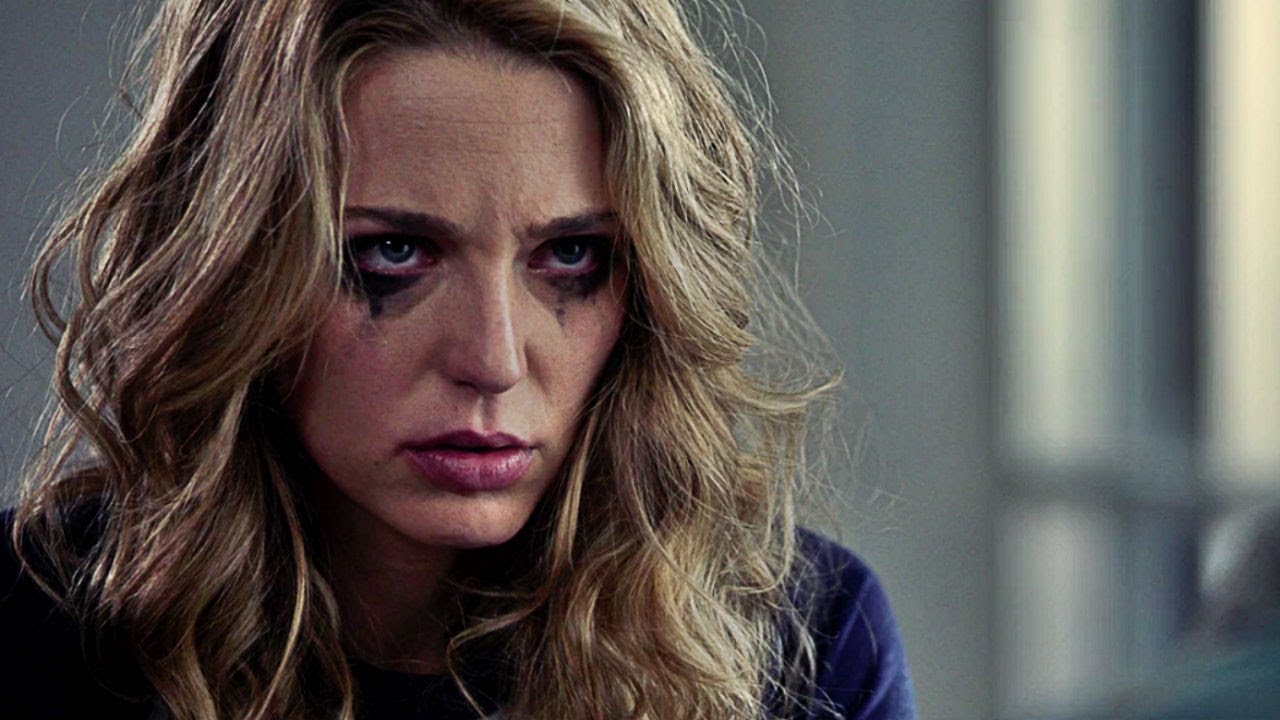
Happy Death Day does what it can to make up for its lacking originality with a tight pace and compelling lead performance.

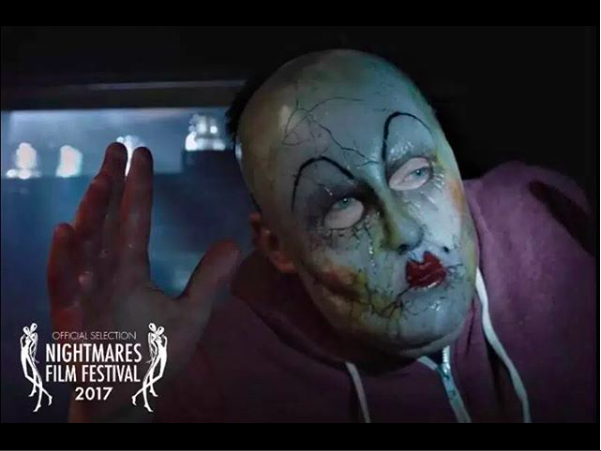
Tree (Jessica Rothe) wakes up on her birthday in some rando’s dorm room with no memory of the night before, a raging hangover and an attitude. She’s murdered that night by a knife-wielding marauder in a plastic baby mask, only to wake up back in that same dorm room under that same They Live poster.

Repeat ad nauseam.

It doesn’t take too many déjà vu mornings before Tree decides there is a mystery to solve here and just like that, we’re off in Phil Connors territory: reliving the same day again and again gives you the chance to become a better person, right?

If, like Tree, you are unaware of Groundhog Day, Phil Connors is the Bill Murray character doomed to relive February 2 until he…well, if you haven’t seen it I don’t want to ruin it for you. But the fact that Happy Death Day addresses the groundhog in the room is part of its self-aware, played-for-comedy charm.

Rothe boasts strong comic timing and a gift for physical comedy, a skill that transitions nicely to the demands of being repeatedly victimized by a slasher.

Director Christopher Landon (Scout’s Guide to the Zombie Apocalypse) wisely mines Scott Lobdell’s screenplay for laughs. Given the repetitive, bloodless nature of the kills, trying to generate scares would have been a tough go.

The mystery absolutely does not hold up, red herrings are silly and fairly pointless, and whatever charm the filmmakers infuse into this recycled premise wears off just a tad before the credits roll. Still, there are funny bits and clever moments peppered throughout what is easily this year’s best Groundhog Day ripoff.

Fright Club: Best Middle Eastern Horror

There are countless reasons the Middle East has not been a hotspot of horror film output. Chief among them may be censorship, but the truth is that many of the countries in the area have a lot more to deal with right now than making movies.

Still, horror cinema has become a blossoming industry. Film as art has always been a renegade’s opportunity to make a political statement and horror can be an inexpensive way to speak your mind. Films like Omar Khan’s 2007 Pakistani horror mash-up Devil’s Ground, though highly flawed, worked as both an homage to Western horror tropes and a comment on Pakistani life. And the 2015 film Jeruzalem filmed its first-person found-footage right in the holy city.

Here we count down the five very best of the genre coming from the region in a podcast recorded live at Gateway Film Center.

5. Rabies (2010)

(Israel)
So, weirdly enough this film has literally nothing to do with rabies. Like, at all. But, it does have a relentless nature and seriously weird attitude, mashing together serial killer, slasher and wooded horror to nice effect.

Filmmakers Navot Papushado and Aharon Keshales started their journey in film and in horror here, with a genre mishmash that mostly works.

We open in a pit. A pitiful woman is calling out from the darkness. We soon realize that she and her brother 1) have run away from something, and 2) share a dark, unseemly secret. But that’s almost beside the point.

This story introduces the serial killer who haunts the film but hardly does the most damage. When a group of lost tennis players wanders into the woods—first to help the brother, then to escape a morally questionable cop—and a good guy of a forest ranger gets mixed up in all of it, well, things take weird turns. Bloody turns.

There’s an unsettling comic element to everything and performances are uniformly excellent. It’s an ambitious effort that does not entirely satisfy, but you find yourself really pulling for some of these guys and completely forgetting about that landmine.

4. Baskin (2015)

(Turkey)
Welcome to hell! Turkish filmmaker Can Evrenol invites you to follow a 5-man police squad into the netherworld, where eye patches are all the rage, pregnancy lasts well under the traditional 40 weeks, and you don’t want to displease Daddy.

The serpentine sequencing of events evokes a dream logic that gives the film an inescapable atmosphere of dread, creepily underscored by its urgent synth score. Evrenol’s imagery is morbidly amazing. Much of it only glimpsed, most of it left unarticulated, but all of it becomes that much more disturbing for its lack of clarity.
The further along the squad gets, the more often you’ll look in horror at something off in a corner, that sneaking WTF? query developing along with your upset stomach.

The central figures in this nightmare are one eye-patch wearing helper who enjoys tossing his or her hair over one shoulder, and the breathtaking father figure played by Mehmet Cerrahoglu. There is no one quite like him.

Cerrahoglu’s remarkable presence authenticates the hellscape. Evrenol’s imaginative set design and wise lighting choices envelope Cerrahoglu, his writhing followers, and his victims in a bloody horror like little else in cinema.

3. Big Bad Wolves (2013)

(Israel)
A mixture of disturbing fairy tale and ugly reality, Israel’s Big Bad Wolves takes you places you really don’t want to go, but damn if it doesn’t keep you mesmerized every minute.

The particularly vulgar slaughter of several little girls sets events in motion. One teacher is suspected. One cop is driven. One father suffers from grief-stricken mania. It’s going to get really ugly.

Filmmakers Aharon Keshales and Navot Papushado (Rabies) implicate everyone, audience included. They create intentional parallels among the three men, pointing to the hypocrisy of the chase and making accusations all around of a taste for the intoxicating bloodlust that comes from dominating a weaker person.

Their taut and twisty script keeps surprises coming, but it’s the humor that’s most unexpected. Handled with dark, dry grace by Lior Ashkenazi (the cop) and Tzahi Grad (the father) – not to mention Doval’e Glickman (the grandfather) – this script elicits shamefaced but magnetic interest. You cannot look away, even when the blowtorch comes out. And God help you, it’s hard not to laugh now and again.

2. Under the Shadow (2016)</h2 (Iran)
Our tale is set in Tehran circa 1988, at the height of the Iran/Iraq war and just a few years into the “Cultural Revolution” that enforced fundamentalist ideologies.

Shideh (a fearless Narges Rashidi) has been banned from returning to medical school because of her pre-war political leanings. Her husband, a practicing physician, is serving his yearly medical duty with the troops. This leaves Shideh and their young daughter Dorsa (Avin Manshadi) alone in their apartment as missiles rain on Tehran.

When a dud missile plants itself in the roof of the building (shades of del Toro’s Devil’s Backbone), Dora starts talking to a secret friend. Maybe the friend would be a better mommy.

The fact that this menacing presence – a djinn, or wind spirit – takes the shape of a flapping, floating burka is no random choice. Shideh’s failure in this moment will determine her daughter’s entire future.

Anvari casts the political climate meticulously, as forces beyond Shideh’s control – some supernatural, some cultural, all dangerous – surround her.

Frazzled, impatient, judged and constrained from all sides, Shideh’s nerve is hit with this threat. And as external and internal anxieties build, she’s no longer sure what she’s seeing, what she’s thinking, or what the hell to do about it.

1. A Girl Walks Home Alone at Night (2014)

(Iran/US)
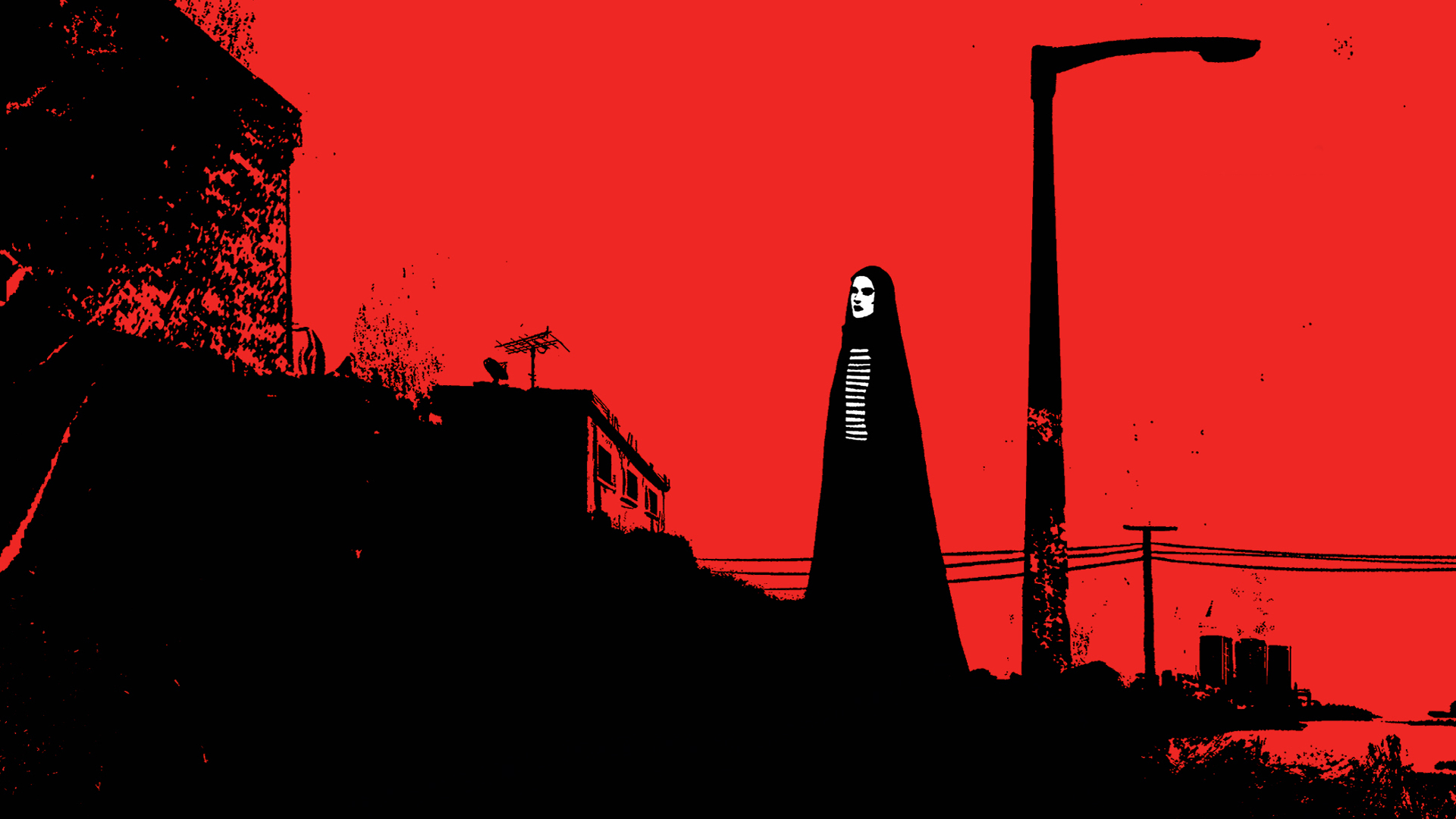
Writer/director Ana Lily Amirpour has made the world’s first Iranian vampire movie, and though she borrows liberally and lovingly from a wide array of inspirations, the film she’s crafted is undeniably, peculiarly her own.

Amirpour is blessed with a cinematographer in Lyle Vincent capable of translating her theme of loneliness in a dead end town, as well as the cultural influences and Eighties pop references, into a seamless, hypnotic, mesmerizingly lovely vision. The film is simply, hauntingly gorgeous.

Amirpour develops a deliberate pace that makes the film feel longer, slower than is probably necessary. The time is spent with singular individuals – a prostitute (a world-wearied and magnificent Mozhan Marno), a drug-addicted father (Marshall Manesh), a street urchin (Milad Eghbali), a pimp (Dominic Rains), and a rich girl (Rome Shadanloo). Two people weave in among these players – the handsome Arash (Arash Marandi), and a lonesome vampire (Sheila Vand).

Though these are character types more than characters outright, Amirpour and her actors don’t abandon them. Each has breath and dimensionality, their fate a question that piques sympathy.

Vand’s Girl is the constant question mark, and that – along with the eerie, sometimes playful beauty of Vincent’s camerawork – is what makes the film unshakably memorable. I promise the image of a vampire on a skateboard will stay with you.

Listening for Banjos

When our son Riley was young, sometimes – well, often – my husband George and I were those parents who had no idea what was going on.

We never quite figured out how other parents always knew about picture day, field trips, permission slips and other school-related whatnot. I’d have found those in-the-know parents irritating if they weren’t so helpful.

Usually, we’d be made aware of some impending deadline or event when somebody else’s mom brought it up at a baseball game. Such was the case with 4th-grade camp.

It was little second baseman Joe Trapp’s mom who asked, “So, is Riley excited about camp?”

Ick. What?

“Camp. It’s coming up. Don’t you have your paperwork filled out?”

I believe my disgusted face said more than just, No, I haven’t seen any paperwork.

“Oh, it’s so fun. He’ll love it.”

I couldn’t imagine why that mattered.

As an unwritten, shameful rule, George and I never let Riley do anything that kept him away from home for more than a single night. It wasn’t an overprotective instinct, really. We were just kind of sad when he wasn’t around. Life beams brighter when he’s on hand.

My oldest sister had harassed me for years to let Riley stay with her for a few days each summer. Her house is six whole hours from mine.

Screw that!

We were to relent in our smothering territoriality for 4th-grade camp, though. It was a mandatory excursion.

Still, there was a hiccup. Because of our situational ignorance, we’d let Riley audition for a play that rehearsed right through the week of camp. He was the lead in James and the Giant Peach, and he was not going to be allowed to miss a full week’s rehearsals.

So, he’d go to camp for two days, come home overnight (allowing for two rehearsals), and then return.

I’d fetch him.

The camp was situated in Hocking Hills, Southern Ohio’s little patch of Appalachia. For an awful lot of Ohioans, the word “Appalachia” conjures images of serene rolling hills, green and peaceful valleys, a restful vacation spot. But for those of us who log too many hours watching horror films, it means something entirely different.

So it wasn’t visions of sugarplums filling my head as I took the Grandview School bus driver’s directions in hand and set off to fetch Riley in time for rehearsal.

As a rule, I dislike any road that lacks the common decency to bedeck itself with streetlights. Sure, this trip into the holler back in the pre-GPS days took place in broad daylight, but that matters not.

It’s not just the dark that I hate.

It’s this type of street – invariably flanked by fields or forest or some other overwhelming, claustrophobic presence of nature where anyone or anything can hide and watch and wait and play a banjo.

Little did I know as I started off that late spring morn that the bus driver who’d written my directions prefers a scenic route.

I would later learn that a good old, reliable highway runs directly from Columbus to Hocking Hills. But I didn’t know that yet, so I was stuck with Bussy’s rural landscape map.

I followed one country road after another rural route and then back across the sticks when, without warning, the road closed. There was no detour, nary a two-story building in the town where the thoroughfare ended, and I had very few bars left on my cell phone.

I pulled into an abandoned Blockbuster Video parking lot and called the school. Time and bars were wasted as the school secretary found me a phone number for the camp, which I dialed promptly. It rang and rang without end.

Why was no one answering?

I called George, who jumped online to google map me up a new route. I could have turned around and looked for the highway, but I was so far away from Columbus by this point that he thought we should try to find a detour that put me back on Bussy’s route.

George began directing, but my brain filled with flies and wax at all these unmarked turns being recommended.

I wrote down his directions, but I panicked.

I called the camp again. Ring, ring, ring, ring….

Panic, panic, panic, panic….

I tried to push the image of a 4th-grade camp overrun with bears or hillbillies or hillbilly bears out of my brain and decided to walk into the intersection to get some thoughts from the cop directing traffic.

“Ma’am, you can’t just walk out here.”

“Yes, I know. I’m lost.”

“I can’t help you right now,” he told me, arms waving rhythmically so this pick-up truck or that would know who had the right of way at the construction-handicapped intersection.

“Right. But here’s the thing. I have to pick my son up from camp, and the only directions I have say I need to stay on this closed road for another few miles, until it crosses 97. Do you know another route to 97?”

He did not know, but he guessed that if I took the next rural route and drove a while, I might be able to find a country road that cut back across to this closed road before it intersected with 97.

Guessing, meandering, wandering, and hoping are not things I am prepared to do on rural routes.

I would rather be eaten alive by sharks.

I called George back, who, taking my own crippling handicaps into consideration (it’s kind of surprising I am legally allowed on the road, really, given that most of Ohio is rural), said the best thing to do was just turn around, come almost all the way back to Columbus, and then take I71 to Athens county, where I could stop at a gas station to determine the whereabouts of the camp.

I felt sure I’d seen that movie, too, but I love me some highway, so I did it.

I won’t say things went smoothly once I hit Athens County, or that I was in my most sound and socially adjusted mind when I found the camp and collected my boy, but the mission was accomplished and James made it to his Giant Peach on time.

Do Not Stop in Willits

Welcome to Willits

by Alex Edeburn

In their debut feature, Trevor and Tim Ryan welcome us to the backwoods of Northern California where the weed, meth and aliens are bountiful and the yokels are creepy. The town of Willits—known as the Gateway to the Redwoods—attracts a young group of hikers looking to enjoy a weekend in the woods, who only get lost and spend the night near a cabin shared by a pair of strung-out conspiracy theorists.

Brock (Bill Sage) and Peggy (Sabina Gadeki) believe aliens are after the powerful batch of crystal meth the two have been cooking and smoking. “Emerald Ice,” as the locals call it, brings on intense hallucinations, exposing the user to the nefarious creatures visiting Earth, and in some cases, inhabiting human bodies.

Brock has no other option than to stand his ground and fend off the aliens he can only see through meth-tinted glasses. This proves problematic for our unsuspecting hikers when they eventually find themselves in Brock’s crosshairs.

The comedy of the film mainly relies on lazy stoner-humor courtesy of Possum, played by Rory Culkin. A Willits local who tags along with the hikers, Possum also provides the explanation for the UFO sightings and other spooky happenings around the town. Except his “explanation” is more of a half-assed paraphrasing of an Ancient Aliens episode.

The central question of the film: Does “Emerald Ice” actually expose the hidden truth about aliens, or are these visions part of a drug-induced psychosis? The narrative attempts to answer this by setting characters on a collision course with butchery. It’s a nice idea that just doesn’t work out since scenes with lost hikers or a homicidal Brock are too short for us to feel invested.

Given the cavalcade of circumstances, the premise seems promising for a science-fiction/horror romp. But the lack of tension and careless writing cripple a film that could have been frightening and fun.

If you’re looking for something with scares and laughs, try watching conspiracy theories on YouTube before watching this movie.

https://www.youtube.com/watch?v=BvhOiwnh5zA

I Don’t Want to Go Out – Week of September 25

Remember the unbelievable bounty in home entertainment last week? Well, it can’t be Christmas every day, kids. Things are a little slower this week, but making its way to DVD/BluRay is a decent horror flick and swimming to your screen for the first time is a shark attack flick that’s not nearly as bad as you think it is. Also, a 17-hour long movie about kids toys dating back to medieval times or some such bullshit.

Click the film title for the full review.

47 Meters Down

The Devil’s Candy

Transformers: The Last Knight

Fright Club: Non-Franchise Halloween Movies

So, there’s this one set of movies you may or may not be aware of about a guy with a William Shatner fixation just trying to get home in time for Halloween. You may have heard of it.

Here’s the thing, there are also other Halloween-themed movies you could watch this holiday if you’re so inclined. Loads of them. And while we feel like you probably know which Michael Meyers movies to skip (5 & 8), which to love (1, duh), and which to watch for the ironic enjoyment (6—we’re looking at you, Paul Rudd!), you might need some direction outside that series. So, here are our five favorite non-franchise Halloween horror movies.

5. Night of the Demons (1988)

It’s Halloween night in the late Eighties and a bunch of high school kids decides to go hang out at Angela’s party because, as the resident goth girl, “Halloween is like Christmas to Angela.”

Where’s the party? At the old, abandoned funeral parlor built over sacred land above some kind of demonic water source. Natch.

Do not be confused – Night of the Demons is not exactly recommended viewing. It’s terrible. Once you get past its dirt-cheap sets and TV-level staging, you’ll notice that the film boasts among the most stilted and cardboard dialogue of any film from the Aquanet decade.

But Angela (Amelia “Mimi” Kinkade) looks cool. Every goth chick— Fairuza Balk’s Nancy Downs from The Craft in particular—owes Angela a little respect. And professional dancer Kinkade does the demonic transformation justice. The acting is atrocious—all of it— but the film boasts a campy, nostalgic, oh-so-80s quality, and we never disagree with Bauhaus on a soundtrack.

4. Murder Party (2007)

Jeremy Saulnier is a filmmaker worth watching. Murder Party is not the near-masterpiece of Blue Ruin or Green Room, but it is a savvy, funny, fun change of pace.

Chris Sharp plays lonesome loser Christopher. Alone with his selfish cat on Halloween night, he decides to follow a whim and hit the party advertised on a flier. A “Murder Party.”

Fun!

What Saulnier pieces together could have dripped with condescending judgment, as a group of insecure art students plot to kill the poor guy as a piece of art that will impress Alexander (Sandy Barnett) enough to nab them the grant Alexander keeps lording over them.

The comedy is more self-referential and human than snide, simultaneously mocking and empathizing with the group of artists as well as their would-be victim.

Funny, tender, biting and often quite bloody and energetic, Murder Party does not suggest the style of film to come from Saulnier, but it predicts a filmmaker who knows what he’s doing.

https://www.youtube.com/watch?v=qI_DqgxNR7U

3. Ginger Snaps (2007)

Ginger and Bridget, outcasts in the wasteland of Canadian suburbia, cling to each other and reject/loathe high school (a feeling that high school in general returns).

On the evening of Ginger’s first period, she’s bitten by a werewolf. Writer Karen Walton cares not for subtlety: the curse, get it? It turns out, lycanthropy makes for a pretty vivid metaphor for puberty.

This turn of events proves especially provocative and appropriate for a film that upends many mainstay female cliches. Walton’s wickedly humorous script stays in your face with the metaphors, successfully building an entire film on clever turns of phrase, puns, and analogies, stirring up the kind of hysteria that surrounds puberty, sex, reputations, body hair, and one’s own helplessness to these very elements.

A well-timed Halloween party allows Ginger to display her new look and skills in as insightful a high school horror film as you’ll find, peppered equally with dark humor and gore.

2. May (2002)

Who wants a little romance? How about the tale of a wallflower, the blossom of new love, the efficient use of veterinary surgical equipment, and a good sized freezer?

Lucky McKee’s 2002 breakout is a showcase for his own talent as both writer and director, as well as his gift for casting. The entire ensemble surprises with individualized, fully realized, flawed but lovable characters, and McKee’s pacing allows each of his talented performers the room to breathe, grow, get to know each other, and develop a rapport.

More than anything, though, May is a gift from Angela Bettis to you.

May’s vulnerability is painful yet beautiful to watch, and it’s impossible not to hope that cool outsider Adam is telling the truth when he reassures her, “I like weird.”

McKee’s film pulls no punches, mining awkward moments until they’re almost unendurable and spilling plenty of blood when the time is right—on Halloween night, of course.

He deftly leads us from the sunny “anything could happen” first act through a darker, edgier coming of age middle, and finally to a carnage-laden climax that feels sad, satisfying, and somehow inevitable.

1. Trick ‘r Treat (2007)

Columbus native Michael Dougherty outdid himself as writer/director of this anthology of interconnected Halloween shorts. Every brief tale compels attention with sinister storytelling, the occasional wicked bit of humor and great performances, but it’s the look of the film that sets it far above the others of its ilk.

Dougherty takes the “scary” comic approach to the film—the kind you find in Creepshow and other Tales from the Crypt types—but nothing looks as macabrely gorgeous as this movie. The lighting, the color, the costumes and the way live action bleeds into the perfectly placed and articulated moments of graphic artwork—all of it creates a giddy holiday mood that benefits the film immeasurably.

Dylan Baker (returning to the uptight and evil bastard he perfected for his fearless performance in Happiness) leads a whip-smart cast that includes impressive turns from Brian Cox, Anna Pacquin, Leslie Bibb and Brett Kelly (Thurman Merman, everybody!).

And it’s all connected with that adorable menace, Sam. Perfect.

HAPPY HALLOWEEN!

Needs More Politics and Candy Crush

Friend Request

by Rachel Willis

With a film like Friend Request, the task becomes creating fear out of something benign. In this case, how can a friend request on Facebook be scary? Director Simon Verhoeven tries to answer that question.

College student Laura (Alycia Debnam-Carey) has a perfect life. Instead of opening credits, the film begins with a montage of scenes from Laura’s Facebook page: pictures with friends, comments from her adoring 800+ Facebook friends, even hints of a love triangle. While there could be an element of not everything is as it seems on social media, the movie doesn’t tackle this. What we see is what we get.

Into this mix comes Marina (Liesl Ahlers), a shy, lonely woman in Laura’s 200-level psychology class. Because Laura is a nice person, when Marina sends her a friend request on Facebook, she accepts. Not only does she accept the request, she takes the time to try to get to know Marina. But because this is a horror movie, in less than two weeks, Laura regrets her decision.

There are a number of ways Friend Request could go, (Marina is perfect Single White Female material) but it takes a supernatural turn. After a falling out between Laura and Marina, Laura and all of her closest friends start having nightmares. Most of the dreams are comprised of jump scares. It works the first few times, but after the third or fourth one, they stop being effective.

At times the film is unintentionally funny. It’s hard to maintain a level of horror around Facebook. If the film had embraced the silliness of its premise, the audience could have been treated to a horror comedy that warns against the danger of too much screen time, but sadly, the film tries to maintain the scares beyond what is reasonable. The suspension of disbelief is often non-existent, as a slowly loading screen generally inspires more irrational rage than outright terror.

Friend Request does follow some interesting ideas, and the actors are mostly up to the task of carrying the film’s weaker elements, but too often there’s a sense that no one’s quite sure how to make Facebook scary. Perhaps if they’d shown the real ways Facebook sucks the life out of its users, they could have had a truly horrifying tale.

Neither Holly Nor Jolly

Red Christmas

by Hope Madden

A holiday celebration of bad taste, Aussie writer/director Craig Anderson’s Red Christmas is a yuletide grab bag of solid performances, provocative subject matter, lazy scripting and gore.

Horror icon and E.T. mom Dee Wallace (who also produces) stars as Diane, the matriarch of a big Australian family gathering for the last holiday at their family home. With all the kids grown, Diane is selling off her large country estate and taking some time for herself.

But first—the best Christmas ever!

She’s joined by a set of squabbling adult children and their spouses, a pot-head uncle, and a stranger bedecked in dirty bandages, black robes and the reek of urine.

That last guest will be trouble.

Anderson has a lot on his mind about family, birth, death, murder, choice and basically every other noun you can associate with abortion. He is neither subtle nor judgmental, honestly, with carnage and questions piling up on both sides of the issue.

His film weaves between the splatter comedy stylings of a young Peter Jackson and the nonsensical decision making of any 80s slasher.

“You stay here while I go do something stupid, leaving you entirely defenseless for no logical reason,” says everyone at one point or another.

I’m paraphrasing.

A great deal about Red Christmas is grotesque yet intriguing. At least as much of it is tedious and hair-brained.

Wallace delivers, regardless of Diane’s routinely questionable decisions in the face of ax-wielding danger. She masters that maternal support-and-shepherd-and-chastise behavior that allows Diane to feel recognizable and human, no matter the increasingly horrific circumstances.

Each member of the cast finds dimension in thinly drawn characters, and the relationships among them feel well-worn.

Whether clever or distasteful, Anderson manages to dispatch characters in manners grossly suited to the subject matter. So, bravo there, I guess.

Not that you see a great deal of the dismemberment—Anderson’s reliance on red and green filters ensures you see very little of anything. His framing and use of sound focus more on reaction and spillage, really, but his is not a film for the squeamish.

I’m not sure who it is for. Red Christmas offers a peculiar, sloppy bit of macabre that manages to be more memorable than it is enjoyable.

Fright Club: Food in Horror Movies

There is a lot about eating in horror movies. Sometimes it’s a single meal (Ray Liotta’s brain, for example), other times it’s a pervasive theme to the entire movie, as in Troll 2 or The Stuff.

We’re focused on the bigger theme here, which is a bit of a shame because spending some time talking about that spaghetti scene in Se7en, or the finger in the french fries in The Hitcher, or that tasty Texas barbeque in Texas Chainsaw Massacre would have been fun. Don’t even get us started on Oldboy and the octopus!

5. Motel Hell (1980)

It takes all kinds of critters to make Farmer Vincent’s fritters!

Farmer Vincent (Fifties heartthrob Rory Calhoun) makes the county’s tastiest sausage and runs the Motel Hello as well. Now if swingers keep disappearing from the motel, and mysterious, bubbly moans echo around the farm, that does not necessarily mean anything is amiss.

Farmer Vincent, along with his sister Ida (a super creepy Nancy Parsons) rids the world of human filth while serving the righteous some tasty vittles. Just don’t look under those wiggling, gurgling sacks out behind the butcherin’ barn!

Motel Hell is a deeply disturbed, inspired little low budget jewel. A dark comedy, the film nonetheless offers some unsettling images, not to mention sounds. Sure, less admiring eyes may see only that super-cheese director Kevin Connor teamed up with Parsons and Calhoun – as well as Elaine Joyce and John Ratzenberger – for a quick buck. But in reality, they teamed up to create one of the best bad horror films ever made.

So gloriously bad!

4. Sweeney Todd: The Demon Barber of Fleet Street (2007)

Here’s a bizarre idea for a musical: The barber upstairs kills his clients and the baker downstairs uses the bodies in her meat pies. Odd for a Broadway musical, yes, but for a Tim Burton film? That sounds a little more natural.

Burton’s Sweeney Todd: The Demon Barber of Fleet Street is a full-on musical – Burton’s first – and every inch a stage play reproduction. For many films, this would be a criticism, but Burton’s knack for dark artificiality serves the project beautifully, and he achieves the perfect Dickensian Goth tone. His production is very stagy and theatrical but never veers from his distinct, ghoulish visual flair.

As in most of Burton’s best efforts, Sweeney Todd stars Johnny Depp in the title role. Depp is unmistakably fantastic – consumed, morose, twisted with vengeance – and he’s in fine voice, to boot.

With Burton’s help, Depp found another dark, bizarre anti-hero to showcase his considerable talent. With Depp’s help, Burton gorgeously, grotesquely realized another macabre fantasy.

3. The Bad Batch (2016)

Ana Lily Amirpour follows themes that fascinated her with her feature debut A Girl Walks Home Alone at Night, this time setting those preoccupations in a wasteland of conformity, survival and food.

The Bridge People are hyper-bulked up, ultra-tanned cannibals represented by Miami Man (Jason Momoa). They may not have access to steroids, but they’re certainly getting a lot of protein. The second community of Comfort offers a colorful, almost habitable environment led by charismatic leader The Dream (Keanu Reeves).

One version of America sees the vain, self-centered “winners” literally feeding on the weak. The second may seem more accepting, but it pushes religion, drugs and other “comforts” to encourage passivity.

Amirpour has such a facility with creating mood and environment, and though the approach here is different than with her debut, she once again loads the soundtrack and screen with inspired images, sounds and idiosyncrasies.

2. The Greasy Strangler (2016)

Like the by-product of a high cholesterol diet, The Greasy Strangler will lodge itself into your brain and do a lot of damage.

A touching father/son story about romance, car washes and disco, this movie is like little else ever set to film, showcasing unholy familial unions, men in their underwear, and merkins. (Look it up.)

Brayden (Sky Elobar) and his dad Big Ronnie (Michael St. Michaels – that is a name!) share the family business: LA walking tours of disco landmarks. They live together, work together, eat together.

Father and son possess a seriously unusual family dynamic that seems to work for them until they meet Janet (Elizabeth De Razzo – brave and funny). Both men fall for this “rootie tootie disco cutie,” and if that wasn’t enough, there’s a marauder on the loose – an inhuman beast covered head to toe in cooking grease.

The result is ingenious. Or repellant. Or maybe hilarious – it just depends on your tolerance for WTF horror and sick, sick shit. Whatever else it may be, though, The Greasy Strangler is – I promise you – hard to forget.

https://www.youtube.com/watch?v=VPl1vcb4hao

1. Dumplings (2004)

Fruit Chan’s Dumplings satirizes the global obsession with youth and beauty in taboo-shattering ways.

Gorgeous if off-putting Aunt Mei (Bai Ling) balances her time between performing black market medical functions and selling youth-rejuvenating dumplings. She’s found a customer for the dumplings in Mrs. Li (Miriam Yeung ChinWah), the discarded wife of a wealthy man.

With darkest humor and sharp insight, Chan situates the horror in a specifically Chinese history but skewers a youth-obsessed culture that circles the globe.

The secret ingredient is Bai Ling, whose performance is a sly work of genius. There are layers to this character that are only slowly revealed, but Ling clearly knows them inside and out, hinting at them all the while and flatly surprised at everything Mrs. Li (and you and everyone else) hasn’t guessed.

Gross and intimate, uncomfortable and wise, mean, well-acted and really nicely photographed, Dumplings will likely not be for everyone. But it’s certainly a change of pace from your day-to-day horror diet.

Fright Club: Sisters in Horror

Oh, siblings—our closest friends and the bane of our existence. Horror movies know that, which is why both sibling rivalry and sisterly bonds populate so many worthwhile flicks: Sisters, Excision, Mama, Only Lovers Left Alive, Kiss of the Vampire. Too many to count, really, but that’s exactly what we plan to do: count down the five best.

5. The Lure (2015)

Sisters Gold (Michalina Olszanska) and Silver (Marta Mazurek) are not your typical movie mermaids, and director Agnieszka Smoczynska’s feature debut The Lure is not your typical – well, anything.

The musical fable offers a vivid mix of fairy tale, socio-political commentary, whimsy and throat tearing. But it’s not as bizarre a combination as you might thing.

The Little Mermaid is actually a heartbreaking story. Not Disney’s crustacean song-stravaganza, but Hans Christian Andersen’s bleak meditation on the catastrophic consequences of sacrificing who you are for someone undeserving. It’s a cautionary tale for young girls, really, and Lure writer Robert Bolesto remains true to that theme.

But that’s really too tidy a description for a film that wriggles in disorienting directions every few minutes. There are slyly feminist observations made about objectification, but that’s never the point. Expect other lurid side turns, fetishistic explorations, dissonant musical numbers and a host of other vaguely defined sea creatures to color the fable.

4. Ginger Snaps (2000)

Sisters Ginger and Bridget, outcasts in the wasteland of Canadian suburbia, cling to each other, and reject/loathe high school (a feeling that high school in general returns).

On the evening of Ginger’s first period, she’s bitten by a werewolf. Writer Karen Walton cares not for subtlety: the curse, get it? It turns out, lycanthropy makes for a pretty vivid metaphor for puberty. This turn of events proves especially provocative and appropriate for a film that upends many mainstay female cliches.

Walton’s wickedly humorous script stays in your face with the metaphors, successfully building an entire film on clever turns of phrase, puns, and analogies, stirring up the kind of hysteria that surrounds puberty, sex, reputations, body hair, and one’s own helplessness to these very elements. It’s as insightful a high school horror film as you’ll find, peppered equally with dark humor and gore – kind of A Canadian Werewolf in High School, if you will.

3. Raw (2016)

Justine (Garance Marillier, impressive) is off to join her older sister (Ella Rumpf) at veterinary school – the very same school where their parents met. Justine may be a bit sheltered, a bit prudish to settle in immediately, but surely with her sister’s help, she’ll be fine.

Writer/director Julia Ducournau has her cagey way with the same themes that populate any coming-of-age story – pressure to conform, peer pressure generally, societal order and sexual hysteria. Here all take on a sly, macabre humor that’s both refreshing and unsettling.

A vegetarian from a meat-free family, Justine objects to the freshman hazing ritual of eating a piece of raw meat. But once she submits to peer pressure and tastes that taboo, her appetite is awakened and it will take more and more dangerous, self-destructive acts to indulge her blood lust.

In a very obvious way, Raw is a metaphor for what can and often does happen to a sheltered girl when she leaves home for college. But as Ducournau looks at those excesses committed on the cusp of adulthood, she creates opportunities to explore and comment on so many upsetting realities and does so with absolute fidelity to her core metaphor.

2. What Ever Happened to Baby Jane? (1962)

Bette Davis and Joan Crawford? Yes, please!

The two then-aging (just barely, if we’re honest) starlets played aging starlets who were sisters. One (Davis’s Jane) had been a child star darling. The other (Crawford’s Blanche) didn’t steal the limelight from her sister until both were older, then Blanche was admired for her skill as an adult actress. Meanwhile, Jane descended into alcoholism and madness. She also seemed a bit lax on hygiene.

Blanche winds up wheelchair bound (How? Why? Is Jane to blame?!) and Jane’s envy and insanity get the better of her while they’re alone in their house.

Famously, the two celebrities did not get along on set or off. Whether true or rumor, the performances suggest a deep, authentic and frightening hatred borne of envy that fuels the escalating tension.

Davis is at her unhinged best in a performance that earned her an Oscar nomination. Crawford pales by comparison (as the part requires), but between the hateful chemistry and the story’s sometimes surprising turns, this is a movie that ages well, even if its characters did not.

1. A Tale of Two Sisters (2003)

A lurid Korean fairy tale of sorts – replete with dreamy cottage and evil stepmother – Jee-woon Kim’s Tale of Two Sisters is saturated with bold colors and family troubles.

A tight-lipped father returns home with his daughter after her prolonged hospital stay. Her sister has missed her; her stepmother has not. Or so it all would seem, although jealousy, dream sequences, ghosts, a nonlinear time frame, and confused identity keep you from ever fully articulating what is going on. The film takes on an unreliable point of view, subverting expectations and keeping the audience off balance. But that’s just one of the reasons it works.

The director’s use of space, the composition of his frame, the set decoration, and the disturbing and constant anxiety he creates about what’s just beyond the edge of the frame wrings tensions and heightens chills. The composite effect disturbs more then it horrifies, but it stays with you either way.

Tale masters the slow reveal, and the dinner party scene is a pivotal one for that reason. One of the great things about this picture is not the surprise about to be revealed – one you may have guessed by this point, but is nonetheless handled beautifully – but the fact that Tale has something else up its sleeve. And under its table.