Tag Archives: horror

Fright Club: Workplace Horror

You think your job sucks? Dude, this list of movies will make you thank the lord above for your crappy gig.

5. Vampire’s Kiss (1988)

Sure, Nicolas Cage is a whore, a has-been, and his wigs embarrass us all. But back before The Rock (the film that turned him), Cage was always willing to behave in a strangely effeminate manner, and perhaps even eat a bug. He made some great movies that way.

Peter Lowe (pronounced with such relish by Cage) believes he’s been bitten by a vampire (Jennifer Beals) during a one night stand. It turns out, he’s actually just insane. The bite becomes his excuse to indulge his self-obsessed, soulless, predatory nature for the balance of the running time.

Cage gives a masterful comic performance in Vampire’s Kiss as a narcissistic literary editor who descends into madness. The actor is hilarious, demented, his physical performance outstanding. The way he uses his gangly mess of limbs and hulking shoulders inspires darkly, campy comic awe. And the plastic teeth are awesome.

Peter may believe he abuses his wholesome editorial assistant Alva (Maria Conchita Alonso) with sinister panache because he’s slowly turning into a demon, but we know better.

4. Mayhem (2017)

You know that nice lady at work who gets bronchitis every time she flies, then she coughs and hacks and spews DNA all over the office?

Let’s say you have issues with that kind of office contamination. And with office politics. And with your boss, her boss, and the way you’ve basically given up everything that makes you feel alive and happy for this stupid job you hate where germs are everywhere…

Wouldn’t it be cathartic to explode, right there, in the middle of everything, righteously and with no repercussions?

The film is an exercise in workplace catharsis, and a pretty fun one. It’s far superior to other recent attempts at office-bound carnage The Belko Experiment and Bloodsucking Bastards, partly because Lynch has a crisp sense of pace and knack for comedy.

Mayhem, the new film from director Joe Lynch, is just that emotional release. It’s fun. Especially if you’ve ever wanted to kill your boss.

https://www.youtube.com/watch?v=bhTDq2t6UpM

3. Severance (2006)

Genuinely funny and exhaustingly brutal, Christopher Smith’s British import Severance offers a mischievous team-building exercise in horror. A handful of would-be execs for global weapons manufacturer Palisade Defense are misled and slaughtered in what they believe to be a mandatory weekend excursion in Hungary to build corporate camaraderie.

Smith and co-writer James Moran’s wickedly insightful script mocks corporate culture as Smith’s direction pays homage to the weirdest assortment of films. The result is an uproarious but no less frightening visit to an area of the world that apparently scares the shit out of us: Eastern Europe. (Think Hostel, The Human Centipede, Borat.)

An epically watchable flick, Severance boasts solid performances, well-placed bear traps and landmines, a flamethrower and an excellent balance of black humor and true horror. To say more would be to give too much away, but rest assured that with every scene Smith and crew generate palpable tension. It erupts with equally entertaining measure in either a good, solid laugh or in a horrible, disfiguring dose of horror. How awesome is that?!

https://www.youtube.com/watch?v=OQ4e1558QY0

2. Compliance (2012)

Compliance is an unsettling, frustrating and upsetting film about misdirected and misused obedience. It’s also one of the most impeccably made and provocative films of 2012 – a cautionary tale that’s so unnerving it’s easier just to disbelieve. But don’t.

Writer/director Craig Zobel – who began his career as co-creator of the brilliant comic website Homestar Runner (so good!) – takes a decidedly dark turn with this “based-on-true-events” tale. It’s a busy Friday night at a fast food joint and they’re short staffed. Then the police call and say a cashier has stolen some money from a customer’s purse.

A Milgram’s experiment come to life, the film spirals into nightmare as the alleged thief’s colleagues agree to commit increasingly horrific deeds in the name of complying with authority.

Zobel remains unapologetically but respectfully truthful in his self-assured telling. He doesn’t just replay a tragic story, he expertly crafts a tense and terrifying movie. With the help of an anxious score, confident camera work, and a superb cast, Zobel masterfully recreates a scene that’s not as hard to believe as it is to accept.

1. American Psycho (2000)

A giddy hatchet to the head of the abiding culture of the Eighties, American Psycho represents the sleekest, most confident black comedy – perhaps ever. Director Mary Harron trimmed Bret Easton Ellis’s novel, giving it unerring focus. More importantly, the film soars due to Christian Bale’s utterly astonishing performance as narcissist, psychopath, and Huey Lewis fan Patrick Bateman.

There’s an elegant exaggeration to the satire afoot. Bateman is a slick, sleek Wall Street toady, pompous one minute because of his smart business cards and quick entrance into posh NYC eateries, cowed the next when a colleague whips out better cards and shorter wait times. For all his quest for status and perfection, he is a cog indistinguishable from everyone who surrounds him. The more glamour and flash on the outside, the more pronounced the abyss on the inside. What else can he do but turn to bloody, merciless slaughter? It’s a cry for help, really.

Harron’s send-up of the soulless Reagan era is breathtakingly handled, from the set decoration to the soundtrack, but the film works as well as a horror picture as it does a comedy. Whether it’s Chloe Sevigny’s tenderness as Bateman’s smitten secretary or Cara Seymour’s world-wearied vulnerability, the cast draws a real sense of empathy and dread that complicate the levity. We do not want to see these people harmed, and as hammy as it seems, you may almost call out to them: Look behind you!

As solid as this cast is, and top to bottom it is perfect, every performance is eclipsed by the lunatic genius of Bale’s work. Volatile, soulless, misogynistic and insane, yet somehow he also draws some empathy. It is wild, brilliant work that marked a talent preparing for big things.

Down Wind

Downrange

by Hope Madden

There are some great films that spare you the exposition, dropping you instead into the center of the action and leaving you there, breathless, until the final credits. Ben Wheatley’s Free Fire, for instance, exists in this Act 2-only universe.

When it’s done well, it can be a breathless, sometimes blistering ride.

Unfortunately, Downrange doesn’t do it well.

Director Ryûhei Kitamura (Midnight Meat Train) strands you with six motorists—just good looking kids ride-sharing their way with strangers across a deserted highway toward whatever.

One blown tire brings the carpool to a screeching halt, but it isn’t a stray pothole to blame (they’re obviously not driving through Columbus right now). No, it’s a well-aimed bullet, and these travelers have unwittingly volunteered to become target practice for some lone gunman (don’t call him a terrorist!) hiding in the tree line.

It’s not a bad set up, really, if a little clichéd and convenient: out of the way (read: no cell reception), car full of strangers (read: character development will unfold by way of action), escalating tension and drama.

How does the roadkill stew Kitamura makes from these ingredients wind up so bland? Once he puts these ducks on this pond, he can’t find anything imaginative to do with them.

The story is thin, yes—it’s a scene, really, stretched for 90 minutes. But it can be done. Greg McLean did it in 2007 with a raft full of tourists and a big gator in Rogue, but he had Radha Mitchell, Stephen Curry, John Jarratt and Mia Wasikowska—actors whose names you may not know but whose talent you would recognize. Downrange doesn’t have that.

To be fair, the cast struggles with more than just limited ability. They quickly lose the opportunity to feel authentic under an abundance of heavy breathing, high tension close-ups as each ducks and contorts to avoid the spray of bullets and body fluids.

The film isn’t terrible, it’s just tedious. Its nihilism feels undeserved, more like a lack of imagination than a cynical choice. A situation both so precise and so familiar requires some surprise—either in style or in narrative decision—to compel attention. Kitamura can muster neither.

Downrange is a Shudder exclusive, debuting April 28.

Films Against Humanity

Truth or Dare

by Hope Madden

Do people over the age of 8 still honestly play Truth or Dare? This idea surprises me. Aren’t there video games kids can be wasting time with?

I suppose the real surprise is that it took four years for a film to rip off It Follows. The new PG-13 horror from Blumhouse, Truth or Dare, takes a stab at it.

No, it’s not sex. But it is a curse that you pass on to other people to save yourself. A super lame curse that blends the clever concept of It Follows with the by-the-numbers structure of one of the later Final Destinations and wraps it all up in a faux-contemporary cautionary tale about the digital age.

Yawn!

I’d point out that co-writer/director Jeff Wadlow was primarily lifting from his own 2005 film Cry Wolf, but I decided to go with movies you might have seen—movies that merit imitation.

So. Goody two-shoes Olivia (Lucy Hale) plans to spend her final spring break as a college student building houses with Habitat for Humanity, but her trampy bestie Markie (Violett Beane) and their binge-drinking roomie Penelope (Sophia Ali) have other plans. They guilt Olivia into spending the time with them, their boyfriends and an ethnic minority/gay sixth wheel in Mexico.

Hooray! Six slasher stereotypes—I mean, six best friends!—head south to flirt with alcohol poisoning and make bad decisions. Like playing grade school sleepover games and going to that decaying old mission.

Truth is, there are moments when one performance or a single intriguing notion or a clever call-back threatens to save a scene, by the final reveal you realize how heavy-handed the film really is.

Performances are bland, kills lack inspiration, there aren’t even enough of the prerequisite jump scares to keep the target PG-13 audience interested.

If you are of-age, hopefully you bought some beer with that ID because you’ll need the lubrication to help you glide past the lapses in logic, sometimes comical dialog and one laugh-out-loud moment at the vending machine.

Brad (Hayden Szeto, who deserves better) hears the ominous sound of an otherworldly voice calling out his name.

Except that it sounds exactly like some stoned guy hiding on the other side of the candy machine trying out his spooky voice and stage-whispering, “Braaaaaaaaadddddd!”

My entire row laughed.

So, there you go. There is some enjoyment to be had.

https://www.youtube.com/watch?v=DLXgDaajBmw

Fright Club: Mothers and Daughters in Horror

The relationship between mothers and daughters informs an awful lot of great horror films from The Exorcist to Black Swan. Frightmare suggests that becoming your mother is inescapable. The Woman tells us that if we can’t raise our daughters right, a more alpha mom might show up and do it for us. The Ring and Mom and Dad remind us that moms aren’t perfect. They have bad days. Sometimes they may want to drop you down a well.

We focus on five horror films where that relationship between mother and daughter informs and impacts the storyline in a substantial way.

5. The Bad Seed (1956)

The minute delicate Christine’s (Nancy Kelly) husband leaves for his 4-week assignment in DC, their way-too-perfect daughter begins to betray some scary behavior. The creepy handyman Leroy (Henry Jones) has her figured out – he knows she’s not as perfect as she pretends.

You may be tempted to abandon the film in its first reel, feeling as if you know where it’s going. You’ll be right, but there are two big reasons to stick it out. One is that Bad Seed did it first, and did it well, considering the conservative cinematic limitations of the Fifties.

Second, because director Mervyn LeRoy’s approach – not a single vile act appears onscreen – gives the picture an air of restraint and dignity while employing the perversity of individual imaginations to ramp up the creepiness.

Enough can’t be said about Patty McCormack. There’s surprising nuance in her manipulations, and the Oscar-nominated 9-year-old handles the role with both grace and menace.

4. Hounds of Love (2016)

It is the late 1980s in Perth, Australia, and at least one young girl has already gone missing when the grounded Vicki (Ashleigh Cummings) sneaks out her bedroom window to attend a party. She doesn’t like staying with her mom, who left her dad and ruined the family and her life.

So she sneaks out, which isn’t nearly as dumb a move as is accepting a ride from Evie White (Emma Booth) and her husband, John (Stephen Curry).

Writer/director Ben Young’s amazing feature debut works on so many levels and showcases a master visual storyteller almost as brilliantly as it shines the light on three phenomenal performances.

What is it that may finally undo the evil the Whites have planned? One mother’s relentless devotion to her daughter and another mother’s sudden, stabbing empathy.

https://www.youtube.com/watch?v=UNEurXzvHqE

3. Eyes of My Mother (2016)

Francisca’s mother had been an eye surgeon back in Portugal.

“We used to do dissections together. She always hoped I’d be a surgeon one day.”

Though Mom appears only in Act 1 of writer/director Nicolas Pesce’s modern horror masterpiece Eyes of My Mother, her presence echoes throughout the lonely farmhouse Francesca rarely leaves.

Yes, the skills her mother imparted coupled with the trauma Francesca faced bleeds together to create a character whose splintered psyche keeps her from seeing that she’s taking some extreme measures to cure her lonliness.

This is one of the most beautifully filmed horror movies ever made, and as impeccable as the cinematography, the sound is even more important and magnificent. Together with restrained performances and jarring images, Eyes of My Mother is a film that sticks around even after it’s gone. Like a mom.

2. The Witch (2015)

There is a lot going wrong for poor Thomasin (Anya Taylor-Joy). But it all starts when the baby goes missing on her watch. Her mother (Kate Dickie) never forgives her for it and soon Mother is finding faults with Thomasin, making accusations that even Father, who knows better, won’t defend.

For The Witch to work, for us to tentatively hope that Black Philip talks back, Thomasin has to basically lose everything, and it all starts with her mother’s love and respect. Soon her mother’s bitterness turns to competition for the affection of the menfolk, accusations of all sorts of wrongoing, all of which spirals out of control until Thomasin has no one left, no one who will love her and look after her, except that goat.

Robert Egger’s unerringly authentic deep dive into radicalization, gender inequality and isolation is all sparked with one act that irrevocably ruptures one relationship.

1. Carrie (1976)

There is nobody quite like Margaret White. Oscar nominee Piper Laurie saw the zealot for all her potential and created the greatest overbearing mother film has ever seen. (We never did see Mrs. Bates, did we?)

Sissy Spacek (also Oscar nominated for her performance) is the perfect balance of freckle-faced vulnerability and awed vengeance. Her simpleton characterization would have been overdone were it not for Laurie’s glorious, evil zeal. It’s easy to believe this particular mother could have successfully smothered a daughter into Carrie’s stupor.

De Palma and screenwriter Lawrence D. Cohen streamline King’s meandering finale. Wise, because once the dance drama is done, we just want to find out what happens at home, and Mrs. White doesn’t disappoint.

Shush!

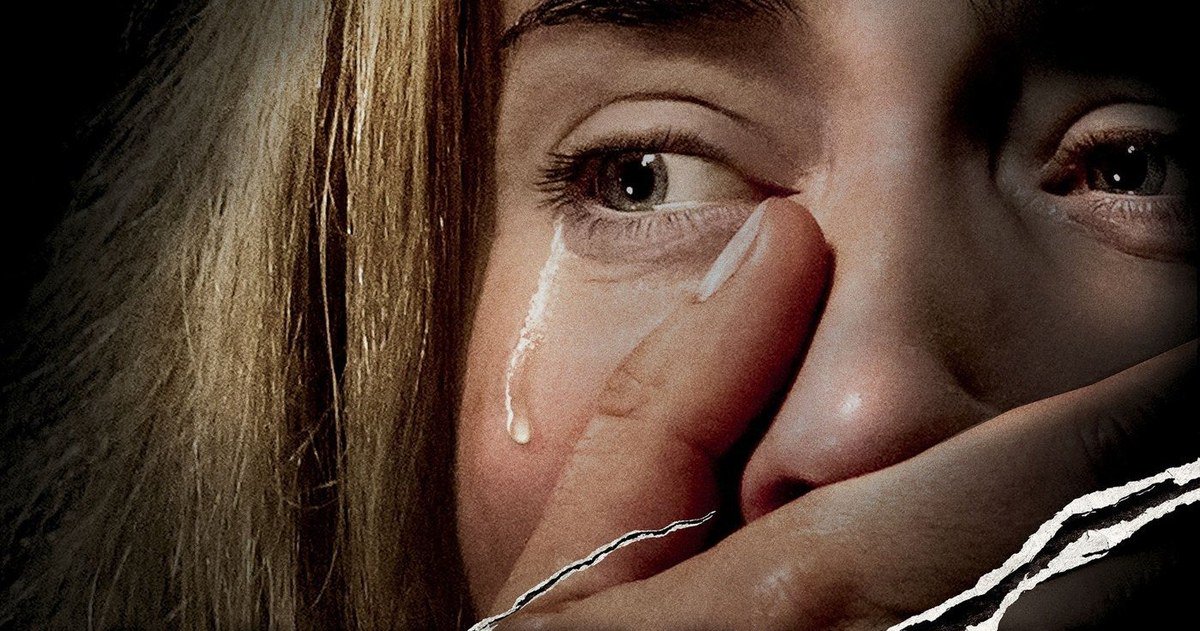
A Quiet Place

by Hope Madden

Damn.

So, John Krasinski. That big, tall guy, kind of doughy faced? Married to Emily Blunt? Dude can direct the shit out of a horror movie.

Krasinski co-writes, directs and stars in the smart, nerve-wracking gut-punch of a monster flick, A Quiet Place.

Krasinski plays the patriarch of a close-knit family trying to survive the post-alien-invasion apocalypse by staying really, really quiet. The beasts use sound to hunt, but the family is prepared. They already know sign language because their oldest, played by Millicent Simmonds (Wondertruck) is deaf.

A blessing and a curse, that, since she can’t tell if she makes noise, nor can she tell if a creature comes calling.

Simmonds is wonderful as the conflicted adolescent, her authenticity matched by the tender, terrified performance given by Noah Jupe (Wonder) playing her younger brother.

As their expecting mother, Emily Blunt is magnificent, as is her way. Simultaneously fierce and vulnerable, she’s the family’s center of gravity and the heart of husband (onscreen and off) Krasinski’s film.

But you expect that from Emily Blunt. She’s amazing.

What you may not expect is Krasinski’s masterful direction: where and when the camera lingers or cuts away, how often and how much he shows the monsters, when he decides the silence will generate the most dread and when he chooses to let Marco Beltrami’s ominous score do that work for him.

The script, penned by Krasinski with horror veterans Bryan Woods and Scott Beck, stays one step ahead of your complaints. Just as you think, “Why haven’t they done this?” a clear explanation floats across the screen, either as translated sign language, a prop on a table or a headline in Dad’s gadget-laden basement bunker.

It’s smart in the way it’s written, sly in its direction and spot-on in its ability to pile on the mayhem in the final reel without feeling gimmicky or silly.

And the monsters are kick ass. That’s a big deal.

At its heart lies a sweet sentiment about family, but sentiment does not get in the way of scares. A Quiet Place works your nerves like few films can.

Fright Club: Death + Sex

A few weeks ago we covered Sex and Death. That is, the act of sex leads directly to death. Sex kills you.

This week, as a kind of wrong-headed sibling, we talk with B Movie Bros about Death and Sex. Which is to say, the death part comes first. Either party can be dead, or both can. Reanimated corpses are fine, if that’s your thing. Just as long as at least one participant is dead.

5. Living Doll (1990)

Though few scenes go by that don’t showcase Katie Orgill’s bare breasts, this odd British import is just a sweet romance at its heart. It’s a romance between a young mortician/med student and the corpse of his unrequited love, which doesn’t sound that sweet, I’ll grant you, but between Mark Jax’s delusional naivete and the strangely tender script penned by director George Dugdale with Paul Hart-Wilden and Mark Ezra, the film may openly flirt with necromancy, but it courts true romance.

Why is Christine (Orgill) buried naked? Why does everyone hide their British accents—and so poorly? Why clutter the film with so many atrocious actors? Why is Orgill so bad at holding her breath? Who knows or cares, when Eartha Kitt plays the landlady?

The film is weirdly memorable—equally grotesque and tender-hearted. You can’t exactly look past its snail’s pace or poor acting, but it works on you. There’s not much else like it.

4. The Corpse of Anna Fritz (2015)

Young hospital orderly Pau (Albert Carbo) attends the morgue, where the famous actress Anna Fritz (Alba Ribas) awaits an autopsy come morning. He secretly texts a selfie with the body to two buddies. They show up to see the body.

Soon, three young men are alone with a beautiful, naked, dead woman with absolutely no chance of being interrupted for hours. If you’re a little concerned with where this may lead, well, you should be.

As a comment on rape culture, the film is a pointed and singular horror.

Sort of a cross between 2008’s irredeemable rape fantasy Deadgirl and Tarantino’s brilliant Kill Bill, The Corpse of Anna Fritz will take you places you’d rather not go.

And while contrivances pile up like cadavers in a morgue, each one poking a hole in the credibility of the narrative being built, The Corpse of Anna Fritz has a lot more to offer than you might expect—assuming you stick it out past the first reel.

3. The Neon Demon (2016)

“Beauty isn’t everything, it’s the only thing.”

So says an uncredited Alessandro Nivola, a fashion designer waxing philosophic in Nicolas Winding Refn’s (Bronson, Drive) nightmarish new film The Neon Demon.

The line, of course, is borrowed. Refn tweaks the familiar idea to suit his fluid, perfectly framed, cynical vision.

Jesse (Elle Fanning) is an underaged modeling hopeful recently relocated to a sketchy motel in Pasadena. Will she be swallowed whole by the darker, more monstrous elements of Hollywood?

Or is Ruby (Jena Malone) the godsend of a friend Jesse needs?

Nope. And she’s not to be trusted with the kind of beautiful corpses you might find in an LA mortuary, either.

2. We Are the Flesh (2016)

Are you squeamish?

First-time feature writer/director Emiliano Rocha Minter announces his presence with authority—and a lot of body fluids—in this carnal horror show.

A hellish vision if ever there was one, the film opens on a filthy man with a lot of packing tape. He’s taking different types of nastiness, taping it inside a plastic drum to ferment, and eventually turning it into a drink or a drug. Hard to tell—loud drum banging follows, as well as hallucinations and really, really deep sleep.

During that sleep we meet two siblings, a teenaged brother and sister who’ve stumbled into the abandoned building where the hermit lives.

What happens next? What doesn’t?! Incest, cannibalism, a lot of shared body fluids of every manner, rape, necrophilia—a lot of stuff, none of it pleasant.

Minter has created a fever dream as close to hell as anything we’ve seen since last year’s Turkish nightmare Baskin.

There’s little chance you’ll watch this film in its entirety without diverting your eyes—whether your concern is the problematic sexuality or just the onslaught of viscous secretions, the screen is a slurry of shit you don’t really want to see.

https://www.youtube.com/watch?v=BnTY6q7bt78

1. Dead Alive (1992)

Rated R for “an abundance of outrageous gore,” Dead Alive is everything the young Peter Jackson did well. It’s a bright, silly, outrageously gory bloodbath.

Lionel Cosgrove (Timothy Balme) secretly loves shopkeeper Paquita Maria Sanchez (Diana Penalver).His overbearing sadist of a mother does not take well to her son’s new outside-the-home interests. Mum follows the lovebirds to a date at the zoo, where she’s bitten (pretty hilariously) by a Sumatran rat-monkey (do not mistake this dangerous creature for a rabid Muppet or misshapen lump of clay).

The bite kills her, but not before she can squeeze pus into some soup and wreak general havoc, which is nothing compared to the hell she raises once she comes back from the dead. Soon enough, Lionel has a houseful of reanimated corpses, some of them a bit randy.

You ever wonder where a zombie baby comes from?

Tamara’s Not Home. Leave a Message.

The Strangers: Prey at Night

by Hope Madden

Sequels are hard. Especially when you don’t understand what made the original so unnerving and memorable.

A decade ago, Bryan Bertino released the almost unbearably slow burn of a home invasion film, The Strangers. The underappreciated gem quietly terrified attentive audiences, beginning with the line, “Is Tamara home?”

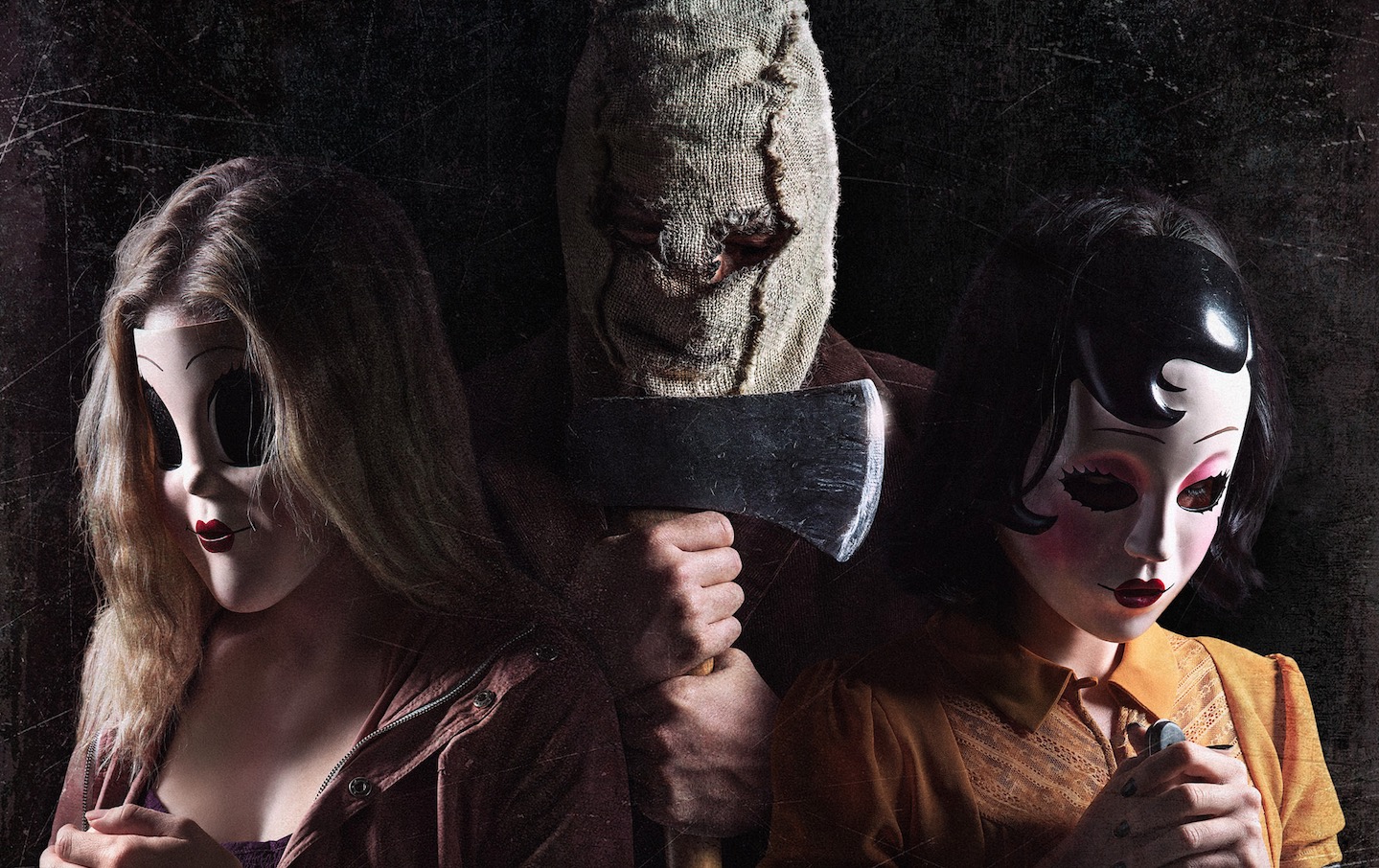
Director Johannes Roberts (47 Meters Down) and screenwriter Ben Ketai (The Forest) pick up the story of three masked, bloodthirsty youngsters still looking for Tamara.

A loving but bickering family spends the night at a lakeside campground and trailer park. A great deal of exposition ensures that you catch on, but the main gist is this: problem child Kinsey (Bailee Madison) is at odds with her beleaguered parents (Christina Hendricks and Martin Henderson) and her golden-child brother (Lewis Pullman).

Yes, our three masked malcontents have also settled into that same lakeside trailer park, now mainly vacant in the post-season.

Where Bertino’s horror had the languid melancholy of the old country blues tunes scratching away on a turntable, Roberts prefers the power ballads of the early Eighties. In fact, instead of the cinema of the Seventies that inspired Bertino, Roberts prefers 80s fare, from the early MTV soundtrack to the Argento-esque title sequence to the campground setting.

This is a self-conscious slasher with jump scares, frequent bloodletting and a marauder who is profoundly difficult to kill.

Roberts borrows a lot. Not just from Bertino’s original, but also scads of other horror gems from across the eras (Texas Chainsaw Massacre, The Town that Dreaded Sundown, Friday the 13th, Bava’s Carnage and so many more).

And while cinematographer Ryan Samul cannot grip you with dread the way Peter Sova’s creeping camera and quiet wide shots did ten years back, he can frame a shot.

That shot 1) has usually been lifted from another source, and 2) often contains a nearly-ludicrous image. Still, there are more than a few beautifully macabre sequences in this movie. One poolside episode is particularly impressive.

Still, the main problem with The Strangers: Prey at Night is that it gets comfortable in clichés, where the stinging original subverted them. That doesn’t make it a bad movie. It’s not. It’s a nasty little piece of entertainment, unoriginal but competent.

And you cannot expect originality from a sequel, of course. You just hope it can be memorable. The Strangers: Prey at Night is not.

Metaphorically Yours

The Cured

by Hope Madden

Zombies have proven to be metaphorically versatile over the decades. For Romero, they were sometimes the mindless consumer, sometimes the oppressed, sometimes the political outcasts.

David Freyne’s new Irish horror, The Cured, pushes the epidemic/ostracism angle to create xenophobic and racist parallels, as well as flashes of the kind of contagion-phobic hatred the AIDS epidemic met with. And Freyne does so without losing sight of a compelling, sometimes punishing story.

The Dublin of the not-so-distant future is home to the world’s most cataclysmic outbreak of the MAZE virus—a 28 Days Later kind of thing.

Senan (Sam Keeley) is among the stricken. Along with thousands of his countrymen, Senan has spent the last several years a zombie of sorts—a mindless, cannibalistic killing machine.

And though a cure has been found—relieving 75% of the infected—returning to a society proves difficult because the cured can remember their beastly behavior. So can the uninfected.

Plus, there is still that tricky question of what to do with the other 25%, “the incurable.”

Ellen Page (who also executive produces) co-stars as Senan’s widowed sister-in-law, and becomes  our window into what humanity may be left in humanity.

For a world in chaos (ours, not that of the movie), zombies offer a simple way to contend with the unimaginable: racism being celebrated at the highest offices, child molestation being excused when it’s politically convenient, Nazis being labeled good guys. For Freyne, publicly sanctioned fear and hatred leads first to oppression and then to uprising.

His set decoration echoes WWII-era propaganda as his characters struggle with shame, disenfranchisement, and righteous indignation. Keely’s deeply human performance remains focused on overcoming, but it’s the unnerving turn by Tom Vaughan-Lawlor that makes this film a keeper.

A barrister with political aspirations before the outbreak, Vaughan-Lawlor’s Conor proves a natural to lead a revolution. But what feels at first like an imbalance between entitlement and outrage slowly blossoms into something impressively fiendish.

There are two concerns with The Cured. 1) By horror standards, it’s a sociopolitical drama. 2) By the time it decides to become a horror movie, any hint of novelty or originality vanishes.

But don’t discount it. The Cured is smart and relevant. It doesn’t leave you guessing and won’t satisfy your bloodlust, but there is something satisfying in knowing that the ugliness and chaos of the day has not gone unnoticed.

Filmmaker Ted Geoghegan on Breaking New Ground with Mohawk

Filmmaker Ted Geoghegan has been making horror movies since 2001 when he began writing primarily low-budget European horror. His award-winning 2015 break out film We Are Still Here, a haunted house tale starring beloved genre staple Barbara Crampton, marked him as a director worth attention. He leveraged that success to tell a story he’d been mulling for years, a genre hybrid that breaks new ground called Mohawk.

Hope Madden: Did you set out to make a horror movie this time around:
Ted Geoghegan: Even though it’s being marketed as an action-horror film, Mohawk‘s more of a sad, angry drama about marginalized people. It’s spiritually similar to We Are Still Here while also being a total, hard 180. 

Madden: How’s that?
Geoghegan: Mohawk‘s a very unconventional period film, from the relationship of its lead characters and hard synth score to the fact that it was shot completely with natural light and on actual Mohawk land. It’s a sad, angry, very political anti-Trump drama about colonialism, but it’s also got people being stabbed in the head. It’s awfully different and we take some bold creative choices, but I figure that’s what cinema is for.

Madden: Mohawk is possibly the first Western to take the Native American point of view, but definitely the first to make that perspective female. Did you set out to break that ground?
Geoghegan: Absolutely. I’ve made it a point in my directorial works that my films are always anchored by a strong female lead. I am someone who relishes the idea of being able to tell the stories of marginalized people and encourage those people to be able to tell their own stories as well.

Madden: How did this story come about?
Geoghegan: This story that has grown out of my youth in Montana followed by my present life in New York City. I grew up around a lot of Native and indigenous people and for me, it was a part of my daily life. Years ago, when I moved to New York City, I was surprised by the lack of Native faces on the streets. It greatly surprised me and saddened me.

I remember being surprised by the number of times I would see signs saying Mohawk Construction or Mohawk Steelwork or Mohawk Ironworks over a lot of the City’s buildings: the Chrysler building, the Empire State building.

While I was aware of the fact that the Mohawk were an indigenous people, I knew very little about them aside from the eponymous haircuts. I wanted to learn more, so I started reading up on these people who were very foreign to me but who were the original people who called the region that I call home their original home.

I was bowled over by a lot of what their society had gone through over the course of several centuries and found that it was a story that I might want to tell.

I am a white man of European heritage and for me, I understand the gravitas, I understand the weight of telling a story like this about the decimation of indigenous people and tried to make the point through all of the creative process to not only treat it with the respect that it deserved, but also the humility of telling the story of someone with a very different heritage.

Madden: How did you manage to stay out of your own way?
Geoghegan: It is a topic that I try to treat with the utmost respect and responsibility.

I am a fan of war films, but my favorites are those that do not portray the heroes with halos and the villains twirling their mustaches. To me, war, like all aspects of humanity, exist in shades of grey. I think it’s important to portray that in your heroes and your villains.

Over the course of events in Mohawk, a group of scared, angry white men were making decisions based almost solely on fear and blind hatred. And you have a group of heroes who are making their decisions almost solely based on fear. These are not rational people and they are not necessarily making decisions that may be the best given the circumstances. I think it’s extremely important to acknowledge that no one is truly innocent, that everyone is in some way guilty.

Madden: Tell me about your cast.
Geoghegan: Kaniehtiio Horn, is actually a Mohawk. She was rather wary about the fact that she was reading a script called Mohawk written by two white men of European descent, but she really responded well to the film. She felt like the story resonated and she was very appreciative of the fact that we had done our research. She did have a lot of notes, which we were so excited about. The fact that we were able to incorporate so many things in the script was beyond our wildest dreams.

I feel very blessed that I was able to work with Mohawk actors and native contributors to the film in terms of language consultants to make something that not only I could be proud of but they could as well.

Madden: And the wardrobe?
Geoghegan: The wardrobe was created in cooperation with a historical producer we brought on to the film, Guy Gane. Guy spent the majority of his life researching the 1800s and he was so excited to tell a story set during the War of 1812, a war that’s been almost completely erased from cinema. It’s a war in which the US lost, so we tend to not talk about hose as much.

Guy brought in an amazing team of people who helped us create the very historically accurate wardrobe for both the native people and the new Americans. A lot of people might expect native wardrobe to look more traditionally cinematic. Guy really helped us understand that the Mohawk, in particular—who’d been trading with Europeans for centuries by that point—actually dressed in a rather modern style. The fact that Oak wears a red miniskirt is not anachronistic in the least. It’s actually exactly what young Mohawk women were wearing, down to the ribbon and down to the fabric. And it was such a joy to be able to work with him on that and help change a lot of expectations about what a lot of Mohawk people looked like and acted like at that time.

Madden: It’s interesting that the three heroes are in a sexual relationship. What made you decide to take that approach?
Geoghegan: Upon researching Mohawk history, they are a polyamorous society. They are also a matriarchal society, which is interesting because of how patriarchal so many Native nations were.

Originally we tried to broach the fact that, while Oak is quite in love with these men, they’re in love with each other, too. Rather than have moments in the film where all three share a big, passionate kiss, I wanted to treat it as something that’s so normal it’s almost blasé.

I wanted to toy with traditional conventions about storytelling and that felt like an interesting way to do so. In studying the Mohawk people and just how truly unconventional and how anti-establishment they were as a society, I was inspired to include things like that. It also helps me understand why anti-establishment people now wear the Mohawk hairdo. It really comes full circle when you understand who the Mohawk people are as to why people decide to have this specific hairdo. It says a lot without saying much at all.

Madden: It’s similar to the way you address so much in the film without calling attention to it. You create a lived-in world where these unexpected choices—a female point of view, polyamorous relationships, matriarchy—feel like normal storytelling choices. Like, why not look at it this way?
Geoghegan: You really hit the nail on the head when you used the phrase “Why not?” That’s what the society right now needs to wrap their brains around. This is reality and why not? People are going to love who they love and live where they live and unfortunately people are going to hate who they hate. That’s the basic core message behind this film is trying to find some sort of space where all of these human emotions can all live in one place together.

Madden: How much was this influenced by today’s political climate?
Geoghegan: Extremely. It’s extremely, extremely influenced by what’s going on today and that’s actually the main reason why I made this film.

If the injustices that occurred in Mohawk were no longer happening today, I don’t know if those stories would have resonated as strongly with me. But the fact that so many marginalized people are screwed over every single day by other people, by blind hatred, by our government—I knew this was something that had to be addressed.

And again, given the fact that I am a white guy of European heritage, I had to take a very hard look at myself and my own ancestors and the fact that Holt (Cavalry officer) and his companions in Mohawk, those are the people that I am descended from. I think that I and everyone else in America needs to acknowledge this history of atrocity and do what we can to stop it from repeating itself, which it unfortunately seems like it is doing these days.

The fact that people are still being blindly persecuted because of the color of their skin or who they love or where they live is so unbelievable to me and I’ve often told people that I could remake Mohawk, set it in the year 2018 and change very few things and it would still work in exactly the same fashion, which is deeply unsettling.

After all of my impassioned speeches about it not being a horror movie, I now keep thinking – given that we’ve been living in a horror movie for the past two years – maybe it is. 

Here’s to a time when stories like Mohawk aren’t as timely. 

Mohawk opens in limited release and on VOD Friday, March 2.

Fright Club: Best Farming Horror

It’s rural, it’s isolated, it’s dirty and often brutal and bloody. No, it’s not a serial killer’s dream, it’s farming, everybody, and it is the perfect opportunity for mayhem. Now, we’re looking for working farms here. No isolated and abandoned farmhouse nonsense. And no farms that don’t really farm, instead they keep distressed drivers in their barn and train them as circus acts. (Barn of the Naked Dead, people. Watch it. Wait…no, don’t.)

No, no. Working farms, often with some kind of pharmaceutical tie-in to pay off a loan. (We’ve learned that is a really, really bad idea, btw.) Scary manure, that’s what we’re saying. And here are the 5 best.

5. Isolation (2005)

In 2016, writer/director/Irishman Billy O’Brien made an effective and lovely – yes, lovely – creature feature called I Am Not a Serial Killer. But about a decade earlier, he started down that path along a muddy, ruddy Irish roadside that wound ‘round to an out-of-the-way farm.

It’s the kind of a depressing, run-down spot that would catch nobody’s eye – which is exactly why it drew the attention of runaway lovers Jamie (Sean Harris) and Mary (a young Ruth Negga – wonderful as always). The solitude and remoteness also got noticed by a bio-genetics firm.

Down-on-his-luck Farmer Dan (John Lynch, melancholy perfection) has little choice but to allow some experimentation on his cows. He doesn’t really mind the required visits by veterinarian Orla (Essie Davis – hooray!).

But when one cow needs help delivering – genetic mutations, fetuses inside fetuses and teeth where no teeth belong. Nasty.

O’Brien and his truly outstanding cast create an oppressive, creepy, squeamish nightmare worth seeking out.

4. 100 Bloody Acres (2012)

A testament to the entrepreneurial spirit and the bonds of family, 100 Bloody Acres is Australia’s answer to The Texas Chainsaw Massacre. Same body count and more blood, but a far sweeter disposition and loads more laughs.

Brothers Reg (Damon Herriman) and Lindsay (Angus Sampson) sell organic fertilizer. Business is good. Too good. Demand is driving the brothers to more and more extreme measures to gather ingredients.

Interesting the way writing/directing brothers Cameron and Colin Cairnes explore sibling rivalry, but the film’s strength is in its humor: silly enough to make even the most repugnant bits enjoyable. (I’m looking at you, Nancy. Oh, no! Why did I look?!)

3.Black Sheep (2006)

Graphic and gory horror comedy seems to be the Kiwi trademark, no doubt a product of the popularity of native Lord of the Gastro-Intestinal-Splatter-Fest-Laugh-Riot, Peter Jackson.

First-time writer/director Jonathan King uses the isolation of a New Zealand sheep farm and the greedy evil of pharmaceutical research to create horror. He does it with a lot of humor and buckets full of blood. It works pretty well.

Evil brother Angus (Peter Feeney) has bred some genetically superior sheep while smart but sheep-phobic brother Harry (Nathan Meister) has been away. But the new sheep bite (a recurring problem with bio-genetically altered farm animals). Victims turn into, well, were-sheep. Of course they do.

The result is an endearing, often genuinely funny film. Cleverly written with performances strong enough to elevate it further, Black Sheep offers an enjoyable way to watch a would-be lamb chop get its revenge.

2. The Other (1972)

Director Robert Mulligan (To Kill a Mockingbird) is a master of slow reveal, feeding us information as we need it and pulling no punches in the meantime.

It’s rural 1930s, and one hearty farm family has withstood a lot. Ever since Dad died last summer, seems like every time you turn around there’s some crazy mishap. And now, the baby’s gone…

And yet, the farm still goes on – there’s always a pie in the oven and a cow that needs milking. Still, Ada (Uta Hagen), the sturdy German matriarch, is troubled. Sweet, stout young Niles seems terribly confused about his twin, Holland.

Mulligan turns to that same nostalgic, heartland approach he used so beautifully with Mockingbird to inform a stunningly crafted, understated film that sneaks up on you. He creates what is likely the most effective and troubling film you’ll see about twins.

https://www.youtube.com/watch?v=HMmMqWkudgA

1. Wicker Man (1973)

In the early Seventies, Robin Hardy created a film that fed on the period’s hippie- versus-straight hysteria. Uptight Brit constable Sgt. Howie (Edward Woodward) flies to the private island Summerisle, investigating charges of a missing child. His sleuthing leads him into a pagan world incompatible with his sternly Christian point of view.

The deftly crafted moral ambiguity of the picture keeps the audience off kilter. Surely we aren’t to root for these heathens, with their nudey business right out in the open? But how can we side with the self-righteous prig Howie?

But maybe Howie’s playing right into something he doesn’t understand – and what would the people of Summerisle do if he didn’t play along? The ritual would be blown!

Hardy and his cast have wicked fun with Anthony Shaffer’s sly screenplay, no one more so than the ever-glorious Christopher Lee. Oh, that saucy baritone!

The film is hardly a horror movie at all –more of a subversive comedy of sorts – until the final reel or so. Starting with the creepy animal masks (that would become pretty popular in the genre a few decades later), then the parade and the finale, things take quite a creepy turn.