Tag Archives: horror movies

Fright Club: Best Horror Reboots

This week the new Ghostbusters cast was announced and for the first time, we were excited about this reboot. The reimagining of a classic is hard to do well, which is obvious when you count the unforgivably botched horror reboots there are: Shutter, The Eye, The Hills Have Eyes, Prom Night, Rob Zombie’s Halloween – don’t even make us say Oldboy. It’s a long, depressing list. But that only makes those rare gems – the well-made reboots – shine the brighter.

Here is a list of horror reboots we love – maybe even as much as we loved the original!

Funny Games (1997, 2007)

Michael Haneke is a genius, an amazing creator of tension. Everything he’s done deserves repeated viewing. With Funny Games, he makes it easy because he made it twice.

A family pulls into their vacation lake home to be quickly bothered by two young men in white gloves. Things deteriorate.

Haneke begins this nerve wracking exercise by treading tensions created through etiquette, toying with subtle social mores and yet building dread so deftly, so authentically, that you begin to clench your teeth long before the first act of true violence.

As teen thugs put the family through a series of horrifying games, they (and Haneke) remind us that we are participating in this ugliness, too. We’ve tuned in to see the family tormented. Sure, we root for them, but we came into this with the specific intention of seeing harm come to them. So, the villains rather insist that we play, too. In one particularly famous scene, Haneke decides to play games with us as well.

His English language remake is a shot for shot repeat of the German language original. In both films, the performances are meticulous. This is true of the entire cast, but it’s the villains who sell this. Whether the German actors Arno Frisch and Frank Giering or the Americans Brady Corbet and Michael Pitt, the bored sadism that wafts from these kids is seriously unsettling, as, in turn, is each film.

https://www.youtube.com/watch?v=48s781bxWF8

Dawn of the Dead (1978, 2004)

Zack Snyder would go on to success with vastly overrated movies, but his one truly fine piece of filmmaking updated Romero’s Dead sequel with the high octane horror. The result may be less cerebral and political than Romero’s original, but it is a thrill ride through hell and it is not to be missed.

The flick begins strong with one of the best “things seem fine but then they don’t” openings in film. And finally! A strong female lead (Sarah Polley). Polley’s beleaguered nurse Ana leads us through the aftermath of the dawn of the dead, fleeing her rabid husband and neighbors and winding up with a rag tag team of survivors hunkered down inside a mall.

In Romero’s version, themes of capitalism, greed, and mindless consumerism run through the narrative. Snyder, though affectionate to the source material, focuses more on survival, humanity, and thrills. (He also has a wickedly clever soundtrack.) It’s more visceral and more fun. His feature is gripping, breathlessly paced, well developed and genuinely terrifying.

The Ring (1998)/Ringu (2002)

Gore Verbinski’s film The Ring – thanks in large part to the creepy clever premise created by Koji Suzuki, who wrote the novel Ringu – is superior to its source material principally due to the imagination and edge of the fledgling director. Verbinski’s film is visually arresting, quietly atmospheric, and creepy as hell.

This is basically the story of bad mom/worse journalist Rachel (Naomi Watts) investigating the urban legend of a video tape that kills viewers exactly seven days after viewing.

The tape itself is the key. Had it held images less bizarre the whole film would have collapsed. But the tape was freaky. And so were the blue-green grimaces on the dead! And that horse thing on the ferry!

And Samara.

From cherubic image of plump cheeked innocence to a mess of ghastly flesh and disjointed bones climbing out of the well and into your life, the character is brilliantly created. (It’s actually a full grown man who climbs herky-jerky out of the TV.)

Hideo Nakata’s original was saddled with an unlikeable ex-husband and a screechy supernatural/psychic storyline that didn’t travel well. Screenwriter Ehren Kruger did a nice job of re-focusing the mystery.

Sure, it amounts to an immediately dated musing on technology. (VHS? They went out with the powdered wig!) But still, there’s that last moment when wee Aidan (a weirdly perfect David Dorfman) asks his mom, “What about the people we show it to? What happens to them?”

At this point we realize he means us, the audience.

We watched the tape! We’re screwed!

https://www.youtube.com/watch?v=_PkgRhzq_BQ

Let the Right One In (2008)/Let Me In (2010)

In 2008, Sweden’s Let the Right One In emerged as an original, stylish thriller – and the best vampire flick in years. A spooky coming of age tale populated by outcasts in the bleakest, coldest imaginable environment, the film breaks hearts and bleeds victims in equal measure.

Kare Hedebrant‘s Oskar with a blond Prince Valiant cut falls innocently for the odd new girl (an outstanding Linda Leandersson) in his shabby apartment complex. Reluctantly, she returns his admiration, and a sweet and bloody romance buds.

Hollywood’s 2010 version is the less confusingly entitled Let Me In, and fans of the original that feared the worst (ourselves included) can rest easy. Director Matt Reeves (Cloverfield) managed to retain the spirit of the source material, while finding ways to leave his own mark on the compelling story of an unlikely friendship.

Twelve year old Owen (Kodi Smit-McPhee) is a lonely boy who’s being bullied at school. When young Abby (Chloe Moretz) and her “dad” (Richard Jenkins) move in next door, Owen thinks he’s found a friend. As sudden acts of violence mar the snowy landscape, Owen and Abby grow closer, providing each other a comfort no one else can.

While the original had an ominous sense of dread, a feel of bleak isolation, and a brazen androgyny that the update can’t touch, Let Me In scores points all its own.

Together the films set the standard for child vampire fare, and neither one should be missed.

https://www.youtube.com/watch?v=DYcBSQokyBU

The Crazies (1973/2010)

Just five years after Night of the Living Dead, George A. Romero found himself interested in taking his zombiism concepts in a different direction. Building a cumulative sense of entrapment and dread, the both versions of this film rely on a storyline whisper-close to a zombie tale, but deviate in a powerful way. The slight alteration plumbs for a different kind of terror.

The military has accidentally tainted a small town’s drinking supply with a chemical. Those who drink the water go hopelessly mad. Both films begin by articulating humankind’s repulsion and fear of infection and loss of control before introducing the greater threat – our own government.

Romero was more interested in social commentary than in horror, therefore his film is not as scary as it could be. Military incompetence, the needless horror of Vietnam, and the evil that men can do when ordered to do so are all central conceits in his film.

Breck Eisner’s remake offers solid scares, inventive plotting, and far better performances than expected in a genre film. Eisner’s languid pace builds dread and flirts with an effectively disturbing sense of compassion. His sense of timing provides a fine balance between fear of the unknown and horror of the inevitable. He also has a far more talented cast, and he mines individual madness for more terror – although he pulls one punch Romero was happy to land.

Listen to our Frihgt Club PODCAST at Golden Spiral Media!

Fright Club: Best in French Horror

French horror films are not for the squeamish. In particular, the French languge output in the first decade of this century boasted some of the most extreme and well-crafted horror available anywhere. Films like Sheitan, Trouble Every Day, Frontiers, High Tension and many others mark an era that may never be bettered. In celebration of this week’s live Fright Club, we walk through some of the best in best French language horror films.

Inside (2007)

Holy shit. Sarah lost her husband in a car crash some months back, and now, on the eve of Christmas, she sits, enormous, uncomfortable, and melancholy about the whole business. Were this an American film, the tale may end shortly after Sarah’s Christmas Eve  peril makes the expectant mom realize just how much she loves, wants, and seeks to protect her unborn baby. But French horror films are different. This is study in tension wherein one woman (the incomparable Beatrice Dalle) will do whatever it takes, with whatever utensils are available, to get at the baby still firmly inside another woman’s body.

Them (Ils) (2006)

Brisk, effective and terrifying, Them is among the most impressive horror flicks to rely on the savagery of adolescent boredom as its central conceit. Writers/directors/Frenchmen David Moreau and Xavier Palud offer a lean, unapologetic, tightly conceived thriller that never lets up. Creepy noises, hooded figures, sadistic children and the chaos that entails – Them sets up a fresh and mean cat and mouse game that pulls you in immediately and leaves you unsettled.

https://www.youtube.com/watch?v=z9Djvi1-k0s

Irreversible (2002)

Gaspar Noe is perhaps the most notorious French filmmaker working in the genre, and Irreversible is his most notorious effort. Filmed in reverse chronological order and featuring two famously brutal sequences, Noe succeeds in both punishing his viewers and reminding them of life’s simple beauty. There’s no denying the intelligence of the script, the aptitude of the director, or the absolute brilliance of Monica Bellucci in an incredibly demanding role.

Martyrs (2008)

This import plays like three separate films: orphanage ghost story, suburban revenge fantasy, and medical experimentation horror. The first 2 fit together better than the last, but the whole is a brutal tale that is hard to watch, hard to turn away from, and worth the effort.

https://www.youtube.com/watch?v=Jbct9qWBSME

Calvaire (The Ordeal) (2004)

A paranoid fantasy about the link between progress and emasculation, The Ordeal sees a timid singer stuck in the wilds of Belgium after his van breaks down. With the darkest imaginable humor, the film looks like what might have happened had David Lynch directed Deliverence in French. As Marc (a pitch perfect Laurent Lucas) awaits aid, he begins to recognize the hell he’s stumbled into. Unfortunately for Marc, salvation’s even worse. The whole film boasts an uneasy, “What next?” quality. It also provides a European image of a terror that’s plagued American filmmakers for generations: the more we embrace progress, the further we get from that primal hunter/gatherer who knew how to survive. This film is a profoundly uncomfortable, deeply disturbing, unsettlingly humorous freakshow that must be seen to be believed.

http://www.youtube.com/watch?v=WgB9JTdrXhg

FC 02-Best in French Horror Films

Join us the 4th Saturday of every month for Fright Club Live, as we unspool a horror gem at Drexel Theater. Join the club!

One Bad Book

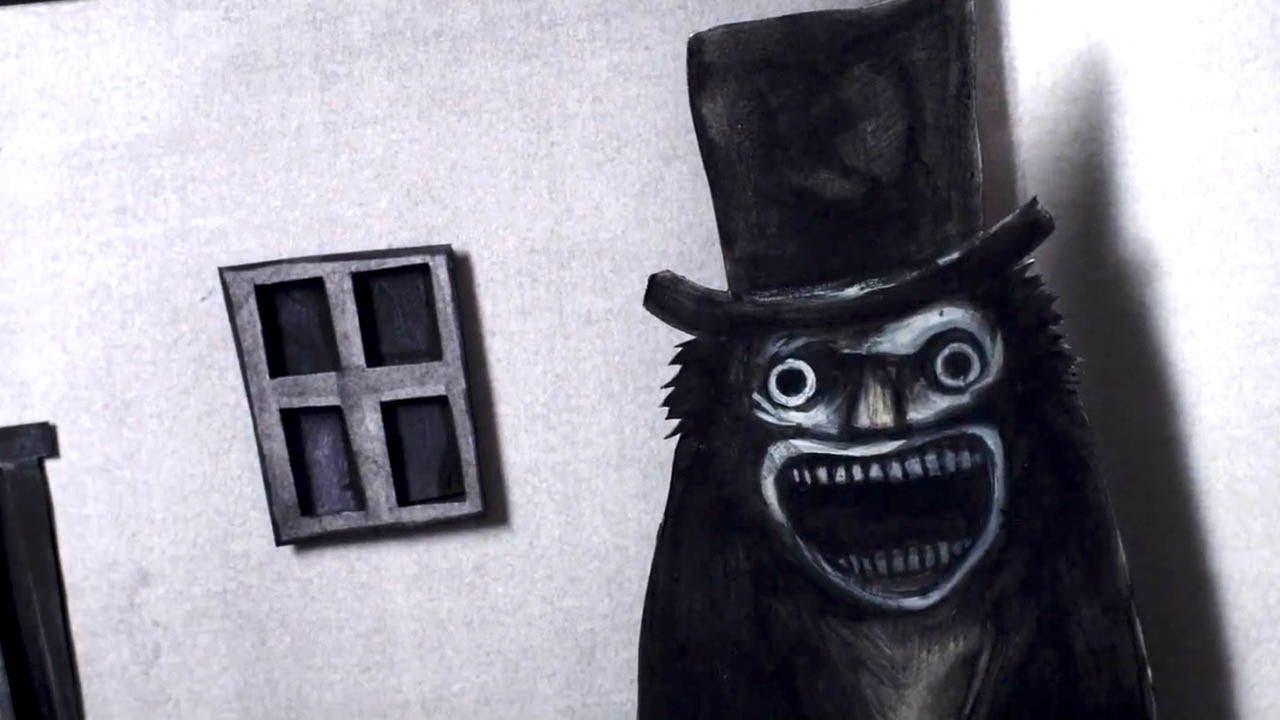
The Babadook

by  Hope Madden

You’re exhausted – just bone-deep tired – and for the umpteenth night in a row your son refuses to sleep. He’s terrified, inconsolable. You check under the bed, you check in the closet, you read a book together – no luck. You let him choose the next book to read, and he hands you a pop-up you don’t recognize: The Babadook. Pretty soon, your son isn’t the only one afraid of what’s in the shadows.

It’s a simple premise, and writer/director Jennifer Kent spins her tale with straightforward efficiency. There is no need for cheap theatrics, camera tricks or convoluted backstories, because Kent is drilling down into something deeply, frighteningly human.

Like a fairy tale or nursery rhyme, simplicity and a child’s logic can be all you need for terror.

Kent’s film is expertly written and beautifully acted, boasting unnerving performances from not only a stellar lead in Essie Davis, but also the alarmingly spot-on young Noah Wiseman. Davis’s lovely, loving Amelia is so recognizably wearied by her only child’s erratic, sometimes violent behavior that you cannot help but pity her, and sometimes fear for her, and other times fear her.

Likewise, Wiseman delivers as a tender, confused, dear little boy you sometimes just want to throttle. Their naturalistic performances genuinely showcase the baggage that can exist between a parent and a child.

Radek Ladczuk’s vivid cinematography gives scenes a properly macabre sense, the exaggerated colors, sizes, angles and shadows evoking the living terror of a child’s imagination.

Much of what catapults The Babadook beyond similar “presence in my house” flicks is the allegorical nature of the story. There’s an almost subversive relevance to the familial tensions because of their naked honesty, and the fight with the shadowy monster as well as the film’s unusual resolution heighten tensions.

The film’s subtext sits so close to the surface that it threatens to burst through. Though that does at times weaken the fantasy, it gives the film a terrifying urgency. In the subtext there is a primal horror, a taboo rarely visited in film and certainly never examined with such sympathy. Indeed, the compassion in the film may be the element that makes it so very unsettling.

Eerily familiar yet peculiar and unique, The Babadook immediately ranks among the freshest and more memorable films the genre has to offer. It also marks a filmmaker to keep an eye on.

Verdict-4-0-Stars

Color Me Weirded Out

The Strange Color of Your Body’s Tears

by Hope Madden

For a Belgian film, The Strange Color of Your Body’s Tears sure feels Italian.

Married writing/directing team Helene Cattet and Bruno Forzani appear to be fans of Italian horror – the gaillo style of Mario Bava and Dario Argento, in particular.  Their more memorable films had a dreamlike quality, and often boasted vivid colors and superb cinematography. Almost invariably their storylines were mysteries wherein an unknown marauder in black leather gloves picked off beautiful women in particularly bloody fashion.

Or, for Cattet and Forzani: check, check, check and check.

Bava and especially Argento have often been criticized for the overt sexuality and misogyny of their work, but Cattet and Forzani are not among the critics. Indeed, their film takes all those elements Bava and Argento are known for, amps them up, then basically drops the idea of any coherent narrative. The result is a visually arresting fantasy of blood and sexuality.

A man returns from a business trip abroad to find that his wife is missing, but the chain was on the door, so how is that even possible? He promptly drinks himself into a stupor, harasses his neighbors, then begins collecting weird clues. There ends any sense of narrative structure.

From there expect a lot of heavy breathing, ornately decorated bedrooms, hidden passageways, and characters with suspicious backgrounds and nefarious motives. Plus a lot of nudity and plenty of blood.

Cattet and Forzani display an imaginative and commanding directorial style. The film’s serpentine structure suits the almost unconnected scenes, saturated with color and surreal imagery. They’ve created a truly dreamlike quality with a film rich with bizarre and provocative ideas. And had their film been a short, or even a sixty minute exercise, it would have been quite a product. Unfortunately, it runs for 102 minutes.

Long before the film is over the novelty may wear off, as well as the astonishment with the directorial mastery. It begins to feel like a bad dream that is no longer very scary, just tiresome in that it won’t end. Maybe a few additional themes or ideas would help, as the film circles back so often to the same cycles of images that it grows wearying. The Strange Color of Your Body’s Tears is a fine cinematic experiment, just not an entirely successful one.

Verdict-3-0-Stars

Sympathy for the Devil

Horns

by Hope Madden

“Who’s the new girl at church?”

It’s a line brimming with innocence and temptation, filled with the possibilities of good versus evil, predator v prey. It’s a nice start to a crime drama steeped in surreal, Miltonesque imagery.

Along with a good line, Horns boasts quite a fantasy/horror pedigree. Helmed by French horror director Alexandre Aja (High Tension), written by Stephen King’s son Joe Hill, and starring Harry F. Potter (Daniel Radcliffe), it’s sure to draw the attention of – let’s be honest – nerds. Like me. The beguiling if flawed effort can’t quite become greater than the sum of its parts, though. But it is a wild ride while it lasts.

Ig Perrish (Radcliffe) is commonly believed by his community to have murdered his much-beloved girlfriend Merrin (Juno Temple). It’s a bit like Gone Girl, except that Ig’s crisis is compounded by the fact that he’s begun sprouting bony horns from his forehead. More than that, in the presence of the be-horned Ig, people compulsively confess their dark secrets.

Overripe imagery and symbolism inform a film that is comfortably over-the-top. It’s a glorious mess riddled with stiff dialog, and so tonally discordant – leaping from thriller to comedy to horror to mystery and back – that the effect is dizzying. Yet somehow Horns is utterly watchable.

Much credit for the film’s successes sits with Radcliffe, who seems utterly at home in a supernatural environment full of demons, tragedy, angst and earnestness. Temple also strikes the right innocent nymphette cord, and the young cast of the childhood flashback is especially strong.

The storyline itself carries the unmistakable odor of Stephen King, with the small town crime and flashback to the innocence of youth and the many untold dangers therein (Stand By Me, It, etc.) But King Senior never dove headlong into such blasphemous territory, while his son toys with recasting Satan, if not as hero, then as anti-hero.

Aja struggles gleefully to strike the right tone, and though his cast seems game, no one can quite overcome the symbolism gimmicks or stilted dialog.

Dense with color and texture, Horns invites you into a wild, often poorly acted and weakly written yet sumptuously filmed world of dark magic. It’s a fascinating mess.

Verdict-2-5-Stars


Alphabetized Mayhem

ABCs of Death 2

by Hope Madden

Children’s stories can be so inventive! Tired of telling the old “a is for apple” tale? ABCs of Death 2 may be just the movie for you.

Actually, it started two years ago, when fans of the horror short were challenged to endure a marathon event – 26 shorts, each dedicated to one letter of the alphabet. ABCsof Death pulled together 26 up-and-coming horror directors (or directing teams), each with their own letter. Their product varied from inspired to horrifying to extreme to forgettable to lame with a lot of middling efforts in between.

If nothing else, the filmmakers truly seemed to be having fun, which explains why 26 new directors (or directing teams) wanted in. Brace yourself for the sequel: 26 new alphabetically inclined films about death.

This time around the quality of the efforts is a little better balanced. Only two films really stand out as weak, and even those boast professional workmanship. The films in the sequel feel less like a cinematic dare and more like a well thought out, if brief, horror film.

On the other hand, the original work felt more vital where the sequel feels safe. The sequel lacks some of the maverick WTF quality of the first, with far fewer extreme moments. There’s also far less toilet horror, so at least there’s that.

Highlights include Robert Morgan’s D – an animated nightmare that’s part Kafka, part Burroughs yet somehow uniquely bizarre.

Dennison Ramalho’s J offers a well made piece of social commentary, as does the film for the letter T by Jen and Sylvia Soska.

The highlight from last year’s effort belonged to Frenchman Xavier Gens, whose take on X was startling and exceptional. Once again, the letter X falls to the French, and once again, the French film is among the very strongest. Julien Maury and Alexandre Bustillo re-team with Beatrice Dalle – the muse at the center of their brilliant 2007 feature Inside – to unsettle and horrify.

You’re unlikely to be disappointed by any individual piece. The whole may be less memorable than its 2012 predecessor, but for genre fans, it’s always fascinating to glimpse work from new filmmakers and to see what established directors can do with three minutes and a letter.

Verdict-3-0-Stars

http://www.youtube.com/watch?v=rLbQOKxugjw

Halloween Countdown, Day 25

Frozen (2010)

Writer/director Adam Green has made a name  in the industry with a series of unwatchably bad boogeyman slashers brimming with genre has-beens in wink-and-nod cameos. But sandwiched somewhere between the sloppy, insider splatter comedies Hatchet and Hatchet II sits a chilly tale worth finding: Frozen.

Three friends – a girl, her boyfriend and his best friend – go skiing one Sunday afternoon. They con their way onto the lift for one last run up the hill. But they didn’t really have a ticket to ride, you see, and the guy who let them take that last lift gets called away and asks a less reliable colleague to take over. That colleague has to pee. One thing leads to another.

So, three college kids get left on a ski lift. It’s Sunday night, and the resort won’t reopen until Friday.

I give Green, who also wrote, credit for crafting a brisk and usually believable flick. Sure, it’s Open Water at a ski resort, but that doesn’t mean it doesn’t work. Green and company avoid a lot of the pitfalls you might expect, not only from this type of film, but from Green’s cannon. The characters are not hateful or contemptible; their actions rarely seem idiotic. In fact, they cave in and try something dangerous at just about the point you’re thinking to yourself: “Hey, why don’t they try shimmying across those cables?”

The most effective scene, in fact, comes just after Joe (Shawn Ashmore) begins his perilous shimmying. He stops suddenly, looks all around, and starts quickly back to the chair. At first you think he’s just an enormous wussy who couldn’t even make it five feet without retreating.

Nope. Nope. That’s not it at all.

There are some unrealistic prosthetics, but otherwise, Green can be pretty proud of this tense, freaky thriller. Just don’t get it mixed up with the one your kids like to watch. Irreparable damage might follow.

Halloween Countdown, Day 23

28 Days Later (2002)

Prior to 28 Days Later, the zombie genre seemed finally dead and gone. But director Danny Boyle single-handedly resurrected the genre with two new(ish) ideas: 1) they weren’t dead, 2) therefore, they could move really quickly.

You know you’re in trouble from the genius opening sequence: vulnerability, tension, bewilderment, rage and blood – it marks a frantic and terrifying not-zombie film.

Like zombie god George Romero, though, Boyle’s real worry is not the infected, it’s the living.

Activists break into a research lab and free the wrong fucking monkeys.

28 days later, bike messenger Jim wakes up naked on an operating table.

What follows is the eerie image of an abandoned, desolate London as Jim wanders hither and yon hollering for anybody. In the church, we get our first glimpse of what Jim is now up against, and dude, run!

Danny Boyle is one of cinema’s visionary directors, and he’s made visceral, fascinating, sometimes terrifying films his entire career – Shallow Grave, Trainspotting, Millions, 127 Hours – but 28 Days Later is his one true horror film. And it is inspired.

He uses a lot of ideas Romero introduced, pulling loads of images from The Crazies and Day of the Dead, in particular (as well as Adrian Lyne’s Jacob’s Ladder). But he revolutionized the genre – sparking the rebirth of zombie movies – with just a handful of terrifying tweaks.

The vision, the writing, and the performances all help him transcend genre trappings without abandoning the genre. Both Brendan Gleeson and Cillian Murphy are impeccable actors, and Naomie Harris is a truly convincing badass. Their performances, and the cinematic moments of real joy, make their ordeal that much more powerful.

Sure, it’s tough to believe that among the ten or so people still alive in England, two are as stunningly attractive as Murphy and Harris. You know what, though? Boyle otherwise paints a terrifyingly realistic vision of an apocalypse we could really bring on ourselves.

Halloween Countdown, Day 18

The Woman (2011)

OK, it’s time to get real. And by that we mean real nasty.

There’s something not quite right about Chris Cleese (an unsettlingly cherubic Sean Bridgers), and his family’s uber-wholesomeness is clearly suspect. This becomes evident once Chris hunts down a feral woman (an awesome Pollyanna McIntosh), chains her, and invites the family to help him “civilize” her.

The film rethinks family – well, patriarchy, anyway. Notorious horror novelist and co-scriptor Jack Ketchum may say things you don’t want to hear, but he says them well. And director Lucky McKee – in his most surefooted film to date – has no qualms about showing you things you don’t want to see. Like most of Ketchum’s work, The Woman is lurid and more than a bit disturbing. Indeed, the advanced screener came packaged in a vomit bag.

Aside from an epically awful performance by Carlee Baker as the nosey teacher, the performances are not just good for the genre, but disturbingly solid. McIntosh never veers from being intimidating, terrifying even when she’s chained. Bridgers has a weird way of taking a Will Ferrell character and imbibing him with the darkest hidden nature. Even young Zach Rand, as the sadist-in-training teen Brian, nails the role perfectly.

Nothing happens in this film by accident – not even the innocent seeming baking of cookies – nor does it ever happen solely to titillate. It’s a dark and disturbing adventure that finds something unsavory in our primal nature and even worse in our quest to civilize. Don’t even ask about what it finds in the dog pen.

Halloween Countdown, Day 15

Open Water (2003)

Jaws wasn’t cinema’s only powerful shark horror. In 2003, young filmmaker Chris Kentis’s first foray into terror is unerringly realistic and, therefore, deeply disturbing. From the true events that inspired it to one unreasonably recognizable married couple, from superbly accurate dialog to actual sharks, Open Water’s greatest strength is its unsettling authenticity. Every element benefits from Chris Kentis’s control of the project. Writer, director, cinematographer, and editor, Kentis clarifies his conception for this relentless film, and it is devastating.

A couple on vacation (Blanchard Ryan and Daniel Travis) books a trip on a crowded, touristy scuba boat. Once in the water, they swim off on their own – they’re really a little too accomplished to hang with the tourists. And then, when they emerge from the depths, they realize the boat is gone. It’s just empty water in every direction.

Now, sharks aren’t an immediate threat, right? I mean, tourist scuba boats don’t just drop you off in shark infested waters. But the longer you drift, the later it gets, who knows what will happen?

Kentis boasts not just an ear for realistic dialogue and an ability to draw authentic performances. He’s even better at framing shots.

Susan and Daniel have been adrift for hours, and they’ve dozed off. Susan wakens suddenly. Something has bumped her from below. It’s unclear whether she realizes what woke her, just that she’s awake now and her husband is not nearby. She panics, begins calling him. Her terror, heartache, panic are very real and moving. But we know more than she does. Because, while she calls out, Kentis’s camera pans to an aerial image showing clearly what woke Susan, and the whole population of predator in the world immediately below Susan and her husband. Very quietly, it’s among the scariest scenes in horror cinema.