OK, Halloween’s almost here. It’s time to get real. And by that we mean real nasty.
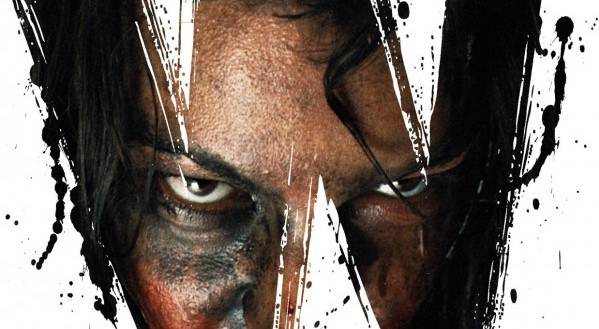
There’s something not quite right about Chris Cleese (an unsettlingly cherubic Sean Bridgers), and his family’s uber-wholesomeness is clearly suspect. This becomes evident once Chris hunts down a feral woman (an awesome Pollyanna McIntosh), chains her, and invites the family to help him “civilize” her.
The film rethinks family – well, patriarchy, anyway. Notorious horror novelist and co-scriptor Jack Ketchum may say things you don’t want to hear, but he says them well. And director Lucky McKee – in his most surefooted film to date – has no qualms about showing you things you don’t want to see. Like most of Ketchum’s work, The Woman is lurid and more than a bit disturbing. Indeed, the advanced screener I watched came in a vomit bag.
Aside from an epically awful performance by Carlee Baker as the nosey teacher, the performances are not just good for the genre, but disturbingly solid. McIntosh never veers from being intimidating, terrifying even when she’s chained. Bridgers has a weird way of taking a Will Ferrell character and imbibing him with the darkest hidden nature. Even young Zach Rand, as the sadist-in-training teen Brian, nails the role perfectly.
Nothing happens in this film by accident – not even the innocent seeming baking of cookies – nor does it ever happen solely to titillate. It’s a dark and disturbing adventure that finds something unsavory in our primal nature and even worse in our quest to civilize. Don’t even ask about what it finds in the dog pen.
Listen weekly to MaddWolf’s horror podcast FRIGHT CLUB. Do it!
We greet an honest to god expert for this week’s podcast, as Dr. Neil McRobert (you may know him better as NakMak!) joins us to talk about Stephen King films. Neil’s doctoral thesis concerned itself in part with King’s writings, and yet, somehow Hope decided she was still the more appropriate choice to determine the rankings of King films. Listen in and let us know who does a better job with the list. The whole conversation goes on HERE.
5. Dolores Claiborne (1995)
Taylor Hackford helms this generational saga of women in a man’s world. Not truly a horror film, it follows the tale of stern Mainer Dolores (the magnificent –as-always Kathy Bates), who’s been accused of murdering her contemptible boss, Vera Donovan (an outstanding Judy Parfitt). Dolores’s estranged daughter (Jennifer Jason Leigh) returns to the Maine island of her birth to support her mom from being railroaded, as the entire town believes Dolores has already gotten away with murder once.
The film is an achievement in casting above all things. Bates is brilliant, and so is David Strathairn, playing against type as abusive white trash husband and father. Tony Gilroy’s screenplay is delicately faithful to King’s novel, a character-driven drama that boasts some excellent lines – most of them landing in Parfitt’s mouth. Luckily she’s up to the challenge and makes it look easier than it should to be a bitch.
4. Misery (1990)
Kathy Bates had been knocking around Hollywood for decades, but no one really knew who she was until she landed Misery. Her sadistic nurturer Annie Wilkes – rabid romance novel fan, part time nurse, full time wacko – ranks among the most memorable crazy ladies of modern cinema.
James Caan plays novelist Paul Sheldon, who kills off popular character Misery Chastain, then celebrates with a road trip that goes awry when he crashes his car, only to be saved by his brawniest and most fervent fan, Annie. Well, she’s more a fan of Misery Chastain’s than she is Paul Sheldon’s, and once she realizes what he’s done, she refuses to allow him out of her house until she brings Misery back to literary life.
Caan seethes, and you know there’s an ass kicking somewhere deep in his mangled body just waiting to get out. But it’s Bates we remember. She nails the bumpkin who oscillates between humble fan, terrifying master, and put-upon martyr. Indeed, both physically and emotionally, she so thoroughly animates this nutjob that she secured an Oscar.
3. The Mist (2007)
Frank Darabont really loves him some Stephen King, having adapted and directed the writer’s work almost exclusively for the duration of his career. While The Shawshank Redemption may be Darabont’s most fondly remembered effort, The Mist is an underappreciated creature feature.
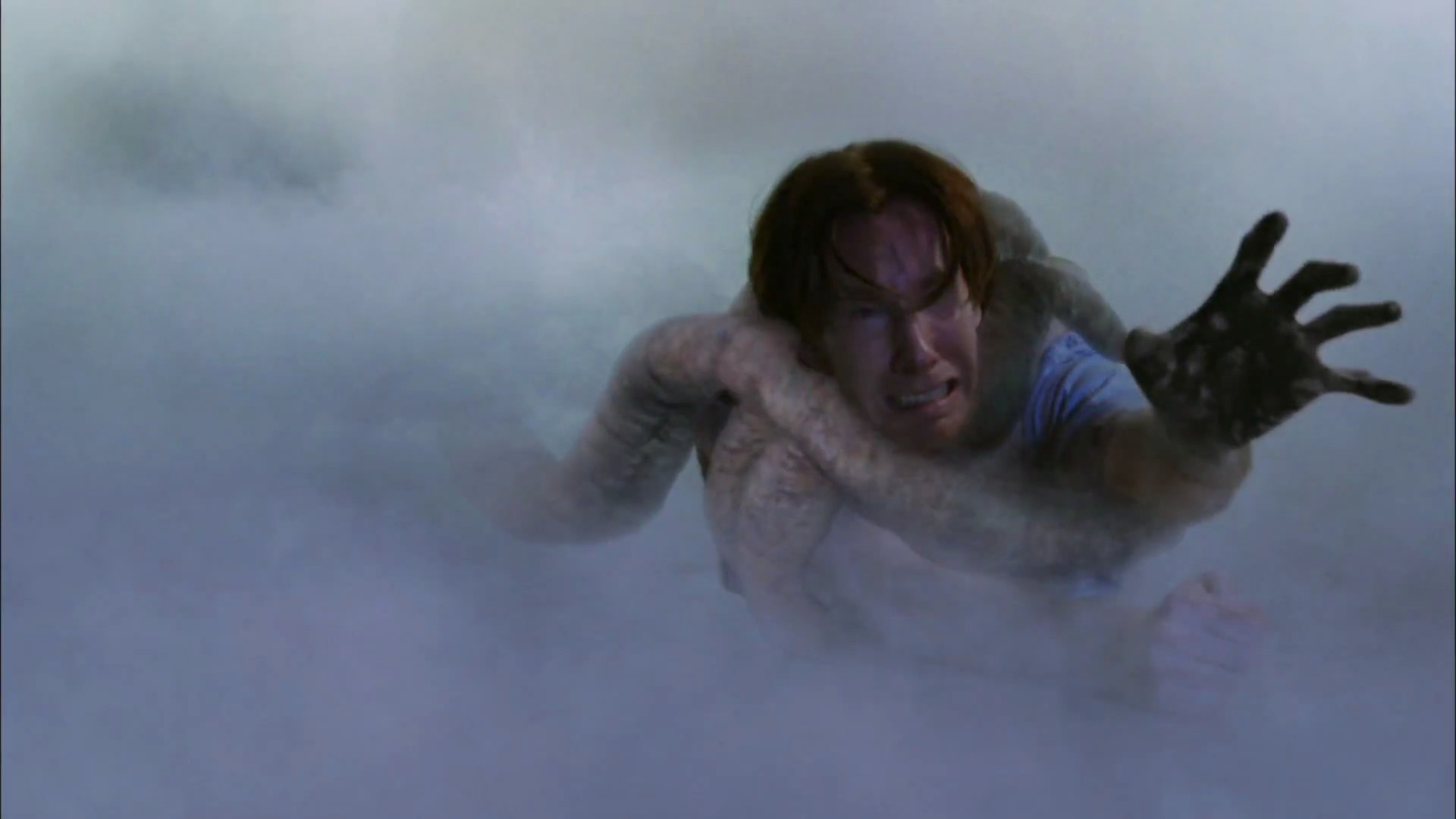
David Drayton (Thomas Jane) and his young son head to town for some groceries. Meanwhile, a tear in the space/time continuum opens a doorway to alien monsters. So he, his boy, and a dozen or so other shoppers are all trapped inside this glass-fronted store just waiting for rescue or death.
Marcia Gay Harden is characteristically brilliant as the religious zealot who turns survival inside the store into something less likely than survival out with the monsters, but the whole cast offers surprisingly restrained but emotional turns.
The FX look good, too, but it’s the provocative ending that guarantees this one will sear itself into your memory.
2. Carrie (1976)
The seminal film about teen angst and high school carnage has to be Brian De Palma’s 1976 landmark adaptation of King’s first full length novel, the tale of an unpopular teenager who marks the arrival of her period by suddenly embracing her psychic powers.
Sissy Spacek is the perfect balance of freckle-faced vulnerability and awed vengeance. Her simpleton characterization would have been overdone were it not for Piper Laurie’s glorious evil zeal as her religious wacko mother. It’s easy to believe this particular mother could have successfully smothered a daughter into Carrie’s stupor.
One ugly trick involving a bucket of cow’s blood, and Carrie’s psycho switch is flipped. Spacek’s blood drenched Gloria Swanson on the stage conducting the carnage is perfectly over-the-top. And after all the mean kids get their comeuppance, Carrie returns home to the real horror show.
1. The Shining (1980)
It’s isolated, it’s haunted, you’re trapped, but somehow nothing feels derivative and you’re never able to predict what happens next. It’s Stanley Kubrick’s masterpiece rendition of Stephen King’s The Shining.
Though critics were mixed at the time of the film’s release, and both Kubrick and co-star Shelley Duvall were nominated for Razzies, much of the world’s negative response had to do with a needless affection for the source material, which Kubrick and co-scriptor Diane Johnson use as little more than an outline.
A study in atmospheric tension, Kubrick’s vision of the Torrance family collapse at the Overlook Hotel is both visually and aurally meticulous. It opens with that stunning helicopter shot, following Jack Torrence’s little yellow Beetle up the mountainside, the ominous score announcing a foreboding the film never shakes.
What image stays with you most? The two creepy little girls? The blood pouring out of the elevator? The impressive afro in the velvet painting above Scatman Crothers’s bed? That guy in the bear suit – what was going on there? Whatever the answer, thanks be to Kubrick’s deviant yet tidy imagination.
Next week we will look at the best Canada has to offer the genre.
The following week, we are thrilled to tackle our sophomore effort at live recording the Fright Club podcast! We will unspool The Orphanage (2007) at Gateway Film Center on November 11, counting down the best Spanish language horror at 7:30, just prior to the 8pm screening.
In the meantime, help us prep for upcoming podcasts. What filmmaker, actor or actress deserves an entire podcast? Let us know on Twitter @maddwolf, on facebook @maddwolfcolumbus, or leave us a comment here.
This – the disappointed outcry from an audience member as the closing credits rolled on Paranormal Acvitity: The Ghost Dimension – only scratches the surface of the problems with this film.
The sixth feature in the series begun in 2007 with Oren Peli’s ultra-low-budget indie seeks to tie together all the various strands of storyline spun from the previous efforts and put the final bow on the franchise.
Ryan (Chris J. Murray) invites his heavily mustachioed brother Mike (Dan Gill) to spend some post-breakup time with him and his family over the holidays. Also visiting – Toby. You may remember Toby from such hauntings as Paranormal Activity 3.
Mike will wish he’d visited his mom instead.
The entire cast does a perfectly serviceable job, and Ivy George is devastatingly adorable as young Leila, the object of Toby’s interest. But Jesus, her parents are stupid!
Mike and Ryan come across a giant, old, eighties-style camcorder when digging out Christmas decorations. It’s so nutty! With it you can see things like giant black tar monsters lurking over your baby daughter’s bed – too crazy. Wonder whether you should do something about that immediately, or debate with your wife about whether the camera’s just broken. Because, you know, it’s not like your daughter’s in jeopardy.
Once a priest is attacked in the house, you might expect the houseguests to politely exit – particularly the friend of the family who’s visiting for no important reason. But no! There is apparently nothing that will make her spring for a hotel while she’s in town for her yoga retreat – not even the malevolent presence of a demon.
Speaking of – and I know I’m picking nits here – but why go to the bother of explaining to us film after film after film that we are dealing with a demon, not a ghost, and then call the final movie in your franchise The Ghost Dimension?
For what it is – a low rent found footage spookfest – this franchise has actually managed to break the law of diminishing returns for a long time, but their luck began to slip a couple episodes ago. Let’s hope this really is their final effort.
Part of the satisfying lull of a slasher film is its predictability: idiotic characters behave lasciviously and are repaid for their indignities with the hard justice of a machete. They are scary movies for people who don’t really want to be scared, they’d rather enjoy the idiocy.
People like, I think we can assume, co-writers M. A. Fortin and Joshua John Miller, whose The Final Girls celebrates the genre and its fans with a meta-flick brimming with genre affection and upbeat carnage.
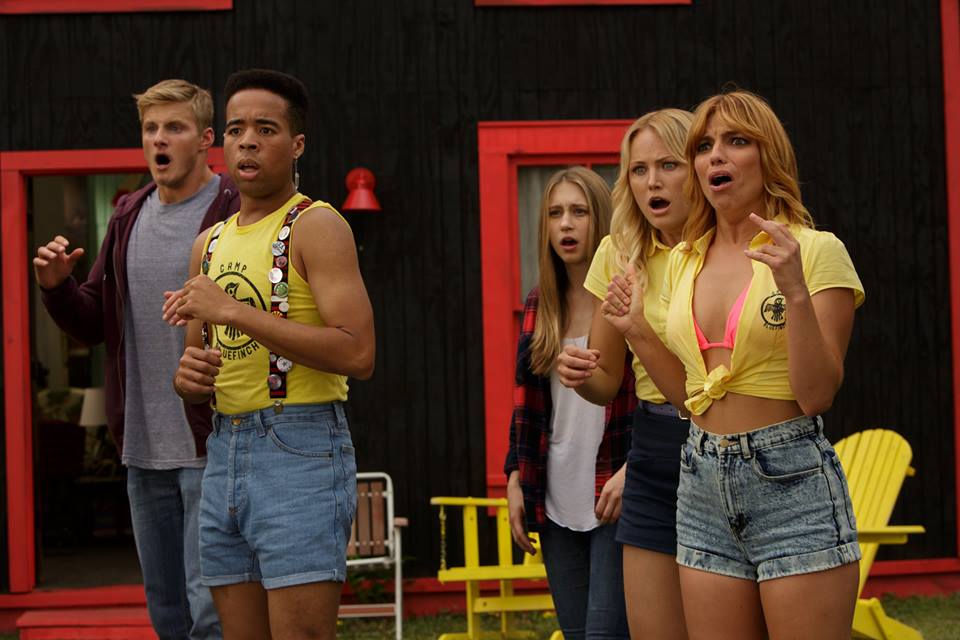
Max (Taissa Farmiga) never really got over the loss of her mother, scream queen Amanda Cartwright (Malin Akerman). She and her friends find themselves pulled into Mom’s most famous film – the ‘80s slasher Camp Bloodbath – and need to use their knowledge of slasher conventions to survive.
The film is far more a comedy than a horror flick – the casting of Adam DeVine (Workaholics) alone clarifies that. But don’t expect a spoof or cynical parody. There’s real love for the ironic pleasures of the genre that keeps the film lighthearted and fresh.
Director Todd Strauss-Schulson deconstructs the overly familiar genre, replacing its mean spirit with broad strokes of goofiness. He and his cast see these characters as something one-dimensional, but still worthwhile – rather than presenting them as simply the ingredients for Camp Counselor Slurry.
Supporting work from DeVine, Tom Middleditch, Angela Trimbur, and Alia Shawkat freshens up the predictability with sharp, spontaneous comedy that elevates the film above its clever gimmick.
The film shoehorns in some emotion as well, but it’s at its best when reveling in the familiar. Farmiga is saddled with the least playful, mostly humorless role, but her dour presence is offset by the fun lunacy around her.
There are flat spots, and the film is never the laugh riot of other recent horror comedies (Deathgasm, for instance), but it is a spot-on send up that entertains throughout.
The prolific director Takashi Miike made more than 70 movies in his first 20 or so years in film. Among the best is Audition, a phenomenally creepy May/December romance gone very, very wrong.
Audition tells the story of a widower convinced by his TV producer friend to hold mock television auditions as a way of finding a suitable new mate. He is repaid for his deception.
The story itself follows a far more linear path than what’s commonly found in Japanese horror, but the usual preoccupations with hair, decorum, and bodily horror still abound. My favorite quote from the movie: “The police tried to recompose her body. Three extra fingers and an ear came up.”
That’s just solid detective work!
Nearly unwatchable and yet too compelling to turn away from, Audition is a remarkable piece of genre filmmaking. The slow moving picture builds anticipation, then dread, then full-on horror.
Midway through, Miike punctuates the film with one of the most effective startles in modern horror, and then picks up the pace, building grisly momentum toward a perversely uncomfortable climax.
By the time Audition hits its ghastly conclusion, Miike and his exquisitely terrifying antagonist (Eihi Shina) have wrung the audience dry. She will not be the ideal stepmother.
Keep an eye on the burlap sack.
Listen weekly to MaddWolf’s horror podcast FRIGHT CLUB. Do it!
It’s crazy this film hasn’t been seen more. The always outstanding Michael Fassbender takes his girl Jenny (Kelly Reilly) to his childhood stomping grounds – a flooded quarry and soon-to-be centerpiece for a grand housing development. He intends to propose, but he’s routinely disrupted, eventually in quite a bloody manner, by a roving band of teenaged thugs.
Kids today!
The film expertly mixes liberal guilt with a genuine terror of the lower classes. The acting, particularly from the youngsters, is outstanding. And though James Watkins’s screenplay makes a couple of difficult missteps, it bounces back with some clever maneuvers and horrific turns.
Sure, the “angry parents raise angry children” cycle may be overstated, but Jack O’Connell’s performance as the rage-saturated offspring turned absolute psychopath is chilling.
There’s the slow boil of the cowardly self righteous. Then there’s this bit with a dog chain. Plus a railroad spike scene that may cause some squeamishness. Well, it’s a grisly mess, but a powerful and provocative one. Excellent performances are deftly handled by the director who would go on to helm The Woman in Black.
Don’t expect spectral terror in this one, though. Instead you’ll find a bunch of neighborhood kids pissed off at their lot in life and taking it out on someone alarmingly like you.
Listen weekly to MaddWolf’s horror podcast FRIGHT CLUB. Do it!
We spend a lot of time examining skeletons in the closets of major celebrities – the god-awful horror movies where they got their start. But today, we celebrate that handful of aspiring actors who get their start in really decent horror movies – some you’ve probably seen, some you may not have. Before these guys were stars, they lucked into a good one, so check them out!
5. My Little Eye (2002)
This quasi-found footage style gem is hardly flawless, but it creeps around dark ideas and delivers some nasty moments. Five youngsters volunteer to live Real World-style for a year, being filmed for an online channel contest. If they all stay for the full year, they win a million dollars. If anyone leaves, they all lose the cash.
Co-written by James Watkins, who appears again on this countdown, the story remains claustrophobic until the introduction of one handsome, lost hiker (Bradley Cooper) who’s not what he seems.
This is just Cooper’s second feature, releasing shortly after Wet Hot American Summer, and his onscreen presence breathes life to an intentionally drab atmosphere. His character is a catalyst for horrors aplenty, but his performance offers a glimpse of good things to come.
4. A Nightmare on Elm St. (1984)
Johnny Depp made his film debut in Wes Craven’s groundbreaking nightmare. Craven said in interviews that he almost didn’t cast the future heartthrob, thinking he was too pasty and weird for the role, but his daughter’s swooning convinced him.
Depp plays Glen, boyfriend to bossy Nancy (Heather Langenkamp), epicenter of Freddy Krueger’s revenge from beyond. Though his performance doesn’t necessarily predict an Oscar-nominated future, he delivers his lines more thoughtfully than most of the cast. Plus, what a death scene!
3. A Perfect Getaway (2009)
This is another underseen flick, boasting some solid performances that make the most of decent, twisty writing in a identity reversal horror story. In his second feature, Chris Hemsworth is half of one of the three couples traveling through Hawaii that get mixed up in a mystery surrounding serial killers. The ever-versatile Steve Zahn plays beautifully against type, while Timothy Olyphant offers another hard-edged but fun performance.
For the film to work, you need to always be guessing as to who may or may not be the killer. Hemsworth’s performance is one you revisit, is-he-or-isn’t-he style. He’s menacing from his first appearance, but shows some of the versatility that would help him climb quickly out of supporting roles.
2. Eden Lake (2008)
Again with James Watkins! He writes and directs this brutal and brilliant culture clash, but his real talent may be in casting. Michael Fassbender proves here what everyone knows by now – he is a brilliant, limitless actor. His Steve takes girlfriend Jenny (Kelly Reilly – also excellent) to an old quarry about to be revitalized as an upscale community – to the distaste of the low scale community currently roaming its beaches.
Fassbender plumbs his character’s depths. By turns smug and cowardly, superior and kind hearted, Steve is a real human being – the kind rarely seen in a horror film. And while Reilly’s strength is another uniqueness that makes the film stand out, the introduction to Jack O’Connell’s evicerating talent as alpha thug is no doubt what makes Eden Lake so painfully memorable.
https://www.youtube.com/watch?v=_9kuMFPW0YI
1. American psycho (2000)
The star-studdedness just keeps growing! Jared Leto, Josh Lucas, Chloe Sevigny, Justin Theroux, Reese Witherspoon! But, of course, the main reason to remember the film is the lunatic genius of Christian Bale as Patrick Bateman, soulless Wall Street psychopath.
He’s helped, of course, by director Mary Harron’s faultless direction – effortlessly balancing the blackest of comedy with inspired bloodletting. So many scenes are iconic by this point, all of them involving Bale as the beautiful shell of a human being, filled mostly with vacuous musical taste and a lust for blood.
Listen to the whole conversation over on FRIGHT CLUB!
A giddy hatchet to the head of the abiding culture of the Eighties, American Psycho represents the sleekest, most confident black comedy – perhaps ever. Director Mary Harron trimmed Bret Easton Ellis’s novel, giving it unerring focus. More importantly, the film soars due to Christian Bale’s utterly astonishing performance as narcissist, psychopath, and Huey Lewis fan Patrick Bateman.
There’s an elegant exaggeration to the satire afoot. Bateman is a slick, sleek Wall Street toady, pompous one minute because of his smart business cards and quick entrance into posh NYC eateries, cowed the next when a colleague whips out better cards and shorter wait times. For all his quest for status and perfection, he is a cog indistinguishable from everyone who surrounds him. The more glamour and flash on the outside, the more pronounced the abyss on the inside. What else can he do but turn to bloody, merciless slaughter? It’s a cry for help, really.
Harron’s send up of the soulless Reagan era is breathtakingly handled, from the set decoration to the soundtrack, but the film works as well as a horror picture as it does a comedy. Whether it’s Chloe Sevigny’s tenderness as Bateman’s smitten secretary or Cara Seymour’s world wearied vulnerability, the cast draws a real sense of empathy and dread that complicate the levity. We do not want to see these people harmed, and as hammy as it seems, you may almost call out to them: Look behind you!
As solid as this cast is, and top to bottom it is perfect, every performance is eclipsed by the lunatic genius of Bale’s work. Volatile, soulless, misogynistic and insane, yet somehow he also draws some empathy. It is wild, brilliant work that marked a talent preparing for big things.
Listen weekly to MaddWolf’s horror podcast FRIGHT CLUB. Do it!
There is something eerily beautiful about Severin Fiala and Veronika Franz’s rural Austrian horror Goodnight Mommy (Ich seh, Ich seh).
During one languid summer, twin brothers Lukas and Elias await their mother’s return from the hospital. They spend their time bouncing on a trampoline, floating in a pond, or exploring the fields and woods around the house. But when their mom comes home, bandaged from the cosmetic surgery she underwent, the brothers fear more has changed than just her face.
Franz and Fiala owe a great debt to an older American film, but to name it would be to give far too much away, and the less you know about Goodnight Mommy, the better.
Inside this elegantly filmed environment, where sun dappled fields lead to leafy forests, the filmmakers mine a kind of primal childhood fear. There’s a subtle lack of compassion that works the nerves beautifully, because it’s hard to feel too badly for the boys or for their mother. You don’t wish harm on any of them, but at the same time, their flaws make all three a bit terrifying.
The filmmakers’ graceful storytelling leads you down one path before utterly upending everything you think you know. They never spoon feed you information, depending instead on your astute observation – a refreshing approach in this genre.
Performances by young brothers Lukas and Elias Schwarz compel interest, while Susanne Wuest’s cagey turn as the boys’ mother propels the mystery. It’s a hypnotic, bucolic adventure as visually arresting as it is utterly creepy.
The film is going to go where you don’t expect it to go, even if you expect you’ve uncovered its secrets.
Listen weekly to MaddWolf’s horror podcast FRIGHT CLUB. Do it!
The Inhabitants is a hodgepodge of horror elements cut and sewn awkwardly together to create a film that isn’t particularly scary and lacks thematic consistency.
But what a good location! The movie was filmed inside the Noyes-Parris House, formerly owned by the father of one of the girls who kicked off the Salem Witchcraft Trials. As such, you come in expecting a certain degree of paranoid atmosphere and the use of witchy tropes.
The story follows a young couple that decides to buy and renovate an old bed and breakfast. The screenwriters make no real attempt to explain how the couple can possibly afford the place or what exactly their goals for it are, but it’s hard to quibble with that issue when the acting quality and opening credit sequence has you squinching up in your seat—not from fear or anticipation, but from a justified suspicion that you’ve accidentally stumbled into a horror movie porn parody, given the minutes of static-y black and white footage featuring folks disrobing, bathing, and humping.
But, the movie then switches tone.
We are introduced to the main leads, who do somewhat exude the sense of ennui of two porn stars well into a long day of shooting, but after the odd soft-core porn sequence, the film covers up the skin and lurches along for another 80 minutes that drag like an ill-sewn leg on a reanimated cadaver.
The wife, Jessica, finds out that the original owner of the house was a midwife, tried and executed for witchcraft. Set in a historical location with ties to the famous trials, midwife/witch in the mix, even with the acting…I’m on board.
But, instead of focusing on this theme, the film tries to incite scares by randomly throwing elements at you that just don’t work or really seem to belong in the same movie, like the bank of AV equipment that allows the husband to spy on Jessica’s increasingly weird antics (but that undermines the likability of the husband), or the smokers in the woods that are intended to seem menacing (but just seem like furtive high school kids with a mild addiction to nicotine), or the dog that appears abruptly and seems attuned to the possible presences in the house (but then disappears unceremoniously), or the ghost Jessica sees…in the washing machine (washing machines aren’t scary).
Despite having access to the famous house, the setting and history of Salem is rather absent save for a brief trip to the Ye Olde Witch Museum. This trip, however, is nicely balanced by the couple’s trip into town…to grocery shop at Whole Foods.
This broke the sense of isolation and vulnerability that the directors were trying to achieve. My suspension of disbelief was shattered as soon as I saw the logo on that paper bag. Do not send your characters to Whole Foods unless you want us to be biting our fingernails worrying about their food budget.
Not bad enough to drunk-watch with friends, I suggest passing on this one. It’s not worth gathering the pitchforks and torches.