Tag Archives: horror movies

Fright Club: Best Horror Documentaries

Sometimes the truth is scarier than fiction, which is why we decided to look at documentaries this week. From true crime to weird tales, from psychological nightmares to war crimes, we look at the best documentaries the genre has to offer.

5. Room 237 (2012)

Stanley Kubrick’s magnificent film The Shining inspires close examination. Director Rodney Ascher assembled some of the most inspired – obsessed, even – for his documentary on the Kubrick ghost story, Room 237.

It would be too simplistic to take Room 237 as a deconstruction of The Shining, and those hoping to uncover Kubrick’s deeper meaning may be disappointed. But what the film does, it does well. It explores one of cinema’s most exquisite films, using it to encourage the spectator’s active participation in viewing. In doing so, it positions film as an art equal to literature or painting in terms of thematic dissection.

It also opens our eyes to the abject nuttiness of Kubrickian “scholars” – and a documentary always gets extra points if it introduces an audience to an entirely new concept, like that of the Kubrickian scholar.

More than anything, though, Room 237 is a documentation of obsession, and a fascinating one at that. It bares more insight into the act of obsessing than it does on Kubrick’s work itself, but it helps that these people spend all their time analyzing such a great movie. If they were this excited about tessellations or ringworm, well, the movie would have lacked that certain panache.

4. My Amityville Horror (2012)

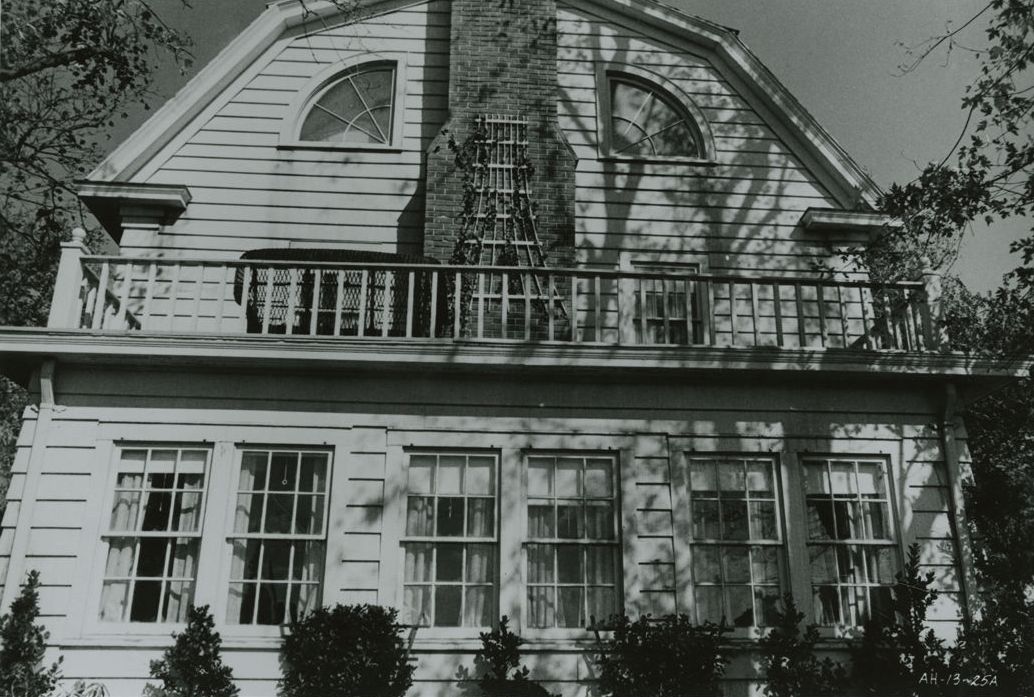
The film begins as yet another tale spun ‘round the Long Island home called High Hopes, where Ronald DeFeo Jr. killed his parents and siblings before the Lutz family took up residence, remaining only 28 days. The Lutzes’ tale informed a fantastically popular book and no fewer than 12 films, as well as plenty of hoax accusations. What sets My Amityville Horror apart is that it quickly becomes a character study of the eldest of the Lutz children, Daniel.

He’s a troubled, heartbreaking, mesmerizing central figure for the film. His stories are so wild and yet he believes them so earnestly that, whether phantasms traumatized his family or whether these tales are the coping mechanism of a young boy subjected to a different kind of abuse becomes hazy and deeply sad.

Director and Amityville fanatic Eric Walter uses a compassionate but unerring focus to illuminate something honestly troubling: the struggle of one of the Amityville horror victims, regardless of the actual horror that went on inside the house.

3. Cropsey (2009)

Cropsey was the Hudson River area summer camp name for a boogeyman. In Staten Island’s Boy Scout camp tales, Cropsey lived in a tunnel system beneath the borough’s abandoned mental hospital. He nabbed children while their parents weren’t looking and killed them out in the woods.

But in Staten Island, the story of Cropsey was true, only his name is Andre Rand.

As filmmakers Barbara Brancaccio and Justin Zemen dig into this story of a convicted sexual predator/mental hospital orderly suspected in the disappearances of as many as seven children, they pull us through fact and myth, expertly choosing news footage to anchor modern interviews.

Their clever approach combines the best of any serial killer drama with the haunting reality of Capturing the Friedmans. They explore the investigation of a serial child killer, all the while exposing the human foibles, mob mentality, and lurid fascination that makes you wonder, even though they clearly have a very bad man, do they have the right one?

2. The Act of Killing (2012)

Surreal, perverse, curious and horrifying, The Act of Killing demands to be seen.
It is anchored in the atrocities committed during the overthrow of the Indonesian government in 1965. Paramilitary death squads and ruthless gangsters captured, tortured and killed at will, all under the guise of exterminating “communists.” Over one million Indonesians lost their lives, and those responsible continue to gloat about their actions from a seat of power they still enjoy today.

Co-director Joshua Oppenheimer met with some of the most famous death squad leaders and made them a distasteful yet ultimately brilliant offer: would they re-enact their savagery on camera?

The result is mesmerizing, can’t-believe-what-I’m-seeing-stuff.

Recalling the finest of their work, The Act of Killing is unforgettable. It calls to mind past cruelty, an Orwellian present and an uncertain future, emerging as essential, soul-shaking viewing.

1. The Nightmare (2015)

An effective scary movie is one that haunts your dreams long after the credits roll. It’s that kind of impact most horror buffs are seeking, but even the most ardent genre fan will hope out loud that Rodney Ascher’s documentary The Nightmare doesn’t follow them to sleep.

His film explores sleep paralysis. It’s the phenomenon that inspired Wes Craven to write A Nightmare on Elm Street. It’s a clear creative root for Insidious, Borgman and scores of other horror movies. But it isn’t fiction. It’s a sometimes nightly horror show real people have to live with. And dig this – it sounds like it might be contagious.

Ascher’s a fascinating, idiosyncratic filmmaker. His documentaries approach some dark, often morbid topics with a sense of wonder. His films never seem to be pushing an agenda, he doesn’t seem to have made up his mind on his subject matter. Rather, he is open which, in turn, invites the audience to be open.

We spend a great deal of time watching horror movies, and I cannot remember an instance in my life that I considered turning off a film for fear that I would dream about it later. Until now.

Listen to the whole conversation on our FRIGHT CLUB podcast.
Third Time Lacks Charm

Insidious: Chapter 3

by Hope Madden

Mid-budget, R-rated horror can land a surprising punch. Sinister, The Purge, Paranormal Activity and others benefitted from filmmakers’ dark imagination and the freedom to explore unsettling territory.

Similarly budgeted PG-13 horror is more of a mixed bag. The younger target audience frees filmmakers up to steal from older films, and the family-friendly rating sometimes means sterilized scares. There are exceptions: The Ring, The Grudge, Insidious.

The first film in this trilogy offered a wildly imaginative take on ghost stories and possession. A spooky if somewhat traditional haunted house tale turns insane as director James Wan articulated writer Leigh Whannell’s concept of “the Further” – the realm beyond ours where creepy spirits play pipe organs and tiptoe through tulips.

It is tough for a filmmaker to show us something that phantasmal. Generally, leaving it up to the audience’s imagination is the better bet, but Wan and Whannell took a chance and it paid off with disturbing success.

The two returned for a sequel, with lesser results. For the third chapter, Whannell – longtime horror writer, first time director – takes the helm for an origin story.

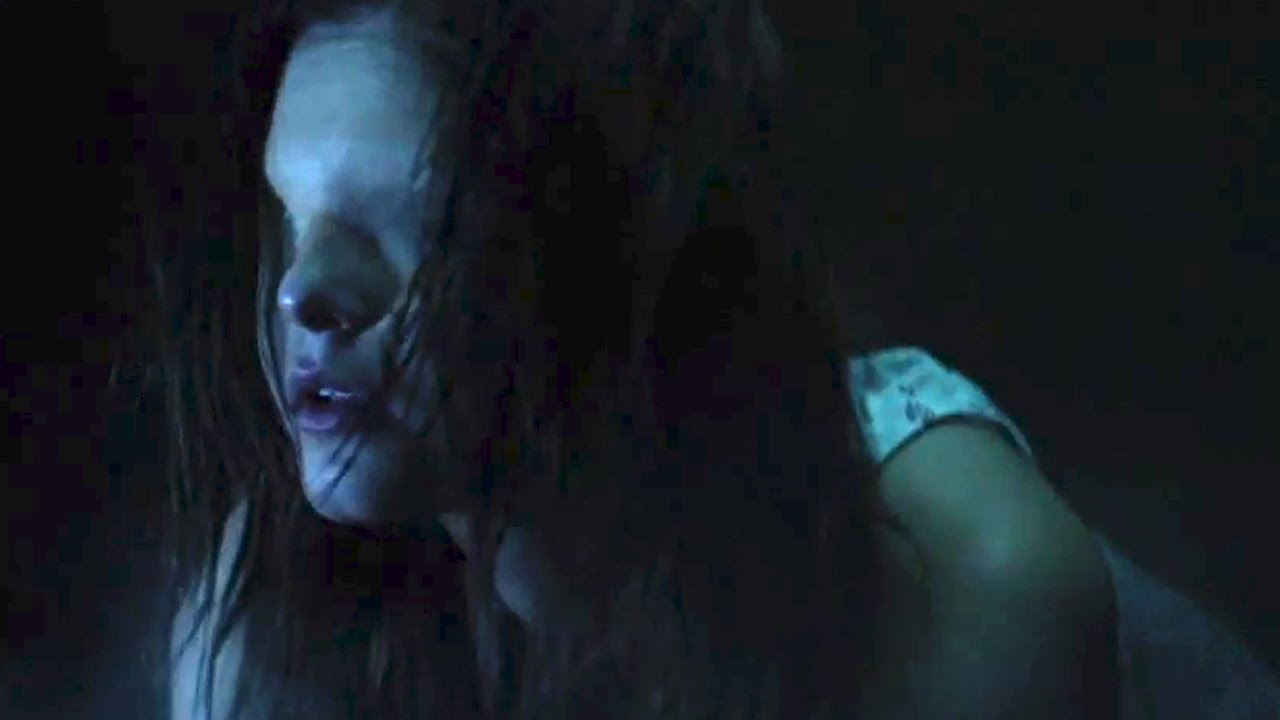
Elise (Lin Shaye) has retired from the psychic biz after a personal tragedy and a spectral scare, but she’s drawn reluctantly back into the game when spunky teen Quinn (Stefanie Scott) finds herself dogged by a nasty entity she’d mistaken for her dead mother.

As a director, Whannell relies heavily on jump scares, and his image of “the Further” lacks all the panache and terror of the original.

He’s replaced this with a hero/victim that better suits a younger audience. Rather than watching desperate parents struggling to save their children, we follow the increasingly more helpless adolescent as her angsty high school drama turns into something far more sinister.

There’s no depth to the emotional turmoil and the supernatural element is far less clever. This is not a film that will haunt you as you turn out the lights, but it will make you jump while you’re watching, which is sometimes success enough.

Verdict-2-5-Stars

Fright Club: Best Haunted House Movies

The Poltergeist reboot has us talking about the great haunted house movies over the years and how much they’ve changed. From the creaky old mansions to suburban horror to the curse that will stay with you even after you leave, ghosts have always been able to scare moviegoers and us. Here are our 5 favorite ghost stories:

5. Poltergeist (1982)

This aggressive take on the haunted house tale wraps director Tobe Hooper’s potent horrors inside producer Steven Spielberg’s brightly lit suburbia.

Part of the original’s success emerged from pairing universal childhood fears – clowns, thunderstorms, that creepy tree – with the adult terror of helplessness in the face of your own child’s peril. JoBeth Williams’s performance of vulnerable optimism gives the film a heartbeat, and the unreasonably adorable Heather O’Rourke creeps us out while tugging our heartstrings.

Splashy effects, excellent casting, Spielberg’s heart and Hooper’s gut combine to create a flick that holds up. Solid performances and the pacing of a blockbuster provide the film a respectable thrill, but Hooper’s disturbing imagination guarantees some lingering jitters.

4. The Conjuring (2013)

James Wan built an old fashioned ghost story from the ground up to push buttons of childhood terror. But don’t expect a long, slow burn. Wan expertly balances suspense with quick, satisfying bursts of visual terror.

Ghost stories are hard to pull off, though, especially in the age of instant gratification. Few modern moviegoers have the patience for atmospheric dread, so filmmakers now turn to CGI to ramp up thrills. But Wan understands the power of a flesh and blood villain in a way that other directors don’t seem to.

Claustrophobic when it needs to be and full of fun house moments, The Conjuring will scare you while you’re in the theater and stick with you after. At the very least, you’ll keep your feet tucked safely under the covers.

http://www.youtube.com/watch?v=Vjk2So3KvSQ

3. The Orphanage (2007)

Laura (Belén Rueda) and her husband reopen the orphanage where she grew up, with the goal of running a house for children with special needs – children like her adopted son Simón, who is HIV positive. But Simón’s new imaginary friends worry Laura, and when he disappears it looks like she may be imagining things herself.

A scary movie can be elevated beyond measure by a masterful score and an artful camera. Because director Antonio Bayona keeps the score and all ambient noise to a minimum, allowing the quiet to fill the scenes, he develops a truly haunting atmosphere. His camera captures the eerie beauty of the stately orphanage, but does it in a way that always suggests someone is watching. The effect is never heavy handed, but effortlessly eerie.

One of the film’s great successes is its ability to take seriously both the logical, real world story line, and the supernatural one. Rueda carries the film with a restrained urgency – hysterical only when necessary, focused at all times, and absolutely committed to this character, who may or may not be seeing ghosts.

2. The Innocents (1961)

Quietly desperate and delicately high strung, Deborah Kerr’s performance is the perfect central image in The Innocents, the best of many screen adaptations of Henry James’s The Turn of the Screw. Is Kerr’s hypersensitive governess turning delusional as she spirals toward spinsterhood, or are her angelic charges in danger of becoming possessed by the spectral lovers who seem to haunt the property?

Thanks to Kerr, the wickedly cherubic turn by Martin Stephens as young Miles, and Freddie Francis’s gorgeous black and white photography, this eerie ghost story is a glorious study in the shadowy line between reality and imagination. Countless films – good ones, like The Orphanage and The Others – have walked similar, spooky hallways, but The Innocents will always be the standard bearer.

1. The Shining (1980)

A study in atmospheric tension, Kubrick’s vision of the Torrance family collapse at the Overlook Hotel is both visually and aurally meticulous. It opens with that stunning helicopter shot, following Jack Torrence’s little yellow Beetle up the mountainside, the ominous score announcing a foreboding that the film never shakes.

Let’s not forget Jack. Nicholson outdoes himself. His veiled contempt early on blossoms into homicidal mania, and there’s something so wonderful about watching Nicholson slowly lose his mind. Between writer’s block, isolation, ghosts, alcohol withdrawal, midlife crisis, and “a momentary loss of muscular coordination,” the playfully sadistic creature lurking inside this husband and father emerges.

What image stays with you most? The two creepy little girls? The blood pouring out of the elevator? The impressive afro in the velvet painting above Scatman Crothers’s bed? That guy in the bear suit – what was going on there? Whatever the answer, thanks be to Kubrick’s deviant yet tidy imagination.

Listen to the whole conversation on our FRIGHT CLUB podcat.

They’re Back

Poltergeist

by Hope Madden

Thirty three years ago, Steven Spielberg unleashed two tales of supernatural contact in anonymous, suburban neighborhoods. Things went better for Elliott.

Between producer Spielberg’s sense of awe and director Tobe Hooper’s capacity for imaginative terror, the original Poltergeist far exceeded expectations, and though several sequences have not aged well, it remains a potent horror show.

A generation later, we return to Glen Echo Circle, now the victim of a downturned economy, as are the Bowens. Sam Rockwell and Rosemary DeWitt play the parents unwillingly relocating their three kids to the neighborhood to accommodate their now-more-modest means. Their son Griffin (Kyle Catlett) doesn’t like his room because of the creepy tree outside, but little Maddie (adorable Kennedi Clements) is already making friends.

This is a tough film to remake. The original combined superficial thrills with primal fears and offered the giddy mix of Spielberg’s wonder and Hooper’s twisted vision. Wisely, director Gil Kenan started with a solid cast.

Rockwell is always a good bet and DeWitt is fast becoming the go-to for authenticity in the suburban mom role. Jared Hess offers a little panache as the medium who cleans houses, and the supporting performers turn in respectable work.

Kenan can’t seem to decide whether or not to embrace the original’s more iconic moments, and his revisions feel more like obligation than inspiration. What his version lacks is a big punch. He’s hampered by audience expectation – we kind of know what’s coming, after all – but that doesn’t excuse his lack of imagination.

The director proved a savvy storyteller with his Oscar-nominated animated nightmare Monster House, a film that was surprisingly terrifying for a kids’ movie. That kind of exuberance could have infected this production, but the sequel lacks energy.

Poltergeist is not a bad movie, just disappointing. A lot of reboots are, but there are some that feel like one filmmaker’s love letter to a movie. Films like The Ring, The Crazies, Dawn of the Dead, and more recently, Evil Dead work as reboots because they inhabited an old story but found a new voice. Kenan doesn’t find his. The result is entertaining and forgettable.

Verdict-2-5-Stars

Fright Club: Best Female Villains

Today we celebrate the ladies – the really, super scary ones. We are counting down our favorite female villains from horror. Now, we’re not talking about the great supporting villains – the ones who had villainy help – like Julia (Claire Higgins) from Hellraiser or Mrs. White (Piper Laurie) from Carrie. They are outstanding and terrifying, but they’re not the main antagonist in the film. Nor are we including the terrifying protagonists – not Carrie White (Sissy Spacek) or Ginger (Katharine Isabelle) from Ginger Snaps, or May (Angela Bettis). No, our goal is to find the Freddy Krueger, the Hannibal Lecter—or maybe even better.

Listen to the full podcast HERE.

Here are our contenders:

5. Samara (Daveigh Chase) The Ring (2002)

That sweet little face, those plump cheeks, those dark locks, those shadowy circles under her eyes, that disappointed frown, that penetrating stare…young Daveigh Chase commanded attention as the vulnerable/terrifying girl in the well. Her ability to be both the lost child you want to save and the horror that must not be unleashed unnerves. Yes, that bewigged man who crawls out of the TV wearing her waterlogged dress helps with the overall effect, but the wee Chase is haunting.

4. Annie Wilkes (Kathy Bates) Misery (1990)

An Oscar winning turn from the magnificent Kathy Bates brings this character to life in the most terrifyingly realistic way. Her sadistic nurturer Annie Wilkes – rabid romance novel fan, part time nurse, full time wacko – ranks among the most memorable crazy ladies of modern cinema. She nails the bumpkin who oscillates between humble fan, terrifying master, and put-upon martyr. Plus she’s handy with a mallot.

3. Lola (Robin McLeavy) The Loved Ones (2009)

Whatever Lola wants, Lola gets. What an absolutely bizarre character and what a brilliantly wrong-headed performance by McLeavy as Daddy’s little prom princess. She’s funny, malicious, utterly insane with some daddy issues we just don’t need to get into here. Just keep her away from the power tools.

2. Asami (Eihi Shiina) Audition (1999)

Eihi Shiina’s elegant beauty is such a perfect match for the brittle psychology of Asami, a delicate sociopath with real betrayal issues. Director Takashi Miike is no stranger to dismemberment and disemboweling (Ichi the Killer, anyone?), but because of Audition‘s serious tone and Shiina’s meticulous approach to the insanity, she leaves you shaken.

1. La Femme (Beatrice Dalle) Inside (2007)

Beatrice Dalle’s predatory performances, colored by sadistic humor and an explosive temper, is astonishing. Relentless, pitiless, and inventive, she stalks the enormously pregnant Sarah (Alysson Paradis) like a tiger – one who really knows how to do damage with a pair of scissors. This woman can take punishment, but what she can dish out is positively inspired. Her unpredictable mastery of bloody havoc wreaking puts her at the top of our list of female villans we seriously, truly hope never to run into ourselves.

https://www.youtube.com/watch?v=gOk5tiAkEdA

Fright Club: Zealots

Horror films have long told the story of religious zealots, usually of the Black Mass variety – The Mephisto Waltz (1971), Sheitan (2006), Starry Eyes (2014), Rosemary’s Baby (1968). We decided not to look to the cloaked, horned Satanists and instead, examine religious zealots of a different flavor. Here are our favorites.

5. Red State (2011)

Kevin Smith’s first foray into horror is perhaps his very strongest and least seen film. Red State is an underrated gem. Deceptively straightforward, Smith’s tale of a small, violently devout cult taken to using the internet to trap “homos and fornicators” for ritualistic murder cuts deeper than you might expect. Not simply satisfied with liberal finger wagging, Smith’s film leaves no character burdened by innocence.

The usually stellar Melissa Leo chews more scenery than need be as a devoted apostle, but pastor Abin Cooper spellbinds as delivered to us by Tarantino favorite Michael Parks. Never a false note, never a clichéd moment, Parks’s performance fuels the entire picture.

There’s enough creepiness involved to call this a horror film, but truth be told, by about the midway point it turns to corrupt government action flick, with slightly lesser results. Still, the dialogue is surprisingly smart, and the cast brims with rock solid character actors, including John Goodman, Stephen Root, and Kevin Pollak.

Smith said at the time: “I think we have something. It’s creepy and very finger-on-the-pulse and very much about America.”

We agree.

4. The Wicker Man (1973)

In the early Seventies, Robin Hardy created a film that fed on the period’s hippie versus straight hysteria.

Uptight Brit constable Sgt. Howie (Edward Woodward) flies to the private island Summerisle investigating charges of a missing child. His sleuthing leads him into a pagan world incompatible with his sternly Christian point of view.

The deftly crafted moral ambiguity of the picture keeps the audience off kilter. Surely we aren’t to root for these heathens, with their nudey business right out in the open? But how can we side with the self-righteous prig Howie?

Hardy and his cast have wicked fun with Anthony Shaffer’s sly screenplay, no one more so than the ever glorious Christopher Lee. Oh, that saucy baritone!

The film is hardly a horror movie at all – more of a subversive comedy of sorts – until the final reel or so. Starting with the creepy animal masks (that would become pretty popular in the genre a few decades later), then the parade, and then the finale, things take quite a creepy turn leading to what is still a very powerful climax.

https://www.youtube.com/watch?v=21gb49H-Uo4

3. Kill List (2011)

Never has the line “thank you” had a weirder effect than in the genre bending adventure Kill List.

Hitman Jay (a volcanic Neil Maskell) is wary to take another job after the botched Kiev assignment, but his bank account is empty and his wife Shel (an also eruptive MyAnna Buring) has become vocally impatient about carrying the financial load. But this new gig proves to be seriously weird.

Without ever losing that gritty, indie sensibility, Ben Wheatley’s fascinating film begins a slide in Act 2 from crime drama toward macabre thriller. You spend the balance of the film’s brisk 95 minutes actively puzzling out clues, ambiguities and oddities. (The often impenetrable accents don’t exactly help with this sleuthing). The “What the hell is happening?” response to a film is rarely this satisfying.

For those looking for blood and guts and bullets, Kill List will only partially satisfy and may bewilder by the end. But audiences seeking a finely crafted, unusual horror film may find themselves saying thank you.

https://www.youtube.com/watch?v=bQDPp5hxFZQ

2. Martyrs (2008)

This import plays like three separate films: orphanage ghost story, suburban revenge fantasy, and medical experimentation horror flick. The whole is a brutal tale that is hard to watch, hard to turn away from, and worth the effort.

Mining the heartbreaking loneliness of abandoned, damaged children, the film follows the profound relationship between torture survivor Lucie (Mylene Jampanoi) and the only friend she will ever have, an undeterrably loving Anna (Morjana Alaoui).

Constantly subverting expectations, including those immediately felt for Anna’s love, writer/director Pascal Laugier makes a series of sharp turns, but he throws unforgettable images at you periodically, and your affection for the leads keeps you breathlessly engaged.

The proceedings are tough to stomach, but well-conceived and skillfully executed. It holds some gruesome imagery, and though the climax may not be pleasing, it certainly doesn’t disappoint.

https://www.youtube.com/watch?v=-7Qx2dT-lUw


1. Frailty (2001)

Director Bill Paxton stars as a widowed, country dad awakened one night by an angel – or a bright light shining off the angel on top of a trophy on his ramshackle bedroom bookcase. Whichever – he understands now that he and his sons have been called by God to kill demons.

Flash forward and we’re led through the saga of the serial killer God’s Hand by a troubled young man (Matthew McConaughey), who, with eerie quiet and reflection, recounts his childhood with Paxton’s character as a father.

Dread mounts as Paxton drags out the ambiguity of whether this man is insane, and his therefore good hearted but wrong-headed behavior profoundly damaging his boys, or is he really chosen, and his sons likewise marked by God? The film upends everything – repeatedly – until it’s as if it’s challenged your expectations, biases, and your own childhood to boot.

Paxton crafts a morbidly compelling tale free from irony, sarcasm, or judgment and full of darkly sympathetic characters. It’s a surprisingly strong feature directorial debut from a guy who once played a giant talking turd.

https://www.youtube.com/watch?v=89u-uKDNrfU

Listen to the whole conversation on our FRIGHT CLUB podcast.

Fright Club: Best Horror Movies You May Have Missed

We’ve spent more than a month celebrating the best horror movies of each decade, and what that made us want to do is to throw a little party for those under-the-radar gems you may not have caught. This list could go on for days, but we narrowed our recommendations down to a half dozen of our very favorite, woefully underseen horror flicks. Have a look, and if you’ve missed any of these, take our word for it: you need to see these.

6. Eden Lake (2008)

The always outstanding Michael Fassbender takes his girl Jenny (Kelly Reilly) to his childhood stomping grounds – a flooded quarry and soon-to-be centerpiece for a grand housing development. He intends to propose, but he’s routinely disrupted, eventually in quite a bloody manner, by a roving band of teenaged thugs.

European horror tends to do a nice job with the upwardly mobile middle class’s terror of untamed young things. Kids today! The best of these films mix a contempt for proper manners and liberal guilt with a genuine terror of the lower classes.

The acting, particularly from the youngsters, is outstanding. Sure, the “angry parents raise angry children” cycle may be overstated, but Jack O’Connell’s performance as the rage-saturated offspring turned absolute psychopath is chilling.

https://www.youtube.com/watch?v=4g1wYEAWOrs

5. The Woman (2011)

There’s something not quite right about Chris Cleese (an unsettlingly cherubic Sean Bridgers), and his family’s uber-wholesomeness is clearly suspect. This becomes evident once Chris hunts down a feral woman (an awesome Pollyanna McIntosh), chains her, and invites the family to help him “civilize” her.

The film rethinks family – well, patriarchy, anyway. Writer Jack Ketchum may say things you don’t want to hear, but he says them well. And director Lucky McKee, in hi smost sure-footed effort, has no qualms about showing you things you don’t want to see. Like most of Ketchum’s work, The Woman is lurid and more than a bit disturbing.

Nothing happens in this film by accident – not even the innocent seeming baking of cookies – nor does it ever happen solely to titillate. Deeply disturbing and absolutely not for the timid, this is a movie that will stay with you.

https://www.youtube.com/watch?v=RaXjkMtyhmI

4. The Snowtown Murders (2011)

John Bunting tortured and killed eleven people during his spree in South Australia in the Nineties. We only watch it happen once on film, but that’s more than enough.

Director Justin Kurtzel seems less interested in the lurid details of Bunting’s brutal violence than he is in the complicated and alarming nature of complicity. An unflinching examination of a predator swimming among prey, Snowtown succeeds where many true crime films fail because of its understatement, its casual observational style, and its unsettling authenticity. More than anything, though, the film excels due to one astounding performance.

Daniel Henshall cuts an unimpressive figure on screen – a round faced, smiling schlub. But he brings Bunting an amiability and confrontational fearlessness that provides insight into what draws people to a sadistic madman.

There’s not a false note in his chilling turn, nor in the atmosphere Kurzel creates of a population aching for a man – any adult male to care for them, protect them and tell them what to do.

The Snowtown Murders is a slow boil, and painfully tense. It’s hard to watch and harder to believe, but as a film, it offers a powerful image of everyday evil that will be hard to shake.

https://www.youtube.com/watch?v=VJlVmJQPwxo

3. Them (Ils) (2006)

Brisk, effective and terrifying, Them is among the most impressive horror flicks to rely on the savagery of adolescent boredom as its central conceit. Writers/directors/Frenchmen David Moreau and Xavier Palud offer a lean, unapologetic, tightly conceived thriller that never lets up.

A French film set in Romania, Them follows Lucas (Michael Cohen) and Clementine (Olivia Bonamy), a young couple still moving into the big rattling old house where they’ll stay while they’re working abroad.

It will be a shorter trip than they’d originally planned.

What the film offers in 77 minutes is relentless suspense. Creepy noises, hooded figures, sadistic children and the chaos that entails – Them sets up a fresh and mean cat and mouse game that pulls you in immediately and leaves you unsettled.

Watch it. Do it.

2. We Are What We Are (Somos le que hay) (2010)

In a quiet opening sequence, a man dies in a mall. It happens that this is a family patriarch and his passing leaves the desperately poor family in shambles. While their particular quandary veers spectacularly from expectations, there is something primal and authentic about it.

It’s as if a simple relic from a hunter-gatherer population evolved separately but within the larger urban population, and now this little tribe is left without a leader. An internal power struggle begins to determine the member most suited to take over as the head of the household, and therefore, there is some conflict and competition – however reluctant – over who will handle the principal task of the patriarch: that of putting meat on the table.

Writer/director Jorge Michel Grau’s approach is so subtle, so honest, that it’s easy to forget you’re watching a horror film. Grau draws eerie, powerful performances across the board, and forever veers in unexpected directions.

We Are What We Are is among the finest family dramas or social commentaries of 2010. Blend into that drama some deep perversity, spooky ambiguities and mysteries, deftly handled acting, and a lot of freaky shit and you have hardly the goriest film on this list, but perhaps the most relevant.

https://www.youtube.com/watch?v=nQ4-UOB3Y-U

1. The Ordeal (Calvaire) (2004)

A paranoid fantasy about the link between progress and emasculation, the film sees a timid singer stuck in the wilds of Belgium after his van breaks down.

Writer/director Fabrice Du Welz’s script scares up the darkest imaginable humor. If David Lynch had directed Deliverance in French, the concoction might have resembled The Ordeal. As sweet, shy singer Marc (a pitch perfect Laurent Lucas) awaits aid, he begins to recognize the hell he’s stumbled into. Unfortunately for Marc, salvation’s even worse.

The whole film boasts an uneasy, “What next?” quality. It also provides a European image of a terror that’s plagued American filmmakers for generations: the more we embrace progress, the further we get from that primal hunter/gatherer who knew how to survive.

Du Welz animates more ably than most our collective revulsion over the idea that we’ve evolved into something incapable of unaided survival; the weaker species, so to speak. Certainly John Boorman’s Deliverance (the Uncle Daddy of all backwoods survival pics) understood the fear of emasculation that fuels this particular dread, but Du Welz picks that scab more effectively than any filmmaker since.

His film is a profoundly uncomfortable, deeply disturbing, unsettlingly humorous freakshow that must be seen to be believed.

https://www.youtube.com/watch?v=Hn3oba5HmH8

To hear the whole conversation, tune into our FIGHT CLUB podcast.

Fright Club: Best Horror 2010 – 2015

It’s official. Our flux capacitor is running out of power, our time travels are coming to a close. We’ve highlighted the best horror films of the 60s, 70s, 80s, 90s and the first decade of the 2000s, and now it’s time to bring things up to the present with the best in horror from 2010 – 2015. Who would have thought that list would be so hard to put together?

What do we wish we didn’t have to leave off? Indies like The Woman, Kill List, The Snowtown Murders; major releases like Evil Dead and The Woman in Black; foreign language gems like Big Bad Wolves, The Last Circus, We Are What We Are and A Girl Walks Home Alone at Night. All of this convinces us that we are in the midst of a horror movie rennaissance – hooray!

So what did make the cut? Here you go:

5. The Cabin in the Woods (2012)

You know the drill: 5 college kids head into the woods for a wild weekend of doobage, cocktails and hookups but find, instead, dismemberment, terror and pain. You can probably already picture the kids, too: a couple of hottie Alphas, the nice girl, the guy she may or may not be into, and the comic relief tag along. In fact, if you tried, you could almost predict who gets picked off when.

But that’s just the point, of course. Making his directorial debut, Drew Goddard, along with his co-scribe Joss Whedon, uses that preexisting knowledge to entertain holy hell out of you.

Goddard and Whedon’s nimble screenplay offers a spot-on deconstruction of horror tropes as well as a joyous celebration of the genre. Aided by exquisite casting – particularly the gloriously deadpan Richard Jenkins and Bradley Whitford – the filmmakers create something truly special.

Cabin is not a spoof. It’s not a satire. It’s sort of a celebratory homage, but not entirely. What you get with this film is a very different kind of horror comedy.

4. The Conjuring (2013)

Yes, this is an old fashioned ghost story, built from the ground up to push buttons of childhood terror. But don’t expect a long, slow burn. Director James Wan expertly balances suspense with quick, satisfying bursts of visual terror.

Wan cut his teeth – and Cary Elwes’s bones – with 2004’s corporeal horror Saw. He’s since turned his attention to something more spectral, and his skill with supernatural cinema only strengthens with each film.

Ghost stories are hard to pull off, though, especially in the age of instant gratification. Few modern moviegoers have the patience for atmospheric dread, so filmmakers now turn to CGI to ramp up thrills. The results range from the visceral fun of The Woman in Black to the needless disappointment of Mama.

But Wan understands the power of a flesh and blood villain in a way that other directors don’t seem to. He proved this with the creepy fun of Insidious, and surpasses those scares with his newest effort.

Wan’s expert timing and clear joy when wielding spectral menace help him and his impressive cast overcome the handful of weaknesses in the script by brothers Chad and Carey Hayes. Claustrophobic when it needs to be and full of fun house moments, The Conjuring will scare you while you’re in the theater and stick with you after. At the very least, you’ll keep your feet tucked safely under the covers.

http://www.youtube.com/watch?v=Vjk2So3KvSQ

3. Let Me In (2010)

With Hollywood’s 2010 reboot of the near-perfect 2008 Swedish film, director Matt Reeves (Cloverfield) managed to retain the spirit of the source material, while finding ways to leave his own mark on the compelling story of an unlikely friendship.

Twelve year old Owen (Kodi Smit-McPhee) is a lonely boy who’s being bullied at school. When young Abby (Chloe Moretz) and her “dad” (Richard Jenkins) move in next door, Owen thinks he’s found a friend. As sudden acts of violence mar the snowy landscape, Owen and Abby grow closer, providing each other a comfort no one else can.

Moretz (Kick-Ass) and Smit-McPhee (The Road) are both terrific, and give the film a touching, vulnerable soul.

Reeves, also adapting the screenplay, ups the ante on the gore, and provides more action, scares and overall shock value. Incredibly, he even manages to build on the climactic “revenge” scene that was damn-near flawless the first time.

https://www.youtube.com/watch?v=8h39ikMdei4

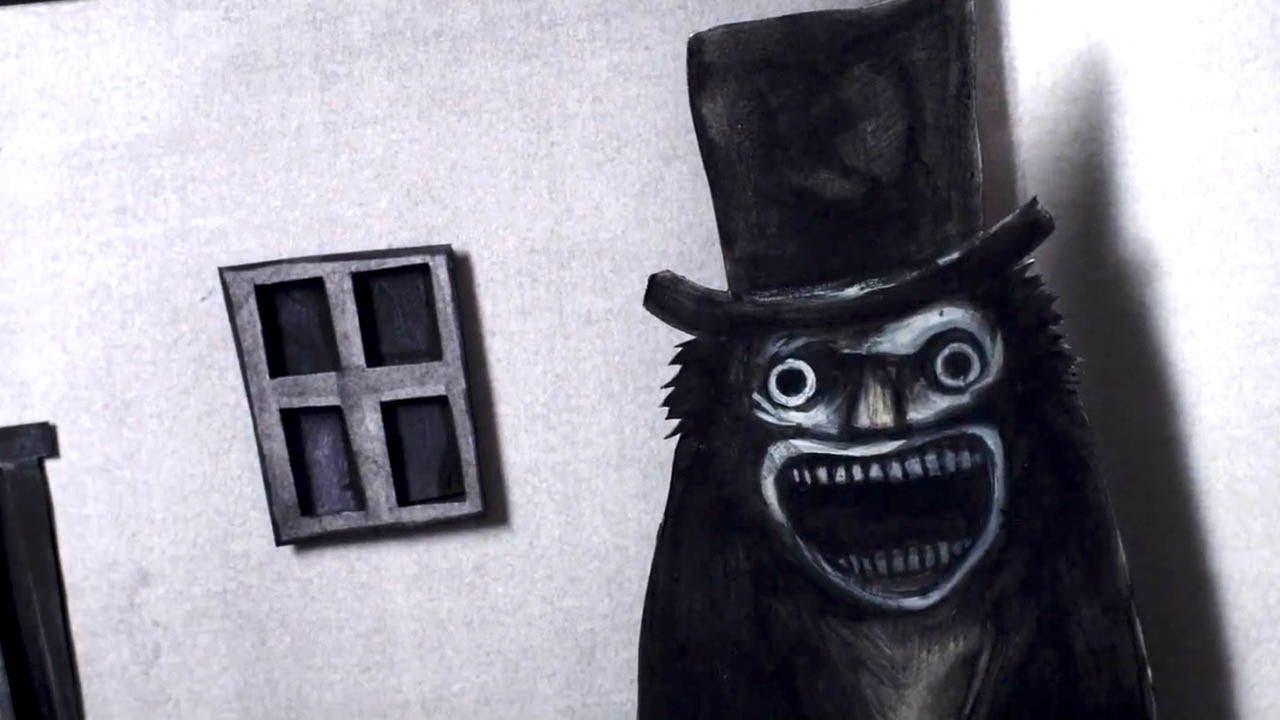
2. The Babadook (2014)

Like a fairy tale or nursery rhyme, simplicity and a child’s logic can be all you need for terror.

You’re exhausted – just bone-deep tired – and for the umpteenth night in a row your son refuses to sleep. He’s terrified, inconsolable. You check under the bed, you check in the closet, you read a book together – no luck. You let him choose the next book to read, and he hands you a pop-up you don’t recognize: The Babadook. Pretty soon, your son isn’t the only one afraid of what’s in the shadows.

It’s a simple premise, and writer/director Jennifer Kent spins her tale with straightforward efficiency. There is no need for cheap theatrics, camera tricks or convoluted backstories, because Kent is drilling down into something deeply, frighteningly human.

Kent’s film is expertly written and beautifully acted, boasting unnerving performances from not only a stellar lead in Essie Davis, but also the alarmingly spot-on young Noah Wiseman. Davis’s lovely, loving Amelia is so recognizably wearied by her only child’s erratic, sometimes violent behavior that you cannot help but pity her, and sometimes fear for her, and other times fear her.

1. It Follows (2015)

David Robert Mitchell invites you to the best American horror film in years. He’s crafted a coming of age tale that mines for primal terror. Moments after a sexual encounter with a new boyfriend, Jay discovers that she is cursed. He has passed on some kind of entity – a demonic menace that will follow her until it either kills her or she passes it on to someone else the same way she got it.

Yes, it’s the STD or horror movies, but don’t let that dissuade you. Mitchell understands the anxiety of adolescence and he has not simply crafted another cautionary tale about premarital sex. Mitchell has captured that fleeting yet dragging moment between childhood and adulthood and given the lurking dread of that time of life a powerful image. There is something that lies just beyond the innocence of youth. You feel it in every frame and begin to look out for it, walking toward you at a consistent pace, long before the characters have begun to check the periphery themselves.

Mitchell borrows from a number of coming of age horror shows, but his film is confident enough to pull it off without feeling derivative in any way. The writer/director takes familiar tropes and uses them with skill to lull you with familiarity, and then terrify you with it.

Mitchell’s provocatively murky subtext is rich with symbolism but never overwhelmed by it. His capacity to draw an audience into this environment, this horror, is impeccable and the result is a lingering sense of unease that will have you checking the perimeter for a while to come.

Listen to the whole conversation on our FRIGHT CLUB podcast.

Curse of the Digital Native

Unfriended

by Hope Madden

Director Levon Gabriadze, with serious help from screenwriter Nelson Greaves, has managed the unmanageable. His entire film Unfriended is seen from a laptop screen, yet never gets visually dull and never feels limited by the gimmick.

More than that, his film is immersed in the digital-native culture without seeming forced or hokey. Without ever feeling like a stunt – a story in service of a device rather than vice versa – Unfriended tells a cautionary tale that’s topical, current and smart.

Five high school friends mindlessly Skype on the anniversary of their friend Laura’s suicide. Laura had been the victim of cyberbullying, and not only is her humiliation still available online, so is her suicide. Such is the horrifyingly public world of today’s teen.

The gang can’t seem to get rid of an anonymous 6th in their hangout, and little by little the presence evolves from annoying to aggravating to terrifying.

Greaves’s script is smart. There are flashes of other films – The Den, Paranormal Activity 4 and others – but Unfriended never feels stale. Greaves’s language is so unsettlingly familiar, and he makes some important points without even approaching a preachy tone.

It’s a set of familiar ideas – vengeance, guilt, betrayal, cowardice – wrapped in a very shiny new package, and it’s the wrapping that could have really gone wrong, but Gabriadze succeeds in filling the screen with enough to look at, enough virtual action to keep your attention.

He builds tensions through a truth or dare style game that provokes the friends to turn on each other, but the film has more empathy for the characters than the run of the mill slasher. The five actors manage to flesh out dimensional characters with the slightest material to work with, and each feels realistically flawed yet sympathetic.

It’s a fascinating choice because the whole film flirts with the ugly “they aren’t bad kids” excuse you hear every time a 7th grader is filmed being gang raped or an autistic child’s bullying goes viral.

These five don’t think they’re bad people. They certain seem like nice enough, likeable enough teens – to everyone except that creepy lurker on their screen.

Verdict-3-5-Stars

Spooky Stories For Your Queue

The best horror film (indeed, one of the very best films, period) of 2014 is available today for home entertainment and you must see The Babadook. Writer/director/Australian Jennifer Kent, with an assist from cinematographer Radek Ladczuk and magnificent performances from Essie Davis and Noah Wiseman – has crafted an unsettling and spooky haunted house style tale.

The horror here is fueled by compassion generated by the naturalistic performances. Kent has captured something with primal urgency, something simultaneously heartbreaking and terrifying. The film’s subtext sits like a raw nerve just below the scary happenings afoot, making this as the freshest and most relevant horror film of 2014.

Pair it with another remarkable tale of either a crazy mother or a supernatural presence, J. A. Bayona’s 2007 ghost story The Orphanage.

Belen Rueda shines as a mother whose son disappears shortly after making imaginary friends at the orphanage the family owns. Bayona creates a haunted atmosphere and Rueda’s utter commitment to the character keeps the film breathless. It is a spooky nightmare that takes its material seriously and delivers.