Tag Archives: horror movies

Fright Club: Hooray for Hollywood!

The Harvey Weinstein story is a horror film all its own, but there are echoes of it across the genre. When you are desperate to accomplish something and there are those with power who can manipulate your success, victimization is the likely result in horror. We salute the best films that see Hollywood ambition as death and corruption in the making.

5. The Neon Demon (2016)

“Beauty isn’t everything, it’s the only thing.”

So says an uncredited Alessandro Nivola, a fashion designer waxing philosophic in Nicolas Winding Refn’s (Bronson, Drive) nightmarish The Neon Demon.

Jesse (Elle Fanning) is an underaged modeling hopeful recently relocated to a sketchy motel in Pasadena. Will she be swallowed whole by the darker, more monstrous elements of Hollywood?

Hollywood is a soulless machine that crushes people. The world objectifies women, a toxic reality that poisons everyone it touches. Small town girl gets in trouble following her dreams in Tinseltown. There’s nothing new here. To manufacture something, it’s as though Refn replaces fresh ideas with bizarre imagery.

The film is not without its charms. Like Only God Forgives, the longer you wander through this nightmarish landscape, the more outlandish the dream becomes.

And you know what? Keanu Reeves isn’t bad. Huh!

4. Starry Eyes (2014)

Sarah (Alex Essoe) is an aspiring actress in LA and a bit of a delicate flower. She lives in a complex full of other aspiring actors, but she doesn’t hang out with them or participate in their low budget indie circle – they believe she thinks she’s too good for them. Then she auditions for a part, does some things on camera for the audition she regrets, behaves weirdly in the bathroom, and is invited to meet The Producer.

On the one hand, Starry Eyes offers an obvious plot about selling your soul for success, dressed in a cautionary tale about Hollywood. But the writing/directing team of Kevin Kolsch and Dennis Widmyer are much more sly than that. Yes, the insights they provide about the backbiting lowest rungs of the Hollywood ladder abound, but they are far more compassionate than what you routinely see.

Also fascinating is the clever use of the protagonist Sarah – she begins as our empathetic heroine, our vehicle through the daily degradation of trying to “make it.” But the filmmakers have more in store for her than this, and Essoe uncomfortably peels layer after layer of a character that is never fully what we expect.

Look for outstanding, witchy appearances by genre veteran Maria Olsen, as well as a spot-on Louis Dezseran. They will make you uncomfortable.

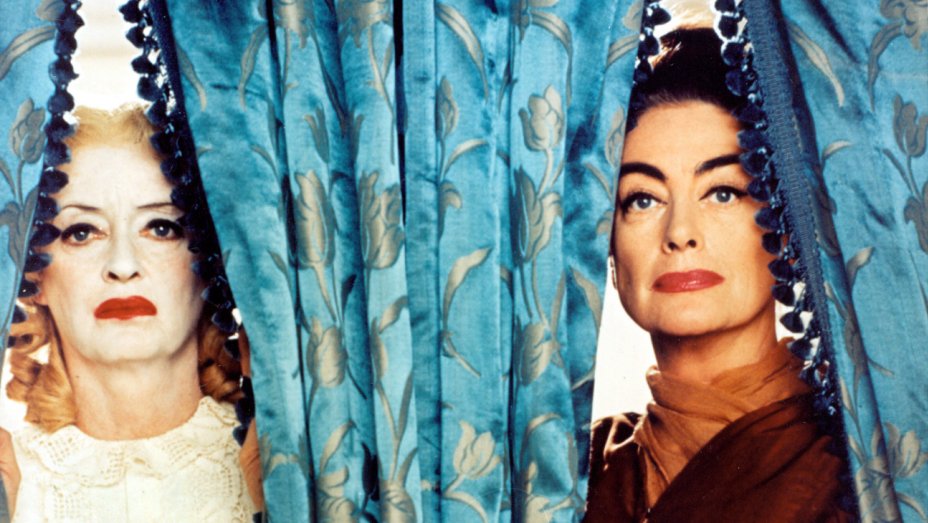
3. What Ever Happened to Baby Jane? (1962)

Bette Davis and Joan Crawford? Yes, please!

The two then-aging (just barely, if we’re honest) starlets played aging starlets who were sisters. One (Davis’s Jane) had been a child star darling. The other (Crawford’s Blanche) didn’t steal the limelight from her sister until both were older, then Blanche was admired for her skill as an adult actress. Meanwhile, Jane descended into alcoholism and madness. She also seemed a bit lax on hygiene.

Blanche winds up wheelchair bound (How? Why? Is Jane to blame?!) and Jane’s envy and insanity get the better of her while they’re alone in their house.

Famously, the two celebrities did not get along on set or off. Whether true or rumor, the performances suggest a deep, authentic and frightening hatred borne of envy that fuels the escalating tension.

Davis is at her unhinged best in a performance that earned her an Oscar nomination. Crawford pales by comparison (as the part requires), but between the hateful chemistry and the story’s sometimes surprising turns, this is a movie that ages well, even if its characters did not.

2. Shadow of the Vampire (2000)

Not Hollywood – Germany. But actors are putting their fate in the wrong hands for the sake of stardom nonetheless.

E. Elias Merhige revisits F. W. Murnau’s masterpiece Nosferatu with smashing results in Shadow of the Vampire. Wickedly funny and just a little catty, ‘Shadow’ entertains with every frame.

This is the fictional tale of the filming of Nosferatu. Egomaniacal artists and vain actors come together to create Murnau’s groundbreaking achievement in nightmarish authenticity. As they make the movie, they discover the obvious: the actor playing Count Orlok, Max Schreck is, in fact, a vampire.

The film is ingenious in the way it’s developed: murder among a pack of paranoid, insecure backstabbers; the mad artistic genius Murnau directing all the while. And it would have been only clever were it not for Willem Dafoe’s perversely brilliant performance as Schreck. There is a goofiness about his Schreck that gives the otherwise deeply horrible character an oddly endearing quality.

Eddie Izzard doesn’t get the credit he deserves, reenacting the wildly upbeat performance of Gustav von Wagenheim so well. The always welcome weirdness of Udo Kier balances the egomaniacal zeal John Malkovich brings to the Murnau character, and together they tease both the idea of method acting and the dangerous choice of completely trusting a director.

https://www.youtube.com/watch?v=uAn5uLNMmjk&t=10s

1. Rosemary’s Baby (1968)

Again, not Hollywood, New York. But how genius is this movie?

Rosemary’s Baby remains a disturbing, elegant, and fascinating tale, and Mia Farrow’s embodiment of defenselessness joins forces with William Fraker’s skillful camerawork to cast a spell.

Working from Ira Levin’s novel, Roman Polanski spins a tale of mid-run actor Guy Woodhouse (John Cassavetes) who sells his wife’s womb for success. Dude!

Like so many of these films, Rosemary’s Baby sees the Faustian dilemma not in terms of carnal or intellectual pursuits, but the desperate drive for stardom. The fact that Guy doesn’t even have to sacrifice anything himself actually makes the evil that much more frustrating and horrifying.

Of course, Mia Farrow’s embodiment of helplessness and Ruth Gordon’s Oscar-winning turn as rouged busybody Minnie Castavet only give the film more and surprising layers. It’s a masterpiece of atmosphere and storytelling.

Fright Club: Tortured Romance

A lot of horror romances don’t work out. Whether it’s the demon/internet connection hoping to impregnate you, the stalker/voyeur/vampire obsessed with you, or that dreamy girl who turns into a hungry panther every time she’s aroused – finding Mr. or Ms. Right in a horror movie can prove dangerous.

Let’s not even talk about prom dates.

Here are five of our favorite examples of the dire, bloody, terrifying reason that following your heart is not always your best bet.

5. Scream (1996)

Oh, poor Sidney Prescot (Neve Campbell). Her boyfriend Billy (Skeet Ulrich) is practically Johnny Depp levels of hot, but ever since that thing with her mom, Sid can’t get intimate. Plus, Billy Loomis might be the town’s serial killer.

No, love doesn’t turn out great for Sid and Billy. Or for Tatum (Rose McGowan) and Stu (Matthew Lillard). Or for Mr. and Mrs. Prescott. In fact, the only romance that seems to flourish at all ends up giving one guy a terrible limp.

4. It Follows (2014)

Moments after a sexual encounter with a new boyfriend, Jay (Maika Monroe) discovers that she is cursed. He has passed on some kind of entity – a demonic menace that will follow her until it either kills her or she passes it on to someone else the same way she got it.

Writer/director David Robert Mitchell has captured that fleeting yet dragging moment between childhood and adulthood and given the lurking dread of that time of life a powerful image. There is something that lies just beyond the innocence of youth. You feel it in every frame and begin to look out for it, walking toward you at a consistent pace, long before the characters have begun to check the periphery themselves.

Mitchell’s provocatively murky subtext is rich with symbolism but never overwhelmed by it. His capacity to draw an audience into this environment, this horror, is impeccable, and the result is a lingering sense of unease that will have you checking the perimeter for a while to come.

3. Trouble Every Day (2001)

Backed by a plaintive, spooky soundtrack by Tindersticks, Clair Denis’s metaphorical erotic horror examines gender roles, sex and hunger. Denis is one of France’s more awarded and appreciated auteurs, so a one-time voyage into horror should not be dismissed.

A newlywed American couple head to Paris, ostensibly to honeymoon, but Shane (Vincent Gallo) is really there to re-establish connection with old colleagues Coré (Béatrice Dalle) and her husband, Léo (Alex Descas). The three scientists once participated in an experiment, and Shane needs to find them.

The film is a startling work of biologic-horror, but its existential riffs on intimacy, dominance and violence—common fare in the genre—are clearer-headed and more disturbing here than in anything else that swims the same murky waters.

https://www.youtube.com/watch?v=oz5VlZc8tC4

2. Get Out (2017)

Writer/director Jordan Peele crafts an impeccable horror based in social anxiety, articulating something more relevant and powerful than anything horror had undertaken in decades. His is a brilliant take on modern racism, cultural appropriation and horror.

On a less metaphorical level, it’s also a look at a really, really bad romance. Poor Chris (Daniel Kaluuya) agrees to spend the weekend with his girl Rose (Allison Williams) and her parents, meeting the family and participating in a big, rich-white-people party.

But Rose’s relationships don’t turn out so rosy. Just ask Georgina and Walter.

1. Audition (1999)

The prolific director Takashi Miike made more than 70 movies in his first 20 or so years in film. Among the best is Audition, a phenomenally creepy May/December romance gone very, very wrong.

Audition tells the story of a widower convinced by his TV producer friend to hold mock television auditions as a way of finding a suitable new mate. He is repaid for his deception.

Nearly unwatchable and yet too compelling to turn away from, Audition is a remarkable piece of genre filmmaking. The slow moving picture builds anticipation, then dread, then full-on horror.

By the time Audition hits its ghastly conclusion, Miike and his exquisitely terrifying antagonist (Eihi Shina) have wrung the audience dry. She will not be the ideal stepmother.

He Deserves Better

Slender Man

by Hope Madden

It’s the end of the summer! Quick, what lackluster genre trash can we tidy up with a PG-13 rating to cash in on kids’ free time before they have to go back to school next week?!

That’s the theme for this week at the movies, a period in which a 70-foot prehistoric shark movie contains no blood-not one drop. Also, a super creepy, tall, faceless but nattily clad monster terrorizes teens.

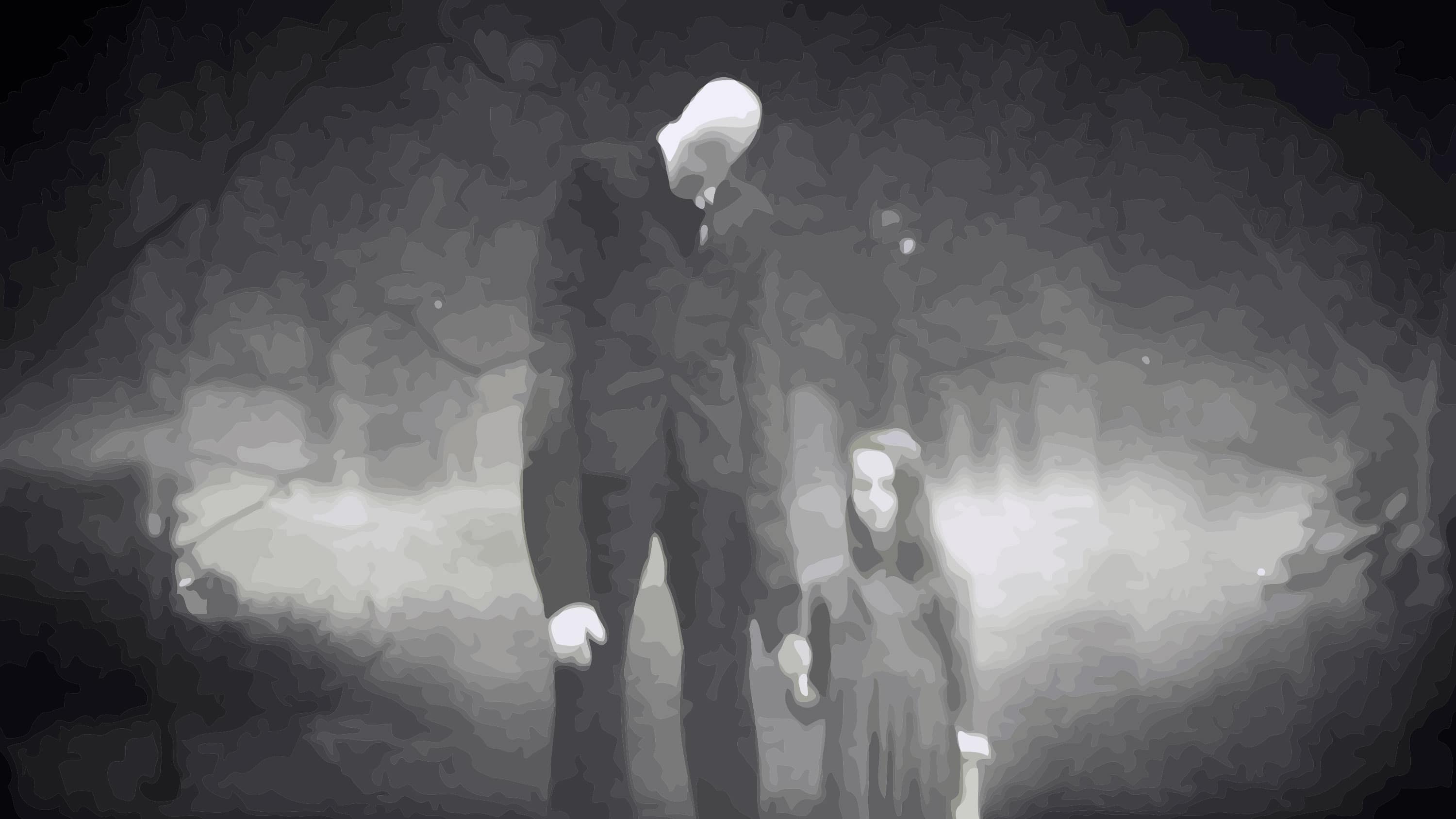
I love a good villain, and this film has an opportunity. Slender Man is a cool character. Born online in a meme contest in 2009, the elongated, pale, bald and faceless man in a black suit who beckons children was immediately embraced by a horror community who apparently has no idea what to do with him.

Sylvain White’s film positions him as an urban legend. Four girls watch a video to conjure the beastie. Bad things happen.

Do you know why bad things happen? Because kids today aren’t shown the classics, like The Ring. That movie knew how to maneuver a PG-13 rating.

So, the supernatural being haunts the woods. Or your phone. He’s electrical, you see. So, the woods. No, wait…

And therein lies the problem. We have a villain, born a meme. He has no real backstory, but he’s cool and he deserves a proper horror show. Screenwriter David Birke was absolutely not up to the task of creating that story. And even if he had done a proper job of it, White can’t manage to move scene to scene with any sense of dread or even narrative logic.

Boxes are checked with zero thought about why. Is there a scene in a library where one character stumbles upon some important background information? Why, yes, although it doesn’t make sense and leads nowhere.

Is there another scene of googling where a previous victim turns out to be in an asylum? Indeed! And again, this goes nowhere. Do they find her? Do they visit the asylum? Is she ever brought up again? Nope.

More than anything, Slender Man is just boring. And he shouldn’t be.

Fright Club: Best Horror of the 1950s

When we first started this podcast, one hundred thirtysomething episodes ago, we devoted specific shows to the best horror movies by the decade. We started with the Sixties, but we got called on that at one point by a listener who wanted to know what we thought were the best horror movies of the Fifties.

We have finally responded to that (hopefully) very patient listener, and enlisted the help of our old friend Phantom Dark Dave. Together, we wander through the cold war movies that scared a generation.

5. Godzilla (1954)

Is Godzilla the best film on this list? No. But, more than any other film in the genre, it spoke directly to global anxieties, became a phenomenal success, and changed the face of horror.

As Japan struggled to re-emerge from the 1945 bombings of Hiroshima and Nagasaki, director Ishiro Honda unleashed that dreaded kaiju—followed quickly by a tidal wave of creature features focused on scientists whose ungodly work creates global cataclysm.

Far more pointed and insightful than its American bastardization or any of the sequels or reboots to follow, the 1954 Japanese original mirrored the desperate, helpless impotence of a global population in the face of very real, apocalyptic danger. Sure, that danger breathed fire and came in a rubber suit, but history shows again and again how nature points out the folly of man.

4. Invasion of the Body Snatchers (1956)

Director Dono Siegel was the first filmmaker to bring Jack Finney’s Cold War nightmare to the screen. He wouldn’t be the last, maybe not even the best, but what he did with this eerie alien tale tapped into a societal anxiety and quickly became one of the most influential and terrifying films of its time.

Doc Miles Bennell (Kevin McCarthy) is just home from a short trip when he’s inundated by patients swearing their loved ones are not their loved ones at all. Sure, they look the same and have all the same skills and memories, but there’s no warmth, no passion.

With this, the fear that our very nation could be overtaken by an outside force – Russians, say, for terrifyingly immediate sake of argument – working its way through not by force, but by quietly taking over each and every person in one town, then spreading from town to town to town.

It’s the kind of insidious evil that fuels contagion horror, infestation horror, even demonic horror. But Invasion of the Body Snatchers spoke to a society’s deepest fears and became a touchstone for all SciFi to follow it.

3. Dracula (Horror of Dracula) (1958)

In 1958, Hammer Films began its long and fabulous love affair with the cloaked one, introducing the irrefutably awesome Christopher Lee as the Count.

Their tale varies a bit from Stoker’s, but the main players are mostly accounted for. Peter Cushing steps in early and often as Van Helsing, bringing his inimitable brand of prissy kick-ass, but it’s Lee who carries the film.

Six foot 5 and sporting that elegant yet sinister baritone, Lee cuts by far the most intimidating figure of the lot as Dracula. Director Terence Fisher (what?!) uses that to the film’s advantage by developing a far more vicious, brutal vampire than what we’d seen previously.

Still, the film is about seduction, though, which gives Lee’s brute force an unseemly thrill. Unlike so many victims in other vampire tales, it’s not just that Melissa Stribling’s Mina is helpless to stop Dracula’s penetration. She’s in league. She wants it.

Ribald stuff for 1958!

2. The Bad Seed (1956)

The minute delicate Christine’s (Nancy Kelly) husband leaves for his 4-week assignment in DC, their way-too-perfect daughter begins to betray some scary behavior. The creepy handyman Leroy (Henry Jones) has her figured out – he knows she’s not as perfect as she pretends.

You may be tempted to abandon the film in its first reel, feeling as if you know where the it’s going. You’ll be right, but there are two big reasons to stick it out. One is that Bad Seed did it first, and did it well, considering the conservative cinematic limitations of the Fifties.

Second, because director Mervyn LeRoy’s approach – not a single vile act appears onscreen – gives the picture an air of restraint and dignity while employing the perversity of individual imaginations to ramp up the creepiness.

Enough can’t be said about Patty McCormack. There’s surprising nuance in her manipulations, and the Oscar-nominated 9-year-old handles the role with both grace and menace.

1. Diabolique (1955)

Pierre Boileau’s novel was such hot property that even Alfred Hitchcock pined to make it into a film. But Henri-Georges Clouzot got hold if it first. His psychological thriller with horror-ific undertones is crafty, spooky, jumpy and wonderful.

And it wouldn’t work if it weren’t for the weirdly lived-in relationship among Nicole (Simone Signoret) – a hard-edged boarding school teacher – and the married couple that runs the school. Christina (Vera Clouzot) is a fragile heiress; her husband Michel (Paul Meurisse) is the abusive, blowhard school headmaster. Michel and Nicole are sleeping together, Christine knows, both women are friends, both realize he’s a bastard. Wonder if there’s something they can do about it.

What unravels is a mystery with a supernatural flavor that never fails to surprise and entrance. All the performances are wonderful, the black and white cinematography creates a spectral atmosphere, and that bathtub scene can still make you jump.

Webcam Confessional

Unfriended: Dark Web

by George Wolf

The good news: this Dark Web isn’t searching for your credit card info.

That would be playing nice compared to what the sequel to the surprisingly effective Unfriended has in store. More good news: it’s mean is pretty damn lean, clever and creepy.

Like its predecessor, Dark Web does a great job upholding the integrity of the “real time computer screen” gimmick. But from the opening setup, this one carries more eerie authenticity.

First-time director Stephen Susco, a veteran writer with plenty of horror titles in his resume, knows the genre has always reflected the anxieties of the day, and his screenplay here feels as in-the-moment as a brand new laptop with all the latest add-ons.

And that’s just what Matias (Colin Woodell) needs for his new programming project, but funds are tight. He finds a used one on Craigslist that might do, but when he hooks it up for a Skype game night with his friends, the previous owner “slides into his DMs.”

That’s what the kids, say, right?

There’s some bad, bad, stuff on that hard drive, and Matias has to strike bargains with the bad guy if he wants his friends to survive the night.

Sure there are some preposterous turns, but as the upper hand shifts (and shifts again), Susco and his winning cast (including Blumhouse favorite Betty Gabriel) make it a suspenseful ride. We’re making these discoveries right along with them, and while true scares might be in short supply, there’s is no shortage of nasty and unpleasant.

As online cautionary films go, Dark Web gets it better than most. The original Unfriended debuted four years ago, or in tech/social media terms, the Stone Age. Susco finds a wry, self-aware groove to drive home just where we’re at today: manufactured reality, “swatting,” and even, yes, internet currency.

Word is, there will be two theatrical prints, each with different endings. I can think of one that would pretty well spoil all that Dark Web executes so well.

I didn’t see an ending like that.

I hope you don’t either.


Fright Club: Prostitutes in Horror

Jack the Ripper carved up prostitutes in real life and in about a million cinematic representations. But Jack’s not the only marauder who recognizes a helpless population when he sees it. Sometimes, though, the prostitute gets the last laugh.

5. The Poughkeepsie Tapes (2007)

John Erick Dowdle’s film is a difficult one to watch. It contains enough elements of found footage to achieve realism, enough police procedural to provide structure, and enough grim imagination to give you nightmares.

Edward Carver (Ben Messmer) is a particularly theatrical serial killer, and the film, which takes you into the police academy classroom, asks you to watch his evolution from impetuous brute to unerring craftsman. This evolution we witness mainly through a library of videotapes he’s left behind for the police to find, along with poor Cheryl Dempsey, (Stacy Chbosky).

While Cheryl’s plight is the most morbidly fascinating, a tricky side plot involving the murders of prostitutes not only clarifies the murderer’s game, but offers some of the most troubling scenes in the film, toying not just with horror but with weird personal anxieties: like the popping of a balloon.

4. Frankenhooker (1990)

Wanna date?

Director/co-writer Frank Henenlotter took the Frankenstein concept in strange, unseemly new ways with this one. Out-of-work loser with a knack for science Jeffrey (James Lorinz) mourns the really messy loss of his beloved Elizabeth (Patty Mullen) in his own way. Grief is like that—personal. And when you’re really grieving, a project can help you get past that. It focuses the mind.

Jeffrey rebuilds Elizabeth with the help of a lot of body parts made available to him via NYC prostitutes. They’re not volunteered, and Jeffrey is really conflicted about that, but this isn’t what makes him a bad person. It’s the fact that he never really accepted Elizabeth for who she was, or he’d be a lot less picky about these parts.

Jeffrey learns his lesson—kind of—in a film that is unusually sweet given the topic. It’s funny, gross, wrong-headed and more than a little stupid as well.

3. We Are What We Are (2010)

Jorge Michel Grau’s horror about the disposable population of Mexico City centers on a family with a ritual to fulfill. Too bad the patriarch’s death leaves no one but novices to put dinner on the table.
The fact that this family is a cannibal clan is a brilliant avenue into the sociopolitical theme of a society feeding off the poor, but Grau’s perspective offers a little bit of optimism in its own, bloody way. The cops are useless, the system is ridiculous, but those very people who have been disregarded by society are not as helpless as you might thing.

The family underestimates a society it deems beneath them, a group of people so low they are not even fit to kill. What Grau does with this circle of prostitutes is like a Pat Benatar video done right.

2. American Psycho (2000)

Mary Harron’s near-perfect horror comedy send-up of the Reagan era benefits from a number of things, including maybe the best casting in cinema history. This cast and Harron hit every note perfectly, offering a film that is as bloody and alarming as it can be, with every re-watch an opportunity to see more and more of its comic genius.

And of the many memorable moments in the film, the line most likely to be quoted is this: Don’t just stare at it. Eat it.

There is a lot of soullessness afoot in American Psycho, and in that line, but not in Cara Seymour’s performance. As Christie—Patrick Bateman’s favorite prostitute, God help her—she gives this film its first truly empathetic character. She is the one character you root for, the one whose death you don’t want to see happen. When Christie is lured back to Patrick’s apartment for a second round, for the first time in the film, you find yourself feeling sad for someone, finding the empathy Patrick so utterly lacks.

1. Peeping Tom (1960)

Director Michael Powell’s film broke a lot of ground and nearly ended his film career. People tend to react badly to horror movies that unnerve them, which is really odd given that this is the entire point of the genre. Peeping Tom pissed everybody off, maybe because—like Michael Haneke’s films Funny Games—Peeping Tom implicates you in the horror.

Mark (Karlheinz Bohm) had a difficult childhood, developing a bit of a voyeuristic hobby to help him cope. He starts off with prostitutes, filming them, capturing their terror as he kills them. He’s a voyeur, but who can throw stones? Didn’t every one of us who’s ever watched this film— or any other horror movie, for that matter—sign up to do exactly what Mark was doing?

Bohm’s great success is in making Mark unsettlingly sympathetic. Powell’s is in using the audience’s instincts against us. Bohm makes us feel bad for the villain, Powell makes us relate to the villain. No wonder people were pissed.

Do Not Open

The Devil’s Doorway

by Hope Madden

So many horror films delve into those murky holy waters of Catholicism. So many horror movies are clearly made by lifelong non-Catholics. If Aislinn Clarke’s The Devil’s Doorway gets extra points, it’s for knowing the religion it is lambasting.

Two priests—one young, one a veteran—head into dangerous spiritual territory in a film that fully understands that you will compare it to The Exorcist. How can you not?

The Devil’s Doorway follows Fr. Thomas Riley (Lalor Roddy) and Fr. John Thornton (Ciaran Flynn) to a Magdalene Laundry, one of Ireland’s infamous workhouses populated by women the country wanted to hide and exploit.

The setting itself is a way of inverting the gravitas of The Exorcist, which saw two priests—one firm in his belief, the other confronting a crisis of faith—come to the aid of an innocent girl facing the corruption of her purity from something demonic.

Here, Fr. Riley, the elder priest, has to face his own crisis of faith. But his belief has been stretched to breaking by the corruption of the church itself, as manifest by this place.

So, they go to investigate a miracle but find something more predictably menacing is afoot.

There is an earnestness in the battle between faith and cynicism in this film. The Exorcist and films like it, those that saw the wayward horror of man as only correctable with help from above, have long given way to something else. A demonic possession now feels like it happens within holy walls because that’s where the devil lives in the first place.

While most films of this ilk simply take potshots, The Devil’s Doorway mourns the corrosion of something worthwhile and holy. Applause for finding an honest statement to make within this over-worked subgenre, although the congratulations belong primarily to Roddy.

The Irish actor finds truth in Fr. Riley—Doubting Thomas’s—struggle. He stands out as the only sane person, the only responsible adult in the house. And though the Mother Superior role is written with evil relish (as per usual), Helena Bereen’s delivery stings in a way that is eerily authentic.

Until it’s not.

We get it. Nuns are creepy. Twelve years of Catholic school clarified that.

The film gets a bit caught in genre trappings, and what starts as an indictment of the church becomes so punchdrunk on jump scares it loses its focus entirely. The found-footage gimmick works well enough for a while, but devolves in the end into something so familiar it’s almost sad.

The Devil’s Doorway started out with promise, but like so many lapsed Catholics, it lost its way.

Fright Club: Murderous Mentors

Everybody needs a hand now and then, a little guidance. Everybody, even cold-blooded killers, because murder can be really difficult to pull off. You can’t just google a how-to. I mean, you probably can, but where’s the personal connection? The relationship? The trust.

It’s all here, in our list of the best films focusing on murderous mentors.

5. Addiction (1995)

Like most of director Abel Ferrara’s work, the film is an overtly stylish, rhythmically urban tale of brutal violence, sin and redemption (maybe). Expect drug use, weighty speeches and blood in this tale of a doctoral candidate in philosophy (Lili Taylor) over-thinking her transformation from student to predator.

Taylor cuts an interesting figure as Kathleen, a very grunge-era vampire in her jeans, Doc Martens and oversized, thrift store blazer. She’s joined by an altogether awesome cast—Annabella Sciorra, Edie Falco and Christopher Walken among them.

Ferrara parallels Kathleen’s need for blood to drug addiction, but uses her philosophy jibberish to plumb humanity’s historical bloodlust. In monologues and voiceovers, Taylor waxes philosophic as she comes to terms with her own evil nature, and here is where the film nearly implodes. It begins to feel like Ferrara’s real warning is that philosophical pretentiousness spreads like a disease. But just when you are tempted to give up on the pomposity, Walken appears as Kathleen’s vampiric mentor. Thank you.

He injects the film with random violence and nuttiness, as is his way, and Ferrara pays you for your patience and thoughtfulness with viscera aplenty before settling on the uneasy answer that there is no excusing your own bad behavior.

4. The Poughkeepsie Tapes (2007)

John Erick Dowdle’s film is a difficult one to watch. It contains enough elements of found footage to achieve realism, enough police procedural to provide structure, and enough grim imagination to give you nightmares.

Edward Carver (Ben Messmer) is a particularly theatrical serial killer, and the film, which takes you into the police academy classroom, asks you to watch his evolution from impetuous brute to unerring craftsman. This evolution we witness mainly through a library of videotapes he’s left behind—along with poor Cheryl Dempsey (Stacy Chbosky)—for the police to find.

Cheryl is Carver’s masterpiece, the one victim he did not kill but instead reformed as his protégé. It’s easily the most unsettling element in a film that manages to shake you without really showing you anything.

3. The Last Horror Movie (2003)

A clever concept handled very craftily, The Last Horror Movie is found footage in that we, the audience, have found this surprising bit of footage recorded over the VHS tape we are apparently watching. What serial killer Max (a top-notch Kevin Howarth) has done, you see, is made a documentary of his ghastly habits and shared them with an audience that has shown, by virtue of the movie it intended to rent just now, its predilection for something grisly.

Like Edward in The Poughkeepsie Tapes, Max wants to pass on his expertise to a protégé. (There’s a reason the audience isn’t quite enough.) He hires an assistant (Mark Stevenson), who helps with the documentary Max is making. The assistant shoots the footage. Max tells the camera, step by step, what he’s doing, why he’s doing it, how he came to the decision. It’s a how-to, really, and the assistant is supposed to be paying attention.

But when push comes to shove, will the assistant have the stomach for it?

2. Behind the Mask: The Rise of Leslie Vernon (2006)

Writer/director Scott Glosserman’s film takes us to Glen Echo, Maryland. It’s a small town, exactly the kind of town that would be perfect for a slasher, and Leslie Vernon is just the villain Glen Echo doesn’t know it’s aching for.

This is a mockumentary and an affectionate ode to slashers. It pulls the concept of a documentary crew participating in the crime (a la Man Bites Dog), builds on the expected steps of every slasher film (Scream), and yet somehow feels fresh and fun.

One reason is Nathan Baesel as Leslie. He’s a charming, self-deprecating joy.

The second reason is the whole “training” concept. By way of the documentary being filmed, we’re invited into the hard-core training that goes into becoming the next immortal slasher villain. Not just cardio—although Leslie is very clear on the need for cardio—but all the little skills you can’t just pick up on your own. That’s why Leslie is blessed to have the help of a committed community who wants to see him succeed, including Eugene (Scott Wilson), a retired slasher himself.

Clever, funny and surprisingly adorable, this one’s a keeper.

1. Henry: Portrait of a Serial Killer (1986)

Henry offers an unforgivingly realistic portrayal of evil. Michael Rooker is brilliant as serial killer Henry (based on real-life murderer Henry Lee Lucas). We follow him through his humdrum days of stalking and then dispatching his prey, until he finds his own unwholesome kind of family in the form of buddy Otis and his sister, Becky.

“You mean to tell me you’ve never killed anybody before?” a disdainful Henry asks Otis, and the mentoring relationship is born. Otis really takes to it, too.

What’s diabolically fascinating is the workaday, white trash camaraderie of the psychopath relationship in this film, and the grey areas where one crazy killer feels the other has crossed some line of decency.

Rooker’s performance unsettles to the bone, flashing glimpses of an almost sympathetic beast now and again, but there’s never a question that he will do the worst things every time, more out of boredom than anything.

It’s a uniquely awful, absolutely compelling piece of filmmaking.

https://www.youtube.com/watch?v=IU3P6WXzvXU

Great Again

The First Purge

by Hope Madden

Is it me, or does Independence Day feel a little tough to celebrate this year? Is there a downward spiral going on that seems like the backstory of a dystopian SciFi novel? One where the Supreme Court finally crumbles to an administration that embraces white supremacy, gun violence and toxic masculinity?

Oh, it’s not just me, then?

You want to see a movie?

Five years ago, writer/director James DeMonaco spun a tale of a government-sanctioned, pseudo-religious night of violence meant to purge us of our evil. The Purge turned out to be a cautionary tale: if we’re not careful, this could happen.

Three films later, allegories are cast aside. From tiki torches to pussy grabbers, this is Trump’s America.

The First Purge takes us back to the experiment that set off the once-annual night of mayhem. A test, funded by the NRA and backed by the far-right government, is carried out on Staten Island.

DeMonaco returns to write the latest installment, but for the first time he hands off directing duties. Gerard McMurray makes his feature directing debut with a film that does not mix messages.

The African American director and his primarily African American cast take us inside a film that, if it’s not America today, it’s America of like three weeks from now.

DeMonaco didn’t have to work too hard for his script. From robed Klansmen to unrepentant, officially-sanctioned police officers with badges and billy clubs, to doughy white political mouthpieces altering facts to further their agenda, DeMonaco pulls nightmares from reality and pastes them together in a world that’s almost more comforting in that it’s supposed to be fantasy.

McMurray struggles a bit with action sequences, although, as he follows one misguided young man, he does manage a funhouse atmosphere that creates a giddy tension.

His cast, including Lex Scott Davis, Y’lan Noel and Marisa Tomei, offer entirely solid performances in fairly underwritten roles. Meanwhile, Rotimi Paul cuts an impressive figure as Skeletor, one of the few citizens of Staten Island genuinely interested in participating in the experiment.

McMurray and DeMonaco are not all gloom and doom. Mercifully, they root their story in a realistic optimism that we, the citizens of the United States—potential voters, all—are not as easily manipulated as the powerful may think. We are not sheep. Not one of us is expendable and we outnumber them.

God bless America.

https://www.youtube.com/watch?v=25yzf1V9cTY

Fright Club: Best Horror of the First Half of 2018

What a killer year 2018 has in horror been already! One mega-blockbuster, another big indie hit, loads of fun stuff big and small. Whether you think the great Annihilation and The Endless are horror, whether you believe unhinged Mom and Dad-style Nic Cage is the best kind of Nic Cage, and no matter where you stand on The Strangers: Prey at Night, we’re here to has it out.

It’s time we count down the best of the best so far this year, and we are thrilled to have Senior Filmmaker Correspondent Jason Tostevin join us, as is tradition, to argue over what is and is not horror, what is and is not great. Plus, we sing!

5. The Ritual

David Bruckner has entertained us with some of the best shorts in horror today, including work from V/H/S, Southbound, and one of our favorites, The Signal. Directing his feature debut in The Ritual, Bruckner takes what feels familiar, roots it in genuine human emotion, takes a wild left turn and delivers the scares.

Five friends decide to mourn a tragedy with a trip together into the woods. Grief is a tricky, personal, often ugly process and as they work through their feelings, their frustration quickly turns to fear as they lose themselves in a foreign forest where danger lurks.

The film works for a number of reasons, but its greatest triumph is in making the woods scary again. That environment has become such a profound cliché in horror that it is almost impossible to make it feel fresh, but there is an authenticity to the performances, the interaction among the characters, and the frustration and fear that grounds the horror. And then there is horror—intriguing, startling, genuinely frightening horror. Yay!

4. Unsane

Sawyer Valentini (Claire Foy—brittle, unlikeable and amazing) is living your worst nightmare. After moving 400 miles to escape her stalker, she begins seeing him everywhere. She visits an insurance-approved therapist in a nearby clinic and quickly finds herself being held involuntarily for 24 hours.

After punching an orderly she mistakes for her stalker, that 24 hours turns into one week. And now she’s convinced that the new orderly George is, in fact, her stalker David (Joshua Leonard—cloying, terrifying perfection).

After laying bare some terrifying facts about our privatized mental health industry, Steven Soderbergh structures this critique with a somewhat traditional is-she-or-isn’t-she-crazy storyline. Anyone who watches much horror will recognize that uneasy line: you may be here against your will, but that doesn’t mean you shouldn’t be here.

And the seasoned director of misdirection knows how to toy with that notion, how to employ Sawyer’s very real damage, touch on her raw nerve of struggling to remain in control of her own life only to have another’s will forced upon her.

He relies on familiar tropes to say something relevant and in doing so creates a tidy, satisfying thriller.

3. Revenge

The rape-revenge film is a tough one to pull off. Even in the cases where the victim rips bloody vengeance through the bodies of her betrayers, the films are too often titillating. Almost exclusively written and directed by men for a primarily male audience, the comeuppance angle can be so bent by the male gaze that the film feels more like an additional violation.

Well, friends, writer/director Coralie Fargeat changes all that with Revenge, a breathless, visually fascinating, bloody-as-hell vengeance flick that repays the viewer for her endurance. (His, too.)

Fargeat’s grasp of male entitlement and the elements of a rape culture are as sharp as her instincts for visual storytelling. Wildly off-kilter close-ups sandwich gorgeous vistas to create a dreamlike frame for the utterly brutal mess of a film unfolding.

Symbol-heavy but never pretentious or preachy, the film follows a traditional path—she is betrayed, she is underestimated, she repays her assailants for their toxic masculinity. But between Fargeat’s wild aesthetic, four very solid performances, and thoughtful yet visceral storytelling, the film feels break-neck, terrifying and entirely satisfying.

2. A Quiet Place

Damn. John Krasinski. That big, tall guy, kind of doughy-faced? Married to Emily Blunt? Dude can direct the shit out of a horror movie.

Krasinski plays the patriarch of a close-knit family trying to survive the post-alien-invasion apocalypse by staying really, really quiet. The beasts use sound to hunt, but the family is prepared. The cast, anchored by Krasinski’s on-and-off-screen wife Emily Blunt is amazing. That you may expect.

What you may not expect is Krasinski’s masterful direction: where and when the camera lingers or cuts away, how often and how much he shows the monsters, when he decides the silence will generate the most dread and when he chooses to let Marco Beltrami’s ominous score do that work for him.

It’s smart in the way it’s written, sly in its direction and spot-on in its ability to pile on the mayhem in the final reel without feeling gimmicky or silly.

1. Hereditary

Grief and guilt color every somber, shadowy frame of writer/director Ari Aster’s unbelievably assured feature film debut, Hereditary.

With just a handful of mannerisms, one melodic clucking noise, and a few seemingly throwaway lines, Aster and his magnificent cast quickly establish what will become nuanced, layered human characters, all of them scarred and battered by family.

Art and life imitate each other to macabre degrees while family members strain to behave in the manner that feels human, seems connected, or might be normal. What is said and what stays hidden, what’s festering in the attic and in the unspoken tensions within the family, it’s all part of a horrific atmosphere meticulously crafted to unnerve you.

Aster takes advantage of a remarkably committed cast to explore family dysfunction of the most insidious type. Whether his supernatural twisting and turning amount to metaphor or fact hardly matters with performances this unnerving and visual storytelling this hypnotic.