Tag Archives: Hope Madden

Fright Club: Skeletons in the Closet, 2026

It’s the most wonderful time of the year! The time when we celebrate the bad horror lurking in Oscar nominees’ closets. Because we have a lot of return nominees, we have some overlap with earlier years. But there is also fresh blood…

5. Amy Madigan, Antlers (2021)

Scott Cooper reimagines the Wendigo legend to lead us through a dour metaphor full of familiar genre tropes and leave us with a brutal, great-looking, well-acted lecture.

Antlers is not a terrible film. But it has at least one incredibly stupid scene, and that scene stars the otherwise incredible Amy Madigan. She plays a school principal who stops at a student’s home to check on him and then–in a film that otherwise mainly avoids those “what a stupid decision” horror cliches—makes every stupid decision an educated professional could make. There is nothing believable about one step of it, however hard the talented veteran tries. It it so dumb that our friends Tyrone and Vernell abandoned the good characters and joined “Team Creature.”

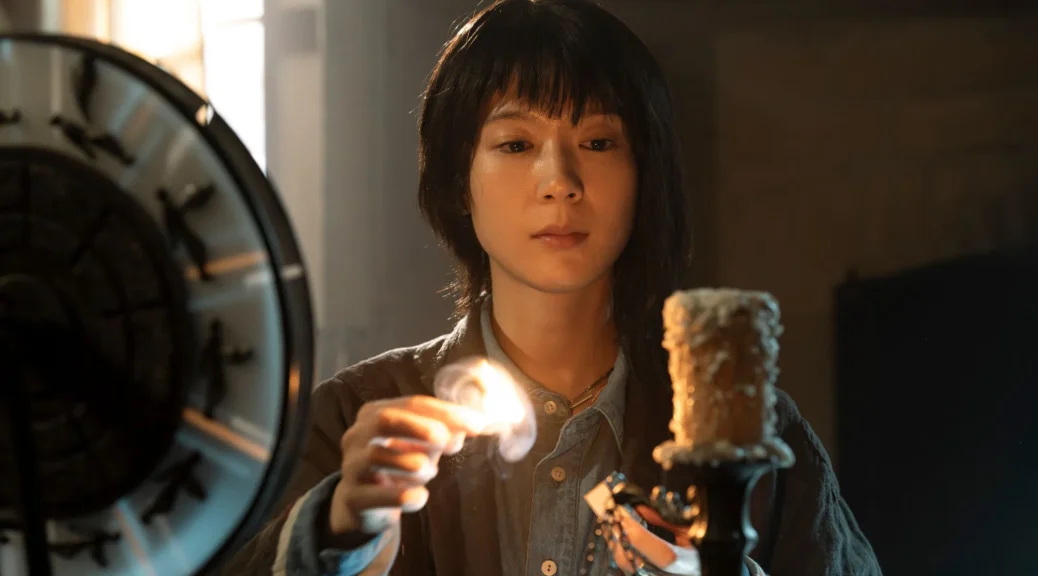
4. Renate Reinsve: Dark Woods II/Villmark Asylum (2015)

Pål Øie followed up his surprise hit Villmark – a cabin in the woods horror – with this odd sequel set in the high hills above those woods, where an old hospital used after WWII is being prepared for destruction.

Øie lifts most of his story from Brad Anderson’s far superior Session 9, mixing in some Nazi style experimentation and creatures. It’s not a terrible movie, and characteristically, Renate Reinsve, gives a strong performance. There are some real scares, too, and the cast on the whole is solid. The mythology makes little to no sense, the leaps in logic are impressive, and in the end, it’s not memorable outside the early career work of one of the most talented actors working today.

3. Stellan Skarsgård: Deep Blue Sea (1999)

Skarsgård’s made his fair share of horror. We considered both of his Exorcist movies for this list, but since they’re basically the same movie, which too choose?

Deep Blue Sea is a fun B-movie creature feature. It’s mindless, violent, action packed, and Skarsgård gets one of the most ludicrous deaths in horror.

2. Benicio del Toro: The Wolfman (2010)

We had such hopes for this one when it came out. That cast! Benicio Del Toro, Anthony Hopkins, Hugo Weaving, Emily Blunt!

Good God, was it awful. If you can look past the idea that Hopkins and Del Toro could be father and son, look past the insipid plot, look past Hopkins’s hamminess or del Toro’s disinterest, you cannot look past the heinous FX. But Blunt handles herself really, really well.

1.  Leonardo DiCaprio: Critters 3 (1991)

Long before Django UnchainedTitanic, or even What’s Eating Gilbert Grape, a barely pubescent Leo DiCaprio donned a day-glow t-shirt and a pre-teen scowl to battle Gremlin rip-offs in Critters 3.

They are furry, toothy, ravenous beasts from outer space and, until episode 3, they were content to terrify rural folk. But now they’re in the big city, and (in a clear rip off of the not-quite-as-terrible film Troll), they are pillaging a single apartment building and terrifying all those trapped inside. It’s a comedy, really, the kind with farting furballs and dunderheaded people. Which is to say, one that’s not particularly funny.

Serving up the same derivative comedy/horror pap you can find in one out of every three films made that decade, Critters 3 has a lot of hair in scrunchies, oversized blouses belted over colorful leggings, stereotypes, and actors on their careers’ last legs. And Leonardo DiCaprio, which will forever be the only reason this movie was released to DVD.

Screening Room: Scream 7, Pillion, The President’s Cake & More!

Hope and George review this week’s new releases: Scream 7, Pillion, The President’s Cake, Dreams, Dolly, Crazy Old Lady, PLUS movie news and notes from The Schlocketeer Daniel Baldwin!

Knife Finds a Way

Scream 7

by Hope Madden and George Wolf

There’s a lot to be said for the Scream franchise. Sure, Wes Craven’s 1996 iconic original delivered the shot of adrenaline needed to reimagine and reinvigorate the horror genre. But the fact is that, seven episodes in, the series doesn’t have a lot to be embarrassed by.

In case any unexpected callers ask, there are 12 Friday the 13th films, 8 Nightmare on Elm Street films (yes, we are counting the 2010 abomination), 9 Texas Chainsaw Massacre films, 12 Hellraisers, and 13 Halloweens in all. Hell, there are 8 Leprechaun films. And, in every case, most of the individual sequels are terrible. Some of them unwatchable. But not Scream.

Sure, Scream 3 was a step backward. Scream 4 was less beloved than it should have been. Scream 5 was a nice comeback, then 6 was a bit of a letdown. Still, seven episodes and we have no real stinkers. Including Scream 7, co-written and directed by the franchise’s original scribe, Kevin Williamson.

The storyline has veered back, after Melissa Barrera was fired, which prompted Jenna Ortega to quit. So, naturally, the property finally found the money to pay Neve Campbell to come back, and good thing they did. When Ghostface tracks Sidney Prescott down to the smalltown where she’s raising her three kids with husband/police chief Mark Evans (Joel McHale), she needs to keep her own history from echoing through her teenage daughter Tatum’s (Isabel May) life.  

Episode Seven is all about nostalgia, and a reminder of the years we all have invested. You’ll see plenty of familiar faces, including everyone’s favorite from the original film. There is a nicely organic reason for this, but the film’s core is about Sidney’s strained relationship with her daughter. That’s a weaker thread.

Williamson sells the new setting well enough, and with some understatement that feels refreshing. What isn’t subtle is the frayed nature of the mother/daughter dynamic, fueled by dialog and drama that’s forced and unearned.

The younger cast (including McKenna Grace, Michelle Randolph, Asa German, Celeste O’Connor and Sam Rechner), while perfectly talented, are slighted in terms of plot and character development. They only get a passing chance to school us on some new rules of the game, and benefit from the satisfying staging of just one standout kill.

The grownup side of the story is solid. It’s still a kick to see Campbell’s Sid and Courteney Cox’s Gale Weathers doing their thing. There is still some teenage dumbassery involved, but this Scream is leaning into its age more than ever.

It’s less risky, and certainly after all this time, less groundbreaking. But Scream 7 is also less silly. Like a proud parent reminding the kids they can always come home, Williamson’s return gives the franchise some bloody comfort food to chew on.

Rude Awakening

Dreams

by Hope Madden

Early in Dreams, Michel Franco’s latest, a wealthy white guy at a board meeting says, “Why Mexicans? Isn’t there anybody here we can help?”

It’s a pristine boardroom, just the questioning Jake McCarthy (Rupert Friend), speaking to his benevolent father (Marshall Bell), and his philanthropic sister, Jennifer (Jessica Chastain). She gives him a playfully annoyed shake of the head, hands him a dossier to sign, and promises her “little projects” are all tax write offs. She and her father share a “what are we going to do with this guy?” smile and roll of the eyes.

Franco’s film is not subtle.

Chastain cuts an elegant figure, Franco’s cinematographer Yves Cape lingering over every meticulous ensemble, fetishizing each pair of impossible heels. She never smiles. There’s a hand ready to help her out of every vehicle as its door opens for her. She has never a hair out of place.

Except when she’s having energetic sex with Fernando (Isaac Hernández), the talented ballet dancer who’s just crossed the border and most of the US on his own to be with her.

The erotic thriller’s psychosexual politics are eye-catchingly surface level, with a heavy-handed examination of the American Dream driving the action. The role reversal—that the wealthy philanthropist is a woman and the beautiful ballet dancer in distress is a man—allows Franco provocative opportunities.

One of the most interesting things about Franco’s films, including Memory, also starring Chastaine, and 2022’s Sundown, is that, at just past the halfway mark, each becomes an entirely different film.

Dreams follows that path as well, although with less satisfying results.

Like Memory, Dreams considers power and consent in sexual relationships, and again, the latter film comes up shorter. Dreams seems more obviously built to provoke, more relentlessly opposed to choosing a side.

That feels less provocative and more irresponsible here. Whether, in the final image on the screen, we are expected to see the evil of privilege or the righteous glare of vengeance, what’s important to note is that no white men were harmed in the making of this film.

La Vida Loca

Crazy Old Lady

by Hope Madden

In a provocative and assuredly nuanced riff on the old hagsploitation genre so popular in the Sixties and Seventies, Martín Mauregui’s Crazy Old Lady dares you to look away.

The agist, often misogynistic originators of the genre—What Ever Happened to Baby Jane?, Hush…Hush, Sweet Charlotte, Straight-Jacket—eventually made way for more thoughtful, but no less terrifying, meditations on the horrors that await us all. The heartbreaking nature of dementia in Natalie Erika James’s Relic and Adam Robitel’s The Taking of Deborah Logan struck a nerve.

Crazy Old Lady traps us in a home with a dementia sufferer who’s stopped taking medication and has embraced a violent unreality. But Marengui, an Argentinian filmmaker, is less interested in what the future holds as what the past hides.

The great Carmen Maura is Alicia. Alicia has her daughter Laura (Augistina Liendo) worried. By the third time Alicia calls Laura inside of ten minutes, always asking for the same recipe, Laura panics. Hundreds of miles from home with no one else to turn to, she phones her ex-boyfriend Pedro (Daniel Hendler) with a desperate request: stay with Alicia until Laura can get back home tomorrow morning.

Pedro complies. But he’s not Pedro to Alicia. He’s Cesar, her first love, an abusive man with whom Alicia shared dark, even brutal secrets.

Mauregui takes a Death and the Maiden approach to the balance of the film. The result is a profoundly uncomfortable, breathtakingly performed exhumation of the kind of dark past that refuses to stay buried in the garden.

“People disappeared every day back then,” Alicia casually recalls.

Through most of the film’s runtime, we’re alone with Alicia and Pedro. Maura’s masterful performance hardly comes as a surprise. Broken, seductive, self-righteous, naïve, sinister—the veteran weaves from one tone to the next with alarming flexibility.

Hendler keeps pace. There is such humanity in his performance, confusion and terror and, most heartbreakingly, empathy. It’s a beautiful, aching turn. Though both actors are aided immeasurably by Mauregui’s deft writing, their chemistry and deeply felt performance elevate the film far beyond its genre trappings.

Mauregui builds tension, delivers unexpected shocks, and lets his exceptional cast compel your attention. Despite its exploitation title, Crazy Old Lady delivers a gripping tale.

Play Thing

Dolly

by Hope Madden

Fans of Savage Seventies Cinema, rejoice. Filmmaker Rod Blackhurst channels The Texas Chain Saw Massacre, Tourist Trap, and even a little bit of Ted Post’s 1973 freak show The Baby for his wooded horror, Dolly.

Macy (Fabianne Therese) and Chase (Seann William Scott) hike through the woods to a breathtaking overlook where Chase will pop the question. But they probably should have turned back at the first sign of those baby dolls nailed to the trees.

Soon enough, they meet Dolly (Max the Impaler, that’s quite a name), an enormous person whose whole noggin is hidden inside a cracked ceramic doll’s head. Dolly has a shovel, puts it to unusual use, and soon enough it’s just Dolly and her new baby, Macy, back at Dolly’s house.

Blackhurst nails the look and vibe of a 70s grindhouse horror show. And it’s not just tone, it’s also the content. Dolly gets nasty. Blackhurst intends to horrify you far more than frighten you. Whether it’s blood or body fluids or rancid food stuffs or broken bones that trip your gag reflex, he’s aiming to find it.

Ethan Suplee—you remember, the happy singing football player from Remember the Titans–cuts a far more intimidating presence as Daddy, and you can’t help but wonder about the backstory here at Dolly’s place. Kudos to Blackhurst, who co-writes with Brandon Weavil, for keeping it ambiguous.

Yes, if it’s an indie Seventies horror aesthetic you’re after, and logic and common sense are of less importance, then Dolly is for you. But if you crave one single scene of realistic behavior, the movie comes up short.

Therese can’t be blamed. She does what she can, her attempts at carving a heroic character are in and of themselves heroic. But Macy’s every action is made exclusively to further the plot and never, ever to create a believable character. If you have a tough time watching a person constantly abandoning weapons along with common sense, this film will frustrate you.

The excellent grindhouse violence and style are only equaled by the utter and distressing ridiculousness of the plot. So, even Steven, I guess.

Screening Room: How to Make a Killing, Psycho Killer, Man on the Run & More

On this week’s Screening Room podcast, Hope & George break down this week’s new releases: How to Make a Killing, Psycho Killer, Paul McCartney: Man on the Run, EPiC: Elvis Presley in Concert, The Oscar Nominated Short Films, This Is Not a Test, The Last Sacrifice, The Dreadful, Diabolic, Kokuho, and Ghost Train.

Teenage Wasteland

This Is Not a Test

by Hope Madden

Take The Breakfast Club, eliminate the humor and add zombies and you’re headed in the direction of Adam MacDonald’s This Is Not a Test.

Olivia Holt is Sloane, an utterly miserable teenage girl. Her older sister took off, leaving her alone with her abusive dad. And if that’s not enough, the zombies are here. And not that slow, rambling kind. It’s the red-eyed, fast moving, pissed off kind.

MacDonald, working from a script he co-wrote with Courtney Summers, pays tribute to his Z-film inspirations the moment Sloane steps out onto her front porch to take in the suburban carnage.

So, yes, both Danny Boyle’s 28 Days Later and Zack Snyder’s Dawn of the Dead remake—among others—get a nod. Which makes you wonder, as you must wonder every time somebody makes another zombie movie, why do it? What new idea can you bring to the genre?

I suppose it’s the teen angst angle that John Hughes exploited for an entire career. And though there are cinematic pauses (human reactions lagging to frustrating slowness so the camera can witness the unfurling action), stupid choices (almost a necessity in most horror flicks), and a lot of shouty drama, somehow it feels likelier given that our protagonists are all high school seniors.

They can be dramatic with their friends, that’s all I’m saying.

Holt is solid and the young cast around her ably handles the melodrama and action. Corteon Moore is particularly impressive in the kind of Alpha male jock character rarely allowed nuance.

Likewise, Luke Macfarlane pops in mid film to be unseemly, desperate and creepy in equal measure.

Sloane’s arc is not with her classmates, though, but with her sister. There’s a simplicity to the arc that allows the carnage to get showy without overpowering it. But that simplicity adds to the film’s relative ordinariness.

There’s nothing bad about This Is Not a Test. Yes, character behavior is often frustrating, but not in a way that makes caricatures out of characters. The problem is that there’s nothing exceptional about the film, either.

C’est Ce Se

Psycho Killer

by Hope Madden

Gavin Polone’s Psycho Killer had one strike against it going in, for me. The film takes us along for the ride on the Satanic Slasher’s cross-country killing spree.

And while James Preston Rogers cuts an impressive figure as the serial killer at the center of this cat and mouse chase, a Satanic murderer is a conservative straw dog cliché as tired and damaging as witches, maybe worse.

That aside, Polone, working from a script by Andrew Kevin Walker (Se7en, The Killer, Metalocaplyse: Army of the Doomstar), crafts a taut thriller.

Georgina Campbell (Barbarian) is Trooper Jane Archer. After witnessing her husband’s murder, Archer determines to take the shot she missed and put an end to the Satanic Slasher.

Campbell delivers a properly heroic performance. Smart, driven, and with an aggressive lack of cooperation from the FBI and other law enforcement agencies but nothing to divide her attention, Archer figures out the psycho’s trajectory.

And though her story involves one almost inescapable cliché, having a woman play the cop who misses the shot that could save their spouse and then, job be damned, scours the country to kill the bastard—it’s a nice gender role reversal.

The villain’s concept impresses: the hair, the mask, the coats, the voice. His mythology is sometimes clunky, other times lazy, but it’s rarely the backstory that makes a villain memorable. This guy’s creepy.

Logan Miller offers solid support with limited screentime. Likewise, Malcolm McDowell lends his unmistakably infernal voice to great effect, providing the film with a bit of dramatic flourish. But otherwise, Psycho Killer blends police procedural and revenge flick with plenty of tension and not a lot of fanfare.

There’s fairly little onscreen violence. Though an awful lot of grisly carnage is mentioned, there are only a few scenes in the film depicting it. Two of them are grimly subversive and worth the ticket price.

The third act comes seems to come from nowhere, but it’s a big capper to the slow building momentum of the Slasher’s bloody journey. Psycho Killer isn’t perfect, but it’s a tight, entertaining bit of a thrill.

Monster-in-Law

The Dreadful

by Hope Madden

Have you ever seen Kaneto Shindô’s1964 masterpiece Onibaba? Dude, you should!

Writer/director Natasha Kermani’s latest film, The Dreadful, reteams Game of Thrones stars Sophie Turner and Kit Harington, alongside the flawless as ever Marcia Gay Harden, in a medieval retelling of the same Buddhist parable that inspired Shindô’s tale.

Turner is Anne, a pious young woman whose husband Seamus (Laurence O’Fuarain) has been called up to fight in 15th Century England. She lives on the outskirts of a tiny hamlet near the sea, in a hovel with her mother-in-law, Morwen (Harden).

Times are tough for the two women, and before too long, Morwen’s exploiting Anne’s naivete with ever darker schemes to earn money. But when Seamus’s friend returns home without him, Morwen sees a future without a son, without Anne, and with very little hope for survival.

Morwen tries to convince Anne that leaving her would be an unforgivable sin, damning Anne to hell. Out of the other side of her mouth, Morwen contends that the increasingly bloody criminal activity the women are involved in is, in fact, entirely forgivable.

Seamus’s friend Jago (Harington), the bearer of bad news, has other plans for Anne and they definitely do not include her mother-in-law. Because Kermani’s take on the parable sees Anne as the protagonist, the battle then is her own fight between piety, devotion and pity, and a second chance at love.

Unfortunately, Anne is an impossible character. There is no conceivable logic to a choice to stay with Morwen, so no real conflict of any kind. While she seems to feel pity and some fear for her mother-in-law, she doesn’t seem to harbor any guilt for her own complicity in the crimes, or worry over punishment of any sort, criminal or spiritual.

If Turner never manages to convey a clear character, Kermani seems equally mystified. The final act of the film is unearned and unsatisfying.

It might be too much to hope for some of the visual majesty and honest to God horror of Shindô’s film, but Kermani can’t find her own way through the parable well enough to leave an impression.

You should definitely watch Onibaba, though.