Way back in 1988, legendary practical FX and make up genius Stan Winston directed his first feature film, Pumpkinhead. In it, a grieving father (Lance Henriksen) awakens an unstoppable evil to avenge his terrible tragedy.
The film remains effective because it is so genuinely heartbreaking. Winston, who also co-wrote, understands the unreasonable, destructive nature of grief, and that is what every frame in the film depicts.
Fast forward nearly 40 years, and veteran music video director Colin Tilley shapes Elisa Victoria and Michael Tully’s similarly themed script Eye for an Eye into something like Pumpkinhead lite.
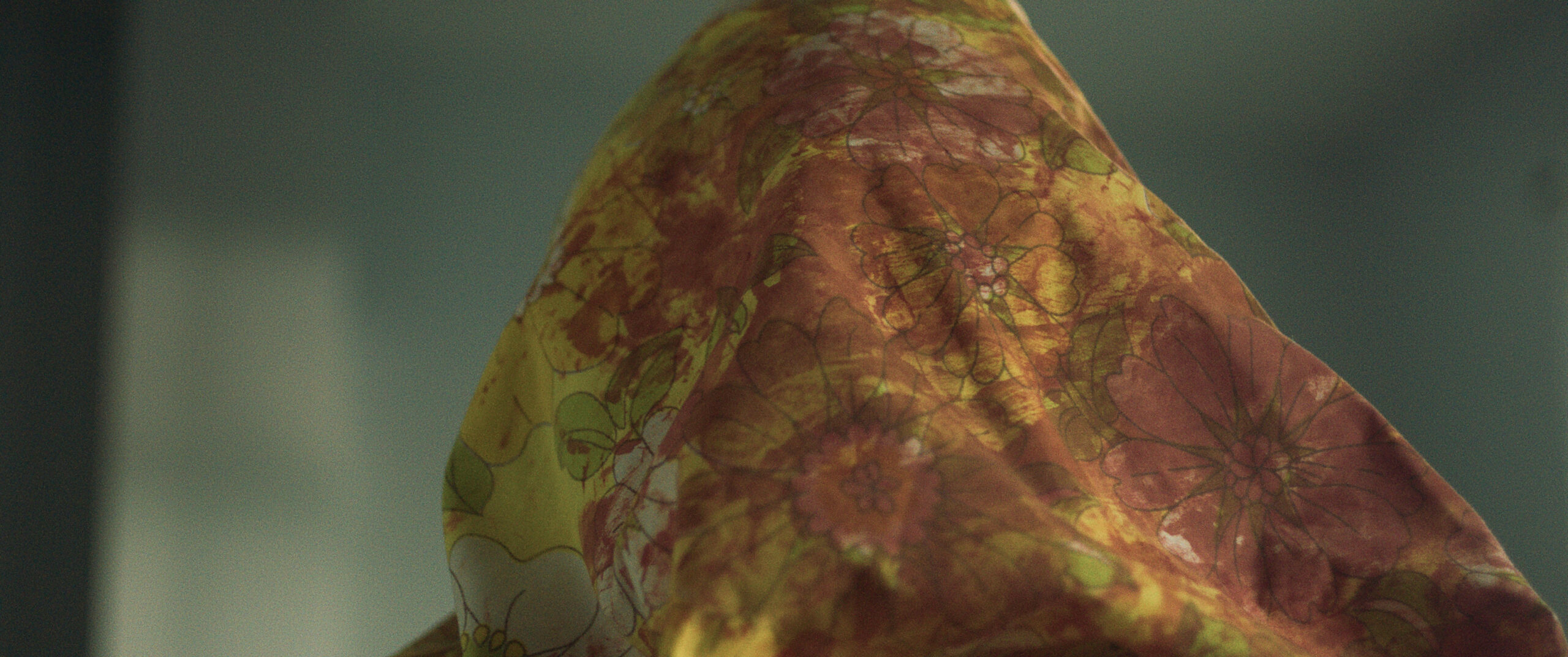
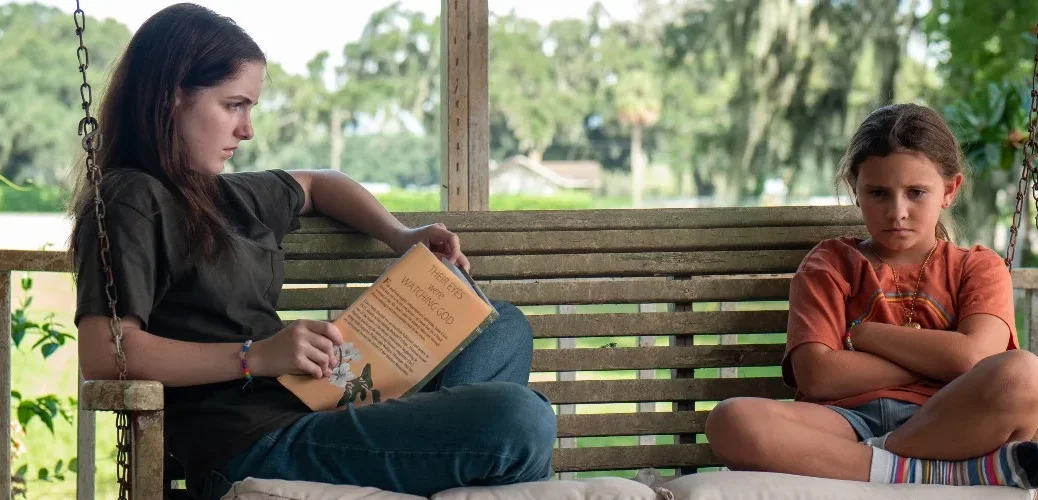
Still reeling from the car wreck that took her parents, Anna (Whitney Peak, Gossip Girl) moves in with Grandma May (S. Epatha Merkerson, Chicago Med) in the Florida bayou. Grandma’s blind, but behind those big, dark glasses is evidence of something cursed, something supernatural. And now that Anna has gotten mixed up with a couple of locals who bullied the wrong kid, she might be cursed as well.
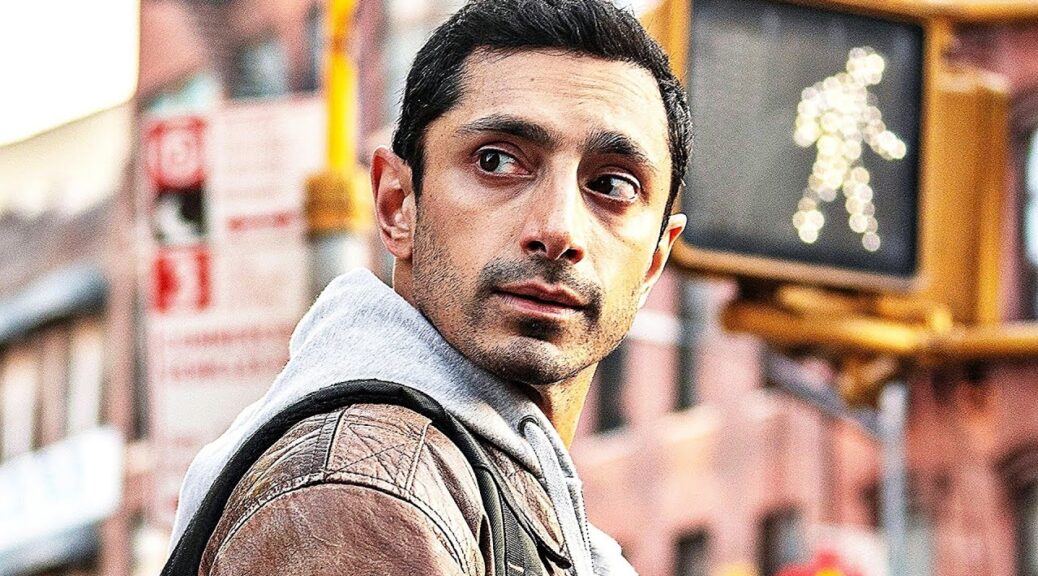
What works: some really believable performances almost salvage the film. Reeves has an understated, shell-shocked approach that slows down reactions, giving proceedings a dreamy quality while ensuring audiences keep up with plot twists.
Both Laken Giles and Finn Bennett veer outside of cliché as the nogoodnik townies Anna takes up with. And veteran Merkerson elevates the villain-in-waiting grandmother character with endearing bursts of humor.
Everything that works in the film delivers a YA drama. Three lost teens, one finding her way, the other two already poisoned by circumstances, face the music after an ugly incident.
But Eye for an Eye is a horror movie. And besides Grandma May’s empty stare, nothing genre related works. The confused Freddy Krueger-esque mythology feels Scotch-taped onto an indie drama.
Nightmare sequences are weak, backstory feels convenient and of another film entirely. The production values impress, giving creepy bayou vibes that emphasize the horror. But conjuring both Pumpkinhead and A Nightmare on Elm St. sets a very high bar for an indie horror flick, and Eye for an Eye can’t deliver on that promise.
The family that slays together stays together, isn’t that what they say? That was certainly a lot of the fun in Ready or Not, You’re Next, Frightmare and more. But what are the best examples of horrific families working together in horror movies? Brandon Thomas joins George with the full list!
5. The Hills Have Eyes (1977)
Wes Craven’s original Hills – cheaply made and poorly acted – is a surprisingly memorable, and even more surprisingly alarming flick. Craven’s early career is marked by a contempt for both characters and audience, and his first two horror films ignored taboos, mistreating everyone on screen and in the theater. In the style of Deliverance meets Mad Max, Hills was an exercise in pushing the envelope, and it owes what lasting popularity it has to its shocking violence and Michael Berryman’s nightmarish mug.
The Hills Have Eyes is not for the squeamish. People are raped, burned alive, eaten alive, eaten dead, and generally ill-treated.
In fact, Craven’s greatest triumph is in creating tension via a plot device so unreasonably gruesome no audience would believe a film could go through with it. The freaks kidnap a baby with plans to eat her. But by systematically crushing taboo after taboo, the unthinkable becomes plausible, and the audience grows to fear that the baby will actually be eaten. It’s not the kind of accomplishment you’d want to share with your mom, but in terms of genre control, it is pretty good.
4. Frailty (2001)
Director Paxton stars as a widowed country dad awakened one night with an epiphany. He understands now that he and his sons have been called by God to kill demons.
Frailty manages to subvert every horror film expectation by playing right into them.
Brent Hanley’s sly screenplay evokes such nostalgic familiarity – down to a Dukes of Hazzard reference – and Paxton’s direction makes you feel entirely comfortable in these common surroundings. Then the two of them upend everything – repeatedly – until it’s as if they’ve challenged your expectations, biases, and your own childhood to boot.
Paxton crafts a morbidly compelling tale free from irony, sarcasm, or judgment and full of darkly sympathetic characters. It’s a surprisingly strong feature directorial debut from a guy who once played a giant talking turd.
3. Where the Devil Roams (2023)
There is macabre beauty in every frame of Where the Devil Roams, the latest offbeat horror from the Adams family. The film was co-directed and co-written by its three lead actors – Toby Poser, John Adams and Zelda Adams – who are also a family. ike their earlier efforts, Where the Devil Roams concerns itself with life on the fringes, rock music, and the family dynamic.
The ensemble convinces, particularly the sideshow performers, but the film’s most enduring charm is its vintage portrait look. It’s a gorgeous movie, the filmmakers creating the beautifully seedy atmosphere ideal to the era and setting.
Where the Devil Roams feels expansive and open, but like anything else in the sideshow, that’s all trickery. There’s more happening in this film than they let on, which is why the final act feels simultaneously “a ha!” and “WTF?!” You won’t see it coming, but in retrospect, it was there all along.
2. We Are What We Are (2010)
Give writer/director Jorge Michel Grau credit, he took a fresh approach to the cannibalism film. In a quiet opening sequence, a man dies in a mall. It happens that this is a family patriarch and his passing leaves the desperately poor family in shambles. While their particular quandary veers spectacularly from expectations, there is something primal and authentic about it.
It’s as if a simple relic from a hunter-gatherer population evolved separately but within the larger urban population, and now this little tribe is left without a leader. An internal power struggle begins to determine the member most suited to take over as the head of the household, and therefore, there is some conflict and competition – however reluctant – over who will handle the principal task of the patriarch: that of putting meat on the table.
The family dynamic is fascinating, every glance weighted and meaningful, every closed door significant. Grau draws eerie, powerful performances across the board, and forever veers in unexpected directions.
1. The Texas Chain Saw Massacre (1974)
It is around the dinner table that a guest gets to see the true family dynamics. Sally Hardesty’s getting a good look. Like a really close up, veiny eyed look.
The family meal is the scene that grounds Tobe Hooper’s 1974 masterpiece. Suddenly it’s a family with a lived-in vibe and a backstory. And another person’s face. And a metal basin and a nearly mummified old man.
We’ve met the brothersk. Edwin Neal’s already had his chance to nab the spotlight in the van, and of course Gunnar Hansen’s the star of the show. But at the table, the cook, Jim Siedow, gets to dig in and create an unforgettable character.
Just two years ago, filmmaker Celine Song produced a breathtakingly original romance movies in Past Lives. With that film, she delivered a love triangle of sorts where no character felt cliched, no choice felt obvious, and every moment felt achingly true.
Now she sets her sights on something decidedly more mainstream, but that only makes her instinct for inverting cinematic cliché in search of authenticity that much more impressive.
Lucy (Dakota Johnson) is a skilled matchmaker at a high-end Manhattan boutique. When she attends the wedding of clients she introduced, she runs into her ex, John (Chris Evans). He’s handsome, thoughtful, clearly into her, and he’s catering. Actually, he’s a waiter working for the caterer.
Lucy also meets the groom’s brother, Harry (Pedro Pascal). In the parlance of Lucy’s profession, Harry is a unicorn: handsome, wealthy, smart, and single.
Immediately, we know this movie. Lucy’s job is to broker relationships. Check boxes. Create partnerships. And the film is going to teach her that a good match can’t hold a candle to the unruly nature of love.
It has been done to death. But the path Song takes to get there, and the insights and realities she explores along the route, never cease to fascinate.
Characters use the words value and risk a lot, terms that have a specific meaning in business but actually mean something quite different in the human setting. It’s interesting, in a society where women have agency and financial means, how different the vocabulary of love can be. Listening to women turn men into commodities, ordering as if from a buffet or build-a-bear, is simultaneously funny and horrifying.
Of course, Lucy has men for clients, too, and Song is quick to remind us of the entrenched language of objectification and conquest. And the different definitions of risk.
She also never asks us to root against anyone. Harry’s a gem. John’s a good dude. The one person whose flaws are explored is Lucy, and Johnson’s reflective, quiet delivery is characteristically on point, allowing those flaws to draw us closer to the character.
Materialists isn’t perfect, and to a degree, Song submits too much to formula. But the way she works within those confines is often magical.
If it weren’t for Toy Story, How to Train Your Dragon would be remembered as the finest animated trilogy ever made. The tale of outsider love, parental expectations, physical limitations and dragons was as emotionally satisfying as it was visually stunning. So, it was both disappointing and inevitable to learn that it would be given the live-action treatment.
Dean DeBlois, co-writer and co-director of the animated features, returns with a surprisingly game adaptation.
Mason Thames is Hiccup, the puny, brainy son of Viking chieftain Stoick the Vast (Gerard Butler, reprising his role from the animated series). A disappointment as a Viking, Hiccup eventually finds that his weakness (empathy) is, indeed, his greatest strength. Next, to convince the thick-headed Vikings that the dragons they fight and fear are really, really cool.
And they are cool.
Hiccup’s new bestie, Toothless—the last of the Night Furies—is as beautifully, charmingly, mischievously feline as fans of the original remember. Wisely, DeBlois and team lean the balance of dragons more toward live action. They’re detailed and intimidating—decidedly less kid-friendly than their animated counterparts. One of them is always on fire, which is badass.
The ragtag gang of Vikings-in-training (Julian Dennison, Bronwyn James, Harry Trevaldwyn, and Gabriel Howell) endear and amuse. Likewise, Nick Frost cuts a fun, comical figure as wizened old Gobber, Viking trainer.
Butler, who brought power and pathos to the cartoon, is perhaps even more effective in the flesh (though under pounds of makeup and prosthetics). His confused affection, misdirected pride and aching tenderness lend real humanity to the tale.
Too bad the leads can’t muster the same. Thames and Nico Parker, as Hiccup’s rival/love interest Astrid, share no real chemistry. Parker lacks the fire the role calls for, and Thames can’t mine his fish-out-of-water moments for comedy.
DuBlois also inexplicably cuts the legs from under the original film’s all-is-lost moment, rushing to emotional safety and limiting the power of the film’s breathless climax.
But whatever its flaws, once How to Train Your Dragon is airborne, it’s pure cinema. DuBlois takes to the skies with an untamed wonder that makes the ride both real and magical. Though it may not be the masterpiece of its animated predecessor, this live action dragon adventure is a worthwhile trip.
Filmmaker Yûta Shimotsu has seen a few Takashi Miike films. Everyone should. He’s one of the world’s greatest and most prolific genre filmmakers, so that’s not a drag on the Best Wishes to All (also known as Best Regards to All) writer/director.
His first feature follows a nursing student (Kotone Furukawa) visiting her grandparents over break. They’ve gotten odd. Or have they always been odd and she’s just blocked it out more effectively until now?
Shimotsu’s film, co-written with Rumi Katuka and based on his own 2022 short, is a nimble little beast. What begins as a reckoning with the horrors of aging twists into something else altogether. And then, something else. Because what the unnamed granddaughter learns is that her family is keeping a secret from her. But what’s even more disturbing than the secret itself is the nonchalance with which it’s held, and that the secret does not belong to her family alone.
The filmmaker mines unease, even queasy dread, surrounding obligation to an older generation, the notion of one day turning into that same monstrous burden, or even worse, the realization that you never were anything other than a monster yourself.
Stylistically, Best Wishes to All recalls some of Miike’s more absurd horrors, Gozu in particular. But Shimotsu stitches the absurdity of Gozu or The Happiness of the Katakuris or even Ichi the Killer to pieces of grittier horror. Not quite Audition, but in that zip code. But he can’t strike a tone that can carry the two extremes.
The grotesquerie is always in service of a tale that’s more folk horror than body horror. This doesn’t always work, but it’s never less than interesting.
Kurukawa is delightfully absorbing as the obedient granddaughter utterly gobsmacked by her grandparents’ behavior. What appears to townsfolk as naiveté actually mirrors the audience’s horrified confusion, making the poor girl all the more empathetic.
But what is it, exactly, that’s expected of her? And why? Best Wishes to All is frustratingly unclear in terms of the narrative’s underlying mythology. This limits the satisfaction of the climax and robs the film’s final image of its necessary impact.
It’s a weird one, though, and certainly entertaining. Shimotsu can’t quite pull it all off, but it’s fun even as it falls apart.
In 2022, director Dan Trachtenberg reinvigorated the Predator franchise by taking the story back in time and investing in character. Prey (especially the Comanche language dub) unveiled thrilling new directions for the hunt to take—directions Trachtenberg picks up with three short, animated installments in Hulu’s Predator: Killer of Killers.
The anthology moves between three different earth-bound time periods: Viking conquest, feudal Japan, and WWII. Each short is focused on an individual warrior—one whose cunning and skill draws the attention of a predator on the hunt.
While the overall animation style can be tiresome, there are sequences that impress, even wow. This is not a kids’ cartoon. There’s carnage aplenty, and when it’s at Ursa’s (Lindsay LaVanchy) hands, it’s nasty business gloriously rendered.
The first and best installment, that of Ursa the Viking, packs the screen with visceral action and memorable characters. It also hits on themes of family, loyalty and vengeance that Trachtenberg and co-writer Micho Robert Rutare return to in the second installment. Here, Samurai brothers do battle with the beast, before an alien invader sets his sits on a cunning young mechanic turned fighter pilot in WWII.
Each story boasts a quick, engaging, violent narrative that adds a bit of fun to the canon. The wrap up, which enshrines these individual tales into a larger mythology, feels cynical and uninspired by comparison.
Credit Trachtenberg, along with co-director Joshua Wassung, for continuing to push the IP in new directions. But the Predator series has long understood its flexibility and shown a willingness to experiment. Some of these experiments (Prey) have worked better than others (Alien vs. Predator: Requiem). But most of the efforts have been, at the very least, entertaining.
Predator: Killer of Killers likewise entertains. And it fills the gap between 2022’s top tier Predator effort and Trachtenberg’s next adventure in the series, due out later this year.
Who are the greatest female action heroes? Ellen Ripley, obviously. Beatrix Kiddo makes a good case for herself. Viola Davis cut one badass figure in G20 last year. Let’s not forget Atomic Blonde.
Ana de Armas is the latest to throw her hat in the ring — her tutu on the stage? — as Eve, orphan turned assassin in From the World of John Wick: Ballerina.
Why is she a ballerina? No idea. Zero actual narrative reason for it. But how much of Ballerina are we going to hold to that high a standard of logic?
Ironically, director Len Wiseman’s action choreography is less balletic than what we’ve come to expect from the franchise. It certainly lacks the elegant choreography that delivered the bloodshed in John Wick 4. But what Ballerina lacks in grace it makes up for with brute force. Most of the action sequences (most—not all) are on a smaller but more brutal scale than the norm for the series. This has much to do with Eve’s fondness for hand grenades.
The result is a colorful, messy but impressive bit of action.
The spectacle is still there, as is the fun mythology where essentially every third person on the planet is secretly a highly trained assassin bound to rules and consequences set by the High Table.
Ballerina remains true to that mythology. Keanu Reeves makes an appearance, as do Anjelica Huston, Ian McShane, and the much missed Lance Reddick. We visit the Continental, and the film even expands the legend to include a snow globe like little town of killers.
The spinoff film fits into that legacy, of course, because it’s the spawn of the same writing team. Derek Kolstad, who penned even the 2014 original, and Shay Hatten, who joined the project for its 2019 third installment, stay within the confines they set for the universe, just changing perspective by delivering a different killer’s POV.
So, they’re true to the idea, if not the timeline. Funny how we’re willing to suspend disbelief when giant flamethrowers are involved, but some fuzzy math with dates on the calendar is troubling.
The plot is irrelevant, which is lucky because it’s pretty trite and overused. Vengeance over a puppy? That was new. You killed my father, prepare to die? I feel like I’ve heard that one. So, the colorful shell feels pretty empty, but sometimes pretty colors are enough.