Tag Archives: Dacre Montgomery

Content Re-creator

Faces of Death

by George Wolf

It’s almost quaint now to remember the word-of-mouth infamy achieved by the original Faces of Death in 1978. By the mid-80s it was a cult favorite at the video store, with a lurid promise to unveil shocking video of real fatalities.

Though the non-stock footage was faked (yes, even the monkey scene), hyperbolic stories of the film’s effect continued to gain traction and the sequels were cranked out.

This new Faces is not one of those. Writer/director Daniel Goldhaber smartly brings that pre-viral legend into the internet age, tucking the bloody hunt for a serial killer inside the dulling nature of modern-day voyeuristic fetishes.

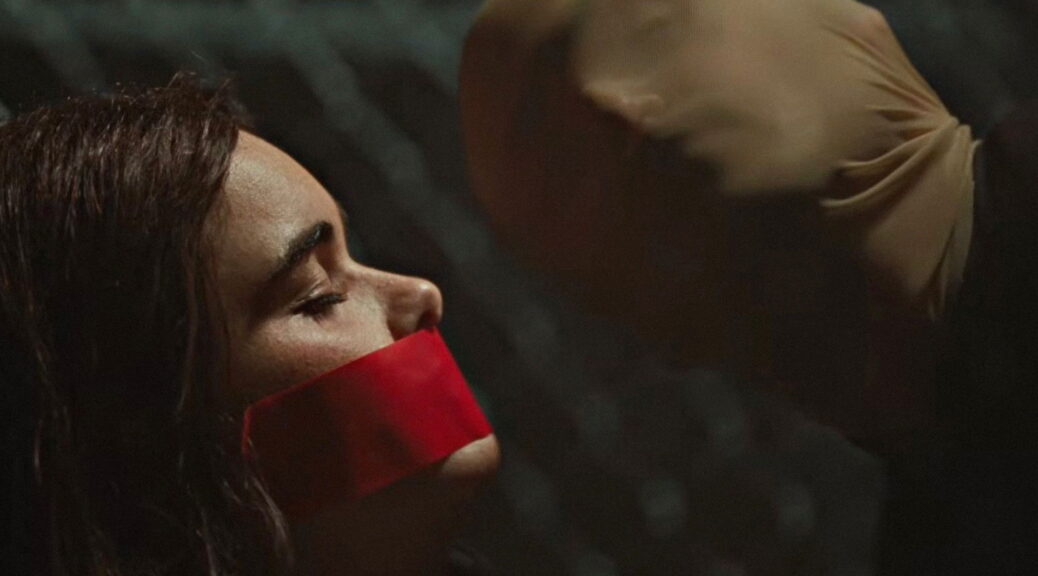
Barbie Ferreira stars as Margot, who works as a website content moderator for a company promising to protect “the young and innocent.” Though she occasionally flags a video for violations, most make it through – which is just how her manager prefers it. But when Margot sees some videos of murders that look alarmingly real, it sets her off on the trail of a killer (Dacre Montgomery) intent on recreating scenes from the original Faces of Death.

Though employees at Margot’s firm are strongly discouraged from researching the videos they moderate, she begins sleuthing. What Margot finds, of course, is an internet audience eager for the brutality, and online footprints that aren’t difficult for a tech savvy psycho to follow.

Stupid decisions (especially by young people) are a staple of horror films, and Margot makes a maddening amount. But Goldhaber (How to Blow Up a Pipeline) is able to mirror most of them alongside the questionable bargains we’ve made as a web-obsessed society.

“It’s an attention economy, and business is booming.”

Our killer (Montgomery gives him both Silence of the Lambs and Red Dragon vibes) knows his audience, and Goldhaber gives the funny games he plays with both his victims and Margot a nice sense of tension. Sure, you may want to slap some sense into most of these people, but then again, is your own browser history MENSA worthy?

The rough patches in the story go down easier thanks to the savvy, in-the-moment winks Goldhaber flashes while telling it.

Why has the explosion of technology that holds so much positive potential continued to reveal the worst parts of ourselves? If you give the people what they want, how culpable are the people that want it?

Michael Haneke may have asked the question more eloquently, but Goldhaber and Faces of Death have more trashy, finger-wagging fun.

Trigger Unhappy

Dead Man’s Wire

by George Wolf

Even without the cameo from Al Pacino, Dead Man’s Wire has the gritty, absurdist vibe of legendary 70s thriller Dog Day Afternoon. Also based on true crime events, the latest from director Gus Van Sant leans on a timely, anti-hero tone and some stellar performances for a look into the desperate edges of the American dream.

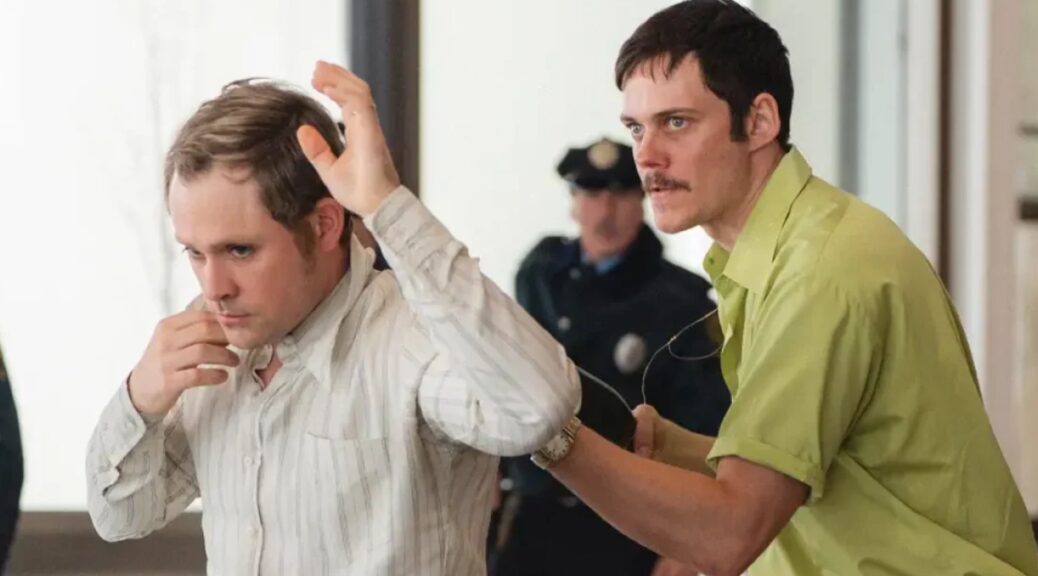
Bill Skarsgård is utterly manic and completely magnetic as Tony Kiritsis, who held an Indianapolis mortgage company executive hostage in February of 1977. Kiritsis, who hoped to build a shopping center on his 17 acres of land, became convinced that Meridian Mortgage president M.L. Hall (Pacino) was sabotaging the project. Finding M.L. out of town, Kiritis settled on son Richard Hall (Dacre Montgomery from Stranger Things) for his plan of revenge.

Armed with a sawed-off shotgun and a “dead man’s wire” running from the trigger to Richard’s neck, Tony demanded media access, immunity, compensation and a personal apology from M.L. himself.

Tony’s mood swings with wild abandon, but he’s downright starstruck when telling his story to WCYD deejay Fred Temple, the “voice of Indianapolis.” The great Colman Domingo plays Temple with a grounded mix of caution and curiosity, as the confused local celeb is reluctantly pulled into a life-or- death drama where a potential murderer is a gushing fanboy.

Writer Austin Kolodney comes from a comedy background, and Van Sant weaves some darkly comedic layers through terrific period details that only enhance the through line from 1977 to today’s breaking news.

Just two years ago, we saw how a communal feeling of hopelessness can turn a fugitive into a heroic man of the people. Dead Man’s Wire reminds us this feeling of simmering resentment is as old as the art of stacking decks. And while his narrative approach ultimately carries more polish than bite, Van Sant and a terrific ensemble never fail to make this history lesson an engaging high wire act of sadness, surprise and bittersweet delight.

Scenes from the Opioid Epidemic

What We Hide

by Hope Madden

At 19, Mckenna Grace has racked up 71 TV and film acting credits, with 11 more movies currently in post-production. That’s insane. Naturally not every project was a winner. But from her earliest film work, like Marc Webb’s 2017 drama Gifted, Grace’s control and authenticity make her memorable, even when the projects are not.

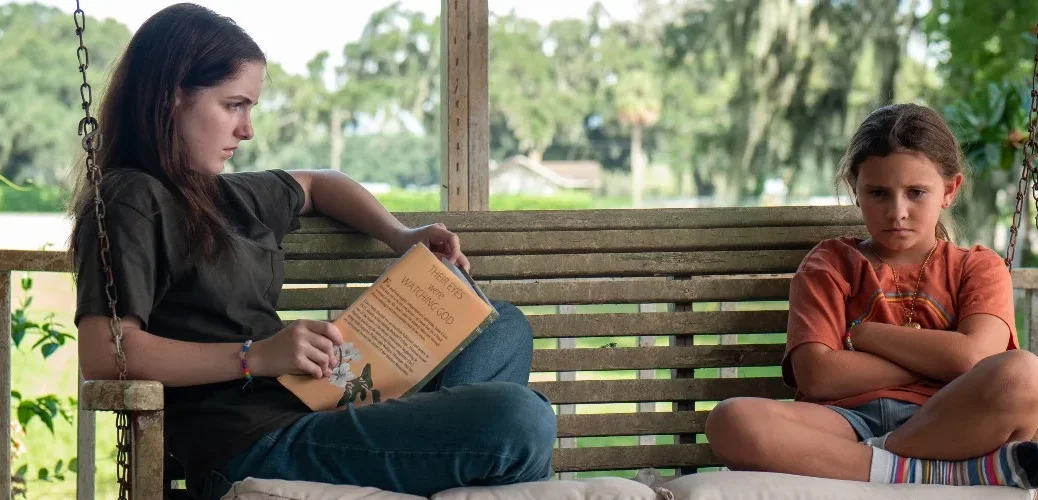
Writer/director Dan Kay’s streamer What We Hide benefits immeasurably from Grace’s presence. She plays Spider, 15-year-old daughter of an addict. With her younger sister Jessie (Jojo Regina), Spider discovers the overdosed corpse of her mother in the opening moments of the film.

Recognizing that foster care would almost certainly mean splitting her from her sister, Spider decides to hide the body and say nothing. Now all the girls have to do is steer clear of their mom’s volatile dealer (Dacre Montgomery), the town’s goodhearted sheriff (Jesse Williams), and the latest case worker, whom they not-so-affectionately call “Baby Thief” (Tamara Austin).

Grace is terrific, and the chemistry she shares with Regina buoys some otherwise clunky dialog. The cast around them does admirable work with even more obvious characters. The always welcome Forrest Goodluck (Revenant, Blood Quantum, How to Blow Up a Pipeline) carries love interest Cody with a naturalism that gives his scenes an indie vibe that comes close to offsetting the after school special tenor delivered by the rest of the effort.

Commendable performances from a solid cast don’t make up for Kay’s uninspired direction. Bland framing marries banal plotting to leech some of the vibrance this cast injects into scenes.

It doesn’t help that the story veers so rarely from the obvious that the occasional flash of originality—the couple from the motel, the case worker’s phone calls—stand out as opportunities left unexplored.

Had Kay been able to situate his tale from the opioid epidemic in a recognizable place, given the community some personality, or found a less by-the-book way to complicate What We Hide, he might have had something. Instead, the film is a well-intentioned waste of a good cast.

Grim Tale

Went Up the Hill

by Hope Madden

In recent years, filmmakers have used the ghost story as an avenue into reflections on not simply grief, but brokenness, dependence, and an aching lonesomeness that can drive a character to desperate acts. David Lowery’s A Ghost Story and Andrew Haigh’s All of Us Strangers each delivered unique, heartbreaking hauntings aided by poignant lead performances.

Co-writer/director Samuel Van Grinsven follows suit, although his latest, Went Up the Hill, skirts a touch closer to horror as the grief-conjured specter takes on a more malevolent nature than the tragic lost souls of the other films.

Award-worthy turns from a pair of leads remains a common thread among the three.

The always effortlessly remarkable Vicky Krieps (The Phantom Thread, Corsage) is Jill, raw and recent widow to a troubled, talented artist whose estranged son Jack (Dacre Montgomery) arrives in time for the isolated New Zealand funeral. Jack claims it was Jill who invited him, but Jill knows better, because Jill’s late wife hasn’t really left.

The whispery score by Hanan Townshend matches Grinsven’s chilly, almost colorless aesthetic—something there that’s not entirely there. The vibe carries through the script and performances, Van Grinsven and his cast mournfully detached, quietly distant, like ghosts. Or like the living, too brittle for direct contact.

As Jack and Jill work through their seemingly bottomless need for the deceased, Van Grinsven, working from a script co-written by Jory Anast, mines for something more obvious than Lowery or Haigh’s films. The filmmaker embraces the genre a bit more forcefully, though it would be tough to categorize Went Up the Hill as a proper horror film.

Instead, it’s an elegant, chilly, bruised reminder that absence doesn’t necessarily mean safety.