
Tag Archives: Hope Madden

Zombie Eat World
The Night Eats the World
by Hope Madden
People like to make lists. For some people, it’s a bucket list. Some like to keep track of the celebrities they are allowed to sleep with if the opportunity arises. Not me.
Years ago I put together my zombie survival team. And though I know plenty of people with varied and worthy skills, making my team mainly came down to two things. Are you smart? Are you quiet? Because it is the introverts of the world who will survive the zombie apocalypse.
Director Dominique Rocher’s unusually titled The Night Eats the World understands this.
Sam (Anders Danielsen Lie) reluctantly stops by his ex’s party to collect his things. It is a loud, raucous event and Sam is in no mood. He stands moping alone until finally he wanders into a quiet back office, locks the door to the partygoers and waits.
By morning, Sam may be the only living human left in Paris.
The majority of the film quietly follows Sam through the apartment building as he fortifies his position, spends his time, survives. It’s a pleasantly pragmatic approach to the zombie film, although it asks many of the same questions Romero asked in Dawn of the Dead.
In fact, TNETW sometimes bears an amazing resemblance to the underseen German zombie flick Rammbock: Berlin Undead. (It’s great. You should see it.)
There’s a lot going on here that’s fresh, though. Rarely is a zombie film this introspective or a horror hero this thoughtful. More than that, though, Rocher’s horror is a meditation on loneliness.
Not only is that an unusual topic for horror, it’s delivered with the kind of touching restraint that’s almost inconceivable in this genre.
Danielsen Lie, in what nearly amounts to a one-man-show, never lets you down and never feels showy. Sam is a man who is maybe too at home with the situation in a film that quietly asks, just what has to happen before a true introvert longs for human companionship?
That’s why they’ll outlast us. It’ll just be a few dozen socially uncomfortable loners skilled at closing themselves off from the chaos around them. Plus Keith Richards.


I Can’t Go Out — Week of March March 16
Nobody wants to go out, and even if you did, there is nowhere to go. So, hunker down and let us help you find something to watch. Here’s what’s new in home entertainment.
Click the movie title to link to the full review.
Swallow

Jumanji: The Next Level
A Hidden Life (DVD)
Richard Jewell

Black Christmas


Fright Club: Bad Doctors in Horror
As we salute the tireless work of our great doctors and health care workers during this uneasy time, Fright Club looks at our favorite “bad doctors” in horror!
5. Herbert West, Re-Animator (1985)
Stuart Gordon’s Re-Animator reinvigorated the Frankenstein storyline in a decade glutted with vampire films. Based, as so many fantasy/horror films are, on the work of H. P. Lovecraft, Re-Animator boasts a good mix of comedy and horror, some highly subversive ideas, and one really outstanding villain.
Jeffrey Combs, with his intense gaze and pout, his ability to mix comic timing with epic self righteousness without turning to caricature, carries the film beginning to end. His Dr. Herbert West has developed a day-glo serum that reanimates dead tissue, but a minor foul up with his experimentations – some might call it murder – sees him taking his studies to the New England medical school Miskatonic University. There he rents a room and basement laboratory from handsome med student Dan Caine (Bruce Abbott).
They’re not just evil scientists. They’re also really bad doctors.
Re-Animator is fresh. It’s funny and shocking, and though most performances are flat at best, those that are strong more than make up for it. First-time director Gordon’s effort is superb. He glories in the macabre fun of his scenes, pushing envelopes and dumping gallons of blood and gore. He balances anxiety with comedy, mines scenes for all they have to give, and takes you places you haven’t been.
4. Beverly and Elliot Mantle, Dead Ringers, (1988)
This film is about separation anxiety, with the effortlessly melancholy Jeremy Irons playing a set of gynecologist twins on a downward spiral. Writer/director David Cronenberg doesn’t consider this a horror film at all. Truth is, because the twin brothers facing emotional and mental collapse are gynecologists, Cronenberg is wrong.
Take, for instance, the scene with the middle aged woman in stirrups, camera on her face, which is distorted with discomfort. Irons’s back is to the screen, her bare foot to his left side. Clicking noises distract you as the doctor works away. We pan right to a tray displaying the now-clearly-unstable doctor’s set of hand-fashioned medical instruments. Yikes.
Irons is brilliant, bringing such flair and, eventually, childlike charm to the performances you feel almost grateful. The film’s pace is slow and its horror subtle, but the uncomfortable moments are peculiarly, artfully Cronenberg.
2. Dr. Heiter, The Human Centipede (First Sequence) (2009)
After a handful of middling Dutch comedies, Tom Six stumbled upon inspiration – 100% medically accurate inspiration. Yes, we mean the Human Centipede. Just the First Sequence makes the list, though.
For a lot of viewers, the Human Centipede films are needlessly gory and over-the-top with no real merit. But for some, Six is onto something. His first effort uses a very traditional horror storyline – two pretty American girls have a vehicular break down and find peril – and takes that plot in an unusual direction. But where most horror filmmakers would finish their work as the victims wake up and find themselves sewn together, mouth to anus, this is actually where Six almost begins.
Although the film mines something primal about being helpless in the hands of surgeons and doctors, it’s Dieter Laser and his committed, insane performance that elevates this film. That and your own unholy desire to see what happens to the newly conjoined tourists.
2. Dr. Genessier, Eyes Without a Face (1960)
The formula behind this film has been stolen and reformulated for dozens of lurid, low-brow exploitation films since 1960. In each, there is a mad doctor who sees his experiments as being of a higher order than the lowly lives they ruin; the doctor is assisted by a loyal, often non-traditionally attractive (some might say handsome) nurse; there are nubile young women who will soon be victimized, as well as a cellar full of the already victimized. But somehow, in this originator of that particular line of horror, the plot works seamlessly.
An awful lot of that success lies in the remarkable performances. Pierre Brasseur, as the stoic surgeon torn by guilt and weighed down by insecurities about his particular genius, brings a believable, subtle egomania to the part seldom seen in a mad scientist role.
Still, the power in the film is in the striking visuals that are the trademark of giant French filmmaker Georges Franju. His particular genius in this film gave us the elegantly haunting image of Dr. Genessier’s daughter Christiane (Edith Scob). Her graceful, waiflike presence haunts the entire film and elevates those final scenes to something wickedly sublime.
1. Hannibal Lecter, The Silence of the Lambs (1991)
Who else but Hannibal the Cannibal?
Anthony Hopkins’s eerie calm, his measured speaking, his superior grin give Lecter power. Everything about his performance reminds the viewer that this man is smarter than you and he’ll use that for dangerous ends. He’s toying with you. You’re a fly in his web – and what he will do to you hits at our most primal fear, because we are, after all, all part of a food chain.

Saturday Screamer: Carriers
Carriers (2009)
by Hope Madden
Chris Pine plays against type in this 2009 pandemic horror currently streaming on most platforms including Netflix.
Pine plays Brian, a hardened young man who believes he may be immune to the virus that has decimated the global population. But, just to be safe, he chalks his survival up to a handful of rules he keeps. He also enforces these rules with three fellow survivors: his girlfriend Bobby (Piper Perabo), his little brother Dany (Lou Taylor Pucci), and Danny’s friend Kate (Emily VanCamp).
Following Brian’s rules to the letter (or else), the four cross the country in search of the childhood vacation destination the boys feel sure is a safe, quiet place to ride out the apocalypse.
Writers/directors/brothers David and Alex Pastor tread some familiar territory here, but their even-handed approach and ear for authentic relationships make for an involving and ultimately moving horror. Character behaviors rarely challenge believability, and the performances suit characters who’ve been dealing with this problem and with each other longer than the audience is aware.
There’s a natural pull between Danny and Bobby: the desire to just survive and the dread of surviving alone, a reluctance to do the wrong thing and yet an even stronger reluctance to wind up the sole survivor.
Character relationships have a real lived-in quality, which gives the film an emotional heft you may not be ready for. Pine, in particular, excels in a role quite unlike those he’s more famous for.
The body horror is effective, but it’s not the real source of horror.
As in all outbreak/infestation/apocalyptic flicks from the earliest Romero to the upcoming Quiet Place 2, this film understands that desperate humans are at least as dangerous as the cause of the pandemic. Interestingly, run-ins with other survivors, both the good and the bad kind, are played in Carriers with a real mixture of terror and sympathy. It’s one of the many reasons that the film delivers a harder emotional punch than you might be expecting.

Screening Room: The Hunt, Bloodshot, Wendy and more
Hard Luck Woman
The Hunt
by Hope Madden
About a year ago, Universal Studios pulled the release of The Hunt because of the amount of gun violence. Commendable.
Later that year, other studios released Ready or Not—critical darling, but didn’t do great box office. Then Knives Out, which was both a critical darling and box office giant. And, of course, Parasite would go on to win all the Oscars. Even documentary short.
While The Hunt does contain a goodly amount of violence—guns, knives, hand grenades, pens, stilettos, kitchen appliances—it also boasts the one thing that appears to be the universal key to entertainment. It hates rich people.
Who doesn’t?!
Director Craig Zobel (Compliance), along with writers Nick Cuse and Damon Lindelof (both of TV’s Watchmen and The Leftovers), takes no prisoners as characters take a bunch of prisoners, drop them in a field somewhere and, you know, hunt them down for sport. The film gleefully skewers both the left and the right, often in ways you wouldn’t expect but should.
This is a meticulously structured horror film, the tidy beats allowing the writers to insert surprises that play on your preconceived notions in clever ways. Like Jordan Peele, Zobel proves a nimble manipulator of both horror tropes and social commentary.
And casting.
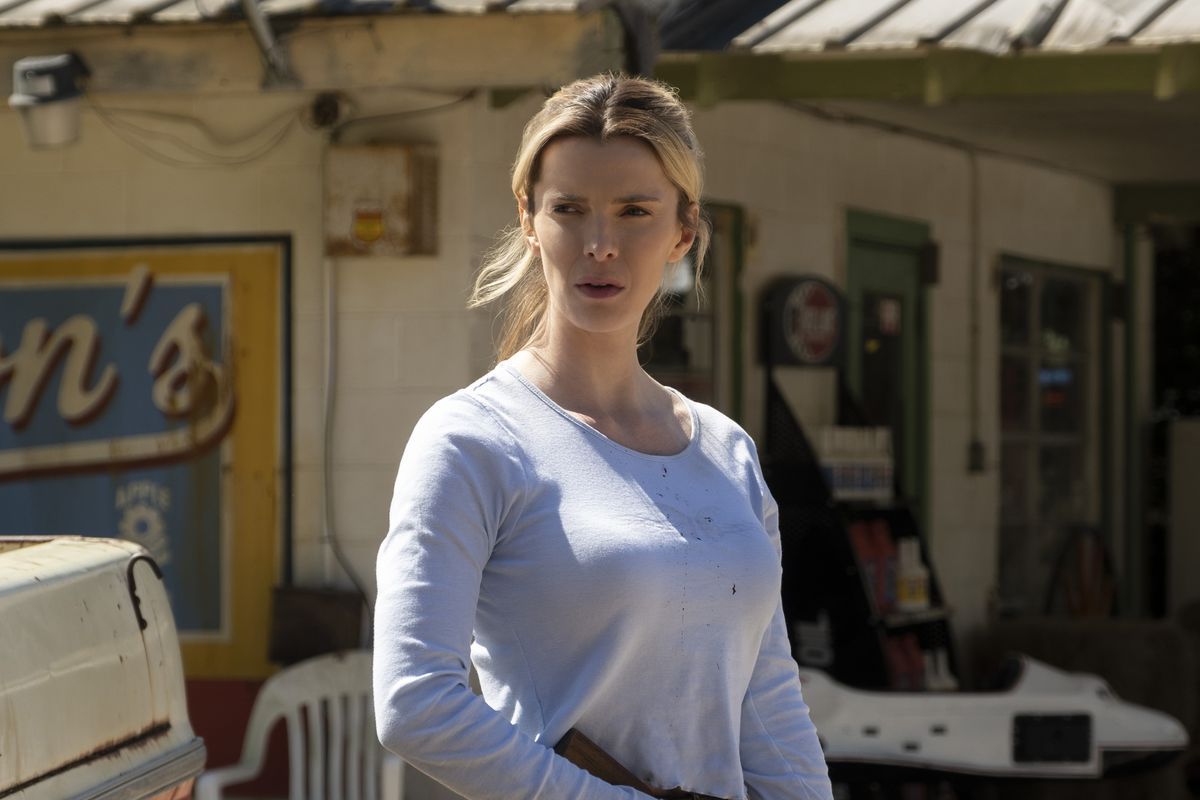
I have to think Betty Gilpin was the most disappointed when this film was shelved last year because it is her break out. No more support work as the hot mean chick, Gilpin’s Crystal is the wrong badass to underestimate. The performance is never showy but quirky and genuine, which goes a long way toward increasing believability.
Zobel populates the herd with familiar faces (Emma Roberts, Ike Barinholtz, Hilary Swank, Amy Madigan), mainly for sleight of hand. Though most get little screen time, and each is handed a fairly one-dimensional character, both the writing and the performances mine that gimmick for a lot.
Positioned to infuriate everyone in one scene or another, the film is brash and bracingly level headed. It’s violent AF, no doubt, but what it reflects back at us is far smarter than what you might expect. The Hunt is a darkly comedic, socially savvy, equal opportunity skewering and it is a blast.

Screening Room: Onward, Emma, Portrait of a Lady on Fire and More
Magic the Birthday Gathering
Onward
by Hope Madden
Dan Scanlon’s been kicking around Pixar for a while. He’s been part of the “Senior Creative Team” for some of the greatest animated films of the last decade: Toy Story 4, Coco, Inside Out.
He also wrote and directed Monsters University—his only w/d credits with the animation giant—and that movie is one of Pixar’s rare missteps. Can he right his footing with a fraternal quest, a hero’s journey, a nerdy road trip?
Not quite.
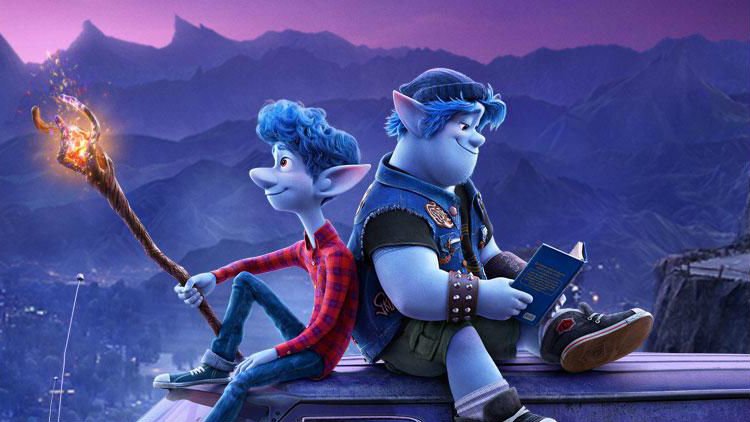
Onward, Scanlon’s first directing effort since that monstrous 2013 Revenge of the Nerds riff, opens where many a hero’s journey begins: a birthday. Shy elf Ian Lightfoot (Tom Holland) is turning 16. He’s a little awkward, and maybe even slightly embarrassed by his magic and folklore obsessed older brother, Barley (Chris Pratt).
Ian never met his dad, but his mom’s been saving a gift for just this occasion. It will set a series of actions in motion that will show the town how cool (and destructive) magic can be. But will it turn meek Ian into a hero?
Scanlon sets up a funny if slight near-satire of the mythical hero’s quest, and the most enjoyable sight gags in the film come from his eye for other (better) films in this vein: all things Lord of the Rings, Harry Potter, Indiana Jones. There’s even a bit of Guardians of the Galaxy (which feels a little too on-the-nose) and maybe just a touch of Weekend at Bernie’s.
Plus feral unicorns.
I will be honest, he had me at feral unicorns. And it is these little flourishes that Onward gets right, but that’s just not enough to carry the film.
Pratt and especially Holland – who continues a run of solid voice work (even if no one saw Dolittle or Spies in Disguise) – both find a rapport that feels honest enough to give the emotional climax a little punch.
But there’s just nothing particularly magical about this movie. The core story is paint by numbers obvious and the nods to other epic adventures become so frequent and so brazen that it’s hard to find a single inspired or original thought in the entire film.
It’s nice. It garners an amused chuckle or too, maybe even a sniffle, but you’ll be hard pressed to remember anything about it besides those unicorns, and there was no real point to those.
New Coat of Paint
Portrait of a Lady on Fire
by Hope Madden
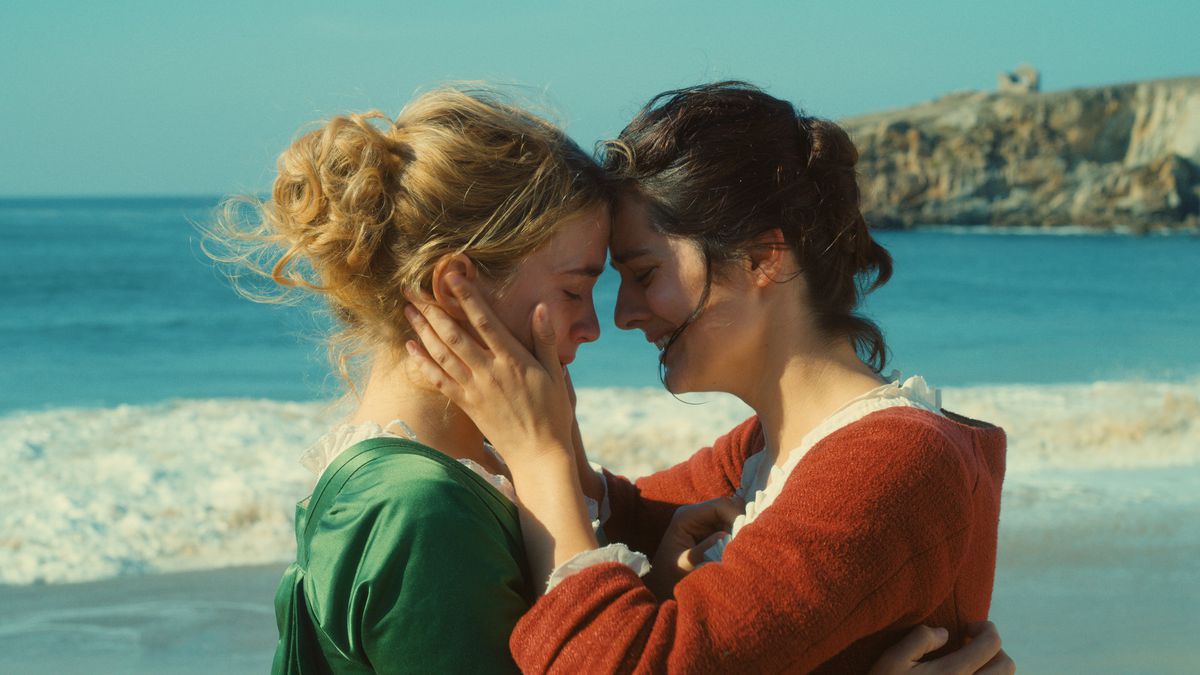
Celine Sciamma follows up the vitally of-the-moment indie Girlhood with this breathy, painterly period romance only to clarify that she is a filmmaker with no identifiable bounds. In the 1790s on a forbidding island in Brittany, Marianne (Noemie Merlant) arrives to paint the wedding portrait of Heloise (Adele Haenel), but since Heloise is not marrying voluntarily, she will not sit for a painter. So, a ruse is developed: Marianne pretends to be simply a companion as she steals glances then sketches from memory into the night.
What develops along with the startlingly beautiful intimacy between the women is a thoughtful rumination on memory and on art, on the melancholic but no less romantic notion that the memory, though lonesome, is permanent and perfect.
Portrait of a Lady on Fire is a tenderly romantic film of self-discovery that asks a lot of questions.
What would life be like with no men at all, the film seems to ask. Unseen, nameless men (because we see very few) may rule the world, and the existence of one casts a pall over the events of the film. But, at least until Mother (Valeria Golino) returns with news of the wedding, this is a community of women.
On the island, women gather at a bonfire, passing time, singing and seeking each other’s guidance. In the austere mansion, Heloise, Marianne and servant Sophie (Luana Bajrami) look after one another. In a more intimate chamber, two women become friends and then lovers and then, likely, the most important relationship the other will ever have.
Offering a master class in visual storytelling, Sciamma relies far less on words than images, ending conversations or omitting them entirely, able instead to deliver meaning with a glance, a gesture, a flame or an ocean wave.
And with art. What Sciamma is able to convey about love, struggle, empowerment and art by virtue of the changing canvas on which Marianna must commit Heloise’s portrait is truly extraordinary.
Sciamam’s film has a painterly quality, frame after frame worthy of museum wall space. And yet, Portrait lacks artifice. Thomas Grezaud’s set design, Dorothee Guiraud’s costumes and, in particular, Claire Mathon’s cinematography blend together to create a costume drama worthy of the historical and art period in question.
Portrait of a Lady on Fire is breathtakingly gorgeous. But, like Heloise’s portrait in the film, that’s not enough to make it a masterpiece. It’s the authenticity to the intimacy—perhaps partly born of the fact that Haenel and Sciamma are a real life couple—that’s inescapable, and it drives the piece.
Like Marianna’s final portrait, Sciamma’s film offers truth, and it’s astonishing.

