Tag Archives: Hope Madden

Time Out Of Mind

Tenet

by Hope Madden and George Wolf

A not-at-all funny thing happened to the movie calendar this year. And now, instead of kicking off the summer blockbuster season with a bang, the stakes for Tenet are a wee bit higher: rescue movie theaters.

As you may have heard, writer/director Christopher Nolan has been adamant that this film be experienced in theaters. He’s not wrong.

Tenet is a sensory battering experience, one not to be paused or downsized. The ideas are big, the visuals are full of wide-eyed wonders, and the persistent mind-bending immediately invites second helpings (maybe more).

An agent known only as The Protagonist (John David Washington) is introduced to technology that has the power to invert time. Time travel? Sorry, that’s Bill & Ted kid stuff. We’re talking the ability to move forward in a space where everything else is moving backward.

Nolan is returning to a familiar playground that manipulates time and reality. From Leonard looping through a constant present tense in Memento to Cobb forever bumping into his own past in his attempts to shift the future in Inception, back to The Prestige, forward to Interstellar and again to the braided timelines of Dunkirk, Nolan is a filmmaker who orchestrates universes by playing with time and consequence.   

In Tenet, the future is talking to the past, and the fate of the world hangs in the balance. To put things right, our Protagonist and a mysterious partner named Neil (Robert Pattinson) must gain the trust of a high-end art dealer (Elizabeth Debicki) on the way to taking down her Russian arms dealer husband (Kenneth Branagh) who’s thinking bigger than Thanos.

A dialog heavy first half benefits primarily from the oily charm and sly humor of Pattinson’s character, whose arc is made more fun and more interesting by the way the film loops its realities. As elegant as always, Debicki exists to give the film a truly human character, which is to say, one whose behavior is too often (and too conveniently) impetuous.

The film’s biggest drawbacks are some cliched dialogue and its tendency to present itself as a SciFi James Bond movie with well-dressed characters popping up in gorgeous locales to impressively (and too conveniently) offer well-timed information. (Washington does impress as a potential Bond, though.)

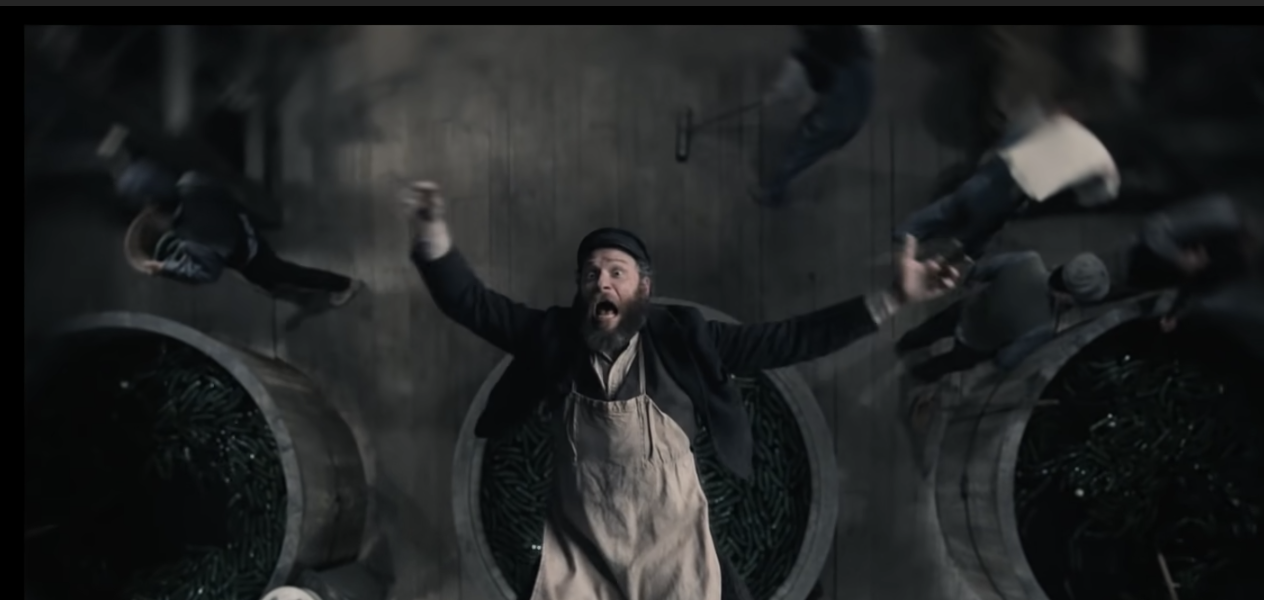
The two and a half hour running time is not a concern, because once we hit the midpoint, Nolan (with a big assist from cinematographer Hoyte van Hoytema and stunt coordinator George Cottle) decide we ain’t seen nothin’ yet. Past and present collide in some of the most interesting, tense and downright fun action sequences Nolan’s ever put together—and fan or not, that’s a feat to acknowledge.

That’s merely a summary that doesn’t require a physics degree, but as Nolan’s own screenplay admits, “Don’t try to understand it.” We’re back to big screens, baby, let’s make it count!

The Kids Are Not All Right

The New Mutants

by Hope Madden

Let’s be honest. Logan’s dead, JLaw’s past her contract obligations, Dark Phoenix bombed and the X-Men are in need of some new blood and maybe a new direction.

The franchise does make a big of a zig with its latest offshoot. The New Mutants is essentially a YA horror film. Co-writer/director Josh Boone’s premise may be comic book, but his execution is angst and PG-13 scares.

Dani Moonstar (Blu Hunt) wakes up to find herself in a locked-down, mainly vacant, definitely old and unmistakably spooky asylum of some sort. Here Dani will learn to control her power—whatever that might be—with the help of the sole custodian of Dani and four other special youngsters, Dr. Reyes (Alice Braga).

Focusing exclusively on adolescence allows the film to deliver, undiluted, the main concepts of the franchise: embrace your differences, forgive yourself, accept others for what they are, master your own potential and stick it to the man. Fine ideas, every one of them, and certainly common themes in YA.

As our plucky hero, Hunt struggles to find anything close to authenticity in her dreamy dialog, but the balance of the cast is strong.

The always remarkable Anya Taylor-Joy relishes the wicked girl role while Game of Thrones’s Maisie Williams (battling Taylor-Joy for largest eyes in a human face) is a deeply empathetic, awkward girl with a crush.

That the crush is not on one of the two boys in lockdown—played by Charlie Heaton and Henry Zaga—is a refreshing change of pace charmingly underscored by the teens’ apparent fixation with the TV show Buffy the Vampire Slayer.

Boone, whose 2014 effort The Fault In Our Stars defines angst porn, knows YA. His combination of these two genres is a bit of a misfire, though, particularly when the final, big, giant scare is revealed. Yikes—and I don’t mean that in a good way.

New Mutants is a film trying too hard to cash in on proven youth market formulas, but the concoction fizzles. It doesn’t really work as an angsty romance, misses the mark as a horror movie and never for a minute feels like a superhero flick.

Speaking Softly

Lingua Franca

by Hope Madden

Lingua franca is literally a language used between two people who don’t share a native tongue. But what goes unsaid in Lingua Franca carries far more weight than anything we’re actually told.

Writer/director/producer/star Isabel Sandoval has mastered cinematic understatement. Her approach, as filmmaker and performer, is never showy. Her third and most confident feature is a slice of life drama that meditates quietly on need, agency, love and capital in Brighton Beach, Brooklyn.

Olga (a perceptive Lynn Cohen) sometimes forgets where she is. She gets a little agitated and a little weary.

Olivia (Sandoval) calms her, keeps her safe, keeps her well, but has worries of her own.

Alex (Aemon Farren) just needs to catch a break, so he’s staying with his grandmother and helping out Olivia when he can. But we can’t all help each other, even when we mean to.

Sandoval’s film says so much with so few words, it’s remarkable. By way of Olga’s apartment we enter an entirely lived-in world, one that is likely to be utterly unfamiliar and yet feels as authentic as any you’ve seen. The ordinariness of extraordinary circumstances, unusual measures and extreme tensions emerges by way of Olivia’s resigned, world-wearied gaze.

There is a cultural currency to the story, one in which Olivia’s position as a transgender woman of color is actually less dangerous than her situation as an illegal immigrant in the age of ICE. That anxiety plays as a backdrop to a desperate romance between Olga’s two needy houseguests.

As Olivia’s sketchy love interest, Farren offers a nuanced and authentic turn. Alex is a man of squandered potential, dim prospects, and a fleeting if recurring notion that he can be something of value.

There’s a lonesome transience to the story, a feeling of impermanence that’s frightening, sad and just slightly freeing. Lingua Franca tells a lovely, sad story that’s very much worth hearing.

Bullets and Broomsticks

The Pale Door

by Hope Madden

The horror Western is an under-explored subgenre. There have been some great ones. In fact, just two years ago filmmaker Emma Tammi took a look at isolation and outlaws from a female perspective with her effective nightmare The Wind.

Co-writer/director Aaron B. Koontz (Scare Package) pits a bunch of women against some scurrilous train robbers in a Wild West ghost town for his latest, The Pale Door.

The title is a Poe reference, a line from his poem The Haunted Palace. Poe wasn’t much of a gun slinger, but that doesn’t matter because the title has nothing to do with anything. Just go with it. You’ll enjoy Koontz’s odd concoction more if you do.

Little brother Jake (Devin Druid) and big brother Duncan (Zachary Knighton) grew up on opposite sides of the law. Duncan runs the Dalton Gang, a bunch of quick shootin’ and hard drinkin’ outlaws. But that’s not the life Duncan ever wanted for his bro, who sweeps up at a saloon and saves his nickels to buy back the old farm.

Until the gang is one man down with a big payday coming on the next train. Jake steps in, the gang robs the train, but this score is not what they expected and next thing they know, wouldn’t ya figure it? Witches.

I am all in for a ghost town full of witches—it’s like a Scooby Doo episode gone wonderfully off track. Production values do not evoke a period and the props are hardly authentic, but the atmosphere is fun and the cast has a good time.

Pat Healey is the wrong-headed good choice he always is. Noah Segan (who directed one of the shorts in Koontz’s Scare Package) is basically playing Noah Segan, but luckily that character is always so entertaining.

Veteran character actor Stan Shaw is mainly saddled with exasperated entrances and hypermasculine melodrama (because this is, after all, a Western). Meanwhile, Bill Sage (We Are What We Are) charms as a kind of poor man’s Bruce Campbell. (That’s not an insult. We can’t all be Bruce Campbell.)

So the gang finds themselves in a sort of Wild West Titty Twister (let’s assume you’ve seen From Dusk Till Dawn), and young, wholesome Jake may be their only hope for survival.

Does the leap from Salem to Western ghost town make sense? It does not. How about the basic internal mythology, the blood ritual, the sex, the ending? Not really. And no one will accuse The Pale Door of taking a female perspective.  

But for a witchtastic Western, is it fun?

Edgar Allen Poe couldn’t have made it any more fun.

Detroit Rock City

Creem: America’s Only Rock ‘n’ Roll Magazine

by Hope Madden

Documentarian Scott Crawford has an interest in location-specific counter culture. His 2014 doc Salad Days recounted a decade of unsurpassed DIY punk rock transforming the underground of Washington, DC.

Now he turns his attention to Detroit.

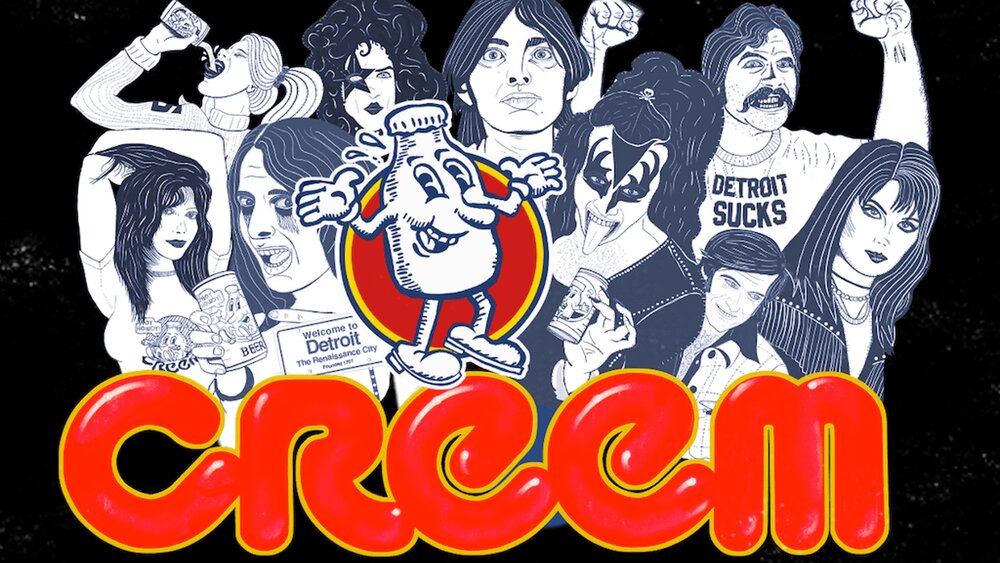
Creem: America’s Only Rock ‘n’ Roll MagazIne documents the inner dysfunction and outward impact of the Motor City’s “screw you” to the rock establishment. (Lookin’ at you, Rolling Stone.)

Launched in 1969 by Detroit head shop entrepreneur Barry Kramer, the magazine immediately defined itself among rock mags as the most personal, most irreverent, least sophisticated and most vital. Like the decaying, even dangerous city it represented, Creem Magazine existed outside the mainstream.

Boasting a litany of groundbreaking rock writers and more women on the editorial and writing staff than nearly any other magazine at the time, the magazine pushed boundaries. It didn’t just cover punk rock, it was punk rock. And like punk rock (or Detroit, for that matter), it was basically doomed.

Crawford’s gift is in establishing the period, time stamping the singular moment in rock history he wants to unveil. Archival footage and behind the scenes photos illustrate the hard core, nearly derelict quality of the working conditions. Kramer’s commitment was almost blind, and the untested staff—many of whom would reveal themselves to be rock writing geniuses—attacked their assignments with equal self-destructive passion.

We hear directly from many of them: Dave Marsh, Cameron Crowe, Jaan Uhelzski (who co-writes the film). We also hear from the rock stars that were covered (Alice Cooper, Gene Simmons, a very testy Joan Jett), as well as those modern day musicians whose young minds were warped by Creem’s pages (Michael Stipe, Kirk Hammett, Chad Smith).

The film’s production design does justice to its source material. Scott Gordon’s animated sequences are an inspired avenue into reenactments. Between the cartoons, stories, photos and excerpts of his writing, a provocative image of Lester Bangs emerges. And who could be more fitting to provide all the movie’s original music than MC5’s Wayne Kramer?

The film, produced by publisher Barry Kramer’s son JJ, is absolutely a mash note to rock’s most rebellious rag. For many it will be a lesson on the significance of Detroit, even after Motown, in the evolution of American music. More than anything, though, Crawford’s film is a testament to the legacy of America’s Only Rock ‘n’ Roll Magazine.  

Screening Room: An American Pickle, The Go-Gos, I Used To Go Here, The Burnt Orange Heresy, Waiting for the Barbarians, Made In Italy, The Tax Collector, Senior Love Triangle, Out Stealing Horses, Spinster, Red Penguins, River City Drum Beat, You Never Had It, She Dies Tomorrow, Limbo, La Llorona

CLICK HERE for our reviews of this week’s new releases plus a studio news update!

Bachelorette

Spinster

by Hope Madden

Director Andrea Dorfman and her frequent collaborator, writer Jennifer Deyell, are quietly establishing a pattern. They are preoccupied by the fact that people are preoccupied with a woman’s relationship status.

They’ve certainly put a fine point on that with their latest, Spinster.

A sort of anti-romantic comedy, the film opens as a voiceover gushes through the most romantic, fairy tale meeting ever. Pan to Gaby (Chelsea Peretti, Brooklyn Nine-Nine), the caterer listening to the bride-to-be with overt cynicism, possibly a little contempt, definitely mockery.

Gaby is 39 today and before the day is over, her boyfriend will break up with her, her married friend’s buddies will demean her childlessness, her dad will disappoint her (and she him), and her brother will forget it’s her birthday but rope her into babysitting.

That is to say, the stage is set for Gaby to actually take stock of her life and address what’s really causing her existential grief. (Hint: it’s not a boyfriend.)

Peretti is so comfortable in this character that she creates believability even when situations and the ensemble around her lack authenticity. Dorfman’s film has an episodic, even sit-com feel to it. She pieces together moments of Gaby’s life with a more “and then this happened, and then this happened” approach than with an outright narrative.

On occasion, this works. Peretti’s one-on-one chemistry is often enough to elevate individual scenes. Her deadpan delivery is ideal for Deyell’s slyly clever script, which refuses to preach, preferring to resignedly point out certain frustrating realities.

Though the execution lacks polish, Spinster makes up for most of that with Peretti’s cynical charm and its own quiet determination to subvert its chosen genre.

Let It Kill You

You Never Had It: An Evening with Bukowski

by Hope Madden

Who’s the greatest American poet? Maya Angelou? Sherman Alexie? Walt Whitman? I will argue that it’s Charles Bukowski.

He really only wrote for about 24 years, but he has nearly 70 books in print: novels, collections of short fiction, and poems. My God, the poems.

 If you are also a fan, documentarian Matteo Borgardt has a film for you.

You Never Had It: An Evening with Bukowski shares a rediscovered interview from 1981. Italian reporter Silvia Bizio visits the writer in his San Pedro home and they talk for about an hour. It’s very low key, and honestly, not a great deal is covered or discovered in terms of the interview itself.

But.

If you’ve ever just wanted to sit in Bukowski’s living room as wine bottle after wine bottle empties, as ash trays fill, as Max the cat finds a good position on Linda Lee’s lap—friends, this is indispensable viewing.

’81 was a big year for him. Bukowski’s about halfway through his seminal novel Ham on Rye, he’s recently returned from the European trip documented in his nonfiction text Shakespeare Never Did This, and that trip/book’s photographer Michael Montfort makes himself at home on the floor near the ash tray on the end table.

It’s all very low key as people drink and smoke and Bukowski talks. He doesn’t wax philosophical, doesn’t argue too much, doesn’t make proclamations or yell or curse. He doesn’t really even tell any stories, but he does read a few poems (good ones!).

This is hardly the first documentary on Charles Bukowski. (In fact, Taylor Hackford directed the first, 1973’s Bukowski.) But as a general (and quite lovely) rule, previous docs focused on his raucous readings. If you want to hear Bukowski read, there are at least five full length docs that will let you do that.

It’s far rarer to spend some time with the writer at home.

Perhaps because she is drinking herself or perhaps because the writer is in a cagey mood, Bizio never really finds a good footing for questions and answers, although humanity and Bukowski’s low opinion of it offers the slightest hint of a theme for the proceedings. The tour of the house goes badly, and back-and-forth about sex in his writing uncovers little.

If that sounds negative, it shouldn’t. The whole scene is like a page from one of his books: things not going as well as he’d hoped, the fault likely his own, but at least there’s wine. The more wine, the worse it will go, but there you have it.

You Never Had It will not entertain everyone equally, but it will thrill a handful of people and you know who you are.

Fright Club: Blond(e)s in Horror

We want to thank Cati Glidewell, also know as The Blonde in Front, for joining us to talk through some of the best blond(e)s in horror. There’s a lot of names here, but I think we may have proved that—with a few really bloody exceptions—blondes do seem to have more fun in these movies.

The Dudes

6. Francis Dollarhyde (Tom Noonan), Manhunter (1986)

Tom Noonan’s entire career is defined by a mixture of tenderness and menace. It begins with his unusual physical appearance, including his almost colorless locks, and ends with performances that realize everything broken and horrifying about a character—especially Francis Dollarhyde. The terrifying chemistry between Dollarhyde and a blind Joan Allen’s is heartbreaking perfection.

5. Mark Lewis (Carl Boehm), Peeping Tom (1960)

Like Norman Bates across the pond, England’s Mark Lewis (Carl Boehm) is an innocent. Boehm’s blank stare, his frightened mouse reflexes, his blond locks all contribute to a character so tender you can’t help but root for him—although it would be great if he’d stop murdering women.

4. Kakihara (Tadanobu Asano), Ichi the Killer (2001)

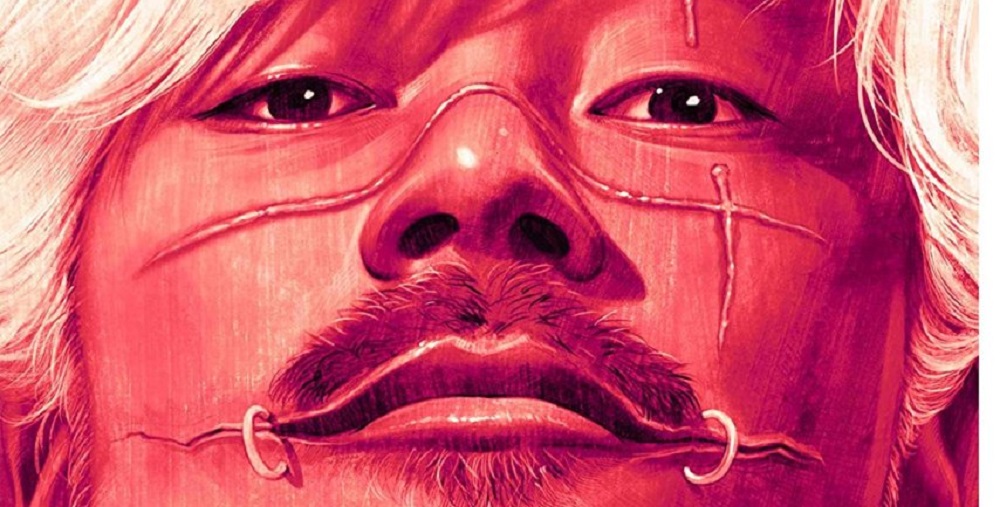
A bleach blond in a Japanese film will automatically draw the eye, but Kakihara’s not just here to catch your attention. Genius filmmaker Takashi Miike and Tadanobu Asano created this badass to upend your expectations. He’s the baddie, right? And man-child Ichi is the innocent? Or is Miike toying with you?

3. Gage (Miko Hughs), Pet Sematary (1989)

Get the Kleenex ready because the ridiculously cute Mike Hughs has a date with a semi. A toddler when he filmed this movie, Hughs really turns in a remarkable performance, whether he’s tugging your heart strings or slicing through Fred Gwynne’s Achilles tendon.

2. David (Keiffer Sutherland), The Lost Boys (1987)

Hubba hubba. The rock star duds. The homoerotic relationship with Jason Patrick. The mullett! Keiffer Sutherland’s bad boy David was so cool you couldn’t help wanting to hang out with him. Eating maggots seems like a small price to pay, really. Nobody said the cool kids’ table would be tasty.

1. John Ryder (Rutger Hauer), The Hitcher (1986)

There are those with a thing for bad boys, and then there are those with a thing for Rutger Hauer. He’s not a bad boy—he’s not even in the same zip code. His John Ryder will make you feel all kinds of weird things because he’s not your garden variety dangerous character. What he will do to you, to that nice family in the station wagon, to your new girlfriend, is more awful than anything you can think of.

The Women

6. Chris Hargeson (Nancy Allen), Carrie (1976)

When De Palma launched the ultimate in mean girl cinema, Nancy Allen delivered the ultimate mean girl. Chris Hargeson’s bloodthirsty princess energy has to convey something horrifying if she is to properly offset what poor Carrie White has to content with at home. Luckily for us (not so much for Carrie), she does.

5. Tomasin (Anya Taylor Joy), The Witch (2015)

Watching The Witch, you realize that writer/director Robert Eggers chose everything: every sound, every image, every color. And while Tomasin’s family looked like gaunt, hard working, colorless cogs in God’s wilderness wheel, Thomasin did not. Even as we open on Anya Taylor Joy, confessing her sins and begging forgiveness, she is lit from within. A beacon. It’s just that her light has caught the wrong kind of attention.

4. Casey (Drew Barrymore), Scream (1996)

The genius Wes Craven and his producer Drew Barrymore pulled an incredible and soon-to-be endlessly copied sleight of hand with Casey—the spunky female played by the biggest star in the cast. With this character, Craven introduces the meta-movie-commentary that defines this film while simultaneously upending our own unconscious investment in those tropes by killing Casey off in Act 1.

3. Carol (Catherine Deneuve), Repulsion (1965)

We went back and forth. Would it be Deneuve as gorgeous seductress Miriam in Tony Scott’s 1983 vampire film The Hunger, or innocent driven to madness Carol in Polanski’s Repulsion? (He does know how to torture innocent young women, doesn’t he?) Deneuve’s performance in Repulsion is so compelling and difficult—playing primarily alone for about half the film—that it won out, but either way, she’s a blonde to be reckoned with.

2. Pamela Voorhees (Betsy Palmer), Friday the 13th (1980)

The OG Karen (to steal a phrase from this episode’s co-host The Blonde in Front), Pamela Voorhees has a plan and she’s sticking to it. This funny business among the camp counselors needs to be addressed, corrected. Enough is enough. Betsy Palmer’s performance is spot-on, so comforting and in control before it goes completely batshit. Jason may get all the love, but Mrs. Voorhees took care of business first.

1. Carrie White (Sissy Spacek), Carrie (1976)

Like his idol Hitchcock, Brian De Palma had a thing about blondes—what that fair hair represented, what it could mean. For De Palma, it might be the bombshell of Angie Dickson’s character in Dressed to Kill, or the innocence of Carrie White. Of course, Sissy Spacek’s Oscar nominated performance in the film was what really sold this sheltered, shell-shocked little lamb, but you can’t deny she had that look.