Tag Archives: George Wolf

Fright Club: Best Horror Comedies

After last week’s look at the most horrific scenes in horror, we needed something light. Today we celebrate the great, rich tradition of mixing horror and comedy, whether slapstick or splatter, dark and dry or red and wet, these are the best of a wonderful sub-genre.

6. Housebound (2014)

Funny and scary, smartly written and confidently directed, this is a film that makes few missteps and thoroughly entertains from beginning to end.

An inspired Morgana O’Reilly plays Kylie, a bit of a bad seed who’s been remanded to house arrest and her mother’s custody after a bit of bad luck involving an ATM and a boyfriend who’s not too accurate with a sledge hammer. Unfortunately, the old homestead, it seems, is haunted. Almost against her will, she, her hilariously chatty mum (Rima Te Wiata) and her deeply endearing probation officer (Glen-Paul Waru) try to puzzle out the murder mystery at the heart of the haunting. Lunacy follows.

Good horror comedies are hard to come by, but writer/director Gerard Johnstone manages the tonal shifts magnificently. You’re nervous, you’re scared, you’re laughing, you’re hiding your face, you’re screaming – sometimes all at once. And everything leads up to a third act that couldn’t deliver better.

5. Tucker and Dale vs Evil (2010)

Horror cinema’s most common and terrifying villain may not be the vampire or even the zombie, but the hillbilly. The generous, giddy Tucker and Dale vs. Evil lampoons that dread with good natured humor and a couple of rubes you can root for.

In the tradition of Shaun of the Dead, T&DVE lovingly sends up a familiar subgenre with insightful, self-referential humor, upending expectations by taking the point of view of the presumably villainous hicks. And it happens to be hilarious.

Two backwoods buddies (an endearing Tyler Labine and Alan Tudyk) head to their mountain cabin for a weekend of fishing. En route they meet some college kids on their own camping adventure. A comedy of errors, misunderstandings and subsequent, escalating violence follows as the kids misinterpret every move Tucker and Dale make.

T&DVE offers enough spirit and charm to overcome most weaknesses. Inspired performances and sharp writing make it certainly the most fun participant in the You Got a Purty Mouth class of film.

4. Cabin in the Woods (2012)

You know the drill: 5 college kids head into the woods for a wild weekend of doobage, cocktails and hookups but find, instead, dismemberment, terror and pain. You can probably already picture the kids, too: a couple of hottie Alphas, the nice girl, the guy she may or may not be into, and the comic relief tag along. In fact, if you tried, you could almost predict who gets picked off when.

But that’s just the point, of course. Making his directorial debut, Drew Goddard, along with his co-scribe Joss Whedon, is going to use that preexisting knowledge to entertain holy hell out of you.

The duo’s nimble screenplay offers a spot-on deconstruction of horror tropes as well as a joyous celebration of the genre. Aided by exquisite casting – particularly the gloriously deadpan Richard Jenkins and Bradley Whitford – the filmmakers create something truly special.

3. Shaun of the Dead (2004)

This is a hard movie not to like. Writer/director Edgar Wright teams with writer/star Simon Pegg to lovingly mock the slacker generation, 80s pop, and George Romero with this riotous flesh eating romance. But what is easy to overlook is the genuine craftsmanship that went into making this picture.

Every frame of every scene is so perfectly timed – pauses in conversation synchronized with seemingly random snippets of other conversations, or juke box songs, or bits from the tele. (The movie will turn you British. By the end you’ll be saying holiday instead of vacation, spelling colour with a u and saying, “How’s that for a slice of fried gold?” even though you don’t really know what that means.)

Shaun offers such a witty observation of both a generation and a genre, so well told and acted, that it is an absolute joy, even if you’re not a fan of zombie movies. As social satire, it is as sharp as they come. It also manages to hit the bull’s eye as a splatter horror film, an ode to Romero, a buddy picture, and an authentic romantic comedy. And it’s more than just a remarkable achievement; it’s a fresh, vivid explosion of entertainment. It’s just a great movie.

2. Slither (2006)

Writer/director James Gunn took the best parts of B-movie Night of the Creeps and Cronenberg’s They Came from Within, mashing the pieces into the exquisitely funny, gross, and terrifying Slither. The film is equal parts silly and smart, grotesque and endearing, original and homage. More importantly, it’s just plain awesome.

Cutie pie Starla (Elizabeth Banks) is having some marital problems. Her husband Grant (the great horror actor Michael Rooker) is at the epicenter of an alien invasion. Smalltown sheriff Bill Pardy (every nerd girl’s imaginary boyfriend Nathan Fillion) tries to set things straight as a giant mucous ball, a balloonlike womb-woman, a squid monster, projectile vomit, zombies, and loads and loads of slugs keep the action really hopping.

Consistently funny, endlessly quotable, cleverly written, well-paced, tense and scary and gross – Slither has it all.

In fact, it’s the perfect movie to see in a big, screaming group – some come join us Wednesday, 7/8 as we screen it at Fright Club Live! Join us at 8pm/6:30 for happy hour and prizes, at the Gateway Film Center in Columbus, OH.

1. American Psycho (2000)

A giddy hatchet to the head of the abiding culture of the Eighties, American Psycho represents the sleekest, most confident black comedy – perhaps ever. Director Mary Harron trimmed Bret Easton Ellis’s novel, giving it unerring focus. More importantly, the film soars due to Christian Bale’s utterly astonishing performance as narcissist, psychopath, and Huey Lewis fan Patrick Bateman.

There’s an elegant exaggeration to the satire afoot. Bateman is a slick, sleek Wall Street toady, pompous one minute because of his smart business cards and quick entrance into posh NYC eateries, cowed the next when a colleague whips out better cards and shorter wait times. For all his quest for status and perfection, he is a cog indistinguishable from everyone who surrounds him. The more glamour and flash on the outside, the more pronounced the abyss on the inside. What else can he do but turn to bloody, merciless slaughter? It’s a cry for help, really.

Harron’s send up of the soulless Reagan era is breathtakingly handled, from the set decoration to the soundtrack, but the film works as well as a horror picture as it does a comedy. Whether it’s Chloe Sevigny’s tenderness as Bateman’s smitten secretary or Cara Seymour’s world wearied vulnerability, the cast draws a real sense of empathy and dread that complicate the levity. We do not want to see these people harmed, and as hammy as it seems, you may almost call out to them: Look behind you!

Listen to the whole conversation on the FRIGHT CLUB podcast!
Head Games

Inside Out

by George Wolf

Sometimes I think Pixar’s only goal is to make me a pile of emotional mush. The old man in Up was a dead ringer for my old man, and the Toy Story films were in perfect sync with my son’s childhood, right down to part 3 when Andy (voiced by the original, now grown up kid) was leaving home the same time our Riley was packing for Ohio State. Sniff.

Now, with Inside Out, Pixar builds their latest delightful adventure around the growing pains of a young girl whose name just happens to be…Riley.

Honey! We’re going to need more tissues!

I doubt we’re alone, and that’s one of the many wonderful things about Pixar films. At their best, they resonate with both infectious fun and relatable emotion. Make no mistake, Inside Out is one of their best, landing perhaps just a half notch below Up and the Toy Story trilogy.

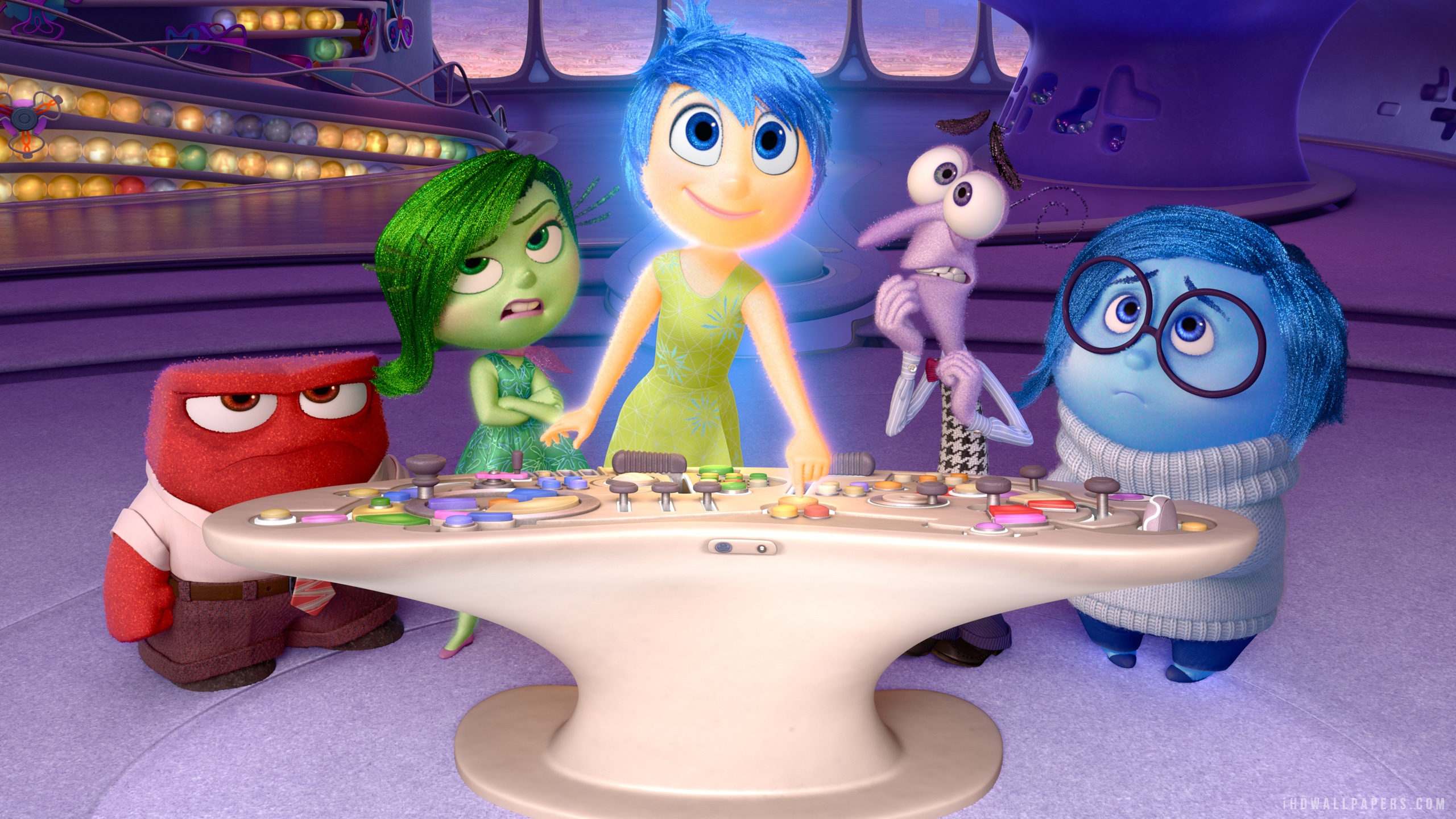
It’s a tumultuous time in young Riley’s life. Her family has just moved from Minnesota to San Francisco, and her emotions are working overtime. Inside her mind, five particular feelings are running the show at Riley “headquarters.” There’s Joy (Amy Poehler), Sadness (Phyllis Smith), Fear (Bill Hader), Anger (Lewis Black) and Disgust (Mindy Kaling). Joy is usually able to keep the rest in check (“I’m detecting high levels of sass!”), but when she and Sadness get lost in the outer regions of Riley’s psyche, the race is on to get back to base before the young girl’s personality is forever changed.

So, yes, Pixar returns to the “secret world” theme they know well, but there’s no denying this is just a brilliant premise and perfect execution by a veteran Pixar team, From rides on the “train of thought” to commercial jingles that get stuck in your head to a clever gag about mixing facts and opinions, co- directors/co-writers Pete Docter and Ronaldo Del Carmen keep things fresh and funny while maintaining a simple conflict that easily gets younger viewers invested.

The voice talent is stellar, particularly Black (Angry? Who’d have thought?) and Smith, who makes Sadness a lovable unlikely hero by reminding us that sometimes, it’s okay to be sad.

And that’s the real beauty of Inside Out. While you’re laughing at those silly emotions, the film is gently tugging at yours. Once again, Pixar examines the changing phases of life with charm, humor and a subtle intelligence that can’t help but give you a fresh appreciation for all the jumbled feelings that make life worth living.

Verdict-4-0-Stars

Fright Club: Road Trip Horror

It’s summer time! Maybe you’ve gotten it into your head to pack up the family truckster and set off on an adventure, take a road trip? Well, we’re here to talk you out of it. Whether it’s Joy Ride or Wrong Turn, Brotherhood of Satan or Race with the Devil, or any one of the films on this list, if there is one thing our research has shown us, it’s that we’re staying safe at home this summer.

5. The Hitcher (1986)

Baby faced C. Thomas Howell – still a star in 1986 – finds himself falling asleep behind the wheel as he drives a car from Chicago to San Diego. In a torrential downpour, he picks up a hitchhiker – the effortlessly terrifying Rutger Hauer.

Hauer’s John Ryder immediately creeps you out, and his peculiarly sinister nature bounces beautifully off Howell’s slack jawed innocence. Hauer goes on to do very bad things, especially to truck stop heroine Jennifer Jason Leigh. Yikes.

First time director Robert Harmon does a nice job of ratcheting up tension by exploring the calm surrounding Howell’s shaken character: the roadside, the townies, the slumbering mountains on the horizon, and in particular, Hauer’s serene psychopath. The discrepancy fosters an anxiety in the audience, and though Howell’s crybaby driver Jim Halsey makes consistently idiotic decisions, he’s so convincingly innocent that we forgive him.

4. Duel (1971)

Steven Spielberg was just 25 years old when he directed this taut thriller about mysterious road rage.

Dennis Weaver stars as a salesman on a business road trip who finds himself terrorized by the driver of a big rig. Based on Richard Matheson’s short story that sprang from a real-life incident, the film shows young Spielberg’s filmmaking instincts were already razor sharp. He rachets the tension early and often, knowing that our fear for the life of the salesman becomes even greater when mixed with the frustration of not knowing why he is being targeted.

Originally produced as a TV movie of the week, Duel eventually received a limited theatrical run, and it is flush with all the elements of a winning big screen pulse-pounder.

3. The Hills Have Eyes (1977)

Wes Craven’s original Hills – cheaply made and poorly acted – is a surprisingly memorable, and even more surprisingly alarming flick. Craven’s early career is marked by a contempt for both characters and audience, and his first two horror films ignored taboos, mistreating everyone on screen and in the theater. In the style of Deliverance meets Mad Max, Hills was an exercise in pushing the envelope, and it owes what lasting popularity it has to its shocking violence and Michael Berryman’s nightmarish mug.

A suburban American family on a road trip takes an ill-advised “short cut” through this New Mexican desert to find themselves the targets of a family of inbred mutants’ blood lust.

The Hills Have Eyes – Craven’s original or Alexandre Aja’s 2006 reboot – is not for the squeamish. People are raped, burned alive, eaten alive, eaten dead, and generally ill-treated.

In fact, Craven’s greatest triumph is in creating tension via a plot device so unreasonably gruesome no audience would believe a film could go through with it. The freaks kidnap a baby with plans to eat her. But by systematically crushing taboo after taboo, the unthinkable becomes plausible, and the audience grows to fear that the baby will actually be eaten. It’s not the kind of accomplishment you’d want to share with your mom, but in terms of genre control, it is pretty good.

2. Wolf Creek (2005)

Some of the best scares in film have come as the reaction to urbanites’ fear of losing our tentative grasp on our own link in the food chain once we find ourselves in the middle of nowhere. With Wolf Creek, it’s as if writer/director Greg McLean looked at American filmmakers’ preoccupation with backwoods thrillers and scoffed, in his best Mick Dundee, “That’s not the middle of nowhere. This is the middle of nowhere.” McLean explores the isolated beauty of this vast, empty Australian middle with spectacularly creepy results.

Using only digital cameras to enhance an ultra-naturalistic style, McLean’s happy backpackers find themselves immobile outside Wolf Creek National Park when their car stops running. As luck would have it, friendly bushman Mick Taylor (a startlingly horrifying, utterly perfect John Jarratt) drives up offering a tow back to his camp, where he promises to fix the vehicle.

A horror film this realistic is not only hard to watch, but a bit hard to justify. What makes an audience interested in observing human suffering so meticulously recreated? This is where, like a true artist, McLean finally succeeds. What is as unsettling as the film itself is that its content is somehow satisfying.

1. The Texas Chainsaw Massacre (1974)

Not everyone considers Tobe Hooper’s 1974 original The Texas Chainsaw Massacre a classic. Those people are wrong. Perhaps even stupid.

Franklin Hardesty, his pretty sister Sally, and a few other friends head out to Grampa Hardesty’s final resting place after hearing the news of some Texas cemeteries being grave robbed. They pick up a hitchhiker, played with glorious insanity by Edwin Neal. The Hitchhiker is part of a family of cannibals, and the youths will eventually stumble upon their digs.

It is classic because Hooper masterfully enlisted a low rent verite for this bizarre story to do something utterly new. The camera work, so home-movie like, worked with the “based on a true story” tag line like nothing before it, and the result seriously disturbed the folks of 1974. It has been ripped off and copied dozens of times since its release, but in the context of its time, it was so absolutely original it was terrifying.

Hooper sidestepped all the horror gimmicks audiences had grown accustomed to – a spooky score that let you know when to grow tense, shadowy interiors that predicted oncoming scares – and instead shot guerilla-style in broad daylight, outdoors, with no score at all. You just couldn’t predict what was coming. He was after an entirely different kind of tension. He dashes your expectations, making you uncomfortable, as if you have no idea what you could be in for. As if, in watching this film, you yourself are in more danger than you’d predicted.

But not more danger than Franklin is in, because Franklin is not in for a good time.

https://www.youtube.com/watch?v=Vs3981DoINw

Fright Club: Top 5 Midnight Movies

We are beyond thrilled that 6-time Emmy winner Fritz the Nite Owl and his director/producer Mike McGraner joined us this week to talk about the five most popular films from thier live midnight movie Nite Owl Theatre. Fritz hosted a late night movie show in Columbus from ’74 to ’91 and in 2010, he and McGraner took Fritz’s particular brand of entertainment to the public and online. Here we talk about the 5 films that got the best fan reaction over their years together.

5. Little Shop of Horrors (1960)

No horror filmmaker could do more with a buck than Roger Corman. Back in 1960, he was still directing a lot of the shoestring budget flicks he produced, and the shiniest and most unexpected gem was this ode to bloodthirsty horticulture. In ’86, Frank Oz would make a campier film version of the stage musical , but the original is a spare, zany black comedy.

Clumsy, lovestruck Seymour (Jonathan Haze) just wants to impress his florist boss with the plant he’s growing at home in a coffee can. Unfortunately, that plant – Audrey, Jr. – is an unholy Venus Flytrap hybrid thirsty for human blood.

The comedy is broad and dated, relying on more than a few stereotypes for laughs, but the unique premise and memorable performances – especially Jack Nicholson’s cameo – keep it fun.

4. Trick ‘r Treat (2007)

Back in ’07, Columbus native and screenwriter Brian Dougherty – hot off a couple well-received superhero screenplays – made the leap to directing with this comic-book inspired collection of related horror shorts.

The visually stunning effort follows holiday revelers in a homey small town. Brian Cox, as a “get off my lawn!” style old coot, is tormented by a small trick or treater. Meanwhile, Anna Paquin’s Red Riding Hood costume carries mean symbolism and Dylan Baker plays a more indecent character here than he did in Todd Solondz’s Happiness.

Dougherty’s fluid camera work, glorious use of color and sense of darkest humor combine in what amounts to what may be the very best anthology style horror movie.

3. A Nightmare on Elm Street (1984)

You know the drill – teens on suburban Elm St. share nightmares, and one by one, these teens are not waking up. Not that their disbelieving parents care. When Tina woke one night, her nightgown shredded by Freddie’s razor fingers, her super-classy mother admonished, “Tina, hon, you gotta cut your fingernails or you gotta stop that kind of dreamin’. One or the other.”

Depositing a boogieman in your dreams, creating nightmares that will truly kill you, was a genius concept by writer/director Wes Craven because you can only stay awake for so long. It took everyone’s fear of nightmares to a more concrete level. Plus, it introduced the world to Johnny Depp.

The film suffers from a low budget and weak FX that date it – not to mention Heather Langenkamp’s weak performanc – but it’s still a great movie. That face that stretches through the wall is cool, the too-long out arms reaching out behind Tina are still scary. The nightmare images are apt, and the hopscotch chant and the vision of Freddie himself were not only refreshingly original but wildly creepy.

2. Alien (1979)

After a vagina-hand-sucker-beast attaches itself to your face, it gestates inside you, then tears through your innards. Then it grows exponentially, hides a second set of teeth, and bleeds acid. How much cooler could this possibly be?

Director Ridley Scott handled the film perfectly, emphasizing the tin can quality of the futuristic vessel. These people are simply not safe – they probably were in danger before bringing the afflicted John Hurt back on board. It’s dark in there, decaying and nasty – just like some moldy old mansion. The trick here is that these people- unlike the inhabitants of a haunted house – truly cannot go anywhere. Where would they go? They’re in space.

Much ado has been made, rightfully so, of the John Hurt Chest Explosion (I loved their early albums, before they went commercial). But Scott’s lingering camera leaves unsettling impressions in far simpler ways, starting with the shot of all those eggs.

1. The Shining (1980)

What more can we possibly say about this movie?

The hypnotic, innocent sound of Danny Torrance’s Big Wheel against the weirdly phallic patterns of the hotel carpet tells so much – about the size of the place, about the monotony of the existence, about hidden perversity. The sound is so lulling that its abrupt ceasing becomes a signal of spookiness afoot.

Jack Nicholson outdoes himself. His early, veiled contempt blossoms into pure homicidal mania, and there’s something so wonderful about watching Nicholson slowly lose his mind. Between writer’s block, isolation, ghosts, alcohol withdrawal, midlife crisis, and “a momentary loss of muscular coordination,” the playfully sadistic creature lurking inside this husband and father emerges.

What image stays with you most? The two creepy little girls? The blood pouring out of the elevator? The impressive afro in the velvet painting above Scatman Crothers’s bed? That freaky guy in the bear suit? Whatever the answer, thanks be to Kubrick’s deviant yet tidy imagination.

https://www.youtube.com/watch?v=A-tgsURVNrI

Original Artist

Love and Mercy

by George Wolf

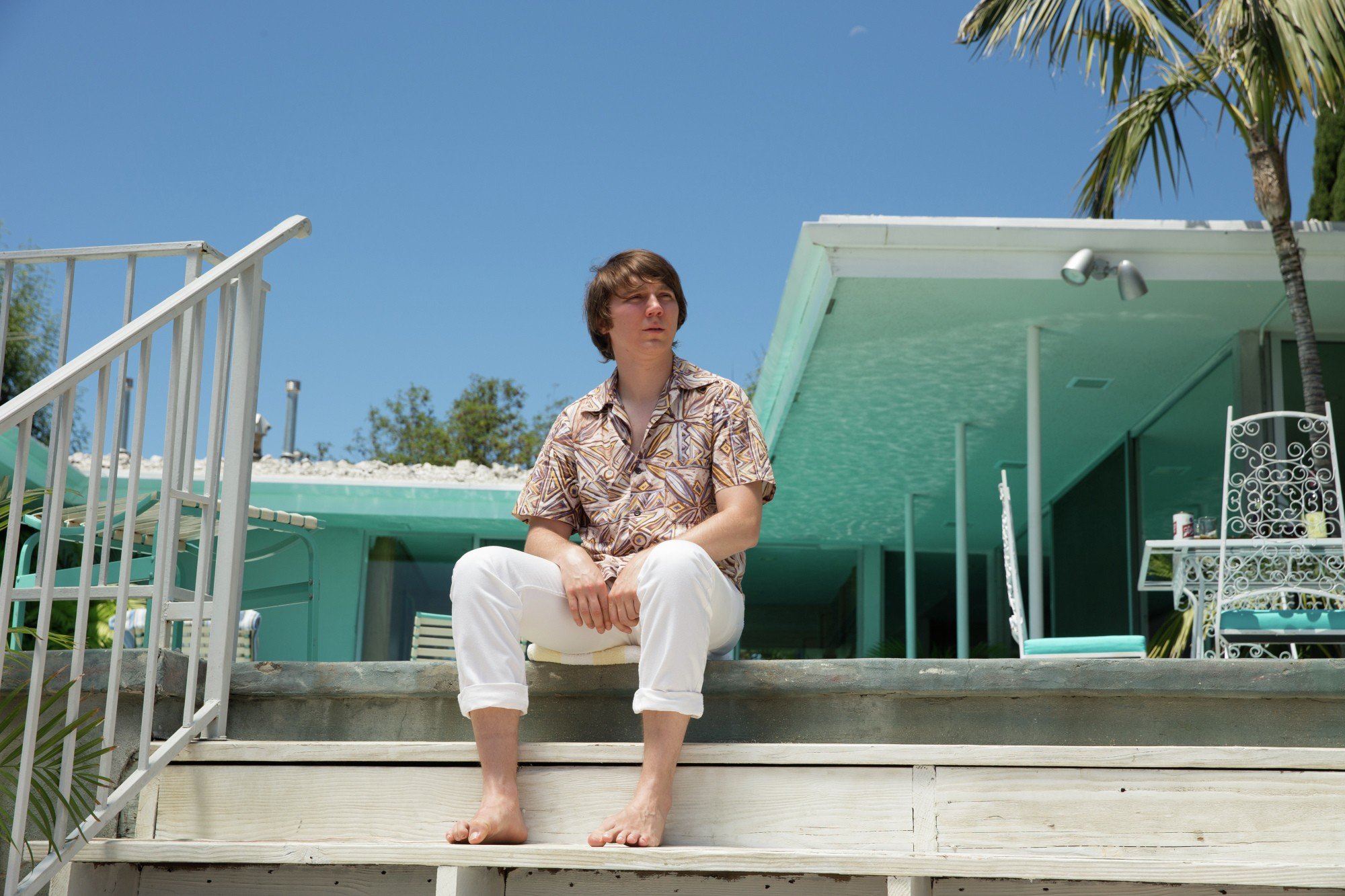
Love and Mercy is a music biography that doesn’t follow the standard playbook. More abstract than similar films in the genre, its dual narrative approach is not only welcome, but one that feels entirely appropriate for the life involved.

Even if you’ve never heard a note of Brian Wilson’s music, one listen to “God Only Knows,” “Good Vibrations,” “Caroline, No” or countless other Beach Boys classics reveals a musical visionary like none other. His success, and inner turmoil, have both become legend, and director Bill Pohlad utilizes an ambitious script and fine performances to make Wilson’s story resonate with heartbreak and hope.

Rather than a complete overview of Wilson’s entire life, acclaimed screenwriter Oren Moverman (Rampart, The Messenger, I’m Not There) anchors the film around two watershed periods: the late 1960s, when Wilson stopped touring to concentrate on recording, and the late 1980s, when questionable treatment for psychological issues left him an emotional invalid.

Paul Dano is flat out fantastic as the younger Wilson. Beyond the considerable physical resemblance, Dano is able to mine multiple layers of wonder, inspiration and doubt, as Wilson struggles to follow his vision in the midst of those who can’t understand it.

Pohlad, a veteran producer directing his first film in nearly 25 years, turns to John Cusack for the role of the older Wilson, and it pays off. Though not the physical match Dano is, Cusack nails Wilson’s speech pattern and hesitant gait and more importantly, he projects the weariness of a decades-long torment. Terrific support comes from Elizabeth Banks as the girlfriend who helped Wilson toward a breakthrough, and her chemistry with Cusack conveys a tender desperation.

Beyond some basic introductions of family and band members, Moverman’s script isn’t interested in spoon feeding. A degree in music history may not be necessary, but viewers already familiar with names such as Van Dyke Parks, Hal Blaine and Dr. Eugene Landy (a perfectly slimy Paul Giamatti) will feel even greater appreciation for the film’s disinterest in pandering.

Pohland crafts the studio segments with precision and an eye for detail. Rather than a greatest hits musical revue, we hear segments of the songs as they’re being constructed, and glimpse Wilson’s obsessive innovations in the studio, tirelessly directing the famed “wrecking crew” of studio musicians until he gets the perfect mix.

There are only minor bumps along the way. Pohland is a tad too preoccupied with time stamping via TV news reports and top 40 hits, and really, one closeup of Wilson trying to follow the sounds inside his head is enough to get the point across.

Variations on the Brian Wilson story have been attempted before, but Love and Mercy is an original tune that won’t need to be covered for quite some time.


Verdict-4-0-Stars


Bad Blue Blood

The Seven Five

by George Wolf

If current events haven’t satisfied your appetite for stories of cops behaving badly, take a trip back to the 1980s with The Seven Five. It’s a sobering look at the man dubbed “the dirtiest cop in history,” as well as the law enforcement code of silence that still appears shockingly prevalent.

Officer Michael Dowd joined New York’s 75th precinct in the early 80s, when the growing crack epidemic sent the crime rate skyrocketing and turned the Seven Five’s territory into what Dowd called “a war zone.” Starting out with the good intentions of a rookie cop, it wasn’t long before Dowd felt underpaid and under appreciated, and had a hard time finding reasons to think his work made any real difference.

The anxiety he felt after taking that first bribe didn’t last, and in the years that followed Dowd became head of the Seven Five’s very own crime family, brazenly involved in burglary, drug dealing, kidnapping and murder.

Dowd was eventually brought down, and director Tiller Russell uses footage from Dowd’s 1993 hearing testimony as an effective bookend to current interviews with Dowd and several of his cohorts. The chill that comes from a younger Dowd testifying that a good cop means “being 100 percent behind anything another cop does” only intensifies when you hear one of his old partners recalling the prevailing attitude of their criminal heyday.

“Prove it. You got me on video? It’s your word against mine, and I’m a cop.”

Obviously, the story crackles with urgency and timeliness, but Russell sometimes get carried away with the Goodfellas nature of it all. Dowd’s trail of lawlessness left countless victims behind, yet Tiller sometimes allows an air of perverse hero worship to creep into the film. No doubt this tale could be worthy of a Hollywood adaptation, but The Seven Five falters only when it gets too caught up in being the trailer for that non-existent film.


Verdict-3-5-Stars


A Tenacious D

The D Train

by George Wolf

Funny thing about The D Train…it’s not really funny.

In fact, if Jack Black wasn’t the lead, you’d be hard pressed to describe it as a comedy in the first place. It’s awkward, uncomfortable in spots, slightly amusing in others and carries exactly one big laugh out loud moment. But it also has a big heart, an unexpected social conscience, thoughtful writing and fine performances that make it worth a look.

Black stars as Dan, a socially challenged guy in Pittsburgh who keeps inventing nicknames for himself in hopes that one of them will stick. Think George Costanza and his quest to be called T-Bone, but less abrasive.

Dan remains stoic and upbeat, taking his position as chairman of his 20th high school class reunion committee very seriously…even if none of the other members will include him in their after meeting get-togethers. The RSVPs for the reunion are pretty sparse, but then Dan sees old classmate Oliver Lawless (James Marsden) in a TV commercial for sunscreen and has an epiphany.

He’ll come up with a bogus reason for an L.A. business trip, track Oliver down and convince the homegrown Hollywood star to come back for the reunion. With that, attendance will skyrocket and Dan will finally be the BMOC of his dreams!

It will come as no surprise that things don’t quite go as planned. What is surprising is how the film turns away from comedic high jinks to embrace a little introspection in today’s complicated times. Writers Andrew Mogul and Jarrad Paul (Yes Man) also make their directing debut with The D Train, displaying a commendable, if not completely successful ambition to bring a classic genre some fresh perspective.

While they cast the always funny Kathryn Hahn as Dan’s wife Stacey, she is asked to do nothing at all comedic. Talent wasted? Maybe. Or maybe her sympathetic turn is another way the film keeps you guessing and consistently entertained despite the lack of hilarity.

Both Black and Marsden are perfect, crafting a nice chemistry as they gradually give Dan and Oliver some layers of insecurity and misconception that may look pretty familiar.

You won’t be quoting many lines from The D Train at your next party, but you won’t be regretting the trip either.

Verdict-3-0-Stars


A Maria Full of Grace

Clouds of Sils Maria

by George Wolf

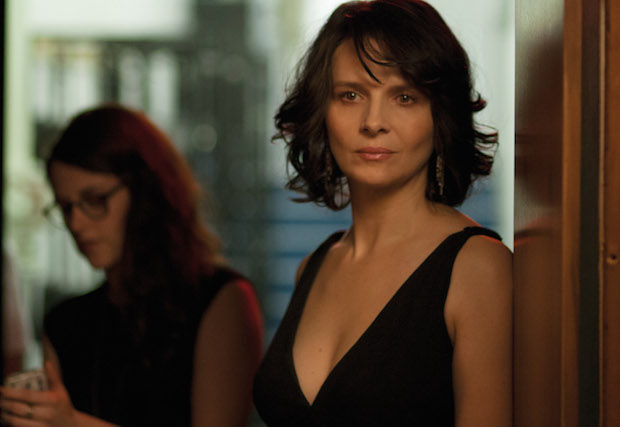
Somewhere between Twilight and the tabloids, Kristen Stewart began doing some real acting. She’s better than ever in Clouds of Sils Maria, and though hers is a supporting role alongside one of the screen’s major talents, Stewart pulls plenty of weight in a terrific drama with much to say.

Juliette Binoche is customarily excellent as Maria, a famous actress returning to the stage in a revival of the play that launched her career twenty years earlier. This time, though, she’s playing the older female lead, while a Lindsay Lohan clone named Jo-Ann (Chloe Grace Moretz, striking just the right tone of clueless entitlement) is taking the role Maria originated.

Stewart is Maria’s ever-present personal assistant Valentine, who not only runs both errands and lines for Maria, but serves as her bridge to a younger generation.

Writer/director Olivier Assayas (Summer Hours) takes the intimate psychological playground of Polanski’s Venus in Fur, and laces it with the pop culture commentary of Cronenberg’s Maps to the Stars. Binoche and Stewart swim gracefully inside the play within a play setup, slowly moving Maria and Valentine in directions that mirror the script both characters are reading.

The actresses display an easy chemistry, never more apparent than when Valentine is trying to sell Maria on the merits of young Hollywood. In the film’s most deliciously meta moment, Stewart might just as well be telling all of us Twilight haters to get over it already.

Assayas’s script is sharp and his camera is fluid, effectively blurring the line between onstage and off. Revisiting the play forces Maria to confront her past and question her present, and Binoche reveals the various layers with a gentle, masterful touch.

The beauty of Clouds of Sils Maria lies in its subtle complexity. It offers sly insights that sneak up on you, and an exceptional cast to make them stick.


Verdict-4-0-Stars


Fright Club: Best Horror 2010 – 2015

It’s official. Our flux capacitor is running out of power, our time travels are coming to a close. We’ve highlighted the best horror films of the 60s, 70s, 80s, 90s and the first decade of the 2000s, and now it’s time to bring things up to the present with the best in horror from 2010 – 2015. Who would have thought that list would be so hard to put together?

What do we wish we didn’t have to leave off? Indies like The Woman, Kill List, The Snowtown Murders; major releases like Evil Dead and The Woman in Black; foreign language gems like Big Bad Wolves, The Last Circus, We Are What We Are and A Girl Walks Home Alone at Night. All of this convinces us that we are in the midst of a horror movie rennaissance – hooray!

So what did make the cut? Here you go:

5. The Cabin in the Woods (2012)

You know the drill: 5 college kids head into the woods for a wild weekend of doobage, cocktails and hookups but find, instead, dismemberment, terror and pain. You can probably already picture the kids, too: a couple of hottie Alphas, the nice girl, the guy she may or may not be into, and the comic relief tag along. In fact, if you tried, you could almost predict who gets picked off when.

But that’s just the point, of course. Making his directorial debut, Drew Goddard, along with his co-scribe Joss Whedon, uses that preexisting knowledge to entertain holy hell out of you.

Goddard and Whedon’s nimble screenplay offers a spot-on deconstruction of horror tropes as well as a joyous celebration of the genre. Aided by exquisite casting – particularly the gloriously deadpan Richard Jenkins and Bradley Whitford – the filmmakers create something truly special.

Cabin is not a spoof. It’s not a satire. It’s sort of a celebratory homage, but not entirely. What you get with this film is a very different kind of horror comedy.

4. The Conjuring (2013)

Yes, this is an old fashioned ghost story, built from the ground up to push buttons of childhood terror. But don’t expect a long, slow burn. Director James Wan expertly balances suspense with quick, satisfying bursts of visual terror.

Wan cut his teeth – and Cary Elwes’s bones – with 2004’s corporeal horror Saw. He’s since turned his attention to something more spectral, and his skill with supernatural cinema only strengthens with each film.

Ghost stories are hard to pull off, though, especially in the age of instant gratification. Few modern moviegoers have the patience for atmospheric dread, so filmmakers now turn to CGI to ramp up thrills. The results range from the visceral fun of The Woman in Black to the needless disappointment of Mama.

But Wan understands the power of a flesh and blood villain in a way that other directors don’t seem to. He proved this with the creepy fun of Insidious, and surpasses those scares with his newest effort.

Wan’s expert timing and clear joy when wielding spectral menace help him and his impressive cast overcome the handful of weaknesses in the script by brothers Chad and Carey Hayes. Claustrophobic when it needs to be and full of fun house moments, The Conjuring will scare you while you’re in the theater and stick with you after. At the very least, you’ll keep your feet tucked safely under the covers.

http://www.youtube.com/watch?v=Vjk2So3KvSQ

3. Let Me In (2010)

With Hollywood’s 2010 reboot of the near-perfect 2008 Swedish film, director Matt Reeves (Cloverfield) managed to retain the spirit of the source material, while finding ways to leave his own mark on the compelling story of an unlikely friendship.

Twelve year old Owen (Kodi Smit-McPhee) is a lonely boy who’s being bullied at school. When young Abby (Chloe Moretz) and her “dad” (Richard Jenkins) move in next door, Owen thinks he’s found a friend. As sudden acts of violence mar the snowy landscape, Owen and Abby grow closer, providing each other a comfort no one else can.

Moretz (Kick-Ass) and Smit-McPhee (The Road) are both terrific, and give the film a touching, vulnerable soul.

Reeves, also adapting the screenplay, ups the ante on the gore, and provides more action, scares and overall shock value. Incredibly, he even manages to build on the climactic “revenge” scene that was damn-near flawless the first time.

https://www.youtube.com/watch?v=8h39ikMdei4

2. The Babadook (2014)

Like a fairy tale or nursery rhyme, simplicity and a child’s logic can be all you need for terror.

You’re exhausted – just bone-deep tired – and for the umpteenth night in a row your son refuses to sleep. He’s terrified, inconsolable. You check under the bed, you check in the closet, you read a book together – no luck. You let him choose the next book to read, and he hands you a pop-up you don’t recognize: The Babadook. Pretty soon, your son isn’t the only one afraid of what’s in the shadows.

It’s a simple premise, and writer/director Jennifer Kent spins her tale with straightforward efficiency. There is no need for cheap theatrics, camera tricks or convoluted backstories, because Kent is drilling down into something deeply, frighteningly human.

Kent’s film is expertly written and beautifully acted, boasting unnerving performances from not only a stellar lead in Essie Davis, but also the alarmingly spot-on young Noah Wiseman. Davis’s lovely, loving Amelia is so recognizably wearied by her only child’s erratic, sometimes violent behavior that you cannot help but pity her, and sometimes fear for her, and other times fear her.

1. It Follows (2015)

David Robert Mitchell invites you to the best American horror film in years. He’s crafted a coming of age tale that mines for primal terror. Moments after a sexual encounter with a new boyfriend, Jay discovers that she is cursed. He has passed on some kind of entity – a demonic menace that will follow her until it either kills her or she passes it on to someone else the same way she got it.

Yes, it’s the STD or horror movies, but don’t let that dissuade you. Mitchell understands the anxiety of adolescence and he has not simply crafted another cautionary tale about premarital sex. Mitchell has captured that fleeting yet dragging moment between childhood and adulthood and given the lurking dread of that time of life a powerful image. There is something that lies just beyond the innocence of youth. You feel it in every frame and begin to look out for it, walking toward you at a consistent pace, long before the characters have begun to check the periphery themselves.

Mitchell borrows from a number of coming of age horror shows, but his film is confident enough to pull it off without feeling derivative in any way. The writer/director takes familiar tropes and uses them with skill to lull you with familiarity, and then terrify you with it.

Mitchell’s provocatively murky subtext is rich with symbolism but never overwhelmed by it. His capacity to draw an audience into this environment, this horror, is impeccable and the result is a lingering sense of unease that will have you checking the perimeter for a while to come.

Listen to the whole conversation on our FRIGHT CLUB podcast.

Fright Club: Best Horror of the Nineties

The Nineties boasted more good horror than you might remember. It was a time of big budget, Oscar nominated studio films like Misery and early genre work from filmmakers who would go on to become the best in the business, like Fincher’s Seven, M. Night Shyamalan’s The Sixth Sense, Tarantino and Rodriguez’s From Dusk Til Dawn, and Adrian Lyne’s Jacob’s Ladder. Foreign films made a splash – Michael Haneke’s Funny Games, Peter Jackson’s Dead Alive, and a wave of Japanese films that would have a powerful influence in the next decade of American horror. Here we pick the best of the decade.

5. Cape Fear (1991)

In 1991, Martin Scorsese toyed with the horror genre with a remake of the ’62 Gregory Peck/Robert Mitchum power struggle between a steamy psychopath and an uptight lawyer. Scorsese mines the very ripe concept for more outright horror, recasting Robert DeNiro – still on top of his game and garnering an Oscar nomination – as Max Cady, a deeply disturbed criminal who should not be underestimated. Nick Nolte takes on the Peck role, but it’s Juliette Lewis (also Oscar nominated) as Nolte and Jessica Lange’s teenage daughter who amps up the unseemly tension.

Scorsese and his cast know how to wring anxiety from an audience and their film brims with a sultry tension that keeps everything on edge. It’s masterful storytelling with a throwback feel, the kind of film that finds you yelling at the screen, not because characters are doing anything stupid, but because you know better than they do just how terrifying Max Cady is. Still, the evil that he can do manages to stagger every single time.

4. Scream (1996)

In its time, Scream resurrected a basically dying genre, using clever meta-analysis and black humor. What you have is a traditional high school slasher – someone dons a likeness of Edvard Munch’s most famous painting and plants a butcher knife in a local teen, leading to red herrings, mystery, bloodletting and whatnot. But director Wes Craven’s on the inside looking out and he wants you to know it.

What makes Scream stand apart is the way it critiques horror clichés as it employs them, subverting expectation just when we most rely on it. We spent the next five years or more watching talented TV teens and sitcom stars make the big screen leap to slashers, mostly with weak results, but Scream stands the test of time. It could be the wryly clever writing or the solid performances, but I think it’s the joyous fondness for a genre and its fans that keeps this one fresh.

3. The Blair Witch Project (1999)

Blair Witch may not date especially well, but it scared the hell out of a lot of people back in the day. This is the kind of forest adventure that I assume happens all the time: you go in, but no matter how you try to get out – follow a stream, use a map, follow the stars – you just keep crossing the same goddamn log.

One of several truly genius ideas behind Blair Witch is that filmmakers Daniel Myrick and Eduardo Sanchez made the audience believe that the film they were watching was nothing more than the unearthed footage left behind by three disappeared young people. Between that and the wise use of online marketing (then in its infancy) buoyed this minimalistic, naturalistic home movie about three bickering buddies who venture into the Maryland woods to document the urban legend of The Blair Witch. Twig dolls, late night noises, jumpy cameras, unknown actors and not much else blended into an honestly frightening flick that played upon nightmares I have almost every night.

2. Audition, 1999

Audition tells the story of a widower convinced by his TV producer friend to hold mock television auditions as a way of finding a suitable new mate. He is repaid for his deception.

Nearly unwatchable and yet too compelling to turn away from, Audition is a remarkable piece of genre filmmaking from horror master Takashi Miike. The slow moving picture builds anticipation, then dread, then full-on horror. Midway through, Miike punctuates the film with one of the most effective startles in modern horror, and then picks up the pace, building grisly momentum toward a perversely uncomfortable climax. By the time Audition hits its ghastly conclusion, Miike and his exquisitely terrifying antagonist (Eihi Shina) have wrung the audience dry. She will not be the ideal stepmother.

Keep an eye on that burlap sack.

1. The Silence of the Lambs

It’s to director Jonathan Demme’s credit that Silence made that leap from lurid exploitation to art. His masterful composition of muted colors and tense but understated score, his visual focus on the characters rather than their actions, and his subtle but powerful use of camera elevate this story above its exploitative trappings. Of course, the performances didn’t hurt.

Hannibal Lecter ranks as one of cinema’s greatest and scariest villains, and that accomplishment owes everything to Anthony Hopkins’s performance. It’s his eerie calm, his measured speaking, his superior grin that give Lecter power. Everything about his performance reminds the viewer that this man is smarter than you and he’ll use that for dangerous ends. But it’s Ted Levine who goes underappreciated. Levine’s Buffalo Bill makes such a great counterpoint to Hopkins’s Lecter. He’s all animal – big, lumbering, capable of explosive violence – where Lecter’s all intellect. Buffalo Bill’s a curiously sexual being, where Lecter is all but asexual.

Demme makes sure it’s Lecter that gets under our skin, though, in the way he creates a parallel between Lecter and Clarice Starling (Jodie Foster). It’s Clarice we’re all meant to identify with, and yet Demme suggests that she and Lecter share some similarities, which means that maybe we share some, too.

Usually, a director shoots a villain from below, making him look larger and more menacing. The victim is usually shot from above, which makes them seem smaller, less powerful, more vulnerable, and cuter. When Clarice and Lecter are talking in the prison, they’re shot at the same angle, eliminating that power struggle. They’re shot as equals.

More than that, during their conversations, Demme captures each character’s reflection in the partition glass as the other speaks, once again making the visual impression that these two are equals, have similarities, are in some ways alike. No one is like Buffalo Bill. He’s incomprehensible. Unacceptable. But Demme generates something akin to sympathy in his depiction of Hannibal in relation to Clarice, and given how terrifying he is, that’s equally unsettling.

Listen to the whole conversation – join our FRIGHT CLUB PODCAST.