2019 was an exceptional year in film. There were so many great movies to catch, undoubtedly some slipped by you. Here we offer a list of the best films we think you might not have seen this year in the hopes that you’re able to remedy that situation stat.
The second decade of the 2000s saw remarkable leaps forward in technology, a fact that democratized filmmaking in a way we’d never seen before. Between the tech available to help low-budget filmmakers get their vision created, and the platforms available to get that product out to consumers, we saw more high-quality (and low) films than ever before. This only meant that it got tougher to convince people to get off their bums and fork over the cash to see something on the big screen, but some filmmakers answered that challenge with the visual wonder and glory.
It’s a great time to be a movie lover. Here are our 25 favorite films from 2010 – 2019.
1. Mad Max: Fury Road (2015)
Holy shit.
To say that George Miller has stepped up his game since he left
us at Thunderdome would be far too mild a statement to open with. Mad Max: Fury Road is
not just superior to everything in this franchise, as well as everything else
Miller has ever directed. It’s among the most exhausting, thrilling, visceral
action films ever made.
Unsurprisingly, the great Tom Hardy delivers a
perfect, guttural performance as the road warrior. As his reluctant partner in
survival, Charlize Theron is the perfect mix of compassion and badassedness.
Hardy’s a fascinating, mysterious presence, but Theron owns this film.
Fury Road amounts
to a film about survival, redemption and the power of the universal blood
donor. Clever, spare scripting makes room for indulgent set pieces that
astonish and amaze. There’s real craftsmanship involved here – in the practical
effects, the pacing, the disturbing imagery, and the performances that hold it
all together – that marks not just a creative force at the top of his game, but
a high water mark for summer blockbusters.
2. Toy Story 3 (2010)
It had been 11 years – time for all of us to grow up and
forget about all our favorite toys. And then Pixar returned to Andy’s room in
maybe the most honest and heartbreaking coming of age film every digitally
created.
Andy’s leaving for college. The toys’ jobs are done. Crated
to be packed away in the attic, the toys are accidentally donated to a day care
center. There, they will learn the true meaning of horror.
Sequels are not supposed to surpass the quality of their
predecessors, but this franchise has always been different. There is love and
pathos among these toys and between the toys and the audience. Whether it was
the handholding scene on the conveyor belt or Woody and Andy’s final goodbye,
something in this movie got to you. If it didn’t, we’re not calling you a
sociopath directly, but we do have our doubts about you.
https://www.youtube.com/watch?v=JcpWXaA2qeg
3. 12 Years a Slave (2013)
Steve McQueen artfully and impeccably
translates Solomon Northup’s memoir of illegal captivity to the screen.
Northup, played with breathtaking beauty by Chiwetel Ejiofor, was a free family
man in New York State, a violinist by trade, duped, drugged, shackled and sold
into slavery in Louisiana. We are privy to the next 12 years of this man’s
life, and while it is often brutally difficult to watch, it’s also a tale so
magnificently told it must not be missed.
12 Years a Slave transcends filmmaking, ultimately become an event, one that
is destined to leave a profound, lasting impression. He’s matched by Lupita
Nyong’o, whose almost otherworldly performance netted her an Oscar, and Michael
Fassbender in one of the most brilliantly
unsettling pieces of acting you’ll ever find.
Even the smallest role leaves a scalding
impression. Whether it’s Paul Giamatti’s casual evil, Benedict Cumberbatch’s
cowardly mercy, Paul Dano’s spineless rage or Adepero Oduye’s unbridled grief,
there’s an emotional authenticity to the film that makes every character, no
matter how brief their appearance in Northup’s odyssey, memorable.
4. Take Shelter (2011)
For years, the undeniably talented Michael Shannon’s been a
bit of a “that guy.” His performance here as a man fighting a possible descent
into madness may make him that guy you can’t stop thinking about.
Shannon’s blue collar family man Curtis is plagued by
frightening dreams and apocalyptic visions. In telling his tale, filmmaker Jeff
Nichols exhibits the patience of an artist who knows just where he is taking us
and how much the journey will resonate once we get there. In one sense, the film
is a modern horror story reaching the parts of our deepest fears that no maniac
in a hockey mask could ever touch. More pointedly, it’s an allegory for now, a
beautifully shot summation of the anxieties of our time.
5. The Tree of Life (2011)
If you don’t mind a challenge, Tree of Life offers the most
personal and introspective work yet from writer/director Terrence Malick. He
begins at the beginning of life itself, then in a loose, autobiographical
narrative, he focuses on a Texas family in the 1950s and on the complicated
relationship between young Jack (Hunter McCracken) and his domineering father
(Brad Pitt) before leaping to a reflective, even spiritual present day.
Malick works on a bold vision and he’s not interested in
dumbing it down. For some filmmakers, this mix of the celestial and the
biographical wouldn’t work. In fact, you may be sure while watching it that The
Tree of Life doesn’t work. But ultimately, it leaves you feeling a way that
no lesser film could.
6. The Master (2012)
A seriously damaged WWII vet-turned-vagabond
(Joaquin Phoenix, in an astonishing performance) stows away on a yacht. Its
enigmatic commander (Philip Seymour Hoffman, incandescent as always) takes the
boy under his wing, determined to use this vessel to prove his theories about the
human mind – to himself, to the veteran, and to an increasingly hostile public.
Phoenix is a tightly coiled spring
of rage and emotion, so honest and raw as to make your jaw drop. He’s flanked
on all sides by impressive turns, not the least of which is Hoffman’s perfectly
nuanced megalomaniac. His presence provides the counterbalance to Phoenix
that allows filmmaker Paul Thomas Anderson to explore core American ideas of
freedom versus security, submission versus power, self-determination versus
subservience. It’s a challenging but awe-inspiring film that proves Anderson
the true master.
7. Selma (2014)
Ava DuVernay’s account of the civil rights marches
in Selma, Alabama doesn’t flinch. You can expect the kind of respectful
approach and lovely, muted frames common in historical biopics, but don’t let
that lull you. This is not the run of the mill, laudable and forgettable
historical art piece, and you’ll know that as you watch little girls descend a
staircase within the first few minutes. Selma is a straightforward, well-crafted
punch to the gut.
Working from a screenplay by first time
scripter Paul Webb, DuVernay unveils the strategies, political factions,
internal frictions and personal sacrifices at play in the days leading to the
final march from Selma to Montgomery, Alabama. Yes, she simplifies some
complicated issues and relationships, but she is a powerful storyteller at the
top of her craft and her choices are always for the good of the film.
8. Moonlight (2016)
Saving the world is great, so is
finding love, or cracking the case, funnying the bone or haunting the house.
But a movie that slowly awakens you to the human experience seems a little
harder to find at the local multiplex.
You can find one in Moonlight, a minor
miracle of filmmaking from writer/director Barry Jenkins. With just his second
feature (after 2008’s Medicine for Melancholy), Jenkins presents a journey of
self-discovery in three acts, each one leading us with graceful insight toward
a finale as subtle as it is powerful.
The performances are impeccable, the
craftsmanship precise, the insight blinding. You will be a better human for
seeing Moonlight. It is a poignant reminder that
movies still have that power.
9. The Act of Killing (2012)
Surreal, perverse, curious and
horrifying, The Act of Killing demands to be seen as much as any film in recent memory.
Co-director Joshua Oppenheimer met with some of the most
famous death squad leaders of the 1965 overthrow of Indonesian government and
made them a distasteful yet ultimately brilliant offer: would they re-enact
their savagery on camera?
The result is mesmerizing,
can’t-believe-what-I’m-seeing-stuff. The Act of
Killing is unforgettable. It
calls to mind past cruelty, an Orwellian present and an uncertain future,
emerging as essential, soul-shaking viewing.
10. Cave of Forgotten Dreams (2010)
Rarely has a film transported an audience back in time as
effectively as Werner Herzog’s Cave of Forgotten Dreams. The time is 30,000
years ago and the place is France’s Chauvet Cave, home of the earliest known
recorded visions in human history.
Herzog films in 3D, reminding you that the technique can be
so much more than a gimmick. You feel the breadth and the depth of the cave and
ogle the beautiful contours of its walls, adorned with the work of incredibly
sophisticated artists. Herzog’s camera lingers as art from tens of thousands of
years ago speak to you so loudly that you may find yourself holding your
breath.
11. Drive (2011)
Nicolas Winding Refn washes deliberately paced scenes in
neon, hangs on long pauses, and builds slow, existential dread that he
punctuates on rare occasions with visceral, brutal smacks of violence.
The perfect embodiment of this trancelike atmosphere and its
sudden spurts of violence, Ryan Gosling simmers quietly, a brooding, almost
childlike outsider in a weird satin jacket. He’s closed off, poetic in his
efficiency, until he’s drawn to the warmth and humanity of another. And others
always mean complications.
The aesthetic and the framing, the sound design and score,
the stillness and explosions of violence define this film as an impeccable and
bizarre vision unlike anything in its gangster genre.
12. The Revenant (2015)
There’s a natural poetry to Alejandro Gonzales
Inarritu’s filmmaking. The Oscar winning director seeks transcendence for his characters,
finding the grace in human frailty regardless of the story unfolding. And The Revenant is quite a story.
With no more than 15 lines in English, DiCaprio
manages to capture the essence of this grieving survivor brought to his most
primal self. This is easily the most physical performance of his career.
DiCaprio is alone for the majority of his time onscreen, and his commitment to
this character guarantees that those scenes are riveting.
One year after winning the Oscar for Birdman’s
intimate, internal journey, Innaritu snagged a second statuette, taking that
human journey toward redemption to the out of doors with a brutally gorgeous,
punishingly brilliant film.
13. Boyhood (2014)
Filmmaker Richard Linklater’s genius has always
been his generosity and patience with his cast and his mastery in observing the
small event. Many of his films feel as if they are moving of their own accord
and he’s simply there to capture it, letting the story unveil its own meaning
and truth.
Never has he allowed this perception to define
a film quite as entirely or as eloquently as he does in Boyhood. With the collaborative narrative Linklater
sets a tone that is as close to reality as any film has managed. It’s both
sweeping and precise, with Linklater’s deceptively loose structure strengthened
by his near flawless editing and use of music to transition from one year to
the next.
An effort that proves Linklater to be
indefinable as an artist even as it feels like a natural evolution of his best
work, Boyhood is a movie like no other.
14. Roma (2018)
A breathtaking culmination of his work to date, Roma pulls
in elements and themes, visuals and curiosities from every film Alfonso Cuarón
has made (including a wonderfully organic ode to the inspiration for one of his
biggest), braiding them into a semi-autobiographical meditation on family life
in the early 1970s.
At the film’s heart is an extended
group concerning an affluent Mexico City couple (Fernando Grediaga and the
scene-stealing Marina de Tavira), their four children and their two live-in
servants Adela (Nancy Garcia Garcia) and Cleo (Yalitza Aparicio).
Sequence upon sequence offers a
dizzying array of beauty, as foreground and background often move in glorious
concert during meticulously staged extended takes that somehow feel at once
experimental and restrained. The effect is of a nearly underwater variety, a
profound serenity that renders any puncture, from a street parade moving
blindly past the distraught woman in its path to a murder in broad daylight,
that much more compelling.
15. Toy Story 4 (2019)
Though a 4th installment seemed needless if not
sacreligious, the stars aligned, the talents gelled, and the history and
character so beautifully articulated over a quarter century found some really
fresh and very funny ideas. Toy Story 4 offers
more bust-a-gut laughs than the last three combined, and while it doesn’t pack
the emotional wallop of TS3 (what
does?!), it hits more of those notes than you might expect.
Between Forky’s confounded sense of self and Woody’s own
existential crisis, TS4 swims some heady waters. These themes are brilliantly,
quietly addressed in a number of conversations about loyalty, devotion and
love.
Characteristic of this franchise, the peril is
thrilling, the visuals glorious, the sight gags hilarious (keep an eye on those
Combat Carls), and the life lessons far more emotionally compelling than what
you’ll find in most films. To its endless credit, TS4 finds new ideas to explore and fresh but
organic ways to break our hearts.
16. The Witch (2015)
In set design, dialog,
tension-building and performances this film creates an unseemly familial
intimacy that you feel guilty for stumbling into. There is an authenticity here
– and an opportunity to feel real empathy for this Puritan family – that may
never have been reached in a “burn the witch” horror film before.
On the surface The Witch is an “into the woods” horror film that
manages to be one part The Crucible, one
part The Shining. Below that, though, is a peek into
radicalization as relevant today as it would have been in the 1600s.
Beautiful, authentic and boasting
spooky lines and images that are equally beautiful and haunting, it is a film –
painstakingly crafted by writer/director Robert Eggers – that marks a true new
visionary for the genre.
17. You Were Never Really Here (2017)
Lynne Ramsay adapts Jonathan Ames’s brisk
novella into a dreamy, hypnotic fable, an in-the-moment pileup of Taxi Driver, Taken and Drive.
Together, Ramsay and lead Joaquin Phoenix
ensure nearly each of the film’s 89 minutes burns with a spellbinding
magnetism. While Phoenix lets you inside his character’s battered psyche just
enough to want more, Ramsay’s visual storytelling is dazzling. Buoyed by
purposeful editing and stylish soundtrack choices, Ramsay’s wonderfully artful
camerawork (kudos to cinematographer Thomas Townend) presents a stream of
contrasts: power and weakness, brutality and compassion, celebration and
degradation.
18. Get Out (2017)
What
took so long for a film to manifest the fears of racial inequality as smartly
as does Jordan Peele’s Get Out.
Peele
writes and directs a mash up of Guess Who’s Coming to Dinner, Rosemary’s
Baby and a few other staples that should go unnamed to preserve
the fun. Opening with a brilliant prologue that wraps a nice vibe of homage
around the cold realities of “walking while black,” Peele uses tension, humor
and a few solid frights to call out blatant prejudice, casual racism and
cultural appropriation.
Peele is clearly a horror fan, and he gives knowing winks to
many genre cliches (the jump scare, the dream) while anchoring his entire film
in the upending of the “final girl.” This isn’t a young white coed trying to
solve a mystery and save herself, it’s a young man of color, challenging the
audience to enjoy the ride but understand why switching these roles in a horror
film is a social critique in itself.
19. Parasite (2019)
Joon-ho Bong, as both director and co-writer, dangles multiple
narrative threads, weaving them so skillfully throughout the film’s various
layers that even when you can guess where they’ll intersect, the effect is no
less enlightening.
Filming in an ultra-wide aspect ratio allows Bong to give his
characters and themes a solid visual anchor. In single frames, he’s able to embrace
the complexities of a large family dynamic while also articulating the detailed
contrasts evident in the worlds of the haves and have nots.
Parasite tells
us to make no plans, as a plan can only go wrong.
Ignore that, and make plans to see this brilliantly mischievous,
head-swimmingly satisfying dive down the rabbit hole of space between the
classes.
20. The Irishman (2019)
Scorsese’s sly delivery suggests that he’s
interested in what might have happened to Hoffa, sure, but he’s more intrigued
by memory, regret and revisionism in the cold glare of time. The result is
sometimes surprisingly funny, with a wistful, lived-in humor that more than suits
the film’s greying perspective.
Robert De Niro’s longtime partnership with
Scorsese makes it even easier to view his Frank Sheeran as an extension of the
director himself, taking stock of his legacy in film. Alongside career
re-establishing turns from Al Pacino, embracing type, and Joe Pesci, a gem
playing against type, De Niro reminds you just why he has the legacy he does.
Away from the chatter of Scorsese’s views on
superhero movies or the proper role of Netflix, The
Irishman stands as a testament to cinematic storytelling, and
to how much power four old warhorses can still harness.
21. Django Unchained (2012)
Quentin Tarantino’s first Oscar winning
screenplay since Pulp Fiction unleashed a giddy bloodbath that’s one
part blaxploitation, two parts spaghetti Western, and all parts awesome.
Astonishing performances from Leonardo DiCaprio and Oscar winner Christoph
Waltz might keep you from noticing the excellent turns from Sam Jackson, Jamie
Foxx and Kerry Washington. That’s why you’ll need to see it again.
22. Dunkirk (2017)
Solid
performances abound without a single genuine flaw to point out, but the real
star of Dunkirk is filmmaker Christopher Nolan. He dials back the score –
Hans Zimmer suggesting the constant tick of a time bomb or the incessant roar of
a distant plane engine – to emphasize the urgency and peril, and generating
almost unbearable tension.
Visually, Nolan’s scope is breathtaking, oscillating between the
gorgeous but terrifying open air of the RAF and the claustrophobic confines of
a boat’s hull, with the threat of capsize and a watery grave constant.
What
the filmmaker has done with Dunkirk –
and has not done with any of his previous efforts, however brilliant or flawed
– is create a spare, quick and simple film that is equally epic.
23. Black Panther (2018)
Just when you’ve gotten comfortable with the
satisfying superhero origin story at work, director/co-writer Ryan Coogler and
a stellar ensemble start thinking much bigger.
Coogler works with many of these basic themes
found in nearly any comic book film—daddy issues, becoming who you are, serving
others—but he weaves them into an astonishing look at identity, radicalization,
systemic oppression, uprising and countless other urgent yet tragically
timeless topics. The writing is layered and meaningful, the execution
visionary.
24. The Babadook (2014)
Like a fairy tale or nursery rhyme, simplicity
and a child’s logic can be all you need for terror.
Radek Ladczuk’s vivid cinematography gives scenes a properly
macabre sense, the exaggerated colors, sizes, angles, and shadows evoking the
living terror of a child’s imagination.
Much of
what catapults The Babadook beyond similar “presence in my house”
flicks is the allegorical nature of the story. There’s an almost subversive
relevance to the familial tensions because of their naked honesty, and the
fight with the shadowy monster as well as the film’s unusual resolution
heighten tensions.
25. Young Adult (2011)
Charlize Theron is singular perfection here as a walking
middle finger to the world. Director Jason Reitman and writer Diablo Cody
create a world in which Theron can soar, vainglorious, damaged, vulnerable,
cynical, shallow and perhaps ready for redemption.
Or is she?
Surrounded by a whip-smart cast, each of whom offering
Theron opportunity for chemical spark, the Oscar winner proved that award was
no fluke. Hysterically subversive and deeply human, Young Adult offers the
greatest cinematic train wreck in recent memory.
This has been a fascinating year for movies. While we had some
great sequels and superhero adventures, 2019 has offered a beautiful abundance
of original films and this may have been the single best year for documentaries
since ever. Favorites returned to form while new voices pushed the artform in
gorgeously necessary directions.
Here are our 25 favorite films of 2019.
1. Parasite
Every time you think you’ve pinned this film
down—who’s doing what to whom, who is or is not a parasite—you learn writer/director/master
craftsman Joon-ho Bong has perpetrated an impeccably executed sleight of hand.
Just when you think Bong’s metaphoric title is merely surface deep, a
succession of delicious power shifts begins to emerge.
As the Kims insinuate themselves into the daily
lives of the very wealthy Parks, Bong expands and deepens a story full of
surprising tenderness, consistent laughter and wise commentary on not only the
capitalist economy, but the infecting nature of money.
2. Toy Story 4
Talents new and veteran gel to combine the history and character
so beautifully articulated over a quarter century with some really fresh and
very funny ideas. Toy Story 4 offers more bust-a-gut laughs than the
last three combined, and while it doesn’t pack the emotional wallop of TS3 (what
does?!), it hits more of those notes than you might expect.
Between Forky’s confounded sense of self and Woody’s own
existential crisis, TS4 swims some heady waters. These themes are brilliantly,
quietly addressed in a number of conversations about loyalty, devotion and
love. To its endless credit, TS4 finds new ideas to explore and fresh but
organic ways to break our hearts.
3. Apollo 11
A majestic and inspirational marriage of the historic and the
cutting edge, Apollo 11 is a monumental achievement from director
Todd Douglas Miller, one full of startling immediacy and stirring heroics.
There is no flowery writing or voiceover narration, just the
words and pictures of July 1969, when Americans walked on the moon and returned
home safely. This is living, breathing history you’re soaking in. And damn is
it thrilling.
4. Jojo Rabbit
Brazen, hilarious, heartbreaking, historical and alarmingly
timely—Taika Waititi’s Nazi satire is a unique piece of cinema. As we follow
the coming of age tale, would-be Nazi youth Jojo (Roman Griffin Davis, amazing)
uses his imaginary friend, Hitler (Waititi, hilarious) to bolster his flagging
self-confidence.
Waititi uses the story of Jojo, his imaginary friend, his deeply
loving and supportive mother (Scarlett Johansson, perfect) and the Jewish girl
hiding in the closet (Thomasin McKenzie, a star in the making) to ask how we
can undo all the hate and fear society feeds us. The answer is tender, funny,
clever and one of easily the best films of 2019.
5. The Irishman
The 3 ½ hour running time opens patiently
enough as Rodrigo Prieto’s camera winds its way through the halls of a nursing
home, establishing a pattern. We will be meandering likewise through the life
and memories of Frank Sheeran (Robert De Niro), “house painter.”
Martin Scorsese’s sly delivery suggests that
he’s interested in what might have happened to Hoffa, sure, but he’s more
intrigued by memory, regret and revisionism in the cold glare of time. The
result is sometimes surprisingly funny, with a wistful, lived-in humor that
more than suits the film’s greying perspective. De Niro’s longtime partnership
with Scorsese makes it even easier to view Sheeran as an extension of the
director himself, taking stock of his legacy in film.
6. Marriage Story
For years, Noah Baumbach’s films have probed characters struggling to live up to an image of themselves. It’s what he does, and now Baumbach has written and directed his masterpiece, a bravely personal and beautifully heartbreaking deconstruction of a marriage falling apart.
Tremendous performances from Scarlett Johansson
and Adam Driver cement our immersion into the lives of two people valiantly
trying to retain some control over the process of splitting up. Will you need
tissues? Oh yes. The story of Nicole and Charlie’s marriage will put you
through the wringer. And every frame is absolutely worth it.
7. Amazing Grace
Already a living legend in January
of 1972, Aretha Franklin wanted her next album to be a return to her gospel
roots. Over two nights at the New Temple Baptist Church in Los Angeles, Aretha
recorded live with the Reverend James Cleveland’s Southern California Community
Choir as director Sydney Pollack rolled cameras for a possible TV special.
To see Franklin here is to see her
at the absolute apex of her powers. taking that voice-of-a-lifetime wherever
she pleases with an ease that simply astounds. Even with the recording session
stop/starts that Elliot includes for proper context, Aretha’s hold on the
congregation (which include the Stones’ Mick Jagger and Charlie Watts) is a
come-to-Jesus revelation.
8. The Souvenir
The Souvenir rests at the hypnotic intersection of art
and inspiration, an almost shockingly self-aware narrative from filmmaker
Joanna Hogg that dares you to label its high level of artistry as pretense.
The Souvenir is finely crafted as a different kind of
gain from pain, one that benefits both filmmaker and audience. It is artful and
cinematic in its love for art and cinema, honest and forgiving in its
acceptance, and beautifully appreciative of how life shapes us.
9. 1917
The danger in crafting a film with one extended
take – or the illusion of it – lies in the final cut existing as little more
than a gimmick, spurring a ‘spot the edit’ challenge that eclipses the
narrative. With 1917, Sam Mendes jumps that hurdle in the first five
minutes.
It is WWI, and two young corporals (Dean Charles-Chapman and George MacKay) are tasked with traveling deep into enemy territory to deliver a message that will keep thousands of soldiers, including one messenger’s brother, from certain death. Mendes’s effort is absolutely thrilling and completely immersive, with ballet-worthy camerawork and pristine cinematography (Roger Deakins, natch) that never seems to blink. You won’t want to either, it’s unforgettable.
10. Joker
Todd Phillips offers an origin story that sees mental illness, childhood trauma, adult alienation and societal disregard as the ingredients that form a singular villain—a man who cannot come into his own until he embraces his inner sinister clown.
Joaquin Phoenix is a god among actors. His
scenes of transformation, his scenes alone, his mesmerizing command of physicality,
and in particular his unerringly unnerving chemistry with other actors are
haunting. Remember when we thought Nicholson could never be topped? Then Ledger
did it. And now Phoenix makes this the darkest, most in-the-moment Joker we’ve
seen.
11. The Farewell
Writer/director Lulu Wang finds poignant truths in an elaborate lie, speaking the universal language of “family crazy” while crafting an engaging cultural prism. As our window into this push and pull of tradition in the modern world, Awkwafina makes her “Billi” a nuanced, relatable soul.
While
Wang’s script is sharp and insightful, her assured tone is even more
beneficial. Even as the film feels effortlessly lived in, it never quite goes
in directions you think it might. Wang doesn’t stoop to going maudlin among all
the whiffs of death, infusing The Farewell with
an endless charm that’s both revealing and familiar.
Funny, too. No lie.
12. Uncut Gems
In what amounts to a two+ hour panic attack, Benny and Josh Safdie
do more than clarify Adam Sandler’s acting prowess. Uncut Gems articulates the
dizzying, exhausting, terrifying and exhilarating cycle of addiction in a way
few films have ever been able to.
It’s also an incredibly potent character study. Sandler’s NYC jeweler and gambler is a live wire, and Sandler’s particular gift is not only to articulate that quest for the thrill, but to underscore it with a tenderness that feels achingly sincere. If you’ve seen Punch Drunk Love, Spanglish or Funny People, you are among the few who realized Sandler could act. But did any of us know he had this in him?
13. Little Women
Just when you think, “They’re making this movie again?” Greta Gerwig steps in and gives this beloved story a fresh, frustrated perspective. Self-discovery, camaraderie and empathy still drive the piece, but Jo’s fiery independence has more meaning, Marmie’s self-sacrifice contains welcome bitterness, Aunt March’s disappointment feels more seeped in wisdom, and spoiled Amy is an outright revelation.
Gerwig’s writing, respectfully confident, brings conflicts more
sharply to the surface in ways that reflect the characters’ bristling against
unfair constraints with a clear eye. But her real strength seems to be in
casting. Lady Bird’s Saoirse Ronan is impeccable as ever, as are Timothee
Chalamet, Tracy Lett and Meryl Streep (naturally). But it’s Florence Pugh,
having a banner year with Fighting with my
Family and Midsommar in her rear view, who entirely reimagines bratty Amy,
turning her into the character we can most understand. In all, this remarkable
filmmaker and her enviable cast make this retelling maybe the most necessary
version yet.
14. Us
Us is far more than a riff on some old favorites. A masterful
storyteller, writer/director Jordan Peele weaves together moments of
inspiration not simply to homage greatness but to illustrate a larger, deeper
nightmare. It’s as if Alice’s Adventures in Wonderland turned into a plague on
humanity.
Do the evil twins in the story
represent the darkest parts of ourselves that we fight to keep hidden? The
fragile nature of identity? “One nation” bitterly divided? You could make a
case for these and more, but when Peele unveils his coup de grace moment (which
would make Rod Serling proud), it ultimately feels like an open-ended
invitation to revisit and discuss, much like he undoubtedly did for so many
genre classics.
While it’s fun to be scared stiff,
scared smart is even better, a fact Jordan Peele has clearly known for years.
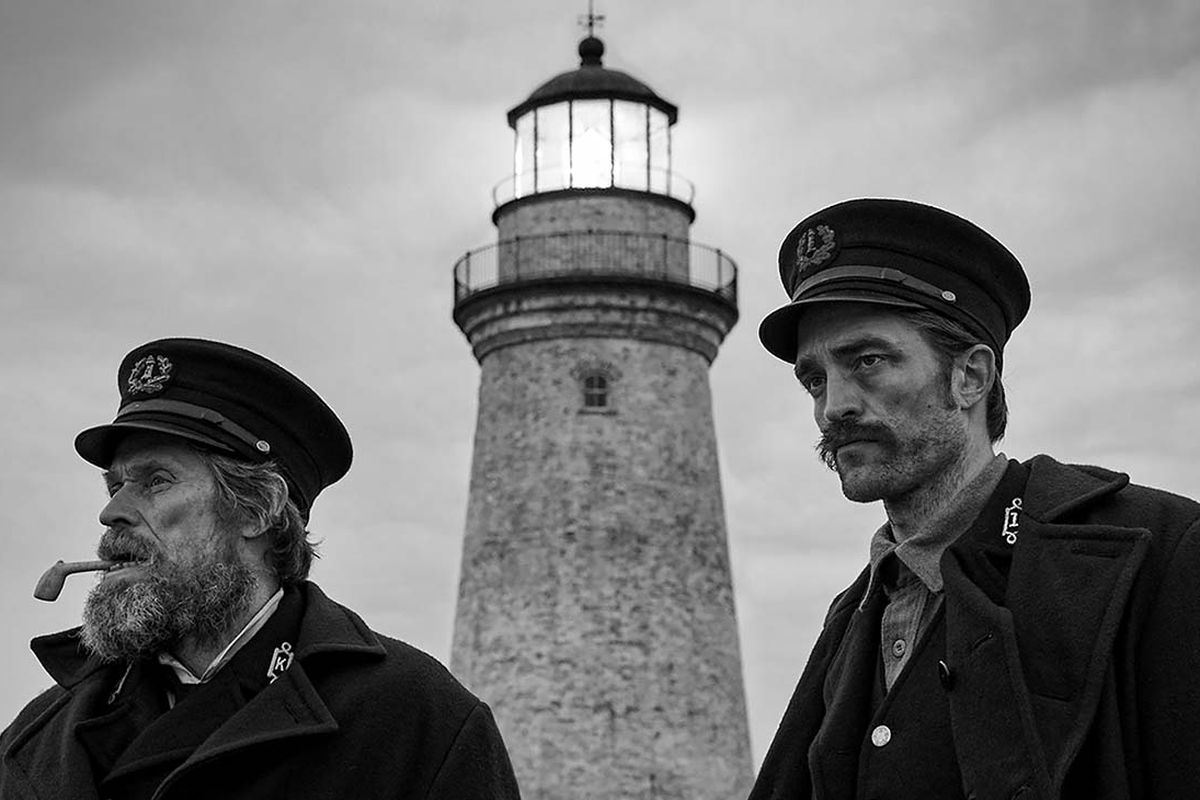
15. The Lighthouse
Director/co-writer Robert Eggers follows The Witch, his incandescent 2015 feature debut, with
another painstakingly crafted, moody period piece. The Lighthouse strands you, along with two wickies
(Robert Pattinson and Willem Dafoe, both mad geniuses at work), on the
unforgiving island home of one lonely 1890s New England lighthouse.
This is thrilling cinema. Let it in, and it will consume you to
the point of nearly missing the deft gothic storytelling at work. The film is
other-worldly, surreal, meticulous and consistently creepy. And we’ll tell you
what The Lighthouse is not. It is not a film ye
will soon forget.
16. The Last Black Man in San Francisco
More than just a story of gentrification, The Last Black
Man in San Francisco is a multi-layered visionary feature debut for
director/co-writer Joe Talbot. Set against the changing face of a city and the
nature of male friendship, we follow along with lifelong friends Mont (Montgomery
Allen) and Jimmie (Jimmie Fails, Talbot’s longtime collaborator whose story is
the basis for the film) as they stake a claim for the majestic home where
Jimmie was raised.
Funny and touching with a knack for keenly unique observations, TLBMISF seems to exist in its very own time and space, intent to lay bare a melancholy but endlessly loving soul.
17. Midsommar
Just two features into filmmaker
Ari Aster’s genre takeover and already you can detect a pattern. First, he
introduces a near-unfathomable amount of grief. Then, he drags you so far
inside it you won’t fully emerge for days.
In Midsommar, we are as desperate to claw our way out of this soul-crushing grief as Dani (Florence Pugh). Mainly to avoid being alone, Dani insinuates herself into her anthropology student boyfriend Christian’s (Jack Reynor) trip to rural Sweden with his buds. Little does she know they are all headed straight for a modern riff on The Wicker Man.
Like a Bergman inspired homage to bad breakups,
this terror is deeply-rooted in the psyche, always taking less care to scare
you than to keep you unsettled and on edge.
18. Monos
On a mountaintop that rests among the clouds,
eight child soldiers guard an American hostage and a conscripted milk cow. Yes,
you’ll find parallels to Lord of the Flies,
even Apocalypse Now, but filmmaker Alejandro Landes
continually upends your assumptions by tossing aside any common rulebooks on
storytelling.
Landes never gives us the chance to feel
confident about anything we think we know, as the powerful score from Mica Levi
(Under the Skin, Jackie) and an impeccable sound design
totally immerse us in an atmosphere of often breathless tension and wanton
violence. In just his second narrative feature, Landes crafts
a primal experience of alienation and survival, with a strange and savage
beauty that may shake you.
19. Knives Out
Knives Out is
writer/director Rian Johnson’s Agatha Christie-style take on the general
uselessness of the 1%. And it is a riot. As it is a whodunnit, little should be
spilled about the film except these names: Daniel Craig, Jamie Lee Curtis,
Chris Evans, Don Johnson, Michael Shannon, Ana de Armas, Toni Collegge, Jaeden
Martel and Don Johnson. Wow!
Johnson proves that you can poke fun without
abandoning compassion. More than that, he reminds us that, as a writer, he’s
shooting on all cylinders: wry, clever, meticulously crafted, socially aware
and tons of fun.
20. Little Woods
Nia DaCosta’s feature directorial
debut, which she also wrote, is an independent drama of the most unusual
sort—the sort that situates itself unapologetically inside American poverty.
This is less a film about the complicated pull of illegal activity and more a
film about the obstacles the American poor face—many of them created by a
healthcare system that serves anyone but our own ill and injured.
But politically savvy filmmaking is not the main reason to
see Little Woods. See it because Tessa Thompson and Lily James
are amazing, or because the story is stirring and unpredictable.
See it because it’s what America
actually looks like.
21. Once Upon a Time… in Hollywood
It’s Once Upon a Time…In Hollywood, Quentin Tarantino’s clearest love letter to cinema both great and trashy. Spilling with nostalgia and packing more sentiment than his previous 8 films combined, Hollywood is the auteur’s most heartfelt film.
Not that it isn’t bloody. Once it hits its
stride the film packs Reservoir Dogs-level
brutality into a climax that’s as nervy as anything Tarantino’s ever filmed.
But leading up to that, as the filmmaker asks us to look with a mixture of
fondness and sadness at two lives twisting toward the inevitable, he’s actually
almost sweet. In strokes stylish and self-indulgent, Tarantino is bidding adieu
to halcyon days of both flower power innocence and the Hollywood studio
machine.
22. Portrait of a Lady on Fire
Celine Sciamma follows up the vitally of-the-moment indie Girlhood with this breathy, painterly period romance only to clarify that she is a filmmaker with no identifiable bounds. In the 1790s on a forbidding island in Brittany, Marianne (Noemie Merlant) arrives to paint the wedding portrait of Heloise (Adele Haenel), but since Heloise is not marrying voluntarily, she will not sit for a painter. So, a ruse is developed: Marianne pretends to be simply a companion as she steals glances then sketches from memory into the night.
What develops along with the startlingly beautiful intimacy
between the women is a thoughtful rumination on memory and on art, on the
melancholic but no less romantic notion that the memory, though lonesome, is
permanent and perfect.
23. Rocketman
Driven by a wonderfully layered
performance from Taron Egerton – who also handles his vocal duties just fine –
the film eschews the standard biopic playbook for a splendid rock and roll
fantasy.
Writer Lee Hall penned Billy Elliot and
Dexter Fletcher is fresh off co-directing Bohemian Rhapsody. Their
vision draws from both to land somewhere between the enigmatic Dylan
biopic I’m Not There and the effervescent ABBA glitter
bomb Mamma Mia. In the world of Rocketman, anything
is possible. And even with all the eccentric flights of fancy, the film holds
true to an ultimately touching honesty about the life story it’s telling.
24. Ad Astra
Daddy issues in zero gravity? There’s that, but there’s plenty more, as a never-better Brad Pitt and bold strokes from writer/director James Gray deliver an emotional and often breathless spectacle of sound and vision.
The film’s mainly meditative nature is
punctured by bursts of suspense, excitement and even outright terror. Gray
commands a complete mastery of tone and teams with acclaimed cinematographer
Hoyte Van Hoytema for immersive, IMAX-worthy visuals that astound with
subtlety, never seeming overly showy.
25. Dolemite Is My Name
“Dolemite” was the brainchild of Rudy Ray
Moore, who created the character for his standup comedy act in the early 70s,
where cheering crowds led to the urge to take Dolemite to the big screen.
Leading a terrific ensemble that
includes Craig Robinson, Keegan-Michael Key, Kodi Smit-McPhee and a priceless
Wesley Snipes as the “real” actor among these amateurs, Eddie Murphy owns every
frame. This film wouldn’t work unless we see a separation between Moore and his
character. Murphy toes this line with electric charisma, setting up the feels
when Moore’s dogged belief in himself is finally rewarded.
Dolemite Is My Name tells a personal and often hilarious story, but it’s one that’s universal to dreamers everywhere.
Honorable mentions: High Life, Pain & Glory, Waves, Hustlers, Honeyland, Ford v Ferrari
One man’s moral courage provides the anchor for A Hidden Life, writer/director Terrence Malick’s affirmation that a life well-lived is a beneficial one, no matter how small the spotlight.
Malick brings his dreamlike focus to the story of Franz Jagerstatter, a conscientious objector who refused to fight with the Nazis in World War II.
Franz (August Diehl) and his wife Frani (Valerie Pachner) are living happily in an Austrian farming village with their three young daughters. The work is hard but the peasant villagers share a strong communal spirit, still untouched by the winds of war.
Malick showcases the mountain landscape with his customary visual brilliance, teaming with cinematographer Jorg Widmer to envelope us in an expansive and idyllic old world setting among the clouds. But those clouds soon turn literally and figuratively stormy, and as Hitler’s rhetoric is parroted by the villagers, Franz’s commitment to conscience turns him into a prisoner and his family into outcasts who “sin against the village.”
Franz finds little comfort from his church elders, who urge appeasement and seek a compromise. But even an assignment away from the front would require an oath of allegiance to Hitler and the Nazi cause – a line Franz refused to cross.
The hushed voiceovers, forced perspectives and dreamlike imaging that served Malick so well in his masterfully personal The Tree of Life here seem a bit ill-fitting when paired with someone else’s legacy. A frequent return to lingering shots such as clasped hands thrust into the air lose resonance with repetition, creating a subtle tedium that betrays the nearly three hour running time.
Not that Malick’s latest doesn’t deliver emotional power, it certainly does, most pointedly during Franz’s visit with a church artist. Suffice to say the exchange features some of Malick’s most brilliantly concise dialogue, using one man’s honest introspection to frame another’s moral quandary in a heartbreakingly beautiful new light.
Try hard, and you can imagine Malick working in a purely historical context, giving a deserving salute to a lesser known man for all seasons.
But on its face, the film presents a climate that is all too familiar, one where a rising tide of hate divides families, reduces religious tenets to twisted rationalizations, and where blind rage requires no subtitles. A Hidden Life is at its best when those stakes are clear, and Franz’s unwavering conviction is a sobering history lesson.
Not that long ago in a galaxy near and dear to us, J.J. Abrams brilliantly re-packaged our Star Wars memories as The Force Awakens. Rian Johnson’s The Last Jedi took an opposite approach two years later, bringing a challenging and welcome nerve that sent a clear signal it would soon be time to move on.
Abrams is back as director and co-writer to close the saga with The Rise of Skywalker, which ends up feeling less like a course correction (which wasn’t needed) and more like a sly meeting of both minds. The fan service is strong with this one, indeed, though it never quite smacks of panicked fanboy appeasement.
In fact, the echoes of Johnson’s vision only make Abrams’s franchise love letter more emotionally resonant. We were told this goodbye was coming, and now here it is, so grab hold of something.
And that doesn’t mean just tissues (though you may need them), as Abrams delivers action that comes early and more than often. From deep space shootouts to light saber duals amid monstrous ocean waves, the heart-racing set pieces are damn near non stop and seldom less than spectacular.
But let’s be real, this is the Rey and (Kylo) Ren show.
We knew their fates would collide, we wanted that collision, and here we get it, propelled by two actors in Daisy Ridley and Adam Driver who are able to fully embrace the weight of their respective arcs. As all our questions are eventually answered, Driver and Ridley never let us forget what drives their characters: the closure of identity.
And from a new hope to the last hope, it is precisely those bloodlines and destinies that have always driven this entire franchise. Abrams makes sure he honors that legacy with a satisfying sendoff bursting with fandom in nearly every frame.
Yes, you’ll find some awkward dialogue and underused characters, but that’s not a bad scorecard considering all that The Rise of Skywalker throws at us. From welcome hellos (Lando!), to sad goodbyes (Carrie Fisher’s is handled with heroic grace), political relevance (“there’s more of us” in the resistance) to stand up and cheer moments, this is a one helluva farewell party.
One of the most fun facts in acting is that most of the greats, even the truly greats, started off in horror. And, apparently, they all co-starred at one point or another with Keanu Reeves, whose Oscar is apparently still forthcoming. Today we look at some horror films with casts dripping with future gold.
5. Constantine (2005)
Two Oscars plus three nominations. Not for Constantine,
obviously, but that’s the hardware and would-be hardware shared among the cast
of this one.
We have no explanation for this, but Keanu Reeves shows up
three times in this countdown, regardless of the fact that he’s never been
nominated for an Oscar.
No!
Francis Lawrence (of the many Hunger Games fame) made his directorial debut with this big screen take on the comic Hellblazer. Reeves mumbles his way through the lead role of John Constantine. Destined to hell because of an early-life suicide attempt and cursed with the ability to see demons and angels in their true form, Constantine battles on behalf of the light in the hopes of regaining favor and avoiding his eternal fate.
Tilda Swinton plays the angel Gabriel! Peter Storemare plays
Satan! I don’t know what else you need to convince you to waste two hours, but
Rachel Weisz also plays twins, Pruitt Taylor Vince plays a priest, Djimon
Hounsou plays a witch doctor, and there’s absolutely no reason any one of these
people said yes to this job. Glorious!
4. Bram Stoker’s Dracula (1992)
OK, well Coppola alone has five outright Oscars and one
Thalberg Memorial Award, as well as nine additional nominations. Add to that
Oldman’s win and nomination, Hopkins’s win and three nominations, Ryder’s two
nominations and Richard E. Grant’s nom and you have to just wonder why this
movie doesn’t work better.
Overheated, overperformed and somehow undeniably watchable,
Francis Ford Coppola’s take on Stoker’s classic vampire tale is a train wreck.
Keanu Reeves is awful. Winona Ryder is awful. Anthony
Hopkins is so over the top as to be borderline hilarious. And yet, Coppola
somehow matches that ridiculous volume and pitch with a writhing, carnal
atmosphere – almost an oversaturated Hammer horror, all heaving breasts and
slippery satin.
At the heart of the film is a glorious Gary Oldman, who is
particularly memorable as the almost goofily macabre pre-London Dracula. Tom
Waits makes an impression as Renfield, Richard E. Grant offers a nicely wearied
turn as the asylum’s keeper, Dr. Seward, and the lovely Sadie Frost joins a slew
of nubile vampire women to keep the film simmering. It’s a sloppy stew, but it
is just so tasty.
3. The Gift (2000)
Blanchett has two, Swank has two, Simmons has one, writer
Billy Bob Thornton has one plus, including Danny Elfman and Greg Kinnear,
there’s another 11 Oscar nominations for this cast and crew. And yet…
Thornton co-writes this supernatural backwoods thriller,
allegedly about experiences his mother had as a clairvoyant. Sam Raimi, who’d
just directed Thornton to an Oscar nomination with A Simple Plan, directs a
star-heavy cast: Cate Blanchette, Keanu Reeves, JK Simmons, Gary Cole, Hilary Swank, Giovanni Ribisi, Katie Holmes
and Greg Kinnear.
Blanchette is a small town Georgia fortune teller (though
she doesn’t like that label). Recently widowed and raising three young boys,
she’s the picture of vulnerability and Blanchette is, of course, excellent.
This is one of Reeves’s stronger performances, too, as the violent rube
suspected of murdering a lovely young missing person (Holmes).
Ribisi does the best by the film, which is a fun if
predictable little spook show. Raimi can’t quite find his tone, and humorless
horror is definitely not the filmmaker’s strong suit. Still, the cast is just
about enough to make the film really shine.
2. Zombieland (2009)
Emma Stone, Woody Harrelson, Jesse Eisenberg, Abigail
Breslin and Bill Murray each have at least one Oscar nomination; Stone’s also
won one. And in a lovely change of pace, the movie they made together kicks all
manner of ass.
Hilarious, scary, action-packed, clever and, when necessary,
touching, Zombieland ranks as one of the most fun zombie movies ever made. How
much of that is due to Rhett Reese and Paul Wernick’s spot-on screenplay?
Loads. How much credit goes to director Ruben Fleischer? Well, he did stage
that utterly fantastic theme park kiosk shootout of death, didn’t he?
But let’s be honest, the chemistry among the four leads,
their comic timing and simple, undeniable talent is what raises this film to
the highest of genre heights.
https://www.youtube.com/watch?v=p9gNJpJyYiA
1. American Psycho (2000)
Truth be told, Christian Bale should have won the Oscar for
this iconic slice of perfection. He did not, but he did win for The Fighter,
with three nominations in quick succession after that. Reese Witherspoon has
one win, one nom and Jared Leto has one win. Meanwhile, Chloe Sevigny has one
nomination to Willem Dafoe’s four.
It this film better than all of those? Hell yes. These fantastic
actors mingle in a giddy hatchet to the head of the abiding culture of the
Eighties. American Psycho represents the sleekest, most
confident black comedy – perhaps ever. Writer/director Mary Harron’s send
up of the soulless Reagan era is breathtakingly handled, from the set
decoration to the soundtrack, but the film works as well as a horror picture as
it does a comedy.
As solid as this cast is, and top to bottom it is perfect,
every performance is eclipsed by the lunatic genius of Bale’s work. Volatile,
soulless, misogynistic and insane, yet somehow he also draws some empathy. It
is wild, brilliant work that marked a talent preparing for big things.
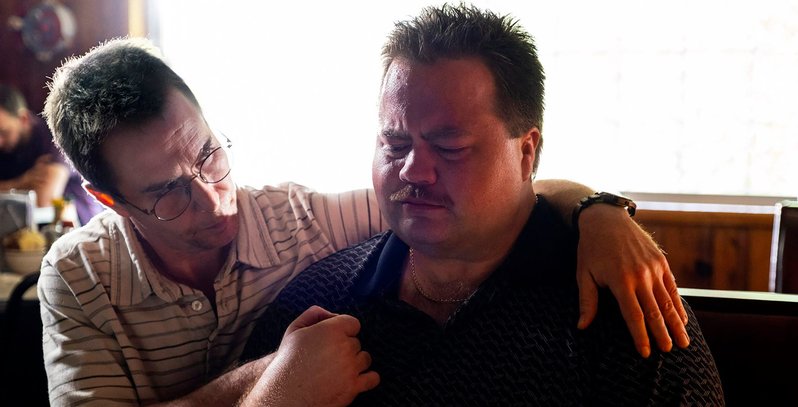
Richard Jewell is a film Clint Eastwood has reportedly been trying to direct for years, and no wonder. It’s the story of a heroic man forced to fight against bureaucrats and parasites who question his heroism, which seems to be Clint’s favored genre.
Jewell, of course, was a hero at the Centennial Park bombing during the Atlanta olympics in 1996. A security guard who first spotted the bomb and was helping clear the scene when it exploded, Jewell was later named as the FBI’s prime suspect, and had his life turned upside down for months until the feds gave up.
It’s a pretty clear case of a man wronged, and a compelling story clearly worthy of a film. But while Eastwood and writer Billy Ray tell much of it well, their zeal for painting broad-stroked villains is hard to overcome.
After years of standout supporting roles (I, Tonya, Black KkKlansman) Paul Walter Hauser takes the lead as Jewell and grounds the film with a terrific and often touching performance. As suspicion around Jewell grows, the bonds created with his lawyer and his mother (Sam Rockwell and Kathy Bates, both great) show Eastwood and Ray at their nuanced best.
The law and the press don’t get off so easy. That’s not to say they should get a pass, far from it, but Atlanta Journal reporter Kathy Scruggs is drawn so one dimensionally, Olivia Wilde might as well be twirling a mustache every time she’s onscreen.
The Journal is currently threatening legal action over the depiction of Scruggs (now deceased, as is Jewell) trading sexual favors to an FBI agent (Jon Hamm) for info, but the film’s slut-shaming isn’t reserved for just one reporter. They’re all whores.
And in case you miss the strategically placed sticker in the lawyer’s office that reads “I fear the government more than I fear terrorism,” Eastwood returns to it more than once. That’s grandstanding, not character development, and ends up undercutting a layer we could have gotten so much more intimately solely through Rockwell’s performance.
Richard Jewell‘s story is a good one, a tragic one, and a cautionary tale that deserves telling. And the film it deserves – the one where a common man finds the will to fight for his dignity – is in here, you just have to wade through some blanket scapegoating to find it.
Recent box office totals have sent a pretty clear message: if you want a butts-in-seats reboot, you gotta come with a strong new hook.
Jumanji: Welcome to the Jungle got it right two years ago, and now most of that gang is back for The Next Level, which is smart enough to add a few new wrinkles (plus some trusty old ones) for freshness.
We catch up with our four young heroes a year removed from high school and trying hard to keep in touch. Over Christmas break from college, Spencer (Alex Wolff), Martha (Morgan Turner), Bethany (Madison Iseman) and Fridge (Ser’Darius Blain) make plans for a meetup, but Spencer doesn’t show.
Hearing those familiar drums, the other three quickly figure out he’s been sucked back into Jumanji, and decide to go after him. I mean, they beat it once, right?
New game, new rules, brand new hook.
Bethany is left behind, but two new players aren’t: Spencer’s grandpa Eddie (Danny DeVito) and Eddie’s ex-best friend Milo (Danny Glover). Know what else? Everyone gets a new avatar.
Well, not Martha, she’s still badass Ruby Roundhouse (Karen Gillan). But this time, it’s Eddie who gets the smoldering heroic intensity of Dr. Bravestone (Dwayne Johnson), while Fridge is portly Professor Shelly Oberon (Jack Black), Milo is diminutive zoologist Moose Finbar (Kevin Hart) and Spencer is newly-added cat burglar Ming Fleetfoot (Awkwafina).
The next level mission: free Jumanji from the evil clutches of Jurgen the Brutal (GOT‘s Rory McCann), or die trying. Game on!
Watching the four adult stars channel teenagers in the first film was a blast, but the avatar switches here are the smart plays, and the body swaps don’t stop once the game begins. Some of the gags do settle for low hanging fruit (i.e. old people are easily confused) but plenty others are clever and inspired.
The film itself even gets in on the switcheroo spirit, with fewer solid laughs but a markedly better adventure. Welcome to the Jungle’s riffs on The Breakfast Club make way for director Jake Kasdan’s set piece homages to Mission Impossible, Indiana Jones, Kingsman and even Peter Jackson’s King Kong in a thrilling escape from angry mandrills.
Writers Chris McKenna and Erik Sommers do not return, which I’m guessing is a major reason the life lesson feels don’t land as smoothly this time. But Kasdan and his team hit the big shots. They give us a reason to be interested in a return to Jumanji, and plenty of fun once we get there.
Holy cow, will you look at all those stars? I don’t think we’ve ever seen a week with such an amazing bounty. Stars, stars, stars – they’re everywhere. If you can’t find something to love this week, you, friend, have troubles.