Lots going on this week in theaters. We talk through Crawl, Stuber, Darlin’, Wild Rose, and Toni Morrison: The Pieces I Am. We also cover what’s new in home entertainment.
Listen to the full podcast HERE.
Lots going on this week in theaters. We talk through Crawl, Stuber, Darlin’, Wild Rose, and Toni Morrison: The Pieces I Am. We also cover what’s new in home entertainment.
Listen to the full podcast HERE.
by Brandon Thomas
“Name?”
“Casey Davies.”
“That’s a very feminine sounding name.”
This humiliating exchange happens between Casey (Jesse Eisenberg) and Sensei (Alessandro Nivola) as Casey excitedly signs up for karate lessons. Casey suffers from a severe lack of confidence. He leads a drab, boring life. His house? Boring. His job? Boring. Even his dog is boring. No one respects Casey. His coworkers barely register his existence. The final demeaning moment is the night he’s viciously attacked while walking home from the store. Karate seems like the perfect antidote for this life of mediocrity.
Eh – not really.
Watching The Art of Self-Defense made me think of Fight Club. A lot. Fight Club overflows with masculinity. Brawny men beating each other to a pulp while waxing philosophical is the film’s bread and butter. Fincher’s movie definitely comments on the toxicity of masculinity, but it also spends a heck of a lot of time glorifying it, too.
The Art of Self Defense is interested in what it means to be a “real man.” Outside of Casey, the men in this dojo operate through sheer brute force. Violence, intimidation and blackmail are how they make their world work. Casey’s gravitational pull to these figures is a tale as old as time. Writer/director Riley Stearns isn’t interested in reveling in this world Sensei has created, he’s more interested in pushing the audience to share in Casey’s horror as he experiences it.
It’s easy to look at many of Eisenberg’s roles and lump them into the same narrow category. Yes, he plays a lot of isolated losers that stammar and shuffle around, but he also plays those roles with varying degrees of nuance. There’s a level of fear and anxiety he brings to Casey that feels different from his other loveable nerds. Casey is a rubber band about to snap at any moment, and Eisenberg does a fantastic job of keeping the audience guessing as to when that will happen.
Nivola’s Sensei has an air of false machismo to him at all times. He speaks in a low, gruff voice, and his words feel precisely selected, but fake. Nivola gets that this movie is a stark black comedy, and he completely goes for broke. He is able to walk this fine line of playing a scene straight, yet has it come off as a comedic masterstroke.
Armed with biting satire, excellent performances, and more on its mind than cheap laughs, The Art of Self Defense delivers a bold, original dark comedy. Minimal flexing involved.

by Hope Madden
Do you know Alice Guy-Blaché? Documentarian Pamela B. Green thinks you should.
She is clearly right.
Guy-Blaché’s groundbreaking career has not been celebrated in the same way as her historical counterparts. She was not only the first female filmmaker, she was among the first four filmmakers, period. She boasts an output of around 1000 films, among them the first narrative film, the first color tinted, and one of the first two films with synchronized sound.
And yet, of the dozen or so filmmakers and actors Green interviews in the opening montage, including Geena Davis, Peter Farrelly, Catherine Hardwicke, Peter Bogdanovich and Ava DuVernay, only DuVernay recognizes the name.
Says Bogdanovich, “I’ve spent my life making films and have written for years about film and I’ve never even heard of her.”
Well, clearly Peter Bogdanovich never took a Women in Film class at Ohio State.
Whether you have or have not heard of Alice Guy-Blaché, Green’s film is bound to be informative, showcasing a figure with remarkable aptitude not only in business (she ran her own studio and produced her own films) but amazing artistic vision, pioneering much of the comedic and dramatic form we now take for granted.
Jodi Foster lends respectful narration (and spot-on French pronunciation!) to an earnest and loving—if sometimes tedious—exploration.
Green’s film is at its best during rare interview footage of the filmmaker, at the time nearing the end of her life and taking a wistful, reflective posture. Between that, footage from Guy-Blaché’s canon, and responses from modern filmmakers on that footage, Green pieces together some engaging and illustrative moments.
Her film gets sidetracked too easily, though, answering questions from those very filmmakers who did not recognize Guy-Blaché’s name, “I would like to see inside her studio,” “I’d love to hear how she managed to be a filmmaker and a mother during that time period…”
These offshoot moments feel disjointed, lessening the intimacy with the subject the more successful moments nearly reach.
Green’s biggest misstep as a filmmaker is her preoccupation with her own sleuthing, some of which feels endearing in its enthusiastic amateurishness, but too often comes off as needlessly self-congratulatory.
Though Green herself struggles to create a film artistically worthy of the pioneering filmmaker, her heart is in the right place and her quest to help Guy-Blaché reclaim her own place in cinematic history is laudable.

by Brandon Thomas
Abel Ferrera, the filmmaker behind Ms. 45, The Driller Killer, and Bad Lieutenant, was maybe too perfect of a choice to depict the final 24 hours in the life of Italian artist Pier Pasolini. While this love letter to Pasolini never quite succumbs to standard biopic syndrome, it also doesn’t fully rise above being anything more than hero worship.
After Pier Pasolini (Willem Dafoe) puts the finishing touches on his masterpiece, Salò, the provocative writer, critic, activist and filmmaker returns to Rome to visit with his family. During the course of this relatively normal day, Pasolini takes part in an interview, meets with fellow artists, and cruises the evening looking for a lover. While the day’s events seem mundane and boring for someone typically known as a notorious hellraiser, all of this leads to a tragic outcome on a beach outside of Ostia, Italy.
It’s evident early on that this movie is in awe of Pasolini. The film doesn’t depict Pasolini’s last day as much as it observes it. Ferrera treats the banal dealings of this 24-hour period with reverence. Pasolini’s life and work is church. The man himself is Jesus.
Where the spirit of Pasolini is sincerely felt is when Ferrera brings the artist’s works to life. A segment from a novel he’s currently working on is realized with graphic depiction as Pasolini’s character, based on the author himself, has an intense sexual encounter with a young man. Another segment finds two men looking for the famed Feast of Fertility Festival where gay men and women come together for one night to procreate. Neither segment adds to Pasolini’s plot (or what exists of one), but they are so categorically Pasolini in tone, spirit and theme that the stillness of the movie is finally shaken alive.
While the lack of narrative momentum causes the film to stumble, Dafoe stuns as the titular character. He doesn’t play Pasolini as much as he channels the spirit of the late artist. Pasolini’s cool and equal indifference flows through Dafoe’s body language and speech like second nature. His Pasolini is a man equally at home with who he his, but also incredibly bored with the person he has become.
Ferrera’s biggest mistake with Pasolini is that he cares too much about the man himself. While Dafoe’s equal admiration leads to a strong anchoring performance, Ferrara’s unwillingness to push the narrative leaves the film largely lifeless and inert.

Not a terrible week in home entertainment, actually. And also not a bad week to avoid the oppressive weather, sit on the couch with a chilly beverage and enjoy.
Click the film title for the full review.


Today we talk through movies that do not make European trips seem wise. We also talk through the ten best films of the first half of 2019 and what’s new in home entertainment.
Listen to the full podcast HERE.
Is it really that time already? Yes, 2019 is half over and that means taking a gander backward to appreciate the horror we’ve witnessed thus far. Two first film filmmakers leave a mark while three of the greats remind us why they have that ranking.
Hey, club kids, it’s a Gaspar Noe dance party! And you know what that means: a balls-out psychedelic bacchanal soaked in body fluids, drugs and EDM.
Noe’s usual reliance on extended takes, stationary cameras and overhead shots makes the dance sequences utterly intoxicating, the performers’ energy creating exciting visual beauty and a palpable exuberance for their art. These seductive odes to dance are interspersed with sometimes graphically sexual conversations between the dancers, sharpening character edges and laying down an interpersonal framework that will soon be turned on its head.
In what seems like an instant, suspicion, mob rule and primal desire overtakes the company. The dancers’ movements become monstrosities bathed in pulsating rhythms, visual disorientation, wanton violence and illicit sex.
What spurred this sea change, and who is to blame? Noe turns that mystery into a greater conversation about the opportunity of birth, the impossibility of life and the extraordinary experience of death, and as is his wont, batters your senses while doing it.
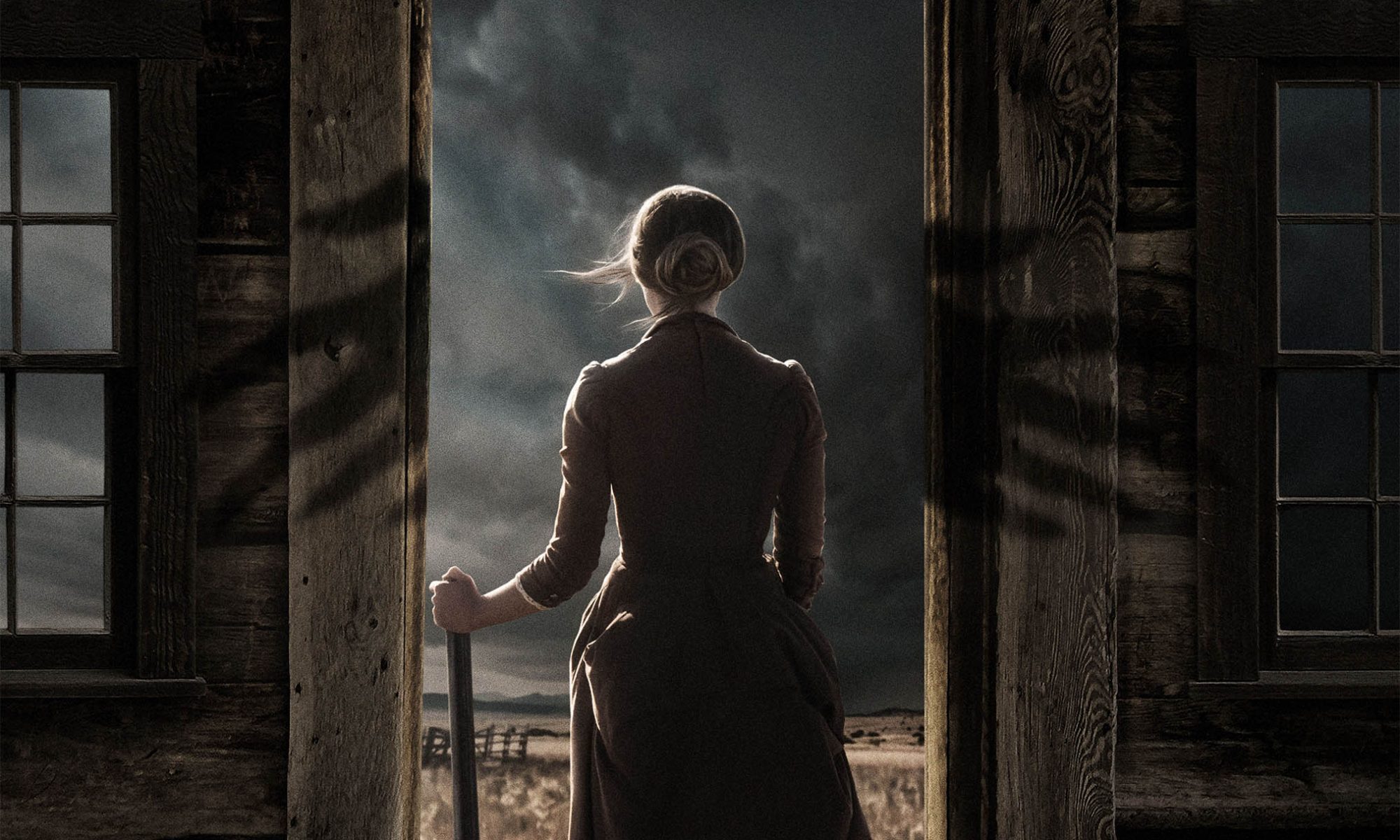
Lizzy and Isaac Macklin (Caitlin Gerard and Ashley Zukerman, respectively) are relieved to see smoke coming from a distant chimney. The only other cabin for miles has been empty a long while, and the prairie does get lonesome.
But companionship and burden go hand in hand for Lizzy, and company won’t chase away all the demons plaguing this harsh land.
Working from a spare script by Teresa Sutherland, Tammi develops a wonderfully spooky descent into madness. Throughout Lizzy’s isolation, Tammi swaps images onscreen from present moment reality to weeks earlier, to months earlier, to a present-day hallucination or specter and back again. The looping time frame and repetitive imagery turn in on themselves to create a dizzying effect that echoes Lizzy’s headspace.
Making a remarkably assured feature debut as director, Lukas Feigelfeld mesmerizes with his German Gothic poetry, Hagazussa: A Heathen’s Curse.
Settled somewhere in the 15th Century Alps, the film shadows lonely, ostracized women struggling against a period where plague, paranoia and superstition reigned.
It would be easy to mistake the story Feigelfeld (who also writes) develops as a take on horror’s common “is she crazy or is there malevolence afoot?” theme. But the filmmaker’s hallucinatory tone and Aleksandra Cwen’s grounded performance allow Hagazussa to straddle that line and perhaps introduce a third option—maybe both are true.
The film lends itself to a reading more lyrical than literal. Feigelfeld’s influences from Murnau to Lynch show themselves in his deliberate pacing and the sheer beauty of his delusional segments. He’s captured this moment in time, this draining and ugly paranoia that caused women such misery, with imagery that is perplexingly beautiful.
Jim Jarmusch’s zombie film never loses its deadpan humor or its sleepy, small town pace, which is one of The Dead Don’t Die‘s greatest charms. Another is the string of in-jokes that horror fans will revisit with countless re-viewings.
But let’s be honest, the cast is the thing. Murray and Driver’s onscreen chemistry is a joy. In fact, Murray’s onscreen chemistry with everyone—Sevigny, Swinton, Glover, even Carol Kane, who’s dead the entire film—delivers the tender heart of the movie.
Driver out-deadpans everyone in the film with comedic delivery I honestly did not know he could muster. Landry Jones also shines, as does The Tilda. (Why can’t she be in every movie?)
Though it’s tempting to see this narrative as some kind of metaphor for our current global political dystopia, in fairness, it’s more of a mildly cynical love letter to horror and populist entertainment.
Mainly, it’s a low-key laugh riot, an in-joke that feels inclusive and the most quotable movie of the year.
From a Santa Cruz carnival to a hall of mirrors to a wall of rabbits in cages—setting each to its own insidious sound, whether the whistle of Itsy Bitsy Spider or Gregorian chanting— writer/director Jordan Peele draws on moods and images from horror’s collective unconscious and blends them into something hypnotic and almost primal.
Even as Peele lulls us with familiar surroundings and visual quotes from The Lost Boys, Jaws, then Funny Games, then The Strangers and Night of the Living Dead and beyond, Us is far more than a riff on some old favorites. A masterful storyteller, Peele weaves together these moments of inspiration not simply to homage greatness but to illustrate a larger, deeper nightmare. It’s as if Alice’s Adventures in Wonderland turned into a plague on humanity.
Do these evil twins represent the darkest parts of ourselves that we fight to keep hidden? The fragile nature of identity? “One nation” bitterly divided?
You could make a case for these and more, but when Peele unveils his coup de grace moment (which would make Rod Serling proud), it ultimately feels like an open-ended invitation to revisit and discuss, much like he undoubtedly did for so many genre classics.
While it’s fun to be scared stiff, scared smart is even better, a fact Jordan Peele has clearly known for years.
by Cat McAlpine
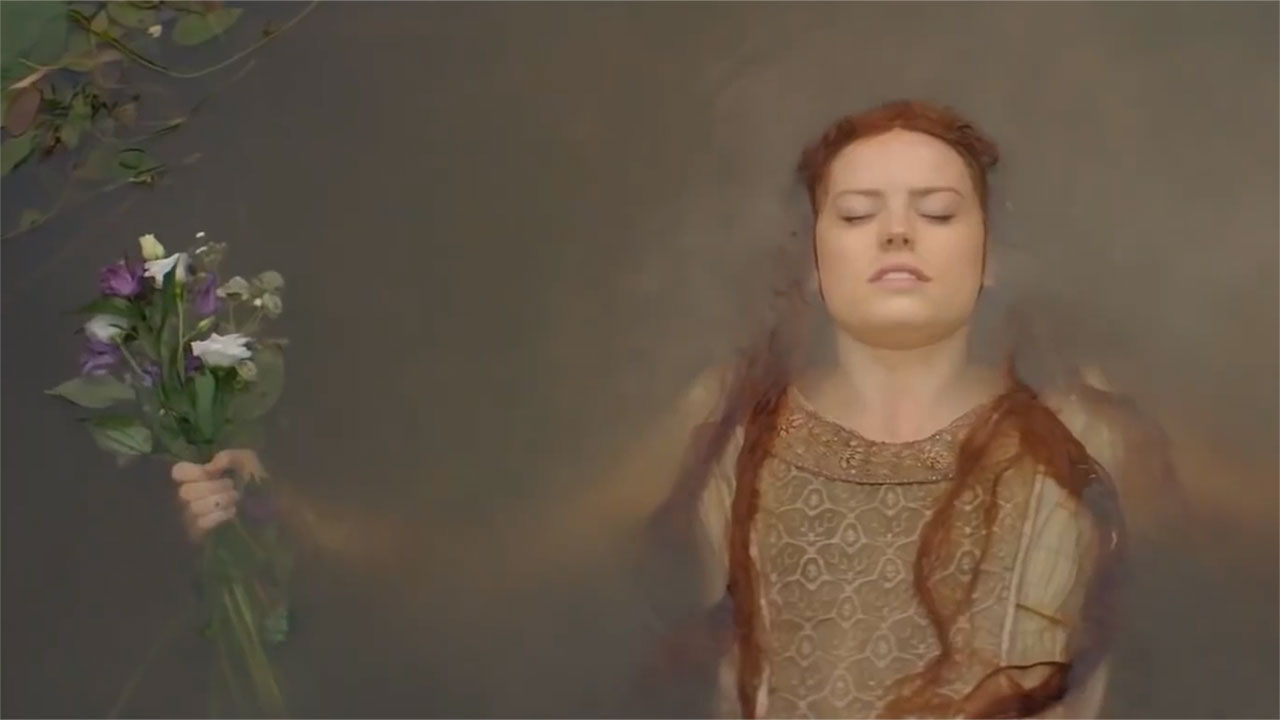
You’ve probably seen the painting “Ophelia” by Sir John Everett Millais (1852). It’s one of the most iconic images born from Shakespeare’s Hamlet, and one of the most well-known paintings of the 19th century. In it, fair Ophelia floats on her back in a river, surrounded by her red hair, elaborate gown, and a fistful of flowers.
This painting seems to be the sole aesthetic for director Claire McCarthy’s Ophelia-centric Hamlet adaptation, as evidenced by a horrible red wig, and the film’s open on a recreation of the painting. Also Ophelia’s quirk is she likes to leave the castle in the middle of the day and just walk into the river?
This iconic imagery is immediately interrupted with a “You may think you know my story…” voice over that immediately dashed all my hopes for Ophelia. The following film was a bizarre infantilizing of a classic heroine, already disadvantaged by her source material. Writers Semi Chellas (adaptation) and Lisa Klein (novel) navigate a series of bizarre Shakespearian fan-service plot twists that only make the story seem less grounded.
You see, Hamlet (a very good George MacKay) fell for Ophelia (Daisy Ridley) because she was quirky. The other girls didn’t like her because she didn’t have money for jewels and didn’t care to learn to dance properly.
This characterization of Ophelia is so cheap that the chemistry between MacKay and Ridley fizzles, further highlighting Hamlet’s unhinged impulses while Ophelia remains a canvas for him to project onto. Ridley surprisingly has more chemistry with charming Devon Terrel (Horatio).
Because this re-telling gets the Rosencrantz and Guildenstern Are Dead treatment, flourishes to the tale only happen in the margins when Ophelia would be off stage, and the story is still bound to all the events penned by Shakespeare. This means many key plot points seem to fly in from nowhere, even for those familiar with the original play. Out of nowhere Ophelia is awoken and told “Your father is dead. Hamlet accidentally killed him.” And while we’re experiencing events through Ophelia’s lens, we’re still left asking “Wait…what happened?”
Time that could’ve been spent developing Ophelia’s character or deepening her connection to her family (familial relationships being the focus of Hamlet) is instead spent on weird through lines about witchcraft and a secret twin. And while Ophelia ends up somewhere we don’t expect with a final resilient message about valuing yourself, the ending feels almost tacky instead of triumphant.
McCarthy’s film isn’t without merit. There’s some clever weaving of Shakespeare’s text into the dialogue. The costuming is beautifully done and the play-with-a-play performance makes for powerful imagery done in silhouette. The fight choreography is beautiful, fierce, and performed with a great fluidity. In all times, when the film is following the original plot, the fevered intensity of Hamlet shines through.
I hope one day sweet Ophelia gets a good story, a method for her madness, and a resolution for her watery demise. But this isn’t it.
Hmmm…well, not a lot to recommend this week, if we’re honest. But you can always rewatch Us!
Click the film title for the full review.
A couple of really great options this week in home entertainment. Also, a couple to steer clear of. Here is the low down.
Click the film title for the full review.