Tag Archives: Christie Robb

Next-Level Flower Arrangements

Queen Marie

by Christie Robb

Alexis Cahill’s biopic is a sumptuous surface-level look at Queen Marie of Romania’s impact on the negotiations leading up to the Treaty of Versailles—which wrapped up the first World War in 1919.

Promised by its allies to have all its disparate historical territories united at the conclusion of the war, Romania has been devastated by German occupation. Despite passionate pleas by the prime minister at the peace talks, none of the major players (Clemenceau of France, Lloyd George of the United Kingdom, and Wilson of the United States) can be bothered to lend an ear, much less lend some aid.

So, Queen Marie (Roxana Lupu, a veteran of royal portrayal), granddaughter of Queen Victoria, hops the royal train to Paris to lobby on her country’s behalf.

The attention to detail in the costumes, interiors, and settings is divine. It’s a joy to sit back and luxuriate in the opulence while historical personages debate national boundaries wearing haute couture in a variety of fancy reception rooms decorated by an almost ridiculous amount of freshly-cut flowers.

But once the delight of the visual treat starts to get old, there’s not much here to hold the attention.

We are frequently told of the sacrifices the Romanians made during the war and of the hardships they are currently suffering. But without grounding in the experience of a specific character, it’s a lot of tell with no show. (In fact, the film’s intro is several minutes of black and white footage with a voiceover summarizing Romania’s involvement in the war that’s more reminiscent of an early 2000s Biography Channel program than a feature film.)

We don’t get why a united Romania has any meaning for the people. We just have to take the well-dressed lady at her sometimes wooden word.

There’s also the issue that the story is overloaded with potential conflicts and character arcs that don’t seem to go anywhere.  There’s some sort of marital difficulties between the king and queen and a hint that Marie is having an affair. The heir seems to hate his mom and is conducting an affair with a woman who is unsuitable for reasons that are unclear. And more or less everyone tells Marie that she should probably just stay in her lane and focus on her clothes, children, and social engagements and stop with the politicking already.

I imagine all of this plays better for a Romanian audience for whom the history, characters, and subject matter are familiar. As an American with a very tenuous grasp on WWI and Eastern Europe generally, I found the film to be a pleasant enough introduction to an interesting person, but one that would have benefitted by sacrificing breadth of coverage for depth of character development.

The Kids Are Not Alright

Here Are the Young Men

by Christie Robb

Based on Rob Doyle’s 2014 novel of the same name, Eoin Macken’s Here Are the Young Men is a bleak look at the emotional lives of three boys poised between school, with a somewhat sheltered boyhood, and real life, with its associated responsibility.

The boys witness the death of a little girl and their individual reactions send them down different paths. Rez (Ferdia Walsh-Peelo, Vikings) sinks into depression and nihilism, more or less disappearing from the movie.

Matthew (Dean-Charles Chapman, 1917/Game of Thrones) desires the stabilization of a proper job and a romantic relationship. Kearney (an unsettling Finn Cole, Peaky Blinders) is awakened, inspired by the immediacy of death, and gives himself permission to satisfy his dark impulses.

The boys’ days and nights are awash in a staggering amount and variety of drugs, downed with beer or vodka. Much of the movie is shot out of focus or uses staccato editing to reinforce the sense that the boys are more or less skating over the surface of their lives, ignoring the emotional depths beneath.

Despite their purported friendship and shared traumatic experience, there’s no solace for the boys in their relationships with each other. The few adults that occasionally appear are either menacing, distracted, or bearers of tired bromides. The young men are isolated and left to stumble along, making choices that aren’t informed by reason. The choices are a creature’s response to an applied stimulus.

Matthew and Kearney’s inner lives are somewhat illustrated by shots of their television screens, which show a kind of cartoonish representation of their subconscious or inner lives. Sometimes the TV shows what is happening to a character separated from the others by distance. I imagine this is an attempt to compensate for the lack of the novel’s inner monologues. And it’s ok, but is kind of jarring, given the spare emotional tone of the rest of the film, and inconsistently applied.

You might ask where the young women are. Well, there is one, Jen (Anya Taylor-Joy, The Queen’s Gambit), Matthew’s sometime girlfriend. Taylor-Joy is magnetic and draws the eye in every scene. There’s just not much for her to do except to express disappointment and defend her virginity. With another actress, this character would be all but forgettable. In the real world, Jen would hang out with other people.

Ultimately, the film serves as a reminder of similar, but more memorable entries in the genre like A Clockwork Orange or Trainspotting. Here Are the Young Men fails to differentiate this generation’s young men from the generations proceeding them. Just more sludge in the puddle of toxic masculinity.

It’s People!!!

Roe V Wade

by Christie Robb

Cathy Allyn and Nick Loeb’s film Roe v. Wade is an unnuanced slog through the events leading up to the landmark 1973 Supreme Court decision.

The directors (who share writing credit with Ken Kushner) frame the court case with the conversion narrative of Dr. Bernard Nathanson (Loeb). According to the film, Nathanson, “the Abortion King” aka “the Scraper,” claims to have been swept up in the wave of 70s women’s liberation and performed seventy thousand abortions until he was confronted with fetal development by way of the advent of ultrasound technology. This results in a breakdown that is unmistakably similar to Charlton Heston’s in Soylent Green—“It’s a person! God forgive me! What have I done?!”

The choice to cast Loeb, whose dialogue delivery bears an eerie similarity to an unsure elementary school student asked to read a passage aloud, in such a pivotal role is but one example of the missteps taken in the film.

The hammy acting is a trait shared among many of the cast members. Jamie Kennedy (Scream), for example, as Larry Lader (co-founder of NARAL Pro-Choice America) all but twirls an imaginary handlebar mustache as he explains how liberals seed the uncritical news media with statistics conjured from thin air. Stacey Dash (Clueless) as Dr. Mildred Jefferson (president of the National Right to Life Committee) fairly vibrates with indignation when her eyes aren’t filled with tears at the equating of abortion to slavery or in polite reference to her own infertility issues.

Even if the acting was better, all the emotion would seem misplaced given how much time is devoted to characters debating constitutional law. There is not enough room in a two hour movie to detail the establishment of the Pro-Life and Pro-Choice movements plus the evolution of the Roe court case and still deliver the kind of emotional character development that Allyn and Loeb are shooting for.

The political arguments are underdeveloped, the nuances of the court proceedings are difficult to follow, and there are too many characters to keep track of. Joey Lawrence’s (Blossom) character could have easily been cut as his purpose in the film seems to be delivering supporting quotes by founding fathers.

The film’s stated goal is to tell the true story of Roe vs. Wade. However, this is something it cannot really achieve. Missing is any coverage of the personal, economic, social, or medical reasons why a woman might seek an abortion in the first place. It’s a pro-life persuasive essay masquerading as a soap opera/civics lecture and it’s not particularly good at being any of those things.

Things that Make You Go Hmmm

Donny’s Bar Mitzvah

by Christie Robb

According to Jewish Law, a bar mitzvah is when, at 13, boy becomes a man and can be held accountable for his actions. The film Donny’s Bar Mitzvah seems to have been written by a 13 year-old who needs to be held accountable for his actions.

Seriously. It’s gross.

Ostensibly a found footage VHS cassette, this cinematic gem depicts a 1998 Oscar Night-themed party for Donny (Steele Stebbins) – It’s the The First-Annual Donny Awards! – shot and edited by a hired videographer. There are a few nods to 90s culture that might make the olds smile (remember giant cell phones, pop-up video, the Whassup commercial?).

But writer/director Jonathan Kaufman’s film’s raison d’etre is a celebration of the random, repellant, and pubescent that transcends decade. And like the lukewarm buffet offerings at a reception, it offers a variety of things, none of them particularly done well. You want butt chugging? It’s got it. You want small dick jokes? There’re plenty of  ‘em. Recurrent vomiting? No problem. Tits? There is a pair.

The wooden acting, sometimes bizarre plotting, and sound design reminiscent of ASMR performed by a hot dog and a jar full of lubricant, isn’t quite terrible enough to elevate Jonathan Kaufman’s film to the level of a masterpiece of BAD MOVIEDOM like The Room. But I imagine that with the right people watching it and the appropriate amount of brain cells murdered beforehand, this thing could be fun to watch.

Oh, and I guess Danny Trejo is in it for a little while?

I Can’t Go Out – Week of April 28

The time will come within weeks that we have no post-theatrical releases to discuss. How insane is that? Until then, you can pass the time with two early 2020 releases that, according to box office, you probably missed. Both are worth a look – one is actually excellent.

Click the film title to link the complete review.

The Assistant

The Rhythm Section

Weaponizing Anxiety

Viral: Antisemitism in Four Mutations

by Christie Robb

“Those who cannot remember the past are condemned to repeat it[1].”

In the documentary Viral, director Andrew Goldberg explores the recent rise of antisemitism in the United States and Europe. In a painterly black and white introductory sequence he gives the subject matter the feeling of a fairy tale. The film begins, “It started long ago with a lie about the Jew…”

If only the rest of the film was fiction.

Goldberg compares antisemitism to a virus (topical) which evolves and spreads, empowered by its ability to adapt to the people and circumstances in different locations. The virus began thousands of years ago. Now, one of the interview subjects suggests, we are nearing the “end of a Jewish golden age of feeling comfortable.” The virus is ending a period of dormancy and becoming active once again.

In this film, we are introduced to four “mutations” of the antisemitism virus: the Far Right, USA; Blaming the Jew, Hungary; The Far Left, The United Kingdom; and Islamic Radicalism, France.

 Although tweaked in each mutation to suit the individual circumstances, the “virus” involves getting people to turn off their ability to think critically and giving them a embodied focus on which to place the blame for their fears or anxieties. (See Germany in the 1930s.)

In the US it’s the Jew as orchestrator of the Civil Rights movement and subsequent supposed lessening of accustomed white privileges. In Hungary it’s a campaign to brand George Soros as a puppet master apparently forcing Muslim refugees into the nation to destabilize national culture. In the United Kingdom it’s Jewish colonial capitalists evidently conspiring against the working class. In France, it’s Muslim former-colonial subjects violently murdering random French Jews because they ostensibly back the Palestinians against the Israelis.

Individual Jews are conflated with “the Jew,” which is associated with the threat, the change, the loss of power. Concepts that take years of study to unpack are simplified and reduced again and again until the result is a caricature of a hook-nosed grinning villain with a neon arrow pointing to it and letters spelling out, “B-A-D G-U-Y.”

The whole simplification process is only made more efficient by the availability of the Internet. Once the conspiracy theory is tailored for a local audience it can be repurposed by anyone with a cell phone and/or social media account and replicated over and over.

It’s a scary documentary Goldberg has put together. It’s scary because of the real-life examples of abuse, vandalism, and murder, and because the film itself can be a bit simplistic. This could easily be a miniseries or several individual films, rather than Viral‘s quick summaries of really complicated issues. (Just unpacking everything around the creation of the state of Israel could be its own series – or academic career.)

Still, it’s useful to be aware of when, how, and where a virus is surging. Those of us who are willing to think must keep an eye on the present so we are not doomed to repeat the past.


[1] A quote by George Santayana which is itself frequently misremembered.

Look What the Cat Dragged In

Cats

by Christie Robb

People say that you’re either a cat person or a dog person. I’m a cat person, but definitely not a Cats person. But if you are, there’s a lot to enjoy in the new film version of Andrew Lloyd Webber’s 1981 musical based on poems by T.S. Eliot.

How else could you possibly get tickets to see a show with this cast? Taylor Swift. Idris Elba. Rebel Wilson. James Corden. Jennifer Hudson. How else can you watch a feline Dame Judi Dench curl up convincingly in a basket? Or glimpse Sir Ian McKellen lap from a bowl of milk?

A movie is a very egalitarian way to enjoy a Broadway musical. This one is about an assemblage of cats who have gathered together under the full moon to decide which one of them will be chosen to be reborn into a new life. Their best life. They pitch their case by singing the song of themselves. There’s very little in the way of traditional narrative structure although director Tom Hooper (Les Misérables) does tinker around with the play a bit to try to tease one out. It’s more like a musical revue designed around a central theme.

Initially concerned about falling into the uncanny valley of CG feline effects on the actors’ familiar faces, after some early creepy moments I got used to it. The realistic tail twitches and subtle changes in the angle of an ear serve to give additional cues as to the interior life of a cat that mere facial expressions alone can’t provide. (The opportunity to see emotional reactions through closeups is another advantage of a screen version.)

Occasionally the feline illusion is broken (most often by Swift and Elba) and instead of seeing a cat you are confronted with a dancing furry naked person with Barbie-doll genitalia. But most of the time, it works.

Wilson and Corden are amusing. Watching Francesca Hayward (principal ballerina at the Royal Ballet) dance the role of Victoria is a delight. But the true star of this show is Jennifer Hudson as Grizabella, a former “glamour cat” now old and suffering through hard times.

As in Les Mis, Hooper has his cast sing live, and it is Hudson’s performance of the signature song “Memory” that far outshines every other musical number here. It’s likely what you’ll be humming as you walk out of the theatre, and the one thing you’ll most remember about these Cats.

Parentification

Mickey and the Bear

by Christie Robb

In a nuanced coming-of-age story, writer/director Annabelle Attanasio delicately maps the rocky emotional landscape of  high-school student Mickey Peck (Camila Morrone).

Mickey balances school and work, and endures the clumsy advances of a needy boyfriend, all while running the household and performing the emotional labor for her widowed, oxy-addicted, veteran dad (James Badge Dale).

It’s mostly a thankless job. For every tender moment Mikey and her dad Hank share, there’s a real fear that any moment he’ll lob a bowl of beef-a-roni at her head (or worse). And there’s no hope of it ever getting better.

As her high school graduation approaches, Mikey grapples with which path to take toward her future. Continue to parent her dad? Get pregnant and engaged like her friend Beth? Strike out for California and college with the cute British new kid?

Morrone and Dale are excellent in their roles as daughter and dad. The actors are able to keep up with each other as they shift from emotional vulnerability to volatility and back again. The pair could have easily wandered into stereotype or melodrama, but between the actors’ subtle skill and Attanasio’s writing, the characters present a multifaceted realism that is riveting.

There’s no unnecessary exposition and little dialogue that could be paired away.  The final act has all the more impact for the understated matter-of-fact way that it is treated.

An impressive film, I anticipate great things to come from Attanasio, Morrone and Dale.

https://www.youtube.com/watch?v=kJ6fDHro3Rk

I Don’t Want to Go Out – Week of November 25

Well, a lot of options for your time off this holiday. Too bad none of these movies are very good.

Click the film title to link to the full review.

Official Secrets

Where’d You Go, Bernadette


Don’t Let Go

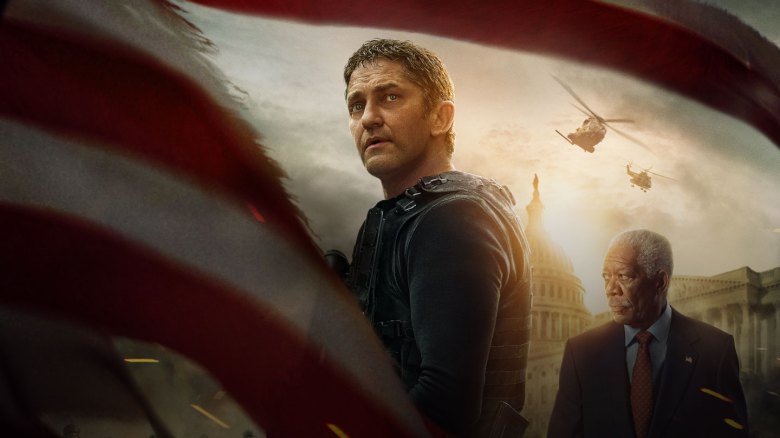
Angel Has Fallen

Mary

Pokémon? No.

Nekrotronic  

by Christie Robb

It’s a truth universally acknowledged that a cute accent will make even the silliest sentiment 20 percent more charming. So, it’s fortunate that the dialogue in Kiah Roache-Turner’s action/comedy/horror is mostly delivered in appealing Australian accents. Otherwise it’s a bit of a mess.

A take on cell phone addiction, Nekrotronic asks the question, “What if demons got online and created a knock-off of Pokémon Go to steal our souls?”

Thankfully, Howard, a sanitation engineer/orphan, discovers he’s the descendant of generations of necromancers (nekromancers?) with demon-fighting superpowers, now upgraded with what look like coaxial cable ports in the backs of their heads. Years ago, his necromancer parents split up when mom, Finnegan, was turned to the dark side. Howard’s dad hid him with muggles before being murdered by his ex.

Ben O’Toole delivers a decent performance in Howard. He’s equally able to pull off his silly X-Men-style superhero suit and deliver the occasional bit of banter that reminds us that the movie is supposed to be part comedy. His chemistry with his tragically underused sidekick Rangi (Epine Bob Savea) is probably the best part of the film. Too bad it’s mostly in the first 18 minutes.

After the initial setup, Nekrotronic often seems to forget the comedic slant and leans heavily into the action. The special effects and fight sequences are acceptable. But there are no stakes. What is Finnegan going to do with the power of the souls she devours through the cell phone game? Use the power to get more souls. Why? To what purpose? Unclear. What does Howard stand to lose? Little. He already seems to hate his foster family and his job. He’s not invested in random strangers. His BF Rangi might take a hit, but Howard’s powers can sorta mitigate that.

The movie mashes up Matrix, Tron and Ghostbusters and sets it to a half-hearted attempt at a Tarantino soundtrack. But there’s no focus or originality in the result.

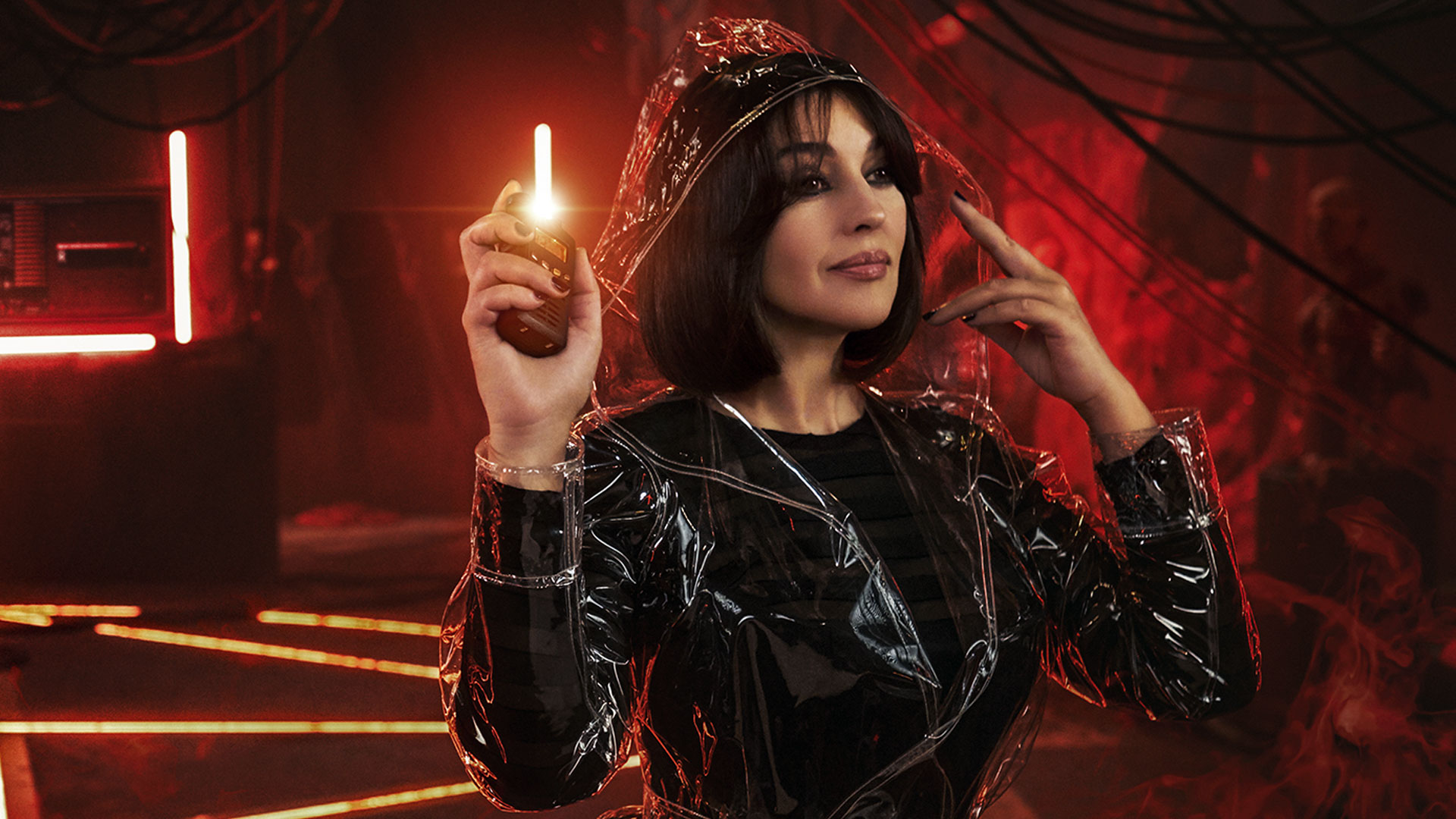
The weakest part of the movie is probably Monica Bellucci’s Finnegan. Possessing a gorgeous Italian accent, her delivery proves the exception to the accent-makes-it-better maxim. She struggles to enunciate the juvenile, expletive-laden dialogue that comes much more naturally from the other characters. It feels like when your manager researches slang on Urban Dictionary and pulls the results out in the conference room to seem relevant. It’s cringy and off-putting.

In the end, Nekrotronic delivers a little bit of everything, but it not enough of the right things.