If you’re the parent of a current high school senior, you’ll find some extra poignancy in Pahokee, an observational doc that follows four small town Florida teens through their last year at the predominantly African-American Pahokee High School.
B.J. is the football star on a team dreaming of a D1 State Championship. Jacobed is the Salutatorian who helps out at her parents taco stand. Junior already has a child at home. Na’kerria is running for “Miss PHS” and weighing community college vs. the full university experience.
For their first documentary feature, directors Patrick Benson and Ivete Lucas take a hands off, leisurely approach that gives the events plenty of room to breath – sometimes a little too much room. Some obvious questions (where’s the mother of Junior’s child?) are ignored in favor of following strands that could have been trimmed in a tighter edit.
But the film still finds its resonance in moments both large and small. From the face of the older white Harvard rep at the college fair, to Jacobed’s emotional description of her parents’ sacrifice, to the prom dress adorned with pictures of Trayvon Martin and other victims of excessive force, Pahokee serves plenty of subtle, evocative sequences that will make you care about these kids.
The further you are away from high school, the easier it is to dismiss what the class of 2020 has lost this year. Pahokee‘s class of 2017 serves a tender and truthful reminder of a crossroads unlike any other.
Small town Wakina, Oklahoma in the 1960’s is about as dreary
as you might expect. Despite many lamenting the “good old days,” director
Martha Stephen’s new film, To the Stars, reminds us that world was not the
ideal many would have you believe. This is a world in which outsiders were run
out of town, thrown to the wolves, or worse.
Iris Deerborne (Kara Hayward) is one such outsider. She is derided by her classmates, teased by both girls and boys (the teasing of the boys has a sinister sexual nature), and tormented at home by her alcoholic mother, Francie (an effectively cruel Jordana Spiro). Her father is a passive protector, stepping in only after her mother has already thoroughly berated Iris for her differences.
Into Iris’s life strides the outspoken Maggie (Liana
Liberato), a girl from “the big city” who speaks her mind and isn’t afraid to
hurl rocks at the “good-old-boys” who harass Iris. And while Maggie seems to
have a handle on who she is and what she wants, we quickly learn that not all
is what it seems with this enviable newcomer.
What connects Iris and Maggie is their sadness. A large part
of the movie is the exploration of female sadness, from the quiet despair of
the woman who runs a beauty parlor from her home to Francie’s alcoholic
outbursts. Even Maggie’s mother seems burdened with her own melancholy as she
tries to make the best of her life in a new town. Each of these women feel
their “otherness” in a town inhabited by women who know where they fit.
As Iris and Maggie bond, first time screenwriter Shannon Bradley-Colleary can’t seem to help falling into familiar coming-of-age clichés. There’s the makeover montage as the two girls skip school (a haircut, a new sweater set, and the removal of glasses equals instant confidence). Maggie’s outspoken nature emboldens mousey Iris. The boy Iris likes is sensitive and mysterious, not at all like the other boys. You can mostly predict how the chips will fall as we watch the two become friends.
Occasionally, the film finds ways to thwart overused tropes.
Unfortunately, these glimpses of originality are too few. Often, the audience
is left scratching its head over certain character choices. Maggie’s mysterious
sadness is explored and explained too late in the film and never given the
resolution it deserves. This is Iris’s story, and Maggie’s otherness only
serves to help Iris become a confident woman.
A few lovely moments of female solidarity help the movie become something a little more than a cliched look at two outsiders bonding, but those instants are mostly lost in a film that can’t seem to embrace its own otherness.
Planting its flag unapologetically at the corner of accuracy and myth, The True History of the Kelly Gang reintroduces a legendary 1870s folk hero through consistently bold and compelling strokes.
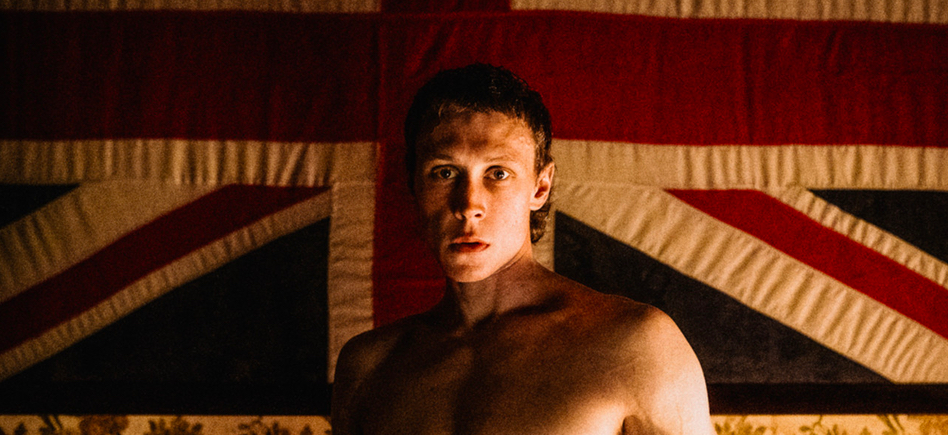
His death imminent, Australian outlaw Ned Kelly (1917‘s George MacKay in another impressive turn) is writing a letter to the daughter he will most likely never see. With a promise to “burn if I speak false,” Kelly wants his child to separate fact from fiction in the family history.
It’s an audacious, somewhat cheeky opening from director Justin Kurzel, considering that the film itself is based on a historical novel. Kurzel and screenwriter Shaun Grant – the duo behind the true crime shocker The Snowtown Murders nine years ago – go bigger this time, trading spare intimacy for a tableau of grand visual and narrative ideas.
After a heroic act in childhood, Ned gets the chance at a proper education. That offer is spurned by his angry and defiant mother (Essie Davis, terrific), who instead passes Ned off to notorious Aussie bushranger Harry Power (Russel Crowe in a sterling cameo) for an intro into the outlaw life.
With a direct nod to the moment when “the myth is more profitable than the man,” Kurzel spins an irresistible yarn that manages to balance the worship of its hero with some condemnation for his sins. And as the road to Kelly’s guns-blazing capture unfurls, the film incorporates elements of both a tense crime thriller and a Nightingale-esqe reminder of savage colonialism.
Does the legend of Ned Kelly owe more to history or myth? Hero or murderer? True History…. aims higher than one word answers, with storytelling that often soars before landing.
Given that 75% of writer/director Kirill Sokolov’s Why
Don’t You Just Die! takes place in a single apartment—one room of that
apartment, really—you might be surprised to learn that it’s an action film.
It’s pretty heavy on the action, actually, amplified by inspired framing, kinetic cinematography, sometimes hilarious but always eye-popping choreography, and blood.
Just a shit ton of blood.
This movie is a hoot!
And, yes, it is Russian, so there will be some reading. Not
a lot, honestly, and Sokolov’s grasp of visual language is so firm that you
really would not have to read a single word to understand every nuance of the
film.
Scrappy thug Matvei (Aleksandr Kuznetsov) waits outside an
apartment door, wary to ring the bell. Behind his back he hides a hammer,
tightly gripped. When the door opens, the imposing Andrei (Vitaliy Khaev) looms.
Suspicious, big, bald, effortlessly alpha (just ask the neighbor’s yipping dog),
he eyes Matvei.
Matvei eyes back.
Things move inside.
Sokolov sets up a raucous mystery. Why is Matvei here? What
does Andrei’s daughter have to do with it? Why isn’t Natasha in the country?
How can Yevgenich help?
Does every single one of these people have reason to want
Andrei dead?
The answer to the last one is yes.
As these characters limp into and out of the apartment (or
don’t), Sokolov helps you keep track by virtue of theme music. Each character has
his or her own. The quiet, brooding Matvei’s music, for instance, soars like a
Morricone Western theme.
But is he a black hat or a white?
With a spare script, visual wonder and energy to burn, Why Don’t You Just Die! promises to snatch your attention like a duffle bag of cash and hang on until exactly enough blood is spilled.
One of the members of Banarama has joined one of the members of Duran Duran in the cast of a new horror movie. That movie is assembled with the ideas and scenes from much better films, but young pop music fans probably haven’t seen any of ’em, so who cares?
Now, put on your mask and join us back in 2020. A similar mindset seems to propel 0.0 Mhz, a Shudder original that brings two stars of the South Korean K-Pop phenomenon to the screen.
Jung Eun-ji, lead singer of the band Apink, also takes the lead here as So-hee, the newbie in a teen team of ghost-chasers known as “Club 0.0 Mhz.” See, that’s the best frequency to call ghosts (don’t argue), and So-hee’s first outing with the group is to a supposedly haunted house in the woods where the kids aim to dial up a little necromancy.
But what Sang-Yeob (Lee Sung-yeol from the band Infinite) and the rest of the gang don’t know is…their new recruit comes from a long line of dead people-seers.
The local at the general store who tells them all not to go to there is just the first in a string of heavily borrowed narrative checkpoints. Pulling from The Grudge to Elm Street to The Conjuring to The Exorcist, first time director Sun-Dong Yoo adapts Jang Jak’s popular webcomic with barely a whisper of originality or visual flair.
But 0.0 Mhz is clearly aimed a notch below anyone who has seen those films. This is strictly teenage fare, content to provide good-looking idols to swoon over and warmed-over scares for kids who want to scream but not have nightmares.
It accomplishes that, and not much else.
So when get-togethers are all good again, 0.0 Mhz will be more than ready to slumber party!
It is creepy when you can’t see someone’s face, unless it’s hidden behind one of those big horse masks, which forever tickle George. But whether the voice on the other side of that mask is asking if Tamra’s home or is telling you where to find your missing daughter, whether that mask is made of burlap, human flesh or the NHL standard fiberglass/Kevlar mix, murder is highly likely.
Here are our favorite masks in horror.
6. The Wicker Man (1973)
There are so many reasons to love this movie, but the fact that it started that incredibly effective trend in horror movies: the anonymity of the group mask.
It was done again and to magnificent effect in The Purge films, Strangers, and You’re Next. But what Robin Hardy does with it gooses the macabre, medieval nuttiness of his story. A bunny has rarely looked so menacing.
5. The Texas Chainsaw Massacre (1974)
What made Tobe Hooper’s 1974 classic the unnerving, even scarring, savage film that it was? The meat hook? The slam of that heavy metal door? The sound of the chainsaw?
There are so very many moments of terror, so many reasons to scream, you can almost overlook the fact that the main character, though he delivers no lines at all, is wearing somebody else’s face. In fact, depending on the scene (or his mood? his outfit?) he could be wearing any one of three different faces.
How messed up and genius is that?
4. Eyes without a Face (1960)
Director Georges Franju casts a spell with the haunting Christiane (Edith Scob). Graceful and lifeless, the mask hides Christiane’s flaws and her humanity. She is otherworldly.
Unlike the grotesque image often drawn by a mask in a horror film, Christiane’s smooth, colorless visage is as lovely and melancholy as it is terrifying.
3. Halloween (1979)
Thematically, it makes sense. Young Michael Myers is wearing a mask, looking through those little false eye holes, when he commits his first, soul-deadening murder. So when he comes home to pick up where he left off, naturally he’d need another costume.
But what John Carpenter created with his altered William Shatner mask was the prototypical boogeyman for all slashers to follow and for all retro horror after that. The soulless, colorless, unmoving face perfectly matched the lifeless killing machine, transforming Michael Myers into The Shape and changing the shape of horror as it did.
https://www.youtube.com/watch?v=rKvxAvkJkac
2. Friday the 13th, Part 3
First of all, the sack head Jason from Part 2 is so much creepier than the hockey mask Jason of Parts 3 – X and beyond. That burlap sack has been a terrifying look in horror movies (from The Town that Dreaded Sundown to Nightbreed to The Orphanage to Trick or Treat).
But it’s the hockey mask you remember. That’s the image that became iconic. Hell, it even made goalies seem cool. (Yes, they stole the idea from the old Martin Landau/Jack Palance/Donald Pleasance film Alone in the Dark, released earlier the same year), but still, who wore it better?
Jason did.
1. The Phantom of the Opera (1925)
The original Phantom’s mask may not be the coolest. In fact, his mask has evolved over the decades and iterations into something way, way cooler looking. But back in 1925, it was the mask and its removal that made this film a heart attack in the making.
Director Rupert Julian and star Lon Chaney used that mask and its removal to deliver one of cinemas first great scares.
Writer/director Bryan Bertino creates an awful lot of terror beginning with that line.
A couple heads to an isolated summer home after a wedding. It was meant to be the first stop on their life together, or so we gather, but not all worked out as James (Scott Speedman) had planned. As he and what he’d hoped would be his fiancé, Kristen (Liv Tyler), sit awkwardly and dance around the issue, their very late night is interrupted by a knock and that immediately suspicious question.
Bertino beautifully crafts his first act to ratchet up suspense, with lovely wide shots that allow so much to happen quietly in a frame. This is a home invasion film with an almost unbearable slow burn.
Bertino creates an impenetrably terrifying atmosphere of not just helplessness, but sadistic game playing. The film recalls Michael Haneke’s brilliant Funny Games, as well as the French import Them, but Bertino roots the terror for his excruciating cat and mouse thriller firmly in American soil, with scratchy country blues on the turntable, freshly pressed Mormon youths on bicycles, and rusty Ford pick ups hauling folks in kids’ Halloween masks.
His image is grisly and unforgiving – part and parcel with the horror output of the early 2000s – but The Strangers is a cut above other films of its decade.
Yes, this couple makes a lot of bad decisions. Indeed, Kristen appears to be borderline mentally challenged. But in this particular situation, they probably just aren’t thinking clearly.
History repeats itself. This often frustrating, even tragic theme has
powered many films and documentaries over the years, including Nanni Moretti’s Santiago,
Italia.
An account of Chile’s 1973 military coup, Santiago,
Italia approaches its history with a fascinating, character-driven
approach. An opening news footage montage sets the stage—no timeline or
voiceover narration detail events for you.
The people of Chile democratically elect a socialist
president. Chileans are excited and hopeful. Big business and the military is
not. Planes fly low over the city. Bombs drop. Hope turns to terror.
Moretti, 6-time nominee and 2001 winner of the Palme d’Or,
isn’t exactly known as a documentarian. His instincts as a storyteller supersede,
even complement, his disregard for the standard practice of documentary. The
result is a slice of global, political, human life that bristles with passion
and indignation.
Moretti’s main characters are a handful of Chilean exiles,
persecuted and, in several cases, tortured for their political views and later
exiled to Italy. As moving as it is to see emotion sneak up on someone
remembering a moment now nearly fifty years old, witnessing someone recount their
own torture with such a clear eye and lack of emotion is even more unsettling.
The filmmaker spends time with former military as well. Among
others, he interviews imprisoned war criminal Raul Iturriaga, who believes the
two sides should just forgive and forget. Irked at the direction the interview
takes, Iturriaga challenges Moretti’s impartiality.
Moretti corrects him.
“Yo no soy imparcial.”
And why should he be? With Santiago, Italy, Moretti recounts a story of two countries bound by a common desire for freedom from tyranny. As he sees that history replay itself once again, he believes that this is a story that bears repeating.