Category Archives: Slider

For the homepage slider

Gotta Be the Shoes

Meeting Michael

by Hope Madden and George Wolf

Normally, you’d expect the MVP of any doc about Michael Jordan – especially one featuring some priceless footage of MJ in his prime – to be the man himself. But in Meeting Michael, he’s upstaged by two kids curious about their Dad’s obsession.

Dad is writer/director Adam Kontras. An Ohio native, Kontras was just a youngster himself when he first idolized Jordan and the mid-80s Chicago Bulls. Now, his L.A. attic is bursting with impressive MJ memorabilia, including two special videotapes with some amazing behind-the-scenes footage.

At just 19 years old, Kontras was pulling the overnight shift at a news/talk radio station in Columbus. Through that gig, he scored a press pass for the Bulls game in Cleveland on Nov. 9th, 1995, and brought a camcorder. With both courtside and locker room access, Kontras captured a truly compelling moment in time.

He released some of the footage five years ago as a short film, drawing superlatives in outlets ranging from online blogs to the Washington Post. For the feature length version, Kontras smartly reframes the entire story as one he’s telling his young son and daughter on the day they’re finally allowed to explore his fan cave.

Though Kontras’s storytelling can flirt with self-congratulations, it’s more often laced with a sheepish wonder at what he pulled off, and some endearing self-deprecating humor aimed at his younger self.

As a director, Kontras (Fastest Delorean in the World, Fastest Delorean Part II) exhibits fine instincts for answering the questions raised by his on-court encounter. For example, footage of Jordan finally answering a merciless heckler sparks a natural curiosity about the garishly dressed front row loudmouth, and Kontras delivers. Bypassing this sidebar wouldn’t have wrecked the film, but giving some time to Eddie “the Heckler” Nahra leads to a richer experience.

It’s these details – some personal, some observational – that keep the film from feeling like a short surrounded by filler.

For Jordan and/or NBA fans, Meeting Michael is a must. But by anchoring the story through the sharing of passions – and by using a touching story about shoes to cement a life lesson – it’s a film with more of a purpose than just liking Mike.

Meeting Michael releases 11/9/20 on Amazon. $4.99 to rent, $7.99 to buy.
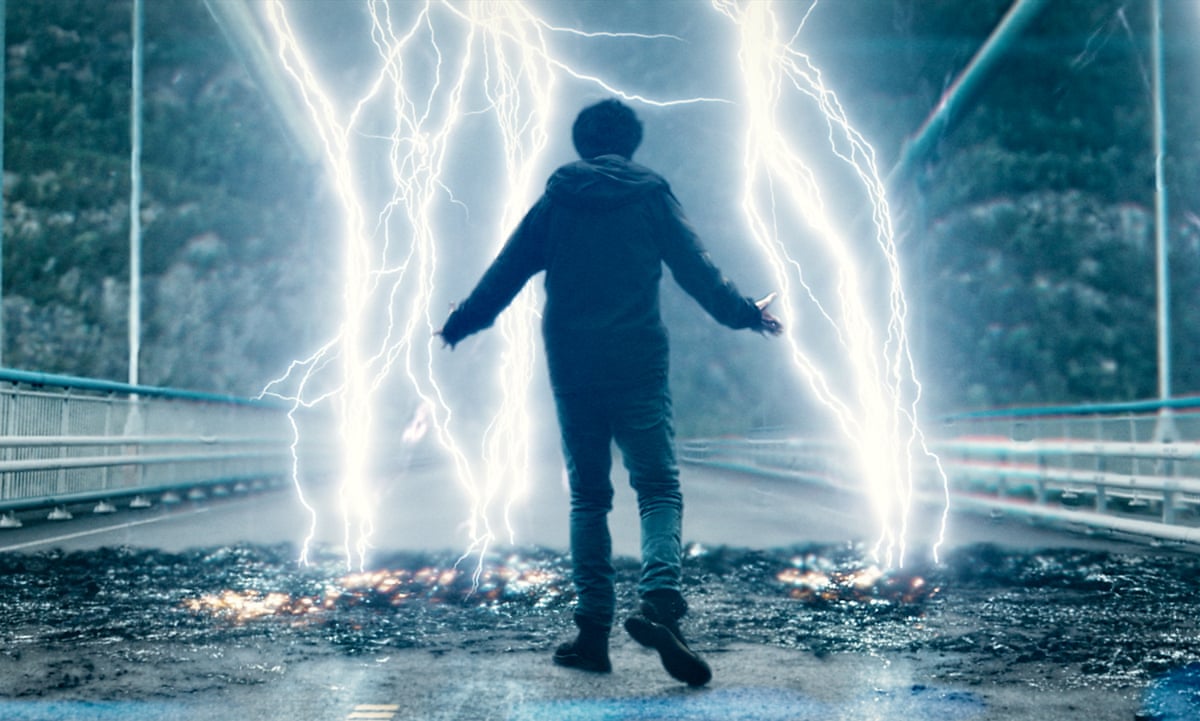
Screening Room: Let Him Go, Jungleland, Mortal, The Dark and the Wicked, Kindred & More

Family Feud

Let Him Go

by George Wolf

It feels like Kevin Costner and Diane Lane have made ten movies together, doesn’t it? They haven’t, but their low key and lived-in chemistry keeps you constantly invested in Let Him Go, a slow burning and effective revenge thriller aimed squarely at the older demos.

Costner and Lane are George and Margaret Blackledge, a retired Sheriff and his wife loving their status as grandparents to little Jimmy Blackledge in late 1950s Montana. The simple life turns tragic when their son James (Ryan Bruce) dies in an accident, and complicated when their daughter-in-law Lorna (Kayli Carter) marries the brooding Donnie Weboy (Will Brittain).

Donnie’s an abusive husband and stepfather, and without warning, takes Lorna and Jimmy back to his family in North Dakota.

George and Margaret decide to track them all down, finding out pretty quickly the Weboy clan don’t appreciate attention from strangers.

The flashpoint to this Western Gothic blood feud is matriarch Blanche Weboy, brought to scenery devouring life by the glorious Lesley Manville. Dragging on her cigarettes and demanding obedience, Blanche is quick to show the Blackledges how far she’ll go to keep Lorna and their grandson under her thumb.

Writer/director Thomas Bezucha builds the tension well, then uses Manville’s entrance as the natural catalyst for amped intensity. Adapting Larry Watson’s novel, Bezucha carves out the road to vengeance and redemption like a less nuanced Cormac McCarthy. This isn’t poetry, but that doesn’t mean it’s not primal and satisfying.

Costner’s in his comfort zone as a weathered country lawman, more invested and touching than he’s been in years. Lane grounds Margaret with a wounded but determined heart, stepping easily into the soul of the film.

After a tender kiss, a sixty-something husband telling a fifty-something wife, “Don’t start anything you can’t finish” could seem like a cheesy ad for Viagra. It doesn’t here, and that’s a testament to the authentic bonds of time, grief and love formed by Costner and Lane.

Even at nearly two hours, the secondary character development does feel slight, and some thematic possibilities of the Blackledge’s friendship with a young and wayward Native American (Booboo Stewart) are never quite fulfilled.

But Let Him Go is here for the adults at the ranch, with a solid American genre yarn full of few surprises, but plenty of bang for your buckaroo.

Sheep Go to Heaven, Goats Go to Hell

The Dark and the Wicked

by Hope Madden

I’ve been a Bryan Bertino fan since The Strangers because of course I have. How could I not be? That loyalty paid off in 2016 with the moving allegorical horror The Monster, and it rewards viewers again this weekend with the supernatural terror of The Dark and the Wicked.

A twisty old Southern Gothic that relies on practical effects and imagination, the film arrives somewhere in deeply rural America with Louise (a terrific Marin Ireland). She’s about a day behind her brother Michael (Michael Abbott Jr., The Death of Dick Long), back at home because of Dad’s deteriorating health.

Mom (Lynn Andrews) does not want them here.

Bertino is not a filmmaker to let his audience off the hook—if you’ve seen The Strangers, you know that. Like that effort, TD&TW is a slow burn with nerves fraying inside the isolated farmhouse as noises, shadows, and menacing figures lurk outside.

Bertino and cinematographer Tom Schraeder work the darkness in and around the goat farm to create a lingering, roaming dread. There are clumsier moments that feel like pre-ordained audience scares, and they really stand out in a film that otherwise just seeps into your subconscious. But where Bertino, who also writes, scores extra points is in crafting believable characters.

Too often in horror you find wildly dramatic behavior in the face of the supernatural. One character adamantly denies and defies what is clearly happening while another desperately tries to communicate with “it.” No one would do either, but this is the best way to serve the needed action to come in lesser films.

Here, Bertino, Ireland and Abbott give us real characters honestly grappling with something extraordinary.

The don’t want to be here. They don’t want to leave. So, they just do what they can, like the rugged folks they are.

“Well, if I’m here, I’m gonna work.”

Like Natalie James’s Relic from earlier this year, TD&TW has the long, slow, debilitating experience of parental illness on its mind. Like that film, this movie has a deeply aching center that makes the horror in the house as tragic as it is scary, and more horrifyingly, somehow inevitable.

Waiting On a Friend

Come Play

by George Wolf

In a vacuum, Come Play is a fairly smart and mildly jump-scary slice of PG-13 horror for your Halloween weekend. It even finds an unexpected and satisfying way out of the monstrous concept that it fosters.

But the feature debut for writer/director Jacob Chase has trouble escaping the shadow of two other films. One is Larry, Chase’s own short from 2017, and the other is the modern horror classic that clearly inspired him.

Larry is the star of Misunderstood Monsters, a story app that Oliver, a non-verbal autistic boy (Azhy Robertson from Marriage Story), has stumbled onto. Larry says he just wants a friend, but he’s too scary, and Oliver resists.

But Larry just won’t be denied. And it isn’t long before Oliver’s estranged parents (Gillian Jacobs and John Gallagher, Jr.) have to admit they really are being terrorized by an entity let in through the screens on their many devices.

A monster from a troubled child’s story manifests itself in a home unsettled by emotional turmoil. Though the metaphors in Come Play are geared more toward multiplex than art house, the blueprint is plenty familiar.

Chase does prove himself to be an able technician, exhibiting some nifty camerawork and a fine sense of visual creepiness. But the road to his effective finale drags from a lack of solid scares and the feeling of filler that can plague a short film stepping up in class.

There are some valid ideas at work here. They’re not terribly urgent or original, but Come Play isn’t pretending they are. It’s a film with little interest in overthinking, for horror fans not interested in films that do.

Teen Wolves

The True Adventures of Wolfboy

by George Wolf (no relation)

Have many Young Adult films carry a theme of self-acceptance? Plenty, but that’s not a problem.

It’s delivering that message via the same tired playbook that gets old, which is just one of the reasons The True Adventures of Wolfboy lands as a charming and completely captivating tale of a truly special teen.

And director Martin Krejci makes sure it feels like a tale in so many magical ways, starting with the beautifully ornate title cards separating each chapter in the journey of a lonely and self-loathing boy on his thirteenth birthday.

Paul (Jaeden Martell) suffers from hypertrichosis – an extremely rare affliction causing abnormal hair growth all over his face and body. He covers his face with a ski mask most of the time, but his father (Chris Messina) gently urges him to put the mask aside and accept the taunts of “dogboy!” with dignity.

Paul’s mother has been gone since he was born, but when a strange birthday gift delivers a map and a promise of explanations, Paul runs away to answer the invitation and get some answers from Mom (Chloe Sevigny).

Krejci crafts Paul’s journey from dog to wolf as an epic odyssey of self-discovery. From Pinnochio-like exploitation in a sideshow run by Mr. Silk (John Turturro, also a producer), to joining the eyepatch-wearing Rose (Eve Hewson) for a string of petty holdups, Paul’s world – and his world view – expands quickly.

But it is the effervescent teen Aristiana (transgender actress Sophie Giannamore) that most triggers Paul’s awakening. She hates the short “boy” haircut her mother insists on, while Paul is ashamed of how much hair he has. Her mother calls her Kevin, his mother doesn’t call at all.

Similarly, Martell delivers true tenderness and longing behind Mark Garbarino’s impressive makeup, while Giannamore is a heartwarming example of defiant positivity. Both actors and their characters bond quickly, and screenwriter Olivia Dufault (also transgender) finds a power that eludes so many YA dramas via the subtle genius of writing Aristiana as a secondary catalyst.

We already feel for Paul, so Aristiana’s effect on his self image is something we feel without being told. The point is made organically, with wit and wisdom, and much more resonance. What Paul finds at the end of his journey is sweet, but just gravy.

Wolfboy is the rare teen drama that speaks without condescension, and entertains without calculation.

That’s welcome, special even.

Screening Room: Borat Subsequent Moviefilm, The Witches, Rebecca, Empty Man & More

High Five!

Borat Subsequent Moviefilm

by George Wolf, because Hope Madden can’t watch Borat’s pranks without leaving the room

You may have already seen a headline or two about Rudy Giuliani’s run-in with Sacha Baron Cohen as Borat.

When it happened this past July, Giuliani called the cops, and then boasted that Cohen didn’t “get him.” But now that Subsequent Moviefilm is here, we see Giuliani still lives in a world unhindered by reality, and Cohen still has a knack for finding cringeworthy humor in the most unseemly situations.

Much as changed in Borat’s world – and ours – since his 2006 adventure brought shame to his native Kazakhstan, and earned him a life sentence of hard labor. But now, with the American president’s fondness for dictatorships, Borat has a chance for redemption.

He must return to America, and get Kazakhstan on the short list for Trump’s “strongman club” by bribing Vice President Pence with a valuable offering.

The gift? Borat’s 15 year-old daughter Tutar- also known as “Sandra Jessica Parker Sagdiyev” (Bulgarian actress Maria Bakalova, nearly Cohen’s equal for stone faced boundary-pushing.)

Borat’s special delivery during Pence’s CPAC speech (beautifully synched to a COVID-19 reassurance of being “ready for anything!”) is rebuffed, so Giuliani becomes the next logical target.

And that road to Rudy is filled with Cohen’s fearless hijinx, again skewering the breeding grounds for bigotry, ignorance, misogyny, anti-semitism, QAnon, Karens and..what else ya got?

Pervy ex-mayors of NYC!

But Borat is pranking a meaner America this time. There are no layers to peel away anymore, the ugliness is out and proud. From a bakery to a pregnancy center to a Tea Party rally, the often hilarious audacity is tempered by the sadness of realizing we no longer need Borat to expose this underbelly.

So Cohen and director Jason Wolinar (a TV vet helming his first feature) make a smart and subtle pivot. Segments with Tutar’s “babysitter,” and another featuring two elderly Jewish ladies in a synagogue (one of which the film is dedicated to) mix the bracing humor with moments of touching sweetness. Cohen’s not going soft, just pausing to remind us there is hope.

Early on, Borat has to run from random Americans excited to see him on the street. It’s a refreshing acknowledgment that we’ve seen this schtick before. Yes, it’s still shockingly brazen and often laugh out loud funny, but the thrill of discovery is naturally gone.

But whether he’s Cohen posing as Borat or Borat posing as Cliff Safari (or John Chevrolet, take your pick), the comedy and the tragedy are nearly impossible to ignore, even if you want to.

Right, Rudy?

