Category Archives: New In Theaters

Reviews of what’s out now

Full of Grace

Mother Mary

by Hope Madden

Whatever it is director David Lowery is making, I’m watching. Not every film lands but he always delivers something thought provoking, and his best films are unlike anything else you’ll see.

Ain’t Them Bodies Saints, A Ghost Story, and The Green Knight were cinematic wonders. His latest, Mother Mary, is as tough to pin down as any of these, and just as gorgeous.

Anne Hathaway is Mother Mary, a Lady Gaga styled music icon and diva in the midst of some kind of prolonged torment who seeks the aid of an old friend. Michaela Coel is Sam, Mother Mary’s oldest confidant and the designer who created the pop star’s legendary look. Ostensibly, Mother Mary needs a gown. In reality, both women are open wounds who need the other, either to heal or to die.

Essentially a chamber piece—more than half of the film takes place in Sam’s barnlike studio—Mother Mary is as poetic and dramatic as a pop song. Lowery, who also writes, seems genuinely empathetic of the isolating nature of superstardom, particularly for those vulnerable souls who create their own art.

Lowery’s vision benefits immeasurably from two outstanding performances. Hathaway seems equally comfortable in semi-surreal concert footage as she does with the raw, constant verge-of-tears intimate drama. And Coel may be the one person who cuts so fascinating a figure that she makes Hathaway look ordinary.

Their fraught back and forth, though occasionally overwritten, feels lived in and wounded but seeking. What they ask of each other allows the filmmaker to pose, but not answer, questions about connection, authenticity, superficiality, fame, creativity, and who ultimately owns the artist and their art.

It’s a heady piece wrapped in silks and sequins, and it won’t be for everybody. But Lowery and his small cast make bold, risky choices. It works because the actors are fully committed and taking those risks themselves, some of which don’t pay off. But Cole and Hathaway bring their vulnerability, buoyed by tremendous talent. The result is a film that feels quite unlike anything else, and for any piece of art, sometimes that’s accomplishment enough.

War Toys

Fuze

by Rachel Willis

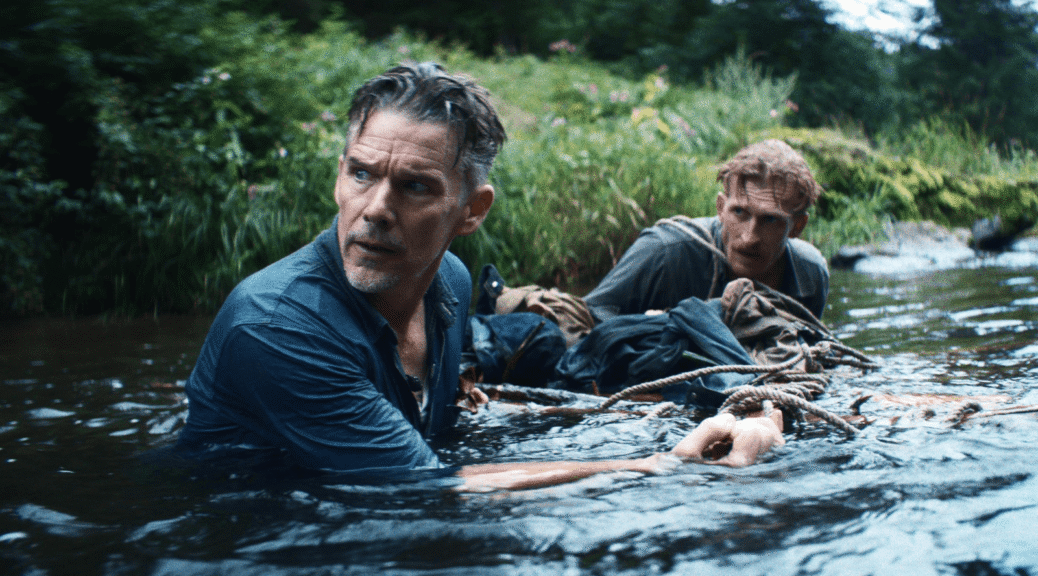
An unexploded bomb from World War II is discovered at a construction site in the heart of London and a massive effort to diffuse it gets underway in writer/director Ben Hopkin’s film Fuze.

As wild as it sounds, 80-year-old bombs exploding in populated cities in England is not unheard of. A bomb discovered in Exeter in 2021 resulted in the evacuation of 2,600 homes and caused massive property damage.

However, the bomb uncovered in Fuze seems out of the ordinary, and to say anything more would remove the elements of suspense and surprise Hopkins works into every minute.

The best thing about the movie is the unrelenting pace. It never gives you time to second guess some of what’s happening on screen. While some moments might falter under the weight of skepticism, Fuze keeps you hooked by the action. There’s something bigger at play, and the film demands you stay focused as it unfolds.

The cast is more than game for the material. Aaron Taylor-Johnson and Theo James play opposite sides of the action. The film moves from one to the other, tension continuing to build as you’re kept on edge, waiting for the next link in the overarching chain.

The downside, though, is that the film doesn’t offer anything in the way of character development. We get little bits and pieces through dialogue, but it’s not enough for us to feel invested in any character. The stakes aren’t high enough, which is a major blunder. The overfocus on plot makes for a tense thriller but not a very interesting one.

Pop Life

Michael

by George Wolf

Two of the best things about Michael are hardly shockers. One is a pleasant surprise.

Colman Domingo and Nia Long are both terrific as Michael’s parents Joe and Katherine Jackson. The surprise is Jaafar Jackson, rising to the challenge of carrying this move as his real life, iconic uncle Michael. In an impressive acting debut, Jaafar is assured and charismatic, flashing plenty of natural talent.

And for the first half of this two-hour biopic, director Antoine Fuqua and writer John Logan find some depth with the story of the Jackson 5’s rise from Gary, Indiana to major chart success at Motown.

That’s the movie I would have loved to spend more time with, ditching the greatest hits nostalgia package that followed. Because from the pivotal moment that Michael seeks management from John Branca (Miles Teller) and starts to break away from his domineering father, the film feels force fed and surface level.

The second half is reduced to a parade of very slick recreations of Michael’s most famous pop culture moments (Motown 25, the “Thriller” video, “Beat It” video, Pepsi commercials, the Victory Tour), unabashed fan service wrapped around an overcooked metaphor of a messianic Peter Pan battling an unrelenting Captain Hook.

With most of the family (Janet’s name is noticeably missing) on board as producers, a warts-and-all biography wasn’t to be expected. And while Father Joe takes plenty of hits, they become the springboard for a reminder about Michael’s greatness that’s as nuanced as a fan club prize package.

Though there’s already chatter about a sequel, I’m not convinced the parting bit of onscreen text is guaranteeing a part two that picks things up in the late eighties. As we know, Michael’s later years came with plenty of complications. The smarter play for the family might be take a cue from Baz Luhrmann’s Elvis EPiC.

After these impressive imitations, just raid the vaults, and put the real footage up there in all its IMAX glory. That might fit like a sequined glove.

Michael ends up feeling like an empty suit.

Living Out Loud

I Swear

by George Wolf

Honestly, I didn’t know that much about I Swear until Robert Aramayo’s amazing performance won a BAFTA Award earlier this year. Now, after seeing it, I have to wonder why officials from BAFTA and the BBC didn’t take more of its lessons to heart.

The film follows the life of Scottish Tourette’s campaigner John Davidson, and opens with Davidson yelling “F*&$ the Queen” moments before Queen Elizabeth herself presented him with an MBE for services to the Tourette’s community.

As a teenager, Davidson developed Tourette’s with coprolalia, a complex vocal tic which causes “the involuntary, uncontrollable utterance of obscene words, sexual/racial slurs, taboo phrases or profane language.” The condition brought isolation within his community and his own family, leading Davidson to move in with the family of a friend, where he found the unconditional support that launched his journey to help others.

Aramayo’s turn as Davidson is simply astonishing. Beyond the physical and vocal authenticity, Aramayo crafts an endlessly sympathetic arc of frustration, acceptance, perseverance and triumph. Heartbreaking but ultimately joyful, Aramayo’s is a deeply felt performance that fills each scene with a humanity that buoys the film.

Writer/director Kirk Jones (Waking Ned Devine) is careful to keep events accurate, drawing from the 1989 doc John’s Not Mad, actual clinical trials, and Davidson himself. Nothing here feels overwritten or sensational, as Jones allows the terrific actors (including great support from Maxine Peake as John’s surrogate mother and Shirley Henderson as his actual mum) to work specific moments for emotional depth.

The message of education, patience and understanding is meaningful and lasting. And it reminds you that, with more of each, there was certainly a way to host Davidson at the BAFTA ceremony and still safeguard other attendees and the television audience from the slurs that occurred.

But I Swear can stand on its own merits. It is a film that is able to turn simple human compassion into a crowd-pleasing event. May it play to large, humanity-pleasing crowds.

Death Do Us Part

Over Your Dead Body

by George Wolf

Why would Jason Segel plot to kill Samara Weaving?

Has he not seen Ready or Not? Borderline? Azreal? Ready or Not 2?

Segel is surely smart enough to play nice, but Dan – his character in Over Your Dead Body – is not. Dan and Lisa (Weaving) are off on a secluded weekend in a cabin by the lake. After 7 years together, they can barely say a cordial word, but this time Dan is laying the sweetness on pretty thick.

He’s cooked up a great dinner, along with a great alibi. Because after a nice boat ride on the lake, Lisa will sleep with the fishes.

Or not. Because Lisa has a plan of her own. And so do some convicts on the run (Timothy Olyphant, Keith Jardine) and the corrections officer who helped bust them out (Juliette Lewis).

Power shifts, violence and blood splatter ensue!

Writers Nick Kocher and Brian McElhaney, fresh off the hilariously unhinged Pizza Movie, adapt the 2021 Norwegian film The Trip with a healthy scoop of witty cynicism atop one good ol’ American mean streak.

Segel and Weaving make an excellent pair of frassasins (friendly assassins), he of the emasculated man child and she of the exasperated younger wife wondering what she saw in this guy. Neither is blameless in the demise of the marriage, and the two actors make the deadly bobbing and weaving (pun intended) a surprising, squirm-inducing delight.

Those squirms only increase once the three fugitives enter the fray, and comic director Jorma Taccone (Popstar, MacGruber) forays into body horror with a respectable aversion to sparring the rum or the wisecracks. What starts out as an in-the-moment sendup of how couples avoid therapy takes a nasty turn in the second half. The threat of violence inherent in the premise makes for a smoother transition, but make no mistake: Taccone leans into that R-rating with some serious bloodshed.

If you’re fine with that, Over Your Dead Body is an entertaining genre blast that’s pretty hard to ignore. And by pretty, I mean pretty funny.

And pretty gross.

Walk Like an Egyptian

Lee Cronin’s The Mummy

by Hope Madden

So, Lee Cronin’s The Mummy. You may be wondering, who is Lee Cronin? Do I even know that guy?

You probably do, if you saw 2023’sEvil Dead Rise, the story of a family trapped in their apartment as their mother turns Deadite and tries to murder them all.

You may have missed his 2019 Irish horror, The Hole in the Ground, where a changeling takes the shape of a woman’s young son, traps her in a house and tries to kill her.

Now Cronin takes on a mummy’s curse, trapping a family inside a house with their daughter, who is now a monster out to kill every one of them. By the third time, you have to think that the idea of an evil entity taking over the body of a loved one is a real fixation for the filmmaker. Lucky for us!

Jack Raynor and Laia Costa are the parents of three: little Maud (Billie Roy), tween Sebastian (Shylo Molina), and their oldest, Katie (Emily Mitchell, then Natalie Grace). Katie went missing in Cairo 8 years ago, but she’s been found and she’s ready to come home. It’ll just take some adjusting.

The trailer for the film gave it the look of a PG13 horror—quick cuts, jump scares, and black vomit. I’m pleased to report that this is not the film at all. Cronin mines the situation for grief and sorrow before descending into body horror. It’s a wild line he crosses, manipulating your emotions and then throwing gross-out body fluid horror all over the deviled eggs.

It’s nasty. Like almost early Peter Jackson nasty.

And Cronin is not afraid to take the film places you may not want to go. The darkest, sloppiest comedy butts up against emotional horror so moving you may want to look away. Or if that doesn’t make you divert your eyes, the pus, eyeballs, tongues, and unspecified body fluids will.

It’s a mixed bag, this one, and it gets a little tedious toward the end. Plus, Cronin doesn’t always balance the tone effectively. This is very much an R-rated horror, at times taking itself too seriously and at others, delivering some of the nastiest comic gags you’ve ever seen during a funeral.

I was unsettled at times and grossed out at others, but I must say, I was thoroughly entertained.

Anything But

Normal

by Hope Madden

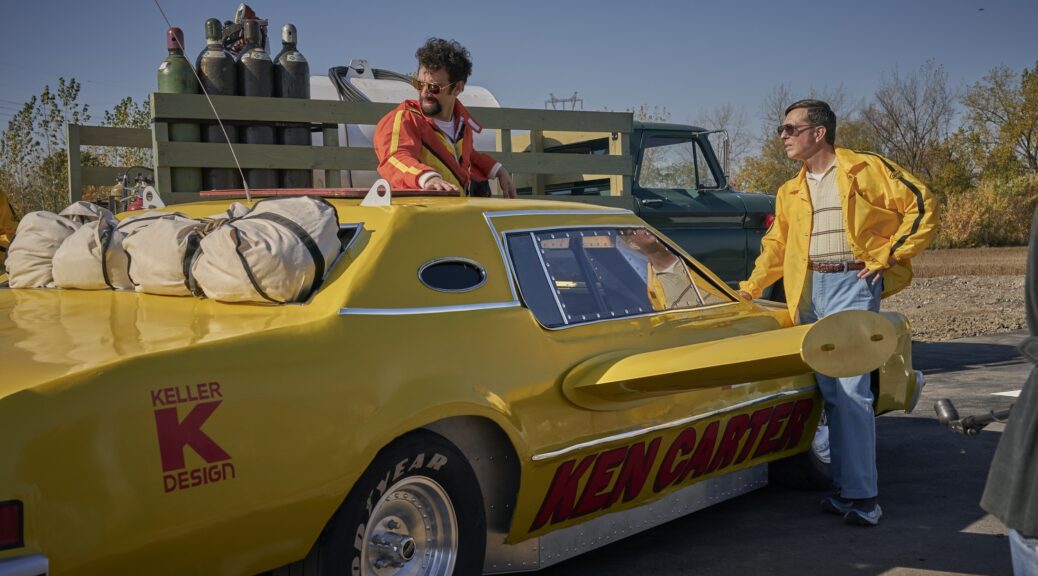
Do you know what’s especially fun about watching Normal? It’s not seeing Bob Odenkirk crack heads and blow stuff up. I mean, that’s always fun, but it’s nothing new. Nor is it new to see what fresh fisticuffs and cutlery mayhem writer Derek Kolstad (John Wick [all four], Nobody [both], Ballerina) can dream up. We’ve seen his dreams. They’re somewhat similar.

What is especially fun about watching the star of Nobody and its writer team up again to drop a middle aged schmo into a sudden and unexpected explosion of violence is that Ben Wheatley is directing. We haven’t seen Ben Wheatley get really nuts in a bit.

Odenkirk, who co-writes the script with Kolstad, is Ulysses. He used to be a real sheriff, but now he takes interim sheriff gigs around the country and leaves rambling accounts of his days on his estranged wife Penny’s voicemail.

His latest assignment: Normal, Minnesota.

The town of about 1500 people and one moose looks…strangely prosperous. Not like the small towns shuttering due to a poor economy. When two good hearted, down-on-their-luck bank robbers roll into town, Ulysses gets a glimpse of the what’s really going on.

That leaves us with about 45 minutes of handguns, rifles, Tommy Guns, knives, fists, rocket launchers, chains, dynamite, and knitting needles. Plenty of time for Wheatley to help us remember what a blast he had directing 2016’s Freefire.

Odenkirk’s ideal as the begrudgingly heroic schlub, and Normal surrounds him with eclectic characters and solid comic performances. But there’s no question the relish Wheatley takes in wry, witty bursts of extreme violence, each gag its own punchline, is what delivers the film’s fun.

There’s a touch of Fargo, a smidge of Hot Fuzz, a bit of the filmmaker’s own Freefire, and maybe a hint of his Sightseers. These borrowed flavors blend favorably with the inescapable familiarity of the concept—Bob Odenkirk, badass—as well as Kolstad’s routine action beats.

Normal is a ton of bloody fun that you’ll kind of remember later but you’ll laugh and enjoy yourself now.

A Fish Called ChaO

ChaO

by Matt Weiner

If you’re boycotting a certain mustachioed plumber this weekend because he went to space instead of the underwater levels, you’re in luck. You can have your own lushly drawn animated movie where an everyman hero goes on an adventure with a princess.

ChaO takes place in a futuristic version of Shanghai where humans and mermaids coexist, but it’s an uneasy peace. Engineer Stephan (Ōji Suzuka) has a plan to create a safe alternative to the screw propeller on ships, which would save ocean life from harm and even death.

Higher-ups at his shipping company are skeptical until mermaid royalty Princess ChaO (Anna Yamada) appears out of the blue to insist that she and Stephan get married. Nobody is more surprised by this than Stephan, despite ChaO’s mysterious assurances that Stephan swore to her they would be married some day.

While Stephan has doubts about the whirlwind romance, the pair are buoyed along by executives at the shipping company—who see a chance to mend relations with the mermaid king—and the nosy public, titillated by the intricacies and logistics of a human-mermaid relationship.

These broad strokes of a story from writer Hanasaki Kino don’t get much more detailed than that. It’s a literal “fish out of water” tale that throws in the odd car chase and robot fight to pad out the runtime. These elements don’t add anything to the underlying mystery of Stephan’s genuinely moving backstory, but the detours are also brief.

Thankfully when ChaO sticks to the budding romance between Stephan and the princess, the film gets back its sea legs. And the real draw is the gorgeous animation from director Yasuhiro Aoki and Studio 4ºC.

This is Aoki’s first feature film, but his decades of experience in the animation industry turn this slight tale into a distinctive visual feast. Every scene is stuffed with witty details and stunning backdrops. There’s a fluidity to the characters as well, both human and merman, that gives everyone a natural expression and constant motion that complements the thorny human-aquatic relations. For all the film’s erratic plotting and odd digressions—including an HR nightmare of an office subplot, parents beware—the animation is so singular and captivating that it makes up for everything else.

Generational Drama

Jimpa

by Rachel Willis

Director Sohpie Hyde’s film, Jimpa, opens with a narrative that lays the groundwork for a family drama about what acceptance truly means.

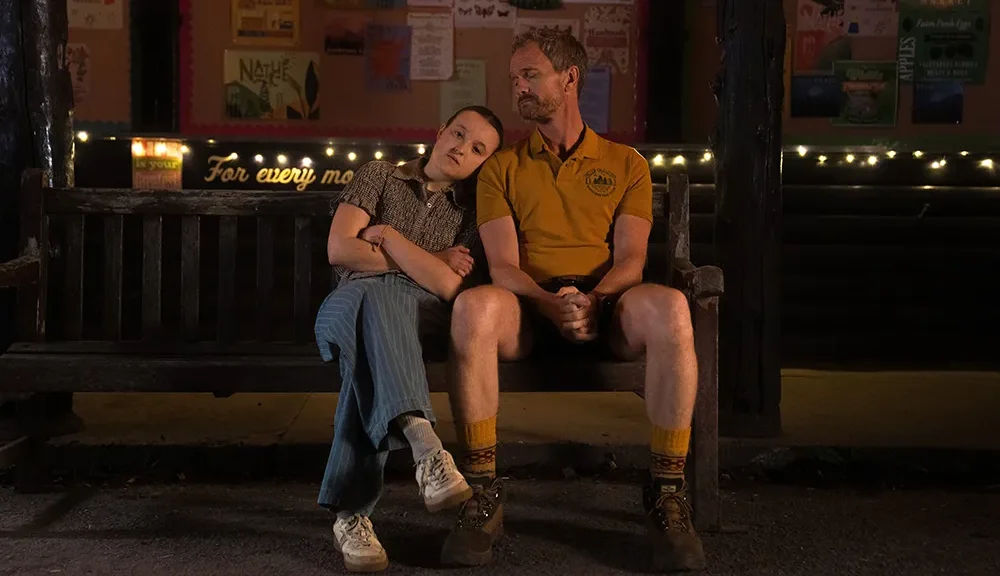
Jimpa (John Lithgow) is an older gay man who left his family in Adelaide, Australia to move to Amsterdam during the height of the AIDS epidemic. There’s a recap of this history from two perspectives, Jimpa’s daughter, Hannah (Olivia Colman), and his nonbinary grandchild, Frances (Aud Mason-Hyde).

The film centers around Hannah and Frances spending time with Jimpa, as Hannah looks to make a film about her parents and their conflict-free partnership when Jimpa came out as gay.  

Colman and Hyde make it clear that Hannah is afraid of conflict, so much so, she rushes to mitigate everyone’s words. Her explanations for others may sound good, but in her urgency to avoid conflict, she steals their agency. And yet, there are times when Hannah fails to step in when it could most help her teenager.

Jimpa is disrespectful of Frances’s choice to identify themselves as non-binary. He introduces them as his “grandthing” and mocks their “sudden” lack of gender. Though grandthing is said with a certain amount of affection, it’s painful to watch because Frances looks up to their grandfather as a hero.

There’s also a collision of age. The older gay men have trouble understanding the younger generation’s motivations and language, fail to recognize the struggles of feeling like an outsider when things are (in their minds) so much better now.

Jimpa feels more like a lesson in gender and sexual politics than a cohesive narrative film. This can be done gracefully, but Hyde’s approach is too heavy handed.

Jimpa‘s second half takes an unexpected path that serves the film well. Hannah confronts and addresses her true feelings, allowing Coleman and Mason-Hyde to shine. Hyde finally gives Mason-Hyde the opportunity to be more than their gender identity.

Though the film’s opening act is defined by a kind of clunkiness, Jimpa’s final moments are handled with enough tenderness to make up for a lot of that.

Downbound Train

Exit 8

by Hope Madden

Horror video game movies are having a moment. And the simpler the video game, the more unsettling the film adaptation.

Though the unendurable Return to Silent Hill  might have sapped your will to live, both Iron Lung and The Mortuary Assistant honored their games’ uncomplicated storyline and reliance on viewer attention to generate dread and entertainment.

Perhaps the simplest and most unnerving is Genki Kawamura’s Exit 8, a captcha experiment in proving your humanity.

A minutes-long opening POV sequence announces the film as a video game, the first-person experience wearing thin just as Kawamura’s cinematic style alters. What has altered it?  Our hero, faced with a deeply human choice, enters the bowels of the metro and loses his phone signal.

Kazunari Ninomiya is “Lost Man.” Buds in his ears, his eyes on his phone, he’s almost entirely unconnected from humanity. Even with no reception, he’s so oblivious that it takes him quite a while in the underground passages to realize he’s walking in circles, forever finding himself back at the exact same spot in search of Exit 8.

Finally, he notices an information sign. If you see an anomaly, backtrack immediately. If there’s no anomaly, keep moving forward.

The monotony and claustrophobia build as white tiled, fluorescently lit hallway after hallway deliver oppressive tension. As the numbers ascend—Exit 1, Exit 2, Exit 3—you may find yourself yelling at the screen. Slow down! Don’t get sloppy now! Because if Lost Man misses one anomaly, one misplaced doorknob, one altered advertisement, it’s back to Exit 0 and the whole nightmare begins again.

And nightmare it is. Blackouts, crying babies, frozen smiles, giant hairless rats with human noses are some of the more obvious anomalies.

It would all become too monotonous to bear were it not for the chapter breaks, which allow us to shift perspective briefly. Yes, the other two characters—Walking Man (Yamato Kôchi) and The Boy (Naru Asanuma)—are likewise trapped in the labyrinthine underground. But their presence offers some clues beyond the surface level anomalies, some hint at the quest to find our humanity.

Kawamura doesn’t dig too deep for character development, but the spare setting and liminal hellscape bring it forth. Exit 8 seems not like a game you play again and again. Likewise, the film is unlikely to be one you revisit every spooky season. But it is a uniquely challenging effort and another surprising win for horror video game adaptations.