Category Archives: New In Theaters

Reviews of what’s out now

Wizard of Aaahhs

Gail Daughtry and the Celebrity Sex Pass

by George Wolf

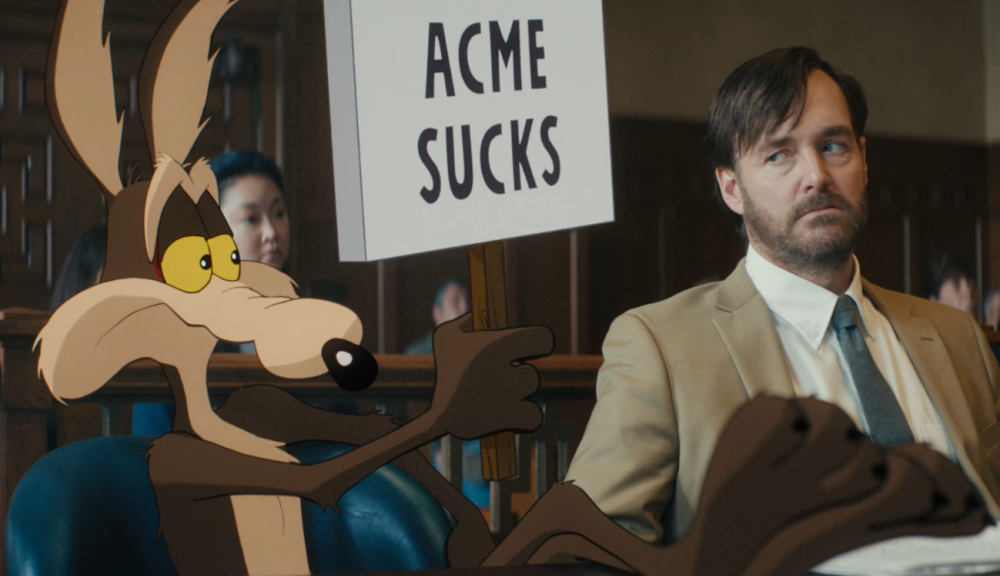
You think Gail Daughtry and the Celebrity Sex Pass is just about a small-town Kansas woman in ruby red shoes traveling to Hollywood on a quest to have sex with Jon Hamm?

Get hip to the subtext, man! It’s also a film about a tragic bullfighting fatality, John Slattery pulling out a man’s eyeball while imitating Howard Cosell, a nefarious plot to dismantle the corrupt global financial system, a mailman’s beef with his overcharging roofer and Henry Winkler’s role in the deadly consequences of a briefcase mixup.

But yes, this hilarity is centered around Gail (an irresistible Zoey Deutch), a fresh faced and endlessly upbeat hairdresser excited to soon marry her childhood sweetheart Tom (Michael Cassidy). But when a local book signing leads Tom straight into the legs of his celebrity sex pass, Gail’s best friend Otto (Miles Gutierrez-Riley) knows there’s only one thing to do.

Gail has to come with him to the big hair show in L.A., and settle the score with her own chosen wizard of aaahhs – Mr. Jon Hamm.

Director/co-writer David Wain (Wet Hot American Summer, Role Models) and co-writer/co-star Ken Marino (veteran comedic support standout) have created a relentless assault of silliness that delivers a consistent string of smiles, yuks, laughs and belly laughs.

Beyond the multiple nods to the yellow brick road adventure, Wain and Marino lampoon celebrity culture, paparazzi, the Hollywood bubble and various movie genres with winks, nods and relish, tossing in several surprise cameos to boot. Deutch proves again that she is a versatile talent with serious comedy chops, and the wide-ranging ensemble (led by Marino, Slattery and a delightfully understated Ben Wang) offers fun from every angle.

Gail Daughtry is an unhinged cult leader in waiting, with a vibe that is set from the opening minutes. Ride it all the way through the credits (and one final Wiz bang) to score the funniest film of the year so far.

Minion Monster Mash

Minions & Monsters

by Hope Madden

There are six films now in the Minion-verse. Most of these are Gru movies, but honestly, without the minions, where would the Despicable Me features be?

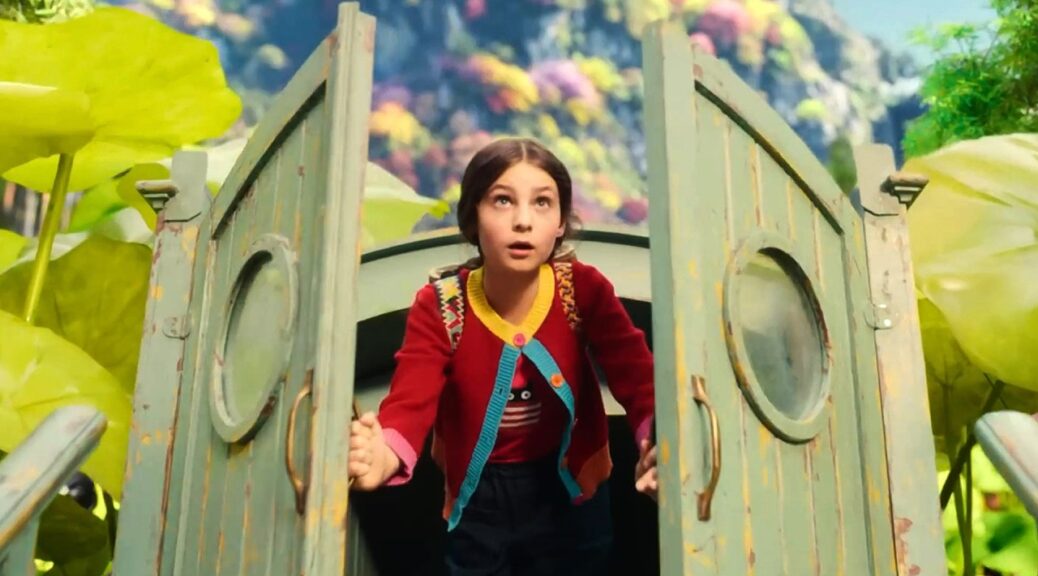
Still, without a single, clear antagonist, the 2015 standalone film Minions felt adrift. Cute and goofy but pointless. To avoid the same trouble this go-round, Minions & Monsters pins the adventure on one creative little dude: James.

Centuries ago, when an early tribe of Minions searched the earth for a villain to assist, James drew pictures. These pictures told funny stories that entertained exactly one other Minion: Henry. (Henry, James and all other Minions are voiced by co-writer/co-director Pierre Coffin.)

The Minions’ quest to find their villain leads them eventually to 1920s Hollywood. Here is where Coffin unveils a love for classic moviemaking. Sure, every film in this franchise charms with hidden sight gags and funny Easter eggs. But Minions & Monsters drips with them. There’s a classic movie reference in nearly every frame of the film, beginning in the intro, where a tour guide (Allison Janney) explains to bored tourists the very important role James and Henry played in saving Hollywood and, indeed, the world.

Janney is not the only Oscar winner lending her voice, either. Christoph Waltz is Max, the harried director who discovers James, and Jeff Bridges plays twin studio heads Frank and Elwood. Plus, Jesse Eisenberg (no slouch!) voices Dort, an unlikely yet somehow perfect Minion ally.

With James in the hero seat, Minions & Monsters follows a more tightly scripted chaos. James decides to conjure some monsters so he can make a creature feature and conquer Hollywood. (If you think Goomi, the first monster conjured, sounds weirdly like Eric Cartman, there’s a reason for that. South Park co-creator and Cartman vocalist Trey Parker lends his voice to the wee green Cthulu cub.)

Characteristic of the franchise, the film is goofball anarchy. Minions & Monsters is quickly paced, brightly colored, silly, good-natured fun. The sheer amount of story sometimes causes the movie to drag. This is not helped by Janney’s lengthy first act exposition. But as a mash note to filmmaking and a goofy, family-friendly adventure, it’s a delightful reason to sit in the air conditioning this weekend with your kids.

Dressed to Impress

Couture

by Hope Madden

Fashion Week in Paris—the only word in that phrase I entirely understand is “in”. Well, I know what a week is, but in Alice Winocour’s drama Couture, Angelina Jolie plays Maxine, an indie horror director with zero interest in fashion who’s tasked with creating a short film to introduce the diva hullabaloo.

They probably called it something different that I should know, but at least there was a character I could grasp.

Maxine is out of her element, under pressure from the event organizers, struggling to communicate with her Stateside 15-year-old, and told by her doctor that she needs to see a specialist immediately.

Meanwhile, Ada (Anyler Anei) is this year’s “new face.” She’ll star in Maxine’s short film and be the first model on the runway. But she’s never modeled before. She’s an 18-year-old South Sudanese refugee living in Kenya and studying pharmacy. Like Maxine, Ada is in over her head.

Winocour, who writes as well as directs, braids these two stories with a third strand. Ella Rumpf is a make-up artist and observer, someone who runs almost undetected in all the Fashion Week circles.

What the three tales have in common, what Winocour explores without exploring, is what each woman keeps to herself. Choosing Fashion Week for this exploration seems fitting. Models are stand-ins, lovely images to hang an idea or a frock on, but not humans. No emotions, no turmoil, no war-torn country to preoccupy them. At least, that’s the role the industry requires them to perform.

Jolie’s gently understated stoicism offers the film an emotional center while Anei’s sweetly awkward vulnerability keeps it tender. Although Winocour’s transitions from one tale to the next are almost magical in their grace, the third storyline with Rumpf feels underdeveloped and a little heavy handed.

Wincour can’t bring the story full circle. The fashion industry still seems superficial and unnecessary by film’s end, which leaves the film feeling less powerful than what the individual heroines deserve.

Fight the Pain Away

Supergirl

by George Wolf

Look, Kara Zor-El (Milly Alcock) isn’t some goody-goody like her cousin Superman, okay? She’s a hard partying rock chick rockin’ a Blondie t-shirt and a wiseass attitude on her 23rd birthday, so F-you! She’s not about go and join young Ruthye’s (Eve Ridley) quest to avenge her parents’ death at the cold-blooded hands of space villain Krem (Matthias Schoenaerts).

But then Krem shoots Krypto full of a slow-acting poison, and suddenly Kara’s got 72 hours to find Krem, get the antidote, and save her beloved dog from back home.

There’s also a sex trafficking ring to bust up, so add Fury Road to John Wick, Star Wars, Alien, multiple Westerns and various other inspirations you may spot. And while at this point, finding an entirely original stylistic angle for your superhero film may be damn near impossible, this familiarity is one of the things keeping a pretty satisfying adventure from reaching the stratosphere.

Director Craig Gillespie (I, Tonya, Lars and the Real Girl, The Finest Hours) overcomes some occasionally wonky CGI to craft several winning sequences of action, backstory and world building, but often undercuts the growing momentum by bailing out too soon. The surprising dive into the demise of Krypton adds narrative heft, but dropping it between the grimness of The Dark Knight and the giddy excess of Birds of Prey keeps any distinct tone elusive.

Through all of it, Alcock (House of the Dragon) keeps our titular hero wonderfully grounded. Writer Ana Nogueira’s debut screenplay may be filled with familiar themes of grief, destiny, revenge and female rage, but Kara has specific reasons to be wounded. Alcock makes sure we appreciate the character arc that turns Kara’s defense mechanisms into Supergirl’s defense of truth, justice, and…you know.

Alcock finds a way to make us care about the girl, whether hunting down Krem (Schoenaerts is a wonderful, facially-studded psycho), fighting alongside Lobo (Jason Mamoa, gleefully hamming it up) or feeling sweetly big sisterly to the resourceful Ruthye.

And more importantly, Alcock’s scenes with David Corenswet’s Superman cement the film’s biggest win: giving Kara the agency for her hero to stand as more than just a sidekick. This girl’s truth is separate from her famous cousin. Supergirl makes no apologies for making that clear, with an uneven but ultimately effective introduction.

I Can’t Live Without My Radio

Lucky Strike

by George Wolf

The song that plays over the closing credits of Lucky Strike couldn’t be a more appropriate choice. Co-written by Rod Lurie, who also co-wrote and co-directed the movie, the theme is passionate and well meaning. It is also overwrought and heavy handed.

So again, perfect for this film.

By all accounts, Lurie (The Outpost), co-director Todor Kotzev, co-writer Marc Frydman and their fellow producers have gone to great lengths to ensure this film gets the thumbs up from WWII historians. From the jeeps to the artillery, the terrain and beyond, the clear aim of the production was to create an authentic bridge between recorded history and battlefield reality.

And on the note, Lucky Strike hits the mark. An authentic feel for the characters being developed proves a much harder target.

Scott Eastwood takes the lead as Capt. John Castle, who in December 1944 is ordered by his superior (Colin Hanks in a brief cameo) to oversee the blockade of a road in the Ardennes forest often used by German soldiers.

Castle and his team come under heavy fire, eventually leaving John and his invaluable radio “Lassie” – which will become even more valued later on – alone behind enemy lines.

Based on true events from the legendary Battle of the Bulge, the film becomes one man’s journey of commitment and survival, as Castle sets out on the 30km trek to safety in Elsenborn, Belgium.

As correct as all the details may be, the writing and direction never miss the opportunity to overplay a hand. Despite some tense and well orchestrated one-shot action sequences, much of the dialog lacks nuance, the editing and reaction shots continually aim for the back row, a third act twist isn’t hard to see coming, and there’s even the inclusion of an actual pale horse (apparently ridden by subtlety).

Eastwood shoulders a big load but doesn’t show the family gift of understatement, and cannot elevate any of this material. Only the great Aunjanue Ellis-Taylor, as a grieving mother in some touching bookend scenes with Eastwood, can give the film a fleeting layer of humanity.

Lucky Strike needed more of that. There’s plenty to respect here on a technical and historical level, but any true emotional connection is lost in the wilderness.

Coven in the Woods

Camp

by Hope Madden

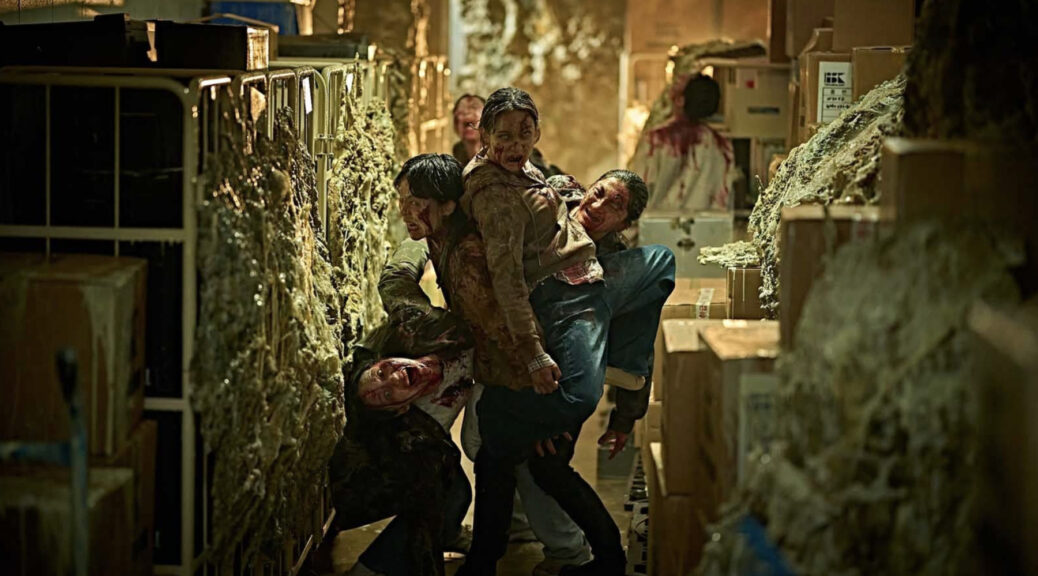
A sapphic coming-of-age summer camp horror, those words are not untrue. They are inaccurate. Whatever expectations you may have coming into writer/director Avalon Fast’s Camp, they’re wrong. Which is not necessarily bad.

Prizing atmosphere over genre, Fast’s loose narrative and structure benefit the floating grief that keeps Emily (Zola Grimmer) only partly present in any situation. It’s rooted in an adolescent tragedy and exacerbated by an incident in her early twenties. She’s disconnected, vacant, and her concerned father suggests she take a counselor position at a summer camp for troubled kids.

But Fast clarifies from Camp’s opening sequence that this is not going to be a slasher. Even when Emily falls in with a close-knit group of likewise disaffected young women—her own coven, if you will—the filmmaker shrugs off any comfortable comparison. The Craft? Practical Magic?

No, grief, guilt, shame, and the disconcertingly untethered existence of modern young adulthood don’t fit so neatly into a single box. Fast wanderingly explores ideas connected with nature and female camaraderie, with acceptance and rejection, with the search for peace. But a typical witch film this is not.

In a little attic space above a cabin in a Christian Youth Camp, five damaged young women cling to each other. They bond, drink, hallucinate, cast spells, make sacrifices, and feel comfort. But unlike The Craft, which condemned a dark use of the feminine power of nature, Camp is nonjudgmental.

Instead, Fast is interested in these broken young women and their hazy search for something to make them feel whole. The pace is slow, the imagery hypnotic, occasionally surreal. The film aches. It mourns. It embraces a vivid if ill-defined reality in which there is no clear path to happiness or wholeness.

Self-discovery is the key, and Emily’s is all melancholy magic. Cinematographer Eily Sprugman captures Emily’s heady freedom and earthy nightmare with gorgeous color. Fast’s languid pace, though sometimes tiresome, mainly delivers a groggy magic that feels like a dark dream.

Grimmer’s naturalistic performance grounds the wonder with honesty and heartbreak. There’s a real sadness at the heart of Camp that, along with an intriguingly messy morality, will keep you thinking about it long after it’s over.

Stop and Be Friendly

Disclosure Day

by Hope Madden

For about fifty years, Steven Spielberg has been indulging his wonder. By sheer force of will and undeniable talent, the filmmaker turned the direction of Hollywood’s alien fascination, not from “they’re coming to get us” to “maybe they love us.” But he pushed hard enough, beguiled intensely enough, to create that space.

He isn’t done. Disclosure Day returns our eyes to the skies and asks us to examine why our natural inclination is to believe the worst in each other and blame the “other” for it.

Josh O’Connor is Daniel Kellner, math nerd (you knew there’d be a nerd). He’s employed by Wardex, an intelligence and security paramilitary firm that works alongside, not for, the US government. But Spielberg, working from a script by longtime collaborator David Koepp (Jurassic Park, War of the Worlds) for which he gets story credit, wastes no time on this set up. From the opening smackdown, we are on the run with Daniel and girlfriend Jane (Eve Hewson) from Wardex and its head, Scanlon (Colin Firth).

Cut to the charmingly unserious Kansas City meteorologist, Margaret Fairchild (Emily Blunt). Quite suddenly, over the objections of Margaret’s equally unserious boyfriend (Wyatt Russell), she’s on a collision course with Daniel while Scanlon’s high tech, black clad operatives use all intel on hand to close in.

The shot making is Spielberg at his most reflectively, thrillingly Spielbergian. Disorienting, gorgeous, and often recalling his own work in nod after ingenious nod. Plus, John Williams came out of retirement, pairing music to scene to reliably engrossing effect.

Colman Domingo offers his support as the father figure whose let wonder and optimism override knee jerk fear and cynicism.

Everybody’s great, Blunt in particular. And there’s a lovely sentiment fueling the tale as Spielberg uses his familiar themes to point to the weaponization of religion and society’s bottomed-out belief in humanity.

But the world is not the same place it was when Richard Dreyfuss wasted a good plate of mashed potatoes. As well made and engaging as Disclosure Day is, the third act reveals what the first two suggested. For a comment on the state of the world, or an extra-terrestrial thriller, the film’s sweet, quaint, and somewhat irrelevant.

A few questionable details would be easier to overlook thanks to the film’s admirable momentum had it all led somewhere less telegraphed and less wide-eyed.

You Play Lizzy?

Power Ballad

by George Wolf

Give it up for “Ireland’s grooviest wedding band…Bride and Groove!”

Back in the day, Rick Power (Paul Rudd) had an American rock band, a record deal and big dreams that never panned out. But after settling in the Emerald Isle with his Irish wife Rachel (Marcella Plunkett) and daughter Aja (Beth Fallon), Rick scratches his musical itch by playing other people’s classic hits and trying not to be too cliched about his glory days.

Power Ballad is yet another tune-centric winner from writer/director/composer John Carney. And much like Once, Sing Street, Begin Again and Flora and Son, his latest is a crowd-pleasing ode to authentic music, heartfelt inspiration and the twists of fate that change the course of our lives.

When Rick and his band play a high end wedding at a sprawling Irish castle, he meets friend-of-the-bride Danny Wilson (Nick Jonas), a former boy band star trying to transition into legit solo act. Danny sits in for a song, he and Rick hit it off and they end up drinking and jamming the night away in Danny’s lavish suite.

Fast forward a few months, and Danny’s first big solo hit is just a polished version of a song that Rick wrote years ago and played for Danny that very night.

Surely Rick can just call the number Danny left him with and settle this, right? He seemed like a great guy!

Well, he can only get through to Danny’s label head (Jack Reynor), who tells Rick that unless he has proof of his claim, buzz off or they’ll sue him into oblivion.

The endlessly endearing Rudd (who sings surprisingly well) shares a nice chemistry with Jonas, and Carney pumps the soundtrack full of both classics and some new originals that actually sound like pop hits. Carney also tosses in a couple wink-wink callbacks to Once and some outright hijinx, but the film’s greatest hits come from the warm humanity in the deep tracks.

Rick can feel his family and his band doubting his claim, and as Danny’s song becomes a global anthem requested at weddings (uh-oh!), Carney finds ways to probe the characters that are easily digestible.

Does Rick want the fame and riches that would come from a writing credit, or does he want to feel like he did when he was young and full of confident ambition?

And if that younger Rick had hit it big with his first band, would he really have had a better life?

Since the achingly beautiful Once, Carney has often relied on contrivances that work well in service of the feel good meter. Power Ballad follows that familiar rhyme scheme, but strikes an irresistible medley of joy, sacrifice and reward that feels like a bangin’ summer playlist.

Master and Servant

Masters of the Universe

by Hope Madden

Mattel, the company behind Greta Gerwig’s brilliant blockbuster Barbie, follows that unprecedented success by backing another woman centered feature driven by an Oscar worthy screenplay and helmed by a genius female filmmaker.

JK. They’re just making another toy movie.

Mattel welcomes you to Pride month with the return of their second pinkest toy. Bulging hero He Man (Nicholas Galitzine), saucy villain Skeletor (Jared Leto), and scrappy helpers including Ram Man (Jon Xue Zhang) and Fisto (Jóhannes Haukur Jóhannesson), unite for a semi-campy Masters of the Universe origin story.

Director Travis Knight, who somehow carved one worthwhile film out of the Transformers franchise (Bumblebee), is tapped to try to Gerwig-up this afternoon 80s staple. The filmmaker’s been nominated three times for Oscars, all for producing truly exceptional animated films. He works here with a team of writers (Chris Butler, Aaron Nee, Adam Nee), collaborators all on other great animated features. It’s not Gerwig and Baumbach, but it’s an impressive pedigree for Masters of the Universe.

The cast off the top impresses. Galitzine, so spot-on in both Bottoms and 100 Nights of Hero, charms as the bumbling prince returned from Earth to save Eternia from the clutches of the cackling, weirdly muscular Skeletor.

Idris Elba elevates scene after scene as Duncan/Man at Arms, the tough talking softie who mentored young Adam and has become a bit of a lush in his absence.

Leto’s adequate. But Knight articulates his henchmen (Trap Jaw, Beast Man, Goat Man) well with a good practical/CGI mix.

The tone is the thing. Masters of the Universe is both playful and self-serious. This doesn’t always work cinematically, but there’s tenderness for the franchise baked into the film. And certain things require a bit of ribbing. Fisto? Seriously?

The good natured humor is not enough to entirely salvage the movie. Indeed, it makes you realize anew how remarkable Barbie was for its lack of cynicism and endless insight. But we may never again see a film quite like Barbie, especially if men keep deciding who makes movies. As Orko might have helped us see at the end of an episode, Masters of the Universe is no masterpiece, but sometimes it’s OK to have fun. And the movie is OK.

Stay tuned for three post-credits scenes. Number one will thrill fans, while two and three tease future installments. Bye for now!

Honky Tonk Blues

Carolina Caroline

by Hope Madden

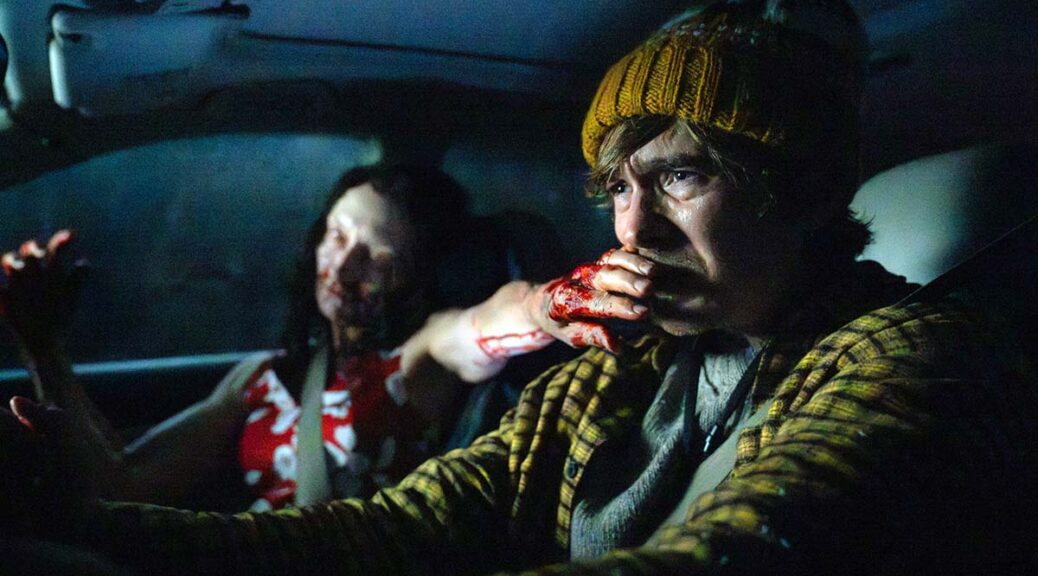
Bourbon soaked and steamy, Carolina Caroline spins a modern Bonnie & Clyde tale with brains, sexual chemistry and emotional impact.

Samara Weaving is Caroline Daniels, stocking shelves and cleaning bathrooms at a two-pump filling station in an ambiguously timestamped, uncertainly located small Texas town. In walks Oliver (Kyle Gallner). He’s not from around here. And she is the one thing Oliver cannot entirely predict.

Director Adam Rehmeier struck gold with this cast. Certainly, he knew Gallner’s capabilities going in, the actor having led his subversive yet adorable misfit romance Dinner in America in 2022. Gallner’s as reliably magnetic an actor as anyone working today, forever mining the outsider character for its humanity.

And Weaving is just a star, pure and simple. Impossible to look away from, charming and vulnerable, those enormous eyes taking everything in, the wheels always turning, in her hands, Caroline is no cliched country beauty.

Strong support from Jon Gries (so dear as Caroline’s dad) and Kyra Sedgewick (brutal!) keep you emotionally engaged.

After two top-tier comedies (Dinner in America and Snack Shack), it’s impressive to see Rehmeier show such instincts with sexier, heavier material. It would have been simple enough for him to coast on the chemistry between his leads, Jean-Philippe Bernier’s photography, and an impossibly on-point honky tonk score and still produce a film worth watching.  Although, there are times when that’s kind of what he does.

Writer Tom Dean (Charlie Harper) usually sidesteps cliché, even given the film’s worn-thin roadmap. We have heist machinations, romance, violence, laughs, family drama and more, none of it out of place or off putting. But maybe because of the skill Rehmeier shows in keeping this road picture intimate, when the script hits some obvious notes, they stand out.

But then Weaving moseys in and rescues the scene with unbridled charisma, and you’re back to enjoying yourself. For the film’s handful of rough patches, it would be a shame to miss Gallner and Weaving sizzle like this.