Category Archives: New In Theaters

Reviews of what’s out now

The Perfect Beast

How to Build a Girl

by Hope Madden

There may be nothing braver than an open heart. That kind of bravery accompanies a lack of cynicism that makes others hide their eyes. It is also what drives Coky Giedroyc’s big screen depiction of Caitlin Moran’s memoir (adapted by Moran herself), How to Build a Girl.

Though events have been condensed and details changed (including the main character’s name), Moran’s inimitable upbeat and insightful voice remains, finding its ideal avatar in Booksmart’s Beanie Feldstein.

Feldstein is Johanna, unrepentantly resilient odd duck. Friendless, in love with life, desperate for an adventure, Johanna is the fearless hero in this quest. Feldstein, aside from a few struggles with the accent, commands your attention and very best wishes. You root out loud for her.

After a local TV spot as student poet turns mortifying, Johanna’s brother (one of four) suggests she audition for a London magazine’s “gunslinger” opening as music critic. She unironically writes up a piece on the soundtrack to Broadway’s “Annie”—which nabs her an interview, but only as a joke. Undeterred, she overwhelms the smarmy hipsters into an assignment.

There are moments where How to Build a Girl transcends its coming-of-age trappings. Those are the moments when it directly quotes the book, giving us a peek inside the skill as a writer that will carry Johanna through it all.

The film bears a resemblance to Lady Bird, in which Feldstein portrayed shy bestie to Saoirse Ronan’s adolescent work-in-progress. Like Lady Bird, Johanna craves life outside her hometown. The two heroines also share a lovely knack for forgiveness (of self and others) as well as a strength for self-definition.

Feldstein’s work thus far (Neighbors 2, Lady Bird and, most notably, Booksmart) has announced her as the go-to for funny, brainy, less-than-popular teens—which is not to call her a one-trick pony. Part of her draw is her ability to carve out individuals, to recognize and unveil the human heart inside each girl. Her charisma is almost blinding in this film.

That’ll help you miss some of the weaker elements. Minor characters are allowed little opportunity to develop and the story feels boiled down to the most obvious plot points. There is nothing superficial about Johanna, but the film itself fails to dive far enough beneath the surface to do her justice.

Moran’s audacious humor sometimes feels muted, and that is an outright shame. Nonetheless, Feldstein’s a 1000 watt bulb who makes even the most ordinary scene glow happily. There is also something fearless in a film that decides it is up to every girl to build and rebuild herself in her own image.

Not So Smooth Criminals

Arkansas

by Brandon Thomas

Clark Duke has established himself as one of the more prominent “Hey! It’s that guy!” actors in Hollywood. You probably don’t know his name, but you’ve seen him pop up on shows and films such as The Office, Hot Tub Time Machine and Kick-Ass. While Duke might not be included among the comedy greats of our time, he shows far more promise as a feature writer/director with his debut, Arkansas.

Kyle (Liam Hemsworth) and Swin (Duke) are low-level drug dealers working for a mysterious king-pin named Frog (Vince Vaughn). The two pose as park rangers by day so that they can courier drugs at night for Bright (John Malkovich), one of Frog’s proxies. When one of these runs goes bad, Kyle and Swin find their lives in danger as Frog starts to believe that they are a threat to his drug empire.

Duke handles the movie’s tone from the first scene. Not quite interested in gut-busting comedy nor the other darkly comedic side of the coin, Duke, instead, is happy to present this tale with wry wit. Think of a happy marriage between the works of Joe R. Lansdale and Elmore Leonard than that of Tarantino.

Fully on board with this tone is the film’s cast. Duke himself plays Swin as a man with unmatched, and unearned, confidence. Malkovich is clearly having a ball, and that allows him to go big, but not Cyrus the Virus big. The odd man out is Hemsworth. Try as he might, Hemsworth tackles every line with a little too much seriousness and bravado. 

Vaughn continues his recent streak of popping up in interesting indie thrillers. While Arkansas isn’t nearly as intense as Brawl in Cell Block 99 or Dragged Across Concrete, Vaughn attacks the role of Frog with the same sense of danger. Like the film itself, Vaughn’s performance oozes charm, but with menace bubbling just below the surface. 

Arkansas probably won’t be taking a victory lap during awards season later in the year, but what it will be doing is showing that Clark Duke is a behind -the-camera talent to keep an eye on.


No Mountain High Enough

South Mountain

by Cat McAlpine

Lila is trying to hold it together, but things keep falling apart. Her best friend has cancer. Her daughters have both left for the summer. Her husband might be leaving forever. The ants will be back soon.

Written and Directed by Hilary Brougher, South Mountain refuses to settle into one place.

At first, we follow the youngest daughter, Dara (Naian González Norvind), back home from the woods. Then the older daughter, Sam (Macaulee Cassaday), arrives home before her big sail across the Atlantic. We discover that father Edgar (Scott Cohen) has a secret. Gigi (Andrus Nichols) has a lump and her daughter is scared. Everyone has an opportunity, even if glancing, to be the main character. Life’s like that.

But it is Lila (Talia Balsam) with whom the camera stays. Lila is at the center of it all.

There is only one reference, in passing, to South Mountain’s namesake but the title still fits the tone of the film. Brougher never lets you forget how close the outside world is or how integral it is to this family’s backdrop.

We see nature in micro and macro as Lila’s journey comes in and out of focus. The credits open on a nearby waterfall, but as the story narrows, the details get smaller and more mundane. Flies are constantly zooming around the dining room. Fresh blackberries are picked for dessert. We even get a look inside the compost bin because life and leftovers are messy.

The narrative is loose. Sometimes new scenes are introduced with a date stamp. “June 22nd”, announces one, in unassuming white letters. Other scenes come and go without any anchor. The clothes change, the light shifts, and you simply realize that this must be a different day. Time never seems to move linearly, but it does keep moving forward. Paired with a shifting focus at the start, Brougher paints a more realistic story of grief and acceptance where some days matter and some do not.

Overall, what carries South Mountain is Balsam’s fantastic performance. The story can be too slow and too scattered at times. But it’s impossible to not keep watching Balsam as she moves from self-assured to train wreck to something in-between.

Is Lila going to be okay? There won’t be a definite answer but it’s worth the journey. Life’s like that.

She Said She Said

What She Said: The Art of Pauline Kael

by George Wolf

Even with the fragmented and ubiquitous nature of film criticism in the social media age, Pauline Kael’s summation may still be the best.

Kael believed it was her job to “alert or interest people,” and without critics, “it’s all advertising.”

Falling into a movie reviewing gig almost by accident in the 1950s, Kael rode her obvious passion and expressive prose to a seat of tremendous power in the film industry. Many credit her positive review of Bonnie and Clyde with saving the film from ruin, while her negative reaction to Lawrence of Arabia made director David Lean question his future.

For What She Said: The Art of Pauline Kael, writer/director Rob Garver gathers interviews with Kael, her daughter and various film industry faces, weaving in passages from Kael’s writings amid snippets – with occasionally cheesy placement – from hundreds of movies.

It’s a spirited, engaging celebration of not only Kael, but of film itself as a source of entertainment, inspiration and discussion.

Garver supplies pertinent biographical info, showcasing Kael’s unlikely rise through sexist attitudes and editors uneasy with a critic unafraid to buck popular sentiment. And though it never quite feels as if we get to know Kael well, Garver makes sure we are aware of her complexities and contradictions.

She was grateful to be “paid for thinking,” not caring much about dissenting opinions or any hurt feelings on the other end of her sharpest barbs. She championed American New Wave cinema, but openly dismissed arthouse elitism for a populist lean, favoring sentences with the “sound of a human voice.”

It is that voice that speaks loudest in What She Said, with clear illustrations of how her self-assurance (and yes, self-promotion) elicited hatred, praise, and even the respect of those whose work fell below her standards.

And though Kael died in 2001, the film’s parting shot shows her approach as one both original and prescient. Putting some of Kael’s memorable thoughts inside imagined tweets, Garver leaves little doubt her following today would be impressively large.

That’s what she said.

Killer Style

Deerskin

by Hope Madden

What makes a good midlife crisis? What gives it swagger? Physicality? Style? Maybe a little fringe?

Deerskin.

Oscar winner Jean Dujardin (The Artist) is Georges, a man willing to pay an awful lot for a jacket—so much that his wife locks him out of their account. No matter, Georges will just hole up in this little French town, learn how to use the digital camera that came with his purchase, and spend some quality time with his new jacket.

If that sounds absurd, it should. You’ve just stumbled into the one-paragraph synopsis of the latest bit of lunacy from filmmaker Quentin Dupieux. As he did with 2010’s Rubber (a sentient tire on a cross-country rampage), Dupieux sets up one feature-length joke.

It’s funny, though.

Again the filmmaker draws hysterically deadpan, even confused performances from the many nameless characters supporting his leads. Adèle Haenel (Portrait of a Lady on Fire), playing town barkeep and would-be filmmaker, offers a wily and enjoyable counterpoint to Dujardin’s earnestness.

Aside from a couple of utterly priceless Dupieux flourishes, it’s Dujardin that sells this film. He’s deeply committed to the wildly wrong-headed internal logic of the film and the character. There’s an underlying sadness to it, and the willful obliviousness required of a character so willing to commit to a plan as ludicrous as Georges’s. He’s wonderful.

Deerskin is also slyly autobiographical in a way Dupieux’s other films are not. An odd duck wants to follow his vision (in this case, the obsessive love of a deerskin jacket) and make a movie. Creative partnerships and collaboration, while possibly necessary, also soil the vision and make the filmmaker feel dumb.

No one understands him!

Or maybe they do and his ruse is up.

No matter. He still has killer style.

Ways to Be Wicked

The Wretched

by Hope Madden

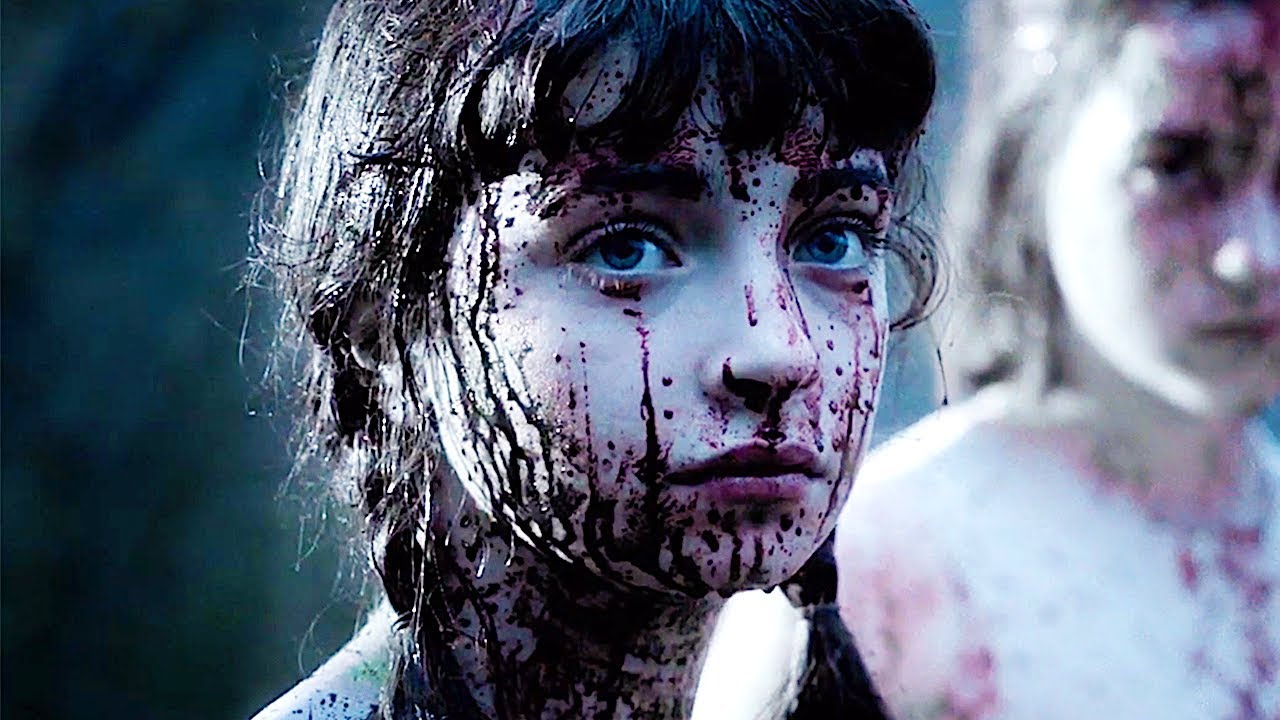
A tidy opening sets the stage, spilling enough beans to prepare you for the full tale while creating an atmosphere of genuine horror. Some excellent soundtrack choices establish a time and generate a mood.

So far so good, The Wretched!

As sometimes happens when a horror movie starts out strong, this one falls into familiar tropes to move things forward. Writers/directors Brett and Drew T. Pierce (Deadheads) stumble slightly as they usher in Act 2, relying on stock concepts as well as shorthand character introductions: rich asshole, hot girl, unfussy hot girl wearing eccentric socks who you should actually care about, Dad who’s trying but just isn’t that good at this.

Basically, there’s too much here that you’ve seen before and may not need to see again. If horror movies have taught me anything (they have, too!), it’s that Never Have I Ever is a lame game that only brings on death.

Still, the Pierce brothers and a game (if mainly unknown) cast keep even the familiar pretty fresh.

High school kid Ben (John-Paul Howard) finds himself out at the lake, working the docks with his newly single dad (Jamison Jones). Sure, he’d planned to spend the summer tooling around town in the Lincoln his mom was passing down to him, but he got himself into a little hot water and now it’s a summer job catering to pampered townies and vacationing families.

If only that was going to be his biggest problem.

Zarah Mahler is especially effective in breaking through tropes as the neighbor lady who is not what she seems, and The Wretched uses the “child in danger” plotline to worrisome effect throughout its running time.

Weird behavior from those tourists next door finds Ben doing a little sleuthing. Quickly, The Wretched turns into Rear Window/Fright Night/Disturbia—but without the actual house arrest kind of thing, which seriously limits its tension.

There are other, lesser-known films that are thematically closer and, honestly, better, including last year’s Irish horror The Hole in the Ground and Oliver Frampton’s almost entirely unseen 2014 gem, The Forgotten.

At about the time you begin to weary of the film, it recovers with a nice surprise that reaffirms the promise of Act 1. There’s far too much borrowed and rehashed between Acts 1 and 3 for it to stand the test of time alone, but The Wretched delivers enough to entertain and to leave you interested in what’s next for the Pierce brothers.

For Art’s Sake

Beyond the Visible – Hilma af Klint

by Hope Madden

Film pioneer Alice Guy Blache and contemporary art ground-breaker Yayoi Kusama were copied, hidden and disregarded by the predominantly male industry that determined not only financial success but historical acknowledgment.

In 1906 – five years before Kandinsky painted Composition VII, long considered the genesis of abstract art—Sweden’s Hilma af Klimpt had already created a breathtaking series of abstracts. Not that you’ve heard of her.

How could you? As Halina Dyrschka’s documentary Beyond the Visible – Hilma af Klint points out, she wasn’t accepted in her time.

Not uncommon for a great artist. What Dyrschka and those she speaks with in the documentary find far more frustrating is that today, even when her genius is acknowledged (more than a million visitors have taken in the current exhibition of her work), art history shuns her.

Leaving behind hundreds of paintings and thousands of pages of journal entries and sketches, af Klint offers an unusual story of a singular life. Inspired by science, nature and spirituality in ways that would seem wildly uncommon today and must have been outright bizarre in her time, she devoted herself to a vibrant artistic exploration.

The filmmaker lingers lovingly on the work, devoting every inch of screen to the vivid color and fascinating images. She surrounds footage of the paintings with landscapes, architecture and even talking head footage framed for elegance. The material balances the energy of af Klint’s work with a calm that’s sometimes even quietly spiritual.

Still, the underlying outrage at history’s reluctance to accept the truth gives the film an energy matched by the excitement of discovery, which is never lost on the filmmaker. As impatient as the film is with the unhurried acknowledgment of genius, it’s equally thrilled to be able to share this genius with an eager if unknowing audience.  

Bite Club

Bit

by Hope Madden

There is something appealing to the glam trainwreck that is Bit, Brad Michael Elmore’s anti-Twilight.

An angsty adolescent fresh from high school graduation voice overs: “You know those teen vampire movies that feel like the horny soap opera fever dreams of an 8th grade diary? Here’s how mine began.”

Like it. It’s self-aware, a little deadpan funny, a little whatever. Go on.

Laurel (Nicole Maines), the recent grad, packs up her Oregon-plated car and takes off to spend the summer with her brother in LA. On her very first night in town, she’s hit on by  the super hot girl Izzy (Zolee Griggs), brought to an after hours full of incredibly cool people, and immediately she feels as if she’s found acceptance, found home.

Naturally, Izzy and her also-hot friends are lesbian vampires who see Laurel’s specialness and invite her to Bite Club.

First rule of Bite Club: No. Fucking. Boys.

Maines is a transgender actress, a fact that elevates Laurel’s angsty “oh, high school was kind of a horror show” schtick because it probably was. Maines does not show an enormous amount of range, unfortunately, and Elmore’s script offers her few opportunities to shine.

She’s entirely convincing with her eyes at half mast, enduring the well-meaning but clueless affection of her family. But Elmore penned very few realistic reasons for Laurel’s behavior and Maines is left struggling to convince us, simply repeating the phrase “I’m fine” ad nauseam.

Diana Hopper, on the other hand, cuts an impressive figure as Bit’s Tyler Durden. Hopper elevates Elmore’s sometimes weak dialog (there are times when it works) with wearied badassedness.

It is fun and sometimes really witty the way Bit mocks boys, though, even if Elmore’s core theme is, “Some of us are OK!” Indeed, Bit undercuts its feminist intent as often as it offers genuine insight.

But maybe its main thesis is that kids are stupid, because Laurel’s philosophy for the future of the human race is…well, it’s stupid.

Still, there’s low-rent garbage fun to be had with this. Everything about it could have been better, but like most guilty pleasures, it appeals in a sugar high kind of way.

Dishonor Among Thieves

The Wild Goose Lake

by Brandon Thomas

A vicious fight breaks out between rival gangs. Chairs fly. Knives are pulled. A spectator takes a bite of a pickle. A man has his prosthetic leg pulled from his body. 

And this is all within the first 10 minutes of The Wild Goose Lake.

Small-time mobster Zhou Zenong (Hu Ge) finds himself in the spotlight after mistakenly killing a police officer during a turf dispute with another gang. With dozens of police searching for him, and rival gangs looking to collect the bounty on Zhou’s head, he’s forced to team up with a mysterious woman (Gwei Lun-mei) and go on the run.

In the grand tradition of so many other neo-noir films, Wild Goose Lake walks a tightrope of mood and style. Many scenes play out long and with few cuts – drawing out the tension. The maze of buildings, streets and corridors are shot deep in shadows. The visual claustrophobia unsubtly mimics that of the main characters. And when the violence hits – it hits quickly and brutally. 

The depiction of violence is where the black humor comes out. There’s more Sam Raimi and Peter Jackson in the violence here than there is Francis Ford Coppola. A killing involving an umbrella had me hooting and clapping my hands in delight. Not to mention the inventive decapitation via forklift.

Hu Ge makes for a stoic lead as Zhou. At the beginning of his story, Zhou is a perfect example of cool, calm, and collected. In the opening fight, he casually dispatches opponents in a flurry of fists and kicks. Sharp contrast to later in the film when Zhou more or less resembles a trapped animal.

Gwei Lun-mei is equally impressive as the standard femme fatale, Liu Aiai. Like any good noir femme fatale, Liu’s motives remain murky at best. Like Zhou, Liu’s resolve begins to crumble as the weight of their situation bears down on her. Gwei does a terrific job of adding subtle layers to Liu. 

It’s hard to look at Wild Goose Lake and not be reminded of Fritz Lang’s noir masterpiece M. In M, Peter Lorre famously plays a serial killer hunted by both the police and the criminal underworld. The narrative themes and strong visual cues helped shape the noir genre as we know it today.

By embracing what makes film noir so riveting, Wild Goose Lake manages to satisfy movie lover’s expectations, and sometimes soar above them. 

Born in a Small Town

Pahokee

by George Wolf

If you’re the parent of a current high school senior, you’ll find some extra poignancy in Pahokee, an observational doc that follows four small town Florida teens through their last year at the predominantly African-American Pahokee High School.

B.J. is the football star on a team dreaming of a D1 State Championship. Jacobed is the Salutatorian who helps out at her parents taco stand. Junior already has a child at home. Na’kerria is running for “Miss PHS” and weighing community college vs. the full university experience.

For their first documentary feature, directors Patrick Benson and Ivete Lucas take a hands off, leisurely approach that gives the events plenty of room to breath – sometimes a little too much room. Some obvious questions (where’s the mother of Junior’s child?) are ignored in favor of following strands that could have been trimmed in a tighter edit.

But the film still finds its resonance in moments both large and small. From the face of the older white Harvard rep at the college fair, to Jacobed’s emotional description of her parents’ sacrifice, to the prom dress adorned with pictures of Trayvon Martin and other victims of excessive force, Pahokee serves plenty of subtle, evocative sequences that will make you care about these kids.

The further you are away from high school, the easier it is to dismiss what the class of 2020 has lost this year. Pahokee‘s class of 2017 serves a tender and truthful reminder of a crossroads unlike any other.