Category Archives: New In Theaters

Reviews of what’s out now

The Outsiders

To the Stars

by Rachel Willis

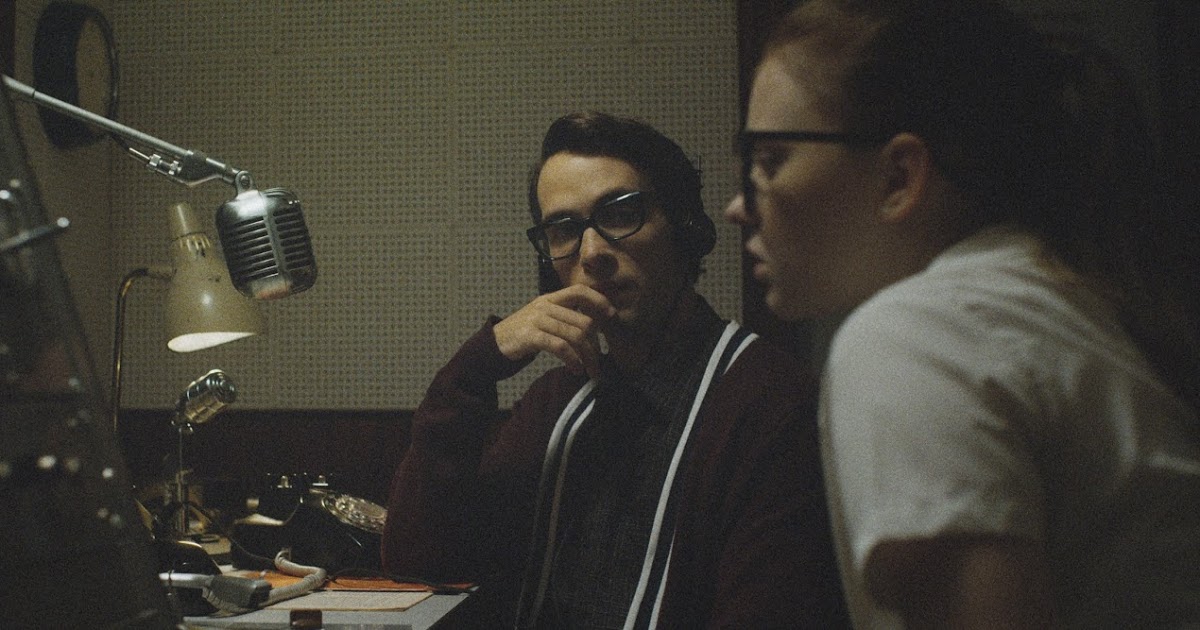
Small town Wakina, Oklahoma in the 1960’s is about as dreary as you might expect. Despite many lamenting the “good old days,” director Martha Stephen’s new film, To the Stars, reminds us that world was not the ideal many would have you believe. This is a world in which outsiders were run out of town, thrown to the wolves, or worse.  

Iris Deerborne (Kara Hayward) is one such outsider. She is derided by her classmates, teased by both girls and boys (the teasing of the boys has a sinister sexual nature), and tormented at home by her alcoholic mother, Francie (an effectively cruel Jordana Spiro). Her father is a passive protector, stepping in only after her mother has already thoroughly berated Iris for her differences.

Into Iris’s life strides the outspoken Maggie (Liana Liberato), a girl from “the big city” who speaks her mind and isn’t afraid to hurl rocks at the “good-old-boys” who harass Iris. And while Maggie seems to have a handle on who she is and what she wants, we quickly learn that not all is what it seems with this enviable newcomer.

What connects Iris and Maggie is their sadness. A large part of the movie is the exploration of female sadness, from the quiet despair of the woman who runs a beauty parlor from her home to Francie’s alcoholic outbursts. Even Maggie’s mother seems burdened with her own melancholy as she tries to make the best of her life in a new town. Each of these women feel their “otherness” in a town inhabited by women who know where they fit.   

As Iris and Maggie bond, first time screenwriter Shannon Bradley-Colleary can’t seem to help falling into familiar coming-of-age clichés. There’s the makeover montage as the two girls skip school (a haircut, a new sweater set, and the removal of glasses equals instant confidence). Maggie’s outspoken nature emboldens mousey Iris. The boy Iris likes is sensitive and mysterious, not at all like the other boys. You can mostly predict how the chips will fall as we watch the two become friends.

Occasionally, the film finds ways to thwart overused tropes. Unfortunately, these glimpses of originality are too few. Often, the audience is left scratching its head over certain character choices. Maggie’s mysterious sadness is explored and explained too late in the film and never given the resolution it deserves. This is Iris’s story, and Maggie’s otherness only serves to help Iris become a confident woman.

A few lovely moments of female solidarity help the movie become something a little more than a cliched look at two outsiders bonding, but those instants are mostly lost in a film that can’t seem to embrace its own otherness.

https://www.youtube.com/watch?v=pkTMx6usAGc

Kelly Green

True History of the Kelly Gang

by George Wolf

Planting its flag unapologetically at the corner of accuracy and myth, The True History of the Kelly Gang reintroduces a legendary 1870s folk hero through consistently bold and compelling strokes.

His death imminent, Australian outlaw Ned Kelly (1917‘s George MacKay in another impressive turn) is writing a letter to the daughter he will most likely never see. With a promise to “burn if I speak false,” Kelly wants his child to separate fact from fiction in the family history.

It’s an audacious, somewhat cheeky opening from director Justin Kurzel, considering that the film itself is based on a historical novel. Kurzel and screenwriter Shaun Grant – the duo behind the true crime shocker The Snowtown Murders nine years ago – go bigger this time, trading spare intimacy for a tableau of grand visual and narrative ideas.

After a heroic act in childhood, Ned gets the chance at a proper education. That offer is spurned by his angry and defiant mother (Essie Davis, terrific), who instead passes Ned off to notorious Aussie bushranger Harry Power (Russel Crowe in a sterling cameo) for an intro into the outlaw life.

With a direct nod to the moment when “the myth is more profitable than the man,” Kurzel spins an irresistible yarn that manages to balance the worship of its hero with some condemnation for his sins. And as the road to Kelly’s guns-blazing capture unfurls, the film incorporates elements of both a tense crime thriller and a Nightingale-esqe reminder of savage colonialism.

Does the legend of Ned Kelly owe more to history or myth? Hero or murderer? True History…. aims higher than one word answers, with storytelling that often soars before landing.

Sloppy Dead

Why Don’t You Just Die!

by Hope Madden

Given that 75% of writer/director Kirill Sokolov’s Why Don’t You Just Die! takes place in a single apartment—one room of that apartment, really—you might be surprised to learn that it’s an action film.

It’s pretty heavy on the action, actually, amplified by inspired framing, kinetic cinematography, sometimes hilarious but always eye-popping choreography, and blood.

Just a shit ton of blood.

This movie is a hoot!

And, yes, it is Russian, so there will be some reading. Not a lot, honestly, and Sokolov’s grasp of visual language is so firm that you really would not have to read a single word to understand every nuance of the film.

Scrappy thug Matvei (Aleksandr Kuznetsov) waits outside an apartment door, wary to ring the bell. Behind his back he hides a hammer, tightly gripped. When the door opens, the imposing Andrei (Vitaliy Khaev) looms. Suspicious, big, bald, effortlessly alpha (just ask the neighbor’s yipping dog), he eyes Matvei.

Matvei eyes back.

Things move inside.

Sokolov sets up a raucous mystery. Why is Matvei here? What does Andrei’s daughter have to do with it? Why isn’t Natasha in the country? How can Yevgenich help?

Does every single one of these people have reason to want Andrei dead?

The answer to the last one is yes.

As these characters limp into and out of the apartment (or don’t), Sokolov helps you keep track by virtue of theme music. Each character has his or her own. The quiet, brooding Matvei’s music, for instance, soars like a Morricone Western theme.

But is he a black hat or a white?

With a spare script, visual wonder and energy to burn, Why Don’t You Just Die! promises to snatch your attention like a duffle bag of cash and hang on until exactly enough blood is spilled.

That’s a lot.

Partial

Santiago, Italia

by Hope Madden

History repeats itself.  This often frustrating, even tragic theme has powered many films and documentaries over the years, including Nanni Moretti’s Santiago, Italia.  

An account of Chile’s 1973 military coup, Santiago, Italia approaches its history with a fascinating, character-driven approach. An opening news footage montage sets the stage—no timeline or voiceover narration detail events for you.

The people of Chile democratically elect a socialist president. Chileans are excited and hopeful. Big business and the military is not. Planes fly low over the city. Bombs drop. Hope turns to terror.

Moretti, 6-time nominee and 2001 winner of the Palme d’Or, isn’t exactly known as a documentarian. His instincts as a storyteller supersede, even complement, his disregard for the standard practice of documentary. The result is a slice of global, political, human life that bristles with passion and indignation.

Moretti’s main characters are a handful of Chilean exiles, persecuted and, in several cases, tortured for their political views and later exiled to Italy. As moving as it is to see emotion sneak up on someone remembering a moment now nearly fifty years old, witnessing someone recount their own torture with such a clear eye and lack of emotion is even more unsettling.

The filmmaker spends time with former military as well. Among others, he interviews imprisoned war criminal Raul Iturriaga, who believes the two sides should just forgive and forget. Irked at the direction the interview takes, Iturriaga challenges Moretti’s impartiality.

Moretti corrects him.

“Yo no soy imparcial.”  

And why should he be? With Santiago, Italy, Moretti recounts a story of two countries bound by a common desire for freedom from tyranny. As he sees that history replay itself once again, he believes that this is a story that bears repeating.

The Nature of Sacrifice

The Droving

by Hope Madden

It’s been almost exactly one year since Martin’s little sister Meg disappeared. The Droving festival is upon us again, and Martin’s come back to town to do his own investigating.

In filmmaker George Popov’s sophomore effort, following his underseen 2017 gem Hex, the co-writer/director once again weaves elements of a psychological thriller with supernatural themes to create an effectively off- kilter sensibility.

Martin (Daniel Oldroyd, also of Hex) isn’t exactly what he appears to be. His own arc, much of it grounded in slowly-revealed backstory, is what drives the film.

Martin’s internal journey is more deceptively complicated than expected. It creates an underlying unease that nicely offsets Droving’s almost poetic visuals. Though Oldroyd understated grace holds all the film’s unusual elements together, he can’t quite convince when the moment comes to unveil Martin’s most dramatic levels of psychic damage.

The clues Martin pieces together feel too easily sleuthed. The Droving would have benefitted from some narrative complications, some untidiness. Still, the mystery itself—built on a handful of tense set pieces that deliver menace and weirdness in equal measure—is a good one.

Popov’s instinct for visual storytelling is again the most compelling argument for the film. Hex, made on next to nothing, delivered a spooky, medieval atmosphere thanks in large part to framing and cinematography.

For Droving, Popov works again with cinematographer Harry Young, whose shots are often beautifully lit, giving them a painterly quality. From early, eerily quiet pre-festival shots of Martin walking the streets of town to the more frenetic, dizzying festival footage, Popov sets a creepy stage for his thriller.

Three’s Company

Endings, Beginnings

by George Wolf

When does the guise of self discovery collapse under the reality of self absorption? Endings, Beginnings unwittingly toes that line for most of its running time, ultimately rescued by the sheer earnestness of its lead performance.

Shailene Woodley shines as Daphne, an aspiring artist who’s living in her sister’s LA pool house after quitting her job and longtime boyfriend to go find herself.

But first, she finds Frank (Sebastian Stan) and Jack (Jamie Dornan), two good friends who don’t try very hard not to let Daphne come between them. Frank’s the impulsive bad boy and Jack’s the reliable good guy, with Daphne bouncing between them while the film pretends it’s because the two men see her differently.

It’s Daphne who sees herself differently, and her inability to choose is just one of the ways Daphne’s newly-stated goal of doing good for others rings with as much authenticity as her winning the claw game at the arcade (really, she wins!).

Don’t get me wrong, an unlikeable protagonist can be more than okay, it can be a bold and challenging narrative choice. But here, director/co-writer Drake Doremus (Like Crazy) is desperate to sell us personal growth and “music to suffer to” playlists when all we keep seeing are excuses for selfishness.

The always reliable Woodley still manages to make Daphne an interesting train wreck. Her vulnerability and confusion at facing this premature midlife crisis does feel real, and Woodley elevates the film by making sure Daphne – likable or not – is a complex personality forgotten by a litany of romance fantasies.

The chemistry between Woodley, Stan and Dornan is solid, seemingly bolstered by improvisational trust amid Doremus’s abrupt cuts and flashback sketches.

Endings, Beginnings has all the parts of a consistently competent and watchable affair. But the resonant character study it aspires to be – much like the character itself – slips away simply from pretending to be something it’s not.

https://www.youtube.com/watch?v=zY1Jzq7h64Q

Rear Window

Butt Boy

by Matt Weiner

A killer fixated on jamming people, animals and any other object not nailed down into his rectum. The grieving detective haunted by loss and obsessed with hunting him down. Every now and then a movie comes along that seems to exist as much as an inside dare as it does to mock the complaint that there’s no original IP anymore.

If the title wasn’t ample enough warning, Butt Boy is that kind of movie. And just about every demented minute of it is a heady joy to watch. Add this to the list of sentences I wasn’t really expecting to write before going into the Butt Boy movie, but beneath the high-concept plot and anal absurdity you’ll find a pretty decent send-up of a “tortured detective” action film.

Detective Russel Fox (Tyler Rice) gets assigned the case of a missing child, his main suspect seems to have made his victim disappear into thin air in a public, crowded place. That’s because mild-mannered IT drone Chip Gutchell (Tyler Cornack, who also co-wrote and directed) does have a way of making his victims – also remote controls, beloved family pets, you name it ­– vanish without a trace. Up his butt.

In focusing on Russel and a cop noir send-up, Cornack’s script ends up being more satirical than disturbing. If anything, it would’ve been an interesting experiment to see the movie fully embrace the horror of its conceit rather than leavening it with self-referential absurdity.

Or maybe not – Butt Boy is likely a hard enough sell. The cast all do a fine job helping to sell it with deadpan line deliveries. And Cornack pulls out all the stops for a conclusion that trades on all the detective noir clichés while still managing to be truly shocking.

There’s a cosmic irony that it’s been quite a year for delirious, genre-bending movies, including Joe Begos’s VFW, and Richard Stanley’s Color Out of Space. Now, we’re all stuck home for yet another uninhibited midnight movie that begs to be seen with a crowd of stoned fellow travelers who know this was made with love for people like them.

The fact that life had a different kind of horror planned shouldn’t keep you from the giddy escapism of Butt Boy, no matter how much smaller that ass will now loom on the home screen.

Grade A Entertainment

Selah and the Spades

by Brandon Thomas

High school has always been ripe for depiction on the silver screen. The drama, comedy, absurdness and horror of social structures and adolescence has gifted us classics like Carrie, The Breakfast Club and Heathers. While Selah and the Spades might not exist in the upper echelon of high school cinema, it is a strong newcomer in its own right.

At Haldwell School, five factions run the elicit world of parties, alcohol and drugs. The most powerful of them, The Spades, is led by Queen Bee, Selah (Lovie Simone). Selah and her second in command, Maxxie (Jharrel Jerome of Moonlight), rule Haldwell’s underground with an iron first. Selah’s facade of cool, calm and collected begins to wane as she tests a potential replacement (Celeste O’Connor), and as she hears rumblings of a potential snitch.

Writer-director Tayarisha Poe jams a lot of style into her debut feature. The camera work is methodical and at times dreamy. The soundtrack, like any good high school mix, is wonderfully eclectic: jazz band cuts to modern pop sounds with a dash of Bing Crosby. Tonally, the film is reminiscent of Rian Johnson’s Brick. While that film did deal with life or death through a delightfully hip noir tale, Selah is content to revel in the cool without being bothered by plot. 

Dangling story threads of “What if…” pepper throughout Selah and the Spades. Most interesting being the almost brushed aside story of Selah’s former protege, and the incident she vehemently refuses to discuss. The brief glimpse of vulnerability in Selah’s character comes in a singular scene where we see her home life, and the pressure from her mother that has undoubtedly molded her into the emotional grifter she is now.

When the main character’s name is in the title, you better make sure that character delivers, and Simone commands the screen with a kaleidoscope of emotions. Selah’s power comes from the ability to adapt her behavior for each situation. She can be cunning, trustworthy or vulnerable – depending on her need at that particular moment. The complexities of the character threaten to overshadow her humanity at times, but Poe’s terrific script and Simone’s complicated performance help maintain a line of empathy for Selah.

Through an ambitious and original sense of style and character, Selah and the Spades positions itself as a high school movie for more than just a high school audience.

Strings Attached

Trolls World Tour

by George Wolf

They may sing songs we already know in a sequel that’s often thematically simple, but to quarantined families longing for an escape from re-runs, these new Trolls will feel like a cool blast of freedom.

Just as Branch (Justin Timberlake) is working up the courage to break out of the friend zone with Queen Poppy (Anna Kendrick), trouble invades the Pop Troll world of endless singing, dancing and regular hug appointments.

Queen Barb (Rachel Bloom) of the Rock Trolls, daughter of King Thrash (Ozzy Osbourne!), has set out on a Mad Max-style rampage through Troll Kingdom, collecting the magic strings from each of 6 different musical villages in a quest to make everyone bow to power chords and devil horns.

Poppy makes a pinky promise (a pinky promise!) not to let that happen, so she heads out with Branch and Biggie (James Corden) on a shuffle through the Troll playlist.

Like the first film, World Tour brings exuberant splashes of sound, color and enthusiasm. But while this latest adventure salutes more types of music, it somehow makes all them feel more bland on the way to its evergreen moral of appreciating differences.

What elevates these Trolls, though, is their funny bone. One of the directors and two of the writers return from part one, but this film is much funnier, especially for the parents sitting down for movie night.

From the struggle to grasp “Hammer time” to the deviousness of yodeling and the futility of fighting smooth jazz, this script-by-committee lands several solid gags. A new group of all star voices (especially a scene-stealing Sam Rockwell as Hickory the cowboy) helps, too.

And really, where else are you gonna hear Ozzy mumble through “Girls Just Wanna Have Fun?”

Hot in the City

The Hottest August

by Hope Madden

It’s August, 2016 – the hottest August in history – and Brett Story (The Prison in Twelve Landscapes) is taking the temperature of New York City. Armed with open-ended questions, she travels borough to borough gauging different New Yorkers’ sensibilities concerning climate, race, capitalism, robotics, gentrification, unions.

As the world sweats and readies itself for a total solar eclipse, Story gets people talking.

Her subjects are not tongue tied, and their soliloquies are loosely linked one to the other by their in-the-moment nature. You can’t talk about this moment, it seems, without waxing nostalgic about the past and worrying about the future.

How do they feel about the future?

Some are compelled to take action, to exert some control over their present to claim their own future. Others prepare. Some take note of what’s going on around them and that’s enough. Some don’t even do that.

The film is equally fascinating whether it’s digging into grand ideas or sitting in a sidewalk lawn chair chit chatting about the nastier, day-to-day consequences of gentrification.

It’s best, though, when it walks alongside Afronaut – New York artist or man from the future who’s come back to make notes on the present and offer sage advice?

Multiply the probability of a harm by the magnitude of the harm.

All directors manipulate the message, especially documentarians, and Story is no different. Story’s unshowy curiosity proves an amicable though not passive guide. She doesn’t judge, neither does she excuse.

Story talks with big thinkers in their spacious, impressive apartments. She follows activists to the streets as they practice to effect change. She sits on a barstool with Yankee fans who’d like to reframe racism as “resentment.“

Is the future controllable, inevitable, or both? Are we preparing for it, or will it eat us whole like the moon ate the sun that August? The answer is ultimately surreal – just ask Afronaut.