Category Archives: New In Theaters

Reviews of what’s out now

Memory Motel

Black Box

by George Wolf

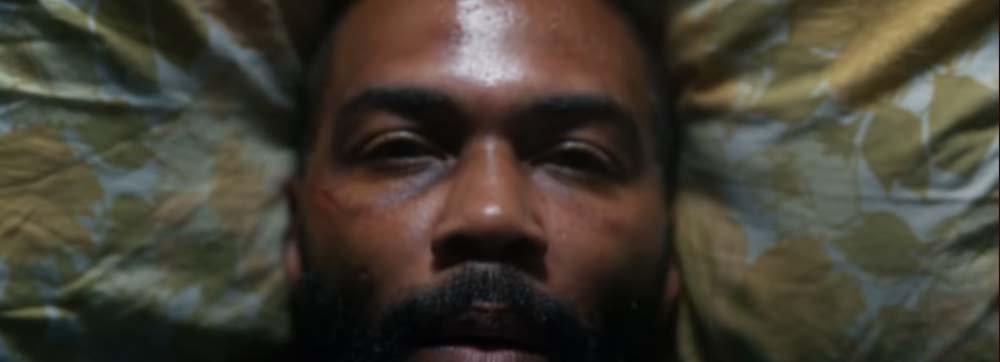
Nolan (Mamoudou Athie) needs Post-It Notes to get through the day. A car crash took his wife and his memory, and the colorful little squares give Nolan useful info while his young daughter Ava (Amanda Christine) is often forced to assume a parental role.

But there is some hope…of the experimental kind.

Dr. Lillian Brooks (Phylicia Rashad) thinks she can help Nolan regain his memory and reclaim his life through her “black box” therapy. Worn like a high-tech VR headset, it allows the patient to wander through their own subconscious, re-living past experiences until they manifest in the conscious world.

Wow, that’s amazing! What could go wrong?

Director and co-writer Emmanuel Osei-Kuffour anchors his feature debut with some recognizable inspirations, crafting another sci-fi ode to identity that flirts with horror tropes while struggling to find a unique voice.

Athie (The Get Down, Underwater) carries the load here with admirable range. The Nolan we come to know early on is not one found in his own subconscious. And as Nolan comes to fear that he is not the man he thought he was, Athie deftly balances the dual roles fighting for control.

And memories aren’t the only area full of mystery. Nolan’s friend Gary (Tosin Morohunfola), a Dr. himself, follows some suspicions to uncover disturbing information about the night of his buddy’s tragic car accident.

The note-posting and body-writing may totally recall Memento, but Black Box also swims in waters populated by iconic J-horror visuals and a touch of Get Out‘s “sunken place.”

The wonders of technology can hide a dark, malevolent side, and we can lose ourselves believing we are always in control.

It’s not a new idea, and Black Box doesn’t blaze any new trails revisiting it. But it is committed to the viability of the journey, and finds its greatest success in engagement rather than surprise.

See How High She Flies

The Curse of Audrey Earnshaw

by Hope Madden

Who’s the villain?

A vampire didn’t choose that destiny, nor the zombie, nor even the werewolf. All three are victims of fate.

The witch, however, comes to her dark powers by choice. And maybe – as Robert Eggers pointed out in his 2015 masterpiece The VVitch—that choice might even make some sense.

Since Eggers’s beguiling horror show, a number of filmmakers have joined him in his ruminations. Lukas Fiegelfeld’s mesmerizing 2017 debut Hagazussa and Luca Guadagnino’s 2018 feminist reprise of Suspiria represent the strongest among the resulting films.

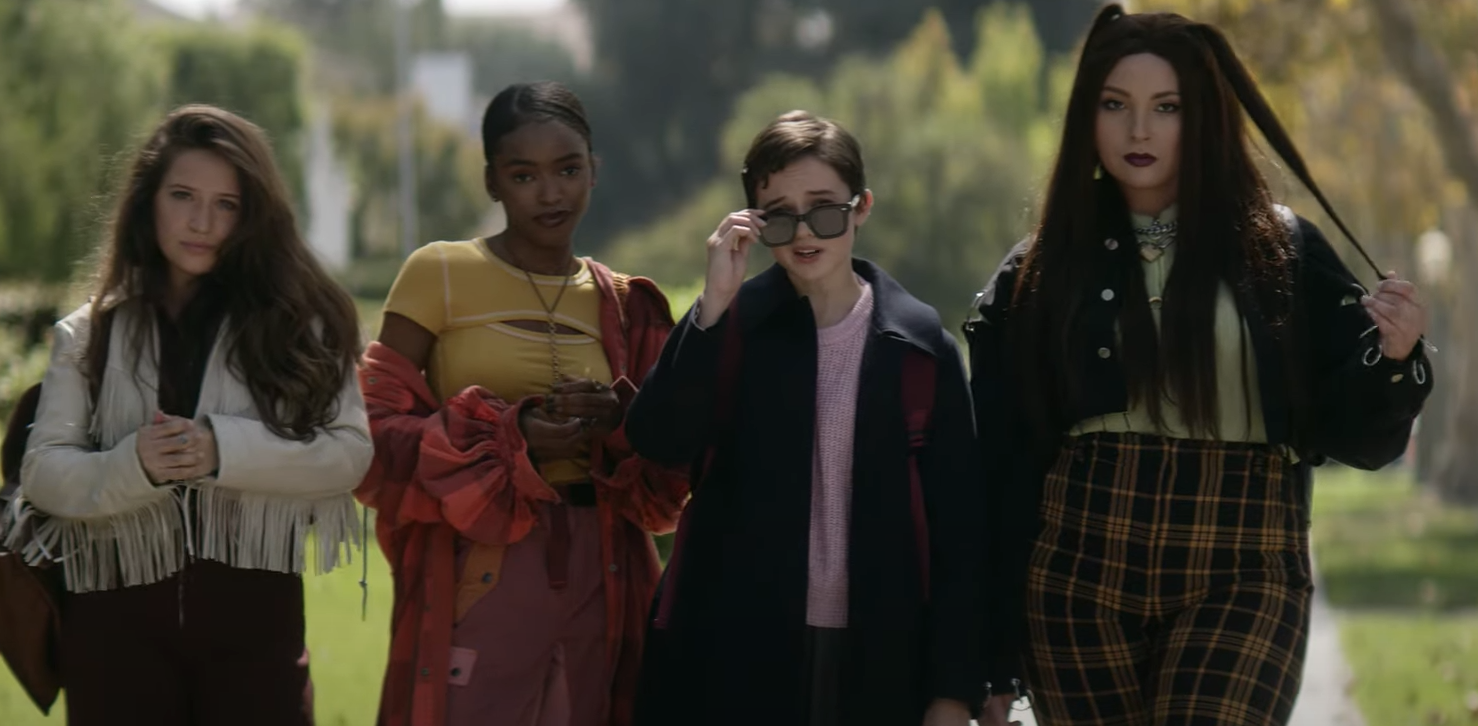
Few if any will ever tell the tale so powerfully or so well as Eggers, but writer/director Thomas Robert Lee has a go with The Curse of Audrey Earnshaw. His film is interested in women’s agency, their oddness, what they owe, what they should and shouldn’t be deciding for themselves, and what they are willing to sacrifice.

It’s August of 1973, but it could just as easily be the 1950s or the 1880s. (So why 1973? It was a big year in women’s rights, after all.) A rugged woman, isolated from the nearby religious community, stands silhouetted against her barn, ax and woodpile.

She is Agatha Earnshaw (Catherine Walker), and she has a secret.

Things haven’t been right in the village since the eclipse 17 years back, but things have been especially troubling lately. Agatha has the only farm that’s producing, the only animals that haven’t taken sick.

Performances are wonderful in a film that looks rustic and spooky, creating a time out of time. Walker, who was so effective in the wonderful little Irish horror Dark Song, cuts an impressive figure of maternal ferocity. She’s orbited by consistently impressive turns, whether the sincere pastor (Sean McGinley), entitled patriarch (Tom Carey), distraught husband (Jared Abrahamson), or young woman finding her voice (Jessica Reynolds).

Each man, however sympathetic or compassionate, represents danger. Like a lot of horror films, The  Curse of Audrey Earnshaw is a coming-of-age cautionary tale: fear the power of womanhood. But Lee is careful to keep asking who, exactly, is the villain here?

The direction is too often obvious: a cough, a handkerchief, blood. At other times, cinematic choices betray the film’s low budget. The Curse of Audrey Earnshaw will never reach the ranks of classic, but it makes a lot of bold choices and leaves an impression.

Liar, Liar

The Lie

by Hope Madden

Kids are stupid.

There may be no more universally accurate sentence. But parents? Dumb and dumber.

Writer/director Veena Sud retools the 2015 German film Wir Monster with a great cast, compelling complications, and that same awful truth.

Kayla (Joey King) is not very popular, not very happy about her parents’ separation, and not at all excited for this weekend-long ballet retreat. When she sees her bestie Brittany (Devery Jacobs) at the bus stop and convinces Dad (Peter Sarsgaard) to pick her up, things turn ugly.

There are any number of “how far would you go to protect your potentially evil kid?” movies—some great (Luce), some less so (Prodigy). What sets this one apart is mainly the cast, plus a somewhat sly delivery.

Sarsgaard is wonderful, as always. He’s one of the most reliable actors working today, and he finds a way to humanize every character, add a bit of depth and some curious moral complexity. He certainly does that here, and with Mireille Enos (playing Kayla’s mom) as sparring partner, a great deal of backstory is communicated without being overtly detailed.

King, a veteran weepy horror protagonist, delivers a clever performance as someone you’re honestly never certain about. Unlike trainwrecks such as Brahms: The Boy II, The Lie knows why the character should be so hard to pin down, and that reason is not a gimmick. It’s integral to the story.

That story is sharply told, even if there are moments that leave you scratching your head. The police presence is something out of a TV drama, and not a very good one. But when all eyes are on this family dynamic, The Lie is often riveting stuff.

The film is far more family drama/thriller than horror, but Blumhouse could do worse than introduce its Welcome to Blumhouse program on Amazon with this solidly crafted, impressively acted film.

I Spy…

A Call to Spy

by Brandon Thomas

Finding a new way to tell a story set during World War II can’t be easy. Men on a mission? Loads of those. Pulpy action adventures? Some of the biggest movies of all time. Dramas exploring the depths of the human condition? We’ve all cried during these. 

What about the true story of female spies sent to France as secret agents? Yeah, that sounds fresh, and thankfully A Call to Spy is just that. 

Great Britain had its back firmly against the wall in the early days of WW II. The Blitz had nearly brought the country to its knees, and Germany’s occupation of France made the threat of invasion seem imminent. In desperation, Winston Churchill formed the Special Operations Executive (SOE), a new spy agency with one purpose: recruit and train women as spies.

A Call to Spy focuses on three women: Vera Atkins (Stana Katic), a Bavarian-born Jew, Virginia Hall (Sarah Megan Thomas), an American, and Noor Khan (Radhika Apte), an Indian Muslim. As the top recruiter, Atkins makes unusual choices in the other two. Hall is a wannabe diplomat with a wooden leg, while Noor is a pacifist. Within the grid of a taught spy thriller, A Call to Spy is mostly interested in how these three pushed back against multiple systems that found them to be less-than. 

Writer and star Sarah Megan Thomas, along with director Lydia Dean Pilcher, weave this true story in such a way that each woman’s tale is given weight and purpose. Unlike many female- driven spy films, our protagonists aren’t scantily clad vixens. Their strength lies in their brains, their cunning and their resolve.

Thomas and Katic channel equal parts determination and vulnerability in their performances. They are leaders who know they have more eyes on them than their male counterparts. Apte’s Noor has the less flashy role that’s at times regulated to the sidelines for huge swaths of the movie. Her final few scenes are intense and devastating, though. 

A Call to Spy jumps around so much that at times it does seem like large chunks of story are being left by the wayside. The character work is subtle and nuanced, but the narrative feels as if it’s tripping over its own feet. Those clunkier moments at times make the movie more resemble a trailer than a fully cohesive story. 

With an interesting look at a true World War II story and captivating performances, A Call to Spy is able to overcome some narrative shortcomings to land as a tense spy thriller. 

And I Feel Fine

Save Yourselves!

by Hope Madden

“The world is f*cked and we should stop pretending it’s not.”

True enough.

This piece of insight comes from Su (Sunita Mani), one half of the Brooklyn couple who’s disconnected to enjoy a week in nature, away from the distractions of a life spent too much online. Yes, Su has brought an internet list of ways to improve as a couple, but she handwrote the list into her notebook, so it’s OK.

Meanwhile, longtime (maybe too long?) boyfriend Jack (John Reynolds, Stranger Things) is jonesing to YouTube his tips for humanely trapping a rabbit. But he will not give in!

No, the two are committed to staying off the grid and offline this week, no matter the cost.

Naturally, this is the week the world ends.

Writers/directors Alex Huston Fischer and Eleanor Wilson, a couple themselves, create a comfortable, hipster vibe. Su and Jack’s relationship is funny in a way that feels less like cynicism and more like compassionately self-referential mockery.

Both performances are charmingly irritating, if that’s a thing. It is here, which could be hard to sell but it’s imperative in this film. The couple is lightly self-obsessed and overly sensitive—an affectionate rip on millennials—but they are sincerely fond of each other, and we are, in turn, fond of them.

Things get sillier once the threat exposes itself. The earth has been overrun by fuzzy little puff balls the couple refers to as pouffes. Yes, the harmless looking—adorable, even—mayhem does feel remarkably similar to those tribbles that caused the Star Trek crew such trouble back in the day.

That’s not the only part of the filmmakers’ feature debut that feels somewhat borrowed, but don’t let them fool you. Just when you think the film itself is selling out, promoting a status quo, nuclear family vibe that would sink the entire production, nope.

The lighthearted cynicism and dystopian dread that marks a generation rears its pessimistic but nonetheless delightful head for an end that’s an unsettling mix of optimism and desperation.

A Wicker Man Vacation

Death of Me

by Seth Troyer

From director Darren Lynn Bousman (Saw II-IV, Repo: The Genetic Opera) comes a vacation horror romp that will bring you some thrills and chills. Nothing more, nothing less.

The highlight here is certainly the gorgeous island setting, which is a welcome departure from haunted houses and summer camps with bad reputations.

The panic begins when a vacationing couple (Maggie Q, Luke Hemsworth) on a remote island realizes they remember nothing from the previous night. The rather chilling race to get answers showcases some intense visuals and surreal editing techniques that help add excitement to the predictable—if surprisingly brutal—twists.

If you are a full on horror fanatic, you will probably have at least a decent time here. The film breaks no new ground but it hits its marks rather decently. The whole, “everybody knows whats going on except you” set up owes a lot to classics such as Rosemary’s Baby and The Wicker Man

It’s also not hard to imagine that the success of Midsommar was a factor in greenlighting this film. It similarly attempts to incorporate a modern theme or two, including a very light commentary on consent and free will, which if fleshed out a bit more could have added some potency and depth.

Also sorry to be that guy, but in 2020, do we really need another film where island natives are portrayed as little more than villains who delight in the torture of the “civilized” Americans? It’s a hypothetical question, the answer is: no, probably not.

What Death of Me lacks in originality it sometimes makes up for with intense visual flourishes and dream sequences, but by the third or fourth “was it a dream or did it really happen?” moment, the horrific scenes begin to lose their sense of danger and traumatic permanence. Because of this, the film starts to flounder a bit in the middle section, just before we reach the rather satisfying, bloody climax.

It’s way off course from being a masterpiece, but for fans of the genre stuck inside during these COVID-19 days, you could do worse than this film that teleports you to a beautiful island for a few bloody thrills.

Workin’ for a Livin’

12 Hour Shift

by Hope Madden

“My mama always said, never trust a skinny woman. While we are eating, they are plotting.”

Amen, sister.

The skinny woman in question is Mandy (Angela Bettis, glorious as always). And she’s skinny for a reason.

It’s the tail end of 1999 somewhere in Texas and Mandy’s just starting a 12 Hour Shift. She’s a nurse (on probation) in a hospital that’s not well staffed, not well run, and losing more patients and organs than it has a right to.

Writer/director Brea Grant strikes an intriguing tone. Her film’s humor is simultaneously deadpan, macabre and very silly. It’s an unusual spot to hit because you don’t root against any of the bad guys, even though they’re doing horrible and often needless things to perfectly likable people. Mainly out of stupidity.

Bettis is dead-eyed perfection, her unflappable nature a front for reluctant tenderness. She’s orbited by a wild assortment of hicks, Karens, low-rent crime lords, criminals, hypochondriacs, bumbling cops, and drugs. So, so many drugs.

Boldly colorful and strikingly stupid, Chloe Farnworth’s Regina is a wonderful counterpoint to Mandy. Together the two generate laughs with the kind of frustrating bond you only have with kin.

Nikea Gamby-Turner’s comfortable presence creates a great energy, while producer David Arquette essentially plays David Arquette (but he does it so well!).

Grant’s film is ghoulish and tense, with a genuinely unexpected musical number. It’s a hard film to nail down, and though it plays out like a long and especially bloody sitcom, the utter lunacy of the plot feels grounded in an authentic exhaustion and insanity known only to those who work in hospitals.

Repo Woman

Possessor

by Hope Madden

It’s been eight years since Brandon Cronenberg swam familiar family waters with his feature debut, Antiviral. He is back with another cerebral, body-conscious fantasy thriller and my first thought is dayyuuuummmmn…

Son of the master of corporeal scifi horror David Cronenberg, Brandon appears to come by his fixations naturally. With Possessor, he travels along with a high end assassin (Andrea Riseborough) who uses a piece of tech (inserted directly into the squishy brain, naturally) to body hop from one mark to the next. She enters one body, takes it over, executes the hit and moves on.

That last part has started to cause some issues, though.

As it was with Antival, much of the world building here is left to our imagination and the film is stronger for it. Possessor’s internal logic is solid enough to be the entire plot. The context is impeccably rendered, providing the most disturbing landscape for Riseborough and her primary avatar, played by the nicely understated Christopher Abbott.

All of it proves an incredible piece of misdirection for what the film is actually accomplishing.

For much of the running time, the chameleonic and underappreciated Riseborough’s Tasya Vos plays an observant interloper—exactly what we are in this weirdly meticulous and recognizable future world. Showy jabs about privacy, appropriation, gender definition and capitalism are simultaneously clever and intentionally distracting.

Cronenberg’s created a gorgeous techno world, its lulling disorientation punctuated by some of the most visceral horror to make it to the screen this year. There is something admirably confident about showing your influences this brazenly.

Credit Cronenberg, too, for the forethought to cast the two leads as females (Jennifer Jason Leigh playing Riseborough’s boss). The theme of the film, if driven by males, would have been passe and obvious. With females, though, it’s not only more relevant and vital, but more of a gut punch when the time comes to cash the check.

Possessor is a meditation on identity, sometimes very obviously so, but the underlying message takes that concept and stabs you in your still-beating heart with it.

In My Oils

Eternal Beauty

by George Wolf

Actor and filmmaker Craig Roberts has pointed to a family member beset by mental illness as the inspiration for Eternal Beauty. You can feel the care Roberts takes in trading stigmas for “superpowers,” as well as the trust he puts in his stellar ensemble to mine the subtle humanity in his script.

Roberts played Sally Hawkins’s son in the sublime Submarine ten years ago, and arranging a working reunion sits right at the top of the smart choices made for his second feature as writer/director.

The Oscar-nominated Hawkins plays Jane, a woman managing to live independently with paranoid schizophrenia, constant medication and bouts of depression. She still has scars from being left at the altar years before, and receives precious little affection or encouragement from her mother (the always welcome Penelope Wilton) or sisters (Alice Lowe, Billie Piper).

Jane’s choice to take a break from her meds brings concerns (like the giant spider hallucinations) but also some welcome clarity amid her constant fog. After first rebuffing the interest of Mike (David Thewlis), an aspiring musician with similar mental issues, Jane accepts his advances, and the two begin a relationship bearing all the awkwardness and free-spirited fun of first love.

Hawkins, again, is a wonderful vessel of expression. Jane may stumble through her days wearing oversized clothes and offering hushed sentences, but she’s always observing and dissecting. She can notice the red flags of her brother-in-law’s wandering eye, and sensibly concoct a darkly hilarious plan to improve her family’s choice in Christmas gifts. Through it all, Hawkins’s vision of Jane is never less than human, and always deeply affecting.

Roberts often films with disjointed angles and changing colors to reflect Jane’s worldview, which sounds more cloying than it actually is, much like the tonal shifts that Roberts softens through a wise commitment to understatement.

More than once in the film we hear a doctor advise: “Don’t fight depression, make friends with it.” By treating Jane’s joy and heartbreak less like a clinical study and more as parts of a greater familial whole, Eternal Beauty finds a way to make those orders seem doable.

Gonna Shout It Everyday

The Glorias

by Hope Madden

“The path up is always a jagged line.”

Gloria Steinem always could articulate the struggle toward progress. Filmmaker Julie Taymor certainly understands that sometimes the best way forward is not straight ahead. The daring filmmaker (Across the Universe, Frida, Titus) puts four Glorias on a bus heading nowhere and everywhere to help us see Gloria Steinem, backward and forward.

The Steinem we best recognize—trailblazing feminist and human rights advocate of the 60s, 70s and onward—is played by the always excellent Julianne Moore. Wise and just a little weary, Moore’s version brings Steinem’s warm soul to the screen.

She’s joined in the role by Alicia Vikander, who plays Steinem in her 20s and 30s; Lulu Wilson as teenaged Gloria; and Ryan Kiera Armstrong, portraying Steinem as a child. Though Vikander stumbles with the flat Ohio accent, each performance establishes something that grows from one era to the next: resolve, openness, vulnerability, courage.

Timothy Hutton shines as Steinem’s father, Leo, and Bette Midler commits outright larceny in her scenes as Bella Abzug. A host of minor roles—Dorothy Pitman Hughes (Janelle Monae), Flo Kennedy (Lorraine Toussaint), Wilma Mankiller (Kimberly Guerrero), Dolores Huerta (Monica Sanchez) and more—fill out a picture of early feminism far more vibrant than history sometimes remembers.

Taymor’s characteristic flourishes sometimes work well to enrich a tale fit for a legend. At other times, they seem like filler in a film that’s far broader than it is deep.

It is exhilarating to watch these pioneering advocates spar and support, dodge and demand, and most of all, speak up. It’s heartbreaking, too. There’s exhausting tragedy in all that promise left unfulfilled, and real terror in the face of what we now stand to actually lose.

But a cameo from the legend herself may be enough to reaffirm anyone’s resolve. As she says, “The constitution does not begin with ‘I the President.’ It begins with ‘We the people.’”