Joy professes inspiration from “stories of daring women everywhere.” It was written and directed by a man. How’s that go down?
Pretty smooth, thank you.
It doesn’t hurt that the writer/director is David O. Russell, his headliner is the no-time-for-b.s. Jennifer Lawrence, and much of the story is true.
Lawrence is Joy Mangano, the inventor and home shopping guru who was a struggling single mom when she came up with the idea for the “Miracle Mop” in 1990. Deep in debt from startup and production costs, her tenacity won over an exec at QVC, and..how you like her now?
Of course, Joy’s actual path to success is a bit more complex, and it’s presented with a more high concept approach than we’re used to from Russell (Silver Linings Playbook, American Hustle). Some amusingly cast fantasy sequences help introduce us to the various players in Joy’s wacked-out family, including a soap opera obsessed mother (Virginia Masden), a father jumping into online dating (Robert DeNiro) and an ex-husband (Edgar Ramirez) who dreams of being the next Tom Jones.
They all rely on Joy for a place to live, and for seemingly every answer to any daily problem. Though Russell flirts with kitschy excess in letting us into Joy’s world, the tone eventually strikes a relatable nerve. The respect for hard-working single mothers seems genuine, and the breezy reminder that we all have crazy-ass families is hard to resist.
Lawrence completely sells it, because that’s just what she does. The bone-tired exasperation of ambitions trumped by responsibility is evident early on, but Lawrence never lets the flicker of defiance to completely leave Joy’s eyes. When her fortunes begin to turn, the dreamlike elation over sudden success feels sweetly authentic.
Russell again shows his touch with actors is among the best in the business. Yes, he’s working with some of his favorites (Lawrence and DeNiro are joined by Bradley Cooper as the QVC exec giving Joy her big chance), but Russell’s entire ensemble seems both perfectly cast and completely invested, all carving out distinct characterizations.
Trimming twenty minutes would be ideal, but Joy has plenty on its mind. It throws a bit of magic at one woman’s success story, taking effectively subtle digs at consumerism, sexism and reality TV in the process.
At long last, the keeper of the keys for Killumbus Horror joins Fright Club, with the topic of her own choosing. Bridget Oliver decided we should discuss the most polarizing filmmakers in horror, so here you have the Love Them or Hate Them list. Note, we are not talking about filmmakers whose personal lives make them hard to stomach. (We’re looking at you, Roman Polanski.) No, these are movie makers whose cinematic output have made them polarizing figures. The three of us have differing opinions about the 5, so be sure to check out the full podcast HERE.
5. Tom Six
After a handful of middling Dutch comedies, Tom Six stumbled upon inspiration – 100% medically accurate inspiration. Yes, we mean the Human Centipede trilogy – a set of films that doubles its ridiculous, bloody, unseemly intensity with every new episode.
For a lot of viewers, the Human Centipede films are needlessly gory and over-the-top with no real merit. But for some, Six is onto something. His first effort uses a very traditional horror storyline – two pretty American girls have a vehicular break down and find peril – and takes that plot in an unusual direction. But where most horror filmmakers would finish their work as the victims wake up and find themselves sewn together, mouth to anus, this is actually where Six almost begins.
His next two efforts in the trilogy are more consciously meta and more clearly referential of the controversy he caused with Episode 1. Much like Last House on the Left, the Centipede films seem to be addressing the abundance of almost unthinkable but true life violence available for public consumption, turning that into something so bombastic and fictional that it’s almost safe to watch.
Not everyone (George, for example) buys that theory. For many, Tom Six makes movies that people simply don’t want to sit through.
4. Ti West
Because West’s films are not, in and of themselves, particularly controversial, his inclusion in this list may seem counter intuitive. But West’s early work suggested a promise that he has failed to live up to, or so several of us seem to think.
West’s first film, The Roost, starring Tom Noonan (hooray!), was a low budget affair that worked mostly because of a peculiar style and ingenuity. It seemed to mark a filmmaker who could benefit from a little real cash flow and some time to develop an idea. For a lot of people, the filmmaker’s next effort, The House of the Devil, proved the director’s mettle.
Not for everyone, though. We see House of the Devil as one of those horror movies that people who don’t like horror really enjoy. It’s a short film extended far beyond its natural length, and though it boasts some excellent cast mates (Noonan, again, along with Mary Woronov and Greta Gerwig), it’s a long slog. The rest of West’s catalog offers a perfect example of the law of diminishing returns. While many (including Bridget) are eager to see whatever it is West is ready to put out next, MaddWolf thinks he’s outstayed his welcome.
https://www.youtube.com/watch?v=AtXtSGRV0xc
3. Rob Zombie
Here’s where the real heavy-hitters begin, because if there is one filmmaker who’s caused the most divisive response from our listeners, it’s Rob Zombie.
We enjoy Zombie’s particular knack with casting. His giddy affection for horror and other cult film genres is on full display with every minor and major piece of casting in every film, and for that reason alone, true horror fans must enjoy his work. On the other hand, his greatest successes – Halloween, for instance – are often his worst films.
Though The Devil’s Rejects is a very fine genre effort, his version of Halloween was nothing more than an arrogant correction of John Carpenter’s genre classic, and the very polarizing Lords of Salem was his ill-aimed attempt to model classic Italian horror.
2. M. Night Shyamalan
Shyamalan is clearly not known solely for horror, but he’s a tremendously polarizing filmmaker who dabbles in horror. His The Sixth Sense was not only nominated for two Oscars (directing and writing), but it was one of the most popular films of 1999. The filmmaker went on to write and direct his personal masterpiece, Unbreakable, followed by another wonderful effort, Signs, before bottoming out completely.
For the next 13 years, Shyamalan did little more than embarrass himself. But just this year he made a humble but genuine comeback with The Visit – a return to his twist ending horror shows. It’s a modest film, but refreshingly lacking the pretentiousness that has marked most of Shyamalan’s work in the last decade and a half.
Though definitely flawed, the film boasts a fine cast, a lot of creepy tension, and the kind of twist ending you should have seen coming but simply did not. That is, it marks a return to form, however low key, for a filmmaker that seemed to have all the promise in the world before he lost his way.
1. Eli Roth
Who else?
There was a thread about The Green Inferno on Bridget’s Killumbus Horror facebook page that just about broke the internet. Bridget had to remove it, not because those posting were being too hostile toward Roth, but because the comments turned a bit vitriolic toward other posters. This is a guy people love to love and love to hate.
We have to admit that we’re in Camp 2. Though both Hostel and Hostel 2 are decent efforts, Roth is a filmmaker whose timing is far superior to his actual talent. Hostel was released at a time when the world was just beginning to understand that torture was now actually on the table as an acceptable, even encouraged, strategy. Roth’s film tapped into the zeitgeist – forgive our pretentious vocabulary – and spawned a decade of horror porn followers.
But Roth has struggled to follow the popularity of his torture porn epics, and recent efforts like Knock Knock and The Green Inferno, attempts to push the genre envelope, come off more as neutered versions of Seventies films.
Join us next week as filmmaker Jaston Tostevin helps us count down the best horror films of 2015. Until then, stay frightful, my friends.
It’s been thirty years and Stormtroopers still can’t hit the side of a barn.
Like all goodhearted people, you will be need to see Star Wars: The Force Awakens this Christmas season. Come on, you know you want to. Luckily, the JJ Abrams retooling doesn’t disappoint.
Back in 2009, when Abrams rebooted Star Trek, he proved that, with talent and genuine fondness for the source material, an aging franchise can not only be reinvigorated, but bettered. It was only a matter of time before he took on the superior galactic icon.
There’s an ingenious simplicity to this film. From the opening sequence it’s clear that Abrams has no intention of distancing himself from the original trilogy. Abrams – aided in scripting duty by Lawrence Kasdan (who wrote, among other things, Empire Strikes Back and Return of the Jedi), and Michael Arndt (who wrote, among other things, Toy Story 3) – breaks down the elements from A New Hope and rebuilds them in a fresh but familiar way . It’s a perfect combination of source material and giddy genius that shows in every scene.
Since the happy ending of Jedi, the Galaxy is again seeing dark times. Luke Skywalker has disappeared, and the First Order has risen to power thanks to Supreme Leader Snoke (Andy Serkis in surprisingly underwhelming motion capture) and his masked apprentice Kylo Ren (Adam Driver). They aim to find Skywalker, and eliminate the last hope of the Jedi Order.
The resistance, led by the now General Leia, has hidden clues to Luke’s sanctuary in feisty droid BB-8, with ace pilot Poe Dameron (Oscar Isaac), runaway Stormtrooper Finn (John Boyega), and mysterious scavenger Rey (Daisy Ridley) all doing their part to keep BB from the bad guys.
Then Han and Chewie join the fun, and it’s goosebump time (one of several).
The Force Awakens is eerily true to the sensibilities of the original trilogy, though the script is more humorous and the actors are more talented. Isaac alone is absolutely among the most gifted actors working today, and Domhnall Gleason impresses again as the evil General Hux. Driver brings menace as well as nuance, with relative newcomer Ridley looking like a real find.
And just seeing Mark Hamill, Harrison Ford, and Carrie Fisher back in their iconic roles brings a wealth of good will that Abrams is smart enough not to squander.
He knows better than to overthink, or overdo. The complete look of the film is right, with the entire universe, like the famous trio of actors, aged to perfection.
It’s really hard to overstate the effect of the Star Wars franchise of popular culture. After all this time a reboot so completely satisfying, so much fun, and so welcoming to future installments seems out of the question.
Earlier this year, Adam McKay won the Hollywood Film Awards Breakthrough Directing trophy. Adam McKay – director of Anchorman, Talladega Nights, Step Brothers, The Other Guys – broke through just this year? How can that be?
If you think you know Adam McKay, you haven’t seen The Big Short.
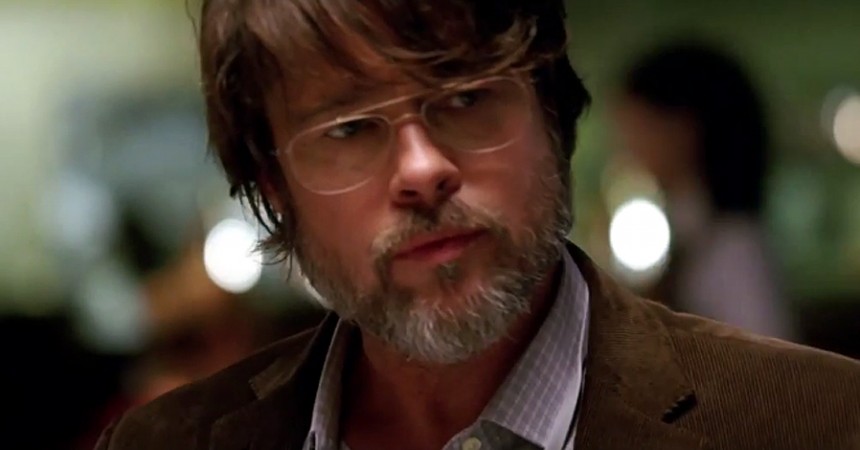
With the help of just about every A-lister in Hollywood – including Brad Pitt, Ryan Gosling, and Christian Bale – he tackles the oft addressed yet rarely entertaining topic of America’s housing collapse. What he seeks to do, in as enjoyable a way as possible, is illuminate the truth of the whole sordid mess. And as his film points out in one of its appropriate screen titles: Truth is like poetry, and most people fucking hate poetry.
McKay cross cuts the stories of four different groups of outsiders who foresaw the housing collapse, learned of the unimaginable corruption that weakened the housing market in the first place, and took advantage.
Obviously McKay is known for comedy, and though this is at its heart a drama, the director’s conspicuous outrage as well as his biting comic sensibilities fuel the film, propelling it in a way that has been lacking in any other movie on the topic.
McKay knows this is dry stuff. He addresses that fact head on, stopping periodically to help you understand key terms and ideas with cut-aways. Margot Robbie sits in a bubble bath to define a term, or Selena Gomez uses black jack as a metaphor to explain another. It’s a cheeky, clever approach, but one that rings with a healthy sense of cynicism. He’s begging: Please, you guys, this is very important stuff! Pay attention! Get pissed!
Christian Bale excels as the socially awkward Dr. Michael Burry, the hedge fund investor who first notices the weakness in the US housing market. It’s not a showy performance, but one whisper-close to comedy. Pitt’s is an understated but needed presence – the film’s conscience, more or less. Meanwhile Steve Carell and Gosling again team up nicely as a couple of driven misfits reluctantly fond of one another.
McKay makes no one a hero – including the film’s heroes – and underscores the entire effort with sympathy for the abused working class victim of the eventual, global financial collapse.
Yes, it’s tough material, and even with McKay’s bag of tricks, he can’t always keep the content both clear and lively. But he makes a valiant attempt, one that proves he is more than just a funny guy. He’s a breakthrough.
So, was the year in film 2015 more about the comeback of westerns, or the dominance of hilarious women? With just days left to make a case, Sisters, the other movie opening this weekend, delivers just enough laughs to score a few more votes for the ladies.
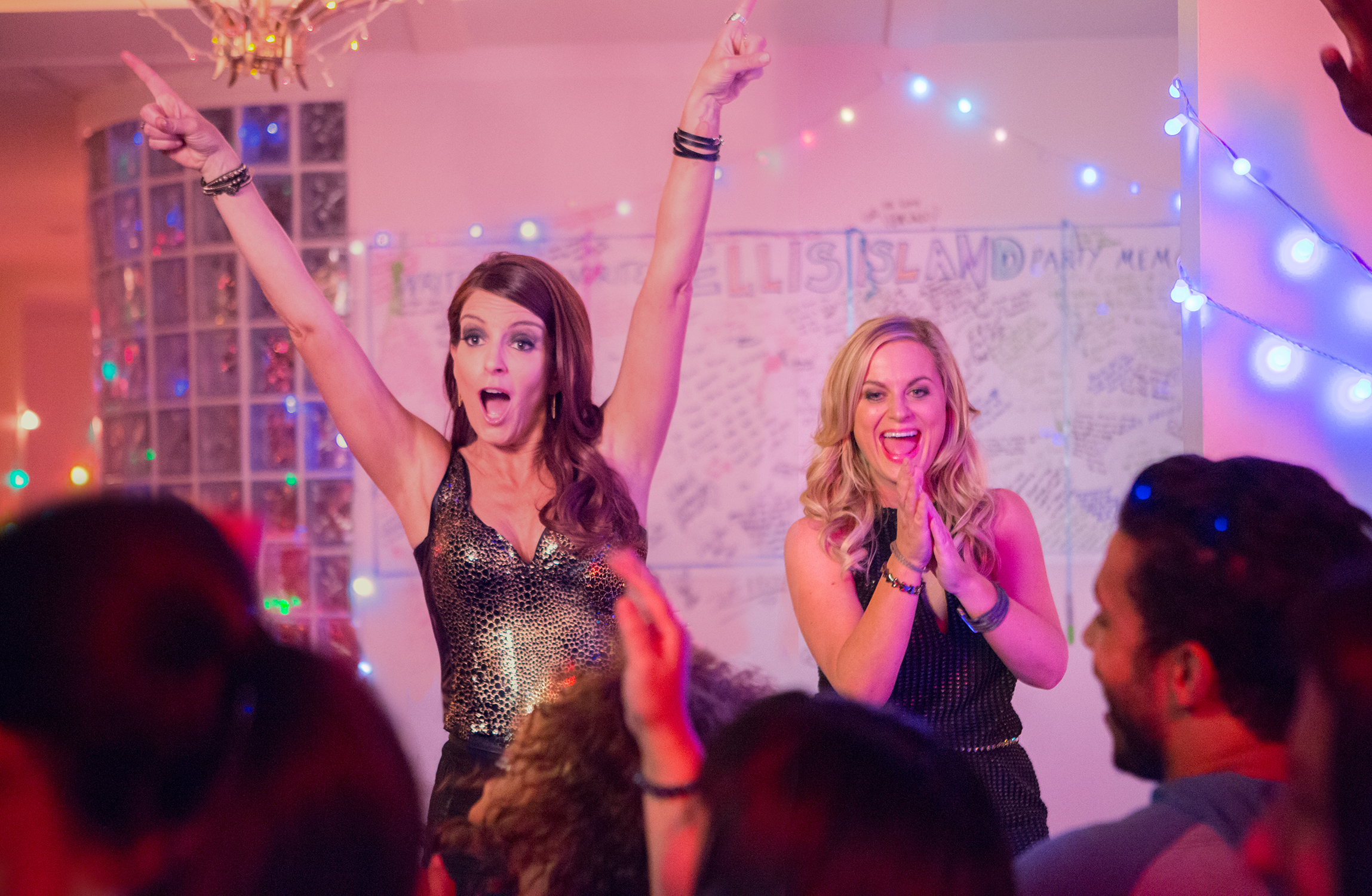
Much of the credit goes to the charm and chemistry of stars Tina Fey and Amy Poehler, playing Kate and Maura Ellis, respectively. After learning their parents (Dianne Wiest and James Brolin) plan to sell the house they grew up in, the two head back home to Orlando to talk the old folks out of it.
Instead, Kate and Maura find the ‘rents are gone, the house is practically empty and definitely sold. Two bedrooms, though, are still serving as a time capsule from the 80s, just waiting to be cleaned out for the new owners.
So, the sisters get to work….on “Ellis Island,” the party of the year!
Fey and Poehler both play against type, which is part of what holds the film back in the early going.
Maura is the shy, demure one, with high school diary entries about “taking a deaf friend to see Sheila E,” while Kate is blunt and in your face (her diary: “all the penises I saw”) and both actresses push a little hard at the outset. Fey always had trouble keeping a straight face during her Saturday Night Live days, and here she seems just a breath away from laughing at the camera and saying “Look! I’m the bad girl!”
Gags are lazy and obvious, there’s the obligatory car radio sing along, and it all seems doomed when, right on cue, it’s party time and the fun comes calling.
A bevy of familiar faces invades Ellis Island, hilariously sending up various high school stereotypes. All find their mark, especially Maya Rudolph as the bitchy queen bee, Bobby Moynihan as the awkward guy who wants to be funny, and Kate McKinnon as the leader of the lesbian clique.
Props again to WWE’s John Cena, following up his scene-stealing in Trainwreck with a winning cameo as Pazuzu, a drug dealer who gets flirty with Kate (his “safe words” are priceless). Don’t bet against this guy being the next wrestler-turned-genuine movie star.
Longtime SNL writer Paula Pell gets the credit for her first screenplay, but no doubt plenty of improvisational gold made the final cut. Director Jason Moore (Pitch Perfect) keeps things fast and frenzied and as the ensemble finds a comfort zone, there are LOL riffs on growing older and up.
Sisters is alternately crude, silly, and sentimental, and at least one dance routine too long, but it is funny, with a heart that feels true. There’s both warmth and humor on Ellis Island.
Working wisely to make the most of limitations, writing/directing partners Dan Berk and Robert Olsen mine a slight premise to examine human nature and ask: What would you do?
Their feature directorial debut Body follows three bored friends home for the holidays. When Cali (Alexandra Turshen) suggests the trio abandon the tedium of Mel’s (Lauren Molina) house in favor of an uncle’s empty mansion, the stage is set for merrymaking gone wrong.
Helen Rogers, starring as third pal Holly, is making a name for herself in horror, which is almost a shame because she’s proven a talented writer, director, and even animator. But her delicate, good-girl sensibilities make her a perfect go-to for the genre. In Body, she gets the chance to be a bit more than simply the delicate flower.
Another genre staple, Larry Fessenden (We Are Still Here), capitalizes on his screen time, managing to remain sympathetic enough to generate tension but distant enough to keep you open to whatever happens.
Molina’s authenticity is sometimes jarring in a film populated with solid but not exceptional performances, but props to Olsen and Berk for investing as much as they do in character development before submerging us in a battle of selfish decision making.
Strangely enough, it may be the time spent developing the characters that weakens the overall tension and enjoyment, as well. The girls are bored – this is important, because if they weren’t bored they wouldn’t agree to Cali’s sketchy plan. The problem is, the first act of the film is dull because of it.
Berk and Olsen’s ideas are strong, but their writing is not especially so. Though the cast delivers believably enough as one new piece of information after another alters their plans, it’s pretty clear where things are going from the first big reveal and the film can’t manage to feel fresh from that point forward.
As an exercise in making the most of meager options, Body excels. It keeps your attention, and though you know what’s coming, it manages to compel interest in the ways in which choices are made and unmade. It’s a decent genre effort – nothing revolutionary, but entertaining nonetheless.
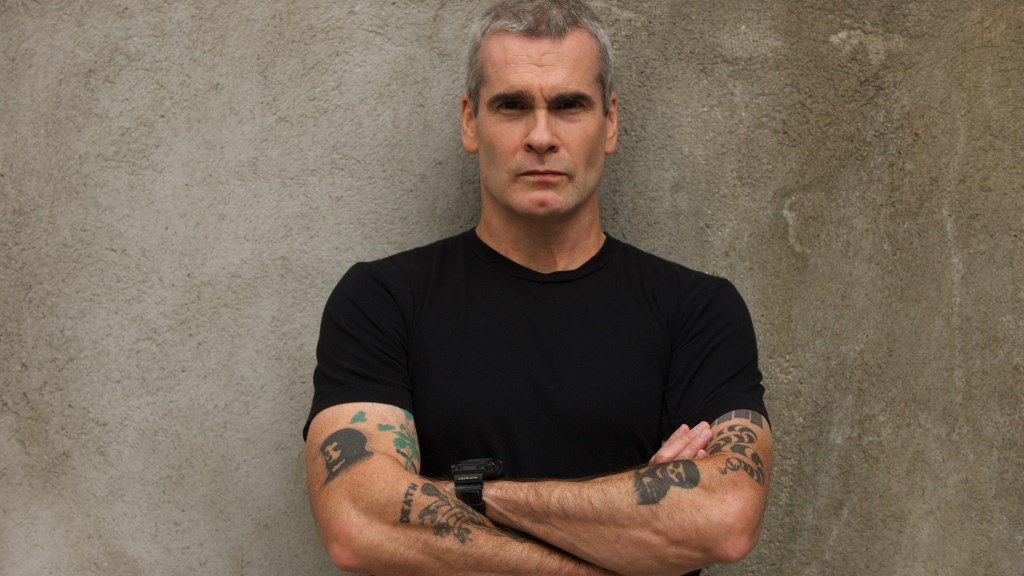
With a funny shuffle step and a blank stare, Henry Rollins announces Jack, anti-hero of the new indie noir/horror mash up He Never Died, as an odd sort.
Jack, you see, has kind of always been here. The here in question at the moment is a dodgy one bedroom, walking distance from the diner where he eats and the church where he plays bingo. An exciting existence, no doubt, but this mindlessness is disturbed by a series of events: an unexpected visit, a needed ally with an unfortunate bookie run in, and a possible love connection with a waitress.
Even if this sounds vaguely familiar, rest assured. This theologically confused but utterly entertaining tale of moral ambiguity, blood thirst, and eternity plays unlike any other film centered on an immortal.
Writer/director Jason Krawczyk’s screenplay drops us in a middling criminal world populated by unimpressive thugs. Jack’s environment is refreshingly and entirely lacking glamour, Krawczyk’s concept uniquely quirky and low key.
From the word go, He Never Died teems with deadpan humor and unexpected irony. Casting Rollins in the lead, for instance, suggests something the film actively avoids: energy. The star never seethes, and even his rare hollers are muted, less full of anger than primal necessity.
Jack’s battle is not with the goons at his door, but with something higher and more confusing to him. This day to day bloodbath he perceives more as a nuisance, although there’s a tale of redemption bobbing just below the surface of all this blood. Krawczyk should be congratulated not only for the light touch he gives this thematic thread, but for the unexpected turns the film takes before embracing it.
Rollins’s performance is strong, offering Jack as a solitary figure who clings to all things mind numbing as a way to pass the time without complication or human interaction. As a survival mechanism, he’s all but forgotten how to behave around humanity, a species he regards without needless sentimentality.
While Rollins is the showcase, the supporting players around him add nice touches of eccentricity (Steven Ogg), resignation (Scott Edgecombe), and energy (Jordan Todosey). Particularly good is Kate Greenhouse as the film’s disgusted, completely frustrated conscience, Cara.
It’s an unusual mix worth checking out. Plus, who hasn’t always wanted to see Henry Rollins eat a man’s larynx?
It’s the holidays!! Who doesn’t want to snuggle in with their cup of nog and a nice, Christmassy bloodletting? I know we do. But with so very much to choose from – Krampus, A Christmas Horror Story, Silent Night, Deadly Night, Santa Claws, Gremlins, The Nightmare Before Christmas, The Legend of Hell House, The Children, Satan’s Little Helper, Santa’s Slay – which should you watch?
Well, none of those. I mean, they’re great in their own (sometimes awful) ways, but we have a list of 5 that may actually scare you.
What is every child’s immediate reaction upon first meeting Santa? Terror. Now imagine a mash-up between Santa, a pirate, and an old school Catholic bishop. How scary is that?
Well, that’s basically what the Dutch have to live with, as their Sinterklaas, along with his helper Black Peter, sails in yearly to deliver toys and bag naughty children to kidnap to Spain. I’m not making this up. This truly is their Christmas fairy tale. So, really, how hard was it for writer/director Dick Maas to mine his native holiday traditions for a horror flick?
Allegorical of the generations-old abuse against children quieted by the Catholic Church, Saint manages to hit a few nerves without losing its focus on simple, gory storytelling.
4. Black Christmas (1974)
Director Bob Clark made two Christmas-themed films in his erratic career. His 1940s era A Christmas Story has become a holiday tradition for many families and most cable channels, but we celebrate a darker yule tide tale: Black Christmas.
Sure, it’s another case of mysterious phone calls leading to grisly murders; sure it’s another one-by-one pick off of sorority stereotypes; sure, there’s a damaged child backstory; naturally John Saxon co-stars. Wait, what was different? Oh yeah, it did it first.
Released in 1974, the film predates most slashers by at least a half dozen years. It created the architecture. More importantly, the phone calls are actually quite unsettling.
Why the girls remain in the sorority house (if only they’d had an Official Red Ryder Carbine-Action Two-Hundred-Shot Range Model Air Rifle!), or why campus police are so baffled remains a mystery, but Clark was onto something with the phone calls, as evidenced by the number of films that ripped off this original convention.
3. Sheitan (2006)
How fucked up is this one? The fantastic Vincent Cassel stars as the weirdest handyman ever, spending a decadent Christmas weekend with a rag tag assortment of nightclub refugees. After Bart (Olivier Barthelemy) is tossed from the club, his mates and the girls they’re flirting with head out to spend the weekend at Eve’s (a not shy Rosane Mesquida). Way out in rural France, they meet Eve’s handyman, his very pregnant wife, and a village full of borderline freaks.
But who cares when somebody might be knocking boots at any minute?
The film is savagely uncomfortable and refreshingly unusual. Cassel’s performance is a work of lunatic genius, and his film is never less than memorable.
2. Rare Exports: A Christmas Tale (2010)
It’s not just the Dutch with a sketchy relationship with Santa. That same year Saint was released, the Fins put out an even better Christmas treat, one that sees Santa as a bloodthirsty giant imprisoned in Korvatunturi mountains centuries ago.
Some quick thinking reindeer farmers living in the land of the original Santa Claus are able to separate naughty from nice and make good use of Santa’s helpers. There are outstanding shots of wonderment, brilliantly subverted by director Jalmari Helander, with much aid from his chubby cheeked lead, a wonderful Onni Tommila.
Rare Exports is an incredibly well put together film. Yes, the story is original and the acting truly is wonderful, but the cinematography, sound design, art direction and editing are top notch.
1. Inside (2007)
Who didn’t know this would be our #1?
This is not your usual Christmas cheer – not even for this list. No, this is a horror movie, no question about it, and it stems from the country that put out some of the most extreme yet excellent the genre had to offer in the first decade of this century. France’s 2000 – 2010 output included High Tension, Frontiers, Martyrs, Sheitan, Calvaire, Them, Irreversible, and Trouble Every Day, all of which are spectacular and challenging horror options. Inisde stands out for its exponentially developing pace, its sinister sense of humor, and one outstanding villain.
Beatrice Dalle’s insidious performance is hard to shake. Fearless, predatory, pitiless and able to take an enormous amount of abuse, her nameless character stalks a very, very pregnant Sarah (Alysson Paradis). Sarah lost her husband in a car crash some months back, and now, on the eve of Christmas, she sits, enormous, uncomfortable, and melancholy about the whole business. She’s grown cynical and despondent, more depressed than excited about giving birth in the morning.
Alexandre Bustillo’s film seeks to change her mind, make her want that baby. Because Dalle’s lurking menace certainly wants it. Her black clad silhouette is in the back yard, smoking and stalking – and she has seriously bad plans in mind.
Bustillo and directing partner Julien Maury swing the film from intelligent white collar angst to goretastic bloodfest with ease. The sadistic humor Dalle brings to the performance adds chills, and Paradis’s realistic, handicapping size makes her vulnerability palpable.
This is a mostly brilliant effort, a study in tension wherein one woman will do whatever it takes, with whatever utensils are available, to get at the baby still firmly inside another woman’s body.
From its opening image of a deceased toddler, his grieving parents – Macbeth and his Lady – witnessing the funeral pyre, Justin Kurzel’s Macbeth announces itself as a departure. The somber tone, the ominous atmosphere, and the adjustments to Shakespeare’s text already on display prepare you for the filmmaker’s ambitious and mostly successful new vision of the Man Who Would be King.
Drawing two of cinema’s most compelling talents to the challenging lead roles was Kurtzel’s other great achievement. The always excellent Michael Fassbender is at once valiant and fragile, ruthless and pitiful. As Lady Macbeth, Marion Cotillard – thanks in part to the opening sequence, only hinted at in the original text – mines personal grief as a source of her own wrong thinking, giving her character a soulful depth to match her ferocious nature.
Many of Kurtzel’s ideas translate into inspired images, thanks in large part to Adam Arkapaw’s lens. The cinematographer, who worked with Kurtzel on his blistering film debut The Snowtown Murders, here articulates a vision of medieval madness and horror appropriate for the Bard’s tale of bloodlust, ambition, and mania.
Skies awash in red, battlefields smothered in smoke and teeming with carnage, the flame of a candle or a blaze, all feed into the haunting, dreamlike quality Kurtzel emphasizes with a mournful score. The screen becomes a misty nightmare, punctuated by impressive action pieces that the stage would not allow.
Sometimes distracting changes to the text can take you out of that dream, though, as the play’s most iconic lines and scenes are occasionally altered or omitted. The cinematic update also offers a hushed quality, particularly to lines that are now delivered mostly as soliloquies or in voiceover. This muted approach sometimes serves to emphasize the bursts of violence and lunacy, but just as often gives the performances and the madness itself too distant a quality.
Powerhouse lead performances and arresting visuals aside, the streamlined narrative can make it difficult to invest in lesser characters. It also feels as if the film capitalizes on the popularity of medieval action when it could have mined the political intrigue for some modern relevance.
Regardless, Kurtzel’s execution suits the supernatural horror of the material, showcasing two of cinema’s greatest talents as it does.