All posts by maddwolf

Thump, Thump, Draaaag

Scary Stories to Tell in the Dark

by Hope Madden

Was there a story you heard as a kid that scared you sleepless? Mine was Bloody Fingers, the tale of a mangled man who dragged his carcass toward you. You could hear him coming: thump, thump, draaaaag. My neighbor used to sneak up behind me muttering those terrifying words.

Writer Alvin Schwartz knew how to work a kid’s nerves even better than my neighbor. Inspired by campfire tales and urban legends, he spun yarns for maximum kid fright, then paired them—and this is the important part—with the inspired line drawings by Stephen Gammell. The result, Scary Stories to Tell in the Dark, became the go-to for kids who like to be scared and schools who like to ban books.

Director André Øvredal (TrollHunter, The Autopsy of Jane Doe) and co-writer Guillermo del Toro both know something about tingling the spine. Together with a team of writers—some veterans of horror, some of family films—they’ve created an affectionate and scary ode to the old series of books.

Set in Mill Town, Pennsylvania around Halloween, 1968—trees are turning, Nixon is about to be elected, Night of the Living Dead is showing at the drive in—Scary Stories to Tell in the Dark follows three wholesome high school outcasts and a handsome out-of-towner. On the run from the Vietnam-bound, letter-jacket wearing bully, they hide in the old, abandoned Bellows place. The town says the house is haunted.

Sounds a little cliched, right? The kind of story you’ve heard over and over, but that’s exactly the point. To begin to tell Schwartz’s tales—all of them pulled from the collective unconscious, all of them drawing on those same old stories that were new to us as kids—Øvredal sets a familiar and appropriate stage.

His framing device works well enough for a while. Stella (Zoe Margaret Colletti), who hopes to be a writer herself, swipes creepy old child killer Sarah Bellows’s book of stories, but when she gets them home, new stories write themselves in the blank pages and, one by one, the kids in Mill Town go missing.

This is what PG-13 horror should look like. Yes, like most of the genre films engineered for youngsters, Scary Stories rehashes tropes familiar to adult viewers, but Øvredal’s clear fondness for the terrifying source material, especially the illustrations, gives the film the primal, almost grotesque innocence of a childhood nightmare.

The film’s tone is spot-on, performances solid and the set design and practical effects glorious. This is more than an anthology of shorts. It’s a cohesive whole that contains a handful of Schwartz’s nightmares, but the whole is not as great as the sum of its parts. Too heavy with clichés in the framing device, the film loses steam as it rolls into its third act.

An analogy of lost innocence, nostalgic without becoming too sentimental, this is old school scary, as unapologetically unoriginal as its source material and almost as effective.

https://www.youtube.com/watch?v=yf0JwXkXs0c


 

Truth and Injustice

Brian Banks

by Brandon Thomas

Anyone with two working eyes knows that the criminal justice system in the United States is far from perfect and rarely yields actual justice. The situation is even bleaker for young men of color. Even after their time is served, people convicted of a crime have a hard time finding work and maintaining new relationships.

As unfair as this is for everyone that goes through it, it can be especially grueling for people convicted of crimes they did not commit.

Brian Banks (Aldis Hodge) was once a star high school football player. He and his mother (Sherri Shepherd) had planned for Brian to attend college and hopefully make it to the NFL. All of that changed with a chance encounter that led to an accusation of kidnapping and rape. The barriers Brian faces after his release from prison lead him to a lawyer (Greg Kinnear) who might be able to clear his name and give him back his future.

Brian Banks is an interesting look at incarceration in that the film never once questions Brian’s innocence. In fact, the audience is clued in early on that Brian is a character we can trust. This film isn’t one that dwells on twists and turns. It’s more interested in Banks himself and what his plight says about our justice system. Unfortunately, that look tends to be one dimensional, and pushed through the lens of a mediocre TV movie-of-the-week.

Hodge (Hidden Figures, Straight Outta Compton) brings a humanity to this role that makes it easy to cheer for Banks despite the over-abundance of cliche. He does a wonderful job showing Brian’s frustration, hurt and disappointment all at once. It’s a tightrope performance, and Hodge pulls it off beautifully.

But there’s a cheapness to Brian Banks that makes it look like it would be right at home on the Lifetime cable channel. This is especially surprising since director Tom Shadyac spent the majority of his career making huge studio movies like Liar Liar, Bruce Almighty and The Nutty Professor. None of these films is exactly Lawrence of Arabia, but they still had a distinct visual flair. 

Despite a strong lead performance, Brian Banks can’t overcome its reliance on age-old courtroom cliche and melodrama that ends up bringing the movie down. It’s a film that had something to say, but the message became muddled and/or lost along the way.


A Woman’s Place

The Kitchen

by George Wolf

Looking for trouble? You’ll find plenty in The Kitchen. Looking for nuance? Fresh out, suckas.

It’s a 70s crime drama stripped of style and subtext, yet able to squeeze considerable fun out of the exploitation vibe it revels in.

Kathy (Melissa McCarthy) Claire (Elizabeth Moss) and Ruby (Tiffany Haddish) are left with dwindling options when their Irish mob husbands are sent to prison for a botched robbery. It’s 1978 in Hell’s Kitchen, and the ladies realize the meager allowance from their hubbies’ crew ain’t gonna cut it.

Time for these sisters to start doing it for themselves!

And if that song was from the 70s, you’d hear it loud and proud alongside all the other strategically placed picks from that groovy decade. It’s not a Scorsese soundtrack strategy, really, but rather one that makes sure we hear the lyric that can most literally comment on what we’re seeing.

Call it a Berloff maneuver.

The Kitchen marks the directing debut of veteran writer Andrea Berloff (Straight Outta Compton), and from the start, her tone is as unapologetic as her main characters.

Their takeover of the Hells Kitchen action is too easy and their character development too broadly drawn. But just as you’re starting to wonder what this much talent (also including Margo Martindale, Domhnall Gleason, James Badge Dale and of course, Common) saw in this material, the sheer audacity of its often clumsily edited approach feels almost right.

Berloff’s script makes it clear that this is less about the shots and more about who calls them, with some surprises in store by act 3 and a committed cast won over by the comic book source material or Berloff’s vision for it. Or probably both.

Moss, as a meek victim pushed around too long, and Gleason, as the smitten psycho who gently schools her in dismembering a body, elevate the film with every scene they share. Haddish delivers the underestimated street smarts with McCarthy – the two time Oscar nominee whose range should no longer be in doubt – bringing an anchor of authenticity.

There’s an allegory here of strong women fed up with fragile masculinity. There’s also a bloody mess of retro schlocky mob noir tropes (patent pending).

I love it when a plan has some awkward missteps but still kinda sorta comes together.

Leap of Faith

Them That Follow

by George Wolf

When a way of life not only makes you a social outcast, but presents increasing dangers to those closest to you, what would motivate you to cling even tighter?

It’s a premise that could easily lead to vilification, so credit filmmakers Britt Poulton and Dan Madison Savage for taking Them That Follow in a more resonant direction. Rather than relying on lazy condescension, they want to probe the psychological politics of control.

Mara (Alice Englert) is the pastor’s daughter in a small community of snake handlers in the Appalachian mountains. Her father Lemuel (Walton Goggins) preaches strict adherence to the Word, which requires frequent tests of faith, subjugation of women and shunning the ways of the material world.

But Mara’s interest is starting to move beyond the mountain, raising the suspicions of the stern Sister Slaughter (Olivia Coleman, recent Oscar-winner for The Favourite) and sparking the curiosity of her best friend Dilly (Kaitlyn Dever).

“Who you choose, girl, chooses your whole life,” Sister Slaughter cautions Mara. And Mara will soon face choices that will alter several lives.

Them That Follow benefits from a beautifully rustic production design and an unhurried pace, building earnest layers of authenticity that mirror a sublime ensemble cast (which includes a nice dramatic turn from comic Jim Gaffigan).

Poulton and Savage are not here to mock religious beliefs, but rather to question the motives of leaders who seek control by division. Followers are belittled by proxy (“They look down on you!”) while leaders make unhealthy demands and wash their hands of culpability (“It’s God’s law, not mine”).

While the film’s concerns are especially timely now, a third act that seems rushed and overly tidy loosens the grip of Them That Follow. The tail here has more bite than the head, but the serpent still deserves respect.

Sail On Sailor

Maiden

by Hope Madden

“The ocean’s always trying to kill you. It doesn’t take a break.”

So says Tracy Edwards, and she should know. At 24 years of age in 1989, fresh off a stint as cook on a charter boat, Edwards skippered the Maiden with the first all-female crew to enter England’s Whitbread Round the World Race.

Thirty years later, documentarian Alex Holmes revisits this historic event with clarity and candor.

It’s certainly no surprise that the odds were stacked against Edwards, although it is fascinating to look back at just how these sailors were treated by other yachtsmen as well as the media.

According to Jen Mundy, Edwards’s girlhood friend and member of her crew, those set to sail Maiden were told: “You’re not strong enough. You’re not skilled enough. Girls don’t get on. You’ll die.”

Girls don’t get on?

Yes, even as the Eighties came to a close there were enough commonly believed stereotypes about women’s inabilities and bitchy tendencies to sink a yacht. And Holmes is not ready to let those spouting such idiocy off the hook. He interviews a number of journalists, each of whom admit to being convinced the Maiden has no shot at completing the race. The Guardian’s Bob Fisher went so far as to refer to the crew as “a tinful of tarts.”

He actually defends that headline in the documentary.

It’s impossible not to notice that the word “woman” is used maybe twice in the entire film, every participant, even Edwards herself, preferring the term “girls.”

Vocabulary aside, Holmes finds an interesting arc for a sports doc. As the race begins, simply finishing the first leg was cause for patronizing celebration: a bunch of girls didn’t die. Hooray!

But Edwards and crew were, like everyone else in the race in 1989, competitors invested in the competition, focused on winning and only on winning. Unlike their competition, the crew of the Maiden seemed genuinely, even wildly unaware of the profundity of simply participating.

The spirit of female defiance, that’s the flag the Maiden flew at journey’s end. After proving their ability – after besting their competition repeatedly —that celebration lost its patronizing taint.

Scene after windy, wet, terrifying scene—the nautical thrills crisply underscored by Rob Manning and Samuel Sim’s score—skipper and crew of the Maiden strategize, tough it out, and risk a watery grave. And why?

Mainly because one malcontent—Edwards, who’d been suspended 26 times before she was finally expelled from school at 15—wanted to do it and was told she couldn’t.

“What do you mean I can’t? That’s just idiotic.”

Indeed.

F*ck Y’all, We’re From Dayton

Brainiac: Transmissions After Zero

by Hope Madden

It’s been an ugly few days, and while we reel from our country’s 251st mass shooting, this one painfully close to home, it’s a good time to remember that Dayton, Ohio is an amazing town teeming with fascinating, resilient people.

Eric Mahoney knows that, which explains why he returned to his hometown for this second documentary, this one on the Nineties indie punk force Brainiac.

The adjective used most frequently in Mahoney’s rock doc Brainiac: Transmissions After Zero is “weird.”

Fitting, really, for a film that dives into the brief and electric career of Dayton’s pride and one of the most innovative and surprisingly influential indie bands on the young scene.

Haven’t heard of them? Now’s your opportunity.

Don’t just take it from Mahoney. Take it from Hole’s Melissa Auf der Maur, The Mars Volta’s Cedric Bixler-Zavala, The National’s Matt Berninger, Fred Armisan and tons of others who still mourn the loss of this genuine and unique and weird presence in music.

Filmed 20 years after the freak accident that took the life of the band’s songwriter and main creative force, Tim Taylor, Transmissions After Zero makes itself comfortable with those who knew him best: his mom, his sister, his band.

Mahoney’s timestamp of a picture offers a refreshing break from the Behind the Music style of so many rock docs—partly because Brainiac’s trajectory ended days before signing with a major label.

What results is a candid look at what happens to the rest of the band, dealing not just with grief but also with the abrupt end of their forward progress, the end of their dream.

The film, in the end, is less about Tim Taylor himself and more about the band. Taylor’s presence is never far from mind, but at the same time, Mahoney and his subjects never manage to truly articulate that presence. Perhaps it’s a lack of interview footage, but the absence is felt—which partly frustrates but also fuels the doc’s overall sensibility of loss.

Without Taylor, Mahoney relies on bandmates Juan Monastrio, Michelle Bodine, Tyler Trent and John Schmersal to keep things lively. Their candor, wit and weirdness compel attention and empathy. Their openness with Mahoney is touching and often very funny.

Mahoney offers mainly talking head footage with brief snippets of the band onstage and some low-key but inspired animated sequences. He exhibits a little electro punk flourish himself as he pieces together the elements, but his style never upstages the content.

Instead, he lets the music and the musicians tell their own story. Like a lot of rock docs, Transmissions After Zero introduces or reintroduces a group of voices that should not have been lost. And in this case, it also reminds us how great Dayton and its people really are.

I Don’t Want to Go Out—Week of August 5

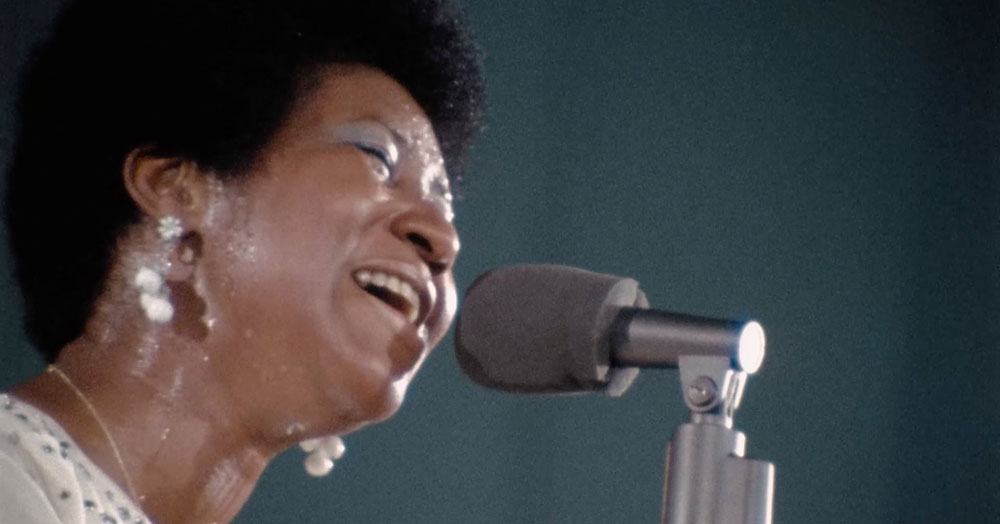
A couple of the best films of 2019 are ready for you to take them home. Do not miss Amazing Grace, an unmissable music documentary that captures Aretha Franklin at the apex of her skills, and the introspective indie gem The Souvenir.

Click the film title to link to the full review.

Amazing Grace

The Souvenir

Pokemon Detective Pikachu

Tolkien

The Curse of La Llorona

Poms

Screening Room: Hobbs & Shaw, The Farewell, Luz, Sword of Trust, Mission Mona Lisa

A bunch of movies to cover this week in The Screening Room, including Fast & Furious Presents: Hobbs & Shaw, The Farewell, Luz, Sword of Trust, Leo Da Vinci: Mission Mona Lisa as well as a whole slew of new movies available to watch at home.

Listen to the full podcast HERE.

Bald & Bickering

Fast & Furious Presents: Hobbs & Shaw

by Hope Madden

Somewhere around its 6th installment, the Fast & Furious franchise tweaked its direction, abandoning logic and embracing ludicrous action as it jumped cars from skyscraper to skyscraper and waterskied off the back of launched torpedoes.

But things took off for real around Episode 7 when some mad genius decided to pit mountainous government operative Hobbs (Dwayne Johnson) against Limey nogoodnik Deckard Shaw (Jason Statham), each of them playing a self-lampooning version of themselves. Fun!

Where to go from there? How about we drop that whole car heist and espionage thing, expel Vincent Toretto and gang, bring in Idris Elba and see what happens?

And for the very first time, I was kind of looking forward to a F&F film.

Fast & Furious Presents: Hobbs & Shaw boasts more than ampersands. Internal logic? Cohesive plot? Thoughtful insights on man’s inhumanity to man?

Why, no.

Cheeky fun? Indeed!

The film indulges in the best elements of F&F (action lunacy, self-aware comedy) and dispenses with its weaknesses (schmaltz, Diesel). F&F: H&S consists primarily of fistfights, gun fights and vehicular chicanery stitched together with comic lines. Unfortunately, there is a plot, but it doesn’t get in the way too much.

A virus meant to thin the herd falls (or is injected!) into the hands of a rogue
(or is she?!!) MI6 agent. The CIA (or is it?!!!) pulls together the two old enemies for no particular reason, but Ryan Reynolds shows up in a decidedly peculiar cameo (one of several to look out for) that draws your attention away from the first of many gaping plot holes.

By this point (about 7 minutes into the film) we’ve been through three separate fight sequences, each meant to articulate the character of one of our leads: down-and-dirty badass (Hobbs), smoothly lethal sophisticate (Shaw), smart and efficient and highly contagious (Vanessa Kirby as MI6 virus thief Hattie), and Black Superman (Idris Elba, who gives himself the name, but if it fits…).

Right. Enough with plot, on to stupifyingly illogical and imaginative action. Hobbs & Shaw offers quite a spectacle.

It bogs down when it gets away from the explosions, wheelies and punches. Whether devoting excessive time to pissing contests or to dysfunctional family backstories, director David Leitch—who proved his action mettle with Atomic Blonde—too often forgets that words are not this franchise’s strongest suit.

Still, there is something compelling about watching Black Superman V Samoan Thor. I don’t know that there’s enough here for a franchise springboard, but there’s plenty for a wasted afternoon.

Can You Keep a Secret?

The Farewell

by George Wolf

Caught in a lie and feeling desperate?

There’s always the Homer Simpson defense (“It takes two to lie – one to lie and one to listen”), or even the George Costanza (“It’s not a lie if you believe it”).

But with The Farewell, writer/director Lulu Wang finds poignant truths in an elaborate lie, speaking the universal language of “family crazy” while crafting an engaging cultural prism.

Inspired by an episode of the This American Life podcast, The Farewell unfolds through the view of Billi (Awkwafina), a Chinese American who follows her parents back to China after the news of her grandmother Nai Nai’s terminal cancer diagnosis.

But Nai Nai (Shuzhen Zhao-priceless) is the only one who doesn’t know how sick she is, and the extended family has concocted a ruse about a grandson’s wedding to give everyone an excuse to come visit Nai Nai one last time.

Billi’s parents (Tzi Ma and Diana Lin) are worried she’ll end up giving the game away – and with good reason. Billi is not entirely on board for the “good lie,” and this conflict of conscience is the vessel Wang steers to expose important cultural differences while she’s getting solid laughs with all the family antics.

The lies -both big and small- pile up, all in service of the belief that one’s life is part of a whole, and thus it is Nai Nai’s family who must carry the emotional burden of her illness.

It is Awkwafina who carries the film. If you only know her as a comic presence (Ocean’s 8, Crazy Rich Asians), prepare to be wowed. As our window into this push and pull of tradition in the modern world, she makes Billi a nuanced, relatable soul.

While Wang’s script is sharp and insightful, her assured tone is even more beneficial. Even as the film feels effortlessly lived in, it never quite goes in directions you think it might. Wang doesn’t stoop to going maudlin among all the whiffs of death, infusing The Farewell with an endless charm that’s both revealing and familiar.

Funny, too. No lie.