All posts by maddwolf

Tunnel Vision

The Cave

by George Wolf

A mother wails in agony over her dead son. A child, sick from a chemical attack, cries for his mother.

The bombs of the Syrian Civil War keep coming, bringing more dead and injured civilians, and inside a makeshift underground hospital known as The Cave, the attending physician wonders aloud if God is really watching over them.

Director Feras Fayyad returns to the Syrian battlegrounds for a film that is perhaps even more unsettling than his Oscar-nominated Last Men in Aleppo. And while it is not enjoyable to watch, its grip is only strengthened by the heartbreaking relief you feel when it ends and you’re free to return to your life.

Fayyad’s camera moves with frantic precision through the underground tunnels where Syrians have fled since 2013, when “the streets became battlefields.”

With an unflinching, verite-style eye, Fayyad follows Dr. Amani Ballour much as he followed the “White Helmet” volunteers in Aleppo. But here, Dr. Amani’s fight to save lives and foster change also encompasses the systemic sexism she’s been fighting all her life.

Dr. Armani saw pediatrics as “a righteous outlet for her anger,” and her experiences provide several juxtapositions Fayyad wields to great effect. Inside a world unfit for children and a religious doctrine used as a “tool for men,” a subtle humanity is revealed, one that refuses to waver amid constant waves of inhumanity.

Oscar-nominated this year for Best Documentary Feature, The Cave is among the most rewarding kicks in the gut you’re likely to experience.

Nom Nom Nom 2020

Any year as strong a 2019 is going to see its share of snubs in the Oscar race because there are just too damn many worthy films and performances. It’s a blessing, really. But we will complain anyway.

First, though, we’ll celebrate Scarlet Johansson for finally getting a nomination, and then getting a second. She nabbed a nom in both lead and supporting categories this year. Antonio  Banderas and Cynthia Erivo nab their first Oscar nominations—Banderas waited just a tad longer for the recognition, but both are well deserved. Also thrilled to see Parasite clean up, JoJo Rabbit and 1917 collecting so much love.

But where was Uncut Gems? Not a peep for Adam Sandler’s career-turning performance or for the Safdie Brothers writing, direction or film. Same for Awkwafina and writer/director Lulu Wang’s The Farewell, both films that deserved a spot.

The most obvious snubs belong to Jennifer Lopez, whose brilliant turn in Hustlers was forgotten, Frozen 2, which didn’t garner an animation nomination (although we’re OK with that), and Apollo 11, which went unnoticed in the documentary category.

Here’s what we did get.

Best Film

Ford v Ferrari

The Irishman

Jojo Rabbit

Joker

Little Women

Marriage Story

1917

Once Upon a Time in Hollywood

Parasite

Surprises

Knives Out struck us as a clear contender for Best Picture. It would be great to fill the list out to its full capacity of 10, include Knives Out and either The Farewell or Uncut Gems.

Best Director

Martin Scorsese for The Irishman

Todd Philips for Joker

Sam Mendes for 1917

Quentin Tarantino for Once Upon a Time in Hollywood

Bong Joon Ho for Parasite

Surprises

Greta Gerwig needed to be here for Little Women, not just because this is once again the All Male Olympics, but because she deserves to be here. We’d give her Phillips’s spot.

Best Performance by a Lead Actress

Cynthia Erivo for Harriet

Scarlett Johansson for Marriage Story

Saoirse Ronan for Little Women

Charlize Theron for Bombshell

Renee Zellweger for Judy

Surprises

Awkwafina, who won the Golden Globe and showed remarkable skill, vulnerability and range in The Farewell deserved a slot as did Lupita Nyong’o for Us. We’d have put them in over Theron and Erivo. It would not have made us unhappy to see Tessa Thompson or Elisabeth Moss make the list for Little Woods and Her Smell, respectively, but that would have been asking a lot.

Best Performance by a Lead Actor

Antonio Banderas for Pain and Glory

Leonardo DiCaprio for Once Upon a Time in Hollywood

Adam Driver for Marriage Story

Joaquin Phoenix for Joker

Jonathan Pryce for The Two Popes

Surprises

Hooray for Antonio Banderas. It’s about damn time.

I don’t know that we’re surprised the Academy voters didn’t go with Adam Sandler, but we’re definitely disappointed. He should have had Pryce’s spot. It’s a tough, stacked year for lead actor, which is why glorious work by Robert Pattinson (The Lighthouse), Eddie Murphy (Dolemite Is My Name) and Kelvin Harrison, Jr. (Luce) went unnoticed. More surprising are snubs for DeNiro (The Irishman), Taron Edgerton (Rocketman) and Christian Bale (Ford v. Ferrari), but again, this category is loaded.

Best Performance by an Actor in a Supporting Role

Tom Hanks for A Beautiful Day in the Neighborhood

Anthony Hopkins for The Two Popes

Al Pacino for The Irishman

Joe Pesci for The Irishman

Brad Pitt for Once Upon a Time in Hollywood

Surprises

Who are those guys? Never heard of them.

If we had our way, Song Kang Ho’s incandescent turn as patriarch in Parasite would have edged out Hopkins, but the biggest let down is Willem Dafoe, whose insane wickie in The Lighthouse deserved a spot.

Best Performance by an Actress in a Supporting Role

Kathy Bates in Richard Jewell

Laura Dern in Marriage Story

Scarlett Johansson in Jojo Rabbit

Florence Pugh in Little Women

Margot Robbie in Bombshell

Surprises

If you’d asked us ten years ago whether we would ever utter the line, “Jennifer Lopez deserves the Oscar nomination that went to Kathy Bates,” we would have assumed you were high. But there you have it. Or maybe Robbie took J Lo’s place, we don’t know. They were all good, but Lopez was better.

Best Screenplay, Adapted

The Irishman

Jojo Rabbit

Joker

Little Women

The Two Popes

Surprises

That’s an exciting category.

Best Screenplay, Original

Knives Out

Marriage Story

1917

Once Upon a Time in Hollywood

Parasite

Surprises

Another great category, and one that’s hard to argue. The Farewell deserved a spot as did  Uncut Gems, but we don’t know where we would have put them.

Best Documentary

American Factory

The Cave

The Edge of Democracy

For Sama

Honeyland

Surprises

No Apollo 11? We’d have given the damn Oscar to that breathtaking piece of history, and here it isn’t even nominated. It was a great year for docs, though, and here’s proof. 

Best Animated Film

How to Train Your Dragon: The Hidden World

I Lost My Body

Klaus

Missing Link

Toy Story 4

Surprises

Lots. I Lost My Body might come as a surprise to a lot of people, but we thought it might crack the list. Hell, Missing Link might surprise some folks, even with the Golden Globe win. But Klaus is certainly a film that few expected to see named on this list. What did we expect? Frozen 2, although if we’re honest, we’re pleased as punch to see this list. (As long as TS4 wins.)

Best International Feature Film

Corpus Cristi

Honeyland

Les Miserables

Pain and Glory

Parasite

Surprises

Great to see the  brilliant Honeyland draw noms in both International Picture and Documentary, but where the hell is Portrait of a Lady on Fire?

Best Cinematography

The Irishman

Joker

The Lighthouse

1917

Once Upon a time in Hollywood

Surprises

All deserving. We are just grateful they recognized the glorious cinematography in The Lighthouse.

Best Score

Joker

Little Women

Marriage story

1917

Star Wars: The Rise of Skywalker

Surprises

No Us? We’d put Michael Abels score in Skywalker’s place, but the rest sound fine to us.

Best Original Song

“I Can’t Let You Throw Yourself Away” (Toy Story 4) — Randy Newman    “(I’m Gonna) Love Me Again” (Rocketman) — Elton John & Bernie Taupin “I’m Standing With You” (Breakthrough) — Diane Warren                   “Into the Unknown” (Frozen 2) — Robert Lopez & Kristen Anderson-Lopez “Stand Up” (Harriet) — Joshuah Brian Campbell & Cynthia Erivo

Surprises                                                                                                                                               “Glasgow” from Wild Rose would have been a nice inclusion, but everyone here is battling for second place after Rocketman.

The 92 annual Academy Awards will be held February 9th, and aired live on ABC.

Fright Club: Time Loop Horror

Ever feel like you’ve been here before? This week we celebrate that spooky feeling with some of the best horror movies to take advantage of time loop nuttiness.

5. Haunter (2013)

Nicolas Vincenzo (Cube) starts off with the standard Groundhog Day premise—surly teen Lisa (Abigail Breslin) wakes up to the walkie talkie sound of her brother playing hidden treasure with an imaginary friend. It’s not Sonny & Cher, but it’s not that far off.

But Vincenzo (working from Brian King’s screenplay) starts bending the time loop structure, blending it with a more recognizable horror trope and subverting expectations. Breslin delivers a solid performance, and Pontypool’s Stephan McHattie’s outstanding as the devilish Pale Man. Plus, excellent support work from Siouxsie Sioux’s big face on Lisa’s tee shirt!

The film does kind of collapse on itself by the third act as it gets all Frequency (or Lake House or Don’t Let Go) on us, but for a good chunk of time Haunter delivers.

4. Happy Death Day (2017)

Tree (Jessica Rothe) wakes up on her birthday in some rando’s dorm room with no memory of the night before, a raging hangover and an attitude. She’s murdered that night by a knife-wielding marauder in a plastic baby mask, only to wake up back in that same dorm room under that same They Live poster.

It doesn’t take too many déjà vu mornings before Tree decides there is a mystery to solve here and just like that, we’re off in Phil Connors territory: reliving the same day again and again gives you the chance to become a better person, right?

Director Christopher Landon (Scout’s Guide to the Zombie Apocalypse) wisely mines Scott Lobdell’s screenplay for laughs. Rothe boasts strong comic timing and a gift for physical comedy, a skill that transitions nicely to the demands of being repeatedly victimized by a slasher.

3. The Endless (2017)

There is something very clever about the way Justin Benson and Aaron Moorehead’s movies sneak up on you. Always creepy, still they defy genre expectations even as they play with them.

Camp Arcadia offers the rustic backdrop for their latest, The Endless. A clever bit of SciFi misdirection, the film follows two brothers as they return to the cult they’d escaped a decade earlier.

It is this story and the pair’s storytelling skill that continues to impress. Their looping timelines provide fertile ground for clever turns that fans of the filmmakers will find delightful, but the uninitiated will appreciate as well.

2. Timecrimes (2007)

This one is nutty, and absolutely required viewing for anyone with an interest in space/time continuum conundrums.

Writer/director/co-star Nacho Vigalondo (Colossal) mocks our desire for control and our fear of the doppelganger with a very quick and dirty trip through time. So much can go wrong when you travel just one hour backward. The less you know going in, the better.

An always clever experiment in science fiction, horror and irony, Timecrimes is a spare, unique and wild ride.

1. Resolution (2012)

Not exactly a traditional time loop horror, Resolution plays with the concept of time in ways that are baffling and eerie.

Michael (Chris Cilella) is lured to a remote cabin, hoping to save his friend Chris (Vinny Curan) from himself. Chris will detox whether he wants to or not, then Michael will wash his hands of this situation and start again with his wife and unborn baby.

But Michael is in for more than he bargained, and not only because Chris has no interest in detoxing. Directors Aaron Moorhead and Justin Benson (working from Benson’s screenplay) begin with a fascinating and bizarre group of characters and a solid story, layering on bizarre notions of time, horror and storytelling in ways that are simultaneously familiar and wildly unique. The result is funny, tense, and terrifying.

Bad Company

Like a Boss

by George Wolf

For years now, we’ve seen Rose Byrne and Tiffany Haddish each be plenty funny.

Three years ago, Salma Hayek and director Miguel Arteta teamed up for the delightful Beatriz at Dinner.

All four now come together for Like A Boss, and what sounds promising quickly becomes a painful 83-minute exercise in tired contrivance and weak sauce girl power struggling mightily to earn its label as a “comedy.”

Haddish and Byrne are Mia and Mel, lifelong friends trying to keep their cosmetic company afloat when they’re tossed a million-dollar lifeline by makeup tycoon Claire Luna (Hayek).

Luna’s true aim is to break up the besties and steal their company (whaaat?), so our heroines must learn some sappy lessons about friendship before they can hatch their plan to turn the tables and show Luna who’s really in charge.

The debut screenplay from Sam Pittman and Adam Cole-Kelly is barely ready for prime time, much less the big screen. What little laughter there is comes courtesy of the supporting cast (Billy Porter, Jennifer Coolidge) while the leads are put through a string of hot-pepper-eating, song-and-dance-routine nonsense.

Entirely forced and sadly wasteful of the talent at hand, this film is less like a boss and more like a mess the CEO tells someone else to clean up.

Under the Sea

Underwater

by Hope Madden

Kristin Stewart has been stretching.

Yes, she will probably forever be first known as that girl from Twilight, unfortunately. But, in the same way her ex-vampire lover Robert Pattinson has relentlessly carved a stronger impression via challenging independent film roles, Stewart has been honing her craft and developing a reputation as a solid talent via varying roles in small budget films.

The few dozen or so of us who saw her versatility over the last few years in Personal Shopper, JT LeRoy, Lizzie, Certain Women, Still Alice and Clouds of Sils Maria no longer think first of Twilight’s Bella Swan.

But Ellen Ripley?

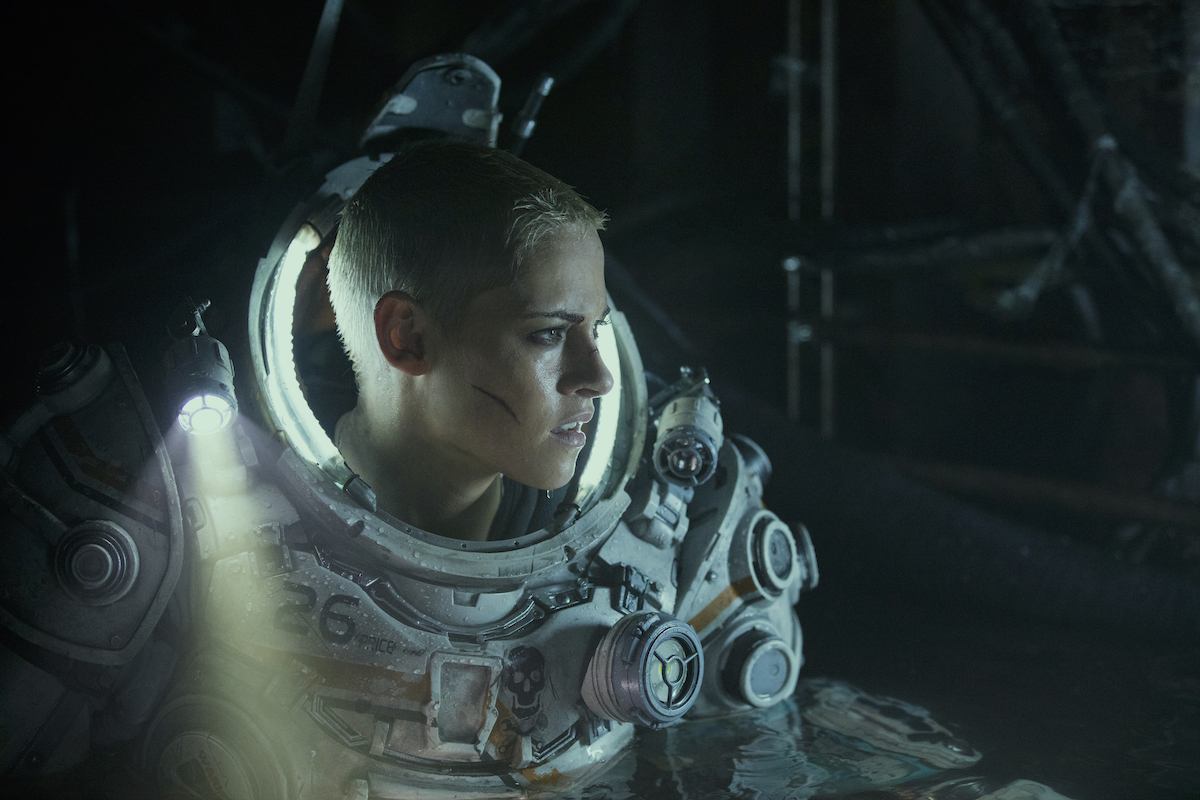
William Eubank’s deep sea horror Underwater sees Stewart as Nora, a no-nonsense, quick thinking, fast acting survivor—the kind who just might keep the remaining crew alive as they try to make their way from an irreversibly damaged deep sea drill rig to a nearby vessel that might have pods to float them to safety.

But what caused the damage in the first place and what is making that noise?

Eubank has assembled a surprisingly solid cast for his “Alien Under the Sea” flick. Joining Stewart as the rig’s humbly heroic captain is the always excellent Vincent Cassel, while John Gallagher Jr. plays the latest in his long line of effortlessly likeable good guys, Smith. Chubby comic relief is delivered by T.J. Miller.

If that sounds like your basic set of recognizable stereotypes assembled to be picked off one by one, you’ve detected the first major problem with Eubank’s film: a breathtaking lack of originality.

The script, penned by Brian Duffield (The Babysitter) and Adam Cozad (The Legend of Tarzan), offers nothing in the way of novelty and much of the dialog is stilted, and Nora’s third act reveal of the emotional damage she must overcome is false and forced.

Luckily, Eubanks somehow convinced a bunch of genuinely talented actors to deliver these lines, so they mainly come off fine. And while the director frustratingly and consistently undercuts the claustrophobic tension he’s begun building, his monsters are pretty cool looking.

Stewart gets to try on the action hero role, and she’s not too bad. For a 95 minute sea monster movie, neither is Underwater. It’s not too good, either, but at least there are no sparkly vampires.

In the Name of the Son

Three Christs

by Hope Madden

“Three grown men who believe they are Jesus Christ—it’s almost comical,” reads Bradley Whitford’s Clyde, a Ypsilanti mental patient who happens to be one of those three men. There is something bittersweet and meta about his reading that particular line from Dr. Stone’s (Richard Gere) report on the experimental procedure the doctor is undertaking with his three chosen patients.

On its surface, Three Christs itself seems almost comical. Whitford, Walton Goggins and Peter Dinklage play real life patients institutionalized in Michigan in the 1960s, each of whom believed they were Jesus. Just below the surface is a sad, lonesome story of a medical system ill-equipped and unwilling to treat the individual, and of the peculiar, touching struggles of three souls lost within that system.

Director Jon Avnet, writing with Eric Nazarian, adapts social psychologist Milton Rokeach’s nonfiction book on his own study, “The Three Christs of Ypsilanti.”

Whitford’s performance is fine, but he’s somewhat out of his league when compared to Dinklage and Goggins. Dinklage is the film’s heartbeat and he conveys something simultaneously vulnerable and superior in his behavior. He’s wonderful as always, but it’s Goggins who steals this film.

Walton Goggins continues to be an undervalued and under-recognized talent. He can play anything from comic relief to sadistic villainy to nuanced dramatic lead (check out his turn in Them That Follow for proof of the latter). Here the rage that roils barely beneath the surface speaks to the loneliness and pain of constantly misunderstanding and being misunderstood that has marked his character’s entire life.

Gere is the weakest spot in the film. He charms, and his rare scenes with Juliana Margulies, playing Stone’s wife Ruth, are vibrant and enjoyable. But in his responses to his patients and in his struggles against the system (mainly embodied by Stephen Root and Kevin Pollak), he falls back on headshakes, sighs and bitter chuckles.

Aside from two of the three Christs’ performances, Avent’s film looks good but lacks in focus, failing to hold together especially well. The point of the extraordinary treatment method is never very clear, nor is its progress. Stone’s arc is also weak, which again muddies the point of the film.

Three Christs misses more opportunities than it grabs, which is unfortunate because both Dinklage and especially Goggins deliver performances worth seeing.

Presumed Guilty

Just Mercy

by George Wolf

You may have noticed there’s no shortage of films exposing the miscarriages of justice that have landed innocent people on Death Row.

Sadly, that’s because there’s no shortage of innocent people on Death Row.

So while the prevailing themes in Just Mercy are not new, the sadly ironic truth is their familiarity brings an added layer of inherent sympathy to the film, which helps offset the by-the-numbers approach taken by director/co-writer Destin Daniel Cretton.

Cretton and co-writer Andrew Lanham adapt the 2014 memoir by Bryan Stevenson, an attorney and founder of the Equal Justice Initiative, that details Stevenson’s years providing legal counsel to the poor and wrongly convicted in Alabama.

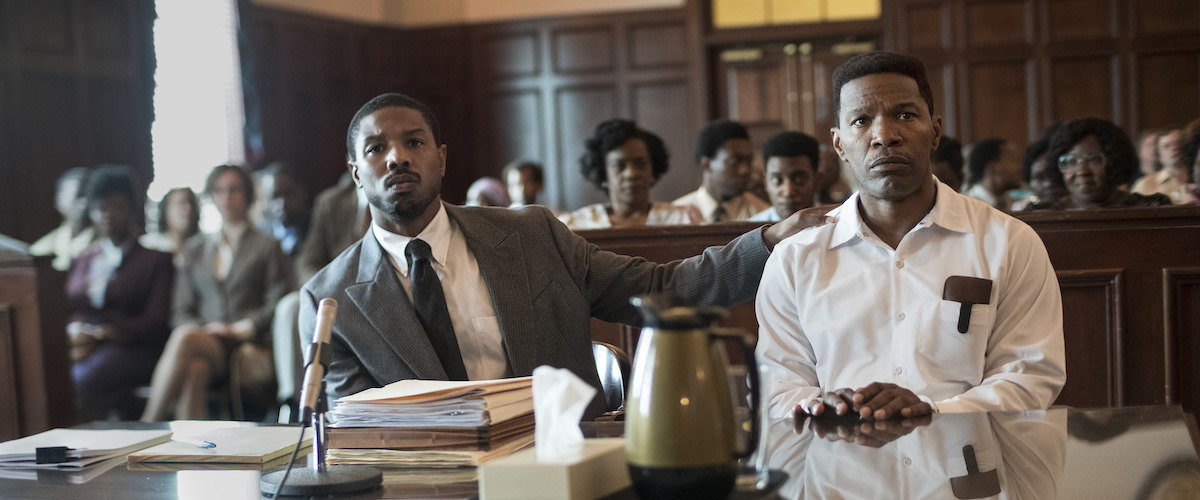
The film keeps its main focus on the case of Walter McMillan (Jamie Foxx), who, by the time Stevenson (Michael B. Jordan) comes along, has long accepted his death sentence for the murder of an 18 year-old white woman. But by winning over Walter’s extended family, Stevenson gains Walter’s trust, along with plenty of threats from the Alabama good ol’ boys once he starts exposing the outrageous violations during Walter’s “fair trial.”

It’s clear that Cretton (Short Term 12, The Glass Castle) is firmly committed to respectful accuracy in his adaptation, which is commendable. The authenticity of the roadblocks, impassioned speeches or blood-boiling examples of bigotry are never in doubt, but it’s only the ferocious talents of Jordan and Foxx that keep Just Mercy from collapsing under the weight of its own unchecked righteousness.

As sympathetic as Walter’s situation is, the script never quite sees him as a real person, painting only in shades of hero. Oscar winner Brie Larson, a Cretton favorite, is wasted as EJI co-founder Eva Ansley, who seems included more out of respect than for what the character ultimately adds to the narrative.

Jordan has the most to work with here, and – no surprise – he makes the most of it. Peripheral cases help Jordan give Stevenson the needed edges of a man who is equally driven by his failures, doggedly committed to helping those he identifies with so deeply, those who, as Walter puts it, are “guilty from the moment you’re born.”

Though it comes out swinging with heavy hands, Just Mercy steadies itself in time to become an effective portrait of systemic injustice. You will be moved, but with a force that is muted by simple convention.

Indirect Message

1917

by George Wolf

War. Maybe you’ve heard of it lately.

Taking inspiration from the past, director Sam Mendes has crafted an immaculate exercise in technical wonder, passionate vision and suddenly vital reminders.

The inherent gamble in crafting a film via one extended take – or the illusion of it – lies in the final cut existing as little more than a gimmick, spurring a ‘spot the edit’ challenge that eclipses the narrative.

1917 clears that hurdle in the first five minutes.

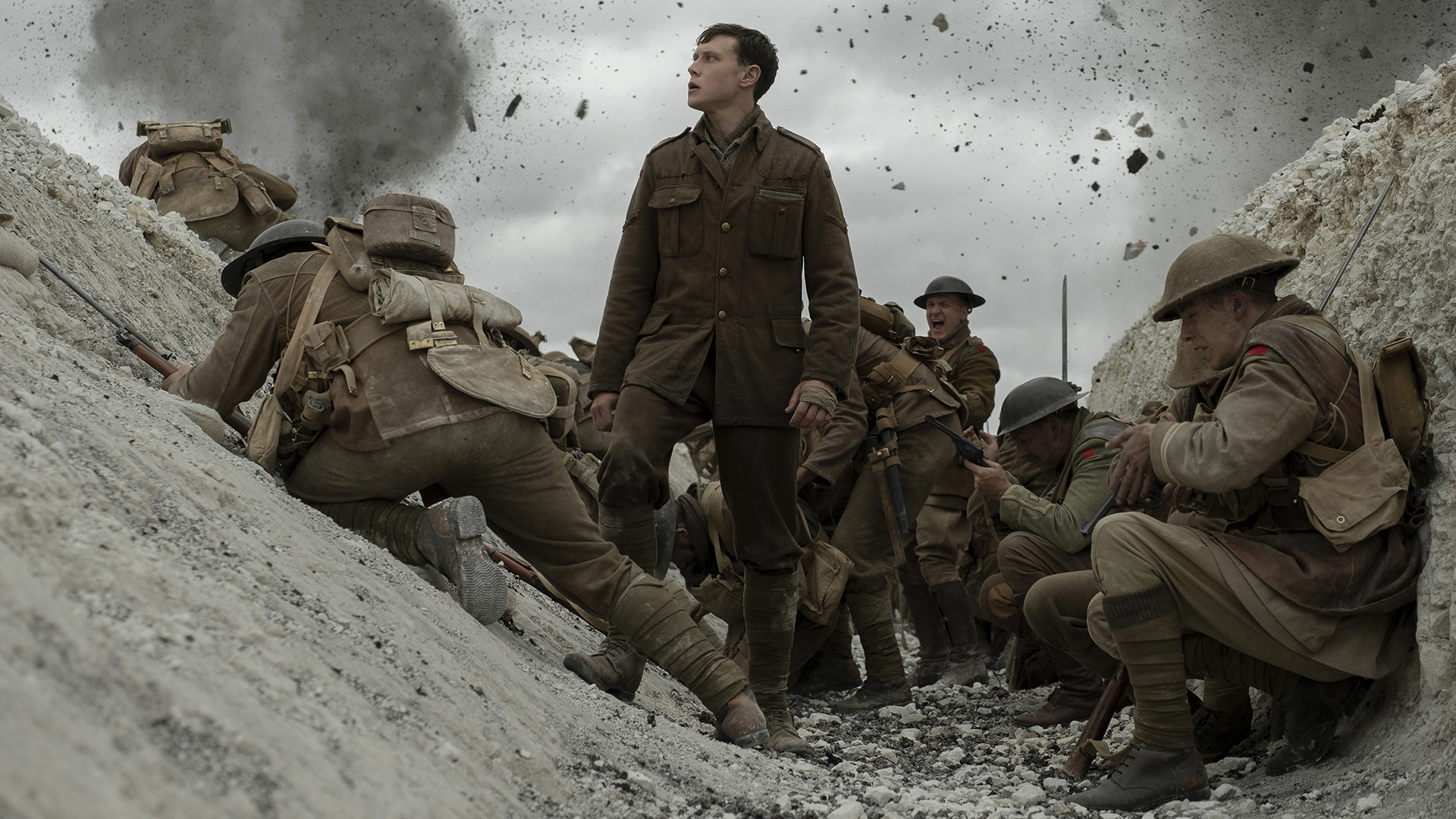
It is WWI, and British Corporals Blake and Schofield (Dean Charles-Chapman and George MacKay, both wonderful) are standing before their General (Colin Firth) amid the highest of stakes. Allied intelligence has revealed an imminent offensive will lead straight into a German ambush, and the corporals’ success at traveling deep into enemy territory to deliver the order to abort is all that will keep thousands of soldiers – including Blake’s own brother – from certain death.

Mendes dedicates the film to the stories told by his grandfather, and it stands thick with the humanity of bravery and sacrifice that ultimately prevailed through the most hellish of circumstances.

Blake and Schofield head out alone, enveloped by ballet-worthy camerawork and pristine cinematography (Roger Deakins, natch) that never blinks. The opportunities for edits may be evident at times, but the narrative experience is so immersive you’ll hardly care. We’re not merely following along on this mission, we’re part of every heart-stopping minute.

Anyone who’s seen the actual WW1 footage from Peter Jackson’s recent doc They Shall Not Grow Old (an irresistible bookend to 1917) will recognize a certain sanitation to the production design, but the trade-off is a fresh majesty for familiar themes, one that’s consistently grounded in stark intimacy. Mendes and Deakins (buoyed by a subtly evocative score from Thomas Newman) brush away any dangers of “first-person shooter” novelty with a near miraculous level of precise execution that succeeds in raising several bars.

1917 is absolutely one of the best films of the year, but it’s more. It’s an unforgettable and exhausting trip, immediately joining the ranks of the finest war movies ever made.