All posts by maddwolf

Home A Clone

LX 2048

by George Wolf

Well, you’ll save money on sunscreen.

Because in the near future world of LX 2048, the only way you can venture out in the daylight is by going full hazmat. In fact, the sun has become so lethal that clone technology is needed to meet the demand for augmented dayworkers.

Once the clones arrive, the unintended consequences are sure to follow. And Adam Bird is getting an up close look at some of them.

Things are not going well for Adam (James D’Arcy). His tech company is on shaky ground, and he hasn’t been taking his LX “mood stabilizers” which could help with the really bad news: his heart is failing and he doesn’t have long to live. Though his relationship with wife Reena (Anna Brewster) and the kids was already on the rocks, Adam is worried about securing their future.

Then, through frequent flashbacks, writer/director/producer/editor Guy Moshe fills in the backstory. Though virtual reality has taken over by 2048, “the chip” is the next big thing. There’s been a massive decline in population. And the Premium 3 insurance plan allows you to “tailor” your spousal replacement clone in the event of death.

What luck for Reena! The Birds are Premium 3 plan holders.

Moshe’s overly cheesy opening credits lower the expectations of what’s to come, but there are engaging visuals and some solid sci-fi ideas here, albeit ones fighting to overcome stilted dialog and tonal swings.

Adam’s conversations with unseen VR avatars are overly explanatory only for our benefit, sometimes bringing a wince-worthy phoniness to D’Arcy’s performance. And yet, when Moshe suddenly introduces moments of absurdist humor, you wonder if either tract was intended.

Delroy Lindo’s cameo as cloning tech legend Donald Stein instantly raises the stakes. Lindo’s natural gravitas make Stein’s musings about what it means to be human and the wages of playing God land a tick higher on the scale of standard sci-fi existential crises.

This is a film that often feels adrift and in need of an anchor. It’s neither as smart as it wants to be, nor as dumb as you fear early on. Much like its main character, LX 2048 has heart, but you’re never sure how long it can hold out.

Raise A Voice

Resisterhood

by Rachel Willis

It’s been a hell of a year.

Not only will 2020 live in infamy as the year we grappled with a worldwide pandemic, it is also the year Trump faces a reckoning in the United States. Will he be voted out of office? Or will he secure a second term?

As unlikely as a second term might sound to some, director Cheryl Jacobs Crim doesn’t want her audience (likely those opposed to Trump and his agenda) to become complacent. With her film, Resisterhood, she reminds us why people, particularly women, are fighting the Trump agenda.

On Day 1 of Trump’s presidency, as many as 500,000 women, and men, descended on the nation’s capital for the Women’s March – a gathering that let the new president know he was on watch.

And as the days of Trump’s presidency progressed, he was indeed being watched. As every devastating and harmful decision was passed down, protestors lined the streets around the country to declare this was not their America. From the People’s Climate March on Day 100 to the United We Dream protest on Day 231, Crim documents it all.

Crim captures the feelings surrounding these moments by interviewing women and men who are part of the resistance. From psychologist Jean Graber, who is following in the footsteps of her grandmother – suffragette Edith Hooker – to Egyptian immigrant, Mimi Hassanein, who ran for office in her community, to Illinois Representative Luis Gutiérrez, Crim intersperses these interviews with scenes of protests, primarily in the nation’s capital.

The movie runs pell-mell through the actions and reactions of Trump’s presidency. At times, when reminded of everything Trump has realized as president, it’s hard not to feel dejected. However, many of the women Crim interviews are still hopeful. More and more women, minorities and young people are participating in the democratic process – either in the streets, at the ballot box, or as political candidates. 

But there is a reminder that complacency is the enemy. It would be easy, worryingly easy, to topple our democracy, and while Resisterhood is steeped in the culture surrounding our current political climate, it has a timeless message. 

If you want to effect change, you must participate. If you need a reminder that your vote, your voice matters, start with Resisterhood.  

https://www.youtube.com/watch?v=RcPWit7cjEY

Unexpected Turns

The Swerve

by Hope Madden

Life takes unexpected turns, no matter how tirelessly you prepare.

Writer/director Dean Kapsalis explores a horrific side of this notion in his confident feature debut, The Swerve.

The film nestles into suburbia where Holly (a phenomenal Azura Skye) lays awake, waiting for the alarm. Her face is a mask of resignation and obligation. As the morning rituals rush themselves toward a day at work and school for Holly, her two teenage boys and her husband, Rob (Bryce Pinkham), it’s clear that Holly lives inside herself. In her home she observes and facilitates but is almost never regarded, reached out to. She’s barely even there.

The film takes us through one week in Holly’s life. Her sister (Ashley Bell) returns home, stirring resentment and jealousy. Her husband works late. There’s a prescription bottle. There’s a mouse. There’s a boy at school, another boy on the highway. Some of this is likely imagined. All of it is leading somewhere, and as inevitable as that destination is, it will still hit you right in the gut.

The Swerve busies itself with too many catalysts. The film could have benefitted from slightly less. But there is no escaping Skye’s performance. As a woman on the verge, her delicate state, the way she fights against her own tendency to submit to misery, is devastating.

Skye is not alone. Pinkham is excellent in a role that too often is a throwaway, one dimensional bastard. The likeable authenticity he brings to the performance makes the character and the situations so much more frustrating. Likewise, Bell and Zach Rand (The Woman) bring life and complexity to their roles as well as Holly’s dilemma.

In its most authentic moments, the tension the film generates is almost unbearable. As small mistreatments build, Skye’s posture and dead-eyed stare say everything you need to know about Holly’s whole life. Skye delivers half of her stunning performance without a single word.

Kapsalis’s understatement as a director capitalizes on Skye’s still, unnerving descent. Together they deliver a climax that will haunt you.

https://www.youtube.com/watch?v=rmEYyYu3JC8

Screening Room: Antebellum, The Nest, The Secrets We Keep & More

Leave No Trace

Residue

by Matt Weiner

Residue begins as a wry bayonetting of gentrification, but the film slowly unfolds—languidly, and then with a dizzying crescendo—into one of the most powerful films to come out this year.

Director Merawi Gerima’s confident debut traces summertime in a fast-changing D.C. neighborhood, where the new white arrivals don’t so much coexist with the area’s long-time black residents as much as they pursue parallel existences. For one group, the area is the latest in affordable rentals.

But for Jay (Obi Nwachukwu), Q Street is home. Or was home, before Jay moved to California. Now grown and an aspiring filmmaker, he decides to visit his parents and childhood friends to collect material and, in his words, “give a voice to the voiceless.” (Gerima himself is a D.C. native who moved to California for film school.)

Not all of Jay’s friends welcome him back with open arms though. As Jay reconnects with friends— some still in the same house, others in prison or dead—he is reminded, forcefully, that the white speculators buying up investment properties and yuppies blissfully smoking pot without fear of long prison sentences (or worse) aren’t the only ones taking advantage of Q Street.

Gerima’s critiques are unsparing, but his direction is achingly beautiful. It’s a mournful sort of beauty—Jay’s washed out recollections of summer in the District, where the sounds of children yelling, fireworks and go-go beats take on a physical texture, only drive home how rootless everything is in the present.

As Jay lapses in and out of these reveries and confronts what has replaced them, elegy turns to horror. There’s a creeping dread with every new encounter, and we’ve seen enough videos on social media this year alone to know that there can be as much danger in Jay’s exchanges with police as with a dude named Josh.

When learning of Jay’s motivations, one of his old friends simply replies, “Who’s voiceless?” Gerima lets Residue speak for itself, an essential statement not just on everything happening right now but on film and art.

Risk & Reward

The Nest

by George Wolf

If you saw the quietly unnerving Martha Marcy May Marlene nine years ago and have had the name Sean Durkin filed away since then, you’re not alone. Good news for both of us then, as Durkin finally returns as writer and director with The Nest, another precisely crafted examination of family dynamics.

This time, though, it’s a nuclear family, one that’s slowly imploding before our eyes.

It is the late 80s, and hotshot commodities trader Rory O’Hara (Jude Law) has news for his wife Alison (Carrie Coon): they need to move. Business in New York is drying up, but his native London is “booming.” Alison isn’t loving the idea of uprooting their two kids – and her horse training business – for the fourth time in ten years, but can’t help but be impressed by the 15th century manor Rory has secured in the English countryside.

The place is legendary (“Led Zeppelin stayed here!”), and huge. And from the moment the O’Haras move in, the spaces between them only grow larger.

Though it lacks the sinister edge of MMMM, Durkin’s storytelling here still carries a chill, assembling precise details with a subtlety that often betrays a focused narrative. With a microscope trained on the minutiae of finding a work/life balance, Durkin gives his stellar leads plenty of room to dig indelible, often heartbreaking layers.

Law shows all the easy charm that makes Rory an office favorite, while slowing revealing the cracks in his entitled, high roller facade. Pretending can be harder to sustain than success, and Rory is wearing down.

And Alison – thanks to a wonderful performance from Coon – becomes the weary embodiment of a last nerve exposed. She’s facing the reality of who her husband really is – and grasping for the best way to react. Fortunately, not giving a fuck is one of the options, and Coon makes all of Alison’s frayed edges irresistible.

Still, even as this family breaks down before us like some sort of clinical exercise, Durkin brings a darkly humorous undercurrent to the O’Haras’ way forward that feels like a first step toward honesty.

A house isn’t always a home. The Nest may rarely be comfortable, but it’s strangely inviting, and once you’re inside, plenty hard to look away.

Issue Related

I’ve Got Issues

by George Wolf

Toward the end the nearly 20 vignettes that make up I’ve Got Issues, a mournful woman proclaims, “The world is absurd. I’ve lost all my humor. But I must continue.”

That’s when you realize how deeply the lede has been buried.

Because that’s exactly what writer/director Steve Collins serves up: a host of absurdity that soldiers on, no matter how few laughs are generated.

Featuring occasional narration from Jim Gaffigan, bare bones production values and an ensemble of actors in ever-changing roles, the film wallows in the lowest of keys and the shaggiest of dogs. From a KKK recycling program to a self-help guru who’s of very little help, from a woman caught on a tilt-a-whirl to a singer sending out a demo tape addressed only to “Hollywood,” this film strings together segments on absurd futility that begin to make the title feel more like a cry for help.

Those with a very particular sense of humor may enjoy this film very much. God bless them.

Lost (Girls) in Translation

Lost Girls and Love Hotels

by Brandon Thomas

“I tell myself…there’s no happy ending.”

Cinema revels in emotion. It’s why the artform has lasted well over a century. We love to experience films that make us laugh, make us afraid, and make us examine even the darkest of our decisions. Lost Girls & Love Hotels is an exploration of these painful, disorientated choices.

Margaret (Alexandra Daddario) is an American ex-pat living in Japan. By day, she teaches at a training academy for Japanese stewardesses. By night, Margaret loses herself in booze and random rendezvous in the red light district. Her life of debauchery softens after she meets a brooding Yakuza (Takehiro Hira).

Margaret’s pain and self-loathing are apparent from the opening frames: she drunkenly stumbles through a subway entrance, tears brimming in her wide eyes as she realizes a man is lurking behind her. Fear is less apparent in her distant gaze. What I saw was more akin to someone finally succumbing to their demons. This was rock bottom.

Lost Girls & Love Hotels isn’t looking to break new ground. There’s no way this movie could. What’s interesting – and original – is how this kind of movie is told through the point of view of a female character. We’ve seen self-destructive dudes do this for eons. Let the ladies have a turn at spiraling out of control! 

Daddario turns in an impressive performance as Margaret. She walks a fine line – showing the character’s high-highs and low-lows with ease. Her wide-eyed, all-American look helps her stand out in a mostly Japanese cast. One would expect a person with such outwardly beauty to harbor very little in the way of pain. For a character like this one, believability is key, and Daddario delivers. 

Director William Olsson and writer Catherine Hanrahan (adapting her own novel) haven’t set out to make a salacious sex drama. While Margaret’s BDSM escapades inform who her character is, Lost Girls & Love Hotels is more interested in a person who has latched onto numbing behavior. Isolation, even with a core group of friends and co-workers, is ever-present in Margaret’s condensed world. 

There’s a simmering sense of danger running through the entire film. Olsson never wrings false drama out of it, but that subtle feeling is there nevertheless. When Margaret does find herself in a precarious situation, it feels more like an eventuality, not the tacked-on payoff to a sleazy thriller.

Grounded with an outstanding lead performance, Lost Girls & Love Hotels is a look at how sadness and isolation isn’t something you can run away from – even if you run halfway across the world. 

Make America Great Again

Antebellum

by Hope Madden and George Wolf

The past is not dead. It’s not even past.

That Faulkner quote gets a lot of action in writers/directors Gerard Bush and Christopher Renz’s social nightmare Antebellum.

The titular term describes the period in American history just prior to the Civil War. That’s where this thriller finds its horror, and where a prominent, present day African American sociologist/activist/author wakes up to find herself trapped.

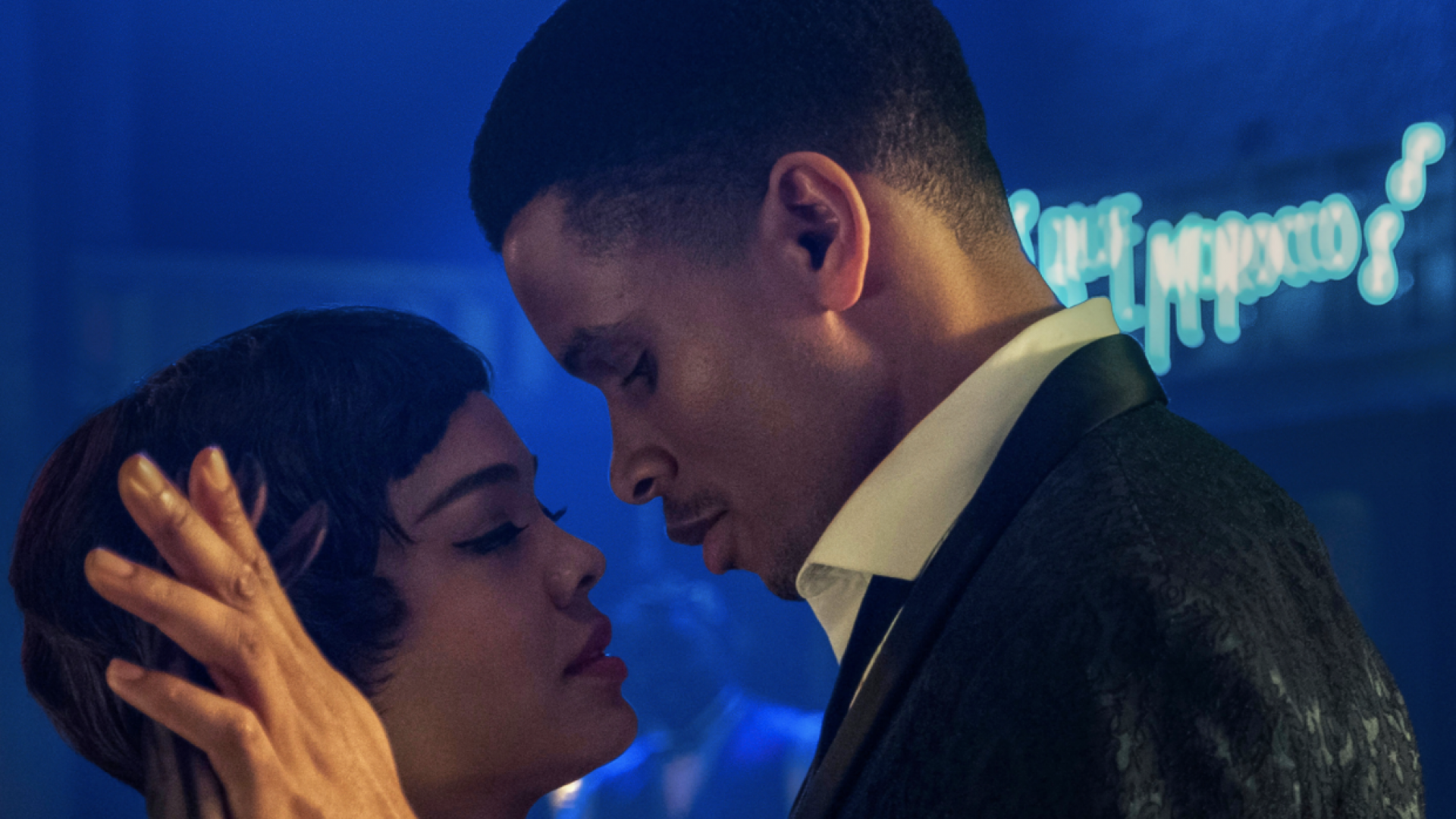
Janelle Monáe crafts an impressive lead as Veronica, a PhD beaten, branded and forced to accept a slave name in a film that plays out like a disturbingly relevant Twilight Zone episode.

Enslaved on a reformer plantation, “Eden” works to stay alive long enough to plan an escape and outsmart two Confederate officers (Eric Lange, Jack Huston) and the mysterious mansion mistress (Jena Malone).

The hideous rise of white nationalism is the true nightmare here – fertile and bloody ground for horror. From Godzilla to Get Out, horror has always brimmed with social commentary and anxiety, so it should come as no surprise that a genre film tackles America’s racist shame this directly.

And while this approach certainly grabs your attention with its boldness, Bush and Renz can get too caught up in obviousness and speech-making. The second act suffers most from these heavy hands. The modern day shenanigans with Veronica and two friends (Gabourey Sidibe, Lily Cowles) push too hard, last too long and say very little.

But as much as Spike Lee has recently connected the past and present of racism with layered nuance, Bush and Renz go right upside our heads. Pulpy exploitation? It goes there. It’s a horror movie.

Horror movies exist so we can look at the nightmare, examine it from a distance, and come out the other side, unscathed ourselves. Antebellum is acknowledgment and catharsis, and not only because all those Black people being terrorized on the screen are fictional, instead of real victims in another cell phone crime scene. The film’s true catharsis – a highly charged and emotional payoff – lies in Act 3: comeuppance.

And it is glorious.

There are stumbles getting to the fireworks, but for sheer heroic tit for tat, Antebellum delivers the goods.

Secret Garden

The Garden Left Behind

by Hope Madden

Newcomer Charlie Guevara charms in Flavio Alves’s drama The Garden Left Behind with a bittersweet performance as Tina, an undocumented Mexican trans woman getting by in NYC. Her performance is simultaneously optimistic, wearied, frightened and strong.

Wisely, filmmaker Alves focuses his tale unblinkingly on Tina—her day to day, her loving if prickly relationship with her grandmother (Miriam Cruz), her warm and supportive community of friends, her struggle with an insecure boyfriend, her tentative steps toward transition. In a real way, every movement in the film is about transition, about claiming something that belongs to Tina, whether it’s her voice or her financial independence, her emotional health or her political power.

The rawness of Guevara’s turn sometimes makes way for self-consciousness that brings certain scenes to an awkward halt. Still, Guevara and Cruz share a lovely, lived-in chemistry. It’s their relationship that both buoys the film and makes the it ache all the more.

The story around the periphery crystallizes the ways in which the lives of trans people—especially trans women of color—differ from your garden variety New Yorkers’. Alves’s hand is not heavy; the fact that so many of Tina’s interactions could be taken as potentially menacing speaks volumes without an overt narrative. It’s actually in this B-story that the filmmaker may make the most salient and heartbreaking points.

If the film feels authentic, that’s unsurprising. Alves not only cast trans actors for each trans role, but he also employed a staff of transgender filmmakers in creative and crew roles. This after several years of research within the NYC transgender community to develop the insightful and poignant storyline.

It’s no surprise The Garden Left Behind became the 2019 SXSW audience award winner. The film breaks through as not only an admirable artistic vision produced with integrity, but a beautiful human tale of perseverance and love.