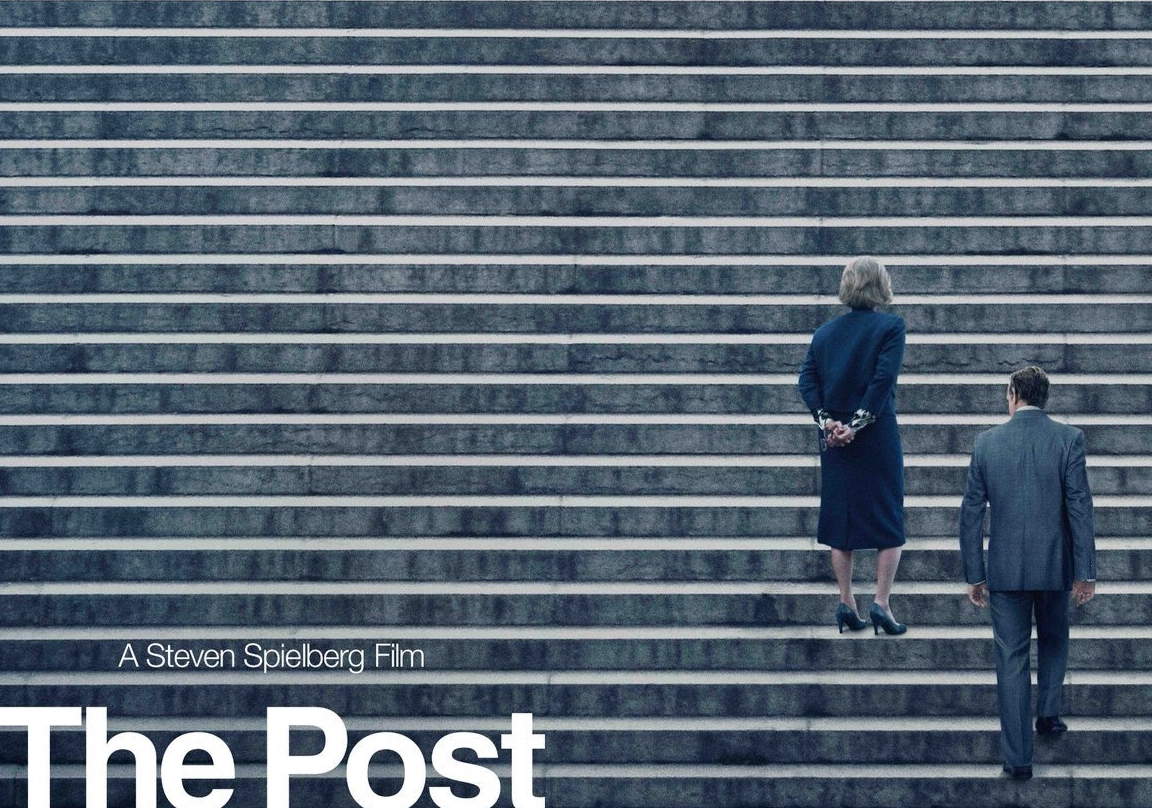
Two-word titles available for home viewing this week. Do you want to watch a slick, important movie about that reminds you just how far America has fallen? Spielberg for you. Rather watch that same Liam Neeson movie you’ve grown to need somehow in your life? That’s here, too.
Some big and bad—and some small and good—covered in this week’s Screening Room Podcast. We talk through Rampage, Truth or Dare, Where is Kyra? as well as what’s new and amazing in home entertainment.
Sssshhhhh! We get too excited to keep our voices down, talking about A Quiet Place, Blockers, Isle of Dogs and the less exciting The Leisure Seeker, plus everything worth checking on in home entertainment.
Do people over the age of 8 still honestly play Truth or Dare? This idea surprises me. Aren’t there video games kids can be wasting time with?
I suppose the real surprise is that it took four years for a film to rip off It Follows. The new PG-13 horror from Blumhouse, Truth or Dare, takes a stab at it.
No, it’s not sex. But it is a curse that you pass on to other people to save yourself. A super lame curse that blends the clever concept of It Follows with the by-the-numbers structure of one of the later Final Destinations and wraps it all up in a faux-contemporary cautionary tale about the digital age.
Yawn!
I’d point out that co-writer/director Jeff Wadlow was primarily lifting from his own 2005 film Cry Wolf, but I decided to go with movies you might have seen—movies that merit imitation.
So. Goody two-shoes Olivia (Lucy Hale) plans to spend her final spring break as a college student building houses with Habitat for Humanity, but her trampy bestie Markie (Violett Beane) and their binge-drinking roomie Penelope (Sophia Ali) have other plans. They guilt Olivia into spending the time with them, their boyfriends and an ethnic minority/gay sixth wheel in Mexico.
Hooray! Six slasher stereotypes—I mean, six best friends!—head south to flirt with alcohol poisoning and make bad decisions. Like playing grade school sleepover games and going to that decaying old mission.
Truth is, there are moments when one performance or a single intriguing notion or a clever call-back threatens to save a scene, by the final reveal you realize how heavy-handed the film really is.
Performances are bland, kills lack inspiration, there aren’t even enough of the prerequisite jump scares to keep the target PG-13 audience interested.
If you are of-age, hopefully you bought some beer with that ID because you’ll need the lubrication to help you glide past the lapses in logic, sometimes comical dialog and one laugh-out-loud moment at the vending machine.
Brad (Hayden Szeto, who deserves better) hears the ominous sound of an otherworldly voice calling out his name.
Except that it sounds exactly like some stoned guy hiding on the other side of the candy machine trying out his spooky voice and stage-whispering, “Braaaaaaaaadddddd!”
My entire row laughed.
So, there you go. There is some enjoyment to be had.
The relationship between mothers and daughters informs an awful lot of great horror films from The Exorcist to Black Swan. Frightmare suggests that becoming your mother is inescapable. The Woman tells us that if we can’t raise our daughters right, a more alpha mom might show up and do it for us. The Ring and Mom and Dad remind us that moms aren’t perfect. They have bad days. Sometimes they may want to drop you down a well.
We focus on five horror films where that relationship between mother and daughter informs and impacts the storyline in a substantial way.
5. The Bad Seed (1956)
The minute delicate Christine’s (Nancy Kelly) husband leaves for his 4-week assignment in DC, their way-too-perfect daughter begins to betray some scary behavior. The creepy handyman Leroy (Henry Jones) has her figured out – he knows she’s not as perfect as she pretends.
You may be tempted to abandon the film in its first reel, feeling as if you know where it’s going. You’ll be right, but there are two big reasons to stick it out. One is that Bad Seed did it first, and did it well, considering the conservative cinematic limitations of the Fifties.
Second, because director Mervyn LeRoy’s approach – not a single vile act appears onscreen – gives the picture an air of restraint and dignity while employing the perversity of individual imaginations to ramp up the creepiness.
Enough can’t be said about Patty McCormack. There’s surprising nuance in her manipulations, and the Oscar-nominated 9-year-old handles the role with both grace and menace.
4. Hounds of Love (2016)
It is the late 1980s in Perth, Australia, and at least one young girl has already gone missing when the grounded Vicki (Ashleigh Cummings) sneaks out her bedroom window to attend a party. She doesn’t like staying with her mom, who left her dad and ruined the family and her life.
So she sneaks out, which isn’t nearly as dumb a move as is accepting a ride from Evie White (Emma Booth) and her husband, John (Stephen Curry).
Writer/director Ben Young’s amazing feature debut works on so many levels and showcases a master visual storyteller almost as brilliantly as it shines the light on three phenomenal performances.
What is it that may finally undo the evil the Whites have planned? One mother’s relentless devotion to her daughter and another mother’s sudden, stabbing empathy.
https://www.youtube.com/watch?v=UNEurXzvHqE
3. Eyes of My Mother (2016)
Francisca’s mother had been an eye surgeon back in Portugal.
“We used to do dissections together. She always hoped I’d be a surgeon one day.”
Though Mom appears only in Act 1 of writer/director Nicolas Pesce’s modern horror masterpiece Eyes of My Mother, her presence echoes throughout the lonely farmhouse Francesca rarely leaves.
Yes, the skills her mother imparted coupled with the trauma Francesca faced bleeds together to create a character whose splintered psyche keeps her from seeing that she’s taking some extreme measures to cure her lonliness.
This is one of the most beautifully filmed horror movies ever made, and as impeccable as the cinematography, the sound is even more important and magnificent. Together with restrained performances and jarring images, Eyes of My Mother is a film that sticks around even after it’s gone. Like a mom.
2. The Witch (2015)
There is a lot going wrong for poor Thomasin (Anya Taylor-Joy). But it all starts when the baby goes missing on her watch. Her mother (Kate Dickie) never forgives her for it and soon Mother is finding faults with Thomasin, making accusations that even Father, who knows better, won’t defend.
For The Witch to work, for us to tentatively hope that Black Philip talks back, Thomasin has to basically lose everything, and it all starts with her mother’s love and respect. Soon her mother’s bitterness turns to competition for the affection of the menfolk, accusations of all sorts of wrongoing, all of which spirals out of control until Thomasin has no one left, no one who will love her and look after her, except that goat.
Robert Egger’s unerringly authentic deep dive into radicalization, gender inequality and isolation is all sparked with one act that irrevocably ruptures one relationship.
1. Carrie (1976)
There is nobody quite like Margaret White. Oscar nominee Piper Laurie saw the zealot for all her potential and created the greatest overbearing mother film has ever seen. (We never did see Mrs. Bates, did we?)
Sissy Spacek (also Oscar nominated for her performance) is the perfect balance of freckle-faced vulnerability and awed vengeance. Her simpleton characterization would have been overdone were it not for Laurie’s glorious, evil zeal. It’s easy to believe this particular mother could have successfully smothered a daughter into Carrie’s stupor.
De Palma and screenwriter Lawrence D. Cohen streamline King’s meandering finale. Wise, because once the dance drama is done, we just want to find out what happens at home, and Mrs. White doesn’t disappoint.
Here’s something I never thought I’d say: I miss the cohesive vision of Battleship, a movie that is no longer the dullest adaptation of a game. That’s because Rampage exists, the latest video game adaptation to suggest that Hollywood is intentionally tanking these things to convince audiences that movies are a superior medium.
To be fair, there are far worse adaptations out there. Rampage reunites director Brad Peyton with disasters, Dwayne Johnson and green screen destruction, last seen together in San Andreas (2015). Peyton knows how to keep the action moving along, and Johnson is extremely adept by now at oozing charm no matter how nonsensical the material.
Johnson plays primatologist Davis Okoye, whose beloved gorilla George is one of three beasts who fall victim to rogue genetic engineering and cut a destructive path through the country as they all converge on the company responsible for their mutation.
Because some tension is needed to pad out the sparse story, Okoye is joined by genetic engineer Dr. Kate Caldwell (Naomie Harris) and government agent Harvey Russell (Jeffrey Dean Morgan), who all have reservations teaming up at first but come to learn that they have more in common than not. For example, they are the only three people involved in the relief effort who think maybe it’s not a good idea to level a major American city.
Sure, the plot is inane and the dialogue breaks new ground in expository heights—especially from the film’s human antagonists, corporate baddies Claire and Brett Wyden (Malin Åckerman and Jake Lacy, who do about as much as possible for being tasked with Explaining Things We Just Saw a Minute Ago).
Rampage’s script-by-committee strives to meet some golden ratio of one-liners and world-ending peril. And the cast is game, plainly knowing what they’ve signed onto. But something still feels off, and it’s a fatal problem for a movie like this when the biggest tension isn’t onscreen but rather a nagging conflict between millions of dollars and who knows how many studio honchos never quite committing to whether this should be a serious property or a popcorn flick.
While the Rampage video game series managed to pay tribute to its monster movie conventions as much as it tore them down, all of that gets ignored for something so by-the-numbers that the number of people credited for the screenplay is the only thing less believable than the movie’s treatment of genetics. (Also physics.)
And as if Rampage needed any more off-screen problems, Warner Bros. isn’t doing themselves any favors by reminding people of King Kong and Godzilla at a time when the studio’s “MonsterVerse” is giving those properties insightful, visually distinct and even daring reboots.
If you’re under the age of 13 and might enjoy seeing The Rock swap crude jokes with a CGI gorilla—or if you’re over the age of 30 and have an inexplicably intense connection to a niche video game series—then there’s a chance Rampage is for you.
Otherwise, it’s a muddled genre substitute for the real thing. Save your quarters.
Even if you hated last year’s polarizing mother! (let’s argue about that later), Michelle Pfeiffer’s bracing performance was a reality check for anyone who doubted her chops.
But that was a supporting role well-suited for scene stealing. Pfeiffer takes the titular lead in Where is Kyra?, the latest from director Andrew Dosunmu, and not only carries, but elevates a film anchored in some grim realities of American life.
Her Kyra is an increasingly desperate woman struggling to keep her deceased mother’s apartment in Brooklyn. Though Kyra continues to look for work, nothing pans out except a dive-bar romance with Doug (Kiefer Sutherland – solid), a cabbie trying to turn his own life around.
Mom’s government checks keep coming after the funeral, and the job offers don’t, so Kyra begins a secret life with slim hopes for happy endings.
Dosunmu, in his first film since the heartfelt and wonderful Mother of George five years ago, re-ups with screenwriter Darci Picoult and again utilizes a stirring lead performance to study a woman faced with shrinking options and tough choices.
But in contrast to the culture clash that drove Danai Gurira in Mother ofGeorge, Pfeiffer’s Kyra personifies the perils of aging in America, and how quickly the slope to desperation can become quite slippery. Pfeiffer is masterful, giving Kyra’s tailspin an authentic center even as Dosunmu and Piccoult box her into a corner with questionable credibility.
Frequent partial shots through doorways, lingering close ups and selective slo-motion enable Dosunmu to move gracefully from monochromatic grit to dreamlike lenses and back again, each trip reinforcing the reality Kyra can’t wish away. The pace may seem achingly slow at times, the message a tad too manufactured at others, but Pfeiffer is always there to keep your attention from wandering.
She pays it small, with an intimately sorrowful center both sympathetic and fascinating, holding Where is Kyra? steady whenever its knees get shaky.
Like a fly on the wall, Raymond Depardon takes his audience inside a world most will never see, and many may never want to see again.
In France, anyone committed to a psychiatric hospital without consent must be seen by a judge within 12 days. At that time, the judge will decide whether to continue their treatment or release them from care. Each patient’s doctor, or group of doctors, provides recommendations to the judge. In every case Depardon is privy to, the doctors never recommend release for their patients.
Only one woman is okay with this decision. She admits she needs additional care and seems happy with the judge’s decision to continue her treatment for another six months. For the rest, they desire their freedom.
Many of the patients are lucid. They argue their cases before the judge, promising to seek treatment from their own doctors, find jobs, and do what they can to lead healthy lives. When they’re remitted back into the care of the hospital, they promise to appeal the decision (they have ten days to appeal any decision made by the judge).
For others, it is clear their mental health is poor. One man is unable to answer questions from the judge; it’s as if he is having a separate conversation, one that only makes sense to him. Another man begs the judge to find his father and have his father come visit him. Only after he leaves the room does the judge comment on why his father will never visit.
It’s an interesting conundrum for the judges, who must rely on the recommendations of the doctors to make their decisions. Do they struggle with their decision when patients have clear goals for their lives outside of the hospital?
Depardon doesn’t give us any answers. He remains an unbiased observer never offering a narrative to sway the viewer. We’re never given any information outside of what we see inside the small, claustrophobic courtroom. This may irritate some viewers who may wish to know more about each of the individuals seen before the judges or the circumstances surrounding their care. For those open to simply taking what Depardon gives, the film is likely to raise many important questions about the nature of mental health care.
There is a silent poetry contained in Kimi Takesue’s fly-on-the-wall documentary focusing on the daily life of her aging grandfather, Tom. 95 and 6 to Go is the calm portrait of this widowed Japanese immigrant who carries on through his calisthenics, coupon clipping and channel surfing.
The film portrays these apparently mundane activities with a zen-like attitude through Takesue’s simple and elegant camera work. There is a hushed beauty in the director’s approach, which allows us as the audience to soak in and associate with Grandpa Tom’s life in his house.
There is one rather eye-catching shot of Tom flipping through TV channels. In the foreground of the shot, we see Grandpa’s tanned, leathery hands clutching the blockish television remote. It almost looks archaic compared to the sleek designs we are so used to with today’s 55-inch flat-screens. Grandpa presses down every half-second, unimpressed with whatever program he comes across. There is a layer of grain in this shot (and several others), a choice that adds a faded element to correspond with the nostalgic texture of the project.
Takesue explores a central theme of reinvention, as when she asks Grandpa Tom to revise a film script she has written. The more he discusses his own ideas on how the script should evolve, the more his eyes flicker with youthful vigor.
Tom is also reinventing himself as he copes with life as a widower. He does not seem like the man to wallow in despair following the death of Kimi’s grandmother, but rather he seeks action in those ostensibly ordinary tasks we notice early on. It all seems like a practical process to Tom, readying himself for whatever may happen in the following chapter of his life.
95 and 6 to Go is a reserved documentary focused on the small aspects of day-to-day living. The film captures something essential and human through its quiet observation of Grandpa Tom and his placid routine toward reinvention.
Good looking week this week for those of us too damn lazy to get off the couch. Oscar nominees, great directors, brilliant actors, songs, dances…hard to go wrong.