Tag Archives: Screen Wolf

Action Figure

Mission: Impossible – Fallout

by George Wolf

Tom Cruise’s next mission – and he’ll most likely accept it – is to try and outdo the stunts he pulls in this latest Mission: Impossible entry. Good luck with that, because Fallout delivers the GD mail.

It’s an action film that hits on nearly every cylinder, thrilling enough to elevate the value of the other five films in the franchise.

Writer/director Christopher McQuarrie (a frequent Cruise collaborator) returns from 2015’s MI: Rogue Nation, leaning on that solid foundation while he ups every ante, delivering not only his most impressive work as a director, but his most complete screenplay since The Usual Suspects.

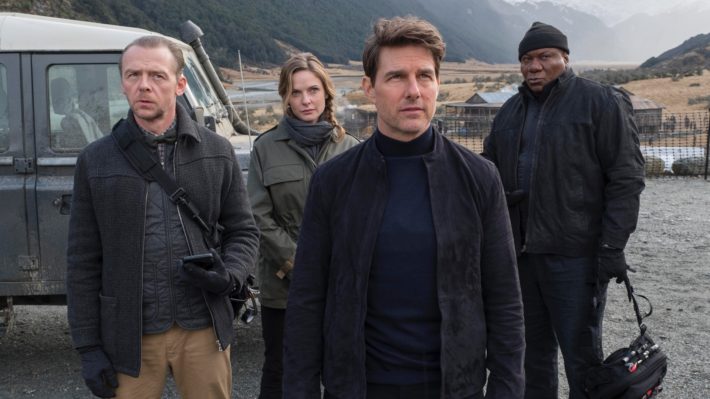
Cruise’s Ethan Hunt draws the ire of his IMF boss (Alec Baldwin) and his boss’s boss (Angela Bassett) by choosing the lives of his team (Ving Rhames, Simon Pegg) over a stash of rogue plutonium. To keep that payload from the highest bidder, they have no choice but to accept help from agent August Walker (Henry Cavill and the ‘stache that ate DC), a “kill now-ask questions later” bruiser.

It can’t go unnoticed that Fallout marks the third blockbuster this year to feature a villain whose goals are more societal than financial.

Coincidence? Clearly no, but McQuarrie’s script keeps the social commentary smart, subtle and out of the way.

Familiar allies (Rebecca Ferguson’s Ilsa), old foes (Sean Harris as Solomon Lane) and new femme fatale “White Widow” (Vanessa Kirby) dot the landscape of double and triple crosses, with McQuarrie being careful not to overplay the genre elements.

Sly, self-aware references ground the film when it’s in danger of reveling in any Bond-ish excess, with plenty of well-placed surprises that, even when they’re not that surprising,  help ease the bloat of a 2 and 1/2 hour running time.

But let’s not kid ourselves, that’s all just spy game gravy.

These stunts – from rooftop to mountaintop, crowded streets to midair and beyond – are showstoppers, with Cruise so electric a t-shirt proclaiming “movie star” would not be out of place under Hunt’s endless supply of tight black jackets.

Cruise’s insistence on doing these stunts himself got him a broken ankle, but there is plenty of gain for his pain. You cannot deny the added authenticity his stuntwork brings to these set pieces, with McQuarrie’s nimble camerawork and some luscious landscapes sealing the deal.

Say what you what about the summer movie season so far, Fallout is here to make you remember how breathlessly fun it can be.


I Don’t Want to Go Out—Week of July 23

Well, if you’ve made it through the bounty that the home entertainment gods bestowed upon us last week and you are looking for just one more movie, well, that’s exactly what you’ve got this week.

Click the film title for the full review.

Ready Player One

The Screening Room: Deuces

Back again? So are some of the same old titles—it’s the week of sequels! We talk through the best and the worst: Mamma Mia! Here We Go Again, The Equalizer 2, Unfriended: Dark Web, plus a couple of original ideas—The Cakemaker and The Night Eats the World. We also run through the best and worst in the boatload of new movies available in home entertainment.

Listen to the full podcast HERE.

Friend of the Family

The Cakemaker

by George Wolf

A delicately subtle and sometimes poetic film, The Cakemaker boasts sterling performances and finely drawn characters for a resonant meditation of love, loss, faith and…food.

Thomas (Tim Kalkhof in a wonderfully tender, understated turn) is a German baker at a Berlin cafe. He begins a long-term affair with Oren (Roy Miller), an Israeli businessman with a wife and son in Jerusalem. When Oren misses his monthly visit to Berlin and calls go unanswered, it takes some persistence on Thomas’s part to discover that Oren has been killed in a car accident.

Grief and confusion take Thomas to Berlin, where he discreetly seeks out Oren’s widow Arat (Foxtrot‘s Sarah Adler – excellent again), takes a job baking at her cafe, and assumes a growing place in her life. This brings differing (and telling) reactions from Arat’s family, and could threaten her cafe’s important kosher certification.

Writer/director Ofir Raul Graizer adopts a quiet, observational tone that is deceptively effective. Though this type of triangle may not be new (especially to foreign film fans), the way Graizer lingers on little moments (especially those in the kitchen) make even the most mundane encounters seem sensuous.

You may know where The Cakemaker is going, but getting there is a sweet and satisfying trip.


Webcam Confessional

Unfriended: Dark Web

by George Wolf

The good news: this Dark Web isn’t searching for your credit card info.

That would be playing nice compared to what the sequel to the surprisingly effective Unfriended has in store. More good news: it’s mean is pretty damn lean, clever and creepy.

Like its predecessor, Dark Web does a great job upholding the integrity of the “real time computer screen” gimmick. But from the opening setup, this one carries more eerie authenticity.

First-time director Stephen Susco, a veteran writer with plenty of horror titles in his resume, knows the genre has always reflected the anxieties of the day, and his screenplay here feels as in-the-moment as a brand new laptop with all the latest add-ons.

And that’s just what Matias (Colin Woodell) needs for his new programming project, but funds are tight. He finds a used one on Craigslist that might do, but when he hooks it up for a Skype game night with his friends, the previous owner “slides into his DMs.”

That’s what the kids, say, right?

There’s some bad, bad, stuff on that hard drive, and Matias has to strike bargains with the bad guy if he wants his friends to survive the night.

Sure there are some preposterous turns, but as the upper hand shifts (and shifts again), Susco and his winning cast (including Blumhouse favorite Betty Gabriel) make it a suspenseful ride. We’re making these discoveries right along with them, and while true scares might be in short supply, there’s is no shortage of nasty and unpleasant.

As online cautionary films go, Dark Web gets it better than most. The original Unfriended debuted four years ago, or in tech/social media terms, the Stone Age. Susco finds a wry, self-aware groove to drive home just where we’re at today: manufactured reality, “swatting,” and even, yes, internet currency.

Word is, there will be two theatrical prints, each with different endings. I can think of one that would pretty well spoil all that Dark Web executes so well.

I didn’t see an ending like that.

I hope you don’t either.


A Little Help From a Friend

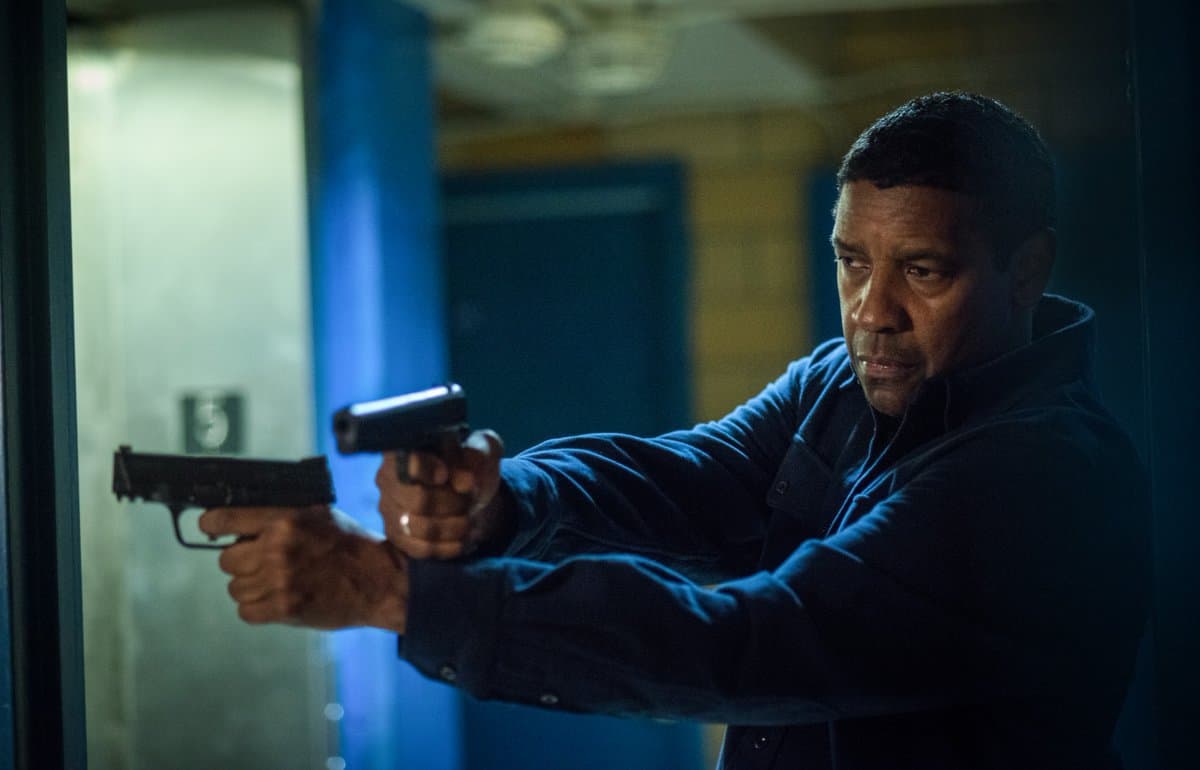
The Equalizer 2

by George Wolf

It still confounds me why John Wick gets more action cred than The Equalizer. Released less a month apart in 2014, Denzel and director Antoine Fuqua bettered Keanu and Chad Stahelski in nearly every respect. But, in fairness John Wick helped inspire Key and Peele’s very funny Keanu so I’ll move on.

JW already dropped its deuce (with part 3 currently in the works), and now The Equalizer 2 gets its director, star and screenwriter (Robert Wenk) back together for a slightly less satisfying dose of the same medicine.

Robert McCall (Denzel) has moved on from that big box hardware store he decimated in part one and settled in as a Lyft driver, making friends around his Boston neighborhood, and enemies when someone wrongs his friends.

E2 lets us see more of that random equalizing, which means more time before we get to the core conflict, but also more helpings of those bad guy beatdowns that bring such primal satisfaction.

Denzel is effortlessly good, which comes as a shock to no one. He digs deeper into the character this time out, maintaining the ticks that outwardly define McCall while sharpening the edges of a mysterious past that is never too far out of reach.

Secrets from that past begin to leave a bloody trail, and after a hit is ordered on his old boss Susan (Melissa Leo), McCall promises to make the guilty pay, his only regret being that he “can’t kill them twice.”

Denzel as a badass is so much cool fun, and he’s clearly the muse for Fuqua’s best work (Training Day, The Magnificent Seven). The stylized violence that so elevated the first film is here as well, but like most of the other elements, in lesser numbers.

The absence of a memorable villain is also felt. Marton Csokas was a great one, and E2 comes nowhere close to matching his simmering intensity. Substantive moral ambiguities are raised in fairly generic fashion, metaphors get a touch too weighty and the running time a bit too excessive.

The Equalizer 2 does offer plenty to like – Denzel, some scenes with unexpected turns,  a surprisingly touching epilogue, Denzel – but little of it can match the style or the vibe of the original.


Fright Club: Prostitutes in Horror

Jack the Ripper carved up prostitutes in real life and in about a million cinematic representations. But Jack’s not the only marauder who recognizes a helpless population when he sees it. Sometimes, though, the prostitute gets the last laugh.

5. The Poughkeepsie Tapes (2007)

John Erick Dowdle’s film is a difficult one to watch. It contains enough elements of found footage to achieve realism, enough police procedural to provide structure, and enough grim imagination to give you nightmares.

Edward Carver (Ben Messmer) is a particularly theatrical serial killer, and the film, which takes you into the police academy classroom, asks you to watch his evolution from impetuous brute to unerring craftsman. This evolution we witness mainly through a library of videotapes he’s left behind for the police to find, along with poor Cheryl Dempsey, (Stacy Chbosky).

While Cheryl’s plight is the most morbidly fascinating, a tricky side plot involving the murders of prostitutes not only clarifies the murderer’s game, but offers some of the most troubling scenes in the film, toying not just with horror but with weird personal anxieties: like the popping of a balloon.

4. Frankenhooker (1990)

Wanna date?

Director/co-writer Frank Henenlotter took the Frankenstein concept in strange, unseemly new ways with this one. Out-of-work loser with a knack for science Jeffrey (James Lorinz) mourns the really messy loss of his beloved Elizabeth (Patty Mullen) in his own way. Grief is like that—personal. And when you’re really grieving, a project can help you get past that. It focuses the mind.

Jeffrey rebuilds Elizabeth with the help of a lot of body parts made available to him via NYC prostitutes. They’re not volunteered, and Jeffrey is really conflicted about that, but this isn’t what makes him a bad person. It’s the fact that he never really accepted Elizabeth for who she was, or he’d be a lot less picky about these parts.

Jeffrey learns his lesson—kind of—in a film that is unusually sweet given the topic. It’s funny, gross, wrong-headed and more than a little stupid as well.

3. We Are What We Are (2010)

Jorge Michel Grau’s horror about the disposable population of Mexico City centers on a family with a ritual to fulfill. Too bad the patriarch’s death leaves no one but novices to put dinner on the table.
The fact that this family is a cannibal clan is a brilliant avenue into the sociopolitical theme of a society feeding off the poor, but Grau’s perspective offers a little bit of optimism in its own, bloody way. The cops are useless, the system is ridiculous, but those very people who have been disregarded by society are not as helpless as you might thing.

The family underestimates a society it deems beneath them, a group of people so low they are not even fit to kill. What Grau does with this circle of prostitutes is like a Pat Benatar video done right.

https://www.youtube.com/watch?v=xFO_qYqvnZo

2. American Psycho (2000)

Mary Harron’s near-perfect horror comedy send-up of the Reagan era benefits from a number of things, including maybe the best casting in cinema history. This cast and Harron hit every note perfectly, offering a film that is as bloody and alarming as it can be, with every re-watch an opportunity to see more and more of its comic genius.

And of the many memorable moments in the film, the line most likely to be quoted is this: Don’t just stare at it. Eat it.

There is a lot of soullessness afoot in American Psycho, and in that line, but not in Cara Seymour’s performance. As Christie—Patrick Bateman’s favorite prostitute, God help her—she gives this film its first truly empathetic character. She is the one character you root for, the one whose death you don’t want to see happen. When Christie is lured back to Patrick’s apartment for a second round, for the first time in the film, you find yourself feeling sad for someone, finding the empathy Patrick so utterly lacks.

1. Peeping Tom (1960)

Director Michael Powell’s film broke a lot of ground and nearly ended his film career. People tend to react badly to horror movies that unnerve them, which is really odd given that this is the entire point of the genre. Peeping Tom pissed everybody off, maybe because—like Michael Haneke’s films Funny Games—Peeping Tom implicates you in the horror.

Mark (Karlheinz Bohm) had a difficult childhood, developing a bit of a voyeuristic hobby to help him cope. He starts off with prostitutes, filming them, capturing their terror as he kills them. He’s a voyeur, but who can throw stones? Didn’t every one of us who’s ever watched this film— or any other horror movie, for that matter—sign up to do exactly what Mark was doing?

Bohm’s great success is in making Mark unsettlingly sympathetic. Powell’s is in using the audience’s instincts against us. Bohm makes us feel bad for the villain, Powell makes us relate to the villain. No wonder people were pissed.

The Sounds of Silence

Leave No Trace

by George Wolf

In her first feature since 2010’s gripping Winter’s Bone, writer/director Debra Granik is again focused on souls living on the rural fringes and scraping out a hardscrabble, under-the-radar existence.

But with Leave No Trace, any sinister, menacing layers have been replaced by a tender, sympathetic grace that feels achingly authentic, and often heartbreaking.

The film is driven by two haunting lead performances.

Ben Foster, surely one of the most underrated actors around, plays Will, a committed single father living deep within a massive state park in Portland. Will and his teenage daughter Tom (Thomasin Harcourt McKenzie) get all they need from their illegal homemade camp in the forest, taking constant measures to avoid being spotted.

One mistake later, Will is desperate to break free from the bureaucratic pressure to adapt, while Tom begins to feel the pull of a “normal” she has never known.

Granik adapts Peter Rock’s novel with a subtlety that stuns, speaking volumes in the silences that would cripple lesser films. Sketches of Will’s backstory are casually provided, allowing the two main performers to let us into the touching bond they create with each other.

Though Foster’s tremendous turn is not exactly surprising, the little-known McKenzie delivers a statement performance full of wonder and quiet power. “Tom,” torn by the love of her father and the need to follow her own heart, becomes our window into this private world, and McKenzie comes nowhere close to any false notes.

Leave No Trace follows its own titular advice, broaching a variety of relevant social concerns without ever raising its voice, yet cutting so deeply you may not get out of the theater with dry eyes.

Less is so often more, and Leave No Trace emits a profoundly minimalistic beauty.

Rock and a High Place

Skyscraper

by George Wolf

My wife says if I can’t get through this without mentioning Die Hard, I owe her ten bucks.

So how much will The Towering Inferno cost me?

Get over it, right? Those are decades old.

Fair enough. Ideas are born to be borrowed, and the real question is how well Skyscraper assembles its inspirations. The answers come without apology, cranked up to full tilt boogie until the rubble-strewn, crowd pleasing finale.

Of course Dwayne Johnson stars as Will Seymour, a former Marine and FBI hostage negotiator now working as a security expert. A tragedy on his former job cost Will his left lower leg, but it led him to a perfect new life with his surgeon wife Sarah (Neve Campbell) and their two cute kids.

Will’s hired to assess the security measures at The Pearl in Hong Kong, the world’s new tallest building that is ready to open its luxurious residential upper half. Will’s intimidated by such a large assignment for his small firm, but there’s a specific reason he got the call.

There’s something in The Pearl’s vault that is very valuable to international terrorist Kores Botha (Roland Moller), and Will is part of the plan to take it from the skyscraper’s visionary designer (Chin Han).

Who’s the fly in that high rise ointment? The monkey in the wrench? It’s The F. Rock

Writer/director Rawson Marshall Thurber (Dodgeball, We’re the Millers, Central Intelligence) trades comedy for disaster thrills with the tangible relish of a kid trading flashcards for the latest XNintendoBox 64 in 3D.

The heroics are grand in scale, engulfed in flames and often unveiled with gasp-inducing effects that consistently poke at our fear of heights. The pace is quick, Johnson serves up his usual good guy charisma and Campbell gets to be more than just a loving bystander.

And it all could only be more ridiculous if Will and Botha got in the Face/Off machine and switched identities.

The film’s plot turns and callbacks get so shameless it nearly pauses for applause, but the commitment is so unabashed and the spectacle so summer-ready, Skyscraper wins you over with pure “are you not entertained?” tenacity.

Yippee Ki….psych!

I Don’t Want to Go Out—Week of July 9

Horror and disappointment available at home this week. Hopefully not at your home. Just movies, you know? One of the best horror movies of the year, and one terrible disappointment.

A Quiet Place

The Leisure Seeker