Big week, people. Huge new flicks in theaters, awesome array of choices in home entertainment. Looking for horror? Independent gems that flew sadly under the radar while they were in theaters? Mildly disappointing blockbusters? We have them all! Here’s the skinny:
So a screenwriter, the president of France and a spy walk into a café… have you heard this one? If so, you might have read the book La Douleur (War: A Memoir for the English translation), an autobiography by Marguerite Duras based on diaries she allegedly wrote during World War II.
Duras rose to fame as a writer, garnering a screenplay nomination for the Alain Resnais-directed Hiroshima mon amour. That film’s novel treatment of memory and chronology echoes throughout Memoir of War, adapted from Duras’s book and directed by Emmanuel Finkiel.
Mélanie Thierry plays the film version of Marguerite, whose recollections span the waning days of Vichy France through the Liberation of Paris, the end of the war and the immediate aftermath of Europe reckoning with news of the Holocaust.
If this sounds like a lot of history to cover for one movie, it would be—except Marguerite’s reflections are unconcerned with straightforward chronology. Her diaries and narration compress time and memory into one long, all-consuming reverie for her captured husband, Robert (Emmanuel Bourdieu).
It makes for a deliberately disorienting experience, one that Finkiel pulls out a few tricks to heighten: there’s the nauseatingly atonal strings of the soundtrack, as oppressive as a horror score. But most effective is the way Marguerite’s memories of these monumental years unfold so frequently in claustrophobic interiors.
We get the entire moral arc of world war by way of smoky Parisian rooms. As the war winds down and Robert’s fate seems more and more dire, Marguerite retreats both mentally and physically. And we experience the two most triumphant moments—the Liberation of Paris and what should be another happy occasion after the war—through Marguerite’s furtive glances out the window, like gossamer filters keeping the reality of the world at large a step removed from ever being something she can attain herself.
It’s a demanding role, and it rests almost entirely on Thierry to hold everything together even as her character seems to slip in and out of time. She pulls off resolve with gusto, and even tempers it with a haunted uncertainty that feels completely natural as the enormity of the Holocaust becomes clear.
Memoir of War is a difficult film to get a handle on. The Resistance intrigue is discarded as quickly as it starts to take shape. The historical romance is mostly MacGuffin. And the war barely leaves the cafés, let alone the city.
The slipperiness is apt though. Marguerite’s memories are their own fog of war, and the author’s real-life diaries play coy with authenticity vs. artistic liberty. Finkiel pieces together a fitting adaptation, and if the parts never hold together long enough to say some cohesive whole, at least he can say he makes us feel something Marguerite would recognize.
Hell Fest is not the first film to point out that it would be really dangerous if any of the masked meanies inside a Halloween haunt were, indeed, a murder-happy maniac. It’s not a bad premise, just not a new one.
In keeping with the not-so-fresh theme, this film is a straight-up, unapologetic slasher. Not a nostalgia-seeped, homage-laden satire or meta-commentary. Nope. Hell Fest is an unironic slasher. Six nubile youths drink some shots and head into a situation that should be fun but does, of course, hold the potential for serious danger. But they’re young, they’re immortal, they’re so hot and horny.
Why so much groping, by the way? They aren’t that drunk, they have homes, none of them just got out of prison. That’s the thing about slashers: we’ve seen so, so, so many of them over the years that the cracks in the formula are gaping holes by this point.
Nevertheless, Hell Fest stays its by-the-numbers course. Director Gregory Plotkin (Paranormal Activity: The Ghost Dimension) manages to keep the energy high, even as the story weaves tediously through an amusement park.
The script, penned by a committee of five, doesn’t burden itself with much in the way of backstory or the need for character arc. Of the six, Natalie (Amy Forsyth) is the smartest and least slutty. She is, therefore, the target of our slow-moving, weirdly strong, masked marauder.
Her friends are mainly over-the-top caricatures of humans, but there’s an almost believable camaraderie among them. Forsyth fares best, clumsily flirting with the equally awkward Gavin (Roby Attal) as their overdressed friends drink from flasks and tell us how very excited they are.
While a couple of the attractions are fun, the main problem with Hell Fest is that it is not scary. Not for a minute. Nor is it gory—for a film with an R rating, there’s almost no blood, absolutely no nudity and very few F-bombs. It’s as if they hoped for a PG13 rating, didn’t get one and now they’re stuck with a movie that can’t entertain the wee ones and won’t entertain adults.
They do have Tony Todd, though. When has that ever been a bad idea?
I know, October is basically here and you just want to find some new scary movies to put you in the mood. Dude, seriously, Halloween comes out in two weeks. Just hold your horses.
The endlessly likeable Kevin Hart and the undeniably talented Tiffany Haddish join forces, which sounds like a solid plan except that Night School is a Kevin Hart movie, and when was the last time one of those was any good?
Sure, Jumanji had some laughs. In fact, Hart’s films almost always boast a few chuckles, mainly because of the actor’s infectious energy and self-deprecating humor. But they’re not good.
Neither is Night School which, even with Haddish and a handful of other proven comic talents, isn’t funny, either.
Hart plays Ted, a good-hearted hustler, talking big and spending bigger, pretending to be more than he is to compensate for his own insecurities. Of course he is, it’s a Kevin Hart movie.
Haddish is Carol, the overworked, underpaid night school teacher here to believe in Ted and the collection of losers in her class. It’s tough love, though, because Haddish is funnier when she’s mean.
What the film does well could have been packaged into an enjoyable 15-minute short. Hart gets off a few laughs working for a Christian fast food chicken joint, and the camaraderie among his late blooming classmates sometimes draws a giggle.
The actors portraying those night school chums work hard to establish memorable, funny characters with limited screen time and an even more limited script. Still, Mary Lynn Rajskub, Rob Riggle, Al Madrigal, Anne Winters and especially Romany Malco work wonders. Taran Killam amuses on occasion as the uptight principal with a grudge.
But there’s only so much they can do. Director Malcolm D. Lee (Girls Trip) drags every gag out about 8 minutes longer than necessary. The script, penned by Hart and five other writers, does Lee no favors. Even Haddish struggles to be funny with flat dialog and pointless, contrived physical comedy bits.
While you’re not laughing you might notice that Night School does make a few surprising choices. Its comedy is good hearted. This is a film that likes all its characters—the females, the losers, those with success and even the parents whose coddling and/or verbal abuse may or may not be to blame for the whole night school problem.
Those are small successes in a film that squanders a lot of talent and all of our time.
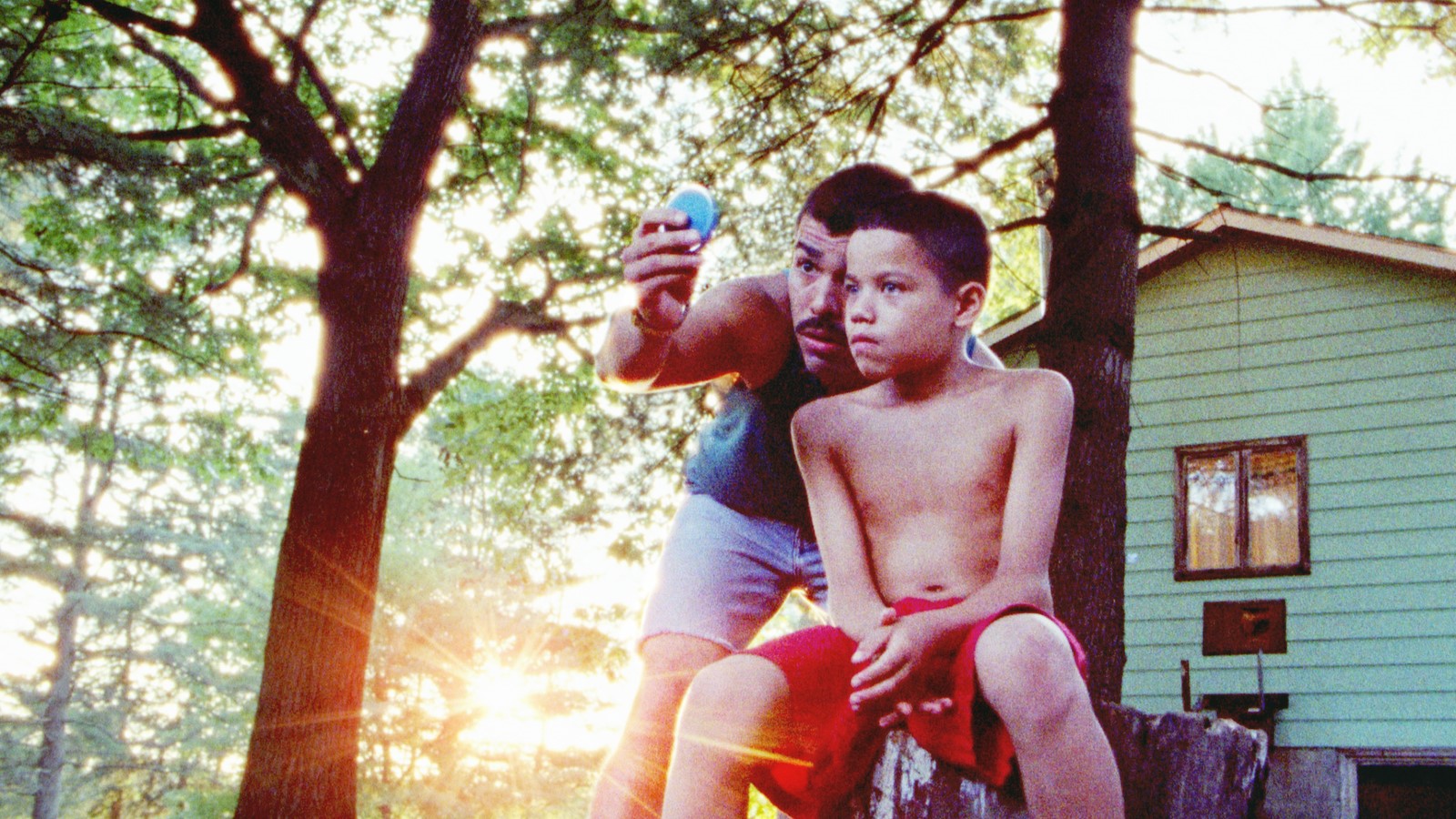
Imaginative Jonah is the focal point of director Jeremiah Zagar’s family drama, We the Animals. Based on Justin Torres’s novel of the same name, Zagar and co-writer Daniel Kitrosser successfully enter the realm of adolescent boys.
The youngest of three brothers, Jonah is the film’s narrator. His quiet observations allow him to remain nearly invisible to the adults around him. He sees things others might miss, and with an artist’s eye, he renders his observations into illustrations that jump off the page.
With his two older brothers, Manny and Joel, Jonah navigates his parents’ volatile relationship. Though there is love between his Paps and Ma, there are also moments of violence.
While the time period of the film is never explicitly stated, based on a few clues it’s likely the mid-1980’s. It’s a time when kids ran wild outdoors without cell phones or tablets in hand. The cinematography captures the sunny summer days when aimless kids roamed far and wide. It perfectly evokes the innocence and curiosity of young children.
As Joel and Manny enter into adolescence and leave childhood behind, Jonah falls further into his own world. The three brothers, at first inseparable, start to drift apart. While Joel and Manny seek to become men just like their father, Jonah tries to carve out his own identity. It puts him at odds not only with his siblings, but his parents as well.
There’s a dream-like quality to the movie reminiscent of films such as Beasts of the Southern Wild and Pan’s Labyrinth. Though Zagar’s approach is slightly less fantastic than either film, there is still a lovable, magnetic child at the center. As Jonah, Evan Rosado joins the ranks of child actors whose talent belies their age.
Zagar proves his mettle as both writer and director. His previous works include a number of solid documentaries (Captivated: The Trials of Pamela Smart, In a Dream), but as his first feature film We the Animals is a marvelous addition to his body of work.
One year back in high school, my school decided participation in the science fair would be compulsory. I resented this since the last thing I wanted to do was “science.”
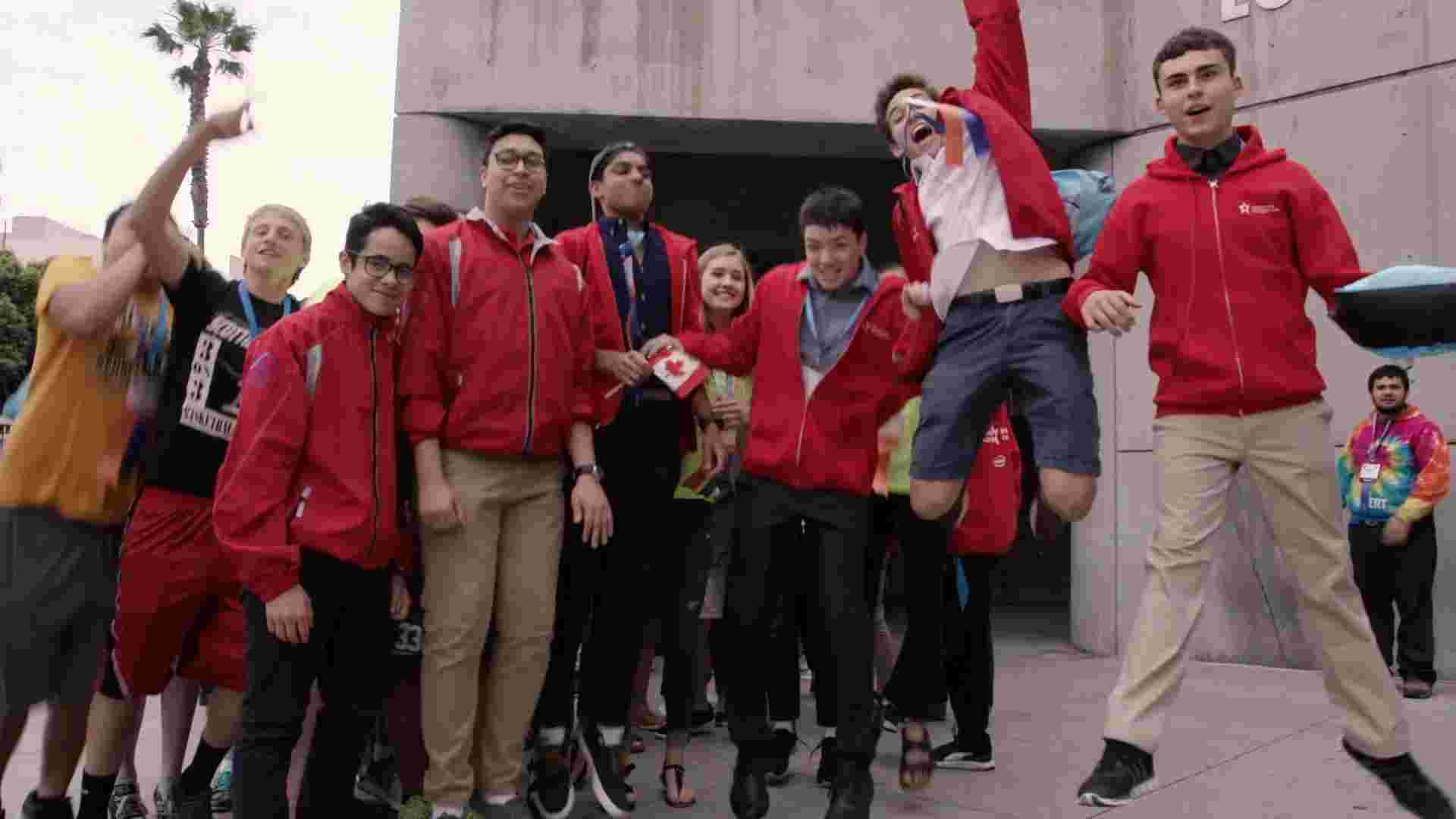
Watching the teenagers profiled in documentarians Cristina Costantini and Darren Foster’s film Science Fair, I start to understand the appeal of sincere participation in regional, national and international science fairs. If I had seen film the year I participated, I might have taken it more seriously.
What these kids invent, build and research makes my greenhouse in a shoe box look prosaic. From research into ways to prevent Zika transmission to monitoring and testing for arsenic in groundwater, these kids are smart, ambitious, and driven.
The crème de la crème of science fairs is the International Science and Engineering Fair (ISEF). To qualify for participation in ISEF, first these students must win their area science fairs, which can be state-wide or regional competitions. However they make it to ISEF, the teenagers who qualify have already faced stiff challenges from their fellow science enthusiasts.
To help the viewer understand the pressure these kids face, former ISEF winner Jack Andraka sheds light on the stress of presenting to judges. Projects that students have worked on for months, even an entire year, must be broken down into ten minute presentations to a handful of judges who will decide if their project is worth the prestigious Gordon E. Moore Award.
It’s hard to pick a favorite. All of the teenagers profiled are charming and their desire to win is infectious. You wish they could all win.
Science Fair follows the familiar structure of other films depicting students engaged in fierce competition – First Position, Spellbound, and Make Believe. We’re given time to get to know the students profiled, to watch them hard at work on their craft, and then we follow them through the competitions as they fight their way to the finish line.
Costantini and Foster make a point to profile students from varied backgrounds. Some of the kids attend private schools especially focused on STEM education. Others attend public schools so focused on athletics that science achievements are completely ignored. The directors want to make a point that science is for everyone and anyone can achieve the level of success that these students find.
In a country that frequently devalues science and scientists, this documentary reminds us that these kids are our future.
I know you didn’t really dig Solo, but if you’re on the fence (or you skipped it), maybe give it a second look. Definitely no need to see Uncle Drew, but if you missed Izzy as she got the F across town, now is the time to rectify that situation. Here’s the low down on what’s new in home entertainment.
We are back and digging through the wild array of movies out this week: The House with a Clock In Its Walls, Fahrenheit 11/9, Assassination Nation, Lizzie, Pick of the Litter plus all that’s fit to watch in home entertainment.
What if a rich white man reclaimed Salem, Mass for ostracized and victimized women by creating an outrageous, violent yarn about our out-of-control, whatever world?
In the case of Sam (son of Barry) Levinson’s latest, a cross between Tragedy Girls and The Purge, the result is the self-conscious, self-righteous and sloppy Assassination Nation.
A cautionary tale about online living, social media saturation, toxic masculinity, mob mentality, rape culture…I’m sorry—where was I? A lot. Levinson’s film is mad about a lot of stuff. And it will empower young women, mainly by filming them braless and wearing shorts that are bound to cause a yeast infection.
Four high school besties (Odessa Young, Hari Nef, Suki Waterhouse, Abra) find themselves unsure if they will survive the night once a hacker shares half the town’s digital secrets with the world. What follows is a vibrant, kinetic spectacle that deserves note if only for its raucous attention to basically anything and everything that might make a teenage girl feel violently self-righteous.
All of it’s empty, of course: lurid and stylish, pseudo-feminist and pretend-woke. Like the opening sequence “trigger warning,” the film promises something it lacks the spine to deliver.
Here’s the point, if there is one: the perils of high school are more horrifying than they were a generation ago. Hell, they’re probably twice as bad as they were two years ago. But high school kids are just as idiotic, self-absorbed, naïve and insecure as they ever were, so things are going badly.
But rather than empathize or provide insight, Assassination Nation offers exploitation and voyeurism. It’s one of those things you can try to get away with by passing it off as culturally relevant, zeitgeist embracing irony. That’s a tactic that might work if you aren’t just cribbing from two more clever and socially aware films where characters wear bras.
Whether it’s true or not, dogs make us feel like their sole purpose in life is to fill us full of happiness. Dancing at the front door when you come home from work… a sneak attack of kisses that always ends with you in a fit of giggles…nice long naps together on the couch. More than just making us feel good, dogs can serve a greater purpose in the lives of people with visual impairments. That journey to find this purpose is where Pick of the Litter takes us.
The documentary opens with the birth of Labrador pups Patriot, Potomac, Phil, Primrose and Poppet. They are the newest arrivals on the campus of Guide Dogs for the Blind, and their training will start on only their second day of life. The training to become a guide dog isn’t easy; out of the 800 dogs born there each year, only 300 become actual guides. The process is time-consuming, strict and unemotional… but it’s never, ever boring.
Directors Don Hardy, Jr. and Dana Nachman give us plenty of cute puppy footage, but never shy away from the seriousness of what a guide dog will end up doing. Bonds immediately form between the puppies and their “raisers,” who will work to socialize them. They can be quickly pulled away from those same raisers if it’s felt that the dogs can benefit more from being in another home. It’s that pull between emotion and dedication that gives Pick of the Litter its ultimate strength.
The urge to root for these pups is there from the beginning. Pick of the Litter doesn’t get too clinical in its approach to the dogs. We’re allowed to get to know them and pick out those distinct personalities. It also stings when one of them isn’t able to make the cut.
The stories of the people involved are just as important. The frustration felt by the trainers when the dogs don’t pass is palpable. Of course, the end game is for these dogs to end up with someone who will rely on them as their guides. Those stories are thankfully not lost, and give the audience that light at the end of the tunnel for our pup stars.
It’s easy to forget that dogs can do more than fetch, roll over and shake. They can give some people their independence back.