Tag Archives: movies

Fright Club: Best First Half of 2019

Is it really that time already? Yes, 2019 is half over and that means taking a gander backward to appreciate the horror we’ve witnessed thus far. Two first film filmmakers leave a mark while three of the greats remind us why they have that ranking.

5. Climax

Hey, club kids, it’s a Gaspar Noe dance party! And you know what that means: a balls-out psychedelic bacchanal soaked in body fluids, drugs and EDM.

Noe’s usual reliance on extended takes, stationary cameras and overhead shots makes the dance sequences utterly intoxicating, the performers’ energy creating exciting visual beauty and a palpable exuberance for their art. These seductive odes to dance are interspersed with sometimes graphically sexual conversations between the dancers, sharpening character edges and laying down an interpersonal framework that will soon be turned on its head.

In what seems like an instant, suspicion, mob rule and primal desire overtakes the company. The dancers’ movements become monstrosities bathed in pulsating rhythms, visual disorientation, wanton violence and illicit sex.

What spurred this sea change, and who is to blame? Noe turns that mystery into a greater conversation about the opportunity of birth, the impossibility of life and the extraordinary experience of death, and as is his wont, batters your senses while doing it.

4. The Wind

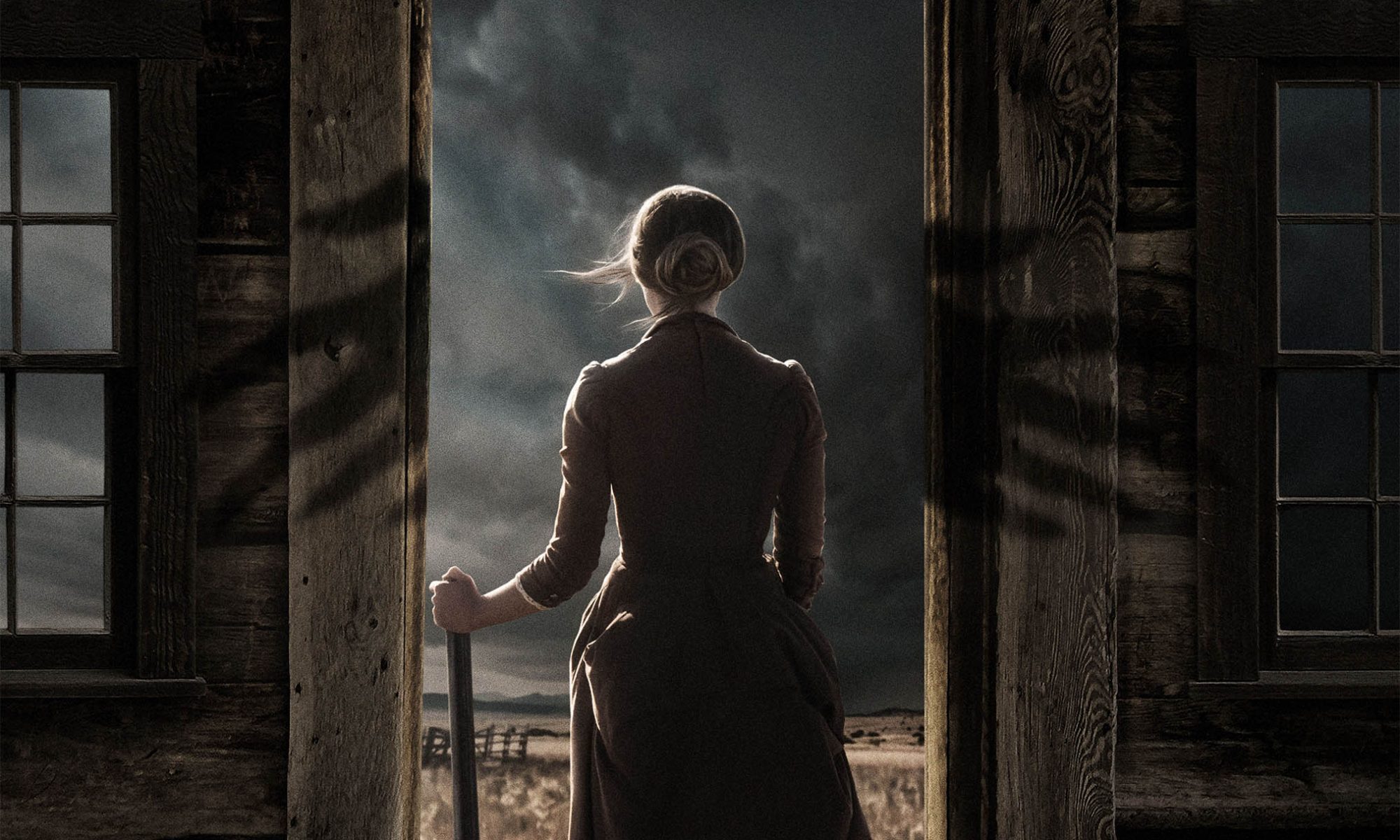
Lizzy and Isaac Macklin (Caitlin Gerard and Ashley Zukerman, respectively) are relieved to see smoke coming from a distant chimney. The only other cabin for miles has been empty a long while, and the prairie does get lonesome.

But companionship and burden go hand in hand for Lizzy, and company won’t chase away all the demons plaguing this harsh land.

Working from a spare script by Teresa Sutherland, Tammi develops a wonderfully spooky descent into madness. Throughout Lizzy’s isolation, Tammi swaps images onscreen from present moment reality to weeks earlier, to months earlier, to a present-day hallucination or specter and back again. The looping time frame and repetitive imagery turn in on themselves to create a dizzying effect that echoes Lizzy’s headspace.

3. Hagazussa

Making a remarkably assured feature debut as director, Lukas Feigelfeld mesmerizes with his German Gothic poetry, Hagazussa: A Heathen’s Curse.

Settled somewhere in the 15th Century Alps, the film shadows lonely, ostracized women struggling against a period where plague, paranoia and superstition reigned.

It would be easy to mistake the story Feigelfeld (who also writes) develops as a take on horror’s common “is she crazy or is there malevolence afoot?” theme. But the filmmaker’s hallucinatory tone and Aleksandra Cwen’s grounded performance allow Hagazussa to straddle that line and perhaps introduce a third option—maybe both are true.

The film lends itself to a reading more lyrical than literal. Feigelfeld’s influences from Murnau to Lynch show themselves in his deliberate pacing and the sheer beauty of his delusional segments. He’s captured this moment in time, this draining and ugly paranoia that caused women such misery, with imagery that is perplexingly beautiful.

2. The Dead Don’t Die

Jim Jarmusch’s zombie film never loses its deadpan humor or its sleepy, small town pace, which is one of The Dead Don’t Die‘s greatest charms. Another is the string of in-jokes that horror fans will revisit with countless re-viewings.

But let’s be honest, the cast is the thing. Murray and Driver’s onscreen chemistry is a joy. In fact, Murray’s onscreen chemistry with everyone—Sevigny, Swinton, Glover, even Carol Kane, who’s dead the entire film—delivers the tender heart of the movie.

Driver out-deadpans everyone in the film with comedic delivery I honestly did not know he could muster. Landry Jones also shines, as does The Tilda. (Why can’t she be in every movie?)

Though it’s tempting to see this narrative as some kind of metaphor for our current global political dystopia, in fairness, it’s more of a mildly cynical love letter to horror and populist entertainment.

Mainly, it’s a low-key laugh riot, an in-joke that feels inclusive and the most quotable movie of the year.

1. Us

From a Santa Cruz carnival to a hall of mirrors to a wall of rabbits in cages—setting each to its own insidious sound, whether the whistle of Itsy Bitsy Spider or Gregorian chanting— writer/director Jordan Peele draws on moods and images from horror’s collective unconscious and blends them into something hypnotic and almost primal.

Even as Peele lulls us with familiar surroundings and visual quotes from The Lost Boys,  Jaws, then Funny Games, then The Strangers and Night of the Living Dead and beyond, Us is far more than a riff on some old favorites. A masterful storyteller, Peele weaves together these moments of inspiration not simply to homage greatness but to illustrate a larger, deeper nightmare. It’s as if Alice’s Adventures in Wonderland turned into a plague on humanity.

Do these evil twins represent the darkest parts of ourselves that we fight to keep hidden? The fragile nature of identity? “One nation” bitterly divided?

You could make a case for these and more, but when Peele unveils his coup de grace moment (which would make Rod Serling proud), it ultimately feels like an open-ended invitation to revisit and discuss, much like he undoubtedly did for so many genre classics.

While it’s fun to be scared stiff, scared smart is even better, a fact Jordan Peele has clearly known for years.

Something Rotten

Ophelia

by Cat McAlpine

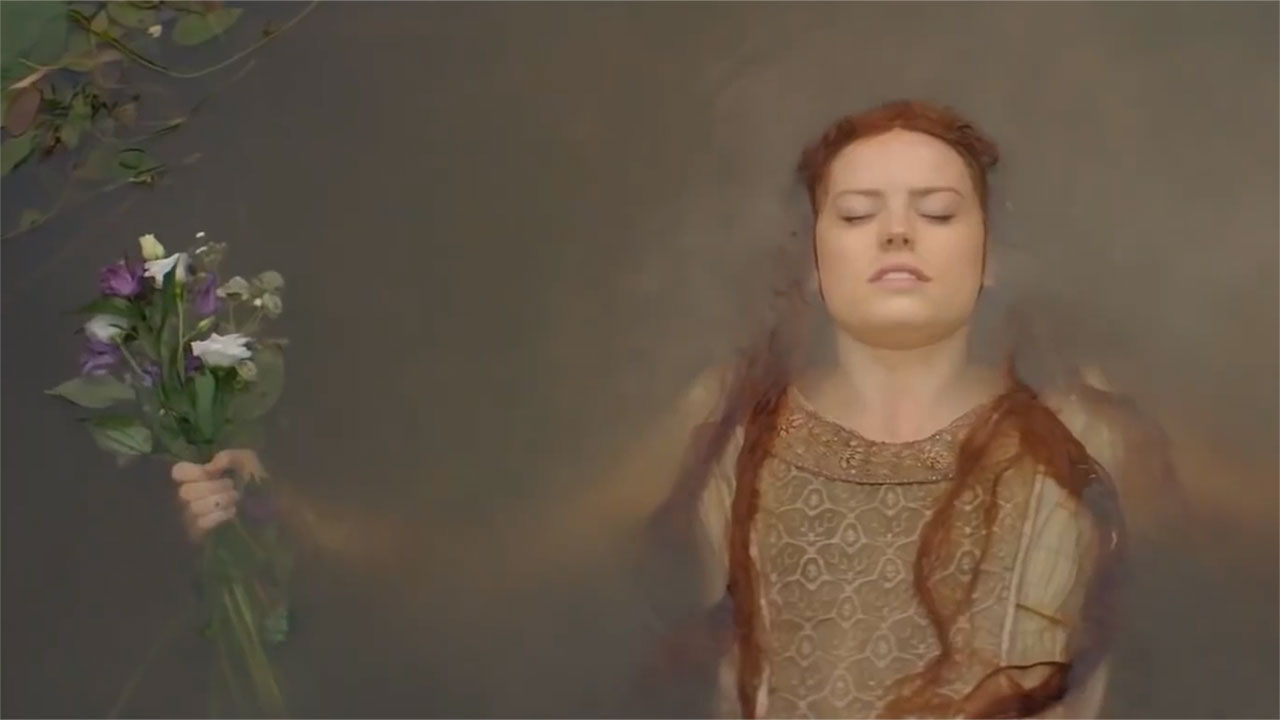
You’ve probably seen the painting “Ophelia” by Sir John Everett Millais (1852). It’s one of the most iconic images born from Shakespeare’s Hamlet, and one of the most well-known paintings of the 19th century. In it, fair Ophelia floats on her back in a river, surrounded by her red hair, elaborate gown, and a fistful of flowers.

This painting seems to be the sole aesthetic for director Claire McCarthy’s Ophelia-centric Hamlet adaptation, as evidenced by a horrible red wig, and the film’s open on a recreation of the painting. Also Ophelia’s quirk is she likes to leave the castle in the middle of the day and just walk into the river?

This iconic imagery is immediately interrupted with a “You may think you know my story…” voice over that immediately dashed all my hopes for Ophelia. The following film was a bizarre infantilizing of a classic heroine, already disadvantaged by her source material. Writers Semi Chellas (adaptation) and Lisa Klein (novel) navigate a series of bizarre Shakespearian fan-service plot twists that only make the story seem less grounded.

You see, Hamlet (a very good George MacKay) fell for Ophelia (Daisy Ridley) because she was quirky. The other girls didn’t like her because she didn’t have money for jewels and didn’t care to learn to dance properly.

This characterization of Ophelia is so cheap that the chemistry between MacKay and Ridley fizzles, further highlighting Hamlet’s unhinged impulses while Ophelia remains a canvas for him to project onto. Ridley surprisingly has more chemistry with charming Devon Terrel (Horatio).

Because this re-telling gets the Rosencrantz and Guildenstern Are Dead treatment, flourishes to the tale only happen in the margins when Ophelia would be off stage, and the story is still bound to all the events penned by Shakespeare. This means many key plot points seem to fly in from nowhere, even for those familiar with the original play. Out of nowhere Ophelia is awoken and told “Your father is dead. Hamlet accidentally killed him.” And while we’re experiencing events through Ophelia’s lens, we’re still left asking “Wait…what happened?”

Time that could’ve been spent developing Ophelia’s character or deepening her connection to her family (familial relationships being the focus of Hamlet) is instead spent on weird through lines about witchcraft and a secret twin. And while Ophelia ends up somewhere we don’t expect with a final resilient message about valuing yourself, the ending feels almost tacky instead of triumphant.

McCarthy’s film isn’t without merit. There’s some clever weaving of Shakespeare’s text into the dialogue. The costuming is beautifully done and the play-with-a-play performance makes for powerful imagery done in silhouette. The fight choreography is beautiful, fierce, and performed with a great fluidity. In all times, when the film is following the original plot, the fevered intensity of Hamlet shines through.

I hope one day sweet Ophelia gets a good story, a method for her madness, and a resolution for her watery demise. But this isn’t it.

A Different Kind of Toy Story

Annabelle Comes Home

by Hope Madden

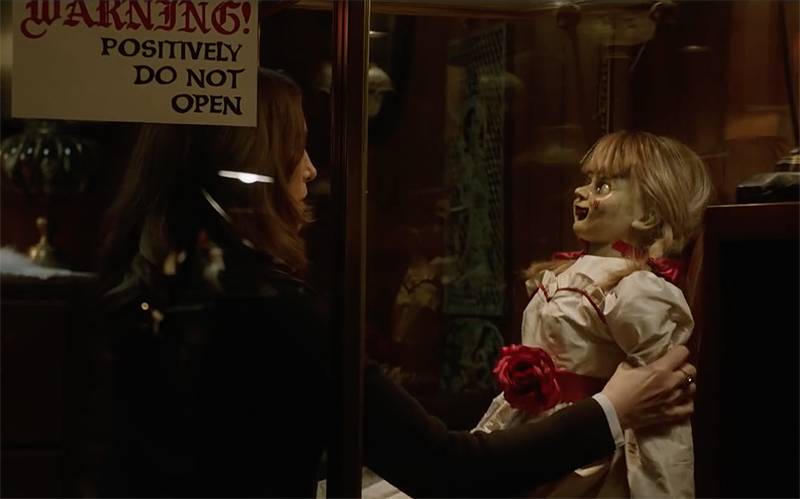
The first conflict, first specter of the Conjuring universe was a hideous, braid-wearing doll haunting hip Seventies roommates. Ever wonder what happened after Lorraine and Ed Warren (Vera Farmiga and Patrick Wilson, respectively) removed the cursed doll Annabelle from the girls’ apartment?

It was a hell of a ride home, I will tell you that.

Truth is, the Annabelle franchise within the larger Conjuring property hasn’t really impressed. John R. Leonetti’s lackluster 2014 “save the baby” horror that gave the doll its own series fell flat. Three years later, David F. Sandberg’s Annabelle: Creation offered an origin story that knew absolutely nothing at all about its own religious setting, yet offered considerably stronger action, scares and gore than its predecessor.

Writer Gary Dauberman, who’s penned every installment (as well as It, which seriously amplifies his credibility), takes on directing duties for the first time with the third film, Annabelle Comes Home.

Again, this one is a little better than the last one.

Dauberman gives us a spooky fun glimpse into the reasons the Warrens kept the doll locked away back in their room of cursed objects. From that first road trip home—which is a blast straight out of Hammer or Michael Jackson’s Thriller—the film is a spooky fun ode to old fashioned horror.

Back at home—the very home where the Warrens illogically keep demonic objects—their daughter Judy (McKenna Grace, really good in this role) is going through some troubles with schoolmates who think her parents are creepy.

Duh.

So, creepy Ed and Lorraine leave town, likely to cast a demon into a Combat Carl they’ll be adding to the back room toybox, leaving little Judy with a cherubic babysitter Mary Ellen (Madison Iseman) and her snoopy bestie, Daniela (Katie Sarife).

What does Daniela touch in the off-limits, demon-filled back room?

“Everything.”

All hell breaks loose, naturally.

Dauberman shows some fun instincts when it comes to isolating characters to make the most of his thrill ride setting. The logic comes and goes with ease, however—once the catalyst kicks in, each scene exists simply to trigger a scare, not to make any narrative sense.

But it is fun, with generous writing that does not ask us to root against any of the kids, and performances that are far superior to the content. Plus a couple of real laughs, mostly thanks to a randomly hilarious pizza delivery guy.

Annabelle Comes Home is no masterpiece and it is definitely a tonal shift from the previous installments, but it’s a mindless PG-13 blast of haunted house summer fun.

Best Movies First Half of 2019

By Hope Madden and George Wolf

The year is half over. What?! Stop it right now.

It’s true, and it has already been one hell of a year for film—documentary, in particular.

We’ve seen performances sure to be forgotten by awards season, so let us say right now that Elisabeth Moss (Her Smell), Emma Thompson (Late Night), Robert Pattinson (High Life) and Billie Lourd (Booksmart) top the list of must see acting glory in 2019.

What else? Well, DC finally got a real hit with the delightful Shazam! Meanwhile, MCU continued to make all the money with two really solid, fun and rewarding experiences: Avengers: End Game and Captain Marvel.

Which we all saw, statistically speaking. What did too few people see this year? Smart, funny R-rated comedies. Woefully underappreciated this year were Long Shot, Booksmart and Late Night. Please rectify this situation by the time these are available for home enjoyment.

10. Rocketman

Driven by a wonderfully layered performance from Taron Egerton – who also handles his vocal duties just fine – the film eschews the standard biopic playbook for a splendid rock and roll fantasy.

Writer Lee Hall penned Billy Elliot and Dexter Fletcher is fresh off co-directing Bohemian Rhapsody. Their vision draws from both to land somewhere between the enigmatic Dylan biopic I’m Not There and the effervescent ABBA glitter bomb Mamma Mia.

In the world of Rocketman, anything is possible. And even with all the eccentric flights of fancy, the film holds true to an ultimately touching honesty about the life story it’s telling.

9. How To Train Your Dragon: The Hidden World

The Hidden World offers so much more than just cute, and more than enough substance to solidify the entire Dragon saga as a top tier film trilogy.

This franchise has delivered true visual wonder since the original film’s opening frame, and part 3, taking natural advantage of enhanced technology, ups the ante. The aerial gymnastics and high seas swashbuckling are propelled by animation that is deep and rich, while new details in the dragons’ faces bring wonderful nuance and expression.

There is real tension here, along with warm humor, thrilling action pieces and resonant themes backed by genuine emotion. Packed with excitement, sincerity and visual amazeballs, The Hidden World ties a can’t-miss ribbon on a wonderful trilogy.

8. The Souvenir

The Souvenir rests at the hypnotic intersection of art and inspiration, an almost shockingly self-aware narrative from filmmaker Joanna Hogg that dares you to label its high level of artistry as pretense.

In her first major role, Honor Swinton Byrne is tremendously effective (which, given her lineage as Tilda Swinton’s daughter, should not be that surprising). In her hands, Hogg’s personal reflections are at turns predictable, foolish and frustrating, yet always sympathetic and achingly real.

The Souvenir is finely crafted as a different kind of gain from pain, one that benefits both filmmaker and audience. It is artful and cinematic in its love for art and cinema, honest and forgiving in its acceptance, and beautifully appreciative of how life shapes us.

7. Little Woods

Nia DaCosta’s feature directorial debut, which she also wrote, is an independent drama of the most unusual sort—the sort that situates itself unapologetically inside American poverty.

This is less a film about the complicated pull of illegal activity and more a film about the obstacles the American poor face—many of them created by a healthcare system that serves anyone but our own ill and injured.

But politically savvy filmmaking is not the main reason to see Little Woods. See it because Tessa Thompson and Lily James are amazing, or because the story is stirring and unpredictable.

See it because it’s what America actually looks like.

6. Us

Even as writer/director Jordan Peele lulls us with familiar surroundings and visual quotes from The Lost Boys, Jaws, then Funny Games, then The Strangers and Night of the Living Dead and beyond, Us is far more than a riff on some old favorites. A masterful storyteller, Peele weaves together these moments of inspiration not simply to homage greatness but to illustrate a larger, deeper nightmare. It’s as if Alice’s Adventures in Wonderland turned into a plague on humanity.

Do the evil twins in the story represent the darkest parts of ourselves that we fight to keep hidden? The fragile nature of identity? “One nation” bitterly divided?

You could make a case for these and more, but when Peele unveils his coup de grace moment (which would make Rod Serling proud), it ultimately feels like an open-ended invitation to revisit and discuss, much like he undoubtedly did for so many genre classics.

While it’s fun to be scared stiff, scared smart is even better, a fact Jordan Peele has clearly known for years.
Guess who he’s reminding now?

5. Shadow

Yimou Zhang rebounds from The Great Wall with a rapturous wuxia wonder, one nearly bursting with visual amazements and endlessly engrossing storytelling.

Taking us to ancient China’s “Three Kingdoms” era, director/co-writer Zhang (Hero, House of Flying Daggers, Raise the Red Lantern) creates a tale of martial artistry, lethal umbrellas and political intrigue gloriously anchored in the philosophy of yin and yang.

While the tragedies and backstabbings recall Shakespeare, Dickens and Dumas, Zhang rolls out hypnotic tapestries filled with lavish costumes, rich set pieces and thrilling sound design, all perfectly balanced to support the film’s dualistic anchor.

Working mainly in shades of charcoal grey with effectively deliberate splashes of color, Zhang creates visual storytelling of the grandest spectacle and most vivid style. There’s little doubt this film could be enjoyed even without benefit of subtitles, while the intricate writing and emotional performances combine for an experience that entertains and enthralls.

https://youtu.be/ySgN82k20xQ

4. Apollo 11

A majestic and inspirational marriage of the historic and the cutting edge, Apollo 11 is a monumental achievement from director Todd Douglas Miller, one full of startling immediacy and stirring heroics.

There is no flowery writing or voiceover narration, just the words and pictures of July 1969, when Americans walked on the moon and returned home safely.

This is living, breathing history you’re soaking in. And damn is it thrilling.

From the capsule “home movies” of Neil Armstrong and Buzz Aldrin, to the mission control checklists and ticking event countdowns, Apollo 11 immerses you in moments that will elicit breathlessness for the drama, pride for the science, respect for the heroism and awe for the wonder.

3. Amazing Grace

Already a living legend in January of 1972, Aretha Franklin wanted her next album to be a return to her gospel roots. Over two nights at the New Temple Baptist Church in Los Angeles, Aretha recorded live with the Reverend James Cleveland’s Southern California Community Choir as director Sydney Pollack rolled cameras for a possible TV special.

While it resulted in the biggest-selling gospel album in history, problems with syncing the music to the film kept the footage shelved for decades. Armed with the latest tech wizardry, producer/co-director Alan Elliot finally brings Amazing Grace to a glorious finish line.

To see Franklin here is to see her at the absolute apex of her powers. taking that voice-of-a-lifetime wherever she pleases with an ease that simply astounds. Even with the recording session stop/starts that Elliot includes for proper context, Aretha’s hold on the congregation (which include the Stones’ Mick Jagger and Charlie Watts) is a come-to-Jesus revelation.

So is the film. It’s a thrilling, absolute can’t-miss testament to soul personified.

2. They Shall Not Grow Old

Peter Jackson may bring us as close to comprehending war as any director has, not by dramatizing the horror or by reenacting it, but by revisiting it.

The Oscar winning director and noted World War I fanatic sifted through hundreds of hours of decomposing footage, restoring the material with a craftsmanship and integrity almost as unfathomable as war itself.

Over this he layered audio from interviews with WWI veterans into a cohesive whole, taking us from the wide-eyed patriotism that drew teenagers to volunteer, through their training and then—with a Wizard of Oz-esque moment of color, depth and clarity—into battle.

The fact that this immersion pulls you 100 years into the past is beyond impressive, but the real achievement is in the intimacy and human connection it engenders.

The clarity of the faces, the tremor in the voices, the camaraderie and filth and death—all of it vivid as life. It’s as informative as it is enthralling, an equally amazing achievement in filmmaking and in education.

1. Toy Story 4

Josh Cooley (who co-wrote Inside Out) makes his feature directorial debut with this installment. He also contributes, along with a pool of eight, to a story finalized by Pixar veteran Andrew Stanton (his credits include the three previous Toy Story films) and relative newcomer Stephany Folsom. 

The talents all gel, combining the history and character so beautifully articulated over a quarter century with some really fresh and very funny ideas. Toy Story 4 offers more bust-a-gut laughs than the last three combined, and while it doesn’t pack the emotional wallop of TS3 (what does?!), it hits more of those notes than you might expect. 

Characteristic of this franchise, the voice cast is stellar, the peril is thrilling, the visuals glorious, the sight gags hilarious, and the life lessons far more emotionally compelling than what you’ll find in most films this summer. To its endless credit, TS4 finds new ideas to explore and fresh but organic ways to break our hearts.

Screening Room: MIB: International, Late Night, Shaft, The Dead Don’t Die

Big week! So many movies! Some of them are even great. This week we break down Men in Black: International, Shaft, Late Night, The Dead Don’t Die, Halston plus everything worth your time in home entertainment.

Listen to the full podcast HERE.

I Do

The Proposal

by Rachel Willis

One part documentary, one part art piece, and one part love letter, The Proposal is an unusual film.

Visual artist and director Jill Magid has an interest in the architect Luis Barragán, particularly his professional archive, which is currently owned by the Swiss furniture company, Vitra. Overseen by Frederica Zanco, the professional collection has been withheld from the public for over twenty years.

The beginning of the film asks some interesting questions about the nature of art and ownership. Not only does Vitra own the physical archives, they also own the copyright for Barragán’s work. A photographer who has taken pictures of Barragán’s work, for example, owns the photo, but Vitra owns distribution rights. It’s a confusing legal quandary that has, in many ways, held Barragán’s work hostage.

However, rather than examine the implications of legal ownership, artistic legacy, and the ethics of corporations owning an artist’s work, Magid has a different agenda for the film.

Working on an artistic installation of her own, Magid has envisioned her entire project, including the film, as that love letter (or a proposal) to Frederica Zanco. What she wants is revealed throughout the course of the film, and her methods to entice Zanco are unorthodox. Many viewers will take issue with her tactics while others will see them as inspired. Part of the film focuses on the debate aroused by her project. 

When the documentary explores the architect (Barragán) and not the artist (Magid), it’s a great film. The moments that concentrate solely on Barragán pay a stunning homage to the man and his work.  However, most of the film is focused on Magid, her project and her goals, which often comes across as indulgent, sometimes even arrogant.   

Though Magid claims she’s sincere in her interest in Barragán’s work and its future, it’s hard to know for sure when each moment is used as a piece in her own installation. Is the film a touching tribute to the architect and those who admire him? Or is it a marketing ploy to draw attention to the artist?

In a scene where Magid addresses Barragán’s family, we might have gained additional insight into her true intentions, but rather than allow us access to the meeting, it’s relegated to a montage. What did she say to Barragán’s family to convince them to allow her to carry out her proposal to Zanco?

The questions raised in the film have less to do with the future of Barragán’s archives and more to do with Magid’s own art, which makes The Proposal an unexpected, if not entirely interesting, film.

https://www.youtube.com/watch?v=oAAheKLI92Y

Back in Black

Men in Black: International

by Hope Madden

Someone somewhere at some recent point in history must have said, “What we need is another Men in Black movie.”

Someone else surely disagreed, suggesting that they’d beaten that dead alien long enough.

“We’ll change it up,” this imaginary and somehow sad conversation continued. “Hire a new director, new writers, new actors, take it international. It’ll be—”

“Great?!”

“—mediocre.”

And there you have it. F. Gary Gray (Straight Outta Compton) directs an entirely new batch of humans in black as they don sunglasses, erase memories and suss out an alien conspiracy in their ranks, this time on European soil.

Tessa Thompson shines, as is her way, starring as Molly, a tenacious nerd who’s tracked down this mystery organization in hopes of a shot at joining. Head of the US division, Agent O (Emma Thompson—no relation that we know of, but how cool would that be?!) reluctantly gives her a shot.

As expected, all scenes between the Thompsons spark. And, as T. Thom has proven twice already, she shares solid onscreen chemistry with Chris Hemsworth, here portraying her new partner, H.

Gizmo-riffic adventures follow, although it’s pretty soft. There are a couple of fun sight gags, especially one with a hammer. Kumail Nanjiani pops off a few drolly comical lines as this go-round’s cute little alien sidekick, Pawnie.

Then the three are off to Marrakesh, then a fortress island, back to London, a desert, and London again all in pursuit of answers about a tiny little device and the evil twins looking for it. But the storyline was never really the MIB selling point, it was the relationship between the partners.

Thompson and Hemsworth seem like fine choices, having shown both chemistry and comedic spark in Thor: Ragnarok. But Thompson’s early, geeky charm is given little opportunity to show itself once she dons the black suit, and Hemsworth—fun enough as he, once again, basically mocks his own persona—has even less opportunity.

Writers Matt Holloway and Art Marcum don’t articulate enough in the way of plot or character arc and Gray’s listless direction leaves us with a Summer popcorn muncher that coasts rather than thrills.

Off the Leash Again

The Secret Life of Pets 2

by Hope Madden

Illumination, the animation giant behind all things Minion, returns to their blandly entertaining dog franchise for the blandly entertaining sequel The Secret Life of Pets 2.

In the 2016 original, Louis C.K. voiced a neurotic terrier named Max who needed to loosen up a little once his beloved owner brought home a huge, lovable Newfie mix (in a NYC apartment?!). And while life lessons were the name of the game, the real gimmick was to take the Toy Story approach to house pets, giving us a glimpse into what they’re up to when we’re not around.

Because we really don’t want to associate him with children anymore, C.K.’s been replaced by Patton Oswalt, whose Max has all new reasons for anxiety. There’s a new baby, whose presence suddenly reinforces all those fears about the big, scary world.

In a move that’s as disjointed as it is interesting, returning writer Brian Lynch sends Max, Newfie Duke (Eric Stonestreet) and family on a trip to the country, creating one of three separate episodes that will eventually intersect. Well, crash into each other, anyway.

The  main story deals with trying to alpha Max up a bit with some problematically “masculine” training by way of farm dog Rooster (Harrison Ford), who, among other things, disregards therapy as weakness.

Basically, Lynch and director Chris Renaud think we’re all a little too precious (the clear message of the original) and what they’d like to do with their sequel is beat us about the head and neck with that idea.

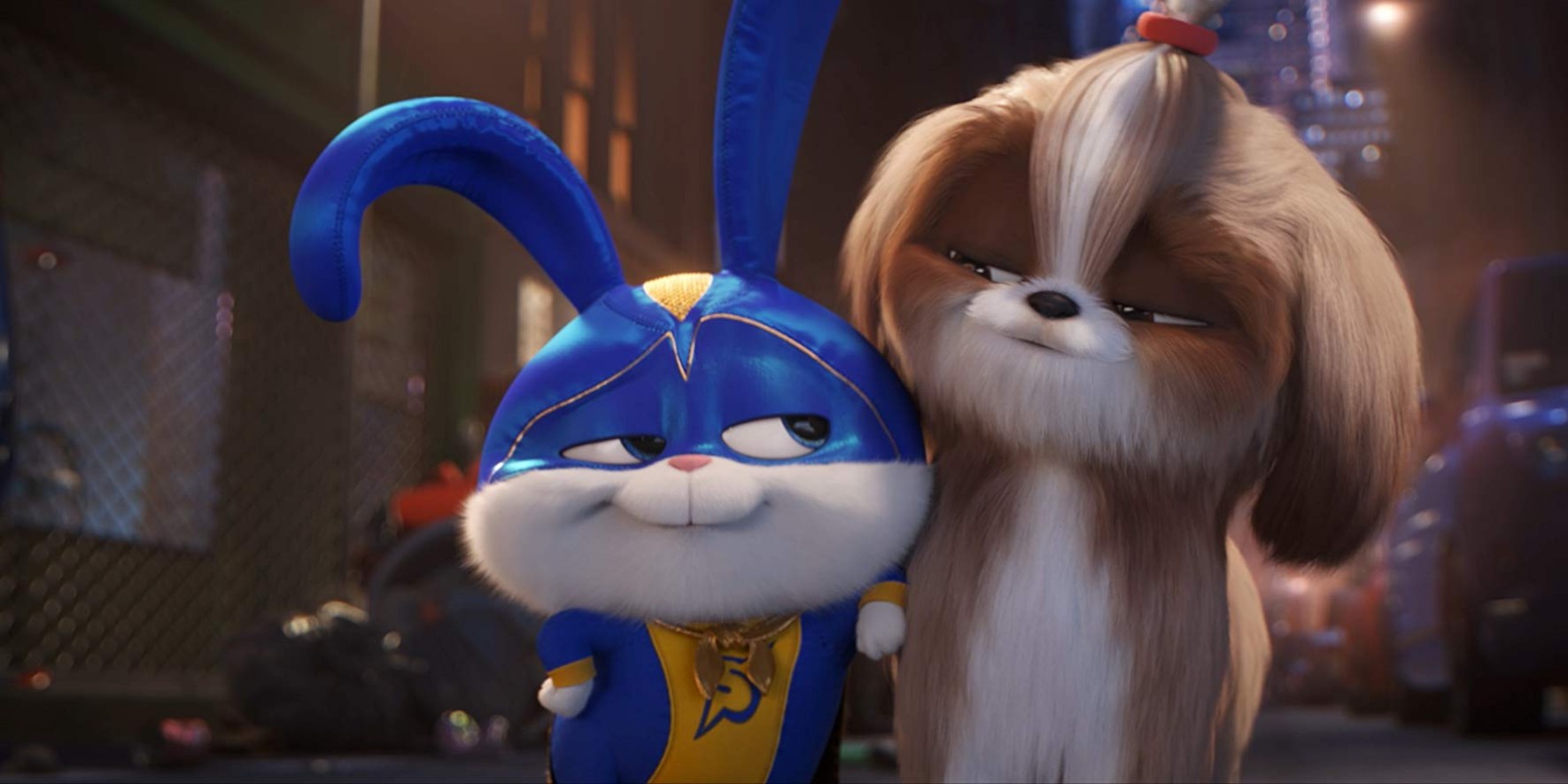
Meanwhile, back in NYC, Pomeranian Gidget (Jenny Slate) and Chloe the cat (Lake Bell – the film’s deadpan bright spot) train to retrieve a chew toy from a crazy cat lady’s feline-overrun apartment. And separately, Snowball the bunny (Kevin Hart), believing himself to be a super hero, befriends Shih Tzu Daisy (Tiffany Haddish), and together they save a baby tiger from an evil Russian circus.

For real.

That last bit gets seriously weird, I have no idea what they feed this baby tiger the whole time, and on average, the actual lessons learned are troublingly old school (read: conservative).

Teaching boys that pretending they’re not afraid so they can take charge of every situation = literally every single problem on earth right now. So let’s stop doing that.

Otherwise, though, Illumination offers yet another blandly entertaining, cute time waster.