Director (Ohio’s own) Lee Wilkof and screenwriter Ethan Sandler tap into years of collective wisdom from the inside to create a bittersweet, in-the-know glimpse at the near-thankless life of the workaday actor.
Gabriel Byrne, low key but excellent, is Lester Rosenthal – or Lawrence Rose, as the old playbill would have read. He’s having a hell of a time, as his longtime friend Hershel (Nathan Lane) explains to us via narration.
He’s a New York actor. An aging one whose dog just died, who hasn’t worked too steadily since that soap opera killed him off a few years back, who whiles away his days with similarly stagnant thesps in the Actors’ Equity Lounge, who may be willing to accept the role as King Lear’s Fool – in Dayton.
A mash note to the beleaguered actor in it for the long haul, No Pay, Nudity hits more often than it misses. The filmmakers possess a clear, lived-in knowledge of this world, this life. The yarn they spin is as empathetic as it is frustrated, and Byrne effortlessly embodies this embittered, wearied soul.
The premise is a bit slight and the resolution a tad rushed, but Wilkof and company make up for most of that with insight and affection to spare.
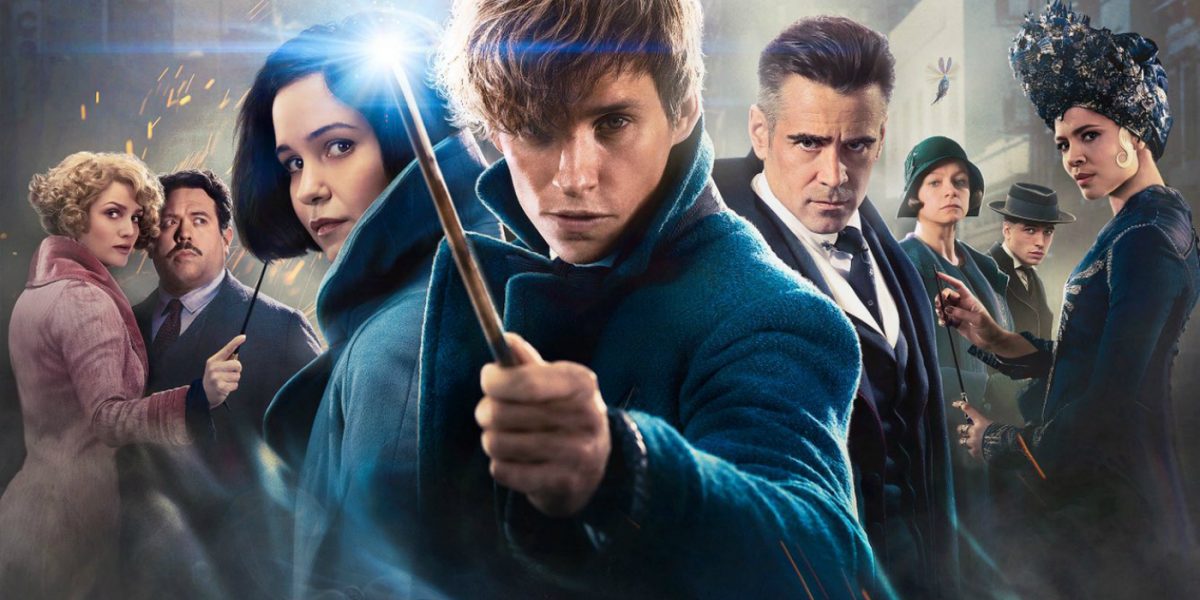
Newt Scamander (Eddie Redmayne) protects that which is unusual and therefore feared and persecuted. Funny that it took so long for a series about witchcraft to finally embrace this theme, but JK Rowling’s latest, Fantastic Beasts and Where to Find Them, digs in.
Part of the Harry Potter universe, though set decades earlier and continents apart, Beasts sees Newt land in NYC circa 1929 with a suitcase full of incorrigible creatures. He’s writing a book (it will eventually become a standard text at Hogwarts), but for now he has a spectacular winged creature to return.
If only the rest of the menagerie would stay put – and the American council of witches is none too pleased to find that his critters have escaped to run amuck in Manhattan.
The witches don’t like Newt’s beasties, so he hides them. The New Salem sect does not like witches, so they hide. The New York elite doesn’t like the freaks of New Salem. All this revulsion of the unknown leads to very bad things – things that could be avoided if we could see beyond our own fears.
Not that Rowling, adapting her own novel for the screen, or Beasts director David Yates (who helmed the final 4 Potter films), beats you about the head with the message. You’ll be plenty distracted by the wings, coils, teeth, horns and antics of Newt’s whimsical pals, and Yates’s giddy FX.
The film looks great – appropriately grim and glorious, in turns – and strong casting helps buoy a somewhat thin plot.
Redmayne (who may need to play a normal guy at some point) charms as the impish lead. As the quietly malevolent leader of the witch hunters, Samantha Morton delivers the most commanding performance among supporting players with characters as peculiar as Newt’s creatures.
Mercifully free of the adolescent angst that plagued the Potter series, Beasts contents itself with lovable losers in search of wild beasties and basic harmony between magic and nomag (the US term for muggles).
Though uneven at times – as if introducing too much and too little simultaneously – the first in a series of 5 films offers enough magic to make it worthwhile.
Amy Adams is as reliable an actor as they come. Thoughtful and expressive, she shares a tremendous range of emotions without uttering a sound.
With his latest, Arrival, director Denis Villeneuve puts her skills to use to quietly display everything from wonder to terror to hope to gratitude as her character, Dr. Louise Banks, struggles to communicate with visitors.
Twelve vessels have touched down in random spots across the globe: Sierra Leone, Russia, China, United States. Each nation has taken its own tack toward determining the purpose of the aliens. An expert in communication and linguistics, Banks has been brought to Montana to decipher that purpose.
Villeneuve, working from Eric Heisserer’s adaptation of Ted Chiang’s short “Story of Your Life,” whispers reminders of a dozen other alien invasion films without ever bending to predictability. His is a sense of cautious wonder.
Those familiar with the director’s work – particularly his more mainstream films Prisoners and Sicario – may be preparing for the unendurably tense. No need.
Yes, there are armed skirmishes, doomsday predictions and bad decisions, but Villeneuve’s focus and ours is always with Banks, whose struggle to make sense of the situation mirrors our own.
Adams owns a performance that does not immediately dazzle. Banks is a solitary, somewhat morose figure. Her predicament reflects humanity’s – she isn’t using her power to communicate for its true use, connecting.
Villeneuve and Adams toy with your expectations – Adams, because of your preconceived notions concerning her solitude, and Villeneuve through a sly playfulness with time and structure.
This sleight of hand allows the filmmaker to ask questions that are simultaneously grand and intimate. Arrival is a quiet film – not mind-blowing or terrifying or one to elicit a self-satisfied, “Fuck yeah!”
People looking for explosions and jingoism on a global scale need not attend. In its place is a quiet contemplation on speaking, listening and working together. While that may not sound like much excitement, it’s about as relevant a message today as anything I can think of.
Bathing an audience in violence – but violence in service of a noble cause – has become filmmaker Mel Gibson’s stock and trade.
Braveheart was a great movie – thrilling, self-righteous and violent as hell. But Gibson really hit paydirt as a director when he underpinned his gorefests with images of the victimhood of the Christian. (Or, of Christ himself.)
Gibson returns to what works with his latest, Hacksaw Ridge.
There is no question that the story of WWII veteran Desmond Doss not only deserves but requires our attention. A conscientious objector and devout Seventh Day Adventist, Doss refused to bear arms and yet he single-handedly carried 75 injured soldiers to safety during a particularly bloody battle in Okinawa.
Screenwriters Andrew Knight and Robert Schenkkan burden the film with every cliché in the WWII movie arsenal, from the wholesome hometown love to the flatly stereotyped platoon mates to nearly every line in the film.
Yet, between Gibson’s skill behind the camera and Andrew Garfield’s commitment to his character, Hacksaw Ridge always manages to be better than the material. And there is really no denying Gibson’s knack for action, carnage and viscera – all in the service of non-violence, of course.
It was Doss’s faith that kept him strong in his non-violent beliefs, just as it was his faith that kept him courageous in battle. Whether you believe in God or you do not, you will admire Desmond Doss, and Garfield does him justice.
He’s goofy and layered and at no point does Doss’s own explanation of his faith feel like a sermon. Thank God.
Garfield also boasts lovely chemistry with just about every actor onscreen – this is particularly touching in some early scenes with Teresa Palmer, playing Doss’s hometown sweetheart Dorothy.
So, come for the wholesome message, stay for the flaming soldiers who’ll flail in unimaginable agony before your very eyes.
It isn’t tough to shock with violence when you’re re-telling the greatest story ever told, but to one-up the carnage in a war movie? Have you seen Platoon? Saving Private Ryan?
Well, Gibson has, and he won’t be intimidated. But give the man credit, these sequences are breathtakingly choreographed, as full of energy and clarity as they are human entrails. If you’re looking for an opportunity to satisfy your bloodlust while also celebrating pacifism, well, Gibson’s got you covered.
Quick, who said this: “I went to Detroit with a tab of mescaline and a shovel.”
Who but Iggy Pop?
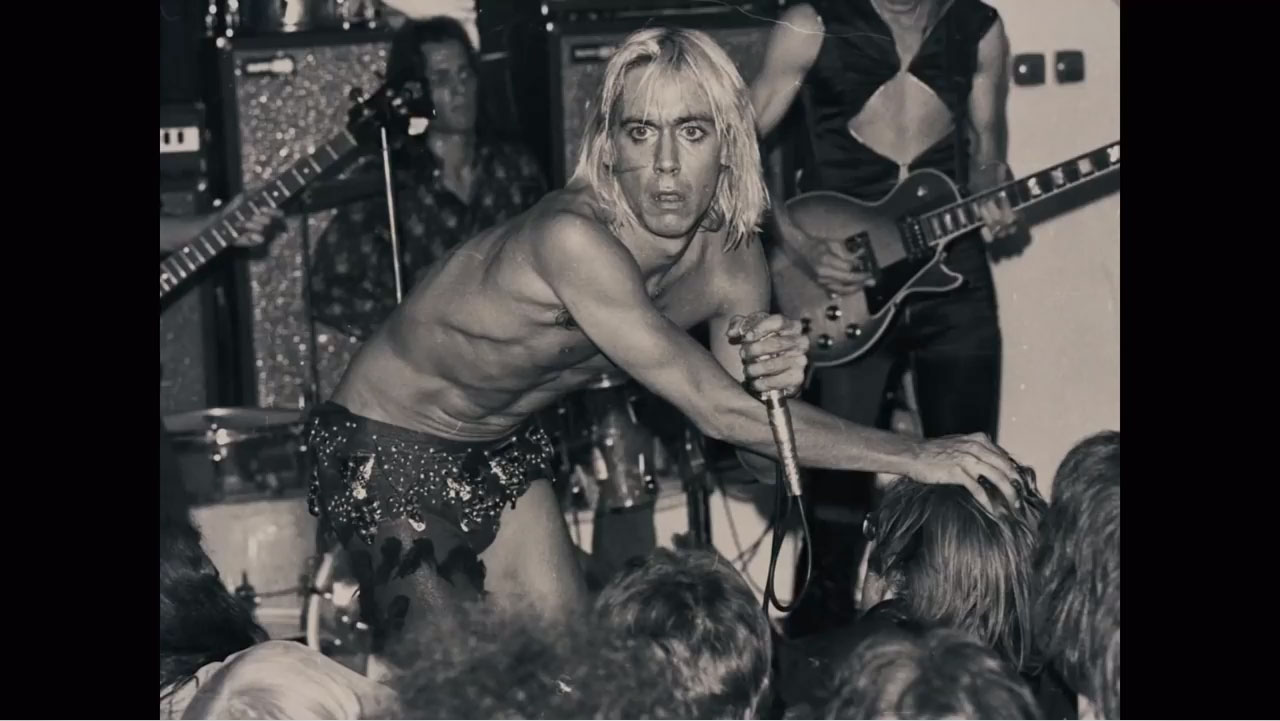
Effortlessly odd and forever fascinating, Pop and his band, the seminal punks The Stooges, are the subject of Jim Jarmusch’s new documentary, Gimme Danger.
Rock docs forever champion their subjects, frequently making a case for someone’s misunderstood and underappreciated genius. The fact that this kind of treatment could possibly be needed for arguably the first ever punk band, a group who influenced The Ramones, The Sex Pistols, David Bowie and dozens of others – well, it’s just disheartening, isn’t it?
While the story – from Ann Arbor trailer park to punk stardom to Ann Arbor trailer park – fits with the traditional “Behind the Music” approach, it’s never wise to expect the expected with Jarmusch.
Sure, the filmmaker pieces together vintage Stooges performances with interviews, but Gimme Danger is awash in the kind of wry cinematic mastery that has become Jarmusch’s trademark. Interviews with Pop take place in his home, the singer sometimes perched on a golden throne bedecked by skulls, sometimes barefoot in the laundry room in front of a washer/dryer set.
Likewise, on-again, off-again Stooge guitarist James Williamson sits through his interviews, guitar in hand, in a public men’s room.
Why? Why not?
Jarmusch has always brought an unusual perspective to his films, and The Stooges are an unusual subject. The pairing works, and for all Jarmusch’s droll use of animation, Three Stooges bits and vintage advertising as backdrop to Stooge insanity, his own affection and respect for the band is always evident.
Indeed, very early in the film, he proclaims The Stooges, “The greatest rock and roll band of all time.”
Jim Jarmusch is a native Ohioan who loves The Stooges.
Oh my God – we have so much in common!
His relationship with Pop goes back decades, since the singer co-starred in Jarmusch’s Dead Man and an early Coffee and Cigarettes short. In both, Pop (billed here as Jim Osterberg as Iggy Pop) haunts and bewilders with his sinewy frame and enormous eyes.
Oddly enough, Gimme Danger neglects some of the more jarring and lurid details of the Pop life. Jarmusch remains reverent throughout the film, focusing exclusively on The Stooges’ musical history. Almost quizzically missing is detail of Pop and crew’s self-destructive behavior, Pop’s infamous stage antics, or any mention of his solo musical or dramatic career.
Nope, Jarmusch wants you to realize that the world’s first punk band – as infamous record scout Danny Fields notes – reinvented music as we know it.
How is it we haven’t done this one yet? So many to choose from – most of them bad. Grizzly? Or Grizzly 2: The Concert? You know how we feel about Monkey Shines.
But, an animal attack has to be the human’s most primal fear, and it is sometimes mined for real terror when the story is in the right hands. Though there are a handful that fell just off the list – Burning Bright, Black Water, Lake Placid, The Shallows – these made the most lasting impression. They left bite marks.
A New England couple, struggling to stay afloat as a family, has some car trouble. This naturally leads to a rabid St. Bernard adventure.
But before we get into all that, we’re privy to the infidelities that undermine the marriage of Donna (Dee Wallace) and Vic (Daniel Hugh Kelly). Remarkably, it’s Donna who’s boning elsewhere. You might expect such behavior from her perennially shirtless husband, but no. Apparently dressing like Ma Engle is a real draw for New England boys.
This film is easy to write off. It dates terribly, from the heavy handed set up to the weak exposition to the inescapably Eighties score to Daniel Hugh Kelly’s ridiculous hair. Let’s not even get into this big, friendly St. Bernard covered in Caro Syrup pretending to be a menace, or the hillbilly family running the garage. (Stephen King will be damned if the South gets to corner the market on scary rural folk!)
Still, with all its many, many faults, once Donna and her asthmatic son (pre-Who’s the Boss Danny Pintauro) find themselves trapped in their broken down Pinto (What? Those seem like such reliable cars!) with a rabid dog (bigger than the car) attacking, the film ratchets up the tensions and rewards you for your patience.
Profoundly claustrophobic and surprisingly tense, benefitting immeasurably by Wallace’s full commitment to the role, the third of the film where we’re trapped in the heat inside that Pinto just about makes up for the entire rest of the picture.
4. Rogue (2007)
In 2007, Wolf Creek writer/director Greg McLean returned, again with the intention of scaring tourists out of Australia.
Australia – if I remember my Crocodile Hunter program, you know, before the deadly beasts of Australia finally killed him – is home to more man eating sharks, poisonous snakes, poisonous spiders, crocodiles and alligators than anywhere else on earth. It’s also the spot right under the hole in the ozone. I swear. The thing that seems to fuel McLean’s work is a bone-deep puzzlement over Australia’s tourism draw.
He’s not all anti-Oz, though. The aerial shots of his native nation’s North Territory inspire awe, and much of the film makes the rugged landscape a major character as riverboat tour guide Kate (Radha Mitchell) veers her group off course to answer another craft’s distress signal. Her boat’s quickly grounded when something bumps it, and she and her crew of tourists find themselves banked on a tiny mud island as daylight diminishes. Eventually they realize that inside that murky river is one mammoth crocodile.
One reason this film works as well as it does is that the croc looks cool. Another is that the performances are rock solid – Mitchell and Wolf Creek co-star John Jarratt, in particular, but look out for Sam Worthington in a small role. But the real star is McLean, who can ratchet up tension like nobody’s business. You know what’s coming, and yet still you jump. Every time.
3. Open Water (2003)
Jaws wasn’t cinema’s only powerful shark horror. In 2003, young filmmaker Chris Kentis’s first foray into terror is unerringly realistic and, therefore, deeply disturbing.
From the true events that inspired it to one unreasonably recognizable married couple, from superbly accurate dialog to actual sharks, Open Water’s greatest strength is its unsettling authenticity. Every element benefits from Chris Kentis’s control of the project. Writer, director, cinematographer and editor, Kentis clarifies his conception for this relentless film, and it is devastating.
A couple on vacation (Blanchard Ryan and Daniel Travis) books a trip on a crowded, touristy scuba boat. Once in the water, they swim off on their own – they’re really a little too accomplished to hang with the tourists. And then, when they emerge from the depths, they realize the boat is gone. It’s just empty water in every direction.
Now, sharks aren’t an immediate threat, right? I mean, tourist scuba boats don’t just drop you off in shark infested waters. But the longer you drift, the later it gets, who knows what will happen?
2. The Birds (1963)
As The Birds opens, wealthy socialite Melanie Daniels (Tippi Hedren) has followed hottie bachelor lawyer Mitch (Rod Taylor) to little Bodega Bay, his hometown, to play a flirtatious practical joke of cat and mouse. But you know what will eat both cats and mice? Birds.
Hitchcock introduces a number of provocative characters, including Hedren’s not-that-likeable heroine. Suzanne Pleshette’s lovelorn schoolteacher’s a favorite. But whatever the character, the dread is building, so they need to work together to outwit these goddamn birds.
The film is basically an intelligent zombie film, although it predates our traditional zombie by a good many years, so maybe, like every other dark film genre, the zombie film owes its history to Hitchcock. The reason the birds behave so badly is never explained, they grow in number, and they wait en masse for you to come outside. No one’s off limits – a fact Hitch announces at the children’s party. Nice!
Though the FX were astonishing for 1963, the whole episode feels a bit campy today. But if you’re in the mood for a nostalgic, clean cut and yet somehow subversive foray into fairly bloodless horror, or if, like one of us, you’re just afraid of birds, this one’s a classic.
https://www.youtube.com/watch?v=LrN_U830_Gc
1. Jaws (1975)
What else – honestly?
Twentysomething Steven Spielberg’s game-changer boasts many things, among them one of the greatest threesomes in cinematic history. The interplay among the grizzled and possibly insane sea captain Quint (Robert Shaw), the wealthy young upstart marine biologist Hooper (Richard Dreyfuss) and the decent lawman/endearing everyman Brody (Roy Scheider) helps the film transcend horror to become simply a great movie.
Perhaps the first summer blockbuster, Jaws inspired the desire to be scared silly. And in doing so it outgrossed all other movies of its time. You couldn’t deny you were seeing something amazing – no clichés, all adventure and thrills and shocking confidence from a young director announcing himself as a presence.
Spielberg achieved one of those rare cinematic feats: he bettered the source material. Though Peter Benchley’s nautical novel attracted droves of fans, Spielberg streamlined the text and surpassed its climax to craft a sleek terror tale.
It’s John Williams’s iconic score; it’s Bill Butler’s camera, capturing all the majesty and the terror, but never too much of the shark; it’s Spielberg’s cinematic eye. The film’s second pivotal threesome works, together with very fine performances, to mine for a primal terror of the unknown, of the natural order of predator and prey.
Jaws is the high water mark for animal terror. Likely it always will be.
Good versus evil. Heaven versus hell. The first 15 minutes of Inferno versus the last 105 minutes…
Director Ron Howard’s latest Dan Brown adaptation reprises Tom Hanks as the clearly tenured Professor Robert Langdon, once again caught up in a global conspiracy that will require his knowledge of symbols, art and religious icons to solve a series of puzzles.
And this time, it’s not just Catholicism that hangs in the balance—Langdon soon learns he’s tracking a deadly virus that, if released, would wipe out much of the world’s population.
Langdon spends the first 15 minutes of the film recovering from a bullet wound and massive head trauma, with no memory of the last few days. He hears voices and suffers violent hallucinations plagued with visions of medieval horror. The quick cuts are unsettling, as if Jason Bourne dropped acid while watching The Omen.
The Dantean grotesques invading Langdon’s head and complete lack of plot coherence also hinted at the chance that maybe, just maybe, Howard would pull off the greatest conspiracy of all and turn a lavish studio tentpole into an unhinged Italian horror send-up.
And then Langdon’s memory starts to come back. That’s when the rest of the film segues from Dario Argento to standard thriller. (You can reliably track the dullness of the movie with the sharpness of Langdon’s puzzle skills.)
It’s not that the thriller portion of Inferno is bad, although it is equal parts frenetic and nonsensical. Based on the source material, though, the relentless pacing is probably for the best, or else you’ll start to wonder when the World Health Organization started building up lethal military commandos without the United Nations getting concerned. Or why nobody is too bothered by the existence of a secret multinational security company that almost destroyed the world. (Or why the movie wastes the electric Irrfan Khan as the group’s leader.) Go in with the right expectations, though, and Inferno won’t disappoint.
Where Inferno really misses the mark isn’t so much its tiredness as a thriller but its complete lack of relevance. Paranoid classics like Three Days of the Condor and All the President’s Men oozed 1970s zeitgeist like blood on bitumen.
But in 2016, at the climax of the United States election—of this election, in these times—Inferno opts to menace us with an asocial Silicon Valley businessman (played by Ben Foster) whose views on humans are just a hair to the right of some actual Silicon Valley CEOs and venture capitalists.
Forgive the plot. Forgive Robert Langdon’s haircuts. Forgive Foster, whose face earns infinite goodwill by reminding you that he also spent 2016 onscreen in Hell or High Water.
But in a movie that, including the end credits, makes rational sense for maybe 20 minutes, the biggest unsolved mystery is how little feels at stake—and how unimaginative the film thinks about what the end of the world as we know it might look like.
Writer/director Kelly Reichardt sees something extraordinary in the simple daily struggle of ordinary people. Her latest film, Certain Women, again observes with genuine interest the (mostly) routine choices and sacrifices that quietly shape lives.
Weaving together three separate tales, each with just a whisper of a connection to the next, she tells of the isolation and disappointments coloring the lives of certain small town women.
Laura Dern stands out, exasperated but compassionate, as a rural Montana lawyer contending with a confused and obstinate client (Jared Harris, wonderful). Their story crescendos with uncharacteristic (for Reichardt) drama, but even here, the intimacy and understatement highlight something far more human than the tale itself predicts.
Reichardt regular Michelle Williams leads the second story, one full of understated moments echoing with regret and longing. The third, starring Kristen Stewart as a new lawyer teaching a class and Lily Gladstone as the desperately lonely ranch hand she befriends, is the most hushed and heartbreaking.
Stewart, who’s been so strong in recent roles (Clouds of Sils Maria, Still Alice, Equals), falls back a bit on her trademark angst, but Gladstone’s aching loneliness balances it out.
It isn’t simply the characters, beautifully wrought as they are, that carry these loosely braided tales. Reichardt’s eloquently captured Montana landscape, lovely but hard, both informs and reflects each of the leads.
She’s working again with regular collaborator, cinematographer Christopher Blauvelt, and together they let the rugged landscape speak as loudly, or as quietly, as the cast.
Few filmmakers – if any – can create such texture in a film. Reichardt rushes nothing, letting every scene breathe, every performance matter. There’s no shorthand here, and viewers thirsting for clear-cut drama and momentum may be uncomfortable with her choices. But those familiar with her work – Meek’s Cutoff (2010) and Wendy and Lucy (2008), in particular – will embrace the quiet intimacy of the portraits.
Speaking of sex and monsters – wait, were we? – have you seen Possession? WTF is going on there?
Andrzej Zulawski – writer/director/Czech – created this wild ride with doppelgangers, private investigators, ominous government (or are they?) agencies, and curious sexual appetites. It’s more precisely fantasy than horror, but it strikes me as David Cronenberg meets David Lynch, which is a pairing I can get behind.
Sam Neill plays Mark. Mark has just left his job – a mysterious position with some kind of lab. He’s being offered a lot of money to stay, but he needs to go home. We don’t know why.
Back at home, he greets his genuinely adorable son Bob (Michael Hogben). I love that his name is Bob. Bob – it’s so normal, and yet feels so unusual for a small child. Mark’s wife Anna (Isabelle Adjani) is also at home with Bob. There’s nothing normal about Anna.
Mark and Anna’s relationship boasts an intentional artificiality- a queasying sexuality- that makes it hard to root for either of them as their marriage deteriorates. Anna, it seems, is in love with someone else. Is it the sexually open – really, really open – Heinrich? Is it a bloody, mollusk-like monster? Is Mark boning Anna’s mean friend with a cast on her leg? Does Bob’s kindergarten teacher bear an unreasonable resemblance to Anna? Is anyone caring properly for Bob?
These questions and more go basically unanswered in a deviant, summary-defying, fantastical bit of filmmaking that mocks the idiocy, even insanity of obsession and boasts a handful of weirdly excellent performances. And sex with a bloody mollusk-like monster.
Listen weekly to MaddWolf’s horror podcast FRIGHT CLUB. Do it!
It’s a rare thing for a sequel to better its predecessor. It helps when the bar is not particularly high in the first place.
Such is the case for Ouija: Origin of Evil. A prequel to the 2014 by-the-numbers spook flick Ouija, the new iteration takes us back to a stylish 1965 where a struggling widow (Elizabeth Reaser) tries to eek out a living as a fortune teller.
Though her goal is noble – she just wants to bring peace to the grieving – her gig is a scam. Worse still, she enlists the help of her 9 and 16-year-old daughters. But when she brings a Ouija board home to liven up the act, her youngest turns out to be the real medium.
This is not a great film. It is, however, not half bad.
Director Mike Flanagan (Absentia, Hush), who co-wrote with Jeff Howard, has proven that he can mine even familiar territory for chills. His casting certainly doesn’t hurt.
Rather than relying on fresh faced teens to carry a supernatural slasher, he turns to seasoned actors – Reaser and Henry Thomas (that’s right – Elliot!) – to ground the fantastical elements with understated but believable performances.
The important roles, though, are the kids. Annalise Basso – so strong in Flanagan’s middling Oculus – again nails a performance as a normal kid living through extraordinary circumstances.
Lulu Wilson plays the wee spiritualist Doris, and though she occasionally slips into something too cloying, for the most part she handles her part with a nice balance of innocence and eeriness.
Flanagan wisely picks up enough from the previous film for this origins story to make it a proper standalone effort. He does get a bit heavy handed with the tiresome FX (is anyone still undone by a crab walking pre-adolescent at this point?), but for 2/3 of the film his approach is more measured. He lets the appealing performances and family dynamic do most of the heavy lifting.
Elements that weaker filmmakers would have hit hard Flanagan allows to linger, to become intriguing rather than damning.
As has been the case throughout his career, he can’t quite close the deal. Though never terrifying and rarely fresh, Origin of Evil still brings enough era-specific nods and spook house moments to be a fun seasonal escape – but never more than that.