Tag Archives: movie reviews

American Pie

Licorice Pizza

by Hope Madden

Each new Paul Thomas Anderson film defies expectations. Few fans of the lunatic frenzy of Boogie Nights or Punch Drunk Love would have expected the somber period dramas of The Master or There Will Be Blood. And I don’t know that anybody saw Phantom Thread coming.

Why not follow that meticulously crafted, deliberately paced tale of love and poison with a coming-of-age comedy? Well, Anderson’s latest, Licorice Pizza, is just that, and it’s a slice of Hollywood life awash in squeamish adolescent truth, politics, and waterbeds.

Anderson returns again to the 1970s, an era where few are as at home. In his 1997 breakout Boogie Nights, he used the porn industry to showcase the changing politics of the end of the decade while exploring alienation, family, and merkins. He journeyed back to the decade in 2015 with his underappreciated private dick flick Inherent Vice, again looking at individuals on the fringes and the choices that put them there.

While Licorice Pizza is far sunnier than those, it again examines choices and consequences against a vividly articulated 1970s LA.

Anderson’s film manages to be simultaneously familiar and entirely authentic. What does it feel like? If Robert Altman had attempted a coming of age flick, maybe? Or if Linklater made a screwball romantic comedy? Among Licorice Pizza’s many triumphs, the film nails its time period, not only in visual detail but in cinematic tone.

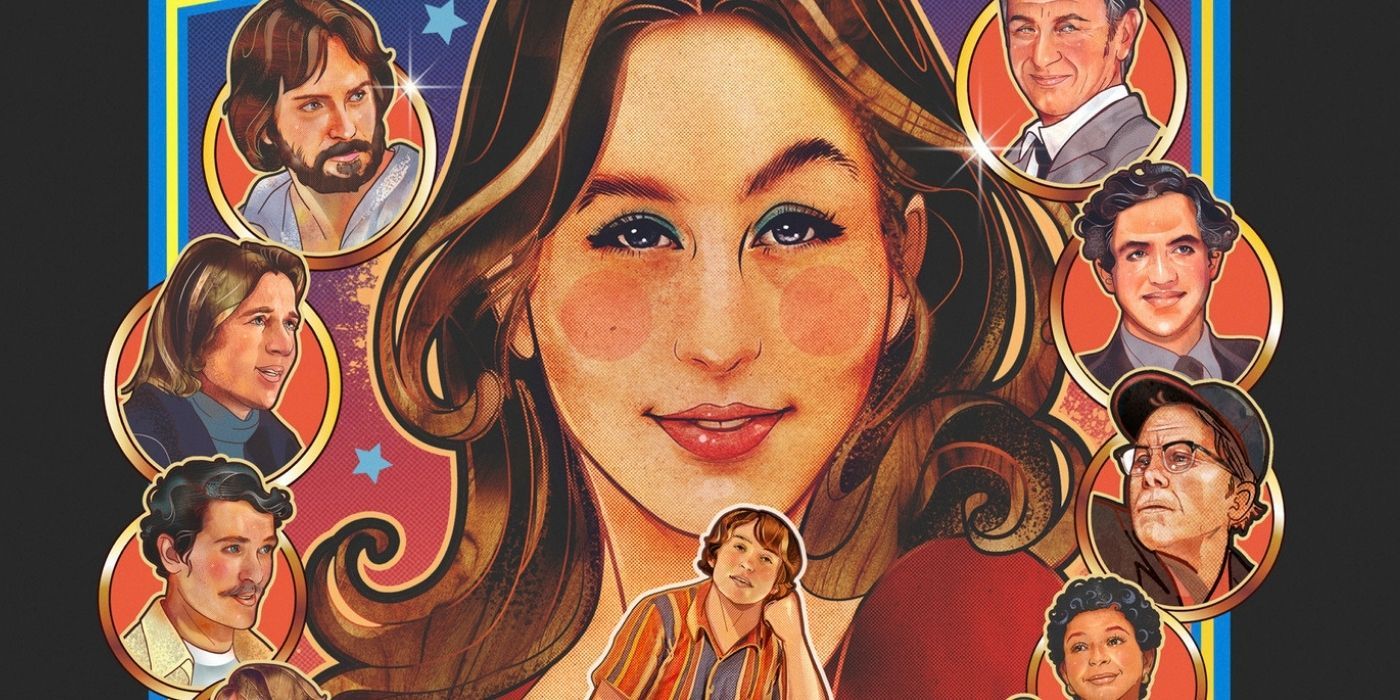
It is loose, forgiving, and along for the ride as 15-year-old entrepreneur Gary Valentine (Cooper Hoffman) woos life, Hollywood and, in particular, Alana Kane (Alana Haim), his much older paramour.

Both stars charm and disarm. Cooper’s sweet-natured confidence masks an adolescent tenderness that, when it shows itself, is almost crushing in its honesty. And Haim’s funny, awkward naivete mirrors the film’s own giddy feel.

Danger edges but never fully punctures the sunshine of youth that brightens every scene of the movie. But that darkness is there, looming like the creepy guy staring at your office window, or the cops who arrest you mistakenly, or the volatile Hollywood producer who may or may not smash your window (or your head) in with a crowbar. (Thank you, Bradley Cooper, by the way, for that brief but unforgettable performance.)

Cooper is not the only Hollywood big wig gracing a few minutes of screen time. Sean Penn drops in as a well-known action star and has not been this entertaining since Fast Times at Ridgemont High.

Don’t ask him about Kuala Lumpur!

The massive ensemble, evocative soundtrack and party atmosphere conjure Boogie Nights, the comfortable family dysfunction recalls Punch Drunk Love, the lumbering walk and surprising charm from the lead is reminiscent of PTA alum and dearly missed Philip Seymour Hoffman, Cooper’s dad.

It’s nostalgic. It’s uproarious, dangerous, just-this-side-of-innocent fun. It’s a near-masterpiece.

It’s a Paul Thomas Anderson movie.

A Day at the Beach

The Lost Daughter

by Hope Madden

Unnerving intimacy marks Maggie Gyllenhaal’s debut as a feature director, The Lost Daughter.

The veteran actor moves behind the camera to capture a weeklong holiday in Greece. Leda (Olivia Colman) lounges seaside and scribbles notes for another book. Little work gets done, though, thanks to the very large, very wealthy, very rowdy family that crowds the beach each day, but one member of that family sends Leda’s mind reeling back to her own youth.

Jessie Buckley’s young Leda captures the rich and volatile version of the woman Colman delivers on the beaches of Greece. The two performances never mirror or mimic each other. Rather, Buckley’s frustration and passion inform the reflective but still impetuous middle-aged woman taking stock of her life.

An actor whose unerring talent feels effortless, though no doubt it is not, Gyllenhaal draws that same kind of vulnerable, raw performance from her leads. Both versions of Leda surprise with a balance of moments, both ugly and dear. Anger lies behind their eyes, as well as longing and the regrettable loneliness of an outsider.

Colman conveys enormous emotional weight with her physical performance. The way she holds herself, the expressions that linger on her face, the changes in her gait—all of it articulates the particular suffering of this human in a way dialog never could.

Gyllenhaal frames the film as if to point out that the story is there, and is important, but of equal value is the way Leda sees the life unfolding around her. The approach is genius but unforgiving. A lesser cast could peter out with this level of attention. Luckily for all of us, Gyllenhaal’s uniformly subline cast (which includes Dakota Johnson and Ed Harris, both marvels) meets the challenge.

The deliberate camerawork in The Lost Daughter crafts a disquieting spell. Whether so close to an embrace you can almost smell the baby shampoo, or holding a distant glance at a stranger long enough to ensure its discomfort, Hélène Louvart’s cinematography disconcerts — as it did in Eliza Hittman’s 2020 treasure Never Rarely Sometimes Always.

Adapting Elena Ferrante’s novel, Gyllenhaal challenges romantic preconceptions about motherhood (sometimes quite bitingly, thanks to lines delivered with acidic precision by the remarkable Colman). The film acknowledges what is given up, what is lost, when you essentially transfer ownership of yourself—your time, your attention, your future—to someone else, to your children. The theme is deeply and honestly felt, and that, too, is unnerving.

Hearing Voices

Sing 2

by Hope Madden

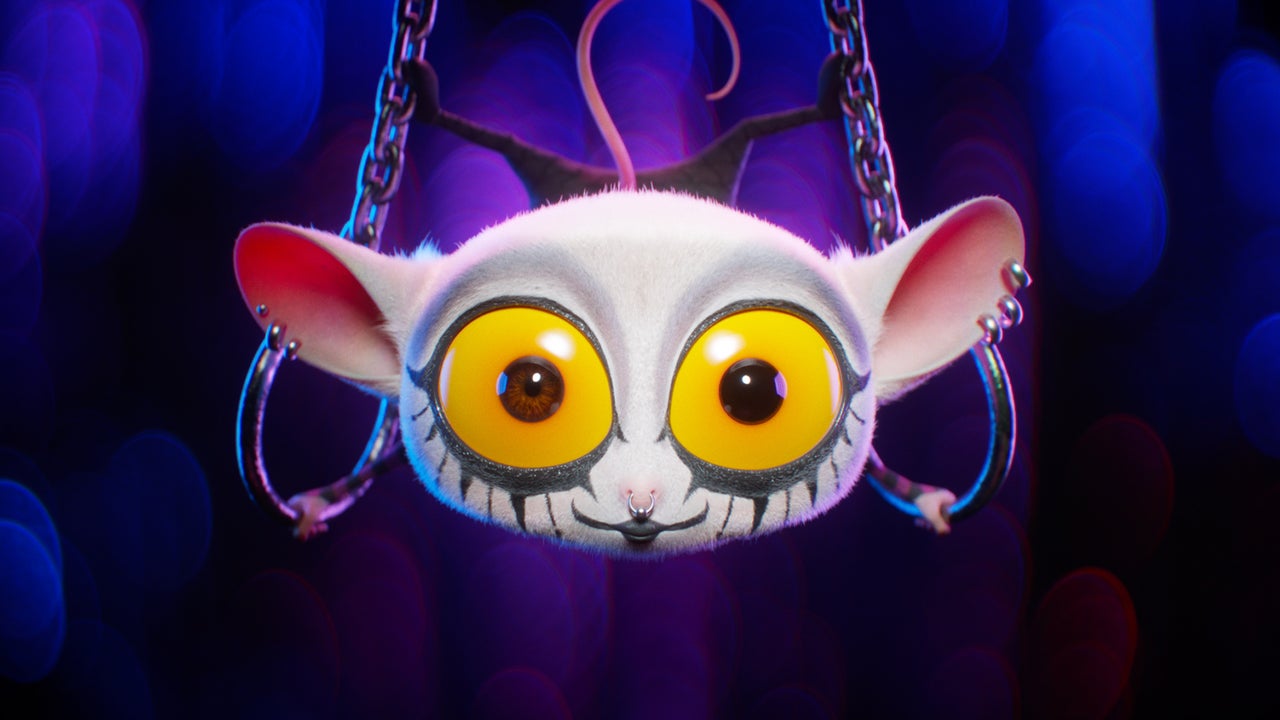
Are you ever absolutely slain by the voice talent in a cartoon? I find this especially true of a middling animation like Sing, or more to the point, writer/director Garth Jennings’s sequel, Sing 2.

Matthew McConaughey, Reese Witherspoon, Scarlett Johansson, Taron Edgerton, Bono, Nick Kroll, Bobby Cannavale, Pharrell Williams, Halsey, Letitia Wright, Eric Andre and Chelsea Paretti round out the set of vocal stylists bringing this animated animal talent show to the big screen. Was there any budget left for animators?

Well, sure. This is an Illumination animation—the good people behind the Minions and all that—and its visual style is bright, colorful and well suited to the animal antics afoot.

What antics, you ask? Well, big dreamer Buster Moon (a koala voiced by McConaughey) wants to take his enormously popular smalltown song and dance troupe to the big time! But are they ready? Will the man in charge of their destiny (a nasty wolf named Jimmy Crystal voiced by Cannavale) choose to murder Buster? And can they find the famous singer Clay Calloway (Bono) in time for the big show?

Who’s to say? What they won’t do is sing originals. Unlike your typical Disney musical, Sing 2 puts recognizable pop songs into characters’ mouths, so it plays a bit like one of those TV talent shows, except less annoying.

Halsey is memorable as spoiled Porsha, and Jennings himself shines voicing the character of theater assistant Miss Crawly.

Still, there’s not a lot new to see here—I think we’re all familiar with “the show must go on” stories. There’s even less new to hear. Characters are likable enough (aside from that wolf), and very solid lessons are learned and themes encouraged.

Plus, some fun song choices keep scenes lively and it is very hard to go wrong with this talent pool.

Not one memorable thing happens. Not one. But Sing 2 is light-hearted, good-natured fun while it lasts.  

Screening Room: Spider-Man: No Way Home, Nightmare Alley, Swan Song and More

Chapter and Multi-Verse

Spider-Man: No Way Home

by Hope Madden and George Wolf

Holy cow, how fun was that?!

Director Jon Watts, working again with writers Chris McKenna and Erik Sommers, uses the third in their Spider-Man series to remind us why we all hope for the best whenever we watch a comic book movie.

Peter Parker (Tom Holland) was found out in the previous installment, Spider-Man: Homecoming. And what he’s learned is that life is more complicated for you and more dangerous for your loved ones when your true identity is known. It’s a lesson most all Spider-Men and most superheroes have to contend with at one time or another. (Except Iron Man. Narcissists, amirite?)

Things have gotten so bad for him, his girlfriend MJ (Zendaya) and his bestie Ned (Jacob Batalon) that he asks for help from a wizard with responsibility issues (Benedict Cumberbatch, having one hell of a year).

What happens next? We see lessons learned from the profound (and rightful) popularity of 2018’s animated treasure, Spider-Man: Into the Spider-Verse. Portals open and Spider-Man characters come pouring in from across the multiverse.

So do other people, inside jokes, and constant opportunities to strengthen themes Spider-Man has spun since Stan Lee and Steve Ditko.

Oh, sure, it’s nostalgic. It panders. It also spills over with joy. This third installment showcases the naïve optimism and youthful sweetness that has made Watt’s first two episodes such a great time, that are so perfectly embodied by Holland.

Rather than feeling like those Marvel overreaches in defining their own universe, Watts’s film uses the opportunity of pulling in other movies to celebrate the hero, his roots, and what he stands for as an icon of comics, heroes, and childhoods the ‘verse over.

It’s a blast spending time with memorable characters, and each of these actors bring something charming to the screen. Watts and his writers fondly recall what’s gone before, even when ribbing some minor shortcomings.

When a superhero franchise gets far enough in that it requires a multitude of villains to one-up its prequel, things usually go south. Watts, on the other hand, gets stronger with each episode. Between his savvy filmmaking and his lead’s endless charm, he’s easily crafted the best set of superhero films in the Marvel (or Sony) universe. Given the excitement around Spider-Man: No Way Home, Peter Parker may not just save the multiverse. He may save the multiplex.  

Master and Servant

Mother/Android

by George Wolf

You think you’ve got a good handle on Hulu’s Mother/Android pretty quickly. Take some zombie basics that we’ve seen from Romero through The Walking Dead, replace the undead with some renegade robots, and away we go.

But while there is plenty here that’s familiar, give writer/director Mattson Tomlin credit for finding sly ways to surprise you, and ultimately subvert your expectations with an nifty metaphorical finale.

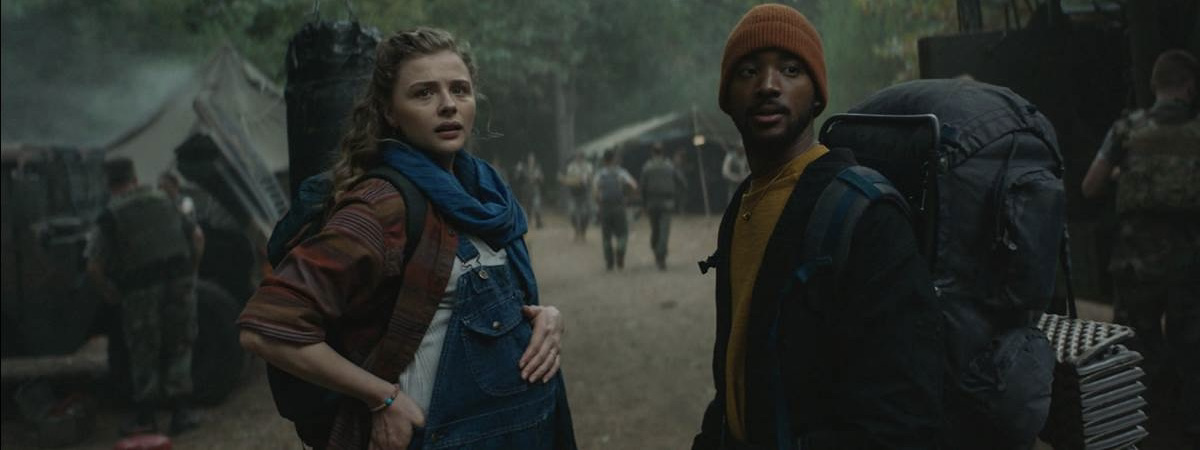
Chloë Grace Moretz stars as Georgia aka “G,” a young woman struggling to enjoy a party after the shock of finding out she’s pregnant. Her boyfriend Sam (Algee Smith) is saying all the right things, but she’s unsure about their future.

As A.I. servants dutifully attend to the party guests, G and a friend head to the bathroom for a private chat. But in an instant, a painful sonic blast drops the humans to their knees while rebooting the bots to a default “kill” setting.

Fast forward nine months, and Tomlin’s got a standard setup (survivors running toward a rumored safe haven while being pursued by a relentless menace) with the always convenient “savior” trump card (very pregnant woman).

Tomlin’s storytelling appears workmanlike but uninspired, often rehashing ideas and set pieces you’ll remember from Terminator, The Descent, A Quiet Place, and even The Empire Strikes Back. But when G and Sam get separated, and G meets up with a fellow survivor (Raúl Castillo) who once helped create the Android serving class, Tomlin finally gets around to rewarding all who stick it out for Act 3.

With foreshadowing that is effectively subtle and an affecting turn from Moretz that crafts G as both tortured and courageous, the film reveals its first twist in finely organic fashion while keeping you distracted from the true motive ahead. Once revealed, it arrives as a plea for global empathy that lands with some unexpected emotional pull.

The best science fiction tales succeed when their glimpses of the future help us reassess the present. Mother/Android gets there, eventually, with a measured pace that seems much more confident when the party’s over.

Hot For Teacher

Bad Luck Banging or Loony Porn

by George Wolf

If you think the word “porn” in the title is just for effect, the first few minutes of Bad Luck Banging or Loony Porn will be a hardcore surprise.

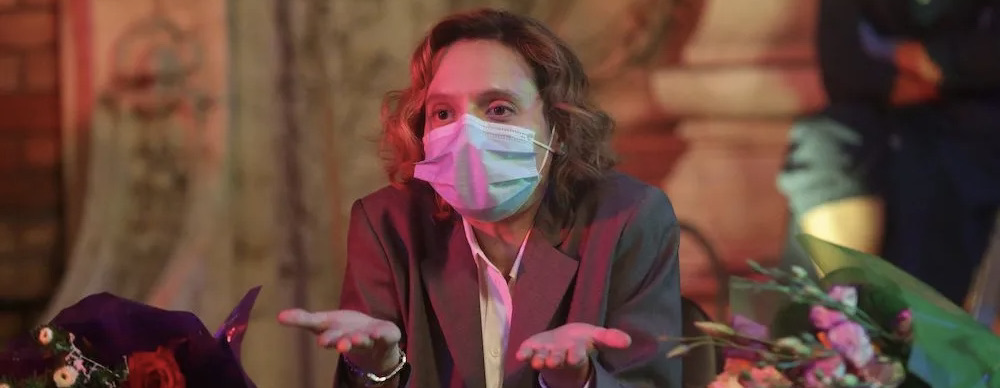
We first meet Romanian married couple Emi (Katia Pascariu) and Eugen (Stefan Steel) as they’re ignoring knocks on the bedroom door to record their spirited relations on home video. They’re consenting adults, so fair enough.

Well, maybe not so fair enough. Emi is a teacher at a prestigious school in Bucharest and when her frisky business footage winds up online, some parents loudly cry foul. But Emi is defiant, and as she’s subjected to a public hearing about her “sins,” writer/director Radu Jude makes it the centerpiece of a wildly audacious, funny and free-flowing diatribe against hypocrisy and the rise of meanness.

Jude divides the narrative into chapters, and doesn’t waste much time in Part 1 worrying about how the tape became public in the first place. Emi’s plight is more a situation than a story and for Jude, the point is the aftermath.

But before Emi faces her critics, Jude breaks away for “a short dictionary of anecdotes,” filling his second act with a series of definitions, archival reels, and meme-worthy examples of everything from racism to explicit oral sex. Subtle, it isn’t, which Jude readily acknowledges by following the word “metaphor” with a child’s game that essentially grabs toy fish from a barrel.

And by the time Emi’s hearing plays out as an Act 3 “sitcom” with multiple endings going off various rails, you’ll be amazed by how much this Romanian import reminds you of any number of heated arguments here at home. Subjects such as FOX News and George Soros are thrown around while the matter at hand quickly devolves into wild conspiracy theories and whataboutism where “the more idiotic the opinion, the more important it is.”

Jude has some strong views of his own, about modern life and how cinema should best reflect it. He doesn’t hold much back in Bad Luck Banging or Loony Porn, a film that leans into its absurdity for a boldly extreme and worthwhile declaration.

Pride Before the Fall

Nightmare Alley

by Hope Madden and George Wolf

Step right up, folks, and witness a master of the macabre! See Guillermo Del Toro twist the familiar tale of ambition run amuck! Gasp at the lurid, gorgeous, vulgar world of Nightmare Alley!

Bradley Cooper stars as Stan, good lookin’ kid on the skids taken in by Clem (Willem Dafoe, creepy as ever) to carny for a traveling show. Stan picks up some tricks from mentalist Zeena (Toni Collette) and her partner Pete (David Strathairn), then lures pretty Molly (Rooney Mara) to the big city to set up their own mind-reading racket.

Things are going swell, too, until Stan gets mixed up with psychiatrist Lillith (Cate Blanchett) whose patient list includes some high rollers with large bank accounts ripe for the picking.

That’s already one hell of an ensemble, but wait there’s more! Richard Jenkins, Ron Perlman, Mary Steenburgen and Tim Blake Nelson all add immeasurably to the sketchy world Stan orbits.

What Del Toro brings to the tale, besides a breathtaking cast and an elegantly gruesome aesthetic, is his gift for humanizing the unseemly. Edmund Goulding’s 1947 adaptation of William Lindsay Gresham’s novel (a solid slice of noir with Tyrone Power in the lead) dulled the edges of any seediness. Even Tod Browning’s Freaks – maligned as it was – found the unsettling carny life mainly wholesome.

Cinematographer Dan Lausten and composer Nathan Johnson create a delicious playground for Del Toro’s carnival to call home, one where even the most likable members of the family turn a blind eye to something genuinely sickening and cruel happening in their midst. The filmmaker plumbs that underlying horror, complicating Stan’s arc and allowing the film’s climax to leave a more lasting mark.

As usual, Del Toro wears his feelings proudly on his sleeve, with unmistakable but organic foreshadowing that ups the ante on the stakes involved. Anchored by another sterling performance from Cooper, Stan’s journey rises to biblical proportions. An actor whose gifts are often deceptively subtle, Cooper makes sure Stan’s pride always arrives with a layer of charming sympathy, even as it blinds him to the pitfalls ahead.

And Blanchett – shocker – is gloriously vampy. She swims elegantly through the sea of noir-ish light and framing that Del Toro bathes her in, as Lillith casts a spell that renders Stan’s helplessness a fait accompli.

Nearly every aspect of the screenplay (co-written by Del Toro and Kim Morgan) creates a richer level of storytelling than the ’47 original. The dialog is more sharply insightful, the finale more dangerously tense and the characters – especially Mara’s stronger-willed Molly – more fully developed. All contribute greatly toward the film rebounding from a slightly sluggish first act to render the two and a half hour running time unconcerning.

For Del Toro fans, the most surprising aspect of Nightmare Alley might be the lack of hopeful wonder that has driven most of his films. As the title suggests, this is a trip to the dark corners of the soul, where hope is in damn short supply.

So as much as this looks like a Del Toro film, it feels like a flex just from taking his vision to the sordid part of town. But what a vision it turns out to be – one of the year’s best and one of his best.

Don’t believe me? See it with your own eyes, step right up!

New York City Serenade

West Side Story

by George Wolf

This week on Twitter, director Edgar Wright reminded anyone doubting Steven Spielberg’s way around a musical number to revisit “Anything Goes” from Indiana Jones and the Temple of Doom. Okay, point taken, but West Side Story? That’s a big step up.

It is, and he makes it in stride.

Right from the opening minutes, Spielberg’s camera seamlessly ebbs and flows along with the street-roaming Sharks and Jets. Their threats of violence are more palpable this time, as Riff (Mike Faist, an award-worthy standout) and his New York boys want to settle their turf war with Bernardo (David Alvarez) and the Puerto Ricans once and for all.

At the dance that night, the first meeting between tragic lovers Tony (Ansel Elgort) and Maria (Rachel Zegler, a newcomer with an amazing voice who beat out thousands in open auditions) now happens under the gym bleachers, the first in a series of subtle and not-so-subtle updates that Spielberg and screenwriter Tony Kushner (Lincoln, Munich, Angels in America) employ to deepen the narrative impact.

“Dear Officer Krupke” seems more organic in the station house, “America” (led by an irresistible Ariana DeBose as Anita) is given more room to move across the west side city streets, while a department store full of mannequins depicting white suburban dreams proves an ironically joyful setting for Maria and her co-workers’ buoyant reading of “I Feel Pretty.”

And from one musical set-piece to the next, Spielberg’s touch is smoothy precise, starting wide to capture the breadth of Justin Peck’s homage to Jerome Robbins’s iconic choreography, zooming in for intimacy, and then above the dancers and rumblers for gorgeous aerials set with pristine light and shadow. Stellar efforts from cinematographer Janusz Kaminski and production designer Adam Stockhausen turn the everyday drab of hanging laundry and fabric remnants into an elegant playground for Spielberg’s camera eye.

In short, it looks freaking fantastic.

It sounds pretty great, too, even beyond the genius of Bernstein’s melodies and Sondheim’s lyrics. Because Spielberg couples his appropriate and welcome diversity of cast with a complete lack of subtitles, rightly putting the opposing cultures on equal narrative footing, and bringing more depth to the cries of “speak English!”

And as the gang fight turns deadly, all of the stakes are embraced more tightly. The offhand bigotry of Lt. Schrank (Corey Stoll, terrific as always) is more casually cruel, the identity conflict of Anybodys (Iris Menas) feels more defined, while Anita’s fateful visit to Doc’s store – now run by Valentina (expect another Oscar nod for the incredible Rita Moreno) – plainly calls it like it always was.

Then, as his (almost) parting shot, Spielberg unveils his grandest revision, a move nearly as bold and risky as the one Richard Attenborough face-planted with in 1985’s A Chorus Line.

By altering the context of one of the most emotional songs, Attenborough showed he didn’t know, or didn’t care, about what the show was trying to say. Spielberg, though, gently adds a perspective that makes Tony and Maria’s quest soar with a renewed, more universal vitality.

Just like most everything else in this West Side Story.