Tag Archives: movie reviews

And the Tissue Goes To

Spoiler Alert

by Hope Madden

In 2017, Michael Showalter directed the best romantic comedy of the modern age, The Big Sick. So, even though the majority of his filmography feels like a near miss – The Eyes of Tammy Faye, The Lovebirds, Hello My Name Is Doris – whatever he delivers, I want to open. Even an avowed tear-jerker, even the same week I see The Whale. I loved The Big Sick so much, I gladly signed up for two public displays of bawling.

And yet…

Spoiler Alert is Michael Ausiello’s (Jim Parsons) true tale of romance, loss and sitcom love. A TV Guide writer, Michael tended to look back on his tragic childhood as if it were an 80s sitcom, replete with life lessons and a laugh track.

Showalter stages these moments like they are right out of Gimme a Break or any of that era’s centrally located couch-and-hijinks programs. They stand out, not because they’re clever or funny, but because they don’t fit in a film that is otherwise a tender if traditionally structured tragedy.

The socially awkward Ausiello meets and quickly falls for gorgeous, fun-loving Kit Cowan (Ben Aldridge). This ushers us into the sweet and odd moments (Ausiello has an extreme Smurf collection) that mark the couple’s development.

Showalter works from Dan Savage and David Marshall Grant’s adaptation of Ausiello’s book. The writers have primarily done TV – a medium clearly suited to Parsons. And here’s where the film really stumbles. Spoiler Alert is, of course, not a TV show and only feels like a TV show on occasions that pull you out of an emotional moment. Rather than creating a narrative thread or even an interesting gimmick, the TV angle distracts – sometimes quite frustratingly – from what otherwise feels like a very honest and necessary look at love.

Showalter alum and all-American gem Sally Field brings needed authenticity to the film, and Aldridge often excels as the hot Oscar to Parsons’s Felix. Plus, the sometimes frank sexuality is more than welcome.

But none of it fits. The framework – Ausiello delivering his life story as if he’s recounting a favorite TV show – is distracting at best. It robs the film of its passion and guarantees the feeling of inauthenticity. It has its moments, but it never delivers any honest laughter or tears.

Bulletproof

2nd Chance

by Tori Hanes

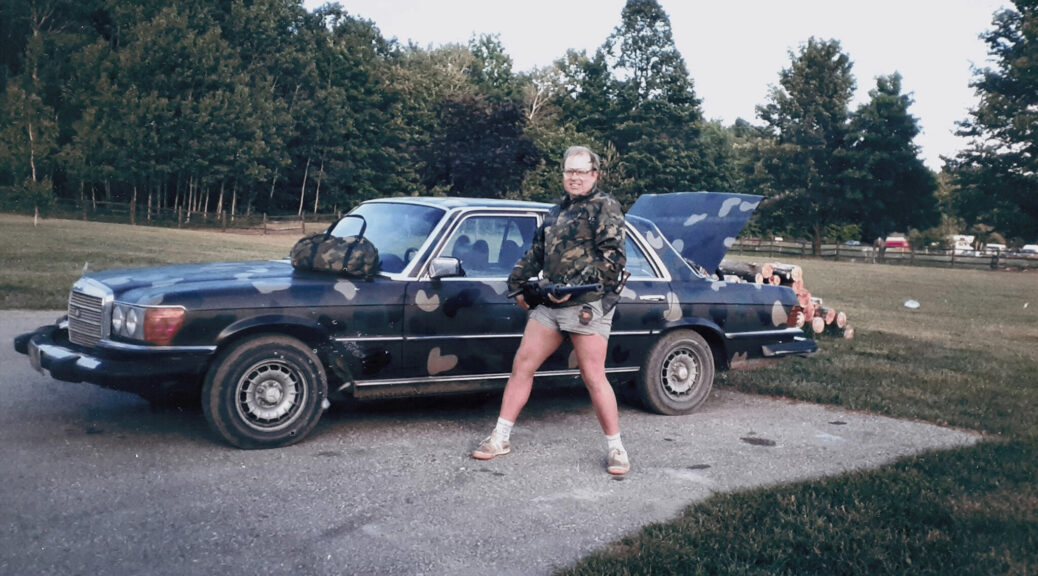
Impurity, hate, forgiveness, rebirth. The repeated image of a man shooting himself in the gut may not seem like the ideal piece of media to use to examine these heavy themes, but 2nd Chance by Ramin Bahrani proves time and again that face value has no place in its 90 minutes.

2nd Chance delves into brazen shock value. At first, this feels cheap and unwarranted. The image of a man repeatedly shooting himself in his bulletproof vest, grimacing, then firing at undeserving coke bottles leaves a bitter taste on the tongue. 

It becomes apparent, however, that this is not shock for shock value. Instead, this is the jaw-dropping life that Richard Davis has led for the past 70 or so years. If anything, Bahrani’s mission is to make Davis’s massive eccentricity somewhat digestible and justifiable.

It doesn’t take much to revel in Davis’s contradictions: his passionate drive toward realizing the American dream makes him familiar, yet his twisted morals pose him as alien.

The structure we’ve come to know and expect with modern-day documentaries is, in a word, boring. 2nd Chance does little to stray from the usual twists and calculated catharsis of others in its genre. Where it differs and excels is in the conscious effort to avoid making the filmmaker an important character. While many documentarians crave that command, inserting themselves into the narrative, Bahrani takes a diligent backseat. He acts as a firekeeper, poking the embers to evoke flames while distancing himself from the heat. 

The film portrays Davis’s flip from eccentric business mogul to undoubtedly narcissistic sociopath. However, Bahrani gracefully captures Davis authentically in his moments of shortcoming. This light touch becomes especially gratifying as the largely unredeemable Davis himself twists that sympathy toward hatred. 

Among the twists and turns, Bahrani brings forth some of the most genuine moments of human catharsis perhaps ever shown on screen. The contradiction these moments deliver takes the film from intriguing to masterful.

You may not expect the inventor of bulletproof vests to deepen your connection to humanity. 2nd Chance delights in flipping your expectations and pulling the trigger, whether you’re protected or not.

Please Stand Up

I Am DB Cooper

by Rachel Willis

Writer/director T.J. Regan’s part-documentary, part-scripted drama examines the account of a man who claims to be infamous plane hijacker D.B. Cooper. Co-written with Sharmila Sahni, I Am DB Cooper, is another entry into the mystery surrounding the November 24, 1971 hijacking of Flight 305.

The film introduces Rodney Bonnifield, a career criminal who fills in details of the hijacking that supposedly only the perpetrator would know. Outfitted with a parachute, and carrying $200,000 dollars of ransom money, Cooper jumped into the night.

There is speculation that Cooper didn’t survive the jump. But there are those who don’t accept this, and Bonnifield makes the case that he is Cooper.

Enhancing the story with a scripted drama, Regan treats the audience to a visual retelling rather than limiting the story to interviews. While the film is composed primarily of documentary footage, the interspersed drama adds tension.

Ryan Cory plays Cooper of the 1970s. His charismatic and slightly sinister portrayal lends the film needed gravitas.

The parts of the film that don’t quite work are the actor-portrayed interviews with Bonnifield’s friends and family. It’s unclear if these are the words of real people or if they’re scripted pieces of Bonnifield’s story. This lack of clarity leads to questions about authenticity.

The dramatized moments add humor to a situation that’s not really funny at all. This is clearly the intention, helping to lighten the overall mood.

News footage from the time of the hijacking, including when a young boy uncovered $5,800 dollars of the stolen $200,000, adds depth to a history that contemporary viewers might not know.

However, sections of Regan’s film don’t quite fit with the scripted drama. The film takes Bonnefield beyond the hijacking into a relationship with singer Rita Coolidge (played here by Rainee Blake). If this addition is meant to cast doubt on Bonnifield’s story it isn’t really necessary. There are other reasons to wonder if the story is true. Talking with the actual singer/songwriter, though, would have been a fascinating and telling choice.

But the crux of Bonnifield’s story is that he claims he knows where the money is buried. Raising new questions and bringing a quaintness to the story of DB Cooper, Regan’s docudrama adds a new side to the original question: Who is DB Cooper?

Trope-ic Thunder

Black Warrant

by Daniel Baldwin

What do you get when you make an action film that combines Tom Berenger, Cam Gigandet, the director of The Gate, and a story by actor Michael Pare? You get an undercooked terrorism-themed actioner. You get Black Warrant.

The story follows two leads: Nick (Berenger) and Anthony (Gigandet). Nick is a long-since-retired CIA assassin that’s been pulled back into the field to take out three high-profile targets in Tijuana, Mexico. Anthony is a seasoned DEA agent following a trail of breadcrumbs toward the same sinister folks in the wake of a bust gone bad.

If you’re thinking the two are eventually going to come together to take out their mutual enemies, you’re right. If you’re thinking that the film also holds a really big & silly twist, you’re also right. This is bog-standard, trope-filled stuff that is content to never rock the boat throughout on a narrative level. You’ve seen this before and you’ve seen it done better.

The good news is that, even after 20 years of working in DTV action, Tom Berenger still isn’t phoning it in. He gives Nick doses of humanity that you don’t often see in films of this type. He manages to be charming enough in the role that one doesn’t mind as much that he’s clearly too old to be playing it. One would assume that an earlier version of the project was meant to star the aforementioned Pare instead. Given that he’s a decade younger than Berenger, he might have been a better fit on an action level, although perhaps not a performance one.

Gigandet is equally engaging as Anthony, giving the film another performance that it doesn’t really deserve. The movie also gets an extra bit of swagger in the form of a cameoing Jeff Fahey. The cherry on top, however, is Helena Haro as female lead Mina. A chef pulled into the middle of all of this insanity, she is the shining beacon of light at the center of this otherwise lackluster affair. Haro is beaming with excitement and charm in almost every scene. She’s a breath of fresh air and her chemistry with Gigandet somehow manages to make their poorly-sketched romance work.

If it weren’t for the cast, the writing and pacing issues would utterly sink this. Black Warrant may not be a terrible film, but everyone involved has done better work elsewhere. DTV action die hards might find things to like, but all others should steer clear.

https://www.youtube.com/watch?v=Wdb_jdHWT8g

Screening Room: Violent Night, Eternal Daughter, The Inspection, A Wounded Fawn, Salvatore & More

Lonely in Your Nightmare

The Harbinger

by Hope Madden

What Andy Mitton’s The Harbinger does well is remind you how desperate the early days of lockdown were. How scary. How lonely. This was especially true for anyone quarantining alone. It must have felt like the world would just go on without you. You’d be forgotten entirely.

Mavis (Emily Davis) is alone, and she is not taking to lockdown well. Her dreams are terrifying and almost unending. When Mavis falls asleep, she doesn’t wake up, sometimes for days, trapped the entire time in a horrifying nightmare. Her friend Mo (Gabby Beans) leaves the comfort and relative safety of the home she shares with her father and brother because Mavis has no one else to call.

Mitton’s film combines collective trauma with existential dread, mirroring the kind of terror that caves in on you when you don’t work, don’t leave home, and fear everything: surfaces, people, the air in your building. It’s a true nightmare, and one you can’t wake up from.

The isolation, the stench of death, it all inspired any number of horror films. Mitton animates that collective ordeal as effectively as anyone working in the genre. He marries the graphic reality of the pandemic with an internal descent, reflecting more than a society’s fear of death. What he sees is the way lockdown, hivemind, misinformation and isolation made people forget who they were.

Davis delivers a solid turn as one wearied to the point of death by quarantine, but it’s Beans’s resilient, naturalistic performance that grounds the unreality in uneasy truth. Mitton’s script sometimes relies on tropes that feel too obvious for his unusual story, and in the end, it’s an overreliance on genre mechanisms that keeps the film from really cutting free from expectations and saying something truly fresh.

But there’s no question he hits a nerve because very few changes need to be made to the reality of 2020 for it to be a nerve-wracking horror show.

Mirror Mirror

The Eternal Daughter

by Hope Madden

Joanna Hogg makes movies about making movies about her life. This should not be confused with making movies about her life, that would be too straightforward. What she captures is the act of creating something from the strands of her experience. But somehow, in her hands, this added layer of artifice allows for increased intimacy, or at least introspection.

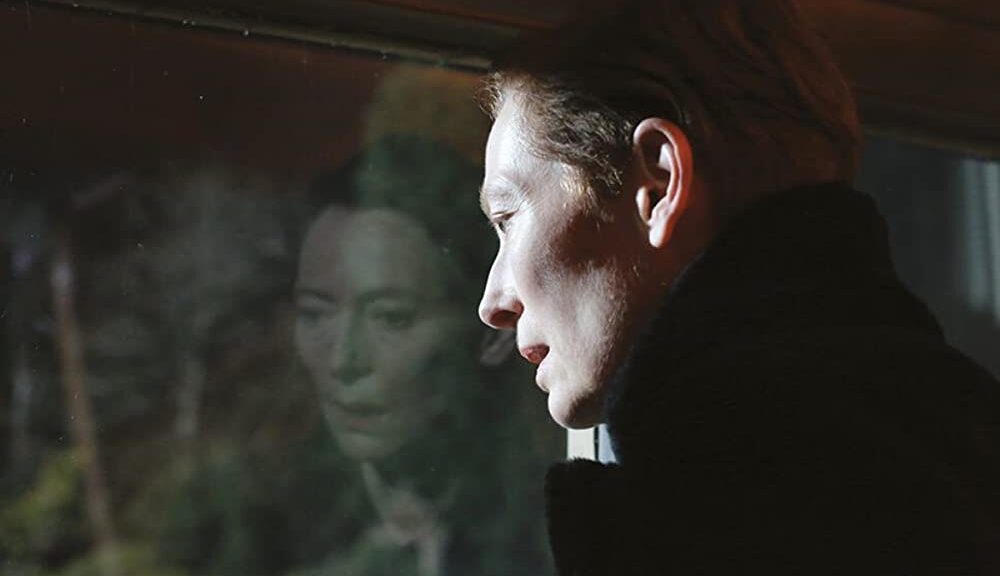
Hogg’s latest follows a middle-aged filmmaker named Julie (Tilda Swinton) who, with her mother (Swinton again), revisits a grand old English manor that was once a family estate but is now a lovely if mysteriously empty inn.

Hogg draws attention to The Eternal Daughter’s movie-ness from the opening shot of headlights in rolling fog, a score reminiscent of classic British hillside horror drawing attention to itself. Here are the genre tropes, Hogg seems to say. This will be a ghost story.

The Eternal Daughter reunites the filmmaker and Swinton, who played mother opposite her own daughter, Honor Swinton Byrne, in Hogg’s The Souvenir, parts 1 and 2. Byrne’s character, a filmmaker named Julie, was a clear stand-in for Hogg. An actual mother and daughter played mother and daughter, although the daughter was simultaneously playing the film’s director as a budding film director. That’s a lot of overlapping whatnot. But it worked, partly because Julie’s relationship with her mother – perhaps reflecting Byrne’s relationship with Swinton – brimmed with tenderness.

In The Eternal Daughter, Swinton plays the Hogg stand-in as she reprises her role as Julie’s now aged mother. It sounds like a lot to keep track of, but there’s really no need. The film boils down to an opportunity to watch Tilda Swinton play multiple roles, which – as Guadagnino’s 2018 Suspiria proved – is always a good idea. Here she delivers two distinct characters, each spilling with love and bristling with disappointment for the other.

All of it sounds like a gimmick: Swinton playing two roles, Swinton playing the director, the director working out issues with her own mother in a film about a filmmaker working out issues with her mother. But none of it feels gimmicky. Rather, it all creates the space for Hogg to rework facts in order to tell difficult, universal truths.

The film’s deliberate pace and overtly reflective nature will irritate impatient moviegoers, and its plot turns are sure to disappoint true genre fans. But what Hogg’s crafted is a film that haunts, whether the specter is supernatural or not.

Semper Fi

The Inspection

by Hope Madden

We’ve seen it so many times, often very effectively. A sloppy recruit, someone with nothing to lose but himself, does just that during boot camp. Maybe it ends in ambivalence and horror (Full Metal Jacket), maybe it ends in heroism and an unwitting invasion of Czechoslovakia (Stripes), maybe it ends in romance (An Officer and a Gentleman).

While the story that writer/director Elegance Bratton (Pier Kids) tells with The Inspection follows those familiar beats, it’s messier, more frustrating, more honest and more human than all the others together. As it should be, since it is his own story.

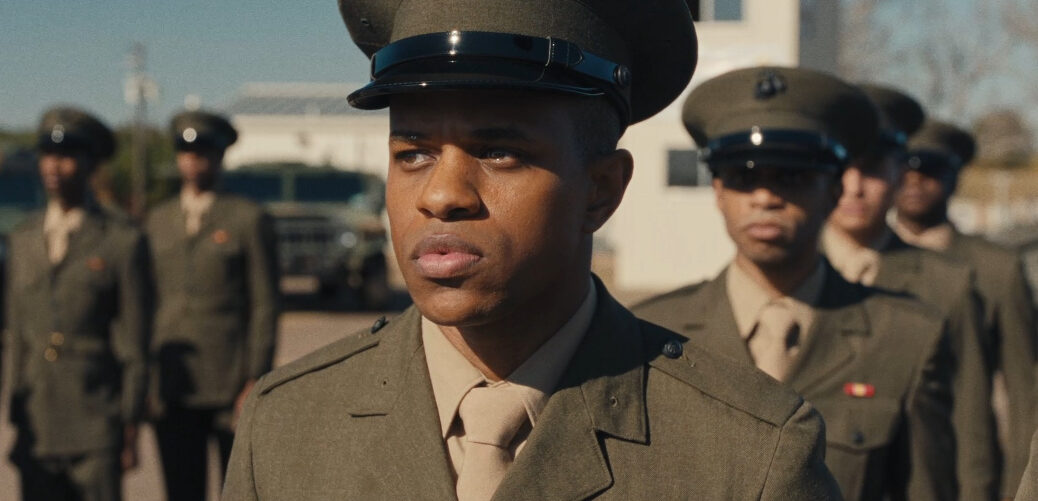
Jeremy Pope delivers an astonishing, raw performance as Ellis French, a 25-year-old homeless gay Black man. His mother Inez (Gabrielle Union in the finest performance of her career) cast him out at 16. We meet Ellis on the day he enlists in the Marines.

And you thought Bill Murray was going to have a tough time.

While the steps in the screenplay are familiar – the recruit has much to escape in his day-to-day; he joins and gets to know a group of men of different backgrounds, each of whom will be tested alongside him; he comes out the other side a different man. But Ellis French’s stakes are higher, his difficulties are more dangerous, and the lessons learned along the way probably affect those around him more profoundly than they affect him.

Bratton also pulls away from audience expectation by avoiding the cliché of one-dimensional recruit characters. There’s good and bad, heroism and cowardice, in everyone on the screen. In this way Bratton allows a certain moral ambiguity to seep into the film. That gray area becomes the space for forgiveness to take shape.

What Bratton brings to this well-worn story is an idea perfectly realized by Pope. The Inspection is a showcase for the idea that resilience comes from a balance of strength and forgiveness. French finds ways to forgive what to most would be unforgivable. This is how he perseveres. It’s a beautiful, difficult lesson to learn, even for a viewer. But thanks to that resilience, we have this exceptional film.

Help

Nanny

by Hope Madden

Senegalese transplant Aisha (a transfixing Anna Diop) cares for a little girl whose mother works too much and whose father is often away. Aisha’s care is tinged with her own deep well of sadness and guilt at handing the care of her own son Lamine over to a friend back in Senegal. But this job will allow her to finally pay for the flight to bring Lamine to NYC, and just in time for his birthday.

Writer/director Nikyatu Jusu’s feature debut employs fantastical elements, but her Nanny is never an outright horror film. Aisha’s visions, though thoroughly spooky and potentially dangerous, speak to the fear, powerlessness and profound sadness facing a woman forever making impossible choices, regardless of the country.

Jusu gives these folklore-rooted images purpose as Aisha awakens to the real nightmare that the American Dream so often becomes. As self-pitying employer Amy (Michelle Monaghan) works long hours to compete in a man’s world, she shorts Aisya’s pay while taking advantage of her time. Reuniting with Lamine feels less and less likely. Helplessness, hopelessness and anger grow.

Jusu’s lighthanded with true horror, a choice that benefits the film because its honesty is horror enough. Diop conveys more with a glance or a sigh than any scaly monster or hairy spider could ever display. Her command of this character’s melancholy and rage is extraordinary.

The addition of Leslie Uggams as Aisha’s love interest Malik’s (Singua Walls) grandmother introduces exposition and explanations that feel slightly forced, particularly compared to the nuance defining the rest of the film. But it’s a slight fault in an otherwise beautiful, devastating movie.

Like Jenna Cato Bass’s Good Madam, Nanny identifies the uneasy social structure that guarantees inequity, and all the accompanying horror it produces. Jusu’s tale sidesteps the true genre punch, though, which may leave some viewers unsatisfied. But, even for its diabolical sirens and eight-legged tricksters, it’s Nanny’s naked honesty that makes it so scary.

Friends to the End

Amigo

by Hope Madden

Friends are the family we choose.

Yeah, that’s all well and good until one of them turns into Annie Wilkes from Misery.

But it looks like Javi (Javier Botet) has chosen well in David (David Pareja). Director Óscar Martín’s film Amigo, co-written with both Botet and Pareja, opens on David carrying Javi from his car, across a snowy lawn, into an old farmhouse, and to a comfortable bed. That’s not all. David will sit up all night in the chair next to Javi’s bed, just in case his friend-in-need needs anything. That’s devotion.

As the next 80 minutes crawl past, we’re alone with the pair in their isolation. They’re far from town. Snow and ice have made the streets impassable. David’s low on his own medication, and that scar on his forehead marks the throbbing pain he can’t control without it. Plus, shouldn’t Javi be in a hospital?

Slowly but surely, Martín’s film descends with its characters into a nightmare, kind of Whatever Happened to Baby Jane without the egos or lipstick.

To develop palpable tension, Martín takes full advantage of Javier Botet’s physical presence. The actor’s made a name for himself playing silent, nightmare images in REC (Nina Medeiros), Mama (Mama), The Conjuring 2 (Crooked Man), Insidious: The Last Key (Key Face), Slender Man (Slender Man) and more. While he put his physical performance to use doing creature work for Guillermo del Toro, Álex de la Iglesia and other filmmakers, Amigo changes that perspective. Botet’s long, gaunt frame is webbed with the scars of an auto accident, his gangle of bones a macabre reminder of his vulnerability.

Botet’s performance, much of it nearly silent, aches with rage, melancholy and helplessness. Javi’s quiet, burning anger could simply be the natural result of his situation. And his best friend David counters the hostility with buoyant, devoted energy and an unflagging smile.

Pareja’s depiction of David’s gradual decline unsettles. Martín rushes nothing, and though he leaves breadcrumbs, you’ll never know for sure where he’s leading you. The result is a somber, unnervingly realistic punch to the gut and a reminder that friendship does not have to be forever.