Tag Archives: Matt Weiner

Through a Tent Darkly

Koko-di Koko-da

by Matt Weiner

What about Groundhog Day, but with unrelenting psychological dread? That’s the premise of Johannes Nyholm’s horror fable Koko-di, Koko-da, and it’s a testament to writer/director Nyholm that the film’s excruciating time loop manages to go from torturous to therapeutic.

After a family vacation takes a shocking turn, Tobias (Leif Edlund) and Elin (Ylva Gallon) lose themselves in their own private grief, their marriage one submerged argument away from total annihilation. What better time for a camping trip in the foreboding Swedish forests to get that old magic back?

Their unresolved trauma starts to literally stalk the couple in the shape of three carnivalesque figures, with each nightmare encounter ending the same way: some gruesome death, and then Tobias wakes up to repeat the loop all over again.

The horror of Koko-di Koko-da rarely gets gory. Tobias and Elin continually suffer extreme violence and torture, but it’s all (thankfully) implied. Instead, what’s so unnerving about the film is the inescapable dream logic that suffuses their fateful loop: no matter how hard Tobias tries or how fast he runs, it’s only a matter of time before the first strains of the fateful nursery rhyme on which the title is based start up, and the couple’s shared torture begins anew.

The film’s main down side is that we aren’t allowed to see or know much beyond the confines of this inexorable—and unrelenting—loop. And once the metaphor is clear, there’s little else to do besides feel like an eavesdropper in a long overdue couples therapy session. (An unconventional one, sure, with more murder and animal attacks than the APA likely recommends, but who knows what they get up to in Sweden.)

Still, it’s impossible not to feel for the grieving pair. Anyone deserves some kind of catharsis after enduring such tragedy, and both Edlund and Gallon manage to make it feel earned, even with their thinly detailed characters.

Koko-di Koko-da is not a pleasant film to watch, but it is often a beautiful one. And it lays bare the truth that there’s no escaping misery in life—that the only way to break the cycle is to confront it, pain and all.

Shipping Up to Sligo

Pixie

by Matt Weiner

There was a time in the late 90s when you couldn’t go six months without a quippy crime comedy that was obviously pitched as “Pulp Fiction, but this time you get to be the studio making a boatload of money.” Some of these, like Doug Liman’s Go, were quite good. Others, like The Boondock Saints, belong in the Hague. Most of them, though, were simply reliable—reliably watchable, and equally forgettable.

Thankfully, the new action comedy Pixie takes as many cues from its distinct local sensibilities as it does from forebears like Tarantino and especially Guy Ritchie, the capo di tutti capi of British gangster cinema.

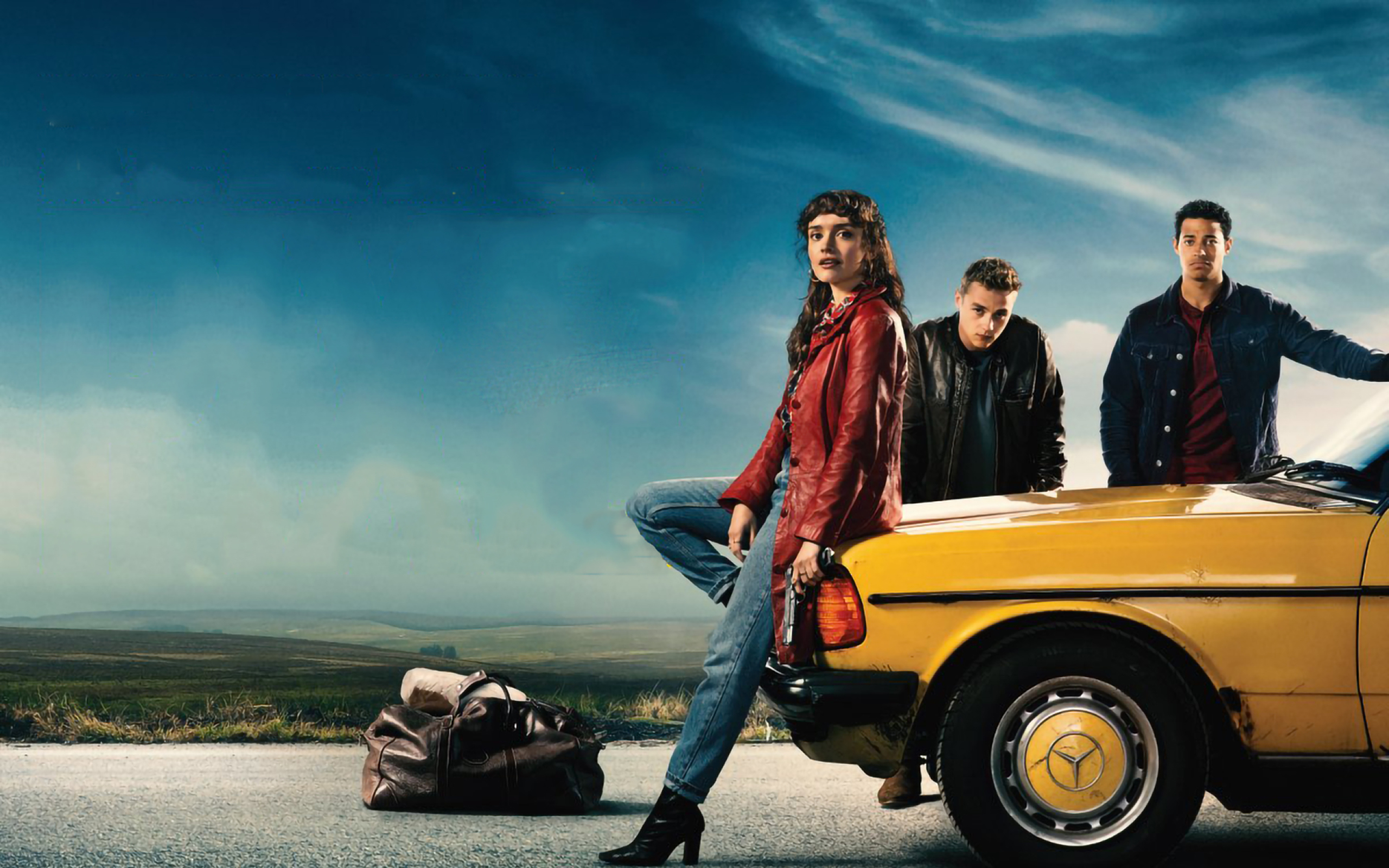
It all starts, naturally, with a drug deal gone bad—and things just get worse from there. Pixie has all the convenient plot twists and beyond belief interconnectedness you’d expect in this sort of crime thriller. But it also has heart, anchored by Olivia Cooke (Ready Player One) as the title moll.

A nonstop series of crosses, double crosses and double-double crosses take Pixie and her inept partners in crime on a scenic if slightly murderous tour through the West of Ireland as they attempt to make their big score without getting snared by misfit hitmen, killer priests and country gangsters hot on their heels. This includes Pixie’s own family (with the great Colm Meaney as patriarch, who seems to be thoroughly enjoying this “teddy bear who might also kill you” stage of his career).

For all the contrivances of the genre, director Barnaby Thompson, working off a script by his son Preston Thompson, imbues the film with an archness that keeps the action entertaining even at its most improbable. So much of this falls to Cooke, who switches effortlessly from femme fatale to agent of pure chaos, a beguiling anti-heroine who has figured out how to entice others to clean up the carnage she leaves in her wake.

And if the bawdy jokes, nun-related gunplay and jaw-dropping vistas still aren’t enough, perhaps Alec Baldwin chewing through his scenes and an Irish accent with equal aplomb will seal the deal.

Double Trouble

The Mimic

by Matt Weiner

You can’t say Thomas F. Mazziotti didn’t warn you: his new comedy The Mimic starts with a shaggy dog, and delivers on the format and then some.

Thomas Sadoski stars as the Narrator, a screenwriter who finds himself being shadowed by an overly agreeable new neighbor—who, by the way, might be a violent sociopath. The neighbor goes only by the Kid, and actor Jake Robinson plays up the “is he or isn’t he” thing to delightful effect by holding the same unnerving rictus for the entire movie.

As the two men become more and more wound up in each other’s lives, the Narrator starts a determined quest to find out what might be lurking below the Kid’s clingy surface. But not before turning the Kid into part frenemy, part sounding board. It becomes clear that the Kid isn’t the only one with emotional issues in need of exorcising.

Where the film’s breezy comedy takes flight is in the brief encounters the Narrator has along the way. These interactions bring in everyone from a newspaper editor (Jessica Walter) to an unlucky driver (Austin Pendleton) to M. Emmet Walsh in some always welcome scene stealing.

If anything, the rotating guest cast cuts against the film. It’s a minor tragedy to get the likes of Walter, Walsh and Gina Gershon, and then barely get to see them work their comic chops before the story reverts back to the claustrophobic tug-of-war between the Narrator and the Kid.

For The Mimic to succeed as a comedy, there’s a lot riding on the dynamic between Sadoski and Robinson. Mazziotti keeps their philosophical banter both light and fast enough to make us almost forget those fleeting moments when Robinson lets some of the menace come out from behind his smile.

The two actors play well off one another, but it’s hard to escape the feeling that you’re trapped with them as much as they are with each other. They’ve mastered the cadence of a classic comedy couple, but their meandering dialogue varies wildly in just how much substance backs up their conversations from scene to scene.

That might be the point, but a little goes a long way. The cast manages to pull off some genuinely funny moments, but when you peel away all the winking direction and screwball zingers it’s hard to shake the feeling that, as comedy, The Mimic gets by on doing an off-kilter impression of the real thing.

The Last Waltz

1982

by Matt Weiner

Wars are complicated. War movies? Not so much, at least not in this country. How, then, to tell the story of an invasion unfolding in the middle of a decades-long civil war?

In 1982, writer and director Oualid Mouaness narrows the lens in his feature debut to focus on the smaller picture. Set at the onset of Israel’s June 1982 invasion in Lebanon during the country’s ongoing civil war, Mouaness’s camera almost never leaves the fenced-in confines of one Beirut school.

Encroaching tanks and fighter jets begin the day as distant updates on the radios, with concerned teachers and school staff furtively trying to stay updated without alarming the children. But as the invasion progresses, it becomes impossible for anyone to keep the reality of war at bay.

How this plays out in a diverse country already torn apart by years of fighting becomes the subject of two love stories. For Yasmine (Nadine Labaki), concerns about her militia member brother outweigh keeping her relationship going with Joseph (Rodrigue Sleiman), a fellow teacher with opposing political views.

Their complicated allegiances serve as a stand-in for the rapidly shifting political landscape in the country, and their uncertainties—toward each other, and the future—are played to great effect by both Labaki and Sleiman.

The film’s other main star-crossed love story is a much lighter one, as 11-year-old Wissam attempts to woo a classmate in the face of challenges both typical—pre-teen embarrassment—and extraordinary, like the one checkpoint to her house being closed.

The split between the faculty and the students is effective, to a point. Although as the idyllic bubble of the students clashes more and more with the war just beyond the school walls, the intensity given to Wissam’s courtship feels increasingly at odds with the stakes.

Some of that seems by design. Mouaness hints at the greater sectarian strife tearing the country apart, but there’s only so much metaphorical weight you can load onto the school’s metaphorical stand-ins. The film does such an economical job sketching the complexities of the war that any single, tidy resolution would do the message a disservice.

In the meantime, we are left feeling much like Wissam, aware for the first time of the complicated forces that determine our lives. And aware too of just how powerless we are to alter their direction.

Leave No Trace

Residue

by Matt Weiner

Residue begins as a wry bayonetting of gentrification, but the film slowly unfolds—languidly, and then with a dizzying crescendo—into one of the most powerful films to come out this year.

Director Merawi Gerima’s confident debut traces summertime in a fast-changing D.C. neighborhood, where the new white arrivals don’t so much coexist with the area’s long-time black residents as much as they pursue parallel existences. For one group, the area is the latest in affordable rentals.

But for Jay (Obi Nwachukwu), Q Street is home. Or was home, before Jay moved to California. Now grown and an aspiring filmmaker, he decides to visit his parents and childhood friends to collect material and, in his words, “give a voice to the voiceless.” (Gerima himself is a D.C. native who moved to California for film school.)

Not all of Jay’s friends welcome him back with open arms though. As Jay reconnects with friends— some still in the same house, others in prison or dead—he is reminded, forcefully, that the white speculators buying up investment properties and yuppies blissfully smoking pot without fear of long prison sentences (or worse) aren’t the only ones taking advantage of Q Street.

Gerima’s critiques are unsparing, but his direction is achingly beautiful. It’s a mournful sort of beauty—Jay’s washed out recollections of summer in the District, where the sounds of children yelling, fireworks and go-go beats take on a physical texture, only drive home how rootless everything is in the present.

As Jay lapses in and out of these reveries and confronts what has replaced them, elegy turns to horror. There’s a creeping dread with every new encounter, and we’ve seen enough videos on social media this year alone to know that there can be as much danger in Jay’s exchanges with police as with a dude named Josh.

When learning of Jay’s motivations, one of his old friends simply replies, “Who’s voiceless?” Gerima lets Residue speak for itself, an essential statement not just on everything happening right now but on film and art.

A Shot in the Dark

Tesla

by Matt Weiner

Nikola Tesla is having a moment. Hot on the heels of 2019’s The Current War comes Tesla, another take on the inventor from writer and director Michael Almereyda. And while both treatments are anchored around Tesla’s rivalry with Thomas Edison over electrifying the country, Tesla is so far apart in style and tone that the subject could be a completely different person.

Almereyda has already shown that he can handle big sci-fi themes on a small budget. His adaptation of Marjorie Prime was moving and challenging. Tesla also has the rhythm of a stage play, one where characters and dialogue take precedence over strict history.

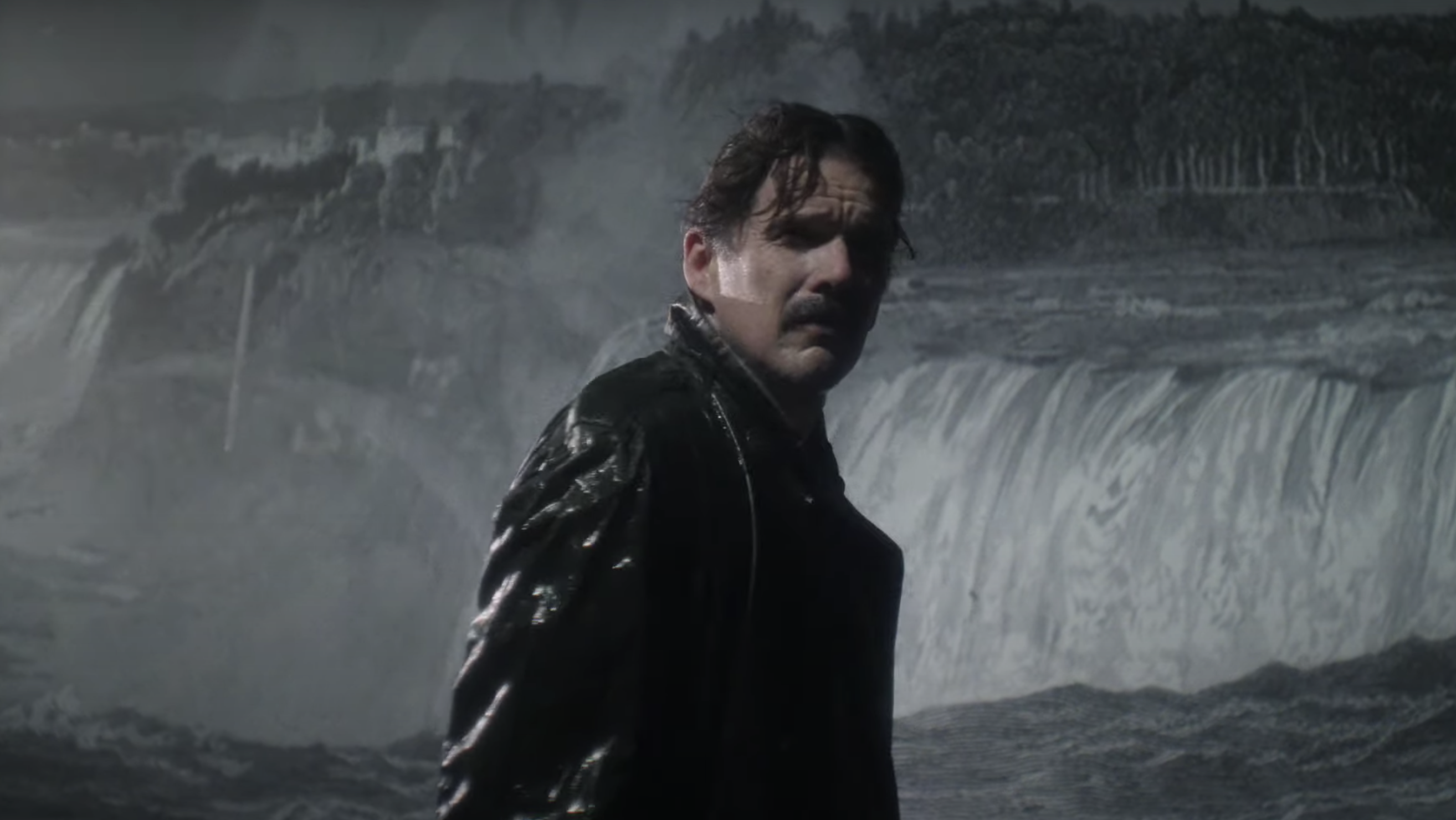
This is still a biopic though. The story begins as Tesla (Ethan Hawke) splits from Thomas Edison (Kyle MacLachlan), and follows through his partnership with George Westinghouse (Jim Gaffigan) and his ultimate victory in the war of the currents.

But as Tesla’s personal and professional lives unravel, Almereyda takes his film off the rails as well. From historical counterfactuals and modern-day interruptions to an arresting musical number, Tesla the movie surrenders all control over its title character—and does so gleefully. These big swings don’t always connect, but the attempts are always compelling.

In Almereyda’s version, Tesla is a cipher. Hawke trades in his usual charm for a portrayal that blends tortured genius and mad scientist, and despite his quiet demeanor he fills every scene with an intensely heavy presence.

It’s up to the supporting cast, especially MacLachlan’s flighty yet imperious Edison, to draw out whatever they can from the inscrutable Tesla. It’s an unusual effect for a biopic, but it works. Tesla is the rare adaptation that seems determined to obscure its subject rather than illuminate him.

This Tesla is a man not so much ahead of his time but completely outside of it. Almereyda suggests that the enduring appeal of Tesla can’t be neatly captured in the war of the currents against Edison. There’s Tesla the pioneering genius who lit up the Chicago World’s Fair, and there’s Tesla who died penniless in a hotel room dreaming of death rays. And somewhere in between, there’s a man who raises the curiosity of everyone he meets.

But in this telling, the closest we can come to unsolvable mysteries are a reflection here, a spark there. This Tesla is a brief light guiding us toward some greater understanding, one that vanishes just as quickly.

No Rest for the Weary

The Fight

by Matt Weiner

No disrespect to taut legal thrillers, but after watching The Fight it’s safe to say nothing will stack up to the real thing during the Trump administration. What began outside a New York court just days after the inauguration in 2017—the night the ACLU scored an early victory against the administration’s first version of what would become the “Muslim ban”—inspired documentary filmmaker Elyse Steinberg (Weiner) to follow the legal organization’s urgent and frequent races against the clock to challenge the administration’s advances on just about every key issue the group defends.

Surprisingly, given the marquee cases the group has been involved in over the years, this is the first time they allowed access inside their offices. Much less surprisingly, that turned out to be a smart move under this administration: the filmmakers (Steinberg, along with co-directors Eli Despres and Josh Kriegman) have no shortage of legal battles to follow.

Steinberg knows how to humanize her subjects. (She made Anthony Weiner almost sympathetic, after all.) The ACLU lawyers followed in the film are big names in their practice area, and recognizable faces to cable news watchers or the kind of person who has a favorite vice president. But it’s the less guarded moments that reveal the full gravity of this work: Dale Ho flubbing the lines in front of a mirror that he’ll later deliver to the Supreme Court, or Brigitte Amiri celebrating a major win with “train wine” on the Northeast Corridor. It’s equal parts grim and joyful.

To both the filmmakers’ and the ACLU’s credit, there’s acknowledgement that the headline wins are tempered by the reality of the American legal system. Even the wins might only be temporary, as the administration endlessly finds ways to retool the laws in ways that pass muster with a sympathetic Supreme Court.

In these moments, the film’s main players seem to tiptoe up to a line of nihilism. But only just up to that line. We hear lawyers sigh that arguing the merits of a case doesn’t always matter in front of the nation’s highest court. And then there’s the criticism from those within the organization itself over their role in Charlottesville, and what free speech and democracy look like in this era.

Ultimately though, this cri de coeur isn’t looking to dismantle the entire system… yet. (Let’s see how disheveled they look if there’s another four years of this.) The film’s subjects refuse to jettison small-d democratic values, or a belief in the foundation on which these laws are built. It’s inspiring, in the way that Charlie Brown thinking he’s going to get that football this time is also a testament to the human spirit or something.

The filmmakers are aware of this contradiction too, though. It’s why the most powerful moments don’t take place in august courtrooms like the generic biopics these cases are bound to spawn some day. Instead, it’s with the individual people at the heart of the cases—the lawyers, eschewing private practice to go from airport to airport forever in search of a phone charger, but especially the anonymous people who found themselves in life or death situations with their fate hanging on the decision of a handful of judges.

For one of these cases, “Ms. L” v. ICE, the camera crew is present when the asylum-seeking mother reunites with her daughter after being separated by the government. She sheds tears of joy, but also lets out a shocking, endless wail. These cases might have good endings, but not happy ones.

Belle of the Ball

The Truth

by Matt Weiner

Actors getting lost in a role can become the stuff of legends, or the butt of jokes—as Olivier’s advice allegedly went to Dustin Hoffman, “Why don’t you just try acting?” In The Truth, director Hirokazu Kore-eda takes one of film’s most iconic actresses and sets to demolishing the notion that an artist could ever separate who they are from what they have to say.

The film is Kore-eda’s first foray outside of Japan, and a worthy follow-up to his masterful 2018 drama Shoplifters. The drama, also written by Kore-eda, has a lighter touch in The Truth, but it’s no less arresting thanks to a brilliant self-referential performance from Catherine Deneuve.

Deneuve plays Fabienne, an idol of French cinema now at a point in her life when she’s ready to look back on her storied career. Fabienne’s daughter Lumir (Juliette Binoche) has brought along her family from America to pay Fabienne a visit. When Lumir gets an early look at Fabienne’s memoir, she lashes out at the wide gulf between Fabienne the myth and Fabienne the mother, the one who pursued her art to the detriment of everything else in her life.

One family’s drama becomes a delightful interrogation of memory and art. And as if the unreliable memoir weren’t enough to drive the point home, Fabienne is also currently filming a new movie against an up-and-coming actress playing her younger version.

The film’s quirky sci-fi twist forces Fabienne to face her younger self, and the grande dame of French cinema isn’t quite ready to relinquish her fading star power to what she sees as a poor imitation of her own youthful rise to celebrity.

Kore-eda blurs the lines even further by referencing Deneuve’s breakout years, specifically Belle de Jour, with posters and costumes dotting Fabienne’s house and still exerting a powerful hold on her sense of self-worth. (Ethan Hawke’s understated turn as Lumir’s bohemian husband Hank also feels like an alternate universe version of Jesse from the Before trilogy… but that might also just be Hawke’s natural “these are my ‘just chilling in France’ vibes.” Either way, the man is living his best life.)

The result is a family drama that manages to humanize the dysfunction without fully absolving anyone. Fabienne might be a legend, but she’s still only human. Living an entire life unmoored, unable to process anything in the moment without layers of artifice to mediate any real emotion, seems like it should be punishment enough.

A Time to Act Up

HomoSayWhat: Who’s Pushing Hate?

by Matt Weiner

For a documentary with the subtitle “Who’s Pushing Hate?,” you would think that HomoSayWhat, Craig Bettendorf’s brief survey of homophobia in America from the mid-20th century up to the nationwide legalization of same-sex marriage, would be a long list of people to choose from.

Bettendorf’s sprint through half a century of history is a helpful primer on major events in the gay rights movement. And while the film is heavy on narration and light on interviews that might contextualize the history—the longest interview segment is a casual chat with Bettendorf’s colleagues—they make the most of contemporary news footage and interviews to produce plenty of jaw-dropping moments.

Far too often, though, the film serves as just that: a whirlwind introduction to the top hits and the reminder that “this sure was bad, but things are getting better.” And to be fair, Bettendorf and his crew couldn’t have known that Pride Month this year would coincide with some of the largest protests against injustice in this country’s history.

But it’s hard to reckon with the film’s contention that progress is a clockwork inevitability even within the relatively rapid success of the gay rights movement. So while gay marriage gets its due, the Stonewall Riots that birthed modern Pride events are conspicuously absent. As is the very current and not at all settled fight for transgender equality. (Trans activists are almost entirely absent from the film’s history, which could be a decision to let them tell their own story. But it’s a puzzling omission for a movie that paints history in such broad strokes. And finds the time for an entire cable news monologue from Keith Olbermann.)

The most generous way to think of the film’s version of events is like a high school textbook: the chronology opens up windows to so many deeper stories you can look up if you’re interested. But given how profound and moving the subject is, the documentary’s point of view seems to go out of its way to avoid sounding too radical. And that leads to some very weird territory, like spending more time on C. Everett Koop than Larry Kramer.

As superficial as the historical treatment is, Bettendorf’s earnestness goes a long way to keeping the narration sprightly. But the choices are so idiosyncratic and linger on so much near history that it’s hard to figure out exactly who the audience for this retelling even is. For a film that sets out to dig into the history of homophobia and how it shaped American society, there’s an awful lot of time on the 2000s-era culture war with very little interrogation of what mission accomplished looks like today.

In a way it’s quaint to look back on a time when hatred felt like it had to keep a veneer of civility and logic when arguing among the political class. Those days are gone though, and those backslapping opponents have been replaced with a new group that doesn’t have much use for masks. It’s ironic that there are plenty of events and figures to look back on who raised hell to see justice done, wielding righteous certainty along with bricks, rocks, and whatever it took. That might offer some comfort at this moment. But you won’t learn about it here.

Persona Non Grata

Clementine

by Matt Weiner

A woman trespassing in a cabin in the woods tends to foretell a very different kind of film than Clementine’s smart, sensual coming-of-age story.

But writer and director Lara Jean Gallagher’s feature debut, while exploring the relationships that make (and break) us, also doesn’t spare the menace lurking just beneath the surface. Maybe it’s the remote cabin in the woods vibe, but it’s also in large part due to the beautiful gauzy shots of the Pacific Northwest from cinematographer Andres Karu that manage to feel always just on the cusp of sliding from languid daydream to nightmare.

Gallagher brings the same inseparable emotions to the story. When Karen (Otmara Marrero) flees Los Angeles and a toxic relationship to break into her ex’s cabin in Oregon, she discovers that she’s not the only interloper in the area. A young aspiring actress Lana (Sydney Sweeney) is also crashing at a nearby house, but quickly finds herself drawn to Karen, open to either validation or love, but undecided on which would be more important.

Their relationship starts out relatively chaste, with Karen still smarting from her breakup and wary about the age gap between her and Lana. Driven by a powerful and nuanced performance from Sweeney, Lana’s mix of aloofness and desire turns even the slightest touch into a highly charged event that seems to stop time. 

There are the aching moments between Karen and Lana as the two bond over heartbreak and trauma. But the sharpest emotional insight that Gallagher brings to her tightly crafted coming-of-age story is to structure it as a psychological drama—one that gets increasingly fraught as the two women push and pull each other into their respective lives.

It makes perfect sense though. Trying to discover who we are as teenagers was horrifying enough, but Karen is an unsettling reminder that learning from these mistakes is an imperfect, lifelong process. The thought that adolescence can be a terror not so removed from Hitchcock is a sobering realization. That we might continue to repeat these traumas, and enact them on the ones we love most, is a horrifying one.