Tag Archives: Matt Weiner

Rear Window

Butt Boy

by Matt Weiner

A killer fixated on jamming people, animals and any other object not nailed down into his rectum. The grieving detective haunted by loss and obsessed with hunting him down. Every now and then a movie comes along that seems to exist as much as an inside dare as it does to mock the complaint that there’s no original IP anymore.

If the title wasn’t ample enough warning, Butt Boy is that kind of movie. And just about every demented minute of it is a heady joy to watch. Add this to the list of sentences I wasn’t really expecting to write before going into the Butt Boy movie, but beneath the high-concept plot and anal absurdity you’ll find a pretty decent send-up of a “tortured detective” action film.

Detective Russel Fox (Tyler Rice) gets assigned the case of a missing child, his main suspect seems to have made his victim disappear into thin air in a public, crowded place. That’s because mild-mannered IT drone Chip Gutchell (Tyler Cornack, who also co-wrote and directed) does have a way of making his victims – also remote controls, beloved family pets, you name it ­– vanish without a trace. Up his butt.

In focusing on Russel and a cop noir send-up, Cornack’s script ends up being more satirical than disturbing. If anything, it would’ve been an interesting experiment to see the movie fully embrace the horror of its conceit rather than leavening it with self-referential absurdity.

Or maybe not – Butt Boy is likely a hard enough sell. The cast all do a fine job helping to sell it with deadpan line deliveries. And Cornack pulls out all the stops for a conclusion that trades on all the detective noir clichés while still managing to be truly shocking.

There’s a cosmic irony that it’s been quite a year for delirious, genre-bending movies, including Joe Begos’s VFW, and Richard Stanley’s Color Out of Space. Now, we’re all stuck home for yet another uninhibited midnight movie that begs to be seen with a crowd of stoned fellow travelers who know this was made with love for people like them.

The fact that life had a different kind of horror planned shouldn’t keep you from the giddy escapism of Butt Boy, no matter how much smaller that ass will now loom on the home screen.

Lukewarm Runnings

Olympic Dreams

by Matt Weiner

You have to admire the chutzpah when the first feature film ever to shoot on location at the Olympics has the star athlete’s event be over immediately after the opening ceremony.

But it’s an anticlimax that sets the tone for the rest of Olympic Dreams. Cross-country skier Penelope (real-life Olympian Alexi Pappas) is at a crossroads in her life. Young in years but already worn out in a world that measures time in all-consuming four-year spans, she spends the rest of her time at the Olympic Village wandering around, talking to fellow athletes and delaying the inevitable return to reality when she has to go back home.

She meets volunteer dentist Ezra (Nick Kroll, foreshadowing an effective mid-career transition to these reined in dramedy roles), an outgoing Olympics nerd who’s just happy to be there.

The two hit it off, united by a vague sense of longing for… well, something. It’s a movie with modest aims, which are often dwarfed by the impressive settings. The story (by Pappas and Kroll along with Jeremy Teicher, who also directs) feels like it came long after securing the PyeongChang Olympic Village as the setting.

There’s the barest of plots, a sort of fish-out-of-water romcom that plays like a mumblecore Lost In Translation. As endearing as the two leads are, there’s not a lot of scaffolding to help them out. The film relies less on subtle characterization and more on a safe bet that you’ve seen these particulars enough to fill in the blanks yourself.

It’s a shame because Kroll and Pappas excel in their elements. Between Kroll’s deadpan improv with the various athletes and Pappas’ sincere empathy for the sacrifice and emotional highs and lows constantly unfolding in the background, it’s a wonder the filmmakers didn’t play it straight as a documentary.

The film has plenty of warm moments, with Pappas especially managing to balance a range of heartbreak, uncertainty and charm in a way that doesn’t get to come through in the official behind-the-scenes featurettes during the Olympics.

There’s just not enough there to back her up. The film might take us to the finish line, but just barely.

Dovidl the Conservatory Boy

Song of Names

by Matt Weiner

A Holocaust movie where the central tragedy haunts the characters just offscreen like a specter, anchored by two forceful leads and a mystery that spans decades. What could go wrong? A lot, it turns out.

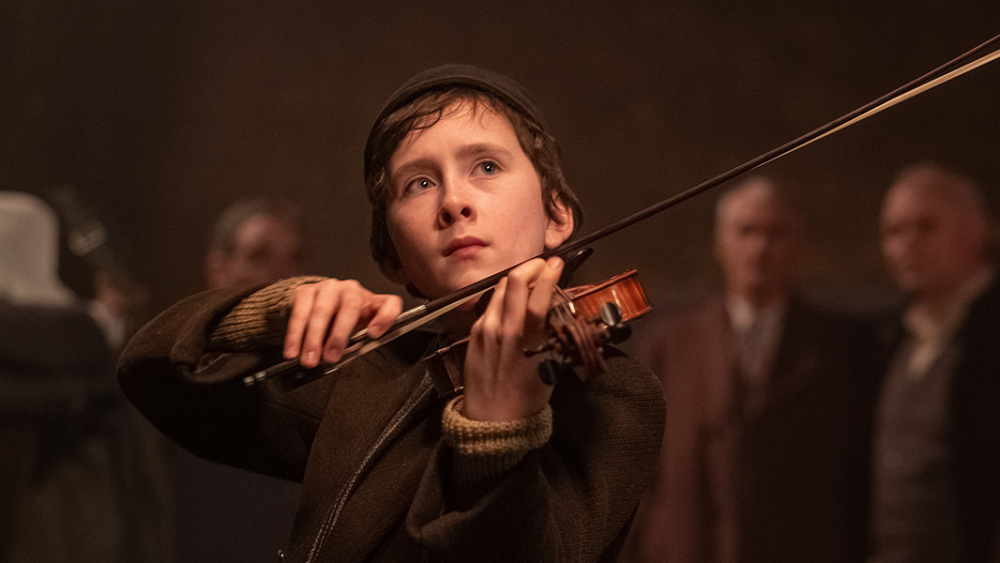
Dovidl (Clive Owen/Jonah Hauer-King) is a Jewish violin prodigy from Poland. Martin (Tim Roth/Gerran Howell) is an accomplished musician in his own right, but once Dovidl joins the household as a wartime refugee, Martin seems to lack both the talent and the affection to win over his father’s attention.

When Dovidl disappears on the night of a big coming-out concert, it tears families apart and leaves Martin with a lifelong quest for answers about what happened that fateful evening. Directed by François Girard and written by Jeffrey Caine (based on the novel by Norman Lebrecht), The Song of Names jumps back and forth in time between Martin’s contemporary search for the missing genius Dovidl and the wartime London childhood that originally brought them together.

The second biggest problem the film is up against is that while Roth does yeoman’s work keeping the present-day mystery engaging, it’s the slow drips of revelations from the past that hold the movie back.

But the biggest weakness is how flat and inoffensive those revelations end up being, which points to a sad milestone for the genre. It’s not that The Song of Names is aggressively bad with its background treatment of the Holocaust. In fact, it goes out of its way not to take offense. (Although Clive Owen’s spirit gum Haredi beard comes dangerously close.)

That inoffensiveness holds the movie back from being memorable, or at least different enough to merit the solemn subject. If we’re so far removed now from the Holocaust that not every movie needs to be a Prestige Event (remember that time we collectively lost our minds pretending Life Is Beautiful was deeply observed and worthy of awards, rather than a peerless grotesquerie of the era?), we should also be far enough removed for those involved to add something new to the conversation.

And for a brief moment, The Song of Names comes close. The World War II-era storyline trembles with pregnant pauses around themes like there might be nothing inherently heroic about survival, or that losing hope might be a recognizably sane response to unfathomable enormities.

But the schmaltzy resolution is a hard comedown. And given what it’s all about in the end, The Song of Names would’ve been better off playing up the mystery—at least Tim Roth is great. And who doesn’t like a mystery that wraps up with tidy answers?

Fear and Loathing in Long Island

Uncut Gems

by Matt Weiner

There’s something acutely familiar right now about watching a consummate New York macher unable to help himself as he pursues more and more wealth, drawing everyone around him into his increasingly unstable house of cards until it all collapses.

But Uncut Gems, the latest panic attack from the Safide brothers (Josh and Benny, who also co-wrote the script with frequent collaborator Ronald Bronstein), captures so much more than our current moment. For one, there’s the career-great performance from Adam Sandler. His take on Howard “Howie” Ratner buzzes seamlessly from typical Sandler ease to pathetic helplessness to manic moments of triumph.

Howie is a fonfer extraordinaire—a bullshit artist whose jewelry business in the Diamond District functions to help him continually feed his sports betting debts and keep his mistress (Julia Fox) happy with a Manhattan love nest. Whatever scant love and money are left over go to Howie’s family on Long Island (a point that sets up maybe the greatest music cue of the year, and one of the funniest moments in a movie that’s full of them).

When Howie gets caught up in his latest round of juggling debts, family drama and especially a rare Ethiopian black opal—a mysterious MacGuffin that transfixes anyone who sees it—the race is on to come up with enough money to appease his debtors while chasing the high of that one big score.

As Uncut Gems takes place in the long-ago days of 2012, that score revolves around a Celtics playoffs run. The Safdies throw a bone to New York sports with a Mike Francesa cameo, but it’s Kevin Garnett playing himself who almost steals the movie as one of Howie’s more fateful customers. Celebrity and proximity to power infuse Howie’s life almost as much as gambling—the Weeknd also puts in a memorable turn as an important buyer, and lends his moody, drug-fueled R&B to the soundtrack as well.

That prevailing mood is a defining feature of Uncut Gems. There’s the nonstop anxiety, but the Safdies and Sandler punctuate it with plenty of humor—and pathos. The Safdies are in a class of their own when it comes to drawing you in and making you care deeply about terrible people. Howie might be enjoying more outward success than Connie from the Safdies’ last movie Good Time, but it’s just as illusory. All debts must be paid.

And as with Good Time, the Safdies serve up subtle (and not-so-subtle) reminders that our actions have consequences, even for those who seem to have put together a successful life around assiduously evading them.

The film opens with a scene of misery thousands of miles away from Howie’s cocooned suburban Long Island life. It’s a non-sequitur worthy of the Coen brothers, our other great chroniclers of anxiety and morality.

But the threat goes from menace to promise that none of us are immune from consequence, and the Potemkin lifestyles of the elite are built on shaky foundations. It doesn’t take much for it all to come crashing down.

Nice Guys Finish Last

Ford v Ferrari

by Matt Weiner

Director James Mangold has a knack for turning the comfortable biopic formula into something genuinely gripping, even when it’s not surprising. In the case of Ford v Ferrari, the film manages to be both.

Anchored by contrasting performances from Matt Damon as the legendary racer and auto engineer Carroll Shelby and Christian Bale as his prickly driver of choice Ken Miles, Ford v Ferrari condenses the staid American automaker’s quest to challenge Ferrari’s dominance in sports car racing as a way of injecting the company with a shot of glamor for younger car buyers.

The site chosen for that showdown is the 1966 24 Hours of Le Mans, a grueling endurance race that no American-made car had yet to win. Shelby previously notched a victory with an Aston Martin in 1959 before retiring as a driver due to health problems.

Although Shelby and Miles were accomplished designers and engineers, the story (by Jez Butterworth, John-Henry Butterworth and Jason Keller) uses a light touch when it comes to detailing the actual car building. There’s almost as much time spent in the boardroom as there is on the racetrack.

And the film is all the better for it, as the conflict turns out to be less about Ferrari and more between the misfits Shelby and Miles and the rigid executives at Ford. (The exception is Lee Iacocca, archly portrayed by Jon Bernthal as a budding Don Draper of Detroit.)

But Ford v Ferrari is still a racing movie, and Mangold delivers when the action moves onto the track. In fact he probably deserves extra credit for heightening the tension during a 24-hour endurance race. How many tea breaks were there in Days of Thunder?

There are also the requisite glimpses of danger (this is a biopic), but the script—and especially Bale’s giddy Miles—bring out the meditative joy as well. It hasn’t been this entertaining to hear Bale yell at people in his accent since Terminator Salvation.

Miles and Shelby get a bit of the tortured artist treatment, but just a bit. The film is after something that in its own small way is more subversive: the friendship, love and respect these men have for each other. (Yes, the focus is almost entirely on men, boys and their toys, but at least Caitriona Balfe gets to do more than sketch the faintest outlines of a long-suffering wife. Barely.)

The film builds to the race in France, but Mangold is in top form when he’s remixing and interrogating Americana, from country in Walk the Line to the western in Logan. Ford v Ferrari continues these reflections on our most storied icons, and the world-weary characters who must bear those burdens for the myth to survive.

We Didn’t Start the Fire

Promare

by Matt Weiner

As the first feature-length film from Studio Trigger (the studio behind the well-received TV series “Kill la Kill”), Promare has its work cut out for it. It’s no easy task to maintain the studio’s unique blend of over-the-top yet self-referential action for a tight animated feature.

It’s a coup for director Hiroyuki Imaishi that Promare manages to do all that and more, while fleshing out characters who rise above their archetypes. (Well, most of them.) The film follows the members of Burning Rescue, a civil firefighting team that fights fires caused by “Burnish,” the name given to people who have mutated to spontaneously combust and must continue to start fires to survive.

The action begins 30 years after the first worldwide mutations took place, and most Burnish have been tracked down and imprisoned (or “frozen”). The plot manages to be both convoluted and contrived at various times, but the animation powers the events forward so relentlessly that I stopped caring. The style is wildly entertaining, and with enough hyperactive neon to make Into the Spider-Verse look like a Merchant Ivory film.

Art designer Shigeto Koyama is credited with the character designs. Western audiences are likely to know his work as designer of the robot Baymax from Big Hero 6, and he’s the perfect choice to make sure the futuristic mechas still allow the warmth and relationships from the characters piloting them to shine on screen.

Good thing, too, because without the laugh-out-loud characters and battles, the rest of the sci-fi plot would never make it off the ground. Even here, though, Kazuki Nakashima’s screenplay takes pains to give you permission to sit back and have a good time. He’s not above getting in a few digs at the absurdity: this is a movie, after all, with a literal Deus Ex Machina.

Promare is full of laugh-out-loud moments from the characters and the background animations—there’s a buoyancy that also makes the film a joy from start to finish. The real story behind the Burnish threat gives an unmistakable nod to global warming, but in the world of Promare what matters less is that we save the world (that’s a given, obviously), but rather how essential it is for our shared humanity that we save it by connecting more deeply with one another.

This plays out between the young firefighting hero Galo Thymos and the supposed terrorist leader, Lio Fotia. Here, too, Promare seems to delight in spurning convention: there’s no need for fans to wistfully ship the two adversaries, as the movie clearly does it for us. When the two burning souls connect and discover they must let go of what is holding them back and combust, I think we’re well beyond subtext.

Together, they offer a message of hope drenched in enough sharp, angular colors to fill out a 1990s t-shirt collection. Promare is an exciting first feature outing for Studio Trigger, and a sign that their distinctive brand of frenetic action hasn’t burnt itself out yet.

Let’s All Go to the Editing Bay

Have You Seen My Movie?

by Matt Weiner

If the phrase “a love-letter to cinema” wasn’t clichéd by now, Paul Anton Smith’s new meta-film Have You Seen My Movie? at least sets the bar impossibly high for future directors.

Have You Seen My Movie? consists entirely of found footage from other movies. From the early silents to the latest blockbusters, Smith pieces together nearly a century of cinematic history to create a distinct and visually stunning movie about movies and moviegoing, all told through these re-cut clips.

Smith served as assistant editor for Christian Marclay’s The Clock, a 24-hour art installation that used film and TV clips featuring the corresponding time of day in their scenes. Marclay’s piece ebbs and flows throughout the day, resulting in a delirious in-person experience that questioned what film, narrative and time itself could be.

All of which is to say that Smith’s own spin on the found footage clip show builds on Marclay’s approach. While it lacks the monumental sweep of The Clock’s 24-hour marathon, Smith’s tight commitment to a feature-length film with all the attendant emotional beats makes for a similarly impressive feature experience.

Without continuity or context to rely on, Smith pieces together a cohesive — and thoroughly engaging — narrative centered on emotion instead of plot (with a big assist from the flashes of recognition that come from picking out iconic scenes and characters).

Over the course of the movie, Smith weaves in every imaginable genre and hundreds of classic films. The technical prowess stands on its own as worth a watch, but it’s clear by the end that all Smith’s clever work is in the service of something grander: yes, there are plenty of hidden delights for cinephiles with a sharp eye. (The Criterion Collection could have a field day with bonus features.)

But there’s also no denying the transformative power of film and the dominant role it enjoyed for so long in shaping the culture. It’s a convincing case from Smith, in all its sentimental and spectacular glory. And in the middle of corporate consolidation, streaming silos and our current blockbuster era, it’s also one that might be less victory lap and more requiem for a dream.


h

I Don’t Want to Go Out—Week of July 22

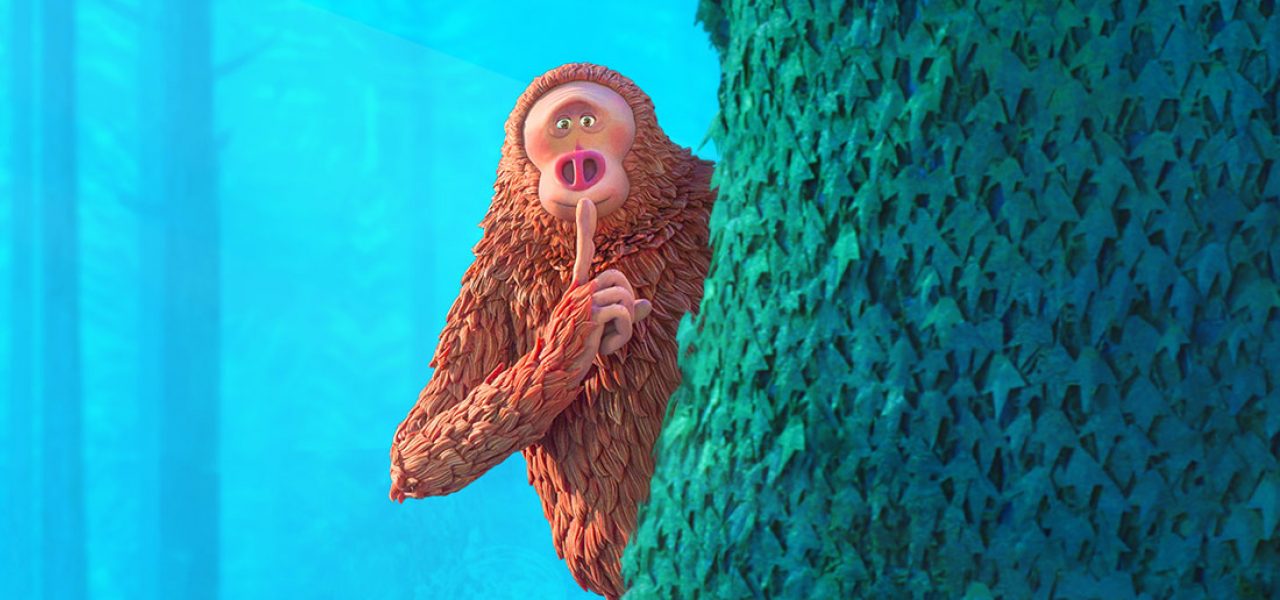
So, there’s this great animated movie that no one saw. It probably isn’t entertaining enough for the littlest kids, but everyone else should see it. There’s also a middling action flick and a sad, sad reboot.

Click the film title for the full review.

Missing Link

Master Z: Ip Man Legacy

Hellboy

Glasgow Skyline

Wild Rose

by Matt Weiner

“Three chords and the truth” is the driving spirit that runs throughout Wild Rose. It’s the reason aspiring country singer Rose-Lynn Harlan (Jessie Buckley) doesn’t just love the genre, she lives it. She has it tattooed on her arm, and her dream of Nashville superstardom buoys her otherwise dreary working-class life in Glasgow.

It’s also an apt quote to hang the movie on. From the opening setup, you already know the notes and you know the progression.  But darned if Buckley doesn’t still have something to say, and in a voice that can’t be ignored.

Buckley (Taboo, Beast) animates every frame as Rose-Lynn, fresh from a year in jail for drug charges and defiant at anyone and anything that comes between her and the country fantasy world she has built her life around.

This includes her long-suffering mother and two young children. Far more supportive is her new employer, the posh Susannah (Sophie Okonedo), who hears Rose-Lynn singing while cleaning her house and encourages her to send a recording to the BBC.

Of course Susannah’s support comes at the expense of Rose-Lynn hiding pertinent background details, and it’s this central tension between following your dreams and making a life of what you already have that concerns most of the drama.

But even if Rose-Lynn’s path is a familiar one, the movie (written by Nicole Taylor and directed by Tom Harper) still imbues her arc with touching consideration and naturalistic ups and downs. Thanks in large part to Buckley, who brings a gut-wrenching humanity to each inevitable screw-up, it’s a journey that is compelling and well-earned—no small feat for the kind of story where at least some cathartic triumph is the payoff we expect for all those bumps along the road.

Wild Rose raises some truly thorny questions about the pursuit of art and the expectations surrounding that. While Rose-Lynn’s story arrives at an answer a bit too neatly, it’s no less catchy of a refrain. There’s a reason that Nashville sound churned out so many hits.


h