Tag Archives: MaddWolf

Fright Club: Best Horror 2010 – 2015

It’s official. Our flux capacitor is running out of power, our time travels are coming to a close. We’ve highlighted the best horror films of the 60s, 70s, 80s, 90s and the first decade of the 2000s, and now it’s time to bring things up to the present with the best in horror from 2010 – 2015. Who would have thought that list would be so hard to put together?

What do we wish we didn’t have to leave off? Indies like The Woman, Kill List, The Snowtown Murders; major releases like Evil Dead and The Woman in Black; foreign language gems like Big Bad Wolves, The Last Circus, We Are What We Are and A Girl Walks Home Alone at Night. All of this convinces us that we are in the midst of a horror movie rennaissance – hooray!

So what did make the cut? Here you go:

5. The Cabin in the Woods (2012)

You know the drill: 5 college kids head into the woods for a wild weekend of doobage, cocktails and hookups but find, instead, dismemberment, terror and pain. You can probably already picture the kids, too: a couple of hottie Alphas, the nice girl, the guy she may or may not be into, and the comic relief tag along. In fact, if you tried, you could almost predict who gets picked off when.

But that’s just the point, of course. Making his directorial debut, Drew Goddard, along with his co-scribe Joss Whedon, uses that preexisting knowledge to entertain holy hell out of you.

Goddard and Whedon’s nimble screenplay offers a spot-on deconstruction of horror tropes as well as a joyous celebration of the genre. Aided by exquisite casting – particularly the gloriously deadpan Richard Jenkins and Bradley Whitford – the filmmakers create something truly special.

Cabin is not a spoof. It’s not a satire. It’s sort of a celebratory homage, but not entirely. What you get with this film is a very different kind of horror comedy.

4. The Conjuring (2013)

Yes, this is an old fashioned ghost story, built from the ground up to push buttons of childhood terror. But don’t expect a long, slow burn. Director James Wan expertly balances suspense with quick, satisfying bursts of visual terror.

Wan cut his teeth – and Cary Elwes’s bones – with 2004’s corporeal horror Saw. He’s since turned his attention to something more spectral, and his skill with supernatural cinema only strengthens with each film.

Ghost stories are hard to pull off, though, especially in the age of instant gratification. Few modern moviegoers have the patience for atmospheric dread, so filmmakers now turn to CGI to ramp up thrills. The results range from the visceral fun of The Woman in Black to the needless disappointment of Mama.

But Wan understands the power of a flesh and blood villain in a way that other directors don’t seem to. He proved this with the creepy fun of Insidious, and surpasses those scares with his newest effort.

Wan’s expert timing and clear joy when wielding spectral menace help him and his impressive cast overcome the handful of weaknesses in the script by brothers Chad and Carey Hayes. Claustrophobic when it needs to be and full of fun house moments, The Conjuring will scare you while you’re in the theater and stick with you after. At the very least, you’ll keep your feet tucked safely under the covers.

http://www.youtube.com/watch?v=Vjk2So3KvSQ

3. Let Me In (2010)

With Hollywood’s 2010 reboot of the near-perfect 2008 Swedish film, director Matt Reeves (Cloverfield) managed to retain the spirit of the source material, while finding ways to leave his own mark on the compelling story of an unlikely friendship.

Twelve year old Owen (Kodi Smit-McPhee) is a lonely boy who’s being bullied at school. When young Abby (Chloe Moretz) and her “dad” (Richard Jenkins) move in next door, Owen thinks he’s found a friend. As sudden acts of violence mar the snowy landscape, Owen and Abby grow closer, providing each other a comfort no one else can.

Moretz (Kick-Ass) and Smit-McPhee (The Road) are both terrific, and give the film a touching, vulnerable soul.

Reeves, also adapting the screenplay, ups the ante on the gore, and provides more action, scares and overall shock value. Incredibly, he even manages to build on the climactic “revenge” scene that was damn-near flawless the first time.

https://www.youtube.com/watch?v=8h39ikMdei4

2. The Babadook (2014)

Like a fairy tale or nursery rhyme, simplicity and a child’s logic can be all you need for terror.

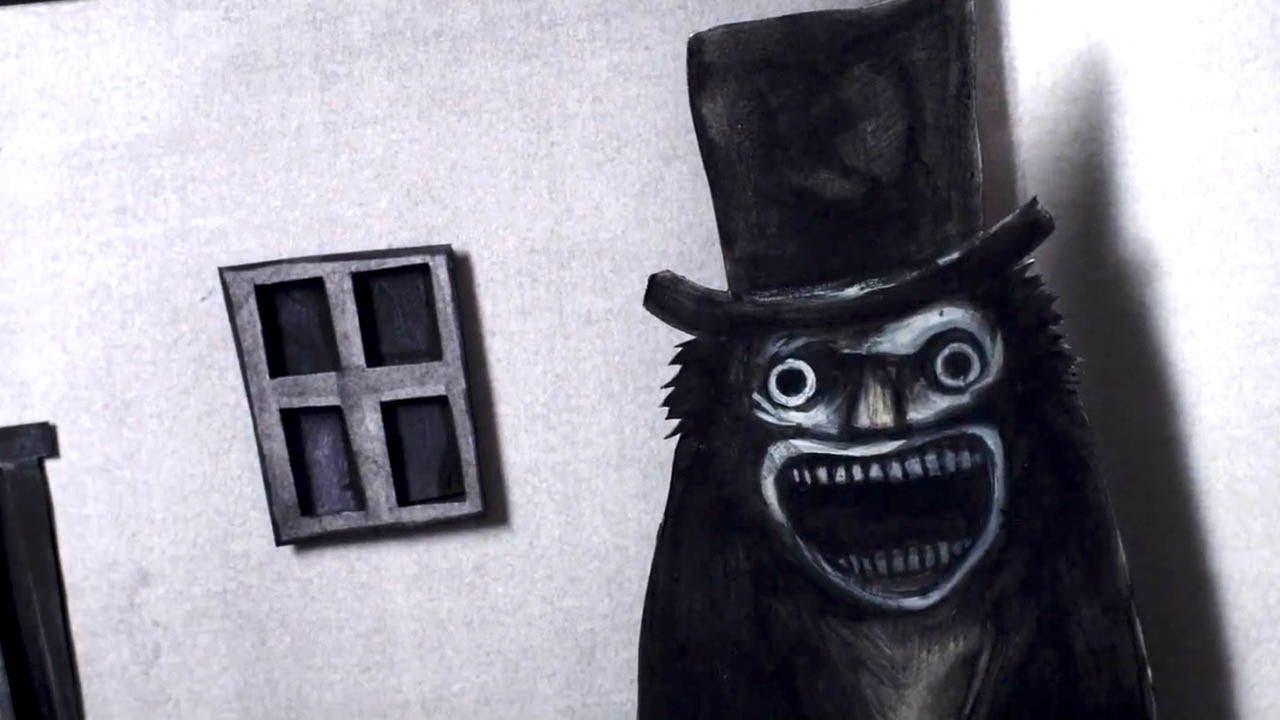
You’re exhausted – just bone-deep tired – and for the umpteenth night in a row your son refuses to sleep. He’s terrified, inconsolable. You check under the bed, you check in the closet, you read a book together – no luck. You let him choose the next book to read, and he hands you a pop-up you don’t recognize: The Babadook. Pretty soon, your son isn’t the only one afraid of what’s in the shadows.

It’s a simple premise, and writer/director Jennifer Kent spins her tale with straightforward efficiency. There is no need for cheap theatrics, camera tricks or convoluted backstories, because Kent is drilling down into something deeply, frighteningly human.

Kent’s film is expertly written and beautifully acted, boasting unnerving performances from not only a stellar lead in Essie Davis, but also the alarmingly spot-on young Noah Wiseman. Davis’s lovely, loving Amelia is so recognizably wearied by her only child’s erratic, sometimes violent behavior that you cannot help but pity her, and sometimes fear for her, and other times fear her.

1. It Follows (2015)

David Robert Mitchell invites you to the best American horror film in years. He’s crafted a coming of age tale that mines for primal terror. Moments after a sexual encounter with a new boyfriend, Jay discovers that she is cursed. He has passed on some kind of entity – a demonic menace that will follow her until it either kills her or she passes it on to someone else the same way she got it.

Yes, it’s the STD or horror movies, but don’t let that dissuade you. Mitchell understands the anxiety of adolescence and he has not simply crafted another cautionary tale about premarital sex. Mitchell has captured that fleeting yet dragging moment between childhood and adulthood and given the lurking dread of that time of life a powerful image. There is something that lies just beyond the innocence of youth. You feel it in every frame and begin to look out for it, walking toward you at a consistent pace, long before the characters have begun to check the periphery themselves.

Mitchell borrows from a number of coming of age horror shows, but his film is confident enough to pull it off without feeling derivative in any way. The writer/director takes familiar tropes and uses them with skill to lull you with familiarity, and then terrify you with it.

Mitchell’s provocatively murky subtext is rich with symbolism but never overwhelmed by it. His capacity to draw an audience into this environment, this horror, is impeccable and the result is a lingering sense of unease that will have you checking the perimeter for a while to come.

Listen to the whole conversation on our FRIGHT CLUB podcast.
Secret of Their Lack of Success

Revenge of the Mekons

by Hope Madden

Is there a more punk rock concept than anarchy?

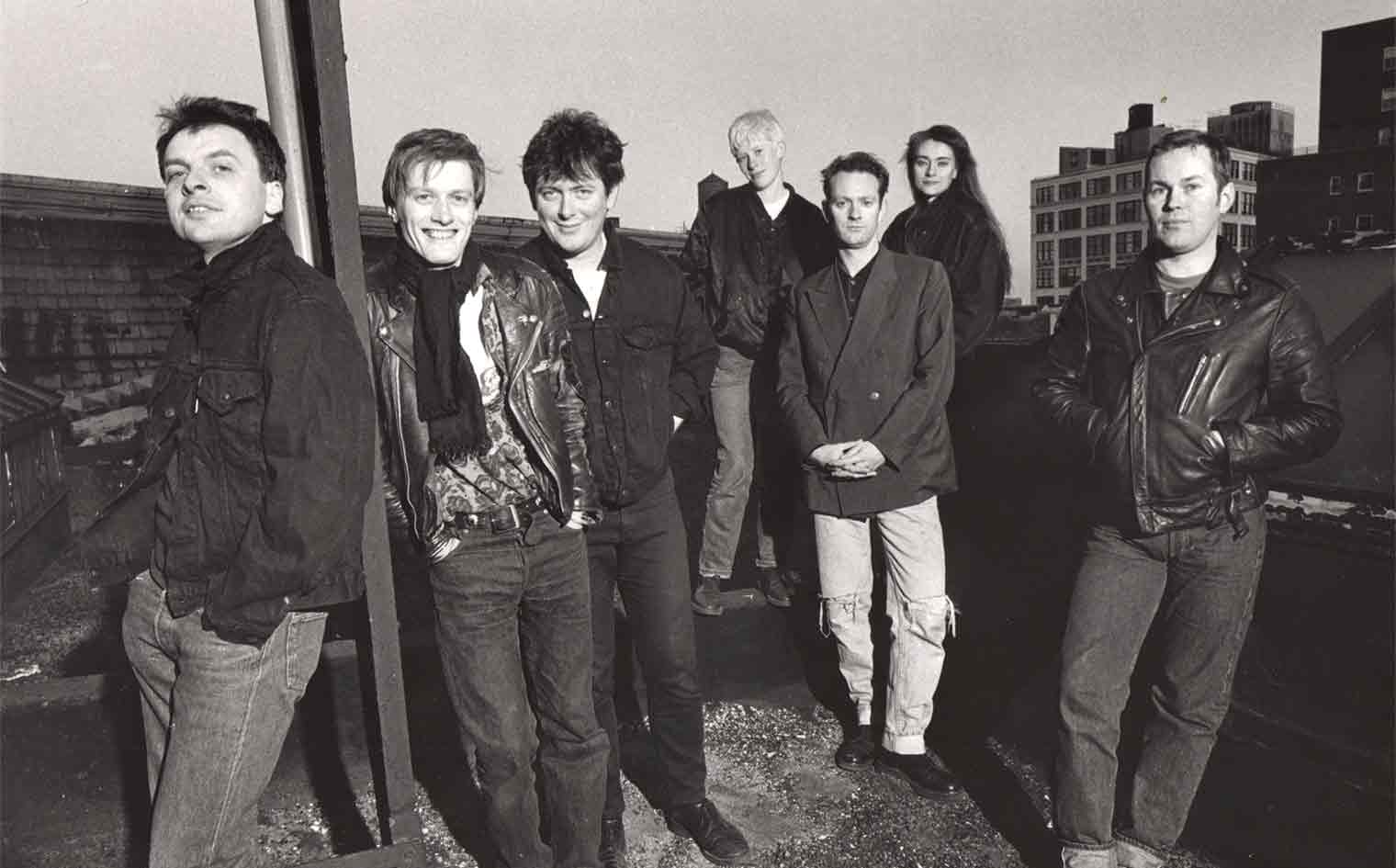
The answer is no, and that is what makes The Mekons the most punk rock band ever, regardless of the fact that their music is more of a folk/honkytonk/punk blend.

Born of Britain’s punk scene in ’77, the band consisted of an art college collective who, characteristically, had no musical ability at all. Naturally, they were immediately signed to a label.

Now, nearly 40 years later, the band is still together, still recording, still touring, regardless of the fact that they’ve been repeatedly dropped by labels and have never achieved even a moderate level of success.

Joe Angio’s documentary Revenge of the Mekons enjoyable catalogs the band’s journey from talentless punks with a philosophy to brilliantly listenable artists with integrity and the same philosophy.

The film marks the evolution of a band that constantly reinvents itself, each new direction a natural progression from the last while also being a fascinating surprise. They find the “voice of the people” foundation in wildly varying styles of music and, rather than abandoning their previous style, they marry it with the next. The result is always fresh because the Mekon’s natural style is, as founder Jon Langford calls it, “bloody minded.” Whatever genre they adopt, it naturally changes. Just like, as the film points out, when the Ramones started recording they were trying to sound like the Beach Boys.

But it’s the band’s almost comical indifference to financial or popular success that sets the film apart. Says Ed Roche of the Mekon’s label Touch and Go Records, “Every critic loves the Mekons. Unfortunately, they get free records.”

Rock docs almost invariably follow the same format: humble beginnings, meteoric rise, trouble handling success, crash and maybe the glimmer of a resurgence, depending on the film and subject. To spend 95 minutes cataloging all the ways a band manages to avoid success is fascinating – it’s like the story of Anvil, except that the Mekons aren’t even trying to succeed.

What they are doing is focusing solely on their own artistry, which can be a pretentious thing to watch for a feature length running time, but the band does not possess an ounce of pretentiousness. They are what they are. They do what they do. Like them or don’t, it doesn’t matter to them.

How punk rock is that?

Verdict-3-5-Stars

Curse of the Digital Native

Unfriended

by Hope Madden

Director Levon Gabriadze, with serious help from screenwriter Nelson Greaves, has managed the unmanageable. His entire film Unfriended is seen from a laptop screen, yet never gets visually dull and never feels limited by the gimmick.

More than that, his film is immersed in the digital-native culture without seeming forced or hokey. Without ever feeling like a stunt – a story in service of a device rather than vice versa – Unfriended tells a cautionary tale that’s topical, current and smart.

Five high school friends mindlessly Skype on the anniversary of their friend Laura’s suicide. Laura had been the victim of cyberbullying, and not only is her humiliation still available online, so is her suicide. Such is the horrifyingly public world of today’s teen.

The gang can’t seem to get rid of an anonymous 6th in their hangout, and little by little the presence evolves from annoying to aggravating to terrifying.

Greaves’s script is smart. There are flashes of other films – The Den, Paranormal Activity 4 and others – but Unfriended never feels stale. Greaves’s language is so unsettlingly familiar, and he makes some important points without even approaching a preachy tone.

It’s a set of familiar ideas – vengeance, guilt, betrayal, cowardice – wrapped in a very shiny new package, and it’s the wrapping that could have really gone wrong, but Gabriadze succeeds in filling the screen with enough to look at, enough virtual action to keep your attention.

He builds tensions through a truth or dare style game that provokes the friends to turn on each other, but the film has more empathy for the characters than the run of the mill slasher. The five actors manage to flesh out dimensional characters with the slightest material to work with, and each feels realistically flawed yet sympathetic.

It’s a fascinating choice because the whole film flirts with the ugly “they aren’t bad kids” excuse you hear every time a 7th grader is filmed being gang raped or an autistic child’s bullying goes viral.

These five don’t think they’re bad people. They certain seem like nice enough, likeable enough teens – to everyone except that creepy lurker on their screen.

Verdict-3-5-Stars

Beyond Aging Gracefully

Beyond the Reach

by Hope Madden

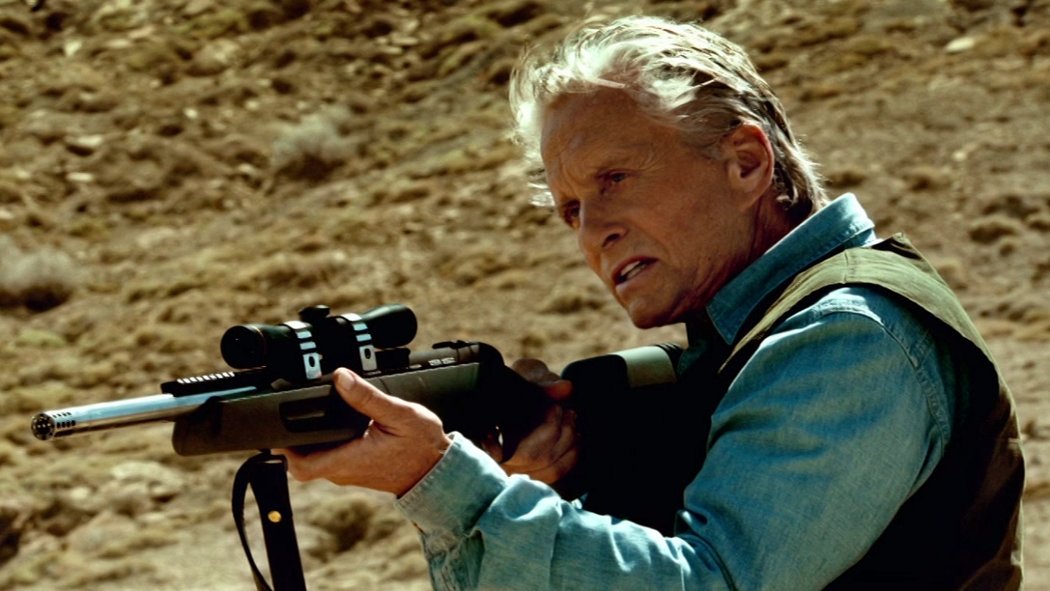
Michael Douglas continues to find intriguing ways to evolve as an actor. Now into his 7th decade on the planet, the actor has taken more and more interesting roles, generally succeeding. His Liberace in 2013’s Beyond the Candelabra marked a high point in his long career, and for his latest, the thriller Beyond the Reach, he reimagines a role originated by Andy Griffith, of all people.

Douglas plays a multi-millionaire named Madec, a man who collects trophies, buying his way out of red tape and problems, no matter how dire. He finds himself in hot water when an expensive but unlicensed hunt for “big horns” goes wrong. When he suspects that his young guide may not be as easily bought as he’d hoped, he devises a particularly nasty Plan B.

Jeremy Irvine (War Horse) is Ben, Madec’s wholesome but potentially corruptible young guide. What emerges is more than a sadistic cat and mouse game, mostly because Douglas patiently unveils layers to the character that feel at once horrifying and utterly natural.

It’s a straight forward thriller wisely adapted by Stephen Susco from a novel by Robb White. White was the source writer for many an exploitation flick back in the day (House on Haunted Hill, The Tingler, 13 Ghosts), and while Susco maintains the same type of urgency and thrill, his taut script is as interested in character as terror.

There is something so genuine about Douglas’s performance – he’s a shark, a man who’s amassed enormous wealth through charm, savvy, and cut-throat maneuvering. His sense of entitlement is based on decades of success, success that has encouraged him to see the world exactly as he sees it here. As ugly as his behavior is, it isn’t necessarily personal. It’s survival. It’s business.

Irvine handles his task capably, but it’s Douglas who makes the film worth watching. What begins as simply the clearest (if most heartless) strategy toward achieving a goal becomes, as time wears on, an old buck’s attempt to dominate the young challenger to his alpha status.

Beyond the Reach is a simple premise and a simple film that could very easily have become another throwaway thriller, and though it’s certainly no masterpiece, it transcends its exploitation trappings thanks to a veteran actor who knows what it means to be a survivor.

Verdict-3-0-Stars

Come and Watch Us Sing and Play

Monkey Kingdom

by Hope Madden

Earth Day rears its smiling, nervously optimistic head once again with Disneynature’s latest eco-doc Monkey Kingdom.

Directors Mark Linfield and Alastair Fothergill have carved an impressive career of environmental documentaries, for both the large and small screen. Monkey Kingdom boasts the same skillful mixture of environmental grandeur and character-driven intimacy, and the film is as visually glorious as any in this series. Still, you have to wonder how many hours of wildlife footage is accrued before the filmmakers can impose a storyline on the proceedings.

That is not to suggest the tale is entirely make believe. Monkey Kingdom rolls cameras in the jungles of South Asia, capturing the complex social structure of a macaque monkey troop. What unfolds is a kind of Cinderella story of the low-born Maya and her efforts to fend for herself and her newborn.

As we’ve come to expect from Disney’s doc series, Monkey Kingdom sheds light on the intricate social workings of the subject, and macaques turn out to be fascinating creatures with the kind of structured social order that begs for exactly this treatment. At first we watch as lowly Maya sleeps in the cold and eats from the ground while the alpha and other high born monkeys nap in sunlight and feast on the ripe fruit at the top of the tree. Can she ever hope for more? (At least we can rest assured that there’s no make-over coming.)

The intricate pecking order sets the perfect stage for an underdog film full of scrap, perseverance and triumph.

Narrator Tina Fey’s smiling, workaday feminism gives the film personality and relates it to humanity without having to even try.

While the film keeps your attention throughout, Monkey Kingdom lacks some of the punch of other Disney Earth Day flicks. Linfield and Fothergill’s 2012 film Chimpanzee had the 5-year-olds at my screening sobbing breathlessly, whereas Monkey Kingdom might elicit a compassionate frown.

Between the built-in drama of the “overcoming adversity” storyline and the occasional giddy monkey hijinks (the bit where the troop crashes a birthday party is particularly enjoyable), the film compels attention as it shares eco-savvy information kids may even remember.

Documentary purists will balk at the anthropomorphized story, but families will enjoy this thoroughly entertaining film.

Verdict-3-5-Stars

Spooky Stories For Your Queue

The best horror film (indeed, one of the very best films, period) of 2014 is available today for home entertainment and you must see The Babadook. Writer/director/Australian Jennifer Kent, with an assist from cinematographer Radek Ladczuk and magnificent performances from Essie Davis and Noah Wiseman – has crafted an unsettling and spooky haunted house style tale.

The horror here is fueled by compassion generated by the naturalistic performances. Kent has captured something with primal urgency, something simultaneously heartbreaking and terrifying. The film’s subtext sits like a raw nerve just below the scary happenings afoot, making this as the freshest and most relevant horror film of 2014.

Pair it with another remarkable tale of either a crazy mother or a supernatural presence, J. A. Bayona’s 2007 ghost story The Orphanage.

Belen Rueda shines as a mother whose son disappears shortly after making imaginary friends at the orphanage the family owns. Bayona creates a haunted atmosphere and Rueda’s utter commitment to the character keeps the film breathless. It is a spooky nightmare that takes its material seriously and delivers.

Fright Club: Best Horror of the Nineties

The Nineties boasted more good horror than you might remember. It was a time of big budget, Oscar nominated studio films like Misery and early genre work from filmmakers who would go on to become the best in the business, like Fincher’s Seven, M. Night Shyamalan’s The Sixth Sense, Tarantino and Rodriguez’s From Dusk Til Dawn, and Adrian Lyne’s Jacob’s Ladder. Foreign films made a splash – Michael Haneke’s Funny Games, Peter Jackson’s Dead Alive, and a wave of Japanese films that would have a powerful influence in the next decade of American horror. Here we pick the best of the decade.

5. Cape Fear (1991)

In 1991, Martin Scorsese toyed with the horror genre with a remake of the ’62 Gregory Peck/Robert Mitchum power struggle between a steamy psychopath and an uptight lawyer. Scorsese mines the very ripe concept for more outright horror, recasting Robert DeNiro – still on top of his game and garnering an Oscar nomination – as Max Cady, a deeply disturbed criminal who should not be underestimated. Nick Nolte takes on the Peck role, but it’s Juliette Lewis (also Oscar nominated) as Nolte and Jessica Lange’s teenage daughter who amps up the unseemly tension.

Scorsese and his cast know how to wring anxiety from an audience and their film brims with a sultry tension that keeps everything on edge. It’s masterful storytelling with a throwback feel, the kind of film that finds you yelling at the screen, not because characters are doing anything stupid, but because you know better than they do just how terrifying Max Cady is. Still, the evil that he can do manages to stagger every single time.

4. Scream (1996)

In its time, Scream resurrected a basically dying genre, using clever meta-analysis and black humor. What you have is a traditional high school slasher – someone dons a likeness of Edvard Munch’s most famous painting and plants a butcher knife in a local teen, leading to red herrings, mystery, bloodletting and whatnot. But director Wes Craven’s on the inside looking out and he wants you to know it.

What makes Scream stand apart is the way it critiques horror clichés as it employs them, subverting expectation just when we most rely on it. We spent the next five years or more watching talented TV teens and sitcom stars make the big screen leap to slashers, mostly with weak results, but Scream stands the test of time. It could be the wryly clever writing or the solid performances, but I think it’s the joyous fondness for a genre and its fans that keeps this one fresh.

3. The Blair Witch Project (1999)

Blair Witch may not date especially well, but it scared the hell out of a lot of people back in the day. This is the kind of forest adventure that I assume happens all the time: you go in, but no matter how you try to get out – follow a stream, use a map, follow the stars – you just keep crossing the same goddamn log.

One of several truly genius ideas behind Blair Witch is that filmmakers Daniel Myrick and Eduardo Sanchez made the audience believe that the film they were watching was nothing more than the unearthed footage left behind by three disappeared young people. Between that and the wise use of online marketing (then in its infancy) buoyed this minimalistic, naturalistic home movie about three bickering buddies who venture into the Maryland woods to document the urban legend of The Blair Witch. Twig dolls, late night noises, jumpy cameras, unknown actors and not much else blended into an honestly frightening flick that played upon nightmares I have almost every night.

2. Audition, 1999

Audition tells the story of a widower convinced by his TV producer friend to hold mock television auditions as a way of finding a suitable new mate. He is repaid for his deception.

Nearly unwatchable and yet too compelling to turn away from, Audition is a remarkable piece of genre filmmaking from horror master Takashi Miike. The slow moving picture builds anticipation, then dread, then full-on horror. Midway through, Miike punctuates the film with one of the most effective startles in modern horror, and then picks up the pace, building grisly momentum toward a perversely uncomfortable climax. By the time Audition hits its ghastly conclusion, Miike and his exquisitely terrifying antagonist (Eihi Shina) have wrung the audience dry. She will not be the ideal stepmother.

Keep an eye on that burlap sack.

1. The Silence of the Lambs

It’s to director Jonathan Demme’s credit that Silence made that leap from lurid exploitation to art. His masterful composition of muted colors and tense but understated score, his visual focus on the characters rather than their actions, and his subtle but powerful use of camera elevate this story above its exploitative trappings. Of course, the performances didn’t hurt.

Hannibal Lecter ranks as one of cinema’s greatest and scariest villains, and that accomplishment owes everything to Anthony Hopkins’s performance. It’s his eerie calm, his measured speaking, his superior grin that give Lecter power. Everything about his performance reminds the viewer that this man is smarter than you and he’ll use that for dangerous ends. But it’s Ted Levine who goes underappreciated. Levine’s Buffalo Bill makes such a great counterpoint to Hopkins’s Lecter. He’s all animal – big, lumbering, capable of explosive violence – where Lecter’s all intellect. Buffalo Bill’s a curiously sexual being, where Lecter is all but asexual.

Demme makes sure it’s Lecter that gets under our skin, though, in the way he creates a parallel between Lecter and Clarice Starling (Jodie Foster). It’s Clarice we’re all meant to identify with, and yet Demme suggests that she and Lecter share some similarities, which means that maybe we share some, too.

Usually, a director shoots a villain from below, making him look larger and more menacing. The victim is usually shot from above, which makes them seem smaller, less powerful, more vulnerable, and cuter. When Clarice and Lecter are talking in the prison, they’re shot at the same angle, eliminating that power struggle. They’re shot as equals.

More than that, during their conversations, Demme captures each character’s reflection in the partition glass as the other speaks, once again making the visual impression that these two are equals, have similarities, are in some ways alike. No one is like Buffalo Bill. He’s incomprehensible. Unacceptable. But Demme generates something akin to sympathy in his depiction of Hannibal in relation to Clarice, and given how terrifying he is, that’s equally unsettling.

Listen to the whole conversation – join our FRIGHT CLUB PODCAST.

Talkin’ Bout My Generation

While We’re Young

by George Wolf

So far, Hollywood’s attempts to address the social media revolution have fluctuated between lackluster and downright embarrassing (Men, Women and Children? Yikes). While We’re Young gets it more right than most, thanks to less of the usual microscope and more of a layered, universal narrative.

Writer/director Noah Baumbach is able to weave the contrasts between older technology “immigrants” and the younger tech “natives” into a larger, utterly charming overview of shifting generations and the humor in realizing you’re not so young anymore.

Josh (Ben Stiller) and Cordelia (Naomi Watts) are a happy, childless couple in New York who suddenly become friends with Jamie (Adam Driver) and Darby (Amanda Seyfried), a pair of hipsters about twenty years younger.

In an instant, Cordelia and Darby are taking hip hop dance classes and Josh is shopping for fedoras with Jamie, then cranking “Eye of the Tiger” to get pumped up for a business meeting (even though he admits listening to the same song back “when it was just bad”). They ditch their longtime friends who now have young children, and convince each other they are free spirits blessed with limitless opportunity.

As Josh slowly begins to look a bit deeper into Jamie’s motives for hanging with him, their interplay comes to resemble Baumbach confronting his younger self, along with the futile anxieties of growing old “gracefully.” Baumbach seems perfectly comfortable in this new skin, crafting a film that is often smart, funny, and bittersweet all at once. His work has never been more accessible.

The characters are all sharply drawn and relatable, fleshed out by a talented cast that lets Baumbach touch on a variety of serious topics with a confident blend of laughter and nuance. The performances are all dead on, with Driver shining in the film’s most complex role.

Baumbach does risk a cop out with the convenient plot turn that comes near the finish, but it’s not nearly enough to derail the knowing smile that While We’re Young is bound to leave you wearing.

And that looks better than a fedora on almost all of us…of a certain age.

Verdict-3-5-Stars


Let’s Do Some Crimes For Your Queue

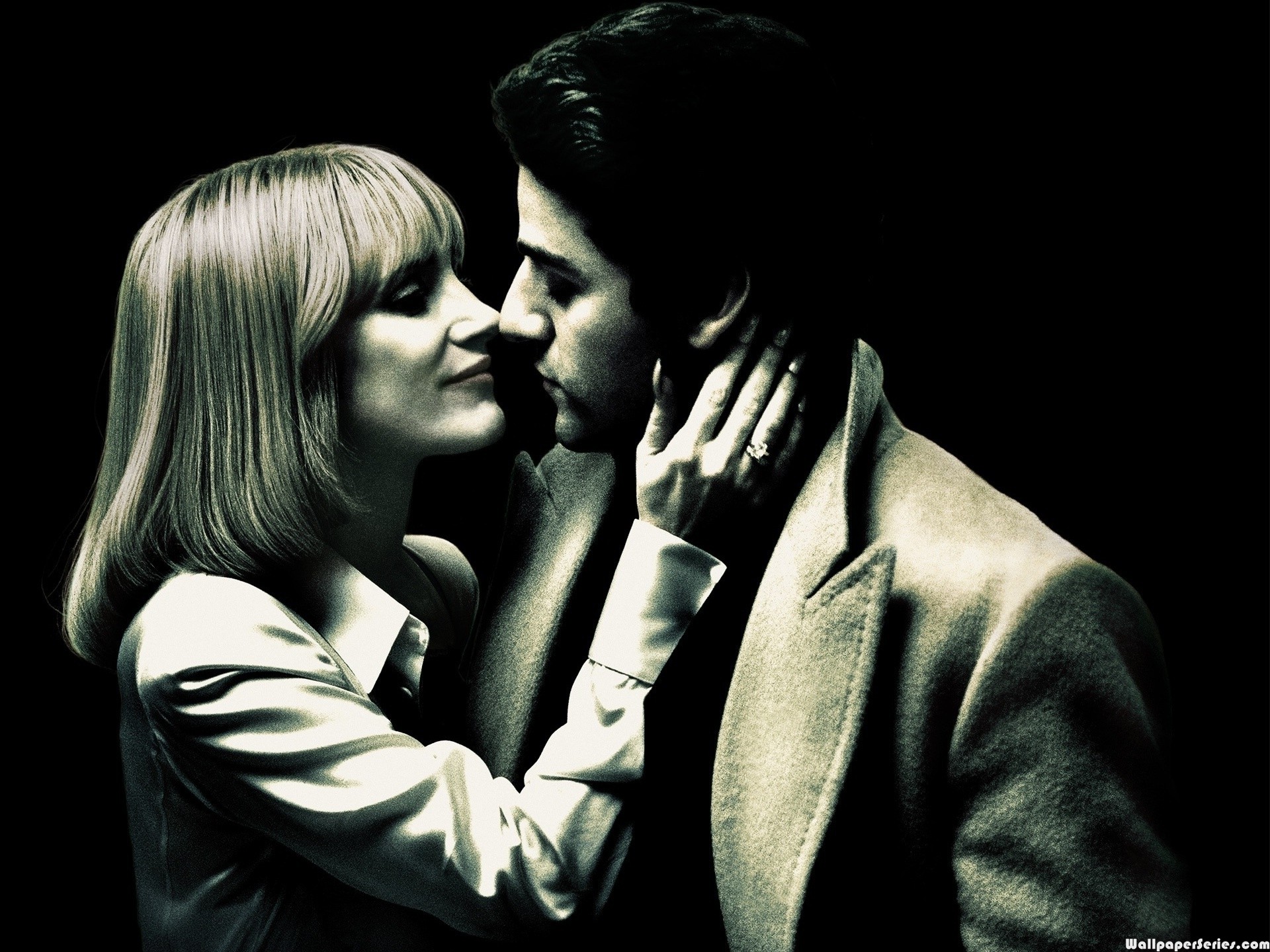
If box office numbers can be trusted, you probably missed A Most Violent Year when it was in theaters in 2014. Now is your chance to remedy that wrong. The film – one of the finest and most underseen of last year – releases for home entertainment this week. Just the third film from fascinating director J.C. Chandor, it’s a look at the merits and moral compromise of the American Dream in a gritty drama set in NYC’s crime-ridden 1980. The look is impeccable, outdone only by a spectacular cast anchored by another magnificent turn from Oscar Isaac.

While it would make just as much sense to highlight either of Chandor’s previous efforts, A Most Violent Year makes us nostalgic for the filmmaking of Sidney Lumet, so instead we decided to pair it with his last, wonderful effort, Before the Devil Knows You’re Dead. An older brother (the great Philip Seymour Hoffman) hiding dark, addictive behavior, talks his sad-sack younger brother (Ethan Hawke) into something unthinkable. It’s the last master turn from Lumet with help from a top to bottom wonderful cast.

https://www.youtube.com/watch?v=8Jhrxn7QVDc

Fright Club: Best Eighties Horror

We’re back to the decade countdown, this week looking at the best horror had to offer in the Eighties. This is the decade that spawned more horror franchises and iconic villains than any other – Friday the 13th, A Nightmare on Elm Street, Evil Dead and Hellraiser to begin with. Somewhere in a haze of Aquanet that era also churned out more bad horror than any decade should, but here we will focus on the five best from the Duran Duran Decade.

5. An American Werewolf in London (1981)

Director John Landis blends horror, humor, and a little romance with cutting edge (at the time) special effects to tell the tale of a handsome American tourist David (David Naughton) doomed to turn into a Pepper – I mean a werewolf – at the next full moon.

Two college kids (Naughton and Griffin Dunne), riding in the back of a pickup full of sheep, backpacking across the moors, talk about girls and look for a place to duck out of the rain.

Aah, a pub – The Slaughtered Lamb – that’ll do!

The scene in the pub is awesome, as is the scene that follows, where the boys are stalked across the foggy moors. Creepy foreboding leading to real terror, this first act grabs you and the stage is set for a sly and scary escapade. The wolf looks cool, the sound design is fantastically horrifying, and Landis’s brightly subversive humor has never had a better showcase.

https://www.youtube.com/watch?v=3uw6QPThCqE

4. Poltergeist (1982)

This aggressive take on the haunted house tale wraps director Tobe Hooper’s potent horrors inside producer Steven Spielberg’s brightly lit suburbia. In both of Spielberg’s ’82 films, the charade of suburban peace is disrupted by a supernatural presence. In E.T., though, there’s less face tearing.

Part of Poltergeist’s success emerged from pairing universal childhood fears – clowns, thunderstorms, that creepy tree – with the adult terror of helplessness in the face of your own child’s peril. JoBeth Williams’s performance of vulnerable optimism gives the film a heartbeat, and the unreasonably adorable Heather O’Rourke creeps us out while tugging our heartstrings.

Splashy effects, excellent casting, Spielberg’s heart and Hooper’s gut combine to create a flick that holds up. Solid performances and the pacing of a blockbuster provide the film a respectable thrill, but Hooper’s disturbing imagination guarantees some lingering jitters.

3. Henry: Portrait of a Serial Killer (1986)

Director John McNaughton’s unforgivingly realistic picture of American serial killer Henry Lee Lucas offers a uniquely unemotional telling – no swelling strings to warn us danger is afoot and no hero to speak of to balance the ugliness. We follow him through his humdrum days of stalking and then dispatching his prey, until he finds his own unwholesome kind of family in the form of buddy Otis and his sister Becky. What’s diabolically fascinating is the workaday, white trash camaraderie of the psychopath relationship in this film, and the grey areas where one crazy killer feels the other has crossed some line of decency.

McNaughton confuses viewers because the characters you identify with are evil, and even when you think you might be seeing this to understand the origins of the ugliness, he pulls the rug out from under you again by creating an untrustworthy narrative voice. His film is so nonjudgmental, so flatly unemotional, that it’s honestly hard to watch. It’s brilliant nonetheless.

https://www.youtube.com/watch?v=IU3P6WXzvXU

2. The Thing (1981)

John Carpenter’s remake of the 1951 SciFi flick The Thing from Another World is both reverent and barrier-breaking, limiting the original’s Cold War paranoia, and concocting a thoroughly spectacular tale of icy isolation, contamination and mutation.

This is an amped up body snatcher movie benefitting from some of Carpenter’s most cinema-fluent and crafty direction: wide shots when we need to see the vastness of the unruly wilds; tight shots to remind us of the close quarters with parasitic death inside. In an isolated wasteland with barely enough interior room to hold all the facial hair, folks are getting jumpy. The story remains taut beginning to end, and there’s rarely any telling just who is and who is not infected by the last reel. You’re as baffled and confined as the scientists. It’s horror movie magic.

https://www.youtube.com/watch?v=F7t-919Ec9U

1. The Shining (1980)

A study in atmospheric tension, Kubrick’s vision of the Torrance family collapse at the Overlook Hotel is both visually and aurally meticulous. It opens with that stunning helicopter shot, following Jack Torrence’s little yellow Beetle up the mountainside, the ominous score announcing a foreboding that the film never shakes.

Let’s not forget Jack. Nicholson outdoes himself. His veiled contempt early on blossoms into homicidal mania, and there’s something so wonderful about watching Nicholson slowly lose his mind. Between writer’s block, isolation, ghosts, alcohol withdrawal, midlife crisis, and “a momentary loss of muscular coordination,” the playfully sadistic creature lurking inside this husband and father emerges.

What image stays with you most? The two creepy little girls? The blood pouring out of the elevator? The impressive afro in the velvet painting above Scatman Crothers’s bed? That guy in the bear suit – what was going on there? Whatever the answer, thanks be to Kubrick’s deviant yet tidy imagination.

Check out the whole conversation on our FRIGHT CLUB PODCAST.